The Three Conversations Nobody Wants to Have, and Why We’re Going to Have One Today

There’s an old saying that you should never talk about politics, religion, or money at the dinner table. Three topics, three landmines, three ways to ruin Thanksgiving.

I get the impulse, but I’d argue it’s also the reason so many families wake up at 50, 60, or 70 years old wondering how they ended up unprepared. We didn’t talk about it. Our parents didn’t talk about it. And the silence got passed down like a family recipe.

So today, we’re going to break the rule. We’re going to talk about money. And honestly, you can’t have that conversation right now without brushing up against politics and a little bit of belief too. Policy is moving fast. Markets are loud. And what you believe about your future is going to shape what you do with your dollars this year.

Let’s get into it.

Where the economy stands right now

Strip away the noise and here’s the picture as of mid-2026:

  • Goldman Sachs Research expects global GDP to grow a sturdy 2.8% in 2026, with the US outperforming at 2.6% on the back of tax cuts, easier financial conditions, and reduced tariff drag.
  • The Fed is on hold. After May’s surprisingly strong jobs report, Goldman pulled its 2026 rate cut forecasts off the calendar entirely. The bank now expects the next cuts in June and December 2027, and doubled the probability of a rate hike to 20%.
  • Core inflation is sticky. Goldman expects core PCE to stay above 3% through 2026 before drifting toward the Fed’s 2% target in 2027. The pressure points: tariffs, Middle East oil tensions, and AI-driven capital spending.
  • Equities are still the story. S&P 500 earnings grew 25% year over year in Q1, with AI carrying a lot of that water, and Goldman Sachs Asset Management upgraded its core equity view for the year despite the macro turbulence.

Translation for the rest of us: the economy is holding up, but the cost of living isn’t getting cheaper anytime soon, and the Fed is not riding to the rescue.

Meanwhile, on the ground

That’s the view from 30,000 feet. Here’s what’s hitting the average household at street level.

Credit cards are flashing red. Americans owe a record $1.25 trillion on their cards, and 13% of accounts are at least 90 days delinquent, the highest level since 2008. The Wall Street Journal called it a shift to “survival debt,” and it’s no longer just lower-income households feeling the squeeze.

Housing is whiplashing. Mortgage rates are volatile, foreclosures are rising in pockets, and HOA fees keep climbing. For a lot of buyers, the math just doesn’t pencil out anymore.

Student loans are about to bite. The SAVE plan is officially over. More than 7 million borrowers are being moved into legal repayment plans, and the new Repayment Assistance Plan launched July 1. If you’ve been in administrative forbearance for the last two years, that grace period is ending and the bill is coming.

Retirement planning is getting more nuanced. With RMDs, Roth conversions, and a higher-for-longer rate environment, the conversation has shifted from just what you own to where you own it. Asset location is becoming as important as asset allocation.

This is what economic turmoil looks like. Not a single dramatic crash, but a slow grind of higher costs, tighter margins, and more decisions that you can’t undo.

Why a plan is the best defense

Here’s the part that connects to politics and to faith, because both shape how we handle hard things.

You cannot control the Fed. You cannot control oil prices. You cannot control which administration writes the next rule on student loans or tariffs or taxes. What you can control is whether you have a written plan, whether you’re contributing to it consistently, and whether you have someone in your corner who can help you adjust when the rules change underneath you.

A plan is not a magic shield. It’s a decision-making framework. When the headlines get loud, your plan tells you what to do next. When a policy changes, your plan tells you what to adjust. When fear shows up, your plan tells you to keep going.

The families I see come through the worst stretches are not the ones with the biggest portfolios. They’re the ones who decided early that they were going to be intentional about money instead of reactive about it.

An essential checklist if you’re in your 40s

Your 40s are the most important financial decade of your life. Peak earnings, peak responsibility, and the last real runway to compound serious wealth before retirement gets close. If you’re in this window, here’s where to focus.

1. Write down your net worth and your goals. Add up your assets. Subtract your liabilities. Then write down three goals: one for the next year, one for the next five, and one for retirement. A goal without a number is just a wish.

2. Automate your retirement savings. Capture every dollar of your employer match. That’s free money and a 100% return before the market does anything. If you don’t have a match, set up automatic contributions to an IRA or brokerage account so you don’t have to think about it.

3. Build a real emergency fund. Aim for six months of essential expenses, closer to a year if you’re self-employed or in a specialized field. Park it in a high-yield savings account so it keeps pace with inflation.

4. Attack high-interest debt. With credit card APRs near 21%, every dollar you put toward a card balance is a guaranteed double-digit return. There is no investment in the market that beats paying off a credit card.

5. Get your protection in order. Life insurance, disability income, and updated will are not the fun part of planning. They’re the part that keeps your family standing if something goes sideways.

6. Optimize asset location, not just allocation. Roth conversions, tax-deferred accounts, brokerage accounts, and HSAs all play different roles. Putting the right asset in the right account can save you tens of thousands of dollars over a lifetime.

7. Revisit the plan every year. Not because it changes constantly, but because you do. Promotions, kids, moves, businesses, all of it shifts the math.

The conversation you need to have

If you’ve made it this far, you already know the answer to the question I’m about to ask. The hardest part isn’t the math. It’s the conversation.

The conversation with your spouse about what you want the next 20 years to look like. The conversation with your kids about how money works so they don’t repeat your mistakes. The conversation with yourself about what you’ve been avoiding because it felt too big.

And eventually, the conversation with a professional who is paid to keep you honest with your plan and steady when the market is anything but.

Let’s talk

If anything in this article hit close to home, that’s your sign. Not to panic, not to overhaul your life this weekend, but to start the conversation.

I help individuals, families, and small business owners build plans that hold up when the headlines don’t. There is no pitch on the other side of the door. Just a conversation about where you are, where you want to go, and what it would take to get there.

Reach out at nkoziknight.com and let’s get the plan started. The economy is going to do what it’s going to do. Your job is to be ready for it.
Your 401(k) Is About to Become Wall Street’s Exit Strategy

By Nkozi Knight

The greatest trick in modern finance is convincing people that a valuation is the same thing as wealth.

It is not.

A company can be valued at a trillion dollars without a trillion dollars ever moving through its business. A founder like Elon Musk can become one of the richest people on earth because investors agreed to price his shares at a number that may never survive public market scrutiny. A venture capital fund can report enormous paper gains before anyone has actually turned those gains into cash. This is the paper illusion that sits underneath the current AI boom, and it is the reason the rule changes that took effect on May 1, 2026, matter far more than most Americans realize.

Nasdaq did not just make a boring technical adjustment to its index methodology. It opened a faster bridge between private market valuations and passive public money. Under the new fast entry rule, certain large newly public companies can be evaluated after only a few trading days and potentially added to the Nasdaq 100 after just 15 trading days. In a market where trillions of dollars track indexes through ETFs, target date funds, pension allocations, and 401(k) plans, that is not a small change. That is a change in who gets forced to buy, when they have to buy, and whose money is standing there when early investors are ready to sell.

This is the part most people miss. The public markets used to be where companies raised money to grow. Now, for many of the largest private companies in the world, public markets are where earlier investors go to find an exit.

Companies like SpaceX, OpenAI, and Anthropic have been built in private markets with money from venture capital firms, sovereign wealth funds, institutional investors, private equity firms, and the world’s largest asset managers. By the time everyday Americans get access, the story has already been written, the valuation has already been inflated, and the insiders have already spent years marking up their positions on paper.

That does not mean these companies are fake. SpaceX is real. OpenAI is real. Anthropic is real. Artificial intelligence is real. Data centers, chips, power grids, and cloud infrastructure are all real.

The bubble is not the technology.

The bubble is the price people are being asked to pay after the wealth has already been created for someone else.

SpaceX lost nearly $5 billion in 2025 while still seeking a valuation around $1.75 trillion. That should stop people in their tracks. It does not mean SpaceX is worthless, and it does not mean the company will fail, but it does mean investors are being asked to pay today for profits that may not ever arrive. That is how bubbles work. They do not usually form around worthless ideas. They form around powerful ideas that become so emotionally convincing that valuation stops mattering.

The reason the passive index complex matters is because it may be the only buyer large enough to absorb these IPOs at the prices Wall Street wants.

A normal investor can say no. A pension manager can hesitate. An active fund manager can decide the valuation is too rich. But passive money does not think that way. If a company enters the index, the funds tracking that index have to buy it. The money moves because the methodology says it moves. The worker contributing to a 401(k) never voted on SpaceX. The teacher with a pension never studied Anthropic’s cash burn. The nurse in a target date fund never decided OpenAI’s valuation made sense. Their money simply follows the index.

That is the machine.

Wall Street creates the paper value in private markets, waits until the valuation becomes too large for traditional buyers to absorb, changes the rules so these companies can enter major indexes faster, and then lets passive retirement money like your pension become the final buyer.

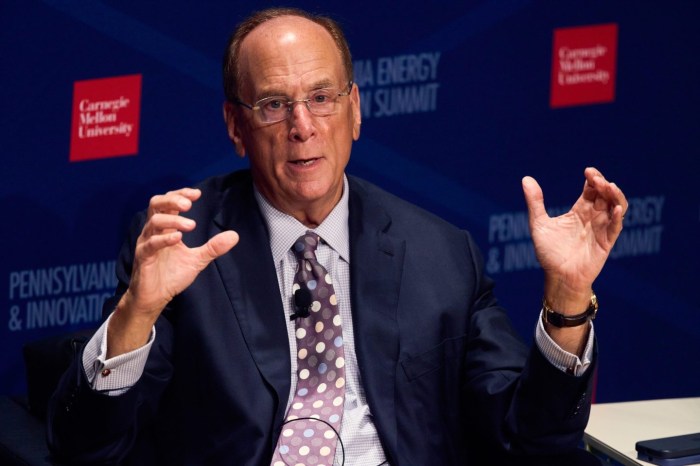
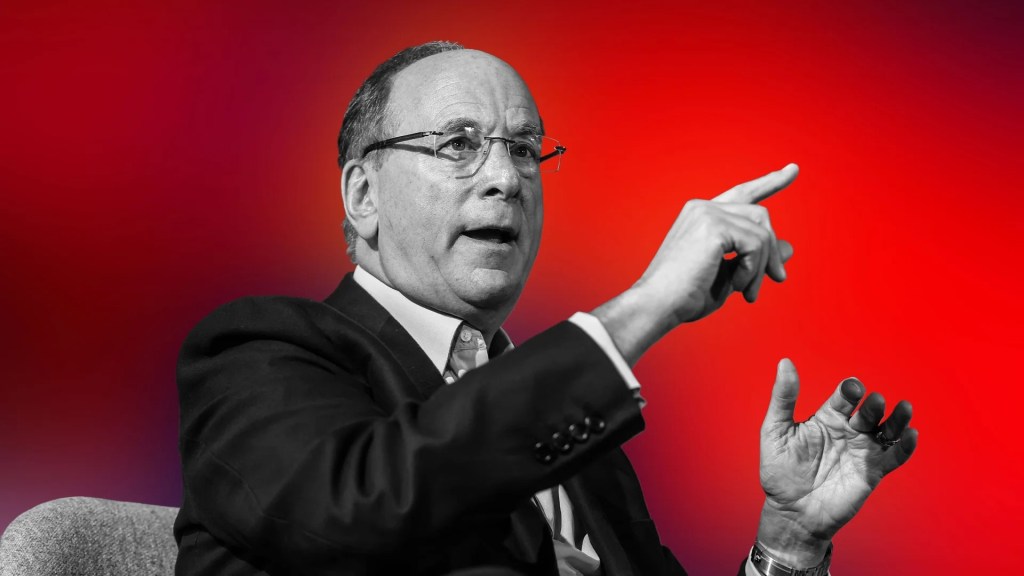
This is why Larry Fink’s comments matter. When the head of BlackRock talks about savings accounts and pension accounts helping fund the AI infrastructure buildout, he is telling people where the money is expected to come from. The AI revolution will require trillions of dollars for data centers, energy production, transmission lines, semiconductors, cooling systems, and computing infrastructure. Venture capital cannot fund that alone. Private equity cannot fund that alone. Government cannot fund that alone without triggering another political fight over debt and deficits.

So the system turns to the deepest pool of money in America.

Retirement assets.

At the end of 2025, the United States had roughly $49 trillion in retirement assets. That is the pool Wall Street sees. That is the pool asset managers want access to. That is the pool that receives contributions every payday from people who are simply trying to retire with dignity.

The tragedy is that everyday workers may not realize they are being moved from investors into financiers. They are not just saving for retirement anymore. Increasingly, their money is being positioned to finance the infrastructure, valuations, and liquidity needs of the AI economy.

That is where the corruption lives. Not always in a brown envelope or an illegal backroom deal, but in the quiet rewriting of rules that shift risk from sophisticated insiders to ordinary workers. The people who got in early get liquidity. The investment banks get fees. The asset managers get products. The exchanges get listings. The founders keep control. The early investors get a path out.

The worker gets exposure.

That word sounds harmless until markets break.

Exposure means your 401(k) bought the shares after the hype was already priced in. Exposure means your pension became the buyer after the private gains were already captured. Exposure means you were told you were gaining access to innovation, when in reality you may have been placed at the end of the line holding assets that insiders were ready to monetize.

This is not how healthy markets are supposed to work. The public is supposed to participate in growth, not simply inherit the bill after private markets finish marking up the asset.

The paper illusion works only as long as there is another buyer. That is why the passive index complex is so important. It creates a buyer that does not need to be convinced. It creates demand that does not ask hard questions. It creates flows that arrive every two weeks from payroll deductions across America.

That is the part that should scare people.

A bubble does not need everyone to believe forever. It only needs enough automatic money to keep coming in long enough for the early money to leave.

And this time, the automatic money will be your 401(k).

The Sovereign Debt Crisis is no longer a future problem, it’s a now problem

By Nkozi Knight

The most important economic story in America is not the stock market.

It is not Bitcoin.

It is not artificial intelligence.

It is not even inflation.

It is debt.

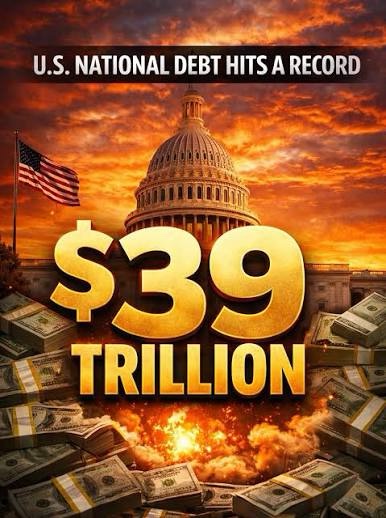
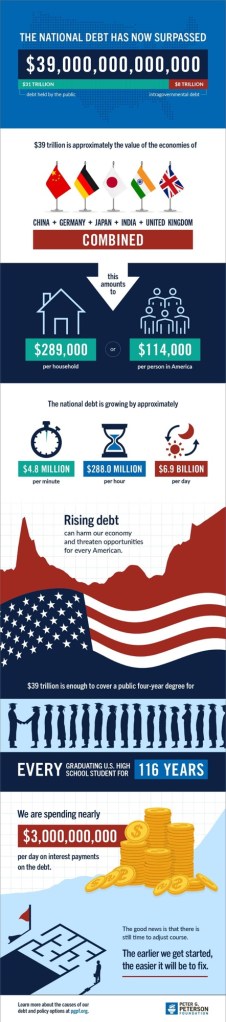
More specifically, it is what happens when the world’s largest economy accumulates nearly $39 trillion in debt while simultaneously asking investors to continue financing deficits approaching $2 trillion a year.

That number is so large it becomes difficult to comprehend.

Broken down across the population, America’s debt burden now exceeds roughly $114,000 for every person in the country.

A family of four is effectively carrying more than $450,000 of federal debt.

No, the government is not sending anyone a bill.

But that does not mean the debt disappears.

Someone always pays.

The question is how.

For decades, the answer was simple.

The United States occupied a unique position in the global economy. The dollar served as the world’s reserve currency, global commerce flowed through dollar-based financial systems, and foreign governments accumulated Treasury securities as reserves.

America benefited enormously from this arrangement.

We could borrow more, spend more, run larger deficits, and face fewer consequences than any other nation in history.

The system worked because the rest of the world trusted American debt.

Today that trust is beginning to show signs of strain.

The warning signs are not coming from politicians.

They are coming from the bond market.

The yield on the 30-year Treasury bond has climbed to around 5 percent, levels not seen consistently since before the financial crisis.

That number matters far more than most people realize.

A Treasury yield is not simply an interest rate.

It is a measure of confidence.

When investors believe the future is stable, they accept lower returns.

When risks increase, they demand higher compensation.

A 5% 30-year Treasury bond is the market’s way of saying the old assumptions are no longer enough.

And the timing could not be worse.

The federal government is projected to spend approximately $1 trillion this year just servicing existing debt.

$1 TRILLION dollars spent not on defense, infrastructure, education, veterans, or health care, but on interest.

Nothing productive is created.

The money simply services obligations accumulated in previous years.

As debt grows, those interest costs grow with it.

And because much of America’s debt was issued when rates were near zero, older bonds must eventually be refinanced at today’s much higher rates.

The result is simple math.

More debt.

Higher rates.

Higher interest costs.

Even more debt.

That is how debt spirals begin.

The international picture makes the situation even more concerning.

For decades, countries such as Japan and China helped finance America’s borrowing because Treasury bonds were considered safe, liquid, and reliable.

But that equation is changing.

Japan’s own debt exceeds twice the size of its economy, and rising domestic yields now give investors meaningful returns at home. China has also been reducing Treasury holdings while diversifying trade and reserve assets.

Neither country is abandoning the United States.

That misses the point.

The issue is marginal demand.

When the largest buyers purchase less, somebody else must step in.

To attract those buyers, yields must rise.

Higher yields mean higher borrowing costs that eventually flow through the entire economy.

Mortgage rates rise.

Auto loans rise.

Credit card rates rise.

Business financing becomes more expensive.

Commercial real estate becomes harder to refinance.

Economic growth slows.

At the same time, inflation remains stubbornly elevated.

Energy prices have surged.

Producer prices continue moving higher.

Supply chains remain vulnerable to geopolitical shocks.

Because energy sits at the center of transportation, manufacturing, and logistics, higher fuel costs ripple through the entire economy.

Consumers experience this reality every day.

Groceries cost more.

Insurance costs more.

Travel costs more.

Housing costs more.

The official inflation number may be one statistic, but the lived experience often feels much higher.

This is where the debt story and inflation story merge.

The government has very few attractive options.

It can cut spending.

It can raise taxes.

It can accept slower growth.

Or it can continue borrowing and creating additional liquidity.

Historically, heavily indebted governments tend to choose the path that appears least painful in the short term.

More borrowing.

More debt issuance.

More intervention.

More money creation.

The danger is not an immediate collapse.

That is what many people get wrong.

The United States is not likely to wake up one morning and discover that Treasury bonds are worthless or that the dollar has suddenly disappeared.

Financial systems rarely fail that way.

Confidence erodes gradually.

Then suddenly.

The greater risk is a slow deterioration in purchasing power, combined with rising interest costs and weakening demand for American debt.

The petrodollar system is not disappearing tomorrow, but it is facing challenges that would have been unthinkable twenty years ago. More nations are settling trade in alternative currencies. Regional trading blocs are reducing dependence on the dollar. Central banks are diversifying reserves.

The dollar remains dominant.

But dominance is not permanence.

And that distinction matters.

Because America’s extraordinary borrowing power has always depended on extraordinary global demand for dollars and Treasury securities.

If that demand weakens, even modestly, the math changes.

And once the math changes, the bond market notices.

The bond market is noticing now.

The question is whether Washington is paying attention.

Because at some point debt stops being a political issue.

It becomes an arithmetic problem.

And arithmetic does not care about ideology, campaign promises, or election cycles.

Eventually, the numbers win.

Insider Trading in Geopolitical Crises: Anomalies in the 2026 Iran Conflict and the Strait of Hormuz

Strait of Hormuz Oil Traffic

The 2026 Iran conflict has delivered more than oil supply shocks and naval blockades, it has spotlighted a disturbing pattern of suspiciously timed trades in oil futures, equities, and prediction markets. In at least three documented episodes, hundreds of millions (and in one case nearly a billion) dollars were wagered on falling oil prices mere minutes before major de-escalation announcements by President Trump or Iranian officials. The precision and scale of these bets have triggered investigations by the Commodity Futures Trading Commission (CFTC), complaints from advocacy groups, and bipartisan scrutiny from Congress.

While markets are supposed to reflect all available information under the efficient-market hypothesis, these events suggest a troubling information asymmetry: a small group of traders appears to have acted with foreknowledge of policy shifts that directly moved energy prices. This is not abstract market theory. It raises core questions about market integrity, the misuse of nonpublic government information, and the regulatory gaps exposed when geopolitics collides with high-stakes derivatives trading.

The Pattern: Three Strikes, Same Playbook

Consider the timeline, drawn from Bloomberg, Reuters, NPR, and Financial Times reporting:

March 23, 2026: Roughly 15 minutes before President Trump posted that he would delay planned strikes on Iranian energy infrastructure, traders executed approximately $500–580 million in short positions on oil futures (WTI and Brent). When the announcement hit, crude prices plunged as much as 15%.

April 7, 2026: Roughly $950 million was bet on falling oil prices hours before the U.S. and Iran announced a two-week ceasefire. Oil dropped sharply on the news.

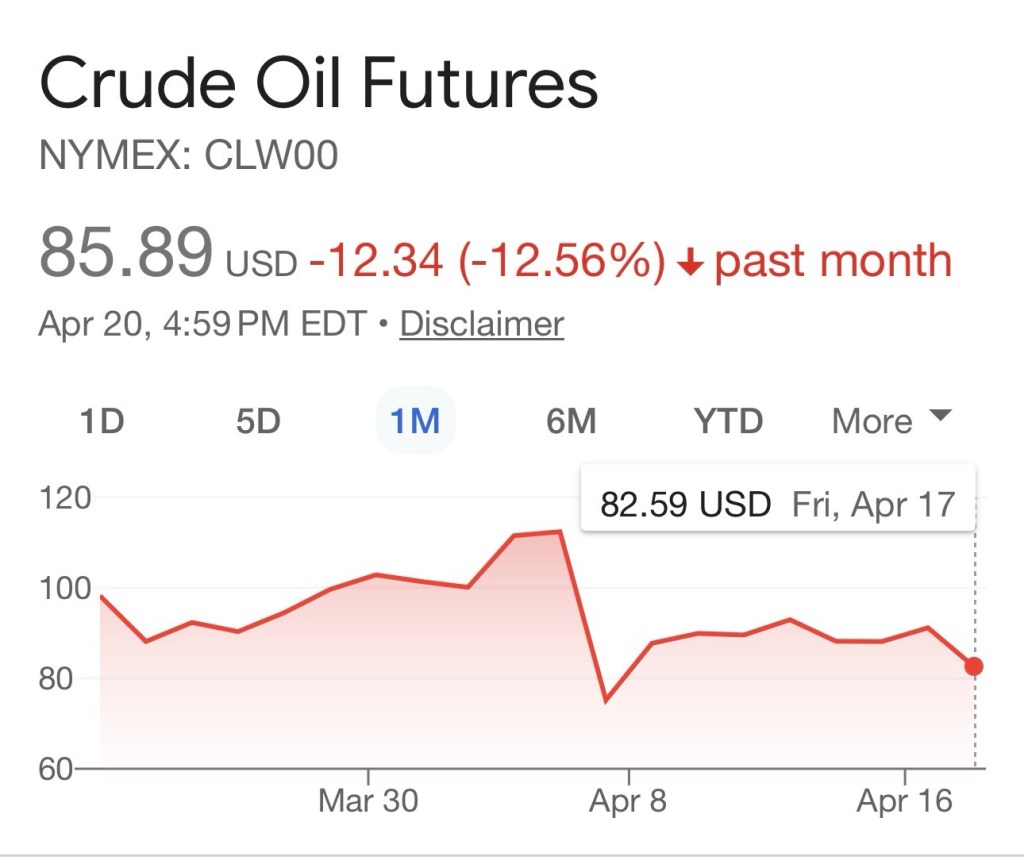
April 17, 2026: About $760 million in oil shorts were placed roughly 20 minutes before Iran’s foreign minister announced the Strait of Hormuz would reopen to commercial traffic. Oil fell as much as 11% intraday.

These are not isolated retail bets. They represent enormous, concentrated positions executed with surgical timing. On prediction markets like Polymarket, similar patterns emerged: one trader reportedly turned $3,200 into $600,000 on a U.S.-Iran ceasefire outcome one hour before it was public; other accounts netted millions across multiple Iran-related events. A crypto-analytics firm identified six “suspected insiders” who collectively made $1.2 million on a single high-profile outcome.

The White House itself recognized the optics. In a March 24 email, it explicitly warned staff against betting on Iran-war-related prediction markets, implicitly acknowledging that nonpublic information was a risk. Senators Elizabeth Warren and Sheldon Whitehouse have publicly questioned whether government insiders are misappropriating material nonpublic information. Public Citizen filed a formal CFTC complaint citing the “statistical impossibility” of such repeated accuracy absent insider knowledge.

Why This Looks Like Insider Trading

Standard market theory holds that prices incorporate information rapidly. Yet these trades consistently preceded public announcements by minutes, precisely the window in which only those “in the know” (administration officials, military planners, or their close associates) would have material nonpublic information.

The mechanics are straightforward:

• De-escalation news (ceasefire, delayed strikes, Hormuz reopening) reliably drives oil prices lower by easing supply fears.

• Shorts placed immediately before such news capture the full price drop with minimal risk.

• The volume of hundreds of millions in minutes, far exceeds normal liquidity and shows coordinated or highly informed positioning.

Defense and energy stocks have also shown volatility tied to the same cycle. The MSCI World Aerospace & Defence Index returned 32% year-to-date through March 2026, outpacing broader markets, while oil futures swung wildly on Hormuz rumors. When policy pivots are telegraphed internally, the incentive to monetize that edge is obvious—and the barrier to entry (futures markets, prediction platforms) is low for sophisticated players.

This is not the first time war has blurred the line between national security and personal profit, but the speed and transparency of modern markets (plus the rise of unregulated-ish prediction platforms) have made the anomalies impossible to ignore. Economists like Paul Krugman have bluntly labeled it “treason in the futures markets.”

Regulatory and Ethical Blind Spots

Prediction markets like Polymarket have exploded in popularity precisely because they allow direct bets on real-world events. Yet they operate in a gray zone: the CFTC has limited jurisdiction, enforcement is slow, and anonymity features can shield bad actors. Traditional futures markets are better regulated, but the CFTC’s probes into the March and April trades have so far yielded little public action, prompting criticism that the agency is “rolling over.”

For elected officials and senior staff, the STOCK Act already prohibits insider trading on nonpublic information, but enforcement has been lax. A bipartisan bill introduced in late March would ban members of Congress and senior federal staff from trading prediction-market contracts tied to policy or political events. It is a necessary start, but broader reforms are needed: real-time trade surveillance for geopolitical flashpoints, mandatory pre-clearance for officials with access to classified briefings, and clearer rules around family members and close associates.

The economic stakes are enormous. The Strait of Hormuz carries roughly 20% of global oil trade. Even temporary closures have spiked prices toward $100/barrel, rippling through inflation, consumer costs, and corporate earnings. When insiders front-run those moves, they privatize gains while the public bears the broader economic pain.

Restoring Trust in Crisis Markets

Geopolitical shocks will continue. The lesson from the 2026 Iran episode is that markets do not self-police when information is asymmetrically distributed along lines of power. Regulators, platforms, and Congress must treat these anomalies with the urgency they deserve, not as conspiracy fodder, but as evidence that the system’s integrity is at risk.

Until credible investigations produce accountability, every perfectly timed oil trade will fuel cynicism. Markets thrive on trust. When that trust erodes because the game is rigged for those “in the know,” the damage extends far beyond any single portfolio and we all lose.

The Bond Market Is Sending a Warning Ahead of a Critical Week

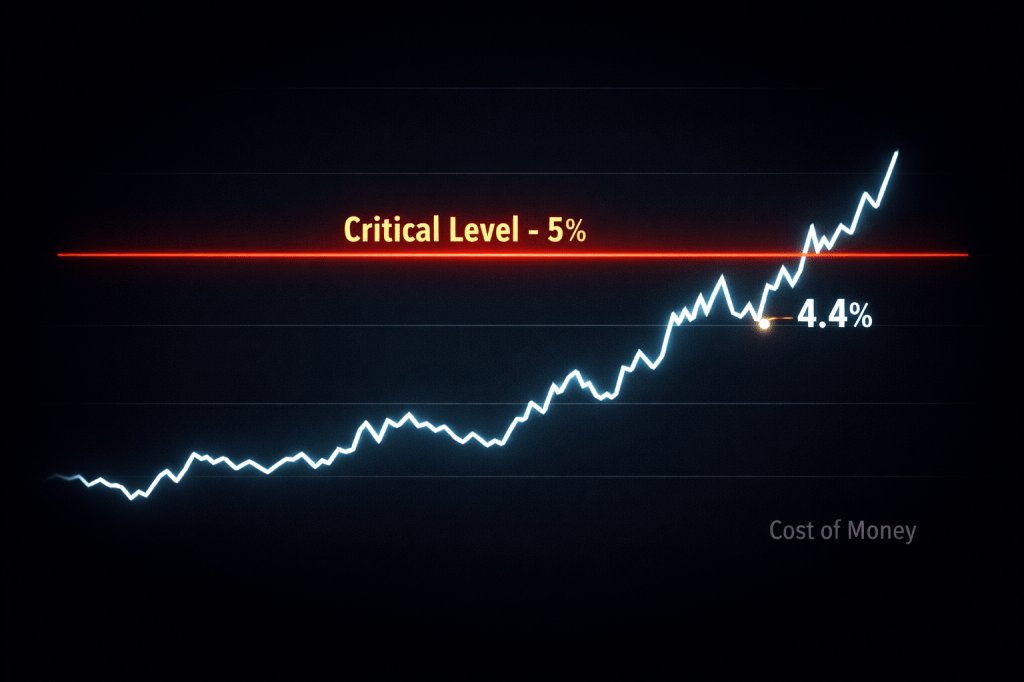
U.S. government bond yields are climbing toward levels not seen in years, with the 10-year Treasury now around 4.40% and selling pressure building as investors price in inflation risks from the U.S.–Iran conflict and a more hawkish Federal Reserve.

A move above 5% would mark a critical threshold. Borrowing costs across the economy would rise quickly, mortgages pushing toward 8%, corporate refinancing getting more expensive, and both consumers and businesses pulling back at the same time. That kind of tightening poses a more lasting threat to growth than oil prices, which can move quickly but don’t reset the cost of money across the entire system.

And this is happening even as oil has already eased from recent highs.

The impact of higher-for-longer rates is starting to show up across markets. Precious metals have reversed sharply, crypto has followed in a broader risk-off move, and global equities are reacting to the same pressure.

At home, the strain is becoming more visible. Essential services are feeling the pressure from broader funding and economic stress, adding another layer of uncertainty.

Even prediction markets are flashing unusual activity, with concentrated bets forming around a near-term U.S.–Iran ceasefire, raising questions about how some participants are positioning with insider information.

With key data on inflation, jobs, and Fed policy due this week, alongside developments in the Middle East, markets are heading into a highly sensitive moment.

Rising yields, economic strain, and geopolitical risk are all converging at once.

The bond market is already moving. Now everything else has to catch up.

The Stability Illusion: Why Financial Plans Fail When Conditions Change

By Nkozi Knight

For many individuals and households, financial stability is often assumed rather than engineered. As long as income remains steady, markets perform within expectations, and expenses stay predictable, most financial plans appear sound.

The challenge is that these conditions are rarely permanent.

Economic cycles, health events, employment disruptions, and shifts in market dynamics have a way of exposing structural weaknesses in otherwise well-intentioned plans. What initially appears to be stability is often a system optimized for normal conditions, not resilient to disruption.

This distinction matters.

A growing number of Americans are financially exposed, not because of poor decision-making, but because their financial frameworks lack durability. Many plans emphasize accumulation, focusing heavily on growth strategies, while underweighting protection, liquidity, and risk management.

In practice, this creates an imbalance.

When disruption occurs, whether through income loss, unexpected expenses, or market volatility, individuals are often forced into reactive decisions. Assets may be liquidated at unfavorable times, debt increases, and long-term plans are compromised to address short-term needs.

A more durable approach to financial planning requires a shift in perspective.

Instead of asking how to maximize returns under ideal conditions, the more important question becomes how a plan performs under stress.

This includes evaluating income protection, ensuring access to liquid reserves, managing liabilities, and maintaining appropriate coverage to safeguard against low-probability but high-impact events.

Resilience, in this context, is not about avoiding risk altogether, but about structuring financial systems that can absorb it.

As uncertainty continues to define the broader economic environment, the individuals and families who navigate it most effectively will not necessarily be those who achieve the highest returns, but those who build with durability in mind.

Financial strength, ultimately, is less about performance in favorable conditions and more about the ability to withstand unfavorable ones.

Knowing When to Walk Away in 2025

By Nkozi Knight

We tell ourselves that success comes from more effort and more time. That belief still matters. Yet in 2025 another truth is just as important. Half the game is choosing where you spend your effort in the first place. Sometimes the smart move is to walk away.

The labor market is reshaping itself in real time. Generative AI tools now handle work that once kept whole teams busy. Companies are reorganizing to chase efficiency and speed. Leadership teams are under pressure to do more with fewer people. Global talent markets are wide open. H1B holders bring real skill and many firms are recruiting globally before they look locally. None of this is a moral judgment. It is the environment. In this environment staying put out of habit can become the most expensive decision you make.

Silent quitting defined the last few years. People stayed but pulled back. In 2025 the bigger risk is silent stagnation. You keep delivering while the org chart keeps shifting. Systems take over routine tasks. Budgets move to automation and to roles that can scale. If your seat does not compound your skills or your network, the clock is already ticking even if you cannot hear it.

Walking away is not drama. It is strategy. The question is simple. Does this role increase your value twelve months from now. If the honest answer is no, the cost of loyalty is too high. Loyalty to your future is the only loyalty that compounds.

To evaluate your situation ask yourself whether the outcomes you deliver are unique to your skill set or whether a model could replace them. Consider whether the learning curve in your current role is still steep or if you are repeating cycles that add little to your future. Reflect on whether your work places you near decision makers or keeps you locked in execution only. And finally, consider whether the relationships you build today will serve you tomorrow. These questions offer quiet clarity that no performance review will provide.

Leaving does not always mean quitting your employer. It can mean walking away from the wrong team, the wrong leader, the wrong product line, or the wrong client mix. It can mean seeking roles that sit beside the machines rather than beneath them. Human judgment, trust building, original insight, and accountable ownership remain scarce. Aim your career at the work that needs a signature, not just a keyboard.

The H1B debate is loud this year and will stay loud. The best response is not resentment. It is readiness. Build competencies that translate across industries. Learn the tools that drive your field so you can direct them rather than compete with them. Grow relationships that outlast any single title. When your value is clear and portable you will not fear any policy cycle.

For leaders the message is just as direct. People are watching how you treat them during this transition. If you use AI to strip away meaningful work without creating new ladders, your best people will exit first. If you invest in upskilling and in clear career paths, your organization will retain its core talent and attract more. Markets reward firms that act with clarity and care at the same time.

The choice to walk away is never easy. It asks for courage and a clear view of the road ahead. Yet the market is telling the truth every day. Growth rarely happens in places that mute your voice or drain your energy. If the room you are in no longer fits the person you are becoming, it is time to leave the room.

In 2025 the winners will not be those who simply grind harder. They will be those who choose their arenas wisely and walk away when the environment no longer deserves them.

Private Equity’s Greed Is Catching Up: Why Ordinary Americans Will Pay the Price

April 30, 2025 • By NKOZI KNIGHT

Many of us do not realize that private equity firms has always been about extraction, not creation. The model is simple. Borrow heavily, buy a company, slash jobs and benefits, sell off assets, and walk away with fees long before the damage shows. Communities are left with shuttered stores, abandoned buildings, bankrupt chains, and broken promises.

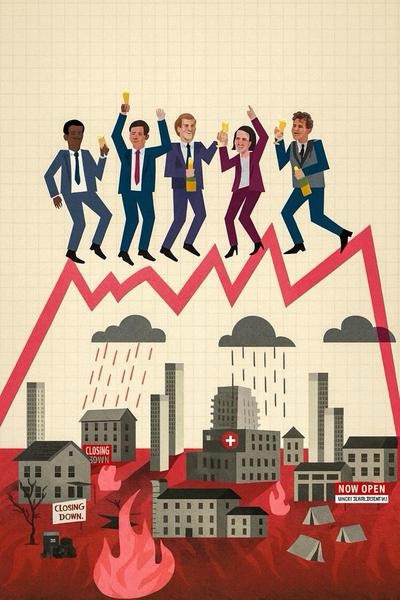
The list of casualties is long. Toys “R” Us was loaded with more than $5 billion dollars in debt by Bain Capital and KKR before it collapsed, taking 30,000 jobs with it. Payless ShoeSource closed its doors, erasing 18,000 jobs. J. Crew, Gymboree, Shopko, Forever 21, and Sears each followed the same path. Behind nearly every failure was a private equity deal that turned once-profitable companies into vehicles for debt. Blackstone, the largest of them all, drew criticism for gutting nursing homes and rental housing, where residents and tenants bore the consequences. Carlyle, Apollo, and Sycamore Partners engineered deals that enriched executives while leaving behind bankruptcies across retail, energy, and health care.

The damage has never been limited to debt. Private equity firms extract billions in fees on top of what they load onto companies. They sell the land and buildings, forcing the very businesses they own to pay rent back to them. In franchise models, they skim off royalty payments while cutting services and staff. They charge management fees to companies they already control, ensuring that even if a business fails, the firm still profits. These practices are not side effects. They are the business model.

For years the system ran on cheap money. With interest rates near zero, debt was abundant and investors were eager. Firms could buy, bleed, and flip companies in two or three years. That era is gone. Interest rates now sit above five percent. Debt costs more, buyers are scarce, and the IPO market has dried up. Firms are stuck holding companies that are drowning under the very leverage designed to enrich their owners.

The numbers are staggering. Nearly $12 trillion dollars in private equity assets now sit unsold. Exit activity has collapsed more than 70 percent since 2021. To raise cash, firms are borrowing against their own portfolios with NAV loans or dumping stakes at steep discounts on the secondary market. Even the giants like Blackstone, KKR, Apollo, Carlyle, Bain are stuck with bad debt no one wants. They cannot sell, yet their investors are demanding cash.

The quiet truth is that these firms are already maneuvering for Washington’s help. During the 2008 financial crisis, banks and insurers were rescued with taxpayer dollars. Private equity, which profited handsomely off that same collapse, is positioning itself for similar treatment.

This is not just an elite problem. It is a national one. When private equity runs out of road, it is not the billionaire partners who suffer. It is the workers whose jobs are cut, the retirees whose pensions cannot meet obligations, the students whose tuition rises because endowments cannot keep pace, and the taxpayers who are asked to backstop the system.

The parallels to 2008 are frightening. Then it was mortgage backed securities. Now it is unsellable companies and illiquid funds. In 2008, families lost homes and jobs while Wall Street was saved. Today the scale is even larger. With trillions in assets frozen, the next bailout could dwarf the last one.

Meanwhile, private equity’s destruction also extends into America’s hospitals and nursing homes and people are paying with their lives. Studies show that Medicare patients undergoing emergency surgeries in private equity–owned hospitals are 42 percent more likely to die within 30 days compared to those treated in community hospitals . A nationwide study found infections, falls, and other preventable adverse events increased following private equity takeovers of hospitals . Even the U.S. Department of Health and Human Services condemned the impact, warning that private equity ownership of nursing homes led to an 11 percent increase in patient deaths .

Recent reporting shows the financial calculus behind these tragedies. Nursing home operators in New York’s Capital Region diverted Medicare and Medicaid funds through inflated rent and bogus salaries. That left facilities chronically understaffed and suffering neglect so severe that it led to cases of serious injury and death .

By turning hospitals and nursing homes into profit centers rather than care centers, private equity firms aren’t just bankrupting businesses, they are literally killing people. And when that business model collapses, it will be everyday Americans who pay the cost once again.

The message is not subtle. If private equity’s gamble fails, the richest players will once again be saved. For ordinary Americans, the reckoning will look like it always does. Lost jobs. Higher taxes. Vanishing pensions. Rising tuition. And another generation paying for someone else’s greed.

This is the American cycle. The profits are privatized, the losses are socialized, and working families are forced to carry the cost.

The Private Equity Trap: How Harvard, Yale, and Princeton Got Caught in a Liquidity Crisis

For decades, private equity was the hottest corner of finance. The model was simple. Buy a company, cut costs, load it with debt and fees, polish the books, and sell it again within two to three years for a hefty profit. It was called the “flip,” and it made fortunes for firms like Blackstone, KKR, and Carlyle. Endowments and pensions rushed to get a piece of it.

That model is now broken.

The exits that once came fast and lucrative have slowed to a crawl. A world of near-zero interest rates is gone. Debt that once financed buyouts at minimal cost now comes with punishing interest, squeezing margins and stretching holding periods. Instead of flipping companies in two years, funds are sitting on assets for six, seven, even ten years. The portfolio backlog is staggering: more than $12 trillion worth of private equity assets sit unsold worldwide.

And at the center of this crisis are the universities that built their wealth on the promise of private equity. Harvard, Yale, and Princeton reshaped modern investing by betting heavily on illiquid alternatives. They now face the consequences of that bet.

The Death of the Flip

The two-year turnaround was never sustainable, but for a time it worked. Cheap debt fueled endless rounds of leveraged buyouts, where firms borrowed heavily, stripped assets, cut staff, and pushed companies back to market at inflated valuations.

But the cycle depended on two things: cheap money and eager buyers. Both have disappeared. The Federal Reserve’s rate hikes have doubled and tripled the cost of debt financing. Buyers are cautious, corporate balance sheets are tighter, and the IPO window remains largely shut.

Exit activity tells the story. In 2021, private equity firms sold $840 billion worth of companies. By 2023, that figure had collapsed to $234 billion, a drop of 72 percent. Even with a partial rebound in 2024 to $468 billion, exits are far too low to clear the backlog. Funds are holding twice as many assets as they did in 2019, but are selling them at the same pace as five years ago.

Without exits, distributions to investors dry up. Endowments that expected cash back to fund university budgets are left waiting.

Interest Rates as the Choke Point

Private equity’s entire model is built on leverage. A firm that buys a company for $10 billion may finance $7 billion of that price with debt, leaving just $3 billion of investor equity. If interest rates are low, debt is cheap, and any improvement in the business magnifies returns.

But with rates at five percent or higher, the math no longer works. Debt service eats into earnings. Refinancing becomes expensive or impossible. Companies bought at lofty valuations in 2020 and 2021 are now struggling to cover interest costs, let alone generate attractive profits for resale.

For the funds that hold them, paper valuations remain high, but real buyers demand discounts. That gap between reported NAV and market reality is another reason sales have slowed.

The Mechanics of Desperation

To keep investors from revolting, firms have engineered liquidity out of thin air. NAV loans lines of credit secured by the assets in a fund allow managers to borrow cash and hand it back to investors as if it were a distribution. Continuation funds where a firm sells a portfolio company from one of its funds into another fund it also controls in effect creates the illusion of an exit, while extending the holding period indefinitely.

On the investor side, endowments and pensions have turned to the secondary market, selling their stakes in private equity funds to buyers willing to take them at a discount. In 2024, secondary volume hit a record $155 billion. Harvard sold $1 billion worth of fund stakes. Yale is preparing to sell as much as $6 billion. The New York City pension system sold $5 billion. Buyers snapped them up at 10 to 15 percent discounts to stated value. For venture portfolios, the discounts were as steep as 50 percent.

These maneuvers do not solve the problem. They buy time. The only true fix is exits with real sales, IPOs, or recapitalizations and the industry is years away from clearing the overhang.

Case Studies: The Ivy League Squeeze

Harvard has a $53 billion endowment, the largest in the world. Nearly 40 percent of it is tied up in private equity. In April 2025, Harvard moved to sell $1 billion of those stakes through Jefferies, while simultaneously planning to issue $750 million in bonds. The official explanation is liquidity management, not distress. But the resemblance to 2008, when Harvard was forced to borrow billions to cover private equity calls, is unmistakable.

Yale built the “Yale model,” with nearly half of its $41 billion endowment allocated to private assets. For years, this made Yale the envy of institutional investors. But in 2024, Yale returned just 5.7 percent, compared to 13.5 percent for a basic stock-bond index. Now it is exploring a $6 billion secondary sale, nearly 15 percent of its endowment. The sale is not about strategy. It is about cash.

Princeton has a smaller endowment, about $35 billion, but the same exposure. Its longtime CIO Andrew Golden called 2023 the worst liquidity environment he had ever seen. Princeton raised $1.4 billion in bonds to shore up its balance sheet. Like Harvard and Yale, it insists the strategy is intact. But the reality is that illiquidity has become a liability.

Why This Matters to Everyday Americans

It is tempting to see this as an elite problem, billion dollar universities mismanaging their fortune. But it is not.

Endowments fund scholarships, financial aid, and core research. If Harvard or Yale faces a liquidity squeeze, it means fewer students receive aid. It means tuition rises to fill the gap. It means labs lose funding and staff lose jobs. What begins as a crisis in private equity becomes a crisis for students and families.

The same holds true in pensions. State retirement systems have billions tied up in private equity. When distributions dry up, they cannot meet obligations to retirees. That shortfall has to be covered by raising taxes, cutting benefits, or, in the worst case, turning to the federal government for relief. For millions of working and middle class Americans, this is not abstract. It is their retirement on the line.

The parallels to 2008 are chilling. Then, it was mortgage backed securities that turned toxic. Homeowners defaulted, banks failed, and Washington rushed in with taxpayer bailouts. Families lost houses, jobs, and savings, while Wall Street was rescued. Today, the scale is even larger. With twelve trillion dollars in unsold assets stuck on private equity books, the next bailout could dwarf 2008.

Imagine the politics of that moment. A populist like Donald Trump could frame it as Ivy League elites and Wall Street executives begging for lifelines while ordinary Americans pay the price. But the structural interdependence is real. If endowments and pensions buckle, the pressure on Washington to intervene may be irresistible. The federal government does not have the fiscal room to absorb another trillion dollar rescue, yet that may be exactly what is asked of it.

The burden would not fall on universities or private equity firms alone. It would fall on taxpayers, on students already struggling with debt, on workers who depend on pensions, on families already squeezed by inflation and high borrowing costs. In short, it would fall on the very people who had no hand in creating the mess.

Private equity sold itself as the smartest bet of modern finance. But the two year flip is dead, interest rates have choked the model, and endowments that once trusted in illiquidity now find themselves trapped. For everyday Americans, the lesson is as clear as it was in 2008: when the smartest people in the room gamble with other people’s money and lose, it is everyone else who ends up paying the price.

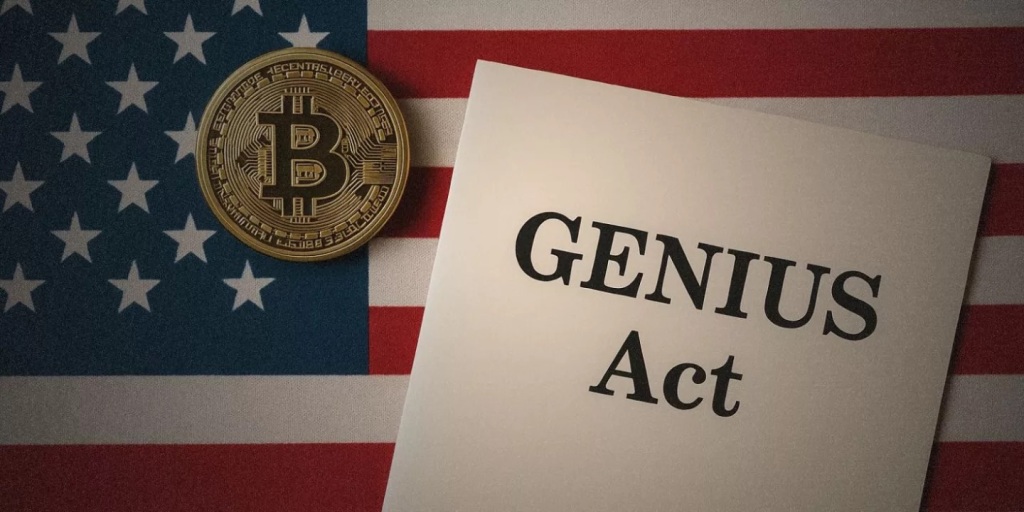
Behind Washington’s Latest Bipartisan Marvel: The Quiet Power Grab in the GENIUS Act

Date: Wisconsin, June 28, 2025

When the Senate voted 68-30 last week to pass the Guiding and Establishing National Innovation for U.S. Stablecoins Act, or better known as the GENIUS Act, the moment barely registered in a news cycle crowded with updates from the Diddy trial, ominous talk of World War III, and who does and does have have nuclear warheads a in the Middle East. Yet the bill is poised to reshape American money itself, setting the stage for bank-issued digital dollars and a vastly expanded federal role in everyday payments that will impact every Americans for the next decade.

House leaders now plan to bundle the measure with a separate market-structure bill, the CLARITY Act, and move both to the floor in a single vote as early as the week of July 7. President Trump has already signaled he will sign the package “without delay.”  

A $265 Million Campaign Pays Off

Passage caps the costliest crypto lobbying blitz on record. Industry groups and super PACs spent more than $265 million during the 2024 election cycle, which is nearly double the previous year, to elect crypto-friendly candidates and draft the very language that now governs them.  

Much of that money flowed through Fairshake, a super PAC bankrolled by Coinbase, Ripple and venture fund a16z, which alone poured over $130 million into congressional races. Thirty-three of its thirty-five endorsed candidates won which ties them with AIPAC.

The bill’s corporate sponsors read like a who’s-who of finance:

JPMorgan Chase filed a trademark for JPMD, a deposit-backed token it can now launch on Coinbase’s Base network.   PayPal and several regional banks lobbied for an exemption that lets them issue “payment stablecoins” under state charters.   World Liberty Financial, the Trump-family venture behind the USD1 stablecoin, secured a new $100 million investment from a UAE fund days before the vote.  

What the Bill Actually Does

This bill re-labels stablecoins as “payment systems,” taking them out of securities law and handing primary oversight to the Fed and the Office of the Comptroller of the Currency, creating an aura of legitimacy. It also creates a licensing moat: only banks and “permitted issuers” that meet 1-to-1 reserve, audit and AML rules can mint tokens—locking smaller DeFi projects outside the gate. Mandates monthly disclosures of reserves but allows issuers to hold short-term Treasuries, providing fresh demand for federal debt.   Bars members of Congress and their immediate families from trading stablecoins—but notably leaves the White House exempt. Senator Elizabeth Warren called this “a loophole big enough to drive a truck full of crypto through.”

The Bipartisan Pattern: Crypto and Foreign Wars

The only other legislation that has moved this smoothly across party lines in recent years is foreign-aid spending for Ukraine and Israel. In April 2024 Congress passed a $95 billion package for Ukraine, Israel and Taiwan with overwhelming majorities in both chambers, with all packages hovering over $300 billion in the last 5 years.

Critics argue the same donor class such as defense contractors abroad and crypto financiers at home, dictates both agendas. “If it involves new weapons or new money rails, Congress finds consensus,” says Sarah Bryer, a former Senate banking staffer now at watchdog group Public Citizen. “Everything else stalls.”

What Gets Missed While Washington Innovates

Poverty: The Supplemental Poverty Measure rose to 12.9 percent in 2023, the first increase in a decade.   Homelessness: More than 770,000 Americans were unhoused on a single night in January 2024, the highest count ever recorded.   Disaster Recovery: Communities from Maui to East Palestine still wait on promised federal funds years after their crises. To date the U.S. Congress has held nine hearings but passed no comprehensive relief bills for any of these victims.

Yet lawmakers devoted 18 months of hearings and four mark-ups to ensure banks can mint digital dollars.

A New Architecture for Control

Civil-liberties attorneys warn that putting money on permissioned blockchains invites mission creep. Once every transaction is traceable:

Payments can be geofenced or frozen at the click of a regulator’s dashboard. Political dissenters can be de-banked without ever seeing a courtroom. Cash’s untraceable refuge disappears, replaced by tokens that obey code written in Washington and often debugged on Wall Street.

Senator Warren, one of just eleven Democrats opposed, likened the bill to the 2000 Commodities Futures Modernization Act, which green-lit credit-default swaps before the 2008 crash. “We’re repeating history,” she warned on the floor. 

What Happens Next

If the House delivers the bill to President Trump before the July 4 recess, bank-branded stablecoins could hit the market within a year. JPMorgan’s JPMD pilot is ready; PayPal has quietly updated code to let its wallet swap into compliant tokens.

For ordinary Americans, the promise is faster payments, at least until the rules change. “Digital dollars are programmable,” notes Bryer. “Today they clear instantly. Tomorrow they refuse to buy a bus ticket to the wrong protest.”

The Bottom Line

The GENIUS Act is not just a regulatory tweak; it is the blueprint for a cashless, centrally mediated economy shaped by the largest banks, the loudest lobbyists and a White House with skin in the game. That it passed under the radar says as much about the media distractions of the moment as it does about the power of money in Washington.

As many households grapple with rising rents, increased living expenses, stubborn poverty and record homelessness, Congress has found rare harmony over who controls the future of money itself. When the dust settles, Americans may discover their new digital wallet comes with fewer rights than the battered leather one it replaced.

While You’re Watching Game 7 of the NBA Finals, We’re Being Sold Out Piece by Piece

We’re not watching a dramatic fall of America. There are no breaking news alerts about the end. No explosions in the streets. No economic sirens.

But make no mistake….something terrible is happening.

Piece by piece, decision by decision, we are being sold out. Our labor, our taxes, our future, it is all being extracted. And while it happens, we are told to look the other way while letting AI take many of our jobs.

Watch the game. Scroll the feed. Place a bet. Argue online about culture wars that do not affect your rent, your hospital bill, or your ability to afford groceries.

Meanwhile, the money keeps flowing. Out of your paycheck. Out of your neighborhood. Out of this country. Straight into the hands of foreign governments, defense contractors, and elite interests.

This is not the dramatic fall of a nation. It is a transfer of wealth, security, and stability away from ordinary Americans and toward a system that was never built to serve us. It is a system that acts globally, extracts locally, and survives only as long as we do not look directly at it.

You can call it a government. You can call it a machine. But what it really functions as is an empire. And the longer we ignore it, the more it takes.

The Cost of That Empire Is Being Paid in Evictions and Empty Refrigerators

While your tax dollars are used to fund missile systems in Israel, people across the United States are struggling just to keep a roof over their heads. Since 2020, the median price of a home has risen by more than 40 percent. Interest rates have climbed above 7 percent, making homeownership unreachable for millions (National Association of Realtors, 2024).

At the same time, Americans like myself, carry over $1.7 trillion in student loan debt. Medical bankruptcies remain the most common form of personal financial ruin. A premature baby that has to stay in a neonatal intensive care unit for over a month can cost well over a million dollars. On top of that, more than half of the country cannot afford an unexpected five hundred dollar emergency.

And yet, every year, tens of billions of dollars are approved for foreign aid without hesitation.

Israel receives more U.S. taxpayer money than any other nation on Earth. Since 1948, it has received over 300 billion dollars in aid, including nearly 4 billion annually in guaranteed military funding (Congressional Research Service, 2023).

That money has helped fund a public healthcare system, subsidized childcare, and modern infrastructure. Israel’s students have new schools. Their citizens have access to doctors without going bankrupt.

Meanwhile, in American cities, teachers work second jobs. Classrooms go without books. People drive across state lines to afford prescriptions. And in cities like Flint, Michigan and Jackson, Mississippi, families still live without safe drinking water.

This is not about scarcity. It is about priorities.

An Economy Built to Keep Us Consuming

We are told that the economy is doing well. But it only looks strong on paper because we are constantly spending to survive.

Wages have remained flat for decades, while the cost of everything else has gone up. Food, gas, housing, tuition, and insurance have all exploded. But instead of fixing the system, the solution we are offered is more debt.

Buy now, pay later.

Zero percent financing.

Monthly subscriptions for everything, even the essentials.

Our economy runs on credit cards and desperation.

We are not building wealth. We are surviving one paycheck at a time, and no one is willing to admit it.

And when that stress becomes too much, we are handed another solution, a distraction. Sometimes it’s a RICO case of a famous celebrity, other times it’s the United States bombing an empty nuclear facility in Iran, and other times it’s something as simple as sports and sports betting.

There is always something to pull our focus. Sports betting is now a multi-billion dollar industry thanks to ESPN, Draft Kings, Prize Picks, and MGM Sports betting. On television, sex-laden reality shows dominate prime time and paid subscriptions. Viral celebrity drama trends daily. Meanwhile, airstrikes in Gaza or explosions in Tehran are buried beneath all this noise but we pay for all of it.

None of this is random. It is a carefully designed system.

We Fund a Better Life for Others While We Are Told to Settle for Less

The average American is constantly being told to sacrifice.

Tighten your belt.

Use credit.

Be patient.

Inflation is temporary.

Work harder.

But there is no austerity when it comes to military aid.

There is always money for war. There is always money for foreign governments. There is always money to rebuild somewhere else in a land most have never been, but there is nothing for Maui, East Palestine, Flint, New Orleans, and many other cities in America.

Since 1948, Israel has received over 300 billion dollars in U.S. assistance (Reuters, 2024). That money has helped create one of the best publicly funded healthcare and education systems in the world—for a country with fewer people than New York City.

In America, we have veterans sleeping on the street in every major city.

We have kids learning from worksheets because their school cannot afford books.

We have families rationing insulin and choosing between medication and rent.

This is not just a funding issue. It is a values issue.

We are paying for the stability of others while our own communities are crumbling.

They Keep Us Distracted So We Do Not See It

Every time the conversation gets too close to real issues, the distractions flood in.

The headlines suddenly shift, and Operation Mockingbird goes full tilt. The scandals erupt more salacious than the prior one. The outrage machine gets turns on, and Americans are pinned against each other.

We are told to obsess over celebrities, argue over culture wars, and follow political soap operas like they are sports teams.

This is not a coincidence. It is the only way this corrupt system survives.

Because if we stop fighting each other, we might start asking the real questions.

Where is the money going?

Why can’t we afford basic services while funding foreign militaries?

Why is our economy built on debt and distraction?

And who exactly is benefiting from all of this since it’s not US?

This Is Not Incompetence. It Is a Strategy.

The truth is that the United States has all the resources it needs to take care of its people….if it wanted to.

But we do not. Not because we can’t. But because we are not supposed to.

We are expected to work, consume, and remain distracted.

We are expected to stay tired, stay anxious, and stay divided.

And we are expected to believe that any attempt to change the system is unrealistic, unpatriotic, or impossible.

But the truth is, the system is not broken. It is functioning exactly as designed.

It is designed to take.

It is designed to distract.

And it is designed to leave us wondering why we are doing everything right and still falling behind.

Can You Relate

If you are working harder than ever but getting nowhere, you are not alone.

If you are wondering why another country has healthcare and you cannot afford a routine checkup, you are asking the right question.

If you are tired of being told that sacrifice is patriotic while billionaires and foreign allies get blank checks, then maybe it is time we stop playing along.

They do not fear Iran. They do not fear China. They do not fear Russia.

What they fear is that you will start paying attention.

Because the moment we stop watching the show and start watching the system, the game is over.

Sources

National Association of Realtors. (2024). Median home price trends

Congressional Research Service. (2023). U.S. Foreign Aid to Israel

Reuters. (2024). Israel aid totals and annual packages

CNBC. (2023). 80 percent of Americans live paycheck to paycheck

Cato Institute. (2021). U.S. Military Footprint: 750 bases in 80 countries

Al Jazeera. (2021). U.S. global base presence overview

BlackRock Doesn’t Just Own Tech. It Owns Your Future.

BlackRock doesn’t just own parts of Apple, Microsoft, and Amazon. It owns your food supply. It owns farmland. It owns water infrastructure. And through those investments, it owns a growing stake in the future of human survival itself.

What began in 1988 as a modest Wall Street firm built on risk management is now the largest asset manager in human history. BlackRock controls over $11 trillion , which is larger than the GDP of every country in the world except the United States and China.

But what most people still don’t realize is that BlackRock’s most important power grab didn’t happen on Wall Street. It happened quietly, across America’s farmland, its food systems, and its natural resources.

How Did We Get Here?

BlackRock’s expansion strategy was never about flashy takeovers. It was about ownership without attention. They don’t need to buy entire companies when they can buy enough shares to influence them all.

Through complex index funds and ETFs (Exchange-Traded Funds), BlackRock has quietly become a top shareholder in nearly every major corporation in America. Coca-Cola. PepsiCo. Kraft Heinz. Nestlé. Tyson Foods. Monsanto-Bayer. Even the companies that compete with each other are often owned by the same hand, BlackRock.

That includes food production, packaging, seeds, fertilizers, pesticides, farmland, water rights, grocery store chains, and agribusiness suppliers.

It is a spider web so vast that very few industries operate outside of its reach.

Farmland: The New Oil

In recent years, farmland has quietly become one of the hottest investments among America’s wealthiest. But few players have been as aggressive as BlackRock and its peers like Vanguard and State Street.

Why Farmland you may ask?

Simple. Land produces food, controls water access, and holds its value against inflation. In a world of uncertainty, farmland is power.

BlackRock has invested in farmland directly and indirectly through real estate investment trusts (REITs) like Farmland Partners and Gladstone Land Corporation. In some regions, institutional investors now own an estimated 30-50% of all available farmland.

For local farmers like Paul Rettler, this creates an impossible game that no one can win. Competing against trillion-dollar firms backed by infinite capital means the consolidation of agriculture isn’t slowing down, rather it’s accelerating.

The ESG Illusion

Much of BlackRock’s public messaging has centered around ESG, which stands for: Environmental, Social, and Governance investing , a framework designed to steer money toward sustainable and ethical practices.

But behind the marketing, ESG has often allowed BlackRock to reshape industries while still investing heavily in the very corporations most responsible for environmental harm.

Larry Fink, BlackRock’s billionaire CEO, has framed ESG as both a moral obligation and a business necessity. Yet BlackRock remains one of the largest shareholders in fossil fuel giants, industrial agriculture companies, and food manufacturers responsible for deforestation and soil degradation.

As environmental groups have pointed out daily, BlackRock has the ability to change the food system overnight. But profit almost always wins over principle and we have seen this outcome time and time again.

So What Does BlackRock Want?

It’s simple: Control. Influence. Permanence.

The more essential needs a company controls such as food, water, housing, energy, the less it matters who holds political office. Ownership is the real power.

When a handful of corporations control the basic elements of survival, the public becomes renters of everything, including their health, their homes, and their future.

This is the world being built right in front of us.

Water rights in California. Farmland in the Midwest. Global seed patents. Packaging monopolies. Shipping routes. Grocery store chains. Pharmaceutical partnerships. Tech platforms controlling communication.

This is not just about selling products.

This is about owning life itself.

So what can everyday people do?

Waiting for a politician to fix this system is like waiting for a thief to return what they stole. It is not going to happen.

But the answer is not fear. The answer is awareness. The answer is action.

It starts with taking back control wherever you can.

Buy from local farmers when possible. Grow your own food even if it is just herbs in your kitchen window. Filter your water. Cook your own meals. Learn how to read ingredient labels. Support local businesses over corporations when you can.

Most importantly, do your own research. Step outside of Google, mainstream media, and the same recycled talking points coming from media companies owned by the very corporations profiting from your confusion.

Seek independent sources. Read books. Listen to people on the ground, not just those in boardrooms. Question convenience when it comes at the cost of your health.

Learn how to be less dependent on the systems designed to keep you dependent.

Because at this point, we cannot wait for RFK. We cannot wait for politicians. We cannot wait for the same people who helped build this system to suddenly tear it down.

We have to start building something different starting in our homes, in our families, in our communities.

Not because it is trendy.

But because survival has always belonged to the people willing to think for themselves, take responsibility for their lives, and protect their future by any means necessary.

The Quiet Poisoning of a Generation: How Food, Water, and Corporate Greed are Undermining Human Health

There’s something happening in our society and if you’ve felt it, you’re not alone.

More people are tired for no reason. Fertility rates are plummeting. Chronic illness is everywhere. Children face record levels of anxiety, allergies, and developmental issues. And yet, we’re told this is normal.

It’s not.

This is the byproduct of a system that has quietly (and quite profitably) waged war on human health.


Founded in 1988, BlackRock now controls over 10 trillion dollars in assets making it one of the most powerful financial forces on the planet.

Follow The Money, Find The Motive

Today, four corporations effectively control most of what you eat, drink, and absorb.

→ Bill Gates is now the largest private farmland owner in America.

→ BlackRock and Vanguard own massive stakes in Monsanto, Nestlé, PepsiCo, Kellogg’s, and Beyond Meat.

→ Lab-grown meat is no longer science fiction, it’s a funded inevitability.

→ The same companies poisoning your body with seed oils, synthetic additives, and plastic packaging? They own the pharmaceutical firms selling you the cure.

This is not a conspiracy — it’s strategy.

When you own the food, the water, the farmland, the grocery distribution, and the healthcare response, you don’t need to control people with force.

You control them with dependence.

What’s Happening To Us?

Consider this:

Global sperm counts have dropped 50% since the 1970s. Testosterone levels in men are down 30% in 20 years. Microplastics are now found in human bloodstreams, breast milk, and even placentas. “Forever chemicals” (PFAS) are in 98% of the U.S. population. The CDC now quietly admits fluoride in water, while good for teeth in small doses, can impact brain development at high levels.

If this were isolated, it could be coincidence.

But when it’s everywhere like our water, food, packaging, cosmetics, medicine, even the air, you start to realize: This is systemic.

The Long Game: Weaken the Body, Profit from the Cure

Sick people buy more products.

Infertile couples pay more for solutions.

Distracted, inflamed, chemically-dependent populations don’t resist systems, they survive within them.

And while many are waiting for politicians like RFK Jr. to come in and blow the whistle, the reality is clear:

This system is working exactly as designed.

So What Do We Do?

Here’s the truth: No one is coming to save us.

But there is power in knowing how to exit the trap.

Real Alternatives for Real People:

Filter your water using Berkey, Clearly Filtered, or AquaTru. Eat whole, organic, ancestral foods with a focus on local sources first. Cut seed oils completely and cook with avocado oil, olive oil, or ghee. Limit plastic exposure by using stainless steel, glass containers, and beeswax wraps. Get daily sunlight and move your body because nature was the original medicine. Supplement wisely to rebuild minerals and support safe detoxing. Support local farmers instead of large corporations whenever possible. Learn herbal medicine like black seed oil, seamoss, milk thistle, and dandelion root. Sweat daily through sauna sessions, hot yoga, or hard workouts. Reduce pharmaceutical dependence by healing the root cause, not just managing symptoms.

Final Thought

We can’t wait for RFK. We can’t wait for “them” to fix what they profit from breaking.

We have to take back our health. Ourselves. Today.

Not because it’s trendy.

Not because it’s easy.

But because our future depends on it.

Health is no longer a luxury, it’s a form of resistance.

This is how we fight back.

Harvard Expands Free Tuition to Families Earning Under $200,000

By Nkozi Knight

In a move aimed at expanding access to higher education, Harvard University announced Monday that it will offer free tuition to students from families earning $200,000 or less starting in the 2025-2026 academic year. This marks a significant expansion of the university’s financial aid program, further removing financial barriers for prospective students.

Students from families with incomes below $100,000 will also have all expenses covered, including housing, food, health insurance, and travel costs. Previously, Harvard provided full financial support only to students from families earning less than $85,000 annually.

“Putting Harvard within financial reach for more individuals widens the array of backgrounds, experiences, and perspectives that all of our students encounter, fostering their intellectual and personal growth,” said Harvard President Alan Garber.

While tuition alone at Harvard currently exceeds $56,000, total costs, including housing and other fees, approach $83,000 per year. The new policy will significantly lessen that burden for many American families.

Families earning above $200,000 may still qualify for tailored financial aid depending on individual circumstances.

This initiative aligns with similar policies at other elite institutions, like the Massachusetts Institute of Technology (MIT), which announced a comparable expansion last fall. Harvard estimates that 86% of U.S. families will now be eligible for some level of financial aid.

“Harvard has long sought to open our doors to the most talented students, no matter their financial circumstances,” said Hopkins Dean of the Faculty of Arts and Sciences. “This investment ensures that every admitted student can pursue their academic passions and contribute to shaping our future.”

The expansion comes amid broader conversations about diversity in higher education, especially following the Supreme Court’s ruling against affirmative action in college admissions. Harvard, along with other institutions like the University of Pennsylvania, views increased financial aid as a pathway to maintaining diversity by ensuring access to students from varied socioeconomic backgrounds.

“We know the most talented students come from different socioeconomic backgrounds and experiences, from every state and around the globe,” said William Fitzsimmons, Harvard’s dean of admissions and financial aid. “Our financial aid is critical to ensuring that these students know Harvard College is a place where they can thrive.”

This policy marks a continued effort to create a more inclusive and accessible environment at one of the nation’s most prestigious universities.

The Silent Killer: How Our Diet and Lifestyle Are Shortening Our Lives

By Nkozi Knight

I truly thought I was healthy. My BMI is only 25, and by most accounts, I look like I I am in great shape. But something wasn’t right for weeks. I felt tired all the time, my feet tingled, and my energy levels were nowhere near what they used to be when I would workout. Something inside me told me to get checked out, and what I found was alarming:

A1C: 7.3% → Diabetes confirmed

LDL (“bad” cholesterol): 198 mg/dL → Very high

Non-fasting glucose: 219 mg/dL → Dangerously high

In other words, I was walking around with a silent killer inside me, completely unaware. And I’m not alone.

Black Men and the Health Crisis No One Talks About

Black men in the United States are disproportionately affected by diabetes, high blood pressure, heart disease, blood clots, and amputations, a lot of it comes down to our diet, lifestyle, and neglect of medical care. Here are some statistics that speak to that point:

Black adults are 60% more likely to be diagnosed with diabetes than white adults (CDC, 2022).

More than 40% of Black men have high blood pressure, increasing the risk of heart attack and stroke (American Heart Association, 2023).

• Diabetes-related amputations occur nearly 3 times more often in Black patients than in white patients (JAMA, 2021).

Yet, we don’t talk about it. We recently witnessed super dad, Lavar Ball lose his foot from such complications. We brush off the fatigue, the numbness, the tingling, the headaches, the difficulty in the bedroom, and the shortness of breath as just “getting older.” But these are warning signs that something is seriously wrong.

The Warning Signs You Can’t Ignore

Tingling or numbness in your feet → Early sign of diabetic neuropathy, which can lead to amputation if untreated.

Extreme fatigue → Could be due to high blood sugar, poor circulation, or even heart disease.

Erectile dysfunction (ED) → Often an early symptom of diabetes or heart disease due to damaged blood vessels.

Blurry vision → High blood sugar can lead to diabetic retinopathy, which can cause blindness.

Slow-healing wounds → A sign of poor circulation, increasing the risk of infections and amputations.

• Frequent urination & constant thirst → Classic symptoms of diabetes.

If you’re experiencing any of these symptoms, it’s time to see a doctor immediately.

Fast Food & High Sugar Diets Are Killing Us

Let’s be real. Our beautiful culture is built around food, and not just any food, it always fried chicken, snacks, barbecue, mac and cheese, burgers, energy drinks, and other sugar-loaded drinks. We love to eat (at least I do), and food is a part of our identity. But it’s also the reason why we’re dying younger than we should.

The average American consumes 17 teaspoons of added sugar per day which far beyond the recommended limit of 9 teaspoons for men (American Heart Association, 2023).

Black Americans are more likely to consume sugar-sweetened beverages, which are directly linked to diabetes and heart disease (CDC, 2022).

Red meat and processed meats (bacon, sausage, deli meat) increase the risk of heart disease by 18% and diabetes by 12% (Harvard School of Public Health, 2023).

The Solution: Skip the Steak, Choose the Chicken

I used to be that guy….grabbing a burger and fries on the go, ordering a steak just because I could, and washing it all down with a Sprite or Old Fashioned. But after seeing my numbers, I realized I was digging my own grave, and I have too many people depending on me to check out early.

I made the switch, and I urge you to do the same:

No more red meat → Choose grilled chicken, turkey, or fish instead.

No more sugary drinks → Drink water, unsweetened tea, or black coffee.

No more processed carbs → Swap white bread & pasta for whole grains like quinoa & brown rice.

More fiber, more greens, more movement.

And most importantly, please see a doctor before it’s too late.

Your Health Is in Your Hands

Black men, we can’t afford to ignore our health any longer. We too often put our own needs aside to take care of everyone else to our own demise. Too many of us are losing limbs, suffering strokes, and dying before our time. It’s not genetics at all, it’s the choices we make every day.

If you made it this far I ask you to not wait until it’s too late. Get your bloodwork done, eat like your life depends on it (because it does), and start moving.

We all deserve longer, healthier lives but we have to take action to make that a reality. I thank God for the people in my life who encouraged me to get checked out before it was too late, because too many of us ignore the warning signs until we can’t anymore. Let’s hope the MAHA movement brings attention to this silent killer that’s taking too many of us too soon. Our health is our responsibility so let’s fight for it.

Sources:

• CDC. (2022). Diabetes Statistics in the U.S.

• American Heart Association. (2023). Heart Disease & Stroke Risk in African Americans.

• Harvard School of Public Health. (2023). The Impact of Diet on Chronic Diseases.

• JAMA. (2021). Racial Disparities in Diabetes-Related Amputations.

Bitcoin Falls to 11-Day Low Amid Broader Tech Selloff

A woman passes by the Bitcoin Monument after bitcoin soared above $100,000, in Ilopango, El Salvador, December 5, 2024. 

Bitcoin fell below $100,000 on Monday, marking its lowest level in 11 days, as a wave of caution swept through global markets following a sharp selloff in tech stocks. Analysts linked the decline to investor anxiety over the surging popularity of a Chinese artificial intelligence model that has disrupted confidence in Western AI-related equities.

Bitcoin Tracks Broader Market Losses

The world’s largest cryptocurrency dropped as much as 7% during the session, trading at $98,745 by late afternoon in London. The dip follows a turbulent day for technology stocks, particularly in the AI sector, which saw significant losses after China’s DeepSeek AI launched its low-cost, high-efficiency DeepSeek-V3 model.

“Bitcoin’s decline is a direct reflection of the broader risk-off sentiment dominating markets,” said Emilia Carter, a cryptocurrency strategist at Digital Asset Partners. “The tech selloff has spooked investors, leading to a rotation out of speculative assets like Bitcoin.”

Tech Selloff Sparks Broader Market Jitters

The tech-heavy Nasdaq Composite fell 2.6%, with major players like Nvidia, Microsoft, and Alphabet posting steep losses. Nvidia, a leader in AI hardware, suffered an 11.2% drop after concerns over its competitive position in the Chinese market. Analysts suggested that DeepSeek’s rapid ascent has reshaped market dynamics, intensifying pressure on Western tech firms.

“DeepSeek’s breakthrough highlights the growing capabilities of Chinese AI firms,” said Daniel Morgan, an analyst at Synapse Capital. “This has created a ripple effect, with investors reassessing valuations across the tech sector, which in turn is affecting sentiment in other high-risk asset classes like cryptocurrencies.”

Safe-Haven Assets Gain

As riskier assets took a hit, traditional safe-havens saw gains. U.S. Treasury yields dropped, with the benchmark 10-year yield falling to 3.42%, while gold climbed 1.3% to $1,945 per ounce. The dollar weakened against major currencies, with the Japanese yen rising 0.7% to 129.50 per dollar.

“Market participants are in defensive mode, pulling back from speculative investments,” said Jonathan Knight, head of macroeconomic research at Fortress Investments. “The flight to safety reflects growing concerns about geopolitical risks and economic uncertainty.”

Bitcoin’s Outlook

Despite the drop, some analysts remain optimistic about Bitcoin’s long-term prospects. “Bitcoin has weathered similar pullbacks before, and its underlying fundamentals remain strong,” said Clara Davis, a senior researcher at CryptoAnalytics. “While short-term volatility is inevitable, the broader adoption trends for cryptocurrencies are intact.”

Still, others cautioned that Bitcoin’s correlation with risk assets could make it vulnerable to further market turbulence, especially as global economic conditions remain uncertain.

What’s Next?

Market attention now turns to how Western technology firms will respond to the competitive threat posed by DeepSeek and whether the broader tech selloff will deepen. Cryptocurrency investors, meanwhile, are watching for signs of stabilization in Bitcoin prices as the market digests the latest developments.

Tech Rout: Nvidia Plunges as China’s DeepSeek AI Soars, Investors Flock to Safe Havens

By Nkozi Knight

Global markets took a hit on Monday as technology stocks plummeted amid growing concerns over competitive pressures from China’s burgeoning AI sector. Shares of Nvidia, a key player in the artificial intelligence (AI) industry, dropped sharply, losing 11.2% in a single session. The slide came as Chinese startup DeepSeek surged in popularity with its low-cost AI model, intensifying market anxiety about the dominance of U.S. tech firms in the rapidly growing AI space.

Tech Stocks in Freefall

Nvidia, widely regarded as a leader in AI computing hardware, saw its shares nosedive after reports of slowing demand for its GPUs in China. Analysts attributed the decline to DeepSeek’s unveiling of its DeepSeek-V3 model, a highly efficient AI system offering comparable performance at a fraction of the cost.

The ripple effect hit other tech giants as well, with Microsoft, Meta Platforms, and Alphabet each recording losses of 3-5%. The Nasdaq Composite Index fell 2.6%, its worst single-day performance since December 2024.

“The competitive landscape is shifting rapidly, and this adds a new layer of uncertainty for U.S.-based AI leaders,” said Daniel Crawford, a senior equity analyst at Global Insights. “DeepSeek’s entry into the market highlights the growing sophistication of Chinese AI firms and their ability to disrupt established players.”

DeepSeek’s Meteoric Rise

DeepSeek’s DeepSeek-V3 became the most downloaded free app on Apple’s App Store within days of its launch. The AI assistant boasts advanced natural language processing capabilities and features targeted at small and medium-sized businesses, undercutting its U.S. competitors on price.

The surge in popularity underscores the increasing influence of Chinese technology companies in global markets. With heavy state-backed funding, firms like DeepSeek are rapidly closing the innovation gap with their Western counterparts.

“DeepSeek represents a ‘Sputnik moment’ for the AI industry,” said James Li, an AI researcher based in Shanghai. “This is a wake-up call for U.S. firms to accelerate innovation or risk losing their competitive edge.”

Flight to Safety

Amid the turmoil, investors sought refuge in traditional safe-haven assets. U.S. Treasury yields dropped as demand surged, with the 10-year yield falling to 3.42%. Gold also saw a 1.3% increase, closing at $1,945 per ounce. The U.S. dollar weakened against major currencies, with the euro rising 0.8% to $1.11.

“Investors are nervous, and rightfully so,” said Sophia Greene, chief market strategist at Capital Horizons. “The market is recalibrating to factor in geopolitical risks and the growing unpredictability of tech-driven disruptions.”

Outlook

The fallout from the tech sell-off has raised broader concerns about the U.S.’s ability to maintain its dominance in the AI industry. Lawmakers in Washington have called for more stringent measures to ensure domestic innovation and reduce reliance on foreign supply chains.

For now, the spotlight remains on how U.S. tech giants will respond to the threat posed by DeepSeek and other rising stars in the Chinese tech ecosystem. Investors are watching closely as the industry braces for further turbulence.

Donald Trump’s $500 Billion Stargate AI Project: Bold Innovation or Dangerous Gamble?

When President Donald Trump unveiled the $500 billion Stargate AI venture on Tuesday, a partnership involving OpenAI, SoftBank, and Oracle, he touted it as a groundbreaking step toward cementing U.S. dominance in artificial intelligence. Trump claimed the project would ensure “the future of technology” while creating hundreds of thousands of jobs and tackling issues like cancer detection. Wall Street initially responded with cautious optimism, but as the details of Stargate emerge, skepticism is mounting, and for good reason in my opinion.

A Bold Promise Without a Foundation

At first glance, Stargate appears ambitious, even transformative. Backed by OpenAI’s cutting-edge technology, SoftBank’s financial clout, and Oracle’s infrastructure expertise, the venture has been pitched as a game-changer for AI research and development. Yet, serious doubts are surfacing about its feasibility and motives.

Tech billionaire Elon Musk, a former co-founder of OpenAI and a longtime critic of the organization’s direction, wasted no time questioning the project’s funding. “They don’t actually have the money,” Musk wrote on X. SoftBank CEO Masayoshi Son claims an initial $100 billion commitment with plans to grow it to $500 billion over four years, but whether those funds will materialize remains unclear. It’s not the first time SoftBank has made lofty promises and its track record includes overestimated ventures like the Vision Fund.

AI for Good or AI for Profit?

One of the most striking concerns is the ethical implications of Stargate. OpenAI CEO Sam Altman and Oracle co-founder Larry Ellison described the project as a way to solve pressing societal issues, like developing cancer vaccines through AI-driven genetic sequencing. While this paints a rosy picture, skeptics question whether these lofty claims are just a smokescreen for profit-driven motives. Musk has repeatedly accused OpenAI of abandoning its original mission to develop AI for the public good, turning instead into a profit-driven enterprise that prioritizes corporate interests.

Donald Trump’s decision to repeal his predecessor’s AI guardrails and policies designed to ensure ethical and safe development of AI, has opened the door to unchecked advancements. Without these safeguards, Stargate’s potential for misuse, whether through biased algorithms, privacy violations, or the militarization of AI, is alarming. Who will ensure that this technology is developed responsibly and does not deepen societal inequalities or threaten democratic systems?

An Economic Boon or Another False Promise?

Trump and Altman have touted the potential for Stargate to create hundreds of thousands of American jobs, particularly in construction and data center operations. However, these promises are eerily reminiscent of past grandiose projects that failed to deliver from the Biden administration. Mega-investments often come with overblown job projections, only to fall short once automation replaces human labor. Even if Stargate reaches its employment goals, questions linger about the quality of these jobs and their long-term sustainability.

A cornerstone of the Stargate project is the construction of massive data centers, which are essential for powering the AI infrastructure envisioned by OpenAI, SoftBank, and Oracle. While these centers promise to create jobs and drive technological advancement, their environmental and societal impacts are deeply concerning. Data centers consume enormous amounts of electricity and water, often straining local resources without providing long-term economic benefits to surrounding communities. Questions about data privacy, cybersecurity, and ownership also loom large, as these facilities will centralize vast amounts of sensitive information in the hands of private corporations. With promises of rapid scalability and a $500 billion price tag, it’s unclear whether such an ambitious undertaking can be achieved responsibly or whether the public will once again bear the hidden costs of unchecked corporate ambition.

Geopolitical Implications: Competing with China

Stargate is also being framed as a key weapon in the U.S.’s competition with China for AI supremacy. While strengthening America’s technological edge is important, rushing into a $500 billion project without transparency or strategic oversight risks creating a “tech cold war” that prioritizes dominance over ethical innovation. Accelerating AI development without proper international collaboration could exacerbate global tensions and lead to a dangerous arms race in AI technology.

What Stargate Really Represents

Beneath the glossy promises of economic growth and transformative technology, Stargate raises deeper questions about power, control, and the future of AI. By handing the reins to corporate behemoths like SoftBank, Oracle, and OpenAI, the U.S. risks placing critical technological advancements into the hands of entities more interested in profits than public welfare. This is not just about building data centers or detecting cancer, it’s about who gets to decide how AI shapes our world.

Trump’s willingness to prioritize corporate interests over ethical considerations should alarm all Americans from both parties. Without a commitment to transparency, regulation, and equity, Stargate could deepen societal divides and erode trust in technology. As history has shown, unchecked technological advancements often come at a steep cost to those least equipped to bear it.

Wisconsin Real Estate Market: What to Expect in 2024 & 2025?

2024 Parade of Homes Model-The Clare

The median home sale price in Wisconsin has reached $327,000, reflecting an 8.8% year-over-year increase. Homes are still selling quickly, with an average of 43 days on the market, which suggests high demand in the real estate market. This is further reinforced by a 6.6% increase in home sales, with 6,532 homes sold in July 2024 compared to 6,130 last year. These figures indicate a competitive housing market, favoring sellers.

Inventory has risen by 6.5%, giving buyers more options. However, the supply remains tight, averaging around 2 months, which leans towards a seller’s market. Mortgage rates are around 6%, giving buyers somewhat more purchasing power, though prices are still on the rise.

With Wisconsin’s strong job market and an unemployment rate of 3%, the housing market is unlikely to experience a crash soon. Wisconsin’s balanced economy, affordable cost of living, and steady population growth continue to support the real estate market’s strength .

If you’re considering buying or selling in areas like Caledonia or Beaver Dam, it’s a good time to stay informed as the market is expected to favor buyers slightly towards the end of 2024.

2024 Parade of Homes model