
Recognition Without Repair: The United Nations Vote, Slavery’s Enduring Legacy, and the Politics of Selective Justice

The recent resolution adopted by the United Nations General Assembly, which formally designates the transatlantic slave trade as the “gravest crime against humanity,” represents a significant moment in the international recognition of one of the most expansive and systematically organized regimes of exploitation in modern history. The resolution passed by a vote of 123 in favor, yet its political meaning is inseparable from the positions taken by those who opposed or declined to support it. The United States, alongside Israel and Argentina, voted against the measure, while the United Kingdom and member states of the European Union abstained. This divergence reveals that even the formal acknowledgment of slavery’s magnitude remains politically contested at the highest levels of global governance.

Between the fifteenth and nineteenth centuries, approximately fifteen million Africans were forcibly transported across the Atlantic, a figure grounded in archival shipping records, port registries, and commercial documentation. However, this number reflects only those who survived long enough to be recorded within the formal system of trade. It does not include the millions who died during violent capture, forced marches to coastal holding sites, or confinement prior to embarkation. Nor does it account for the high mortality rates that followed arrival in the Americas, where disease, overwork, and systemic violence significantly reduced life expectancy. As such, the documented figure represents a partial accounting of a much broader human catastrophe.

Equally significant, and frequently underemphasized in public discourse, is the transformation of slavery in the Americas into a self-reproducing system of labor. Enslaved populations were not sustained solely through continued importation from Africa, but through coerced reproduction under conditions defined by surveillance, coercion, and the denial of bodily autonomy. Enslaved women, in particular, were subjected to systems in which their capacity to bear children was directly linked to economic value. In this context, reproduction functioned as an extension of forced labor, ensuring the expansion of enslaved populations without reliance on transatlantic supply. This dynamic illustrates that slavery was not only a labor system but a generational economic structure embedded within the development of early capitalist economies.

The material consequences of this system remain deeply embedded in the economic foundations of Western nations. As António Guterres has stated, the wealth of many modern economies was built upon “stolen lives and stolen labor,” a formulation that underscores the direct relationship between human exploitation and capital accumulation. In the United States, enslaved labor contributed significantly to the expansion of agricultural production, financial markets, and industrial growth, creating forms of wealth that have persisted across generations. The enduring disparities in wealth and opportunity observed today cannot be fully understood without reference to this historical foundation.

Against this backdrop, the position of the United States in the recent UN vote warrants particular attention. The decision to vote against a resolution that does not impose legal obligations but merely affirms a historical and moral reality raises important questions regarding the limits of acknowledgment. The opposition articulated by U.S. representatives, including concerns about establishing a hierarchy of historical injustices, reflects a broader reluctance to engage with the implications of such recognition, particularly in relation to ongoing debates surrounding reparations.

The inconsistency of this position becomes more evident when examined alongside established precedents for reparatory justice. In the aftermath of the Holocaust, the Federal Republic of Germany entered into the 1952 Luxembourg Agreement, committing to substantial financial reparations for Jewish survivors and to the state of Israel. Over the following decades, Germany has paid tens of billions of dollars in compensation, reflecting a sustained acknowledgment that historical crimes carry enduring moral and material consequences. These reparations were not dismissed on the basis of temporal distance, nor were they rejected due to the complexities of identifying beneficiaries across generations.

Within the United States, forms of restitution have also been implemented in relation to Indigenous populations. Through mechanisms such as the Indian Claims Commission and subsequent land restoration initiatives, the federal government has provided financial compensation and returned land to Native nations. While these measures remain incomplete and subject to ongoing critique, they nonetheless demonstrate that legal and institutional frameworks for addressing historical injustice are both conceivable and actionable.

The historical treatment of slavery presents a stark contrast. In the nineteenth century, following abolition within the British Empire, the United Kingdom compensated slave owners for the loss of enslaved individuals, effectively recognizing the economic interests of those who had benefited from the system while excluding those who had endured it. No comparable compensation was extended to the formerly enslaved, whose labor had generated the wealth being redistributed. This inversion of justice, in which perpetrators were indemnified and victims were neglected, remains one of the most consequential examples of structural inequity in modern history.

In light of these precedents, contemporary arguments against reparations for slavery, whether grounded in claims of impracticality, legal discontinuity, or temporal distance, appear increasingly inconsistent. The issue is not the absence of mechanisms through which reparations could be pursued, but rather the selective application of those mechanisms across different historical contexts. The willingness to provide restitution in some cases, while resisting it in others, suggests that the question is ultimately one of political will rather than feasibility.

The resolution adopted by the United Nations General Assembly therefore highlights a fundamental tension between recognition and accountability. While the international community has taken a meaningful step in formally acknowledging the transatlantic slave trade as a crime of unparalleled magnitude, the absence of consensus among key nations underscores the limitations of symbolic recognition in the absence of material engagement.

If the transatlantic slave trade is to be understood as the gravest crime against humanity, then the implications of that designation extend beyond acknowledgment. They require a sustained and substantive engagement with the enduring consequences of that history. Without such engagement, recognition risks functioning as an endpoint rather than a beginning, offering moral clarity without corresponding action.
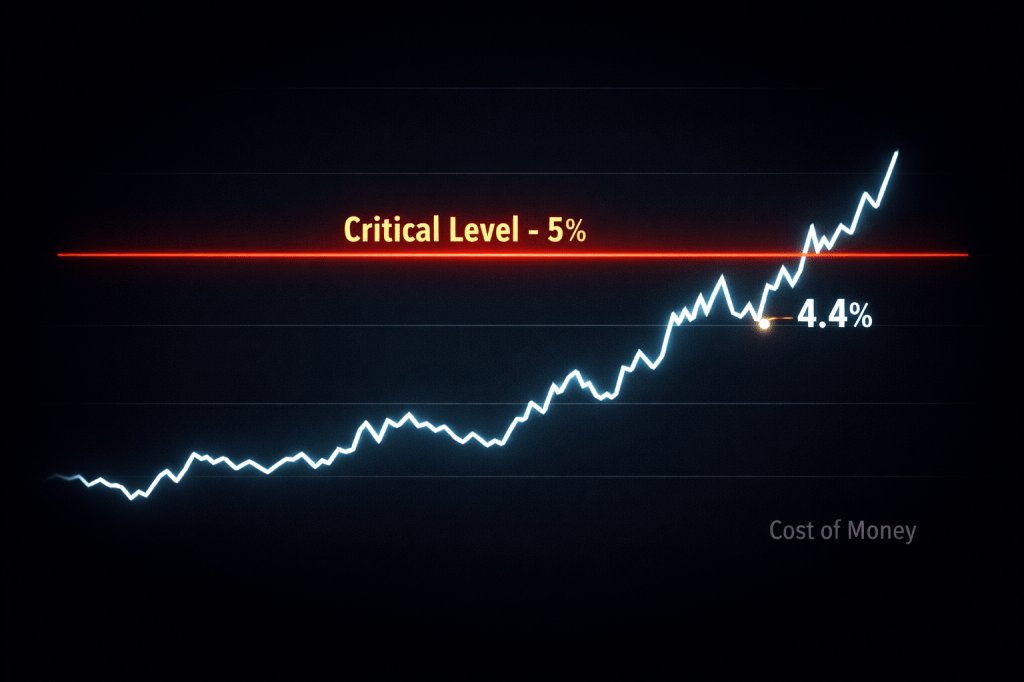

The Bond Market Is Sending a Warning Ahead of a Critical Week

U.S. government bond yields are climbing toward levels not seen in years, with the 10-year Treasury now around 4.40% and selling pressure building as investors price in inflation risks from the U.S.–Iran conflict and a more hawkish Federal Reserve.

A move above 5% would mark a critical threshold. Borrowing costs across the economy would rise quickly, mortgages pushing toward 8%, corporate refinancing getting more expensive, and both consumers and businesses pulling back at the same time. That kind of tightening poses a more lasting threat to growth than oil prices, which can move quickly but don’t reset the cost of money across the entire system.

And this is happening even as oil has already eased from recent highs.

The impact of higher-for-longer rates is starting to show up across markets. Precious metals have reversed sharply, crypto has followed in a broader risk-off move, and global equities are reacting to the same pressure.

At home, the strain is becoming more visible. Essential services are feeling the pressure from broader funding and economic stress, adding another layer of uncertainty.

Even prediction markets are flashing unusual activity, with concentrated bets forming around a near-term U.S.–Iran ceasefire, raising questions about how some participants are positioning with insider information.

With key data on inflation, jobs, and Fed policy due this week, alongside developments in the Middle East, markets are heading into a highly sensitive moment.

Rising yields, economic strain, and geopolitical risk are all converging at once.

The bond market is already moving. Now everything else has to catch up.

The Quiet Things That Were Never Meant for You to Notice

By Nkozi Knight

There are certain things in life that move quietly, so quietly that unless you’ve lived inside them, you may never recognize they exist at all.

Color is one of those things.

For many people, color has always functioned as a matter of preference. It is seasonal, aesthetic, expressive. It is chosen because it feels right, looks appealing, or fits a particular vision. It exists without weight. Without history. Without the need for deeper consideration.

But that experience is not universal.

For Black women in particular, color has never been entirely neutral. It has operated within a longer visual and cultural history, one that shaped not only how they were seen, but how they were expected to be seen. Throughout the late nineteenth and early twentieth centuries, Black women were frequently depicted through narrow archetypes that prioritized recognizability over individuality. The “mammy” figure, which appeared in minstrel performances, advertising, and commercial branding, was not only defined by exaggerated features, but by deliberate visual contrast. Darker skin tones were often paired with lighter garments, aprons, headwraps, and pastel shades, not to enhance, but to create distinction. The goal was not aesthetic harmony. It was legibility within a stereotype.

This pattern did not end there. Early film and television carried these visual conventions forward, often presenting Black women in roles where styling choices reflected function rather than care. Costuming emphasized contrast and clarity over nuance, reinforcing a visual language in which Blackness was something to be highlighted rather than thoughtfully complemented. Even within animation and commercial imagery, similar principles persisted, relying on simplified palettes and exaggerated contrast to maintain familiarity rather than authenticity.

Over time, these choices became less visible as deliberate acts and more embedded as norms. Yet their influence remained. They informed how color interacts with perception, how certain shades sit on different skin tones, and how individuals come to understand what enhances them versus what diminishes them.

As a result, what appears to be a simple decision for some carries a different weight for others. Choosing a color is not always just about liking it. It can be about whether that color reflects you accurately, whether it complements your tone, whether it allows you to feel fully present rather than visually flattened or overlooked.

For those who have never had to consider this, color remains uncomplicated. It moves freely, untouched by history or expectation. That absence of friction is not something most people are taught to notice.

But it is, in itself, something.

Because the difference is not in the color.

The difference is in the experience of having to think about it at all.

The Stability Illusion: Why Financial Plans Fail When Conditions Change

By Nkozi Knight

For many individuals and households, financial stability is often assumed rather than engineered. As long as income remains steady, markets perform within expectations, and expenses stay predictable, most financial plans appear sound.

The challenge is that these conditions are rarely permanent.

Economic cycles, health events, employment disruptions, and shifts in market dynamics have a way of exposing structural weaknesses in otherwise well-intentioned plans. What initially appears to be stability is often a system optimized for normal conditions, not resilient to disruption.

This distinction matters.

A growing number of Americans are financially exposed, not because of poor decision-making, but because their financial frameworks lack durability. Many plans emphasize accumulation, focusing heavily on growth strategies, while underweighting protection, liquidity, and risk management.

In practice, this creates an imbalance.

When disruption occurs, whether through income loss, unexpected expenses, or market volatility, individuals are often forced into reactive decisions. Assets may be liquidated at unfavorable times, debt increases, and long-term plans are compromised to address short-term needs.

A more durable approach to financial planning requires a shift in perspective.

Instead of asking how to maximize returns under ideal conditions, the more important question becomes how a plan performs under stress.

This includes evaluating income protection, ensuring access to liquid reserves, managing liabilities, and maintaining appropriate coverage to safeguard against low-probability but high-impact events.

Resilience, in this context, is not about avoiding risk altogether, but about structuring financial systems that can absorb it.

As uncertainty continues to define the broader economic environment, the individuals and families who navigate it most effectively will not necessarily be those who achieve the highest returns, but those who build with durability in mind.

Financial strength, ultimately, is less about performance in favorable conditions and more about the ability to withstand unfavorable ones.

The Quiet Economic Crisis: America is Sliding Toward Stagflation

By Nkozi Knight

The American economy is entering its most dangerous phase since the financial crisis of 2008.

Not because of a market crash.

Not because of a banking collapse.

But because the forces that produce stagflation are quietly aligning once again.

Oil prices have surged to nearly one hundred dollars per barrel as tensions in the Middle East threaten one of the most important energy corridors in the world. At the same time job growth has stalled, inflation remains stubbornly above the Federal Reserve’s target, and American households are carrying record levels of debt. CNBC recently reported that economists are increasingly worried the United States could face a renewed stagflation threat reminiscent of the economic shocks that gripped the country in the 1970s.

For many Americans the warning signs are already visible.

Gasoline prices doubling overnight. Grocery bills being placed on credit cards. Credit card balances exceeding 10% of monthly income. Car repossession rates at record highs. These are not isolated economic signals. They are symptoms of a deeper tension within the economy itself.

Stagflation is one of the most difficult economic conditions a country can face. It combines two forces that normally do not appear together. Prices continue to rise while economic growth slows. Workers struggle to find better opportunities while the cost of living keeps climbing. Governments and central banks are forced into painful choices because the policies that solve one problem often make the other worse.

The current economic environment is beginning to reflect that dangerous balance.

Energy markets sit at the center of the risk. Oil is not just another commodity. It is the foundation of transportation, agriculture, manufacturing and global trade. When oil prices rise, the effects cascade through the entire economy. Shipping becomes more expensive. Airlines raise ticket prices. Food costs increase as fertilizer and transportation become more costly. Nearly every sector eventually absorbs some portion of the shock.

The recent surge toward $100 oil was driven largely by geopolitical tension in the Middle East. According to CNBC reporting, disruptions in energy supply routes and fears surrounding the Strait of Hormuz have rattled markets and raised concerns that the price spike could persist. Even a temporary surge in oil prices can have significant ripple effects. A prolonged increase can become a full-scale economic shock.

At the same time the labor market is beginning to show signs of fatigue.

The U.S. economy lost 92,000 jobs in February while unemployment ticked upward to 4.4%. Job growth throughout the past year has slowed considerably compared with the stronger recovery period that followed the pandemic. Hiring has weakened while layoffs remain relatively limited, creating a labor market that appears frozen rather than collapsing.

This type of stagnation is precisely the environment that allows inflationary pressures to linger.

Core inflation remains near three percent, well above the Federal Reserve’s two percent target. While inflation has cooled from the extreme levels seen earlier in the decade, the reality for most households is that prices have not returned to previous levels. Instead, the cost of living has permanently reset higher.

Housing, insurance, healthcare and food continue to place increasing pressure on household budgets.

Consumer debt levels reveal how families are coping with that pressure. Americans now carry more than seventeen trillion dollars in total consumer debt. Credit card balances alone exceed one trillion dollars. As interest rates remain elevated, the cost of servicing that debt continues to rise.

This creates a dangerous feedback loop. When prices remain high and wages struggle to keep pace, households often rely on credit to maintain their standard of living. But higher borrowing costs make that strategy increasingly unsustainable over time.

The Federal Reserve now faces the same policy dilemma that defined the stagflation era decades ago.

Lowering interest rates could stimulate economic activity and ease borrowing costs for households and businesses. However, such a move risks fueling inflation at a moment when energy prices are already rising. Keeping rates high may help restrain inflation, but it could also slow hiring and investment further.

Economists often describe stagflation as the worst possible economic environment for central banks because every policy choice carries serious tradeoffs.

Financial markets are already adjusting their expectations. Investors had previously anticipated multiple interest rate cuts this year as growth slowed. The recent oil shock has complicated that outlook. Markets now expect the Federal Reserve to delay easing policy as officials assess whether inflation could accelerate again.

The situation places policymakers in an increasingly narrow corridor.

Too much stimulus risks reigniting inflation. Too little support risks pushing the economy into a deeper slowdown.

History offers a cautionary lesson. During the 1970s the United States endured years of persistent inflation combined with weak growth and rising unemployment. Oil shocks, global instability and loose fiscal policy combined to create a prolonged period of economic frustration. Wages lagged behind prices while economic confidence eroded.

Today the circumstances are different, but the pressures share familiar characteristics.

Large government deficits continue to expand the national debt. Geopolitical tensions threaten energy markets. Households rely increasingly on debt as living costs rise. Central banks attempt to balance inflation control with economic stability.

None of these forces alone guarantees stagflation. Together they create the conditions in which it becomes possible.

The greatest risk may not be an immediate economic collapse. Instead, the danger lies in a prolonged period of slow growth combined with persistent inflation. In such an environment economic progress becomes harder to achieve while financial pressure quietly builds across society.

For ordinary Americans the effects would not appear first in financial headlines.

They would appear in everyday life.

Rising car repossessions.
Higher fuel costs.
More expensive groceries.
Rising interest payments.
Rising foreclosures.
Rising evictions.
Slower wage growth.

These pressures accumulate gradually until households begin to feel that the economy itself is becoming more difficult to navigate.

The coming months will determine whether the current warning signs fade or intensify. If geopolitical tensions ease and energy markets stabilize, the economy may continue its uneven but resilient expansion. If oil prices remain elevated and growth continues to slow, the United States could find itself confronting the most complicated economic challenge of the modern era.

Stagflation rarely arrives with dramatic warning signs.

It emerges quietly, through the slow alignment of forces that gradually reshape the economic landscape.

Many economists now believe that alignment may already be underway.

Reference

Cox, J. (2026, March 9). Fears of 1970s-style stagflation arise with oil spike to $100. How big a threat is it? CNBC. https://www.cnbc.com/2026/03/09/fears-of-1970s-style-stagflation-arise-with-oil-spike-to-100-how-big-a-threat-is-it.html

Wiseman, P., & D’Innocenzio, A. (2026, March 10). U.S. lost 92,000 jobs in February as unemployment rises to 4.4%. Associated Press.
https://apnews.com/article/jobs-unemployment-economy-inflation-trump-tariffs-075a0d33e0794b7c93b9b8a7302dab98