Insider Trading in Geopolitical Crises: Anomalies in the 2026 Iran Conflict and the Strait of Hormuz

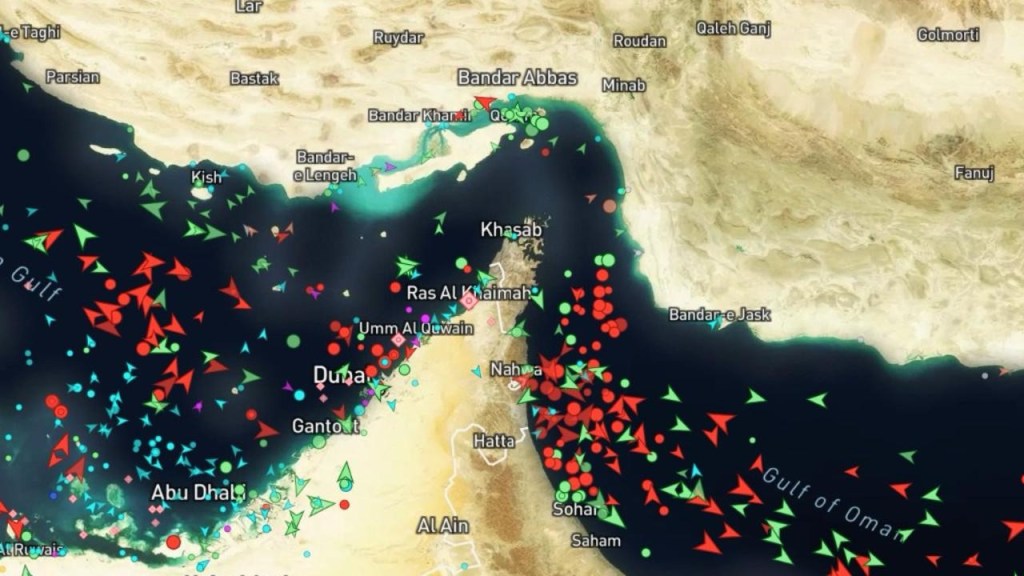
Strait of Hormuz Oil Traffic

The 2026 Iran conflict has delivered more than oil supply shocks and naval blockades, it has spotlighted a disturbing pattern of suspiciously timed trades in oil futures, equities, and prediction markets. In at least three documented episodes, hundreds of millions (and in one case nearly a billion) dollars were wagered on falling oil prices mere minutes before major de-escalation announcements by President Trump or Iranian officials. The precision and scale of these bets have triggered investigations by the Commodity Futures Trading Commission (CFTC), complaints from advocacy groups, and bipartisan scrutiny from Congress.

While markets are supposed to reflect all available information under the efficient-market hypothesis, these events suggest a troubling information asymmetry: a small group of traders appears to have acted with foreknowledge of policy shifts that directly moved energy prices. This is not abstract market theory. It raises core questions about market integrity, the misuse of nonpublic government information, and the regulatory gaps exposed when geopolitics collides with high-stakes derivatives trading.
The Pattern: Three Strikes, Same Playbook

Consider the timeline, drawn from Bloomberg, Reuters, NPR, and Financial Times reporting:

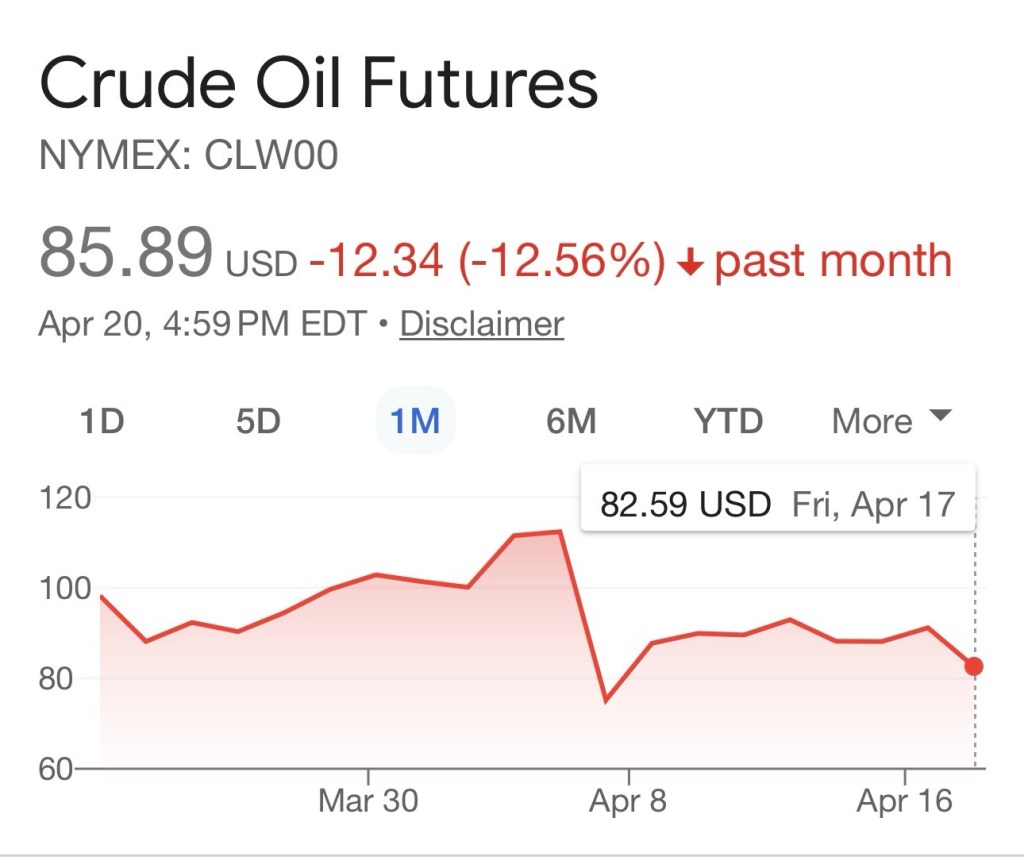
March 23, 2026: Roughly 15 minutes before President Trump posted that he would delay planned strikes on Iranian energy infrastructure, traders executed approximately $500–580 million in short positions on oil futures (WTI and Brent). When the announcement hit, crude prices plunged as much as 15%.

April 7, 2026: Roughly $950 million was bet on falling oil prices hours before the U.S. and Iran announced a two-week ceasefire. Oil dropped sharply on the news.

April 17, 2026: About $760 million in oil shorts were placed roughly 20 minutes before Iran’s foreign minister announced the Strait of Hormuz would reopen to commercial traffic. Oil fell as much as 11% intraday.

These are not isolated retail bets. They represent enormous, concentrated positions executed with surgical timing. On prediction markets like Polymarket, similar patterns emerged: one trader reportedly turned $3,200 into $600,000 on a U.S.-Iran ceasefire outcome one hour before it was public; other accounts netted millions across multiple Iran-related events. A crypto-analytics firm identified six “suspected insiders” who collectively made $1.2 million on a single high-profile outcome.

The White House itself recognized the optics. In a March 24 email, it explicitly warned staff against betting on Iran-war-related prediction markets, implicitly acknowledging that nonpublic information was a risk. Senators Elizabeth Warren and Sheldon Whitehouse have publicly questioned whether government insiders are misappropriating material nonpublic information. Public Citizen filed a formal CFTC complaint citing the “statistical impossibility” of such repeated accuracy absent insider knowledge.

Why This Looks Like Insider Trading

Standard market theory holds that prices incorporate information rapidly. Yet these trades consistently preceded public announcements by minutes, precisely the window in which only those “in the know” (administration officials, military planners, or their close associates) would have material nonpublic information.

The mechanics are straightforward:

• De-escalation news (ceasefire, delayed strikes, Hormuz reopening) reliably drives oil prices lower by easing supply fears.

• Shorts placed immediately before such news capture the full price drop with minimal risk.

• The volume of hundreds of millions in minutes, far exceeds normal liquidity and shows coordinated or highly informed positioning.

Defense and energy stocks have also shown volatility tied to the same cycle. The MSCI World Aerospace & Defence Index returned 32% year-to-date through March 2026, outpacing broader markets, while oil futures swung wildly on Hormuz rumors. When policy pivots are telegraphed internally, the incentive to monetize that edge is obvious—and the barrier to entry (futures markets, prediction platforms) is low for sophisticated players.

This is not the first time war has blurred the line between national security and personal profit, but the speed and transparency of modern markets (plus the rise of unregulated-ish prediction platforms) have made the anomalies impossible to ignore. Economists like Paul Krugman have bluntly labeled it “treason in the futures markets.”

Regulatory and Ethical Blind Spots

Prediction markets like Polymarket have exploded in popularity precisely because they allow direct bets on real-world events. Yet they operate in a gray zone: the CFTC has limited jurisdiction, enforcement is slow, and anonymity features can shield bad actors. Traditional futures markets are better regulated, but the CFTC’s probes into the March and April trades have so far yielded little public action, prompting criticism that the agency is “rolling over.”

For elected officials and senior staff, the STOCK Act already prohibits insider trading on nonpublic information, but enforcement has been lax. A bipartisan bill introduced in late March would ban members of Congress and senior federal staff from trading prediction-market contracts tied to policy or political events. It is a necessary start, but broader reforms are needed: real-time trade surveillance for geopolitical flashpoints, mandatory pre-clearance for officials with access to classified briefings, and clearer rules around family members and close associates.

The economic stakes are enormous. The Strait of Hormuz carries roughly 20% of global oil trade. Even temporary closures have spiked prices toward $100/barrel, rippling through inflation, consumer costs, and corporate earnings. When insiders front-run those moves, they privatize gains while the public bears the broader economic pain.

Restoring Trust in Crisis Markets

Geopolitical shocks will continue. The lesson from the 2026 Iran episode is that markets do not self-police when information is asymmetrically distributed along lines of power. Regulators, platforms, and Congress must treat these anomalies with the urgency they deserve, not as conspiracy fodder, but as evidence that the system’s integrity is at risk.

Until credible investigations produce accountability, every perfectly timed oil trade will fuel cynicism. Markets thrive on trust. When that trust erodes because the game is rigged for those “in the know,” the damage extends far beyond any single portfolio and we all lose.


The Quiet Economic Crisis: America is Sliding Toward Stagflation

By Nkozi Knight

The American economy is entering its most dangerous phase since the financial crisis of 2008.

Not because of a market crash.

Not because of a banking collapse.

But because the forces that produce stagflation are quietly aligning once again.

Oil prices have surged to nearly one hundred dollars per barrel as tensions in the Middle East threaten one of the most important energy corridors in the world. At the same time job growth has stalled, inflation remains stubbornly above the Federal Reserve’s target, and American households are carrying record levels of debt. CNBC recently reported that economists are increasingly worried the United States could face a renewed stagflation threat reminiscent of the economic shocks that gripped the country in the 1970s.

For many Americans the warning signs are already visible.

Gasoline prices doubling overnight. Grocery bills being placed on credit cards. Credit card balances exceeding 10% of monthly income. Car repossession rates at record highs. These are not isolated economic signals. They are symptoms of a deeper tension within the economy itself.

Stagflation is one of the most difficult economic conditions a country can face. It combines two forces that normally do not appear together. Prices continue to rise while economic growth slows. Workers struggle to find better opportunities while the cost of living keeps climbing. Governments and central banks are forced into painful choices because the policies that solve one problem often make the other worse.

The current economic environment is beginning to reflect that dangerous balance.

Energy markets sit at the center of the risk. Oil is not just another commodity. It is the foundation of transportation, agriculture, manufacturing and global trade. When oil prices rise, the effects cascade through the entire economy. Shipping becomes more expensive. Airlines raise ticket prices. Food costs increase as fertilizer and transportation become more costly. Nearly every sector eventually absorbs some portion of the shock.

The recent surge toward $100 oil was driven largely by geopolitical tension in the Middle East. According to CNBC reporting, disruptions in energy supply routes and fears surrounding the Strait of Hormuz have rattled markets and raised concerns that the price spike could persist. Even a temporary surge in oil prices can have significant ripple effects. A prolonged increase can become a full-scale economic shock.

At the same time the labor market is beginning to show signs of fatigue.

The U.S. economy lost 92,000 jobs in February while unemployment ticked upward to 4.4%. Job growth throughout the past year has slowed considerably compared with the stronger recovery period that followed the pandemic. Hiring has weakened while layoffs remain relatively limited, creating a labor market that appears frozen rather than collapsing.

This type of stagnation is precisely the environment that allows inflationary pressures to linger.

Core inflation remains near three percent, well above the Federal Reserve’s two percent target. While inflation has cooled from the extreme levels seen earlier in the decade, the reality for most households is that prices have not returned to previous levels. Instead, the cost of living has permanently reset higher.

Housing, insurance, healthcare and food continue to place increasing pressure on household budgets.

Consumer debt levels reveal how families are coping with that pressure. Americans now carry more than seventeen trillion dollars in total consumer debt. Credit card balances alone exceed one trillion dollars. As interest rates remain elevated, the cost of servicing that debt continues to rise.

This creates a dangerous feedback loop. When prices remain high and wages struggle to keep pace, households often rely on credit to maintain their standard of living. But higher borrowing costs make that strategy increasingly unsustainable over time.

The Federal Reserve now faces the same policy dilemma that defined the stagflation era decades ago.

Lowering interest rates could stimulate economic activity and ease borrowing costs for households and businesses. However, such a move risks fueling inflation at a moment when energy prices are already rising. Keeping rates high may help restrain inflation, but it could also slow hiring and investment further.

Economists often describe stagflation as the worst possible economic environment for central banks because every policy choice carries serious tradeoffs.

Financial markets are already adjusting their expectations. Investors had previously anticipated multiple interest rate cuts this year as growth slowed. The recent oil shock has complicated that outlook. Markets now expect the Federal Reserve to delay easing policy as officials assess whether inflation could accelerate again.

The situation places policymakers in an increasingly narrow corridor.

Too much stimulus risks reigniting inflation. Too little support risks pushing the economy into a deeper slowdown.

History offers a cautionary lesson. During the 1970s the United States endured years of persistent inflation combined with weak growth and rising unemployment. Oil shocks, global instability and loose fiscal policy combined to create a prolonged period of economic frustration. Wages lagged behind prices while economic confidence eroded.

Today the circumstances are different, but the pressures share familiar characteristics.

Large government deficits continue to expand the national debt. Geopolitical tensions threaten energy markets. Households rely increasingly on debt as living costs rise. Central banks attempt to balance inflation control with economic stability.

None of these forces alone guarantees stagflation. Together they create the conditions in which it becomes possible.

The greatest risk may not be an immediate economic collapse. Instead, the danger lies in a prolonged period of slow growth combined with persistent inflation. In such an environment economic progress becomes harder to achieve while financial pressure quietly builds across society.

For ordinary Americans the effects would not appear first in financial headlines.

They would appear in everyday life.

Rising car repossessions.
Higher fuel costs.
More expensive groceries.
Rising interest payments.
Rising foreclosures.
Rising evictions.
Slower wage growth.

These pressures accumulate gradually until households begin to feel that the economy itself is becoming more difficult to navigate.

The coming months will determine whether the current warning signs fade or intensify. If geopolitical tensions ease and energy markets stabilize, the economy may continue its uneven but resilient expansion. If oil prices remain elevated and growth continues to slow, the United States could find itself confronting the most complicated economic challenge of the modern era.

Stagflation rarely arrives with dramatic warning signs.

It emerges quietly, through the slow alignment of forces that gradually reshape the economic landscape.

Many economists now believe that alignment may already be underway.

Reference

Cox, J. (2026, March 9). Fears of 1970s-style stagflation arise with oil spike to $100. How big a threat is it? CNBC. https://www.cnbc.com/2026/03/09/fears-of-1970s-style-stagflation-arise-with-oil-spike-to-100-how-big-a-threat-is-it.html

Wiseman, P., & D’Innocenzio, A. (2026, March 10). U.S. lost 92,000 jobs in February as unemployment rises to 4.4%. Associated Press.
https://apnews.com/article/jobs-unemployment-economy-inflation-trump-tariffs-075a0d33e0794b7c93b9b8a7302dab98

While You’re Watching Game 7 of the NBA Finals, We’re Being Sold Out Piece by Piece

We’re not watching a dramatic fall of America. There are no breaking news alerts about the end. No explosions in the streets. No economic sirens.

But make no mistake….something terrible is happening.

Piece by piece, decision by decision, we are being sold out. Our labor, our taxes, our future, it is all being extracted. And while it happens, we are told to look the other way while letting AI take many of our jobs.

Watch the game. Scroll the feed. Place a bet. Argue online about culture wars that do not affect your rent, your hospital bill, or your ability to afford groceries.

Meanwhile, the money keeps flowing. Out of your paycheck. Out of your neighborhood. Out of this country. Straight into the hands of foreign governments, defense contractors, and elite interests.

This is not the dramatic fall of a nation. It is a transfer of wealth, security, and stability away from ordinary Americans and toward a system that was never built to serve us. It is a system that acts globally, extracts locally, and survives only as long as we do not look directly at it.

You can call it a government. You can call it a machine. But what it really functions as is an empire. And the longer we ignore it, the more it takes.

The Cost of That Empire Is Being Paid in Evictions and Empty Refrigerators

While your tax dollars are used to fund missile systems in Israel, people across the United States are struggling just to keep a roof over their heads. Since 2020, the median price of a home has risen by more than 40 percent. Interest rates have climbed above 7 percent, making homeownership unreachable for millions (National Association of Realtors, 2024).

At the same time, Americans like myself, carry over $1.7 trillion in student loan debt. Medical bankruptcies remain the most common form of personal financial ruin. A premature baby that has to stay in a neonatal intensive care unit for over a month can cost well over a million dollars. On top of that, more than half of the country cannot afford an unexpected five hundred dollar emergency.

And yet, every year, tens of billions of dollars are approved for foreign aid without hesitation.

Israel receives more U.S. taxpayer money than any other nation on Earth. Since 1948, it has received over 300 billion dollars in aid, including nearly 4 billion annually in guaranteed military funding (Congressional Research Service, 2023).

That money has helped fund a public healthcare system, subsidized childcare, and modern infrastructure. Israel’s students have new schools. Their citizens have access to doctors without going bankrupt.

Meanwhile, in American cities, teachers work second jobs. Classrooms go without books. People drive across state lines to afford prescriptions. And in cities like Flint, Michigan and Jackson, Mississippi, families still live without safe drinking water.

This is not about scarcity. It is about priorities.

An Economy Built to Keep Us Consuming

We are told that the economy is doing well. But it only looks strong on paper because we are constantly spending to survive.

Wages have remained flat for decades, while the cost of everything else has gone up. Food, gas, housing, tuition, and insurance have all exploded. But instead of fixing the system, the solution we are offered is more debt.

Buy now, pay later.

Zero percent financing.

Monthly subscriptions for everything, even the essentials.

Our economy runs on credit cards and desperation.

We are not building wealth. We are surviving one paycheck at a time, and no one is willing to admit it.

And when that stress becomes too much, we are handed another solution, a distraction. Sometimes it’s a RICO case of a famous celebrity, other times it’s the United States bombing an empty nuclear facility in Iran, and other times it’s something as simple as sports and sports betting.

There is always something to pull our focus. Sports betting is now a multi-billion dollar industry thanks to ESPN, Draft Kings, Prize Picks, and MGM Sports betting. On television, sex-laden reality shows dominate prime time and paid subscriptions. Viral celebrity drama trends daily. Meanwhile, airstrikes in Gaza or explosions in Tehran are buried beneath all this noise but we pay for all of it.

None of this is random. It is a carefully designed system.

We Fund a Better Life for Others While We Are Told to Settle for Less

The average American is constantly being told to sacrifice.

Tighten your belt.

Use credit.

Be patient.

Inflation is temporary.

Work harder.

But there is no austerity when it comes to military aid.

There is always money for war. There is always money for foreign governments. There is always money to rebuild somewhere else in a land most have never been, but there is nothing for Maui, East Palestine, Flint, New Orleans, and many other cities in America.

Since 1948, Israel has received over 300 billion dollars in U.S. assistance (Reuters, 2024). That money has helped create one of the best publicly funded healthcare and education systems in the world—for a country with fewer people than New York City.

In America, we have veterans sleeping on the street in every major city.

We have kids learning from worksheets because their school cannot afford books.

We have families rationing insulin and choosing between medication and rent.

This is not just a funding issue. It is a values issue.

We are paying for the stability of others while our own communities are crumbling.

They Keep Us Distracted So We Do Not See It

Every time the conversation gets too close to real issues, the distractions flood in.

The headlines suddenly shift, and Operation Mockingbird goes full tilt. The scandals erupt more salacious than the prior one. The outrage machine gets turns on, and Americans are pinned against each other.

We are told to obsess over celebrities, argue over culture wars, and follow political soap operas like they are sports teams.

This is not a coincidence. It is the only way this corrupt system survives.

Because if we stop fighting each other, we might start asking the real questions.

Where is the money going?

Why can’t we afford basic services while funding foreign militaries?

Why is our economy built on debt and distraction?

And who exactly is benefiting from all of this since it’s not US?

This Is Not Incompetence. It Is a Strategy.

The truth is that the United States has all the resources it needs to take care of its people….if it wanted to.

But we do not. Not because we can’t. But because we are not supposed to.

We are expected to work, consume, and remain distracted.

We are expected to stay tired, stay anxious, and stay divided.

And we are expected to believe that any attempt to change the system is unrealistic, unpatriotic, or impossible.

But the truth is, the system is not broken. It is functioning exactly as designed.

It is designed to take.

It is designed to distract.

And it is designed to leave us wondering why we are doing everything right and still falling behind.

Can You Relate

If you are working harder than ever but getting nowhere, you are not alone.

If you are wondering why another country has healthcare and you cannot afford a routine checkup, you are asking the right question.

If you are tired of being told that sacrifice is patriotic while billionaires and foreign allies get blank checks, then maybe it is time we stop playing along.

They do not fear Iran. They do not fear China. They do not fear Russia.

What they fear is that you will start paying attention.

Because the moment we stop watching the show and start watching the system, the game is over.

Sources

National Association of Realtors. (2024). Median home price trends

Congressional Research Service. (2023). U.S. Foreign Aid to Israel

Reuters. (2024). Israel aid totals and annual packages

CNBC. (2023). 80 percent of Americans live paycheck to paycheck

Cato Institute. (2021). U.S. Military Footprint: 750 bases in 80 countries

Al Jazeera. (2021). U.S. global base presence overview

This Was Never About Democracy


Joint Chiefs Chairman Gen. Dan Caine speaks during a news conference at the Pentagon in Washington on Sunday, June 22, 2025, following U.S. airstrikes on three sites in Iran. The strikes mark the first direct American military involvement in support of Israel’s effort to dismantle Iran. (AP Photo/Alex Brandon)

By a Former SFO

On June 22, 2025, the United States launched Operation Midnight Hammer, a precision airstrike that hit three of Iran’s most fortified nuclear sites. The Pentagon claimed it wasn’t about regime change. But if you’ve been paying attention or like myself, you’ve worn the uniform and carried out the missions, you know that’s not true.

To the people of the world watching this unfold, wondering how we got here again, let me say what many in Washington won’t: This was never about democracy. It never is.

I’ve served in these wars. I’ve seen the playbook up close. And behind every “freedom mission,” there’s always a pipeline, a port, or a profit margin.

In Iraq, we were told we were bringing liberation. But we were guarding oil infrastructure while the country collapsed around us. Iraq has the fifth-largest oil reserves on Earth. Libya, before we shattered it, had Africa’s largest. Syria resists U.S. control and sits on key energy corridors. Yemen’s coast controls one of the most strategic oil shipping lanes in the world, known as the Bab al-Mandab Strait.

These aren’t wars for freedom. These are wars for access and control.

And it all ties back to the petrodollar. The U.S. dollar isn’t backed by gold, it’s backed by the global oil trade. When leaders challenge that system, they get taken out. Saddam Hussein tried to sell oil in euros. Gaddafi pushed for a gold-backed African currency. Both were removed, their countries reduced to chaos. Now Iran, Russia, and the expanded BRICS alliance are making the same moves trying to exit the dollar system. So now Iran is being bombed under the guise of “security.”

Let’s call this what it is: empire maintenance.

Destabilizing nations isn’t a failure, it’s the primary objective. Break countries that resist. Keep them weak. Prevent alliances with Russia, China, or anyone else outside the U.S. sphere. It’s an old playbook. Divide, conquer, install puppets. If that doesn’t work, create chaos and pretend we’re the firefighters, not the arsonists.

And don’t forget the profit. Every bomb dropped, every drone launched, every military base built feeds the defense industry. Raytheon, Lockheed Martin, Boeing, these are just a few of the real winners of every war we provoke. I saw it firsthand. I watched billion-dollar contracts handed out while our equipment in the field broke down or was left. This isn’t about patriotism. It’s a business. And business is booming no matter who the president of the United States is.

That’s why the war never ends. Permanent conflict justifies mass surveillance, not just on them but on us. It keeps over 800 U.S. military bases running. It feeds a trillion-dollar defense budget. And it keeps the American people afraid and numb, just afraid enough to keep asking for more bombs, more boots, more lies.

Now, Israel has struck first. The U.S. followed. And the war machine rolls on now pointed squarely at Iran.

This didn’t start yesterday. Back in 2007, General Wesley Clark said the Pentagon had a classified plan to take out seven countries in five years: Iraq, Syria, Lebanon, Libya, Somalia, Sudan, and Iran. Every name on that list has since been destabilized, overthrown, or bombed. Iran was the last one.

And if you’re wondering who’s next, just look at who’s resisting the dollar, blocking Western influence, or nationalizing their resources. Venezuela has already been targeted. Somalia, Niger, and others are in the crosshairs and not because they’re threats to peace, but because they’re threats to profit.

The cost? It’s not counted in defense budgets or quarterly earnings. It’s measured in bodies. In families torn apart. In children growing up under drones and rubble. In the rise of terrorist groups born out of the vacuums we leave behind. In entire generations who now associate “democracy” not with hope, but with fire raining from the sky.

“They hate us for our freedoms” was never true. They hate what we do. They hate what we destroy.

I believed the mission once. But now I see what it really was.

Regime change was never about freedom. It was always about control. About money. About fear.

And until we admit that the wars will never stop.

Shades of Gray: The Historical Impact of Political Policies and the Importance of Knowing Our Past

Decades ago, the corridors of American politics witnessed a series of decisions that would dramatically reshape the landscape of African American communities. This story begins in the halls of power, where policies and laws were crafted, setting off a chain of events that would echo through generations. From the Reagan era’s war on drugs to the legislative intricacies underpinning Joe Biden’s rise in the political arena, these decisions painted a complex picture of intention versus impact. This aim is to untangle this complex web, tracing the roots of policies that have left a lasting imprint on society. We delve into the intricate interplay of legislation and its intended consequences, piecing together how political maneuvers have sculpturally shaped the realities of countless individuals and communities across the nation.

The 1980s, under the presidency of Ronald Reagan, marked a pivotal era where international intrigue and domestic policy collided. The Iran-Contra Affair, a scandal defined by covert arms sales and secret funding, not only dominated headlines but also served as a backdrop to the escalating War on Drugs. This war, declared with a mission to eradicate drug abuse, inadvertently laid the groundwork for a crisis in African American communities.

Simultaneously, a young senator named Joe Biden was rising through the political ranks. A figure who would come to shape significant aspects of criminal justice policy, Biden’s career in the 1980s and beyond reflects the complex relationship between American politics and the African American community. His role in shaping the Anti-Drug Abuse Act of 1986, with its disparate sentencing for crack and powder cocaine, had far-reaching impacts, disproportionately affecting African Americans and contributing to a surge in incarceration rates.

As the narrative progressed into the 1990s, Biden’s influence continued to grow. His involvement in crafting the 1994 Violent Crime Control and Law Enforcement Act further entrenched the trend of mass incarceration. Though aimed at addressing rampant crime, the bill’s consequences rippled through African American communities, deepening the chasms of inequality.

Decades later, during his 2020 presidential campaign, Biden’s rhetoric reflected a shift. His acknowledgment of the impact of these policies, coupled with promises of reform, marked a departure from his earlier stances. However, this shift was not without its controversies. Biden’s declaration in a 2020 interview that questioned African American allegiance to the Democratic Party sparked a conversation about the taken-for-granted African American vote in U.S. politics.

Biden’s long-standing pledge to Zionism, mirroring the broader U.S. political landscape’s support for Israel, further adds to the narrative’s complexity. It reflects a broader theme in American politics: the alignment of foreign policy interests, often at the expense of addressing pressing domestic issues.

The story of U.S. drug policy and its impact on African American communities, intertwined with Biden’s career, stands as a testament to the cyclical nature of political priorities and the often contradictory nature of government policies. It highlights a dissonance between the quest for votes from minority communities and the legislative actions that have historically impacted them.

This evolving narrative, chronicled over several decades and various administrations, is not merely a historical account; it serves as a reflective mirror for American society. In an era where political promises ebb and flow with the tide of public opinion, the importance of scrutinizing policy decisions and understanding their long-term impacts becomes paramount. As voters, the responsibility lies in our hands to delve into the history of those we elect into power.

It’s a reminder that genuine representation in the corridors of power and accountability are not just political ideals but necessities. As we stand at the crossroads of another election, it is crucial to remember that the votes we cast are echoes of our collective history and aspirations. We must challenge ourselves to look beyond the rhetoric, to understand the past of those we entrust with our future, ensuring our decisions are informed, and our voices are heard in shaping a more equitable and just society. As James Baldwin once said, “Not everything that is faced can be changed, but nothing can be changed until it is faced.”