Insider Trading in Geopolitical Crises: Anomalies in the 2026 Iran Conflict and the Strait of Hormuz

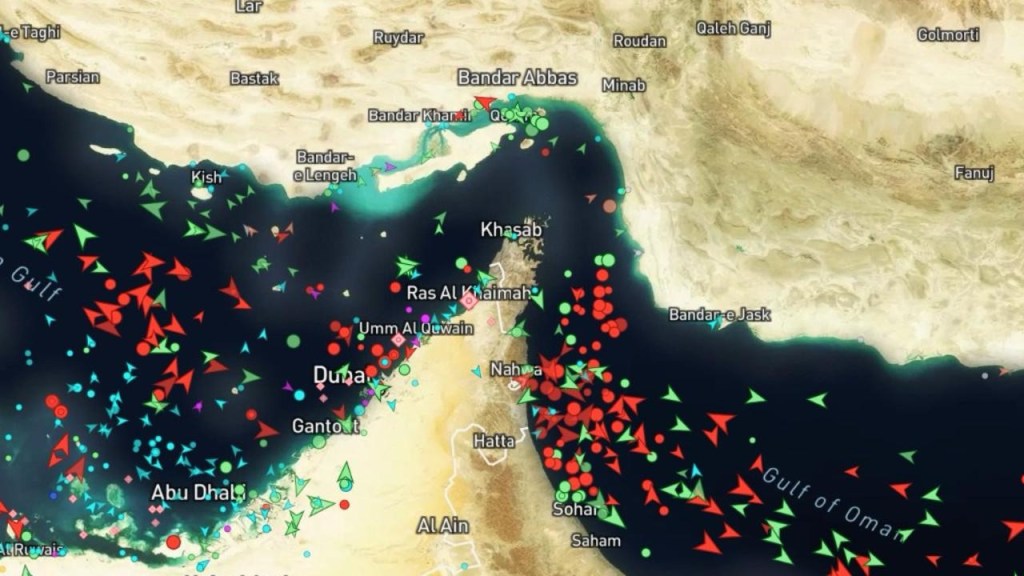
Strait of Hormuz Oil Traffic

The 2026 Iran conflict has delivered more than oil supply shocks and naval blockades, it has spotlighted a disturbing pattern of suspiciously timed trades in oil futures, equities, and prediction markets. In at least three documented episodes, hundreds of millions (and in one case nearly a billion) dollars were wagered on falling oil prices mere minutes before major de-escalation announcements by President Trump or Iranian officials. The precision and scale of these bets have triggered investigations by the Commodity Futures Trading Commission (CFTC), complaints from advocacy groups, and bipartisan scrutiny from Congress.

While markets are supposed to reflect all available information under the efficient-market hypothesis, these events suggest a troubling information asymmetry: a small group of traders appears to have acted with foreknowledge of policy shifts that directly moved energy prices. This is not abstract market theory. It raises core questions about market integrity, the misuse of nonpublic government information, and the regulatory gaps exposed when geopolitics collides with high-stakes derivatives trading.
The Pattern: Three Strikes, Same Playbook

Consider the timeline, drawn from Bloomberg, Reuters, NPR, and Financial Times reporting:

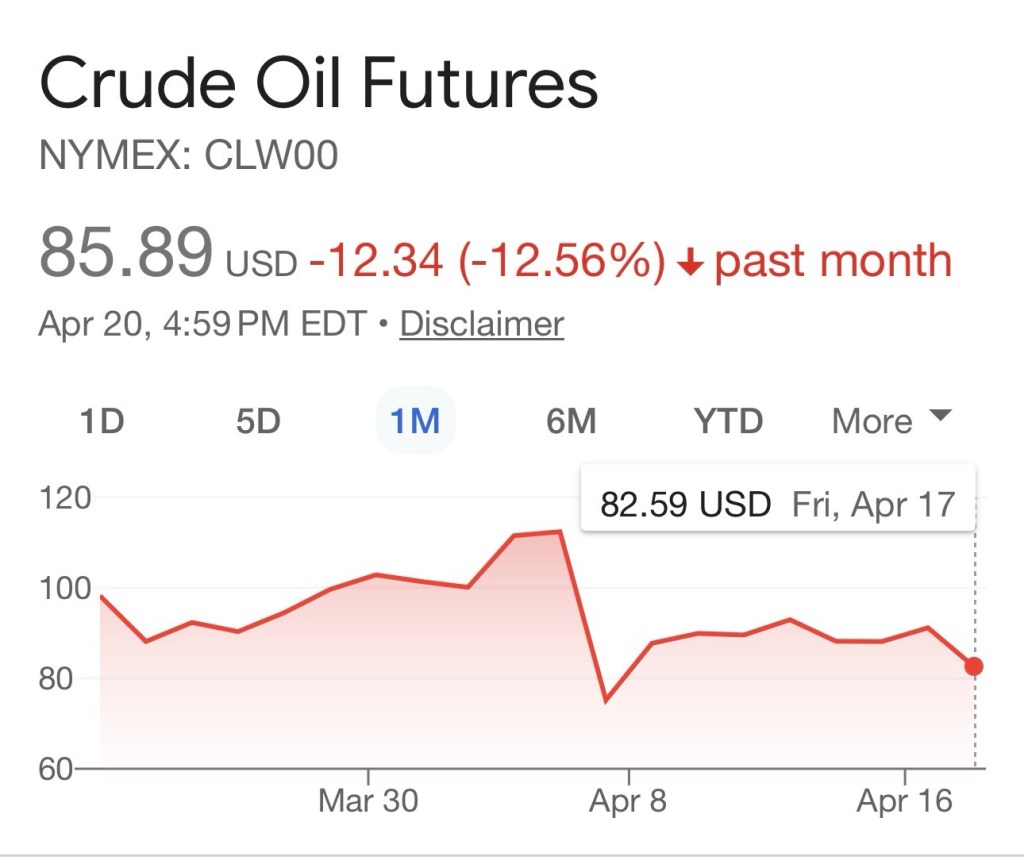
March 23, 2026: Roughly 15 minutes before President Trump posted that he would delay planned strikes on Iranian energy infrastructure, traders executed approximately $500–580 million in short positions on oil futures (WTI and Brent). When the announcement hit, crude prices plunged as much as 15%.

April 7, 2026: Roughly $950 million was bet on falling oil prices hours before the U.S. and Iran announced a two-week ceasefire. Oil dropped sharply on the news.

April 17, 2026: About $760 million in oil shorts were placed roughly 20 minutes before Iran’s foreign minister announced the Strait of Hormuz would reopen to commercial traffic. Oil fell as much as 11% intraday.

These are not isolated retail bets. They represent enormous, concentrated positions executed with surgical timing. On prediction markets like Polymarket, similar patterns emerged: one trader reportedly turned $3,200 into $600,000 on a U.S.-Iran ceasefire outcome one hour before it was public; other accounts netted millions across multiple Iran-related events. A crypto-analytics firm identified six “suspected insiders” who collectively made $1.2 million on a single high-profile outcome.

The White House itself recognized the optics. In a March 24 email, it explicitly warned staff against betting on Iran-war-related prediction markets, implicitly acknowledging that nonpublic information was a risk. Senators Elizabeth Warren and Sheldon Whitehouse have publicly questioned whether government insiders are misappropriating material nonpublic information. Public Citizen filed a formal CFTC complaint citing the “statistical impossibility” of such repeated accuracy absent insider knowledge.

Why This Looks Like Insider Trading

Standard market theory holds that prices incorporate information rapidly. Yet these trades consistently preceded public announcements by minutes, precisely the window in which only those “in the know” (administration officials, military planners, or their close associates) would have material nonpublic information.

The mechanics are straightforward:

• De-escalation news (ceasefire, delayed strikes, Hormuz reopening) reliably drives oil prices lower by easing supply fears.

• Shorts placed immediately before such news capture the full price drop with minimal risk.

• The volume of hundreds of millions in minutes, far exceeds normal liquidity and shows coordinated or highly informed positioning.

Defense and energy stocks have also shown volatility tied to the same cycle. The MSCI World Aerospace & Defence Index returned 32% year-to-date through March 2026, outpacing broader markets, while oil futures swung wildly on Hormuz rumors. When policy pivots are telegraphed internally, the incentive to monetize that edge is obvious—and the barrier to entry (futures markets, prediction platforms) is low for sophisticated players.

This is not the first time war has blurred the line between national security and personal profit, but the speed and transparency of modern markets (plus the rise of unregulated-ish prediction platforms) have made the anomalies impossible to ignore. Economists like Paul Krugman have bluntly labeled it “treason in the futures markets.”

Regulatory and Ethical Blind Spots

Prediction markets like Polymarket have exploded in popularity precisely because they allow direct bets on real-world events. Yet they operate in a gray zone: the CFTC has limited jurisdiction, enforcement is slow, and anonymity features can shield bad actors. Traditional futures markets are better regulated, but the CFTC’s probes into the March and April trades have so far yielded little public action, prompting criticism that the agency is “rolling over.”

For elected officials and senior staff, the STOCK Act already prohibits insider trading on nonpublic information, but enforcement has been lax. A bipartisan bill introduced in late March would ban members of Congress and senior federal staff from trading prediction-market contracts tied to policy or political events. It is a necessary start, but broader reforms are needed: real-time trade surveillance for geopolitical flashpoints, mandatory pre-clearance for officials with access to classified briefings, and clearer rules around family members and close associates.

The economic stakes are enormous. The Strait of Hormuz carries roughly 20% of global oil trade. Even temporary closures have spiked prices toward $100/barrel, rippling through inflation, consumer costs, and corporate earnings. When insiders front-run those moves, they privatize gains while the public bears the broader economic pain.

Restoring Trust in Crisis Markets

Geopolitical shocks will continue. The lesson from the 2026 Iran episode is that markets do not self-police when information is asymmetrically distributed along lines of power. Regulators, platforms, and Congress must treat these anomalies with the urgency they deserve, not as conspiracy fodder, but as evidence that the system’s integrity is at risk.

Until credible investigations produce accountability, every perfectly timed oil trade will fuel cynicism. Markets thrive on trust. When that trust erodes because the game is rigged for those “in the know,” the damage extends far beyond any single portfolio and we all lose.

The Quiet Economic Crisis: America is Sliding Toward Stagflation

By Nkozi Knight

The American economy is entering its most dangerous phase since the financial crisis of 2008.

Not because of a market crash.

Not because of a banking collapse.

But because the forces that produce stagflation are quietly aligning once again.

Oil prices have surged to nearly one hundred dollars per barrel as tensions in the Middle East threaten one of the most important energy corridors in the world. At the same time job growth has stalled, inflation remains stubbornly above the Federal Reserve’s target, and American households are carrying record levels of debt. CNBC recently reported that economists are increasingly worried the United States could face a renewed stagflation threat reminiscent of the economic shocks that gripped the country in the 1970s.

For many Americans the warning signs are already visible.

Gasoline prices doubling overnight. Grocery bills being placed on credit cards. Credit card balances exceeding 10% of monthly income. Car repossession rates at record highs. These are not isolated economic signals. They are symptoms of a deeper tension within the economy itself.

Stagflation is one of the most difficult economic conditions a country can face. It combines two forces that normally do not appear together. Prices continue to rise while economic growth slows. Workers struggle to find better opportunities while the cost of living keeps climbing. Governments and central banks are forced into painful choices because the policies that solve one problem often make the other worse.

The current economic environment is beginning to reflect that dangerous balance.

Energy markets sit at the center of the risk. Oil is not just another commodity. It is the foundation of transportation, agriculture, manufacturing and global trade. When oil prices rise, the effects cascade through the entire economy. Shipping becomes more expensive. Airlines raise ticket prices. Food costs increase as fertilizer and transportation become more costly. Nearly every sector eventually absorbs some portion of the shock.

The recent surge toward $100 oil was driven largely by geopolitical tension in the Middle East. According to CNBC reporting, disruptions in energy supply routes and fears surrounding the Strait of Hormuz have rattled markets and raised concerns that the price spike could persist. Even a temporary surge in oil prices can have significant ripple effects. A prolonged increase can become a full-scale economic shock.

At the same time the labor market is beginning to show signs of fatigue.

The U.S. economy lost 92,000 jobs in February while unemployment ticked upward to 4.4%. Job growth throughout the past year has slowed considerably compared with the stronger recovery period that followed the pandemic. Hiring has weakened while layoffs remain relatively limited, creating a labor market that appears frozen rather than collapsing.

This type of stagnation is precisely the environment that allows inflationary pressures to linger.

Core inflation remains near three percent, well above the Federal Reserve’s two percent target. While inflation has cooled from the extreme levels seen earlier in the decade, the reality for most households is that prices have not returned to previous levels. Instead, the cost of living has permanently reset higher.

Housing, insurance, healthcare and food continue to place increasing pressure on household budgets.

Consumer debt levels reveal how families are coping with that pressure. Americans now carry more than seventeen trillion dollars in total consumer debt. Credit card balances alone exceed one trillion dollars. As interest rates remain elevated, the cost of servicing that debt continues to rise.

This creates a dangerous feedback loop. When prices remain high and wages struggle to keep pace, households often rely on credit to maintain their standard of living. But higher borrowing costs make that strategy increasingly unsustainable over time.

The Federal Reserve now faces the same policy dilemma that defined the stagflation era decades ago.

Lowering interest rates could stimulate economic activity and ease borrowing costs for households and businesses. However, such a move risks fueling inflation at a moment when energy prices are already rising. Keeping rates high may help restrain inflation, but it could also slow hiring and investment further.

Economists often describe stagflation as the worst possible economic environment for central banks because every policy choice carries serious tradeoffs.

Financial markets are already adjusting their expectations. Investors had previously anticipated multiple interest rate cuts this year as growth slowed. The recent oil shock has complicated that outlook. Markets now expect the Federal Reserve to delay easing policy as officials assess whether inflation could accelerate again.

The situation places policymakers in an increasingly narrow corridor.

Too much stimulus risks reigniting inflation. Too little support risks pushing the economy into a deeper slowdown.

History offers a cautionary lesson. During the 1970s the United States endured years of persistent inflation combined with weak growth and rising unemployment. Oil shocks, global instability and loose fiscal policy combined to create a prolonged period of economic frustration. Wages lagged behind prices while economic confidence eroded.

Today the circumstances are different, but the pressures share familiar characteristics.

Large government deficits continue to expand the national debt. Geopolitical tensions threaten energy markets. Households rely increasingly on debt as living costs rise. Central banks attempt to balance inflation control with economic stability.

None of these forces alone guarantees stagflation. Together they create the conditions in which it becomes possible.

The greatest risk may not be an immediate economic collapse. Instead, the danger lies in a prolonged period of slow growth combined with persistent inflation. In such an environment economic progress becomes harder to achieve while financial pressure quietly builds across society.

For ordinary Americans the effects would not appear first in financial headlines.

They would appear in everyday life.

Rising car repossessions.
Higher fuel costs.
More expensive groceries.
Rising interest payments.
Rising foreclosures.
Rising evictions.
Slower wage growth.

These pressures accumulate gradually until households begin to feel that the economy itself is becoming more difficult to navigate.

The coming months will determine whether the current warning signs fade or intensify. If geopolitical tensions ease and energy markets stabilize, the economy may continue its uneven but resilient expansion. If oil prices remain elevated and growth continues to slow, the United States could find itself confronting the most complicated economic challenge of the modern era.

Stagflation rarely arrives with dramatic warning signs.

It emerges quietly, through the slow alignment of forces that gradually reshape the economic landscape.

Many economists now believe that alignment may already be underway.

Reference

Cox, J. (2026, March 9). Fears of 1970s-style stagflation arise with oil spike to $100. How big a threat is it? CNBC. https://www.cnbc.com/2026/03/09/fears-of-1970s-style-stagflation-arise-with-oil-spike-to-100-how-big-a-threat-is-it.html

Wiseman, P., & D’Innocenzio, A. (2026, March 10). U.S. lost 92,000 jobs in February as unemployment rises to 4.4%. Associated Press.
https://apnews.com/article/jobs-unemployment-economy-inflation-trump-tariffs-075a0d33e0794b7c93b9b8a7302dab98