Insider Trading in Geopolitical Crises: Anomalies in the 2026 Iran Conflict and the Strait of Hormuz

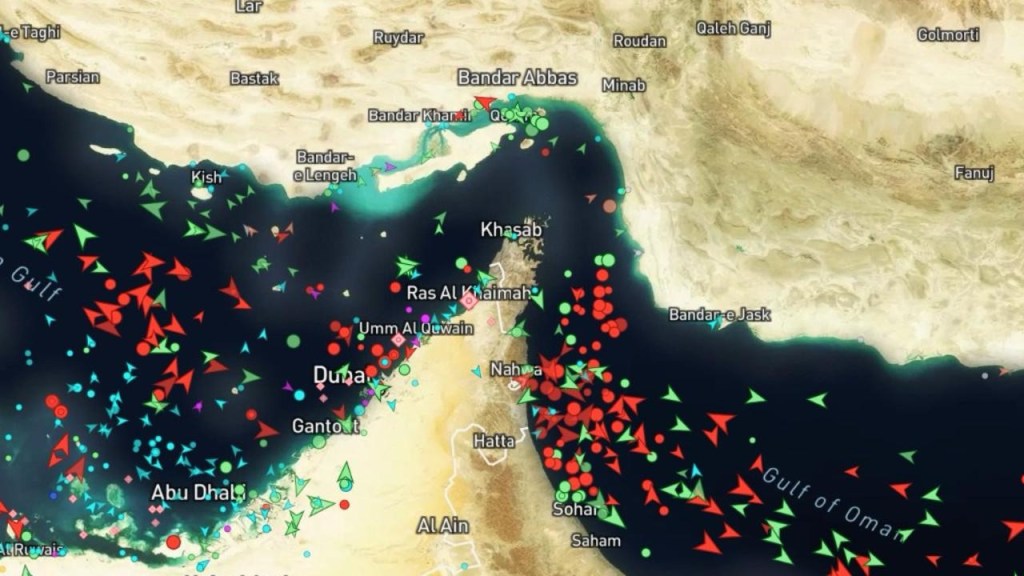
Strait of Hormuz Oil Traffic

The 2026 Iran conflict has delivered more than oil supply shocks and naval blockades, it has spotlighted a disturbing pattern of suspiciously timed trades in oil futures, equities, and prediction markets. In at least three documented episodes, hundreds of millions (and in one case nearly a billion) dollars were wagered on falling oil prices mere minutes before major de-escalation announcements by President Trump or Iranian officials. The precision and scale of these bets have triggered investigations by the Commodity Futures Trading Commission (CFTC), complaints from advocacy groups, and bipartisan scrutiny from Congress.

While markets are supposed to reflect all available information under the efficient-market hypothesis, these events suggest a troubling information asymmetry: a small group of traders appears to have acted with foreknowledge of policy shifts that directly moved energy prices. This is not abstract market theory. It raises core questions about market integrity, the misuse of nonpublic government information, and the regulatory gaps exposed when geopolitics collides with high-stakes derivatives trading.

The Pattern: Three Strikes, Same Playbook

Consider the timeline, drawn from Bloomberg, Reuters, NPR, and Financial Times reporting:

March 23, 2026: Roughly 15 minutes before President Trump posted that he would delay planned strikes on Iranian energy infrastructure, traders executed approximately $500–580 million in short positions on oil futures (WTI and Brent). When the announcement hit, crude prices plunged as much as 15%.

April 7, 2026: Roughly $950 million was bet on falling oil prices hours before the U.S. and Iran announced a two-week ceasefire. Oil dropped sharply on the news.

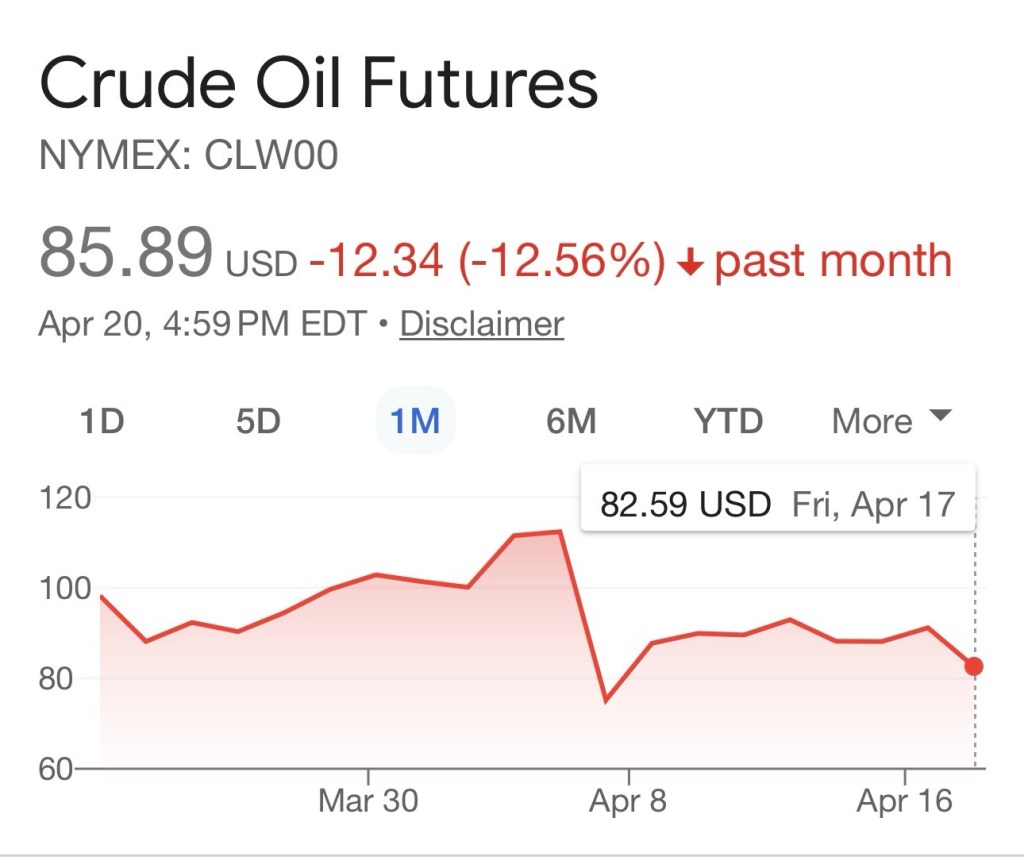
April 17, 2026: About $760 million in oil shorts were placed roughly 20 minutes before Iran’s foreign minister announced the Strait of Hormuz would reopen to commercial traffic. Oil fell as much as 11% intraday.

These are not isolated retail bets. They represent enormous, concentrated positions executed with surgical timing. On prediction markets like Polymarket, similar patterns emerged: one trader reportedly turned $3,200 into $600,000 on a U.S.-Iran ceasefire outcome one hour before it was public; other accounts netted millions across multiple Iran-related events. A crypto-analytics firm identified six “suspected insiders” who collectively made $1.2 million on a single high-profile outcome.

The White House itself recognized the optics. In a March 24 email, it explicitly warned staff against betting on Iran-war-related prediction markets, implicitly acknowledging that nonpublic information was a risk. Senators Elizabeth Warren and Sheldon Whitehouse have publicly questioned whether government insiders are misappropriating material nonpublic information. Public Citizen filed a formal CFTC complaint citing the “statistical impossibility” of such repeated accuracy absent insider knowledge.

Why This Looks Like Insider Trading

Standard market theory holds that prices incorporate information rapidly. Yet these trades consistently preceded public announcements by minutes, precisely the window in which only those “in the know” (administration officials, military planners, or their close associates) would have material nonpublic information.

The mechanics are straightforward:

• De-escalation news (ceasefire, delayed strikes, Hormuz reopening) reliably drives oil prices lower by easing supply fears.

• Shorts placed immediately before such news capture the full price drop with minimal risk.

• The volume of hundreds of millions in minutes, far exceeds normal liquidity and shows coordinated or highly informed positioning.

Defense and energy stocks have also shown volatility tied to the same cycle. The MSCI World Aerospace & Defence Index returned 32% year-to-date through March 2026, outpacing broader markets, while oil futures swung wildly on Hormuz rumors. When policy pivots are telegraphed internally, the incentive to monetize that edge is obvious—and the barrier to entry (futures markets, prediction platforms) is low for sophisticated players.

This is not the first time war has blurred the line between national security and personal profit, but the speed and transparency of modern markets (plus the rise of unregulated-ish prediction platforms) have made the anomalies impossible to ignore. Economists like Paul Krugman have bluntly labeled it “treason in the futures markets.”

Regulatory and Ethical Blind Spots

Prediction markets like Polymarket have exploded in popularity precisely because they allow direct bets on real-world events. Yet they operate in a gray zone: the CFTC has limited jurisdiction, enforcement is slow, and anonymity features can shield bad actors. Traditional futures markets are better regulated, but the CFTC’s probes into the March and April trades have so far yielded little public action, prompting criticism that the agency is “rolling over.”

For elected officials and senior staff, the STOCK Act already prohibits insider trading on nonpublic information, but enforcement has been lax. A bipartisan bill introduced in late March would ban members of Congress and senior federal staff from trading prediction-market contracts tied to policy or political events. It is a necessary start, but broader reforms are needed: real-time trade surveillance for geopolitical flashpoints, mandatory pre-clearance for officials with access to classified briefings, and clearer rules around family members and close associates.

The economic stakes are enormous. The Strait of Hormuz carries roughly 20% of global oil trade. Even temporary closures have spiked prices toward $100/barrel, rippling through inflation, consumer costs, and corporate earnings. When insiders front-run those moves, they privatize gains while the public bears the broader economic pain.

Restoring Trust in Crisis Markets

Geopolitical shocks will continue. The lesson from the 2026 Iran episode is that markets do not self-police when information is asymmetrically distributed along lines of power. Regulators, platforms, and Congress must treat these anomalies with the urgency they deserve, not as conspiracy fodder, but as evidence that the system’s integrity is at risk.

Until credible investigations produce accountability, every perfectly timed oil trade will fuel cynicism. Markets thrive on trust. When that trust erodes because the game is rigged for those “in the know,” the damage extends far beyond any single portfolio and we all lose.

The Bond Market Is Sending a Warning Ahead of a Critical Week

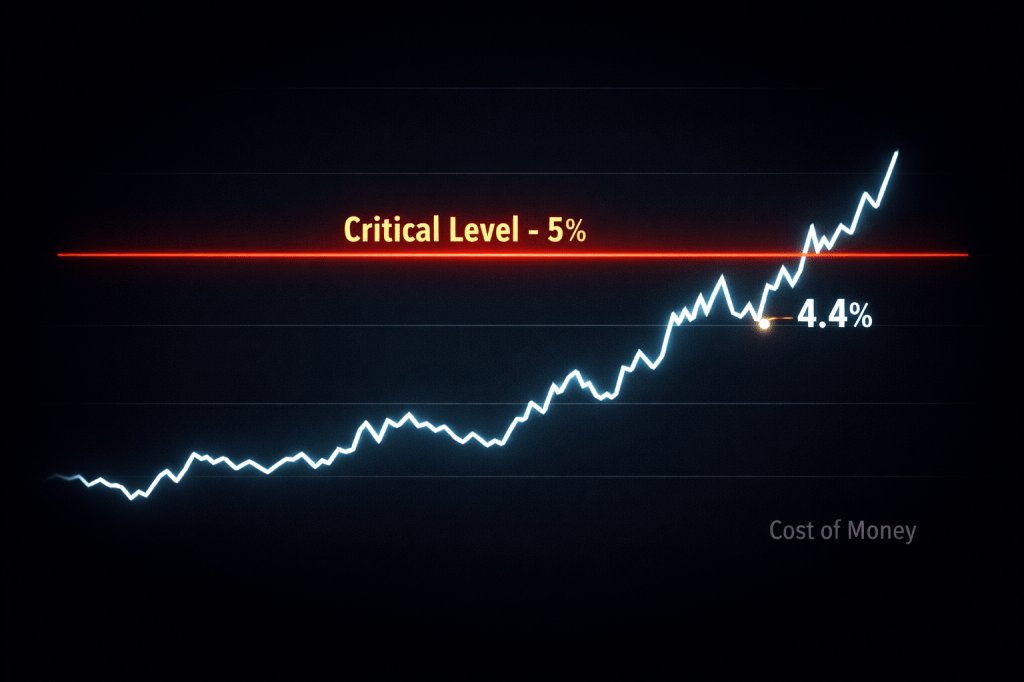
U.S. government bond yields are climbing toward levels not seen in years, with the 10-year Treasury now around 4.40% and selling pressure building as investors price in inflation risks from the U.S.–Iran conflict and a more hawkish Federal Reserve.

A move above 5% would mark a critical threshold. Borrowing costs across the economy would rise quickly, mortgages pushing toward 8%, corporate refinancing getting more expensive, and both consumers and businesses pulling back at the same time. That kind of tightening poses a more lasting threat to growth than oil prices, which can move quickly but don’t reset the cost of money across the entire system.

And this is happening even as oil has already eased from recent highs.

The impact of higher-for-longer rates is starting to show up across markets. Precious metals have reversed sharply, crypto has followed in a broader risk-off move, and global equities are reacting to the same pressure.

At home, the strain is becoming more visible. Essential services are feeling the pressure from broader funding and economic stress, adding another layer of uncertainty.

Even prediction markets are flashing unusual activity, with concentrated bets forming around a near-term U.S.–Iran ceasefire, raising questions about how some participants are positioning with insider information.

With key data on inflation, jobs, and Fed policy due this week, alongside developments in the Middle East, markets are heading into a highly sensitive moment.

Rising yields, economic strain, and geopolitical risk are all converging at once.

The bond market is already moving. Now everything else has to catch up.

Harvard Expands Free Tuition to Families Earning Under $200,000

By Nkozi Knight

In a move aimed at expanding access to higher education, Harvard University announced Monday that it will offer free tuition to students from families earning $200,000 or less starting in the 2025-2026 academic year. This marks a significant expansion of the university’s financial aid program, further removing financial barriers for prospective students.

Students from families with incomes below $100,000 will also have all expenses covered, including housing, food, health insurance, and travel costs. Previously, Harvard provided full financial support only to students from families earning less than $85,000 annually.

“Putting Harvard within financial reach for more individuals widens the array of backgrounds, experiences, and perspectives that all of our students encounter, fostering their intellectual and personal growth,” said Harvard President Alan Garber.

While tuition alone at Harvard currently exceeds $56,000, total costs, including housing and other fees, approach $83,000 per year. The new policy will significantly lessen that burden for many American families.

Families earning above $200,000 may still qualify for tailored financial aid depending on individual circumstances.

This initiative aligns with similar policies at other elite institutions, like the Massachusetts Institute of Technology (MIT), which announced a comparable expansion last fall. Harvard estimates that 86% of U.S. families will now be eligible for some level of financial aid.

“Harvard has long sought to open our doors to the most talented students, no matter their financial circumstances,” said Hopkins Dean of the Faculty of Arts and Sciences. “This investment ensures that every admitted student can pursue their academic passions and contribute to shaping our future.”

The expansion comes amid broader conversations about diversity in higher education, especially following the Supreme Court’s ruling against affirmative action in college admissions. Harvard, along with other institutions like the University of Pennsylvania, views increased financial aid as a pathway to maintaining diversity by ensuring access to students from varied socioeconomic backgrounds.

“We know the most talented students come from different socioeconomic backgrounds and experiences, from every state and around the globe,” said William Fitzsimmons, Harvard’s dean of admissions and financial aid. “Our financial aid is critical to ensuring that these students know Harvard College is a place where they can thrive.”

This policy marks a continued effort to create a more inclusive and accessible environment at one of the nation’s most prestigious universities.

Donald Trump’s $500 Billion Stargate AI Project: Bold Innovation or Dangerous Gamble?

When President Donald Trump unveiled the $500 billion Stargate AI venture on Tuesday, a partnership involving OpenAI, SoftBank, and Oracle, he touted it as a groundbreaking step toward cementing U.S. dominance in artificial intelligence. Trump claimed the project would ensure “the future of technology” while creating hundreds of thousands of jobs and tackling issues like cancer detection. Wall Street initially responded with cautious optimism, but as the details of Stargate emerge, skepticism is mounting, and for good reason in my opinion.

A Bold Promise Without a Foundation

At first glance, Stargate appears ambitious, even transformative. Backed by OpenAI’s cutting-edge technology, SoftBank’s financial clout, and Oracle’s infrastructure expertise, the venture has been pitched as a game-changer for AI research and development. Yet, serious doubts are surfacing about its feasibility and motives.

Tech billionaire Elon Musk, a former co-founder of OpenAI and a longtime critic of the organization’s direction, wasted no time questioning the project’s funding. “They don’t actually have the money,” Musk wrote on X. SoftBank CEO Masayoshi Son claims an initial $100 billion commitment with plans to grow it to $500 billion over four years, but whether those funds will materialize remains unclear. It’s not the first time SoftBank has made lofty promises and its track record includes overestimated ventures like the Vision Fund.

AI for Good or AI for Profit?

One of the most striking concerns is the ethical implications of Stargate. OpenAI CEO Sam Altman and Oracle co-founder Larry Ellison described the project as a way to solve pressing societal issues, like developing cancer vaccines through AI-driven genetic sequencing. While this paints a rosy picture, skeptics question whether these lofty claims are just a smokescreen for profit-driven motives. Musk has repeatedly accused OpenAI of abandoning its original mission to develop AI for the public good, turning instead into a profit-driven enterprise that prioritizes corporate interests.

Donald Trump’s decision to repeal his predecessor’s AI guardrails and policies designed to ensure ethical and safe development of AI, has opened the door to unchecked advancements. Without these safeguards, Stargate’s potential for misuse, whether through biased algorithms, privacy violations, or the militarization of AI, is alarming. Who will ensure that this technology is developed responsibly and does not deepen societal inequalities or threaten democratic systems?

An Economic Boon or Another False Promise?

Trump and Altman have touted the potential for Stargate to create hundreds of thousands of American jobs, particularly in construction and data center operations. However, these promises are eerily reminiscent of past grandiose projects that failed to deliver from the Biden administration. Mega-investments often come with overblown job projections, only to fall short once automation replaces human labor. Even if Stargate reaches its employment goals, questions linger about the quality of these jobs and their long-term sustainability.

A cornerstone of the Stargate project is the construction of massive data centers, which are essential for powering the AI infrastructure envisioned by OpenAI, SoftBank, and Oracle. While these centers promise to create jobs and drive technological advancement, their environmental and societal impacts are deeply concerning. Data centers consume enormous amounts of electricity and water, often straining local resources without providing long-term economic benefits to surrounding communities. Questions about data privacy, cybersecurity, and ownership also loom large, as these facilities will centralize vast amounts of sensitive information in the hands of private corporations. With promises of rapid scalability and a $500 billion price tag, it’s unclear whether such an ambitious undertaking can be achieved responsibly or whether the public will once again bear the hidden costs of unchecked corporate ambition.

Geopolitical Implications: Competing with China

Stargate is also being framed as a key weapon in the U.S.’s competition with China for AI supremacy. While strengthening America’s technological edge is important, rushing into a $500 billion project without transparency or strategic oversight risks creating a “tech cold war” that prioritizes dominance over ethical innovation. Accelerating AI development without proper international collaboration could exacerbate global tensions and lead to a dangerous arms race in AI technology.

What Stargate Really Represents

Beneath the glossy promises of economic growth and transformative technology, Stargate raises deeper questions about power, control, and the future of AI. By handing the reins to corporate behemoths like SoftBank, Oracle, and OpenAI, the U.S. risks placing critical technological advancements into the hands of entities more interested in profits than public welfare. This is not just about building data centers or detecting cancer, it’s about who gets to decide how AI shapes our world.

Trump’s willingness to prioritize corporate interests over ethical considerations should alarm all Americans from both parties. Without a commitment to transparency, regulation, and equity, Stargate could deepen societal divides and erode trust in technology. As history has shown, unchecked technological advancements often come at a steep cost to those least equipped to bear it.

What Emmett Till’s Mother Taught Me About Grief and Justice

On Feb. 26, 2012, my entire life changed in ways that I could never imagine. Within an instant, after the brutal and inhumane killing of my son, …

What Emmett Till’s Mother Taught Me About Grief and Justice

Five ways of expanding your business internationally

The global economy is changing thanks to worldwide connectivity. Companies across the globe are communicating with others without delays or hassles …

Five ways of expanding your business internationally

Quad/Graphics plans to close plants, cut $100M in costs

hqdefault

“Our third quarter financial performance was challenging and below our expectations,” Joel Quadracci, CEO of the commercial printing firm, said in a statement.

Quadracci said the company would move swiftly to slice costs and bring them in line with sales.

Quad did not say how many jobs it might cut, or identify any plants for closing. However, spokeswoman Claire Ho suggested that the firm’s operations in Wisconsin, where it employs 7,000 people at 14 facilities, are not high on the target list for closures.

Quad continues to move work to its most efficient printing and distribution plants, and the Wisconsin operations are “among the most efficient platforms in the entire printing industry,” Ho said in an email. She said Quad is still hiring in Wisconsin.

The company, the biggest printer of magazines and catalogs in North America, operates 57 printing plants in the U.S. and another eight outside the country. It employs 24,000 people worldwide.

However, like other printers, it has seen demand dampened by the rise of the Internet and digital technologies such as iPads and other tablets.

In its annual report filed with securities regulators last March, Quad noted that prices for printing had “declined significantly in recent years.”

Tuesday, Quadracci said in his statement that pricing pressure accelerated during the three months that ended Sept. 30, while Quad’s manufacturing productivity declined.

The firm’s sales for the three months ended Sept. 30 totaled $1.16 billion, down 6.5% from the $1.24 billion in third-quarter 2014 revenue.

The company booked a loss of $552.2 million, or $11.50 a share, in the quarter. But that stemmed almost entirely from a $532.6 million non-cash, after-tax charge Quad recorded for “goodwill impairment” triggered by the decline in the firm’s stock price.

Before Tuesday’s announcement, Quad’s stock closed at $13.10, down 18 cents.

The company went public in July 2010 at $49. Its shares traded above $40 for almost a year, then plunged. They rebounded above $30 in 2013, but have trended downward for the last two years.

The slide in the stock notwithstanding, Quad generates enough cash to pay a hefty dividend — at least at the prices of the last two years. The current dividend of $1.20 a year amounts to roughly 9% of Tuesday’s closing price.

Quad on Tuesday declared another 30-cent quarterly dividend.

The company also reduced its 2015 revenue estimates by about $200 million. Previously, Quad had estimated sales of $4.8 billion to $4.9 billion for the year. The firm now expects $4.6 billion to $4.7 billion in revenue.

Since 2009, Quad has more than doubled its revenue, in large measure through acquisitions.

Quadracci may disclose details of the company’s cutback plans this morning during a conference call with analysts.

About Rick Romell

author thumbnail

Rick Romell covers retail and general business news.

Quad/Graphics is an American printing company, based in Sussex, Wisconsin. It was founded on July 13, 1971, by Harry V. Quadracci, son of Harry R. Quadracci.
Headquarters: Sussex, WI
Company Website: qg.com
CEO: Joel Quadracci
Founded: 1971