Podcast Episode: Debt, Distraction, And Public Life

Pip: Nkozi Knight writes about the economy the way a doctor reads an X-ray — calmly, and with bad news.

Mara: This episode covers two territories: the financial pressures quietly reshaping ordinary Americans' retirement savings and debt load, and the cultural forces eroding the attention and civic seriousness needed to even notice. Let's start with the money.

Debt And Financial Fragility

Mara: The question underneath these posts is who actually absorbs the risk when large financial systems reprice — and whether ordinary workers ever consented to the role they've been assigned.

Pip: The 401(k) post puts it plainly. Setting up the core mechanism, the post reads: "Wall Street creates the paper value in private markets, waits until the valuation becomes too large for traditional buyers to absorb, changes the rules so these companies can enter major indexes faster, and then lets passive retirement money like your pension become the final buyer."

Mara: So the upshot is: the worker never voted on any of this. The money moves because index methodology says it moves — payroll deductions, automatically, every two weeks.

Pip: And the Nasdaq rule change from May 2026 is the mechanism. Newly public companies can now enter the Nasdaq 100 after just fifteen trading days. That's not a technical footnote — that's a faster on-ramp for private insiders to reach public exit liquidity.

Mara: The sovereign debt post widens the frame. Nearly thirty-nine trillion dollars in federal debt, deficits approaching two trillion annually, and the government now spending roughly one trillion dollars a year just on interest — not defense, not infrastructure, just servicing prior obligations.

Pip: And the piece on everyday economic stability makes the lived version of that math visible: families paying more for gas, groceries, insurance, and travel while the stock market's recovery runs on a handful of AI-adjacent names. A 401(k) can show green while the household budget turns red.

Mara: That's the split-screen economy — and it connects directly to who's being asked to fund what comes next.

Attention And Civic Culture

Pip: If the financial posts describe a system that depends on passive money, this segment asks whether the culture has become too distracted to push back on anything.

Mara: The War on Thinking frames the problem directly: "As information has become more accessible, independent thought appears to have become more difficult." The post argues that the threat to critical thinking isn't censorship — it's abundance, and the economic incentives that reward reaction over reflection.

Pip: Algorithms don't monetize pausing. The person who investigates a claim before sharing it is, by the platform's logic, a worse user than the one who amplifies instantly.

Mara: And that pattern, the post notes, runs well beyond politics — into how people invest, how they evaluate financial narratives, how they form any judgment at all. The amateur says the answer is obvious; the expert says it depends. Engagement rewards the former.

Pip: Which is a fairly brutal diagnosis for a moment when people most need to be asking hard questions about, say, whose money is financing the AI buildout.

Mara: The Michelle Obama Day post approaches civic culture from a different angle — not information overload, but what happens when a lifetime of documented public achievement gets answered with dehumanization. The post's argument is that the attack is rarely on the accomplishment itself; it's on the legitimacy of the person who accomplished it.

Pip: And that pattern, the post notes, has a long history in how Black excellence gets received in America.

Mara: Both posts are really asking the same underlying question: what kind of public culture do you need to hold systems accountable — and whether we're building toward that or away from it.


Pip: Paper wealth, automatic money, distracted citizens — it's a fairly coherent picture of how a system stays invisible to the people inside it.

Mara: Next time, we'll see what else is on the site. The questions here don't resolve quickly.
The Three Conversations Nobody Wants to Have, and Why We’re Going to Have One Today

There’s an old saying that you should never talk about politics, religion, or money at the dinner table. Three topics, three landmines, three ways to ruin Thanksgiving.

I get the impulse, but I’d argue it’s also the reason so many families wake up at 50, 60, or 70 years old wondering how they ended up unprepared. We didn’t talk about it. Our parents didn’t talk about it. And the silence got passed down like a family recipe.

So today, we’re going to break the rule. We’re going to talk about money. And honestly, you can’t have that conversation right now without brushing up against politics and a little bit of belief too. Policy is moving fast. Markets are loud. And what you believe about your future is going to shape what you do with your dollars this year.

Let’s get into it.

Where the economy stands right now

Strip away the noise and here’s the picture as of mid-2026:

  • Goldman Sachs Research expects global GDP to grow a sturdy 2.8% in 2026, with the US outperforming at 2.6% on the back of tax cuts, easier financial conditions, and reduced tariff drag.
  • The Fed is on hold. After May’s surprisingly strong jobs report, Goldman pulled its 2026 rate cut forecasts off the calendar entirely. The bank now expects the next cuts in June and December 2027, and doubled the probability of a rate hike to 20%.
  • Core inflation is sticky. Goldman expects core PCE to stay above 3% through 2026 before drifting toward the Fed’s 2% target in 2027. The pressure points: tariffs, Middle East oil tensions, and AI-driven capital spending.
  • Equities are still the story. S&P 500 earnings grew 25% year over year in Q1, with AI carrying a lot of that water, and Goldman Sachs Asset Management upgraded its core equity view for the year despite the macro turbulence.

Translation for the rest of us: the economy is holding up, but the cost of living isn’t getting cheaper anytime soon, and the Fed is not riding to the rescue.

Meanwhile, on the ground

That’s the view from 30,000 feet. Here’s what’s hitting the average household at street level.

Credit cards are flashing red. Americans owe a record $1.25 trillion on their cards, and 13% of accounts are at least 90 days delinquent, the highest level since 2008. The Wall Street Journal called it a shift to “survival debt,” and it’s no longer just lower-income households feeling the squeeze.

Housing is whiplashing. Mortgage rates are volatile, foreclosures are rising in pockets, and HOA fees keep climbing. For a lot of buyers, the math just doesn’t pencil out anymore.

Student loans are about to bite. The SAVE plan is officially over. More than 7 million borrowers are being moved into legal repayment plans, and the new Repayment Assistance Plan launched July 1. If you’ve been in administrative forbearance for the last two years, that grace period is ending and the bill is coming.

Retirement planning is getting more nuanced. With RMDs, Roth conversions, and a higher-for-longer rate environment, the conversation has shifted from just what you own to where you own it. Asset location is becoming as important as asset allocation.

This is what economic turmoil looks like. Not a single dramatic crash, but a slow grind of higher costs, tighter margins, and more decisions that you can’t undo.

Why a plan is the best defense

Here’s the part that connects to politics and to faith, because both shape how we handle hard things.

You cannot control the Fed. You cannot control oil prices. You cannot control which administration writes the next rule on student loans or tariffs or taxes. What you can control is whether you have a written plan, whether you’re contributing to it consistently, and whether you have someone in your corner who can help you adjust when the rules change underneath you.

A plan is not a magic shield. It’s a decision-making framework. When the headlines get loud, your plan tells you what to do next. When a policy changes, your plan tells you what to adjust. When fear shows up, your plan tells you to keep going.

The families I see come through the worst stretches are not the ones with the biggest portfolios. They’re the ones who decided early that they were going to be intentional about money instead of reactive about it.

An essential checklist if you’re in your 40s

Your 40s are the most important financial decade of your life. Peak earnings, peak responsibility, and the last real runway to compound serious wealth before retirement gets close. If you’re in this window, here’s where to focus.

1. Write down your net worth and your goals. Add up your assets. Subtract your liabilities. Then write down three goals: one for the next year, one for the next five, and one for retirement. A goal without a number is just a wish.

2. Automate your retirement savings. Capture every dollar of your employer match. That’s free money and a 100% return before the market does anything. If you don’t have a match, set up automatic contributions to an IRA or brokerage account so you don’t have to think about it.

3. Build a real emergency fund. Aim for six months of essential expenses, closer to a year if you’re self-employed or in a specialized field. Park it in a high-yield savings account so it keeps pace with inflation.

4. Attack high-interest debt. With credit card APRs near 21%, every dollar you put toward a card balance is a guaranteed double-digit return. There is no investment in the market that beats paying off a credit card.

5. Get your protection in order. Life insurance, disability income, and updated will are not the fun part of planning. They’re the part that keeps your family standing if something goes sideways.

6. Optimize asset location, not just allocation. Roth conversions, tax-deferred accounts, brokerage accounts, and HSAs all play different roles. Putting the right asset in the right account can save you tens of thousands of dollars over a lifetime.

7. Revisit the plan every year. Not because it changes constantly, but because you do. Promotions, kids, moves, businesses, all of it shifts the math.

The conversation you need to have

If you’ve made it this far, you already know the answer to the question I’m about to ask. The hardest part isn’t the math. It’s the conversation.

The conversation with your spouse about what you want the next 20 years to look like. The conversation with your kids about how money works so they don’t repeat your mistakes. The conversation with yourself about what you’ve been avoiding because it felt too big.

And eventually, the conversation with a professional who is paid to keep you honest with your plan and steady when the market is anything but.

Let’s talk

If anything in this article hit close to home, that’s your sign. Not to panic, not to overhaul your life this weekend, but to start the conversation.

I help individuals, families, and small business owners build plans that hold up when the headlines don’t. There is no pitch on the other side of the door. Just a conversation about where you are, where you want to go, and what it would take to get there.

Reach out at nkoziknight.com and let’s get the plan started. The economy is going to do what it’s going to do. Your job is to be ready for it.

Your 401(k) Is About to Become Wall Street’s Exit Strategy

By Nkozi Knight

The greatest trick in modern finance is convincing people that a valuation is the same thing as wealth.

It is not.

A company can be valued at a trillion dollars without a trillion dollars ever moving through its business. A founder like Elon Musk can become one of the richest people on earth because investors agreed to price his shares at a number that may never survive public market scrutiny. A venture capital fund can report enormous paper gains before anyone has actually turned those gains into cash. This is the paper illusion that sits underneath the current AI boom, and it is the reason the rule changes that took effect on May 1, 2026, matter far more than most Americans realize.

Nasdaq did not just make a boring technical adjustment to its index methodology. It opened a faster bridge between private market valuations and passive public money. Under the new fast entry rule, certain large newly public companies can be evaluated after only a few trading days and potentially added to the Nasdaq 100 after just 15 trading days. In a market where trillions of dollars track indexes through ETFs, target date funds, pension allocations, and 401(k) plans, that is not a small change. That is a change in who gets forced to buy, when they have to buy, and whose money is standing there when early investors are ready to sell.

This is the part most people miss. The public markets used to be where companies raised money to grow. Now, for many of the largest private companies in the world, public markets are where earlier investors go to find an exit.

Companies like SpaceX, OpenAI, and Anthropic have been built in private markets with money from venture capital firms, sovereign wealth funds, institutional investors, private equity firms, and the world’s largest asset managers. By the time everyday Americans get access, the story has already been written, the valuation has already been inflated, and the insiders have already spent years marking up their positions on paper.

That does not mean these companies are fake. SpaceX is real. OpenAI is real. Anthropic is real. Artificial intelligence is real. Data centers, chips, power grids, and cloud infrastructure are all real.

The bubble is not the technology.

The bubble is the price people are being asked to pay after the wealth has already been created for someone else.

SpaceX lost nearly $5 billion in 2025 while still seeking a valuation around $1.75 trillion. That should stop people in their tracks. It does not mean SpaceX is worthless, and it does not mean the company will fail, but it does mean investors are being asked to pay today for profits that may not ever arrive. That is how bubbles work. They do not usually form around worthless ideas. They form around powerful ideas that become so emotionally convincing that valuation stops mattering.

The reason the passive index complex matters is because it may be the only buyer large enough to absorb these IPOs at the prices Wall Street wants.

A normal investor can say no. A pension manager can hesitate. An active fund manager can decide the valuation is too rich. But passive money does not think that way. If a company enters the index, the funds tracking that index have to buy it. The money moves because the methodology says it moves. The worker contributing to a 401(k) never voted on SpaceX. The teacher with a pension never studied Anthropic’s cash burn. The nurse in a target date fund never decided OpenAI’s valuation made sense. Their money simply follows the index.

That is the machine.

Wall Street creates the paper value in private markets, waits until the valuation becomes too large for traditional buyers to absorb, changes the rules so these companies can enter major indexes faster, and then lets passive retirement money like your pension become the final buyer.

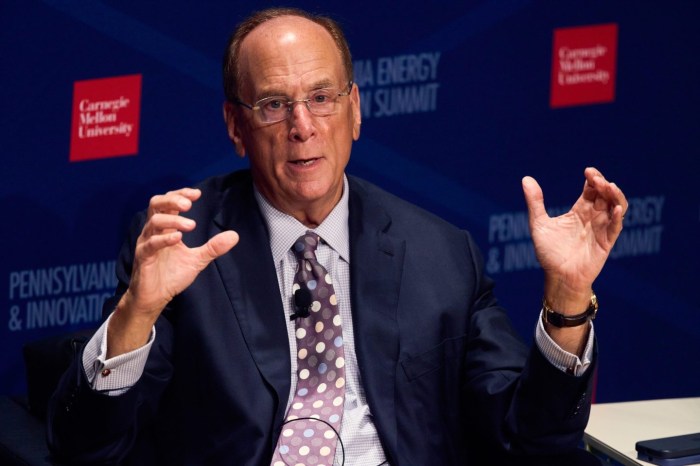
This is why Larry Fink’s comments matter. When the head of BlackRock talks about savings accounts and pension accounts helping fund the AI infrastructure buildout, he is telling people where the money is expected to come from. The AI revolution will require trillions of dollars for data centers, energy production, transmission lines, semiconductors, cooling systems, and computing infrastructure. Venture capital cannot fund that alone. Private equity cannot fund that alone. Government cannot fund that alone without triggering another political fight over debt and deficits.

So the system turns to the deepest pool of money in America.

Retirement assets.

At the end of 2025, the United States had roughly $49 trillion in retirement assets. That is the pool Wall Street sees. That is the pool asset managers want access to. That is the pool that receives contributions every payday from people who are simply trying to retire with dignity.

The tragedy is that everyday workers may not realize they are being moved from investors into financiers. They are not just saving for retirement anymore. Increasingly, their money is being positioned to finance the infrastructure, valuations, and liquidity needs of the AI economy.

That is where the corruption lives. Not always in a brown envelope or an illegal backroom deal, but in the quiet rewriting of rules that shift risk from sophisticated insiders to ordinary workers. The people who got in early get liquidity. The investment banks get fees. The asset managers get products. The exchanges get listings. The founders keep control. The early investors get a path out.

The worker gets exposure.

That word sounds harmless until markets break.

Exposure means your 401(k) bought the shares after the hype was already priced in. Exposure means your pension became the buyer after the private gains were already captured. Exposure means you were told you were gaining access to innovation, when in reality you may have been placed at the end of the line holding assets that insiders were ready to monetize.

This is not how healthy markets are supposed to work. The public is supposed to participate in growth, not simply inherit the bill after private markets finish marking up the asset.

The paper illusion works only as long as there is another buyer. That is why the passive index complex is so important. It creates a buyer that does not need to be convinced. It creates demand that does not ask hard questions. It creates flows that arrive every two weeks from payroll deductions across America.

That is the part that should scare people.

A bubble does not need everyone to believe forever. It only needs enough automatic money to keep coming in long enough for the early money to leave.

And this time, the automatic money will be your 401(k).

The economy looks stable only if you can afford to ignore it

By Nkozi Knight

There is a difference between an economy that looks stable on a chart and an economy that feels stable in real life.

Right now, the charts are giving people permission to pretend things are fine. The stock market corrected, then recovered. The major indexes found their footing. Some investors are still making money. On paper, that can look like resilience.

But outside of Wall Street, the economy feels very different.

Families are paying more to drive, more to fly, more to ship, more to insure, more to borrow, and more to live. Businesses are not just dealing with inflation anymore, they are dealing with a new round of cost pressure tied directly to energy, transportation, and geopolitical risk. That is the part of this economy that is not getting enough attention.

The conflict with Iran changed the math. Once the Strait of Hormuz became disrupted, energy markets reacted exactly the way they always do when one of the world’s most important oil transit points becomes unstable. Prices did not rise because of one gas station, one refinery, or one airline. They rose because risk entered the system.

That risk has a cost.

It shows up in gasoline. It shows up in diesel. It shows up in jet fuel. It shows up in shipping insurance, freight costs, airline routes, grocery distribution, and eventually consumer prices. Most Americans will never study the Strait of Hormuz, but they will feel it when they fill their tank or book a flight.

The fuel data tells the story. Earlier this year, regular gasoline was below $3 per gallon nationally. By May, it was around the mid $4 range. Jet fuel moved even more sharply. For airlines, that matters because fuel is one of their largest operating expenses. When that cost jumps, the entire business model gets squeezed.

Spirit Airlines became the clearest warning sign. Spirit was already a vulnerable company, but the spike in jet fuel accelerated the damage. Low cost airlines survive on volume, tight margins, and predictable costs. When fuel nearly doubles for some carriers, the math stops working. That is not just a company failure. It is a consumer problem, because when a low cost carrier disappears, the pressure on fares moves higher.

People should understand what that means. Fewer low cost seats usually means less competition. Less competition means higher prices. Higher prices mean travel becomes less accessible for working families.

The rest of the industry is not immune. Airlines are raising fares, cutting routes that no longer make financial sense, tightening budgets, and increasing fees to protect margins. That is not surprising. It is how corporations respond to cost shocks. But it also means the consumer takes the hit again.

This is why the official conversation about the economy feels incomplete. Inflation is often discussed as if it is only a Federal Reserve issue, but this moment is bigger than interest rates. This is about foreign policy, energy policy, corporate pricing power, and household exhaustion all colliding at the same time.

The administration’s defenders can say presidents do not control global oil prices, and that is true. No president controls every barrel of oil or every airline ticket. But administrations do make decisions that change risk. They decide when to escalate. They decide how to use diplomacy. They decide how much economic fallout they are willing to accept. When those decisions increase the cost of energy, the public deserves an honest accounting.

The cost of war is not limited to military spending.

It is also the cost of gas.

It is the cost of freight.

It is the cost of groceries.

It is the cost of airfare.

It is the cost of higher inflation expectations.

It is the cost of forcing the Federal Reserve to stay tighter for longer because energy prices are feeding back into the broader economy.

That is the part that should concern everyone. Energy shocks do not stay contained. They move through the economy slowly, then all at once. A trucking company pays more for diesel. A grocery supplier pays more for delivery. An airline pays more for jet fuel. A family pays more for food, travel, and basic necessities. By the time the average consumer sees the full impact, the decisions that caused it are already months behind us.

Meanwhile, the stock market is giving a false sense of comfort.

Yes, the market recovered. But the recovery has been heavily dependent on a narrow group of companies, especially those tied to artificial intelligence and large-cap technology. That does not mean those companies are not valuable. It means the broader market may not be as healthy as the headlines suggest.

When a handful of stocks carry the market, the index can rise while the real economy weakens. A person’s retirement account may look better for a quarter while their monthly budget gets worse. Their 401(k) may recover while their credit card balance grows. Their portfolio may show green while their household cash flow turns red.

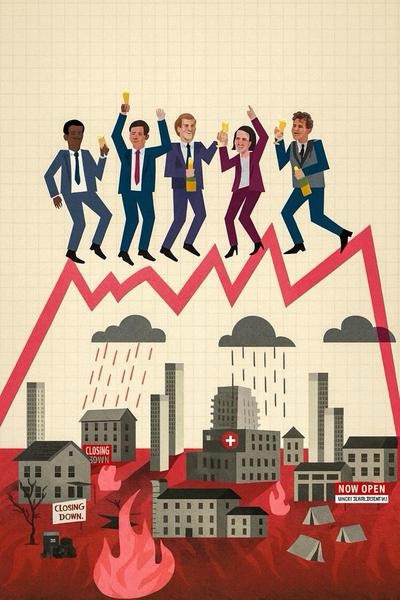
That is not a normal recovery. That is a split-screen economy.

On one side, investors are celebrating market gains. On the other side, working families are absorbing higher fuel prices, higher travel costs, higher food costs, higher insurance premiums, and higher borrowing costs. The wealthy can ride out volatility. The middle class has to budget through it.

This is why the economy feels unstable even when the headlines say otherwise.

A healthy economy should not require people to ignore their own bank accounts. It should not require families to pretend that higher prices are manageable because the Dow had a good week. It should not require small businesses to absorb global energy shocks while policymakers call the economy resilient.

Resilience is not the same as strength. Sometimes resilience just means people are still standing because they have no other choice.

The uncomfortable truth is that this economy is being repriced. War risk is being repriced. Energy is being repriced. Travel is being repriced. Credit is being repriced. Corporate earnings are being repriced. Household life is being repriced.

The question is who can afford the new price.

For too many Americans, the answer is becoming clear. They are working, but not getting ahead. They are earning, but not saving. They are paying bills, but losing breathing room. They are watching policymakers talk about economic strength while their own lives feel more expensive by the month.

That disconnect is dangerous.

If leaders want credibility, they need to stop hiding behind the stock market and start talking honestly about the pressure underneath it. The economy is not just the S&P 500. It is the cost of a gallon of gas. It is the price of a plane ticket. It is the grocery bill. It is the small business payroll. It is the family deciding whether a vacation, a medical bill, or a car repair has to wait.

That is the economy people actually live in.

And right now, that economy is telling us something important.

It is telling us that the country is absorbing the cost of decisions made far above the average household, while the average household is being asked to carry the consequences.

That deserves more attention than it is getting.

Insider Trading in Geopolitical Crises: Anomalies in the 2026 Iran Conflict and the Strait of Hormuz

Strait of Hormuz Oil Traffic

The 2026 Iran conflict has delivered more than oil supply shocks and naval blockades, it has spotlighted a disturbing pattern of suspiciously timed trades in oil futures, equities, and prediction markets. In at least three documented episodes, hundreds of millions (and in one case nearly a billion) dollars were wagered on falling oil prices mere minutes before major de-escalation announcements by President Trump or Iranian officials. The precision and scale of these bets have triggered investigations by the Commodity Futures Trading Commission (CFTC), complaints from advocacy groups, and bipartisan scrutiny from Congress.

While markets are supposed to reflect all available information under the efficient-market hypothesis, these events suggest a troubling information asymmetry: a small group of traders appears to have acted with foreknowledge of policy shifts that directly moved energy prices. This is not abstract market theory. It raises core questions about market integrity, the misuse of nonpublic government information, and the regulatory gaps exposed when geopolitics collides with high-stakes derivatives trading.

The Pattern: Three Strikes, Same Playbook

Consider the timeline, drawn from Bloomberg, Reuters, NPR, and Financial Times reporting:

March 23, 2026: Roughly 15 minutes before President Trump posted that he would delay planned strikes on Iranian energy infrastructure, traders executed approximately $500–580 million in short positions on oil futures (WTI and Brent). When the announcement hit, crude prices plunged as much as 15%.

April 7, 2026: Roughly $950 million was bet on falling oil prices hours before the U.S. and Iran announced a two-week ceasefire. Oil dropped sharply on the news.

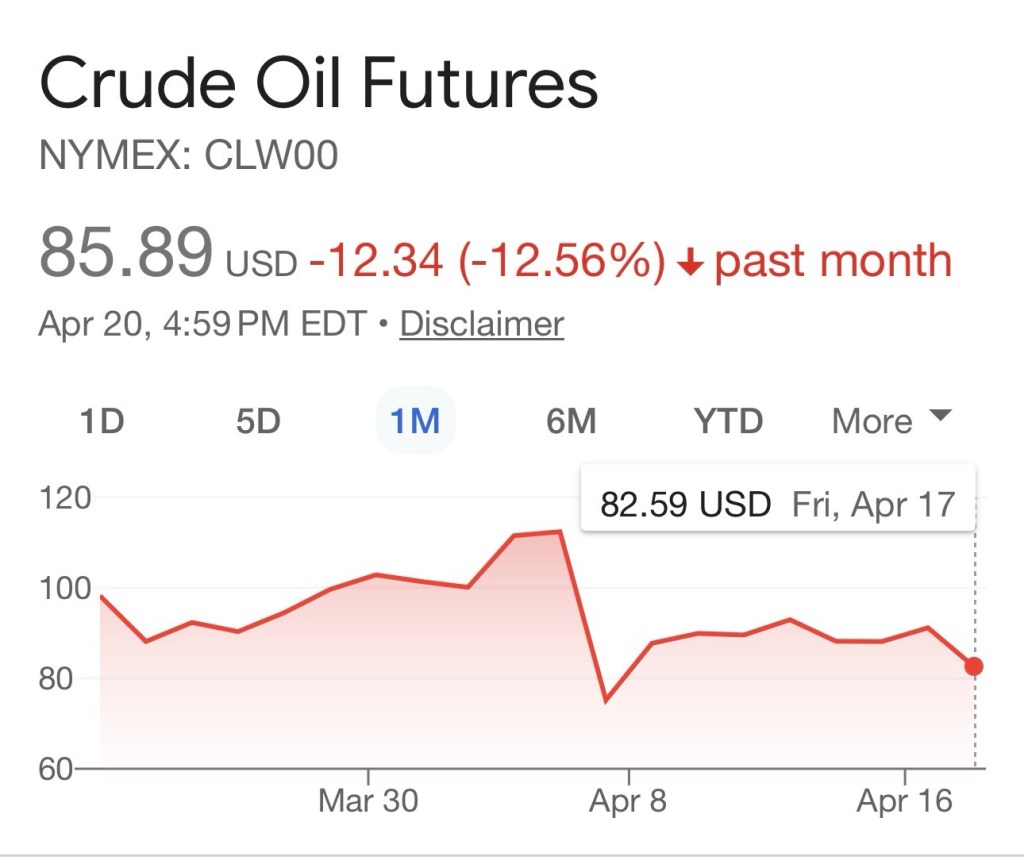
April 17, 2026: About $760 million in oil shorts were placed roughly 20 minutes before Iran’s foreign minister announced the Strait of Hormuz would reopen to commercial traffic. Oil fell as much as 11% intraday.

These are not isolated retail bets. They represent enormous, concentrated positions executed with surgical timing. On prediction markets like Polymarket, similar patterns emerged: one trader reportedly turned $3,200 into $600,000 on a U.S.-Iran ceasefire outcome one hour before it was public; other accounts netted millions across multiple Iran-related events. A crypto-analytics firm identified six “suspected insiders” who collectively made $1.2 million on a single high-profile outcome.

The White House itself recognized the optics. In a March 24 email, it explicitly warned staff against betting on Iran-war-related prediction markets, implicitly acknowledging that nonpublic information was a risk. Senators Elizabeth Warren and Sheldon Whitehouse have publicly questioned whether government insiders are misappropriating material nonpublic information. Public Citizen filed a formal CFTC complaint citing the “statistical impossibility” of such repeated accuracy absent insider knowledge.

Why This Looks Like Insider Trading

Standard market theory holds that prices incorporate information rapidly. Yet these trades consistently preceded public announcements by minutes, precisely the window in which only those “in the know” (administration officials, military planners, or their close associates) would have material nonpublic information.

The mechanics are straightforward:

• De-escalation news (ceasefire, delayed strikes, Hormuz reopening) reliably drives oil prices lower by easing supply fears.

• Shorts placed immediately before such news capture the full price drop with minimal risk.

• The volume of hundreds of millions in minutes, far exceeds normal liquidity and shows coordinated or highly informed positioning.

Defense and energy stocks have also shown volatility tied to the same cycle. The MSCI World Aerospace & Defence Index returned 32% year-to-date through March 2026, outpacing broader markets, while oil futures swung wildly on Hormuz rumors. When policy pivots are telegraphed internally, the incentive to monetize that edge is obvious—and the barrier to entry (futures markets, prediction platforms) is low for sophisticated players.

This is not the first time war has blurred the line between national security and personal profit, but the speed and transparency of modern markets (plus the rise of unregulated-ish prediction platforms) have made the anomalies impossible to ignore. Economists like Paul Krugman have bluntly labeled it “treason in the futures markets.”

Regulatory and Ethical Blind Spots

Prediction markets like Polymarket have exploded in popularity precisely because they allow direct bets on real-world events. Yet they operate in a gray zone: the CFTC has limited jurisdiction, enforcement is slow, and anonymity features can shield bad actors. Traditional futures markets are better regulated, but the CFTC’s probes into the March and April trades have so far yielded little public action, prompting criticism that the agency is “rolling over.”

For elected officials and senior staff, the STOCK Act already prohibits insider trading on nonpublic information, but enforcement has been lax. A bipartisan bill introduced in late March would ban members of Congress and senior federal staff from trading prediction-market contracts tied to policy or political events. It is a necessary start, but broader reforms are needed: real-time trade surveillance for geopolitical flashpoints, mandatory pre-clearance for officials with access to classified briefings, and clearer rules around family members and close associates.

The economic stakes are enormous. The Strait of Hormuz carries roughly 20% of global oil trade. Even temporary closures have spiked prices toward $100/barrel, rippling through inflation, consumer costs, and corporate earnings. When insiders front-run those moves, they privatize gains while the public bears the broader economic pain.

Restoring Trust in Crisis Markets

Geopolitical shocks will continue. The lesson from the 2026 Iran episode is that markets do not self-police when information is asymmetrically distributed along lines of power. Regulators, platforms, and Congress must treat these anomalies with the urgency they deserve, not as conspiracy fodder, but as evidence that the system’s integrity is at risk.

Until credible investigations produce accountability, every perfectly timed oil trade will fuel cynicism. Markets thrive on trust. When that trust erodes because the game is rigged for those “in the know,” the damage extends far beyond any single portfolio and we all lose.

The Bond Market Is Sending a Warning Ahead of a Critical Week

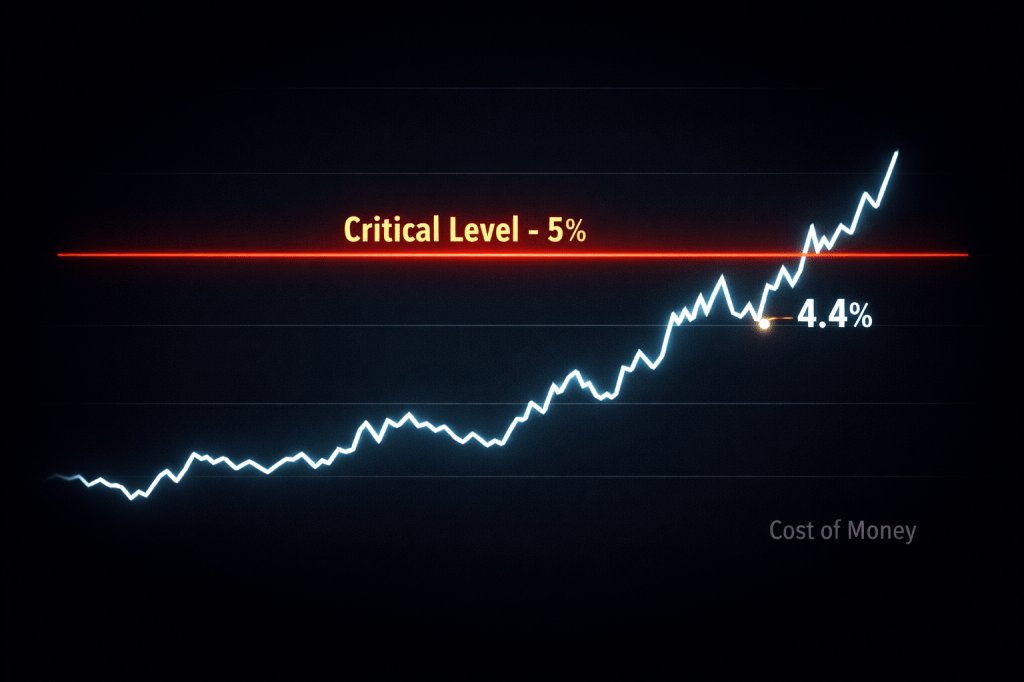
U.S. government bond yields are climbing toward levels not seen in years, with the 10-year Treasury now around 4.40% and selling pressure building as investors price in inflation risks from the U.S.–Iran conflict and a more hawkish Federal Reserve.

A move above 5% would mark a critical threshold. Borrowing costs across the economy would rise quickly, mortgages pushing toward 8%, corporate refinancing getting more expensive, and both consumers and businesses pulling back at the same time. That kind of tightening poses a more lasting threat to growth than oil prices, which can move quickly but don’t reset the cost of money across the entire system.

And this is happening even as oil has already eased from recent highs.

The impact of higher-for-longer rates is starting to show up across markets. Precious metals have reversed sharply, crypto has followed in a broader risk-off move, and global equities are reacting to the same pressure.

At home, the strain is becoming more visible. Essential services are feeling the pressure from broader funding and economic stress, adding another layer of uncertainty.

Even prediction markets are flashing unusual activity, with concentrated bets forming around a near-term U.S.–Iran ceasefire, raising questions about how some participants are positioning with insider information.

With key data on inflation, jobs, and Fed policy due this week, alongside developments in the Middle East, markets are heading into a highly sensitive moment.

Rising yields, economic strain, and geopolitical risk are all converging at once.

The bond market is already moving. Now everything else has to catch up.

Private Equity’s Greed Is Catching Up: Why Ordinary Americans Will Pay the Price

April 30, 2025 • By NKOZI KNIGHT

Many of us do not realize that private equity firms has always been about extraction, not creation. The model is simple. Borrow heavily, buy a company, slash jobs and benefits, sell off assets, and walk away with fees long before the damage shows. Communities are left with shuttered stores, abandoned buildings, bankrupt chains, and broken promises.

The list of casualties is long. Toys “R” Us was loaded with more than $5 billion dollars in debt by Bain Capital and KKR before it collapsed, taking 30,000 jobs with it. Payless ShoeSource closed its doors, erasing 18,000 jobs. J. Crew, Gymboree, Shopko, Forever 21, and Sears each followed the same path. Behind nearly every failure was a private equity deal that turned once-profitable companies into vehicles for debt. Blackstone, the largest of them all, drew criticism for gutting nursing homes and rental housing, where residents and tenants bore the consequences. Carlyle, Apollo, and Sycamore Partners engineered deals that enriched executives while leaving behind bankruptcies across retail, energy, and health care.

The damage has never been limited to debt. Private equity firms extract billions in fees on top of what they load onto companies. They sell the land and buildings, forcing the very businesses they own to pay rent back to them. In franchise models, they skim off royalty payments while cutting services and staff. They charge management fees to companies they already control, ensuring that even if a business fails, the firm still profits. These practices are not side effects. They are the business model.

For years the system ran on cheap money. With interest rates near zero, debt was abundant and investors were eager. Firms could buy, bleed, and flip companies in two or three years. That era is gone. Interest rates now sit above five percent. Debt costs more, buyers are scarce, and the IPO market has dried up. Firms are stuck holding companies that are drowning under the very leverage designed to enrich their owners.

The numbers are staggering. Nearly $12 trillion dollars in private equity assets now sit unsold. Exit activity has collapsed more than 70 percent since 2021. To raise cash, firms are borrowing against their own portfolios with NAV loans or dumping stakes at steep discounts on the secondary market. Even the giants like Blackstone, KKR, Apollo, Carlyle, Bain are stuck with bad debt no one wants. They cannot sell, yet their investors are demanding cash.

The quiet truth is that these firms are already maneuvering for Washington’s help. During the 2008 financial crisis, banks and insurers were rescued with taxpayer dollars. Private equity, which profited handsomely off that same collapse, is positioning itself for similar treatment.

This is not just an elite problem. It is a national one. When private equity runs out of road, it is not the billionaire partners who suffer. It is the workers whose jobs are cut, the retirees whose pensions cannot meet obligations, the students whose tuition rises because endowments cannot keep pace, and the taxpayers who are asked to backstop the system.

The parallels to 2008 are frightening. Then it was mortgage backed securities. Now it is unsellable companies and illiquid funds. In 2008, families lost homes and jobs while Wall Street was saved. Today the scale is even larger. With trillions in assets frozen, the next bailout could dwarf the last one.

Meanwhile, private equity’s destruction also extends into America’s hospitals and nursing homes and people are paying with their lives. Studies show that Medicare patients undergoing emergency surgeries in private equity–owned hospitals are 42 percent more likely to die within 30 days compared to those treated in community hospitals . A nationwide study found infections, falls, and other preventable adverse events increased following private equity takeovers of hospitals . Even the U.S. Department of Health and Human Services condemned the impact, warning that private equity ownership of nursing homes led to an 11 percent increase in patient deaths .

Recent reporting shows the financial calculus behind these tragedies. Nursing home operators in New York’s Capital Region diverted Medicare and Medicaid funds through inflated rent and bogus salaries. That left facilities chronically understaffed and suffering neglect so severe that it led to cases of serious injury and death .

By turning hospitals and nursing homes into profit centers rather than care centers, private equity firms aren’t just bankrupting businesses, they are literally killing people. And when that business model collapses, it will be everyday Americans who pay the cost once again.

The message is not subtle. If private equity’s gamble fails, the richest players will once again be saved. For ordinary Americans, the reckoning will look like it always does. Lost jobs. Higher taxes. Vanishing pensions. Rising tuition. And another generation paying for someone else’s greed.

This is the American cycle. The profits are privatized, the losses are socialized, and working families are forced to carry the cost.

The Private Equity Trap: How Harvard, Yale, and Princeton Got Caught in a Liquidity Crisis

For decades, private equity was the hottest corner of finance. The model was simple. Buy a company, cut costs, load it with debt and fees, polish the books, and sell it again within two to three years for a hefty profit. It was called the “flip,” and it made fortunes for firms like Blackstone, KKR, and Carlyle. Endowments and pensions rushed to get a piece of it.

That model is now broken.

The exits that once came fast and lucrative have slowed to a crawl. A world of near-zero interest rates is gone. Debt that once financed buyouts at minimal cost now comes with punishing interest, squeezing margins and stretching holding periods. Instead of flipping companies in two years, funds are sitting on assets for six, seven, even ten years. The portfolio backlog is staggering: more than $12 trillion worth of private equity assets sit unsold worldwide.

And at the center of this crisis are the universities that built their wealth on the promise of private equity. Harvard, Yale, and Princeton reshaped modern investing by betting heavily on illiquid alternatives. They now face the consequences of that bet.

The Death of the Flip

The two-year turnaround was never sustainable, but for a time it worked. Cheap debt fueled endless rounds of leveraged buyouts, where firms borrowed heavily, stripped assets, cut staff, and pushed companies back to market at inflated valuations.

But the cycle depended on two things: cheap money and eager buyers. Both have disappeared. The Federal Reserve’s rate hikes have doubled and tripled the cost of debt financing. Buyers are cautious, corporate balance sheets are tighter, and the IPO window remains largely shut.

Exit activity tells the story. In 2021, private equity firms sold $840 billion worth of companies. By 2023, that figure had collapsed to $234 billion, a drop of 72 percent. Even with a partial rebound in 2024 to $468 billion, exits are far too low to clear the backlog. Funds are holding twice as many assets as they did in 2019, but are selling them at the same pace as five years ago.

Without exits, distributions to investors dry up. Endowments that expected cash back to fund university budgets are left waiting.

Interest Rates as the Choke Point

Private equity’s entire model is built on leverage. A firm that buys a company for $10 billion may finance $7 billion of that price with debt, leaving just $3 billion of investor equity. If interest rates are low, debt is cheap, and any improvement in the business magnifies returns.

But with rates at five percent or higher, the math no longer works. Debt service eats into earnings. Refinancing becomes expensive or impossible. Companies bought at lofty valuations in 2020 and 2021 are now struggling to cover interest costs, let alone generate attractive profits for resale.

For the funds that hold them, paper valuations remain high, but real buyers demand discounts. That gap between reported NAV and market reality is another reason sales have slowed.

The Mechanics of Desperation

To keep investors from revolting, firms have engineered liquidity out of thin air. NAV loans lines of credit secured by the assets in a fund allow managers to borrow cash and hand it back to investors as if it were a distribution. Continuation funds where a firm sells a portfolio company from one of its funds into another fund it also controls in effect creates the illusion of an exit, while extending the holding period indefinitely.

On the investor side, endowments and pensions have turned to the secondary market, selling their stakes in private equity funds to buyers willing to take them at a discount. In 2024, secondary volume hit a record $155 billion. Harvard sold $1 billion worth of fund stakes. Yale is preparing to sell as much as $6 billion. The New York City pension system sold $5 billion. Buyers snapped them up at 10 to 15 percent discounts to stated value. For venture portfolios, the discounts were as steep as 50 percent.

These maneuvers do not solve the problem. They buy time. The only true fix is exits with real sales, IPOs, or recapitalizations and the industry is years away from clearing the overhang.

Case Studies: The Ivy League Squeeze

Harvard has a $53 billion endowment, the largest in the world. Nearly 40 percent of it is tied up in private equity. In April 2025, Harvard moved to sell $1 billion of those stakes through Jefferies, while simultaneously planning to issue $750 million in bonds. The official explanation is liquidity management, not distress. But the resemblance to 2008, when Harvard was forced to borrow billions to cover private equity calls, is unmistakable.

Yale built the “Yale model,” with nearly half of its $41 billion endowment allocated to private assets. For years, this made Yale the envy of institutional investors. But in 2024, Yale returned just 5.7 percent, compared to 13.5 percent for a basic stock-bond index. Now it is exploring a $6 billion secondary sale, nearly 15 percent of its endowment. The sale is not about strategy. It is about cash.

Princeton has a smaller endowment, about $35 billion, but the same exposure. Its longtime CIO Andrew Golden called 2023 the worst liquidity environment he had ever seen. Princeton raised $1.4 billion in bonds to shore up its balance sheet. Like Harvard and Yale, it insists the strategy is intact. But the reality is that illiquidity has become a liability.

Why This Matters to Everyday Americans

It is tempting to see this as an elite problem, billion dollar universities mismanaging their fortune. But it is not.

Endowments fund scholarships, financial aid, and core research. If Harvard or Yale faces a liquidity squeeze, it means fewer students receive aid. It means tuition rises to fill the gap. It means labs lose funding and staff lose jobs. What begins as a crisis in private equity becomes a crisis for students and families.

The same holds true in pensions. State retirement systems have billions tied up in private equity. When distributions dry up, they cannot meet obligations to retirees. That shortfall has to be covered by raising taxes, cutting benefits, or, in the worst case, turning to the federal government for relief. For millions of working and middle class Americans, this is not abstract. It is their retirement on the line.

The parallels to 2008 are chilling. Then, it was mortgage backed securities that turned toxic. Homeowners defaulted, banks failed, and Washington rushed in with taxpayer bailouts. Families lost houses, jobs, and savings, while Wall Street was rescued. Today, the scale is even larger. With twelve trillion dollars in unsold assets stuck on private equity books, the next bailout could dwarf 2008.

Imagine the politics of that moment. A populist like Donald Trump could frame it as Ivy League elites and Wall Street executives begging for lifelines while ordinary Americans pay the price. But the structural interdependence is real. If endowments and pensions buckle, the pressure on Washington to intervene may be irresistible. The federal government does not have the fiscal room to absorb another trillion dollar rescue, yet that may be exactly what is asked of it.

The burden would not fall on universities or private equity firms alone. It would fall on taxpayers, on students already struggling with debt, on workers who depend on pensions, on families already squeezed by inflation and high borrowing costs. In short, it would fall on the very people who had no hand in creating the mess.

Private equity sold itself as the smartest bet of modern finance. But the two year flip is dead, interest rates have choked the model, and endowments that once trusted in illiquidity now find themselves trapped. For everyday Americans, the lesson is as clear as it was in 2008: when the smartest people in the room gamble with other people’s money and lose, it is everyone else who ends up paying the price.

While You’re Watching Game 7 of the NBA Finals, We’re Being Sold Out Piece by Piece

We’re not watching a dramatic fall of America. There are no breaking news alerts about the end. No explosions in the streets. No economic sirens.

But make no mistake….something terrible is happening.

Piece by piece, decision by decision, we are being sold out. Our labor, our taxes, our future, it is all being extracted. And while it happens, we are told to look the other way while letting AI take many of our jobs.

Watch the game. Scroll the feed. Place a bet. Argue online about culture wars that do not affect your rent, your hospital bill, or your ability to afford groceries.

Meanwhile, the money keeps flowing. Out of your paycheck. Out of your neighborhood. Out of this country. Straight into the hands of foreign governments, defense contractors, and elite interests.

This is not the dramatic fall of a nation. It is a transfer of wealth, security, and stability away from ordinary Americans and toward a system that was never built to serve us. It is a system that acts globally, extracts locally, and survives only as long as we do not look directly at it.

You can call it a government. You can call it a machine. But what it really functions as is an empire. And the longer we ignore it, the more it takes.

The Cost of That Empire Is Being Paid in Evictions and Empty Refrigerators

While your tax dollars are used to fund missile systems in Israel, people across the United States are struggling just to keep a roof over their heads. Since 2020, the median price of a home has risen by more than 40 percent. Interest rates have climbed above 7 percent, making homeownership unreachable for millions (National Association of Realtors, 2024).

At the same time, Americans like myself, carry over $1.7 trillion in student loan debt. Medical bankruptcies remain the most common form of personal financial ruin. A premature baby that has to stay in a neonatal intensive care unit for over a month can cost well over a million dollars. On top of that, more than half of the country cannot afford an unexpected five hundred dollar emergency.

And yet, every year, tens of billions of dollars are approved for foreign aid without hesitation.

Israel receives more U.S. taxpayer money than any other nation on Earth. Since 1948, it has received over 300 billion dollars in aid, including nearly 4 billion annually in guaranteed military funding (Congressional Research Service, 2023).

That money has helped fund a public healthcare system, subsidized childcare, and modern infrastructure. Israel’s students have new schools. Their citizens have access to doctors without going bankrupt.

Meanwhile, in American cities, teachers work second jobs. Classrooms go without books. People drive across state lines to afford prescriptions. And in cities like Flint, Michigan and Jackson, Mississippi, families still live without safe drinking water.

This is not about scarcity. It is about priorities.

An Economy Built to Keep Us Consuming

We are told that the economy is doing well. But it only looks strong on paper because we are constantly spending to survive.

Wages have remained flat for decades, while the cost of everything else has gone up. Food, gas, housing, tuition, and insurance have all exploded. But instead of fixing the system, the solution we are offered is more debt.

Buy now, pay later.

Zero percent financing.

Monthly subscriptions for everything, even the essentials.

Our economy runs on credit cards and desperation.

We are not building wealth. We are surviving one paycheck at a time, and no one is willing to admit it.

And when that stress becomes too much, we are handed another solution, a distraction. Sometimes it’s a RICO case of a famous celebrity, other times it’s the United States bombing an empty nuclear facility in Iran, and other times it’s something as simple as sports and sports betting.

There is always something to pull our focus. Sports betting is now a multi-billion dollar industry thanks to ESPN, Draft Kings, Prize Picks, and MGM Sports betting. On television, sex-laden reality shows dominate prime time and paid subscriptions. Viral celebrity drama trends daily. Meanwhile, airstrikes in Gaza or explosions in Tehran are buried beneath all this noise but we pay for all of it.

None of this is random. It is a carefully designed system.

We Fund a Better Life for Others While We Are Told to Settle for Less

The average American is constantly being told to sacrifice.

Tighten your belt.

Use credit.

Be patient.

Inflation is temporary.

Work harder.

But there is no austerity when it comes to military aid.

There is always money for war. There is always money for foreign governments. There is always money to rebuild somewhere else in a land most have never been, but there is nothing for Maui, East Palestine, Flint, New Orleans, and many other cities in America.

Since 1948, Israel has received over 300 billion dollars in U.S. assistance (Reuters, 2024). That money has helped create one of the best publicly funded healthcare and education systems in the world—for a country with fewer people than New York City.

In America, we have veterans sleeping on the street in every major city.

We have kids learning from worksheets because their school cannot afford books.

We have families rationing insulin and choosing between medication and rent.

This is not just a funding issue. It is a values issue.

We are paying for the stability of others while our own communities are crumbling.

They Keep Us Distracted So We Do Not See It

Every time the conversation gets too close to real issues, the distractions flood in.

The headlines suddenly shift, and Operation Mockingbird goes full tilt. The scandals erupt more salacious than the prior one. The outrage machine gets turns on, and Americans are pinned against each other.

We are told to obsess over celebrities, argue over culture wars, and follow political soap operas like they are sports teams.

This is not a coincidence. It is the only way this corrupt system survives.

Because if we stop fighting each other, we might start asking the real questions.

Where is the money going?

Why can’t we afford basic services while funding foreign militaries?

Why is our economy built on debt and distraction?

And who exactly is benefiting from all of this since it’s not US?

This Is Not Incompetence. It Is a Strategy.

The truth is that the United States has all the resources it needs to take care of its people….if it wanted to.

But we do not. Not because we can’t. But because we are not supposed to.

We are expected to work, consume, and remain distracted.

We are expected to stay tired, stay anxious, and stay divided.

And we are expected to believe that any attempt to change the system is unrealistic, unpatriotic, or impossible.

But the truth is, the system is not broken. It is functioning exactly as designed.

It is designed to take.

It is designed to distract.

And it is designed to leave us wondering why we are doing everything right and still falling behind.

Can You Relate

If you are working harder than ever but getting nowhere, you are not alone.

If you are wondering why another country has healthcare and you cannot afford a routine checkup, you are asking the right question.

If you are tired of being told that sacrifice is patriotic while billionaires and foreign allies get blank checks, then maybe it is time we stop playing along.

They do not fear Iran. They do not fear China. They do not fear Russia.

What they fear is that you will start paying attention.

Because the moment we stop watching the show and start watching the system, the game is over.

Sources

National Association of Realtors. (2024). Median home price trends

Congressional Research Service. (2023). U.S. Foreign Aid to Israel

Reuters. (2024). Israel aid totals and annual packages

CNBC. (2023). 80 percent of Americans live paycheck to paycheck

Cato Institute. (2021). U.S. Military Footprint: 750 bases in 80 countries

Al Jazeera. (2021). U.S. global base presence overview

What Happened to America First? Early Policies Say Anything But…


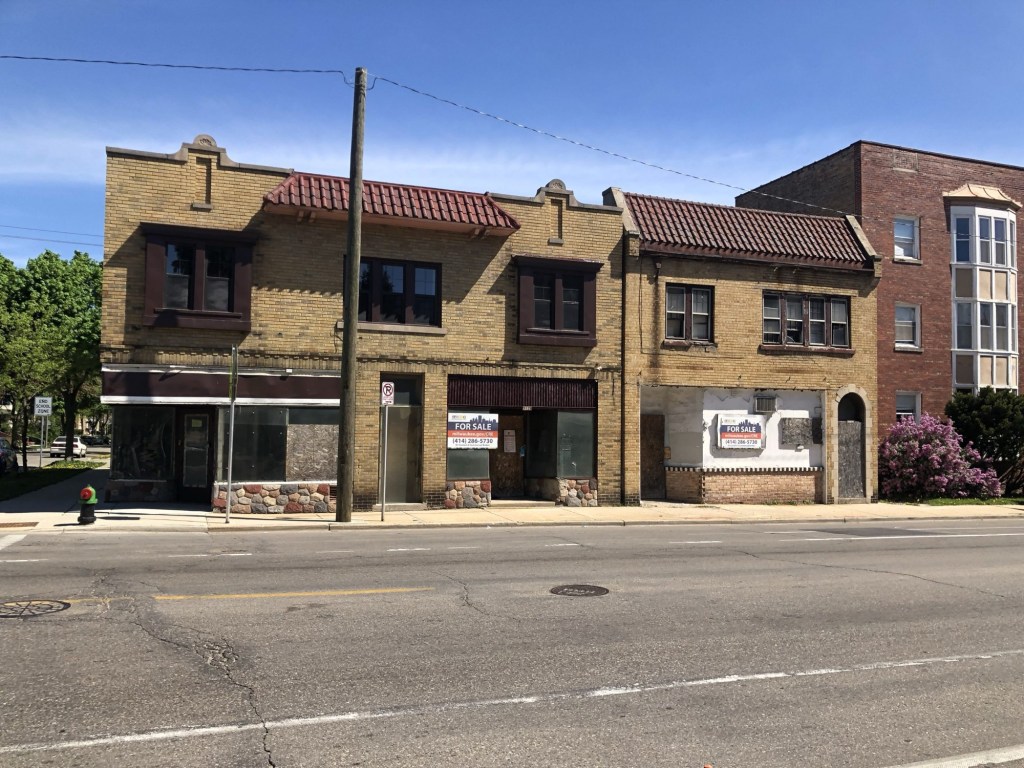
5128-5130 W. Center St. and 5124-5126 W. Center St. Photo by Jeramey Jannene.

MILWAUKEE — From 1st and Center Street west to Sherman Boulevard, abandoned buildings sit like open wounds on both sides of the street, remnants of factories, stores like Family Dollar, and once-thriving Black-owned businesses that used to anchor Milwaukee’s north side. For residents here, the phrase “America First” hits different. It’s not just a slogan. It’s a question.

What happened to America First?

When Donald J. Trump returned to the White House in January, he promised a revival of the economic nationalism that swept him into power in 2016. He talked about lifting up working-class Americans, restoring pride, and rebuilding the nation from the inside out. But early policies out of Washington tell a different story, a story where billions are sent overseas, while communities like this one are left to decay.

Foreign Priorities, Local Consequences

In the first 100 days of Trump’s second term, more than $22 billion has gone to foreign military aid, including a $3.8 billion annual commitment to Israel until 2028, and billions more to Ukraine. Meanwhile, federal programs that fund youth service, veteran reintegration, and inner-city job development are facing the axe.

The Corporation for National and Community Service , the agency behind AmeriCorps, is on the chopping block with $400 Million already cut from the budget in April. In Milwaukee, where City Year corps members help stabilize struggling schools, the impact will be immediate. “These cuts aren’t abstract,” said Vanessa Brown, a local educator and Marquette University graduate. “They take away people, resources, and hope.”

A Tale of Two Budgets

Supporters of the Trump administration say the military spending is about protecting American interests abroad. But on Milwaukee’s North Side, where gun violence, underfunded schools, and housing insecurity dominate daily life, the disconnect feels personal.

“You can walk five blocks and count ten boarded-up or burned down houses,” said Art Jones, a university professor and youth mentor. “But we’ve got money to build houses in Ukraine? Explain that to the kids sleeping in a shelter tonight.”

The Promise of Jobs, Still Waiting

Despite the tough talk on trade and manufacturing, many local plants never reopened after the last recession. Tariffs might have protected certain industries on paper, but they didn’t bring back the jobs and probably never will. What they did do, critics argue, is hike prices on everyday goods , from construction materials to car parts , squeezing small business owners and working families alike.

“It’s smoke and mirrors,” said Renee Evans, who owns a small contracting firm near Burleigh. “We were promised revitalization projects. What we got was new empty buildings and shuttered storefronts.”

The Border and the Backlash

While the administration has doubled down on mass deportations and immigration crackdowns, there’s been no meaningful investment in immigration courts or visa reform, creating longer delays and more confusion for legal immigrants, employers, and even military families. It’s a harsh policy with little planning, and local economies like Milwaukee’s which is reliant on immigrant labor in many work sectors is feeling the strain.

Is “America First” Just a Slogan Now?

For many here, the question isn’t whether America First has failed, it’s whether it was ever real to begin with. The country’s resources still seem to flow upward and outward, not inward to the communities that were promised revitalization.

“If this is America First,” said Kaleb Tatum, shaking his head outside a shuttered youth center on North Avenue, “we must not be part of America.”

Tech Rout: Nvidia Plunges as China’s DeepSeek AI Soars, Investors Flock to Safe Havens

By Nkozi Knight

Global markets took a hit on Monday as technology stocks plummeted amid growing concerns over competitive pressures from China’s burgeoning AI sector. Shares of Nvidia, a key player in the artificial intelligence (AI) industry, dropped sharply, losing 11.2% in a single session. The slide came as Chinese startup DeepSeek surged in popularity with its low-cost AI model, intensifying market anxiety about the dominance of U.S. tech firms in the rapidly growing AI space.

Tech Stocks in Freefall

Nvidia, widely regarded as a leader in AI computing hardware, saw its shares nosedive after reports of slowing demand for its GPUs in China. Analysts attributed the decline to DeepSeek’s unveiling of its DeepSeek-V3 model, a highly efficient AI system offering comparable performance at a fraction of the cost.

The ripple effect hit other tech giants as well, with Microsoft, Meta Platforms, and Alphabet each recording losses of 3-5%. The Nasdaq Composite Index fell 2.6%, its worst single-day performance since December 2024.

“The competitive landscape is shifting rapidly, and this adds a new layer of uncertainty for U.S.-based AI leaders,” said Daniel Crawford, a senior equity analyst at Global Insights. “DeepSeek’s entry into the market highlights the growing sophistication of Chinese AI firms and their ability to disrupt established players.”

DeepSeek’s Meteoric Rise

DeepSeek’s DeepSeek-V3 became the most downloaded free app on Apple’s App Store within days of its launch. The AI assistant boasts advanced natural language processing capabilities and features targeted at small and medium-sized businesses, undercutting its U.S. competitors on price.

The surge in popularity underscores the increasing influence of Chinese technology companies in global markets. With heavy state-backed funding, firms like DeepSeek are rapidly closing the innovation gap with their Western counterparts.

“DeepSeek represents a ‘Sputnik moment’ for the AI industry,” said James Li, an AI researcher based in Shanghai. “This is a wake-up call for U.S. firms to accelerate innovation or risk losing their competitive edge.”

Flight to Safety

Amid the turmoil, investors sought refuge in traditional safe-haven assets. U.S. Treasury yields dropped as demand surged, with the 10-year yield falling to 3.42%. Gold also saw a 1.3% increase, closing at $1,945 per ounce. The U.S. dollar weakened against major currencies, with the euro rising 0.8% to $1.11.

“Investors are nervous, and rightfully so,” said Sophia Greene, chief market strategist at Capital Horizons. “The market is recalibrating to factor in geopolitical risks and the growing unpredictability of tech-driven disruptions.”

Outlook

The fallout from the tech sell-off has raised broader concerns about the U.S.’s ability to maintain its dominance in the AI industry. Lawmakers in Washington have called for more stringent measures to ensure domestic innovation and reduce reliance on foreign supply chains.

For now, the spotlight remains on how U.S. tech giants will respond to the threat posed by DeepSeek and other rising stars in the Chinese tech ecosystem. Investors are watching closely as the industry braces for further turbulence.

Fitch Downgrades U.S. Credit Rating Amid Rising Deficits and Political Turmoil

In a recent blow to the United States, Fitch Ratings has downgraded the nation’s credit rating from the highest possible AAA to AA+. The rating agency attributed the drop to increasing deficits and political conflict, which they believe threaten the government’s capacity to service its debts.

This decision was made two months following a last-minute agreement between the Biden administration and House Republicans to temporarily raise the debt ceiling, thereby narrowly dodging a potentially catastrophic federal default.

This isn’t the first time the U.S. has faced such a demotion. Back in 2011, amid a similar crisis regarding the debt ceiling, Standard & Poor’s reduced the United States’ AAA rating. At present, Moody’s Investors Service is the only major credit rating agency that continues to assign the U.S. the top AAA rating.

Despite recognizing the robustness of the U.S. economy and the benefits reaped from the dollar’s position as the world’s primary currency, Fitch expressed concerns about the escalating deficits and both political parties’ reluctance to address long-term fiscal issues. Fitch voiced limited faith in the government’s ability to effectively manage the country’s finances.

In response to the downgrade, Treasury Secretary Janet Yellen criticized Fitch’s decision as “arbitrary” and reliant on obsolete data. She emphasized that “Treasury securities remain the world’s preeminent safe and liquid asset” and affirmed the underlying strength of the U.S. economy.

According to Fitch, the expenditure caps set as part of the recent debt agreement in June merely scratch the surface of the overall budget and do not confront enduring issues, such as financing Social Security and Medicare for an aging populace.

With tax reductions and elevated government expenditure leading to an expansion of deficits in recent years, and coupled with increasing interest rates, the fiscal burden has grown. Government interest payments in the first nine months of the current fiscal year amounted to $652 billion, marking a 25% rise from the same period last year.

Maya Macguineas, the president of the Committee for a Responsible Federal Budget, responded to the downgrade, terming it a “wake-up call.” She stressed the urgent need for fiscal responsibility, stating, “We are clearly on an unsustainable fiscal path. We need to do better.”

The repeated political standoffs over the debt ceiling have not only eroded the faith in U.S. fiscal management but also put the longstanding reputation of U.S. government bonds at risk. For close to a hundred years, these bonds have been considered some of the safest investments globally, primarily because the U.S. seemed unlikely to default on payments.

However, with the recent debt ceiling impasses, there is growing concern that the U.S. might default for the first time. Over a decade ago, S&P pointed out political discord as a significant risk to the country’s governing ability, and many experts opine that the situation has deteriorated since.

How the FDIC bailouts will impact the economy and impacts all taxpayers

The recent bank failures and the FDIC bailout can have significant impacts on our economy. Here are some ways it may affect us:

  1. Confidence in the banking system: The bank failures and the FDIC bailout may erode consumer and investor confidence in the banking system. When people start to doubt the stability and safety of their banks, they may withdraw their deposits, which can lead to a liquidity crisis and a domino effect of more bank failures. This, in turn, can cause a ripple effect throughout the economy, including decreased lending, lower consumer spending, and a potential recession.
  2. Cost to taxpayers: The FDIC bailout is funded by taxpayers’ money, and the cost of resolving failed banks can be significant. The more banks fail, the higher the cost to the FDIC and the taxpayers. This can divert resources from other government programs and cause budget deficits, which may have long-term consequences on the economy.
  3. Impact on small businesses: Small businesses heavily rely on loans from banks to finance their operations, and the recent bank failures can make it more difficult for them to access credit. With fewer banks and tighter lending standards, small businesses may have to pay higher interest rates or be forced to scale back their operations, which can slow down economic growth and job creation.
  4. Impact on the housing market: The banking sector plays a crucial role in the housing market, as they provide mortgage loans to homeowners. The recent bank failures can lead to a tightening of credit standards and a decrease in the availability of mortgage loans. This can result in lower home prices, decreased demand for housing, and potential foreclosures.

In conclusion, the recent bank failures and the FDIC bailout can have significant impacts on our economy, including decreased confidence in the banking system, increased costs to taxpayers, reduced access to credit for small businesses, and potential impacts on the housing market. It is crucial for policymakers and financial institutions to take steps to stabilize the banking system and restore confidence to prevent further disruptions to the economy.

What Emmett Till’s Mother Taught Me About Grief and Justice

On Feb. 26, 2012, my entire life changed in ways that I could never imagine. Within an instant, after the brutal and inhumane killing of my son, …

What Emmett Till’s Mother Taught Me About Grief and Justice

Five ways of expanding your business internationally

The global economy is changing thanks to worldwide connectivity. Companies across the globe are communicating with others without delays or hassles …

Five ways of expanding your business internationally

5 Tips to Get Your First Business off the Ground

Building your first business is tough. Building any business is tough, but your first is going to be especially difficult – you have no mistakes to …

5 Tips to Get Your First Business off the Ground

Middle class households made more than $2 trillion from homeownership over the past decade, showing it’s still a great way to build wealth

Real estate can still create huge wealth gains for young households. It’s buying the home in the first place that’s the problem.

Middle class households made more than $2 trillion from homeownership over the past decade, showing it’s still a great way to build wealth

7 Ways to Transform Your Money Mindset


The level of abundance in your life in any area (love, friendship, success or finances) is a reflection of your inner state — what you hold in your mind and heart.

Want to create a healthy and loving wealth consciousness? Here are seven ways to transform your money mindset.

1. Forgive your past.

So many of our unquestioned beliefs and behavior patterns today around money are simply things we picked up at childhood or our past. They are not true and they don’t serve our highest good.

Forgiveness is a way to release them from our heart and energy field, so we are no longer blindly re-creating the same patterns and keeping ourselves stuck at the same level of abundance.

Grab a piece of paper and write down all of the painful memories you have around money –involving your parents, lovers, bosses or even yourself — that make you feel icky, stressed, anxious or frustrated.

Now, go through your list and practice forgiveness until you release the negative charge from each memory. You could try:

(a) Using a mantra such as: I forgive you. I’m sorry. I love you.

(b) Placing your hand on your heart and simply letting yourself feel the emotions that arise — giving yourself permission to feel them fully without attaching a mental story to them. Often as you let your feelings rise and observe them without judgement, they will naturally dissolve.

(c) Having compassion. Maybe your parents fought in front of you or didn’t have enough money and it caused you pain, but they were doing their best from their level of awareness — and they were probably re-creating the patterns they had learnt when they were children. Everyone is a divine loving inner spirit deep down — sometimes our true nature just gets temporarily obscured, like a cloud covering the sun.

2. Change your story.

The poet Rumi once said: “This world is like a mountain. Your echo depends on you. If you scream good things, the world will give it back. If you scream bad things, the world will give it back.”

He is referring to the Universal law of creation. Your inner world (thoughts, beliefs and feelings) creates your outer reality.

Do you find yourself saying or thinking things like: I’m so broke… Making money is hard… I’m always down to my last dollar… I never have enough… Wanting money is bad or greedy…?

Try changing your story around money. Start saying and thinking things like: I’m so blessed… I have everything that I need… the Universe always takes care of me… I give to the world and I receive… it is safe for me to have abundance… I am provided for.

3. Open your mind to infinite possibilities.

When it comes to manifesting, your logical mind can be your worst enemy.

It has a limited capacity to think beyond what it already knows, and it can be quick to tell you things like: Well, you can’t earn more from your current job, so receiving more money is, frankly, impossible.

When you have unexamined assumptions that you can only receive money in certain pre-determined ways — like a pay cheque from a day job — you block the Universe from finding other amazingly creative ways to bring you abundance.

Begin asking the Universe: What would it take for more money to flow to me? What would it take for me to get paid for being me? What would it take for creative ideas to come to me?

4. Practice gratitude.

The world is a reflection of you. When you look around your life and see and feel lack, the Universe receives the message to send you more lack.

So many of us suffer from a condition called Onlyness. We look at our bank balance and think: I only have $42. We look at our wardrobes and think: I only have these clothes to choose from. We look at our lives and think: I only have this much love, friendship, success, wellbeing or happiness.

When you start looking around your life and seeing everything as evidence of abundance, and feeling thankful and deeply grateful, the Universe sends you more abundance.

Look at your bank balance and think: Wow, I have a whole $42 to spend, that’s awesome. Look at your wardrobe and thank: Wow, I have warm clothes for my temple, how amazing is that? Look at your life and think: Wow, I already have this much love, friendship, success, wellbeing and happiness, and I am excited for even more. I am so grateful to be alive, adventuring in time and space, and I am going to soak up and appreciate every moment.

Bless your money as it goes in and out of your life. Bless it as you buy something as simple as your morning coffee. Pause and give thanks to the Universe for providing so much for you.

5. Create space.

When your life is full to the brim with old energy, memories and clutter, you are not symbolically or energetically creating space for abundance to come into your life.

Do a life assessment — look lovingly and honestly at your home, possessions, bank balance, love life, friends, career, leisure time, wellbeing and lifestyle.

Where are you not being true to your heart, soul and values? What needs to go in order for you to feel freer, lighter and liberated?

The more you remove anything that no longer serves you, the more space you create — physically and emotionally — for new people, opportunities and abundance to flow into your life.

6. Know your worth.

You are a divine spiritual being having a human experience.

You are the Universe experience itself through you. Your creator desires for you to experience endless happiness, peace and fulfillment.

Until you know your true nature and worth, you will probably experience feelings of guilt and doubt around receiving and abundance.

When you wake up to who you really are, you begin to realize that you are not here just to struggle and survive – you are here to love, create, expand and thrive.

7. Take small steps to cultivate the feeling of abundance.

Abundance is not a number on a bank statement, a large house or a luxury holiday. Abundance is a feeling.

Think about what abundance means to you. Does it mean freedom? Does it mean generosity? Does it mean indulgence?

When you know what abundance means to you, you can start taking baby steps to cultivate the feeling of abundance on a daily basis.

You can do this through visualization (imagining your dreams already being real) or by looking around your life and coming up with creative ways to feel the way you want to feel.

Maybe you feel abundant when you: spend a whole hour with a good book and a glass of wine; cook dinner for friends; have freshly washed hair and wear your favorite outfit; or carry a $100 note in your wallet. Start doing these small actions more often.

When you create the feeling of abundance within you, the Universe will pick up your new signal and start bringing you circumstances to match your new vibration.

Elyse Santilli Writer and life coach at NotesOnBliss.com, your guidebook to happiness and creating a beautiful life

Elyse is a writer, life coach and happiness teacher at NotesOnBliss.com and the creator of the Beautiful Life Bootcamp online course. She teaches people to align with their inner spirit, design a life they love, and expand their happiness and inner peace. For updates and inspiration, sign up now.

5 Important Parts Of The $1.1 Trillion Government Spending Bill

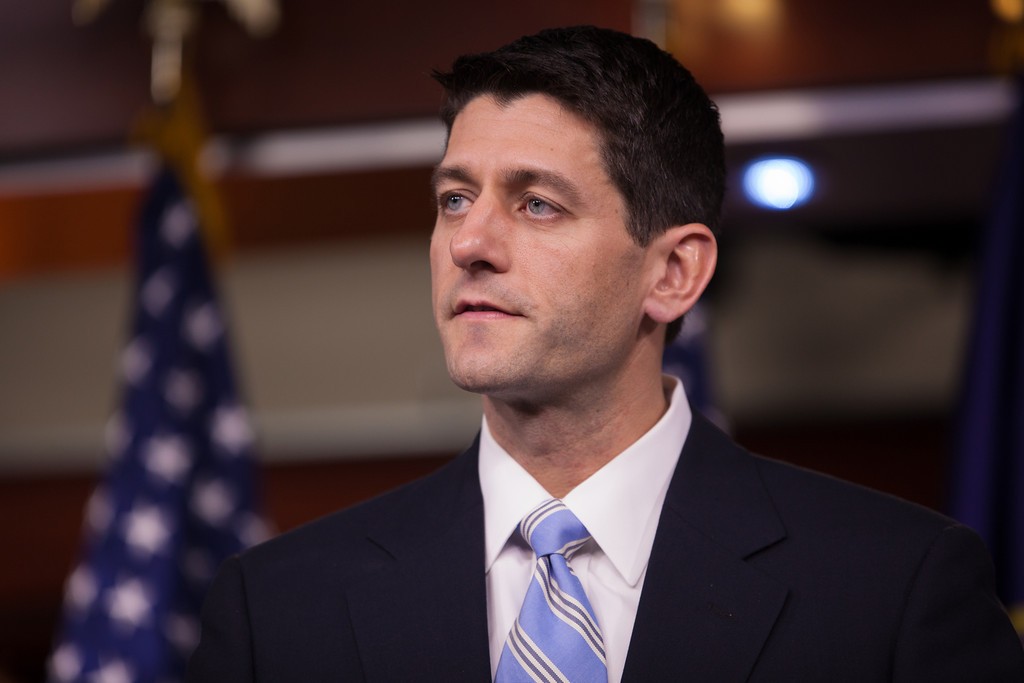
PaulRyan_JeffMalet-1024x683This week, Congress finally began to vote on a $1.1 trillion spending bill, avoiding government shutdown and putting at least a temporary halt to the gridlock that had defined Washington for much of the Obama administration.

The spending package, which hasn’t been voted on yet, would fund most federal agencies throughout 2016 and may actually demonstrate that Republicans and Democrats are, in fact, still capable of compromise. Here are five things to know about the bill:

There are actually two bills: For political reasons, the House leadership decided to split the funding measures into two different bills. One is the $1.1 trillion funding plan, the other is a $629 billion tax cut package. By splitting the two measures, USA Today notes, Democrats can vote against the tax cuts and conservative Republicans can vote against the funding bill while both can still pass.

The oil export ban is gone: The Republican caucus fought hard to put an end to the40-year ban on American companies’ ability to export oil. They got that done, much to the delight of the energy sector.

Republicans lost on refugees: Another major goal of some Republicans, especially more conservative members, was to restrict President Obama from bringing Syrian refugees to the U.S. They didn’t get that, though USA Today notes that the spending bill includes new anti-terror provisions relating to visas for visitors from 38 countries.

Planned Parenthood is safe: One of the most contentious issues for the past several months has focused on federal funding for Planned Parenthood, a national network of women’s health care centers that provide abortions. The organization will continue to receive funding, to the consternation of conservative Republicans.

The medical devices tax is gone: Mark this as a win for House Speaker Paul Ryan. Though it isn’t off the table forever, the deal delays the tax for at least two years.

Source: 5 Important Parts Of The $1.1 Trillion Government Spending Bill