By Nkozi Knight
The greatest trick in modern finance is convincing people that a valuation is the same thing as wealth.
It is not.
A company can be valued at a trillion dollars without a trillion dollars ever moving through its business. A founder like Elon Musk can become one of the richest people on earth because investors agreed to price his shares at a number that may never survive public market scrutiny. A venture capital fund can report enormous paper gains before anyone has actually turned those gains into cash. This is the paper illusion that sits underneath the current AI boom, and it is the reason the rule changes that took effect on May 1, 2026, matter far more than most Americans realize.
Nasdaq did not just make a boring technical adjustment to its index methodology. It opened a faster bridge between private market valuations and passive public money. Under the new fast entry rule, certain large newly public companies can be evaluated after only a few trading days and potentially added to the Nasdaq 100 after just 15 trading days. In a market where trillions of dollars track indexes through ETFs, target date funds, pension allocations, and 401(k) plans, that is not a small change. That is a change in who gets forced to buy, when they have to buy, and whose money is standing there when early investors are ready to sell.
This is the part most people miss. The public markets used to be where companies raised money to grow. Now, for many of the largest private companies in the world, public markets are where earlier investors go to find an exit.
Companies like SpaceX, OpenAI, and Anthropic have been built in private markets with money from venture capital firms, sovereign wealth funds, institutional investors, private equity firms, and the world’s largest asset managers. By the time everyday Americans get access, the story has already been written, the valuation has already been inflated, and the insiders have already spent years marking up their positions on paper.
That does not mean these companies are fake. SpaceX is real. OpenAI is real. Anthropic is real. Artificial intelligence is real. Data centers, chips, power grids, and cloud infrastructure are all real.
The bubble is not the technology.
The bubble is the price people are being asked to pay after the wealth has already been created for someone else.
SpaceX lost nearly $5 billion in 2025 while still seeking a valuation around $1.75 trillion. That should stop people in their tracks. It does not mean SpaceX is worthless, and it does not mean the company will fail, but it does mean investors are being asked to pay today for profits that may not ever arrive. That is how bubbles work. They do not usually form around worthless ideas. They form around powerful ideas that become so emotionally convincing that valuation stops mattering.
The reason the passive index complex matters is because it may be the only buyer large enough to absorb these IPOs at the prices Wall Street wants.
A normal investor can say no. A pension manager can hesitate. An active fund manager can decide the valuation is too rich. But passive money does not think that way. If a company enters the index, the funds tracking that index have to buy it. The money moves because the methodology says it moves. The worker contributing to a 401(k) never voted on SpaceX. The teacher with a pension never studied Anthropic’s cash burn. The nurse in a target date fund never decided OpenAI’s valuation made sense. Their money simply follows the index.
That is the machine.
Wall Street creates the paper value in private markets, waits until the valuation becomes too large for traditional buyers to absorb, changes the rules so these companies can enter major indexes faster, and then lets passive retirement money like your pension become the final buyer.
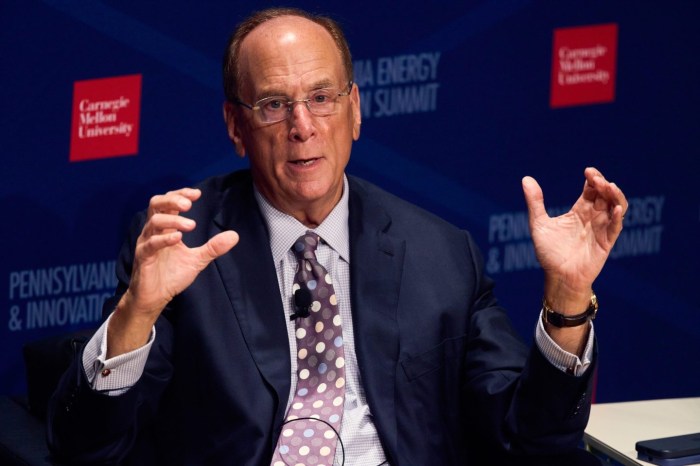
This is why Larry Fink’s comments matter. When the head of BlackRock talks about savings accounts and pension accounts helping fund the AI infrastructure buildout, he is telling people where the money is expected to come from. The AI revolution will require trillions of dollars for data centers, energy production, transmission lines, semiconductors, cooling systems, and computing infrastructure. Venture capital cannot fund that alone. Private equity cannot fund that alone. Government cannot fund that alone without triggering another political fight over debt and deficits.
So the system turns to the deepest pool of money in America.
Retirement assets.
At the end of 2025, the United States had roughly $49 trillion in retirement assets. That is the pool Wall Street sees. That is the pool asset managers want access to. That is the pool that receives contributions every payday from people who are simply trying to retire with dignity.
The tragedy is that everyday workers may not realize they are being moved from investors into financiers. They are not just saving for retirement anymore. Increasingly, their money is being positioned to finance the infrastructure, valuations, and liquidity needs of the AI economy.
That is where the corruption lives. Not always in a brown envelope or an illegal backroom deal, but in the quiet rewriting of rules that shift risk from sophisticated insiders to ordinary workers. The people who got in early get liquidity. The investment banks get fees. The asset managers get products. The exchanges get listings. The founders keep control. The early investors get a path out.
The worker gets exposure.
That word sounds harmless until markets break.
Exposure means your 401(k) bought the shares after the hype was already priced in. Exposure means your pension became the buyer after the private gains were already captured. Exposure means you were told you were gaining access to innovation, when in reality you may have been placed at the end of the line holding assets that insiders were ready to monetize.
This is not how healthy markets are supposed to work. The public is supposed to participate in growth, not simply inherit the bill after private markets finish marking up the asset.
The paper illusion works only as long as there is another buyer. That is why the passive index complex is so important. It creates a buyer that does not need to be convinced. It creates demand that does not ask hard questions. It creates flows that arrive every two weeks from payroll deductions across America.
That is the part that should scare people.
A bubble does not need everyone to believe forever. It only needs enough automatic money to keep coming in long enough for the early money to leave.
And this time, the automatic money will be your 401(k).
 Nkozi Knight