Private Equity’s Greed Is Catching Up: Why Ordinary Americans Will Pay the Price

April 30, 2025 • By NKOZI KNIGHT

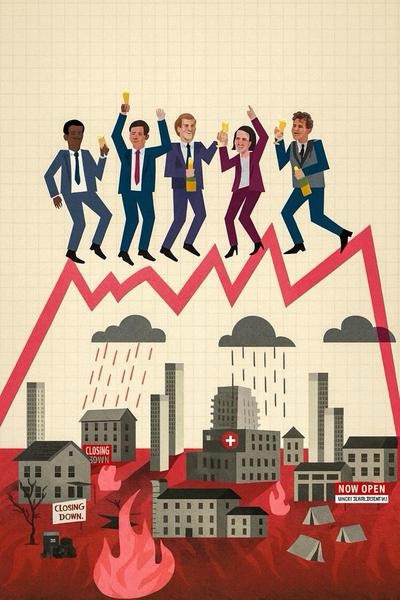
Many of us do not realize that private equity firms has always been about extraction, not creation. The model is simple. Borrow heavily, buy a company, slash jobs and benefits, sell off assets, and walk away with fees long before the damage shows. Communities are left with shuttered stores, abandoned buildings, bankrupt chains, and broken promises.

The list of casualties is long. Toys “R” Us was loaded with more than $5 billion dollars in debt by Bain Capital and KKR before it collapsed, taking 30,000 jobs with it. Payless ShoeSource closed its doors, erasing 18,000 jobs. J. Crew, Gymboree, Shopko, Forever 21, and Sears each followed the same path. Behind nearly every failure was a private equity deal that turned once-profitable companies into vehicles for debt. Blackstone, the largest of them all, drew criticism for gutting nursing homes and rental housing, where residents and tenants bore the consequences. Carlyle, Apollo, and Sycamore Partners engineered deals that enriched executives while leaving behind bankruptcies across retail, energy, and health care.

The damage has never been limited to debt. Private equity firms extract billions in fees on top of what they load onto companies. They sell the land and buildings, forcing the very businesses they own to pay rent back to them. In franchise models, they skim off royalty payments while cutting services and staff. They charge management fees to companies they already control, ensuring that even if a business fails, the firm still profits. These practices are not side effects. They are the business model.

For years the system ran on cheap money. With interest rates near zero, debt was abundant and investors were eager. Firms could buy, bleed, and flip companies in two or three years. That era is gone. Interest rates now sit above five percent. Debt costs more, buyers are scarce, and the IPO market has dried up. Firms are stuck holding companies that are drowning under the very leverage designed to enrich their owners.

The numbers are staggering. Nearly $12 trillion dollars in private equity assets now sit unsold. Exit activity has collapsed more than 70 percent since 2021. To raise cash, firms are borrowing against their own portfolios with NAV loans or dumping stakes at steep discounts on the secondary market. Even the giants like Blackstone, KKR, Apollo, Carlyle, Bain are stuck with bad debt no one wants. They cannot sell, yet their investors are demanding cash.

The quiet truth is that these firms are already maneuvering for Washington’s help. During the 2008 financial crisis, banks and insurers were rescued with taxpayer dollars. Private equity, which profited handsomely off that same collapse, is positioning itself for similar treatment.

This is not just an elite problem. It is a national one. When private equity runs out of road, it is not the billionaire partners who suffer. It is the workers whose jobs are cut, the retirees whose pensions cannot meet obligations, the students whose tuition rises because endowments cannot keep pace, and the taxpayers who are asked to backstop the system.

The parallels to 2008 are frightening. Then it was mortgage backed securities. Now it is unsellable companies and illiquid funds. In 2008, families lost homes and jobs while Wall Street was saved. Today the scale is even larger. With trillions in assets frozen, the next bailout could dwarf the last one.

Meanwhile, private equity’s destruction also extends into America’s hospitals and nursing homes and people are paying with their lives. Studies show that Medicare patients undergoing emergency surgeries in private equity–owned hospitals are 42 percent more likely to die within 30 days compared to those treated in community hospitals . A nationwide study found infections, falls, and other preventable adverse events increased following private equity takeovers of hospitals . Even the U.S. Department of Health and Human Services condemned the impact, warning that private equity ownership of nursing homes led to an 11 percent increase in patient deaths .

Recent reporting shows the financial calculus behind these tragedies. Nursing home operators in New York’s Capital Region diverted Medicare and Medicaid funds through inflated rent and bogus salaries. That left facilities chronically understaffed and suffering neglect so severe that it led to cases of serious injury and death .

By turning hospitals and nursing homes into profit centers rather than care centers, private equity firms aren’t just bankrupting businesses, they are literally killing people. And when that business model collapses, it will be everyday Americans who pay the cost once again.

The message is not subtle. If private equity’s gamble fails, the richest players will once again be saved. For ordinary Americans, the reckoning will look like it always does. Lost jobs. Higher taxes. Vanishing pensions. Rising tuition. And another generation paying for someone else’s greed.

This is the American cycle. The profits are privatized, the losses are socialized, and working families are forced to carry the cost.

While You’re Watching Game 7 of the NBA Finals, We’re Being Sold Out Piece by Piece

We’re not watching a dramatic fall of America. There are no breaking news alerts about the end. No explosions in the streets. No economic sirens.

But make no mistake….something terrible is happening.

Piece by piece, decision by decision, we are being sold out. Our labor, our taxes, our future, it is all being extracted. And while it happens, we are told to look the other way while letting AI take many of our jobs.

Watch the game. Scroll the feed. Place a bet. Argue online about culture wars that do not affect your rent, your hospital bill, or your ability to afford groceries.

Meanwhile, the money keeps flowing. Out of your paycheck. Out of your neighborhood. Out of this country. Straight into the hands of foreign governments, defense contractors, and elite interests.

This is not the dramatic fall of a nation. It is a transfer of wealth, security, and stability away from ordinary Americans and toward a system that was never built to serve us. It is a system that acts globally, extracts locally, and survives only as long as we do not look directly at it.

You can call it a government. You can call it a machine. But what it really functions as is an empire. And the longer we ignore it, the more it takes.

The Cost of That Empire Is Being Paid in Evictions and Empty Refrigerators

While your tax dollars are used to fund missile systems in Israel, people across the United States are struggling just to keep a roof over their heads. Since 2020, the median price of a home has risen by more than 40 percent. Interest rates have climbed above 7 percent, making homeownership unreachable for millions (National Association of Realtors, 2024).

At the same time, Americans like myself, carry over $1.7 trillion in student loan debt. Medical bankruptcies remain the most common form of personal financial ruin. A premature baby that has to stay in a neonatal intensive care unit for over a month can cost well over a million dollars. On top of that, more than half of the country cannot afford an unexpected five hundred dollar emergency.

And yet, every year, tens of billions of dollars are approved for foreign aid without hesitation.

Israel receives more U.S. taxpayer money than any other nation on Earth. Since 1948, it has received over 300 billion dollars in aid, including nearly 4 billion annually in guaranteed military funding (Congressional Research Service, 2023).

That money has helped fund a public healthcare system, subsidized childcare, and modern infrastructure. Israel’s students have new schools. Their citizens have access to doctors without going bankrupt.

Meanwhile, in American cities, teachers work second jobs. Classrooms go without books. People drive across state lines to afford prescriptions. And in cities like Flint, Michigan and Jackson, Mississippi, families still live without safe drinking water.

This is not about scarcity. It is about priorities.

An Economy Built to Keep Us Consuming

We are told that the economy is doing well. But it only looks strong on paper because we are constantly spending to survive.

Wages have remained flat for decades, while the cost of everything else has gone up. Food, gas, housing, tuition, and insurance have all exploded. But instead of fixing the system, the solution we are offered is more debt.

Buy now, pay later.

Zero percent financing.

Monthly subscriptions for everything, even the essentials.

Our economy runs on credit cards and desperation.

We are not building wealth. We are surviving one paycheck at a time, and no one is willing to admit it.

And when that stress becomes too much, we are handed another solution, a distraction. Sometimes it’s a RICO case of a famous celebrity, other times it’s the United States bombing an empty nuclear facility in Iran, and other times it’s something as simple as sports and sports betting.

There is always something to pull our focus. Sports betting is now a multi-billion dollar industry thanks to ESPN, Draft Kings, Prize Picks, and MGM Sports betting. On television, sex-laden reality shows dominate prime time and paid subscriptions. Viral celebrity drama trends daily. Meanwhile, airstrikes in Gaza or explosions in Tehran are buried beneath all this noise but we pay for all of it.

None of this is random. It is a carefully designed system.

We Fund a Better Life for Others While We Are Told to Settle for Less

The average American is constantly being told to sacrifice.

Tighten your belt.

Use credit.

Be patient.

Inflation is temporary.

Work harder.

But there is no austerity when it comes to military aid.

There is always money for war. There is always money for foreign governments. There is always money to rebuild somewhere else in a land most have never been, but there is nothing for Maui, East Palestine, Flint, New Orleans, and many other cities in America.

Since 1948, Israel has received over 300 billion dollars in U.S. assistance (Reuters, 2024). That money has helped create one of the best publicly funded healthcare and education systems in the world—for a country with fewer people than New York City.

In America, we have veterans sleeping on the street in every major city.

We have kids learning from worksheets because their school cannot afford books.

We have families rationing insulin and choosing between medication and rent.

This is not just a funding issue. It is a values issue.

We are paying for the stability of others while our own communities are crumbling.

They Keep Us Distracted So We Do Not See It

Every time the conversation gets too close to real issues, the distractions flood in.

The headlines suddenly shift, and Operation Mockingbird goes full tilt. The scandals erupt more salacious than the prior one. The outrage machine gets turns on, and Americans are pinned against each other.

We are told to obsess over celebrities, argue over culture wars, and follow political soap operas like they are sports teams.

This is not a coincidence. It is the only way this corrupt system survives.

Because if we stop fighting each other, we might start asking the real questions.

Where is the money going?

Why can’t we afford basic services while funding foreign militaries?

Why is our economy built on debt and distraction?

And who exactly is benefiting from all of this since it’s not US?

This Is Not Incompetence. It Is a Strategy.

The truth is that the United States has all the resources it needs to take care of its people….if it wanted to.

But we do not. Not because we can’t. But because we are not supposed to.

We are expected to work, consume, and remain distracted.

We are expected to stay tired, stay anxious, and stay divided.

And we are expected to believe that any attempt to change the system is unrealistic, unpatriotic, or impossible.

But the truth is, the system is not broken. It is functioning exactly as designed.

It is designed to take.

It is designed to distract.

And it is designed to leave us wondering why we are doing everything right and still falling behind.

Can You Relate

If you are working harder than ever but getting nowhere, you are not alone.

If you are wondering why another country has healthcare and you cannot afford a routine checkup, you are asking the right question.

If you are tired of being told that sacrifice is patriotic while billionaires and foreign allies get blank checks, then maybe it is time we stop playing along.

They do not fear Iran. They do not fear China. They do not fear Russia.

What they fear is that you will start paying attention.

Because the moment we stop watching the show and start watching the system, the game is over.

Sources

National Association of Realtors. (2024). Median home price trends

Congressional Research Service. (2023). U.S. Foreign Aid to Israel

Reuters. (2024). Israel aid totals and annual packages

CNBC. (2023). 80 percent of Americans live paycheck to paycheck

Cato Institute. (2021). U.S. Military Footprint: 750 bases in 80 countries

Al Jazeera. (2021). U.S. global base presence overview

How the FDIC bailouts will impact the economy and impacts all taxpayers

The recent bank failures and the FDIC bailout can have significant impacts on our economy. Here are some ways it may affect us:

  1. Confidence in the banking system: The bank failures and the FDIC bailout may erode consumer and investor confidence in the banking system. When people start to doubt the stability and safety of their banks, they may withdraw their deposits, which can lead to a liquidity crisis and a domino effect of more bank failures. This, in turn, can cause a ripple effect throughout the economy, including decreased lending, lower consumer spending, and a potential recession.
  2. Cost to taxpayers: The FDIC bailout is funded by taxpayers’ money, and the cost of resolving failed banks can be significant. The more banks fail, the higher the cost to the FDIC and the taxpayers. This can divert resources from other government programs and cause budget deficits, which may have long-term consequences on the economy.
  3. Impact on small businesses: Small businesses heavily rely on loans from banks to finance their operations, and the recent bank failures can make it more difficult for them to access credit. With fewer banks and tighter lending standards, small businesses may have to pay higher interest rates or be forced to scale back their operations, which can slow down economic growth and job creation.
  4. Impact on the housing market: The banking sector plays a crucial role in the housing market, as they provide mortgage loans to homeowners. The recent bank failures can lead to a tightening of credit standards and a decrease in the availability of mortgage loans. This can result in lower home prices, decreased demand for housing, and potential foreclosures.

In conclusion, the recent bank failures and the FDIC bailout can have significant impacts on our economy, including decreased confidence in the banking system, increased costs to taxpayers, reduced access to credit for small businesses, and potential impacts on the housing market. It is crucial for policymakers and financial institutions to take steps to stabilize the banking system and restore confidence to prevent further disruptions to the economy.

5 Most Common Mistakes People Make with Life Insurance

Over the years, I’ve seen that there is a lot of confusion around this topic – from what type of insurance is best to how much you need and where to get it. With that in mind, below are the five most common mistakes people make when it comes to life insurance. Hopefully, through this list, you’ll be able to get a better understanding of how life insurance works and why it’s a good tool for you and your family.


gofundme
Mistake #1 – Having no life insurance at all

Many people simply overlook the importance of life insurance. It doesn’t appear to be something they need and it can be viewed as an added expense. But take a second to stop and consider all the important people in your life. If you weren’t there, how would they be impacted financially? It’s not fun to think about, but by “playing dead” you can begin to understand that life insurance is a critical tool to ensuring your family feels financially supported should anything happen to you. For instance, if you have any financial obligations, a life insurance policy will help to ensure that those burdens do not fall entirely on your family members and they can avoid starting a gofundme page in your name to pay for funeral cost. Remember, it is also important to get life insurance sooner rather than later because the cost goes up the older we get.


Layoff

Mistake #2 – Relying solely on employer-provided workplace life insurance

Life insurance provided by your workplace is an excellent benefit and can serve as a good starting point for your basic minimum coverage. But remember any life insurance provided automatically from your employer is only good as long as you work with the company. Chances are you will not be with the same company for your entire working career either by choice or by force and the insurance does not go with you. You can purchase additional coverage through your employer or on your own to help fill the gap.


term-vs-perm-venn-diagram

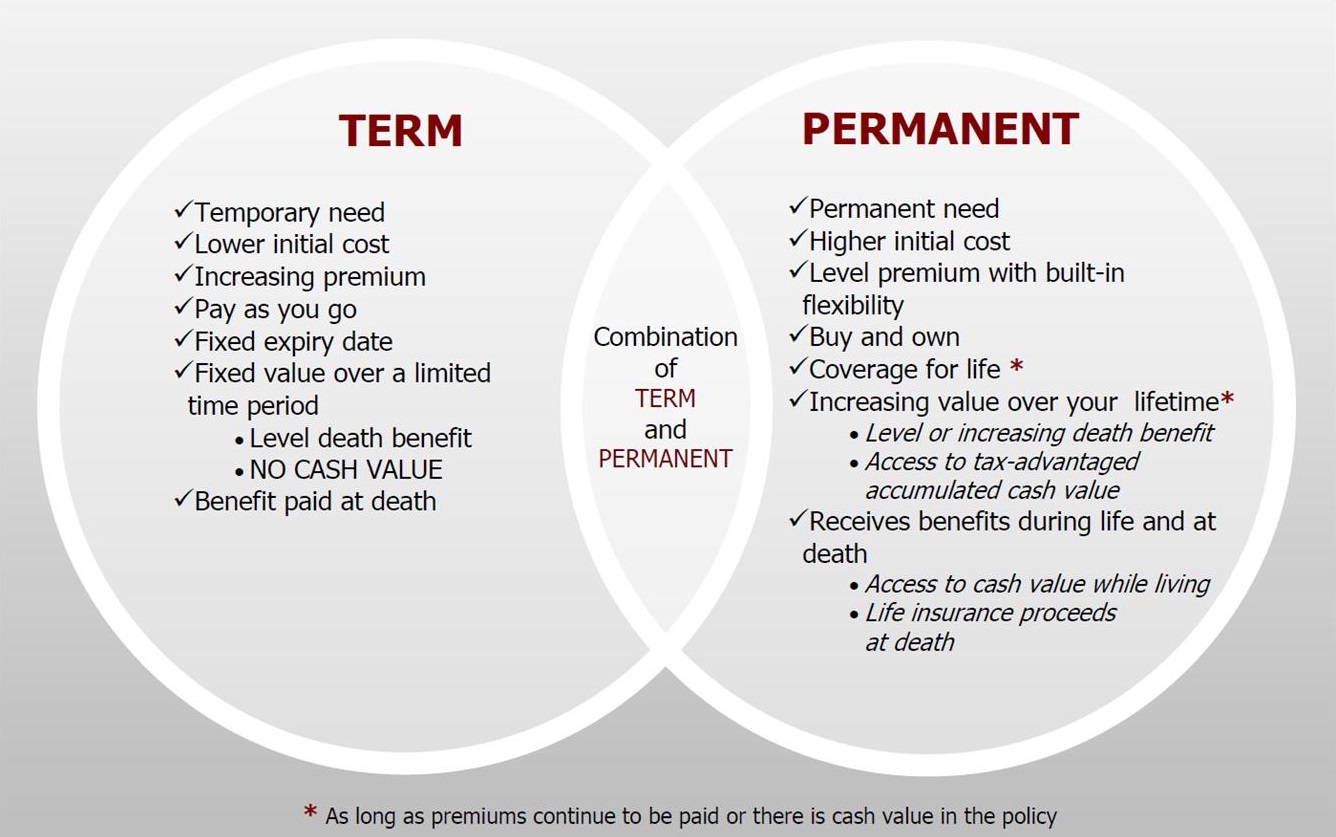
Mistake #3 – Only considering term life insurance

Term life insurance provides a “death” or “survivor” benefit, which is the amount beneficiaries receive if you pass away, for a certain period of time (15, 20 or 30 years are common increments), after which the coverage ends. An alternative solution would be to adopt cash value life insurance, which similarly provides a death benefit, but will grow over the years as long as you continue to fund the policy. Furthermore, cash value life insurance can help with financial obligations in a tax-advantaged way, whether it is paying for college, a business venture or retirement. These policies are generally more expensive, but can make a lot of sense if you are able to commit to regularly funding the policy.


Concern

Mistake #4 – Leaving retirement savings vulnerable

If you do not have any/enough life insurance, your family is likely to look to your retirement savings for financial support. This may seem like a safe solution for finding additional resources, but I would advise against using funds saved specifically for retirement for another purpose. If you are the higher earner in the family, your spouse may have been relying on those savings for his or her own retirement. Similarly, if your spouse is forced to liquidate or take large loans from the retirement account, it will hurt the potential long-term investment gains that would have benefitted your family down the road. It is important that the money you are saving is allotted for different goals – from life insurance to retirement – so that you are making the most of each savings opportunity.


Life-insurance-blog-post-150915

Mistake #5 – Guessing on how much life insurance you need

Many people who walk into my office have no idea how much life insurance they need. Is it five times annual salary? Ten times? Some other figure? There are many factors to take into account to figure out how much life insurance is right for you. Often this is where a financial professional can really help with the process. We can help quantify how much and what type of insurance makes the most sense for you and then help get that coverage in place. There are also many online calculators available to use as a starting point.

At the end of the day, we all just want to know that our loved ones will be taken care of after we’re gone. I have seen firsthand the peace of mind a life insurance policy can deliver. So this month, as life speeds up again, take a few minutes to pause and think about the future. Life Insurance Awareness month may only last 30 days, but a good policy will last for years to come!


7 Ways to Transform Your Money Mindset


The level of abundance in your life in any area (love, friendship, success or finances) is a reflection of your inner state — what you hold in your mind and heart.

Want to create a healthy and loving wealth consciousness? Here are seven ways to transform your money mindset.

1. Forgive your past.

So many of our unquestioned beliefs and behavior patterns today around money are simply things we picked up at childhood or our past. They are not true and they don’t serve our highest good.

Forgiveness is a way to release them from our heart and energy field, so we are no longer blindly re-creating the same patterns and keeping ourselves stuck at the same level of abundance.

Grab a piece of paper and write down all of the painful memories you have around money –involving your parents, lovers, bosses or even yourself — that make you feel icky, stressed, anxious or frustrated.

Now, go through your list and practice forgiveness until you release the negative charge from each memory. You could try:

(a) Using a mantra such as: I forgive you. I’m sorry. I love you.

(b) Placing your hand on your heart and simply letting yourself feel the emotions that arise — giving yourself permission to feel them fully without attaching a mental story to them. Often as you let your feelings rise and observe them without judgement, they will naturally dissolve.

(c) Having compassion. Maybe your parents fought in front of you or didn’t have enough money and it caused you pain, but they were doing their best from their level of awareness — and they were probably re-creating the patterns they had learnt when they were children. Everyone is a divine loving inner spirit deep down — sometimes our true nature just gets temporarily obscured, like a cloud covering the sun.

2. Change your story.

The poet Rumi once said: “This world is like a mountain. Your echo depends on you. If you scream good things, the world will give it back. If you scream bad things, the world will give it back.”

He is referring to the Universal law of creation. Your inner world (thoughts, beliefs and feelings) creates your outer reality.

Do you find yourself saying or thinking things like: I’m so broke… Making money is hard… I’m always down to my last dollar… I never have enough… Wanting money is bad or greedy…?

Try changing your story around money. Start saying and thinking things like: I’m so blessed… I have everything that I need… the Universe always takes care of me… I give to the world and I receive… it is safe for me to have abundance… I am provided for.

3. Open your mind to infinite possibilities.

When it comes to manifesting, your logical mind can be your worst enemy.

It has a limited capacity to think beyond what it already knows, and it can be quick to tell you things like: Well, you can’t earn more from your current job, so receiving more money is, frankly, impossible.

When you have unexamined assumptions that you can only receive money in certain pre-determined ways — like a pay cheque from a day job — you block the Universe from finding other amazingly creative ways to bring you abundance.

Begin asking the Universe: What would it take for more money to flow to me? What would it take for me to get paid for being me? What would it take for creative ideas to come to me?

4. Practice gratitude.

The world is a reflection of you. When you look around your life and see and feel lack, the Universe receives the message to send you more lack.

So many of us suffer from a condition called Onlyness. We look at our bank balance and think: I only have $42. We look at our wardrobes and think: I only have these clothes to choose from. We look at our lives and think: I only have this much love, friendship, success, wellbeing or happiness.

When you start looking around your life and seeing everything as evidence of abundance, and feeling thankful and deeply grateful, the Universe sends you more abundance.

Look at your bank balance and think: Wow, I have a whole $42 to spend, that’s awesome. Look at your wardrobe and thank: Wow, I have warm clothes for my temple, how amazing is that? Look at your life and think: Wow, I already have this much love, friendship, success, wellbeing and happiness, and I am excited for even more. I am so grateful to be alive, adventuring in time and space, and I am going to soak up and appreciate every moment.

Bless your money as it goes in and out of your life. Bless it as you buy something as simple as your morning coffee. Pause and give thanks to the Universe for providing so much for you.

5. Create space.

When your life is full to the brim with old energy, memories and clutter, you are not symbolically or energetically creating space for abundance to come into your life.

Do a life assessment — look lovingly and honestly at your home, possessions, bank balance, love life, friends, career, leisure time, wellbeing and lifestyle.

Where are you not being true to your heart, soul and values? What needs to go in order for you to feel freer, lighter and liberated?

The more you remove anything that no longer serves you, the more space you create — physically and emotionally — for new people, opportunities and abundance to flow into your life.

6. Know your worth.

You are a divine spiritual being having a human experience.

You are the Universe experience itself through you. Your creator desires for you to experience endless happiness, peace and fulfillment.

Until you know your true nature and worth, you will probably experience feelings of guilt and doubt around receiving and abundance.

When you wake up to who you really are, you begin to realize that you are not here just to struggle and survive – you are here to love, create, expand and thrive.

7. Take small steps to cultivate the feeling of abundance.

Abundance is not a number on a bank statement, a large house or a luxury holiday. Abundance is a feeling.

Think about what abundance means to you. Does it mean freedom? Does it mean generosity? Does it mean indulgence?

When you know what abundance means to you, you can start taking baby steps to cultivate the feeling of abundance on a daily basis.

You can do this through visualization (imagining your dreams already being real) or by looking around your life and coming up with creative ways to feel the way you want to feel.

Maybe you feel abundant when you: spend a whole hour with a good book and a glass of wine; cook dinner for friends; have freshly washed hair and wear your favorite outfit; or carry a $100 note in your wallet. Start doing these small actions more often.

When you create the feeling of abundance within you, the Universe will pick up your new signal and start bringing you circumstances to match your new vibration.

Elyse Santilli Writer and life coach at NotesOnBliss.com, your guidebook to happiness and creating a beautiful life

Elyse is a writer, life coach and happiness teacher at NotesOnBliss.com and the creator of the Beautiful Life Bootcamp online course. She teaches people to align with their inner spirit, design a life they love, and expand their happiness and inner peace. For updates and inspiration, sign up now.

5 Important Parts Of The $1.1 Trillion Government Spending Bill

PaulRyan_JeffMalet-1024x683This week, Congress finally began to vote on a $1.1 trillion spending bill, avoiding government shutdown and putting at least a temporary halt to the gridlock that had defined Washington for much of the Obama administration.

The spending package, which hasn’t been voted on yet, would fund most federal agencies throughout 2016 and may actually demonstrate that Republicans and Democrats are, in fact, still capable of compromise. Here are five things to know about the bill:

There are actually two bills: For political reasons, the House leadership decided to split the funding measures into two different bills. One is the $1.1 trillion funding plan, the other is a $629 billion tax cut package. By splitting the two measures, USA Today notes, Democrats can vote against the tax cuts and conservative Republicans can vote against the funding bill while both can still pass.

The oil export ban is gone: The Republican caucus fought hard to put an end to the40-year ban on American companies’ ability to export oil. They got that done, much to the delight of the energy sector.

Republicans lost on refugees: Another major goal of some Republicans, especially more conservative members, was to restrict President Obama from bringing Syrian refugees to the U.S. They didn’t get that, though USA Today notes that the spending bill includes new anti-terror provisions relating to visas for visitors from 38 countries.

Planned Parenthood is safe: One of the most contentious issues for the past several months has focused on federal funding for Planned Parenthood, a national network of women’s health care centers that provide abortions. The organization will continue to receive funding, to the consternation of conservative Republicans.

The medical devices tax is gone: Mark this as a win for House Speaker Paul Ryan. Though it isn’t off the table forever, the deal delays the tax for at least two years.

Source: 5 Important Parts Of The $1.1 Trillion Government Spending Bill

Here’s How Many Jobs U.S. Companies Cut In September

The computer industry was hit hard.

Last month saw a surge in layoffs, primarily due to large-scale employee cuts at companies like Hewlett-Packard.

U.S. companies laid off 58,877 workers in September, according to data released Thursday by Challenger, Gray & Christmas. September layoffs are up 43% from August when about 41,000 workers were let go.

In total, employers have announced 493,431 planned layoffs so far this year, a 36% jump over the same period last year and 2% more than the 2014 total.

“Job cuts have already surpassed last year’s total and are on track to end the year as the highest annual total since 2009, when nearly 1.3 million layoffs were announced at the tail-end of the recession,” said John A. Challenger, CEO of Challenger, Gray & Christmas.

The computer industry accounted for the heaviest job cuts in September primarily driven by Hewlett-Packard, which said it would cut 30,000 jobs. The job losses, which were announced in mid-September by CEO Meg Whitman, should save the company $2.7 billion annually and represented about 10% of the company’s workforce, HP said.

Source: Here’s How Many Jobs U.S. Companies Cut In September