When Staying Still Costs You More Than Leaving

By Nkozi Knight

We are taught that success is a matter of effort and time. Keep your head down. Do the work. Stay loyal. That path built many careers. It also blinds many people to a quieter truth. Sometimes the most valuable move is to leave before the role leaves you.

Workplaces are changing faster than job descriptions. Automation absorbs routine tasks. Teams are reorganized to chase efficiency. Hiring broadens across borders and time zones. The game rewards adaptability and clear value creation more than tenure. In that world staying put out of habit can become the most expensive decision you make.

Quiet quitting got the headlines. The real danger is quiet stagnation. You keep delivering while the organization shifts around you. The learning curve flattens. Budgets tilt toward tools and roles that scale. Your calendar fills up while your market value stands still. It feels safe. It is not.

Walking away is not drama. It is strategy. The test is blunt. Does this role increase your value a year from now. Will you gain judgment, relationships, and outcomes that a tool cannot replicate. Are you closer to decisions or only to tasks. If the answers are unclear, your growth is elsewhere.

Leaving does not always mean leaving the company. It can mean moving away from the wrong team, the wrong product line, or the wrong client mix. It can mean choosing work that sits beside the machines rather than beneath them. Human judgment, trust building, original insight, and accountable ownership remain scarce. Aim your career at the work that needs a signature, not just a keyboard.

Global hiring and visa policies will keep shifting. So will the conversation about who gets which jobs. The best answer is not resentment. It is readiness. Build skills that travel across industries. Learn the systems that drive your field so you can direct them rather than compete with them. Grow relationships that outlast titles and managers. When your value is obvious and portable, market cycles do not scare you.

Leaders face a parallel choice. Use new technology to strip meaning from work and your best people will leave first. Use it to remove drudgery while investing in clear ladders and real learning and your best people will build with you. Markets reward firms that pair efficiency with dignity.

The hardest part of leaving is the story we tell ourselves. We equate exit with failure. We confuse loyalty with growth. We wait for a sign that never comes. Here is the truth. Growth rarely happens in rooms that mute your voice or drain your energy. If the space no longer fits the person you are becoming, it is time to choose a new space.

Staying can be brave when it compounds your value. Staying can be costly when it does not. The opportunity you want is seldom waiting at the desk you have. Choose your arena with care. If the work no longer deserves you, walk away.

Knowing When to Walk Away in 2025

By Nkozi Knight

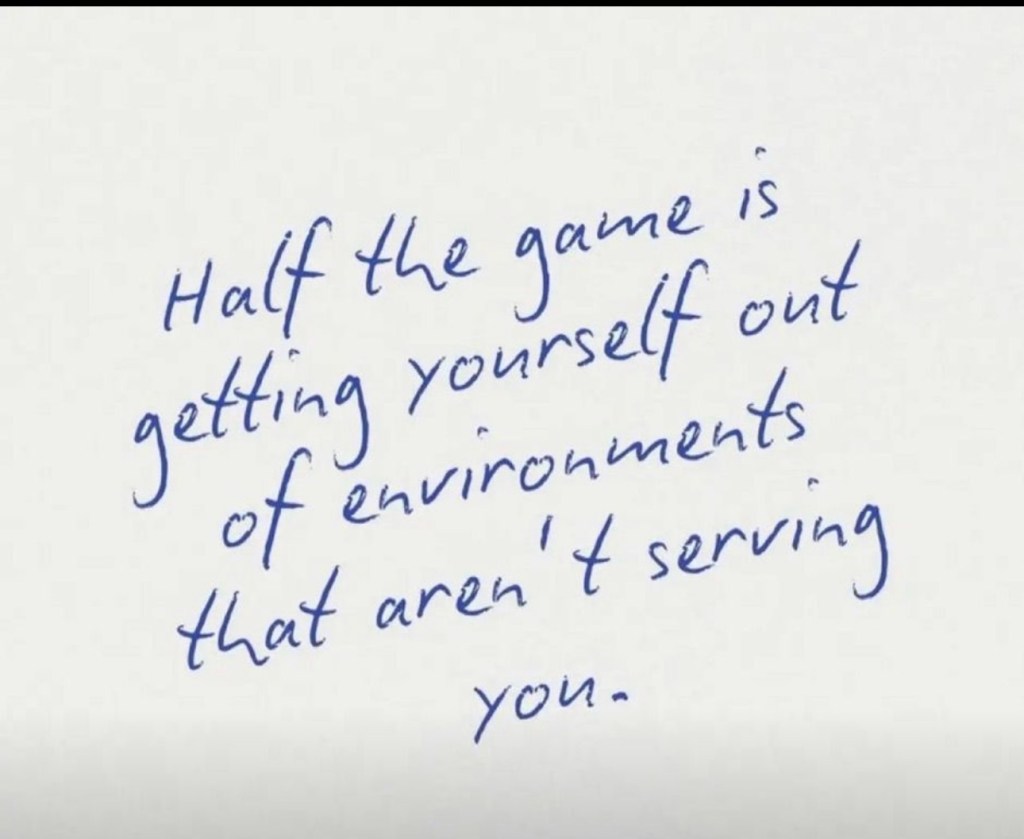
We tell ourselves that success comes from more effort and more time. That belief still matters. Yet in 2025 another truth is just as important. Half the game is choosing where you spend your effort in the first place. Sometimes the smart move is to walk away.

The labor market is reshaping itself in real time. Generative AI tools now handle work that once kept whole teams busy. Companies are reorganizing to chase efficiency and speed. Leadership teams are under pressure to do more with fewer people. Global talent markets are wide open. H1B holders bring real skill and many firms are recruiting globally before they look locally. None of this is a moral judgment. It is the environment. In this environment staying put out of habit can become the most expensive decision you make.

Silent quitting defined the last few years. People stayed but pulled back. In 2025 the bigger risk is silent stagnation. You keep delivering while the org chart keeps shifting. Systems take over routine tasks. Budgets move to automation and to roles that can scale. If your seat does not compound your skills or your network, the clock is already ticking even if you cannot hear it.

Walking away is not drama. It is strategy. The question is simple. Does this role increase your value twelve months from now. If the honest answer is no, the cost of loyalty is too high. Loyalty to your future is the only loyalty that compounds.

To evaluate your situation ask yourself whether the outcomes you deliver are unique to your skill set or whether a model could replace them. Consider whether the learning curve in your current role is still steep or if you are repeating cycles that add little to your future. Reflect on whether your work places you near decision makers or keeps you locked in execution only. And finally, consider whether the relationships you build today will serve you tomorrow. These questions offer quiet clarity that no performance review will provide.

Leaving does not always mean quitting your employer. It can mean walking away from the wrong team, the wrong leader, the wrong product line, or the wrong client mix. It can mean seeking roles that sit beside the machines rather than beneath them. Human judgment, trust building, original insight, and accountable ownership remain scarce. Aim your career at the work that needs a signature, not just a keyboard.

The H1B debate is loud this year and will stay loud. The best response is not resentment. It is readiness. Build competencies that translate across industries. Learn the tools that drive your field so you can direct them rather than compete with them. Grow relationships that outlast any single title. When your value is clear and portable you will not fear any policy cycle.

For leaders the message is just as direct. People are watching how you treat them during this transition. If you use AI to strip away meaningful work without creating new ladders, your best people will exit first. If you invest in upskilling and in clear career paths, your organization will retain its core talent and attract more. Markets reward firms that act with clarity and care at the same time.

The choice to walk away is never easy. It asks for courage and a clear view of the road ahead. Yet the market is telling the truth every day. Growth rarely happens in places that mute your voice or drain your energy. If the room you are in no longer fits the person you are becoming, it is time to leave the room.

In 2025 the winners will not be those who simply grind harder. They will be those who choose their arenas wisely and walk away when the environment no longer deserves them.

Private Equity’s Greed Is Catching Up: Why Ordinary Americans Will Pay the Price

April 30, 2025 • By NKOZI KNIGHT

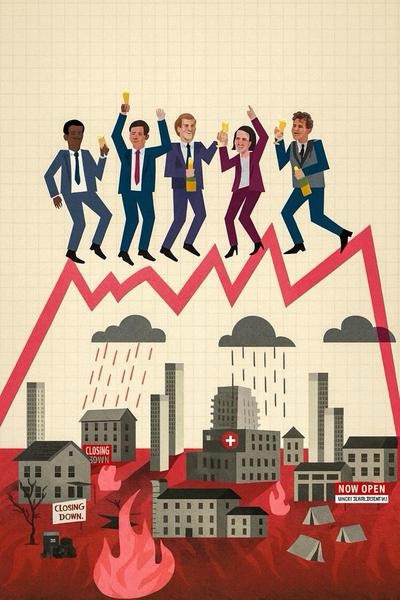
Many of us do not realize that private equity firms has always been about extraction, not creation. The model is simple. Borrow heavily, buy a company, slash jobs and benefits, sell off assets, and walk away with fees long before the damage shows. Communities are left with shuttered stores, abandoned buildings, bankrupt chains, and broken promises.

The list of casualties is long. Toys “R” Us was loaded with more than $5 billion dollars in debt by Bain Capital and KKR before it collapsed, taking 30,000 jobs with it. Payless ShoeSource closed its doors, erasing 18,000 jobs. J. Crew, Gymboree, Shopko, Forever 21, and Sears each followed the same path. Behind nearly every failure was a private equity deal that turned once-profitable companies into vehicles for debt. Blackstone, the largest of them all, drew criticism for gutting nursing homes and rental housing, where residents and tenants bore the consequences. Carlyle, Apollo, and Sycamore Partners engineered deals that enriched executives while leaving behind bankruptcies across retail, energy, and health care.

The damage has never been limited to debt. Private equity firms extract billions in fees on top of what they load onto companies. They sell the land and buildings, forcing the very businesses they own to pay rent back to them. In franchise models, they skim off royalty payments while cutting services and staff. They charge management fees to companies they already control, ensuring that even if a business fails, the firm still profits. These practices are not side effects. They are the business model.

For years the system ran on cheap money. With interest rates near zero, debt was abundant and investors were eager. Firms could buy, bleed, and flip companies in two or three years. That era is gone. Interest rates now sit above five percent. Debt costs more, buyers are scarce, and the IPO market has dried up. Firms are stuck holding companies that are drowning under the very leverage designed to enrich their owners.

The numbers are staggering. Nearly $12 trillion dollars in private equity assets now sit unsold. Exit activity has collapsed more than 70 percent since 2021. To raise cash, firms are borrowing against their own portfolios with NAV loans or dumping stakes at steep discounts on the secondary market. Even the giants like Blackstone, KKR, Apollo, Carlyle, Bain are stuck with bad debt no one wants. They cannot sell, yet their investors are demanding cash.

The quiet truth is that these firms are already maneuvering for Washington’s help. During the 2008 financial crisis, banks and insurers were rescued with taxpayer dollars. Private equity, which profited handsomely off that same collapse, is positioning itself for similar treatment.

This is not just an elite problem. It is a national one. When private equity runs out of road, it is not the billionaire partners who suffer. It is the workers whose jobs are cut, the retirees whose pensions cannot meet obligations, the students whose tuition rises because endowments cannot keep pace, and the taxpayers who are asked to backstop the system.

The parallels to 2008 are frightening. Then it was mortgage backed securities. Now it is unsellable companies and illiquid funds. In 2008, families lost homes and jobs while Wall Street was saved. Today the scale is even larger. With trillions in assets frozen, the next bailout could dwarf the last one.

Meanwhile, private equity’s destruction also extends into America’s hospitals and nursing homes and people are paying with their lives. Studies show that Medicare patients undergoing emergency surgeries in private equity–owned hospitals are 42 percent more likely to die within 30 days compared to those treated in community hospitals . A nationwide study found infections, falls, and other preventable adverse events increased following private equity takeovers of hospitals . Even the U.S. Department of Health and Human Services condemned the impact, warning that private equity ownership of nursing homes led to an 11 percent increase in patient deaths .

Recent reporting shows the financial calculus behind these tragedies. Nursing home operators in New York’s Capital Region diverted Medicare and Medicaid funds through inflated rent and bogus salaries. That left facilities chronically understaffed and suffering neglect so severe that it led to cases of serious injury and death .

By turning hospitals and nursing homes into profit centers rather than care centers, private equity firms aren’t just bankrupting businesses, they are literally killing people. And when that business model collapses, it will be everyday Americans who pay the cost once again.

The message is not subtle. If private equity’s gamble fails, the richest players will once again be saved. For ordinary Americans, the reckoning will look like it always does. Lost jobs. Higher taxes. Vanishing pensions. Rising tuition. And another generation paying for someone else’s greed.

This is the American cycle. The profits are privatized, the losses are socialized, and working families are forced to carry the cost.

The Private Equity Trap: How Harvard, Yale, and Princeton Got Caught in a Liquidity Crisis

For decades, private equity was the hottest corner of finance. The model was simple. Buy a company, cut costs, load it with debt and fees, polish the books, and sell it again within two to three years for a hefty profit. It was called the “flip,” and it made fortunes for firms like Blackstone, KKR, and Carlyle. Endowments and pensions rushed to get a piece of it.

That model is now broken.

The exits that once came fast and lucrative have slowed to a crawl. A world of near-zero interest rates is gone. Debt that once financed buyouts at minimal cost now comes with punishing interest, squeezing margins and stretching holding periods. Instead of flipping companies in two years, funds are sitting on assets for six, seven, even ten years. The portfolio backlog is staggering: more than $12 trillion worth of private equity assets sit unsold worldwide.

And at the center of this crisis are the universities that built their wealth on the promise of private equity. Harvard, Yale, and Princeton reshaped modern investing by betting heavily on illiquid alternatives. They now face the consequences of that bet.

The Death of the Flip

The two-year turnaround was never sustainable, but for a time it worked. Cheap debt fueled endless rounds of leveraged buyouts, where firms borrowed heavily, stripped assets, cut staff, and pushed companies back to market at inflated valuations.

But the cycle depended on two things: cheap money and eager buyers. Both have disappeared. The Federal Reserve’s rate hikes have doubled and tripled the cost of debt financing. Buyers are cautious, corporate balance sheets are tighter, and the IPO window remains largely shut.

Exit activity tells the story. In 2021, private equity firms sold $840 billion worth of companies. By 2023, that figure had collapsed to $234 billion, a drop of 72 percent. Even with a partial rebound in 2024 to $468 billion, exits are far too low to clear the backlog. Funds are holding twice as many assets as they did in 2019, but are selling them at the same pace as five years ago.

Without exits, distributions to investors dry up. Endowments that expected cash back to fund university budgets are left waiting.

Interest Rates as the Choke Point

Private equity’s entire model is built on leverage. A firm that buys a company for $10 billion may finance $7 billion of that price with debt, leaving just $3 billion of investor equity. If interest rates are low, debt is cheap, and any improvement in the business magnifies returns.

But with rates at five percent or higher, the math no longer works. Debt service eats into earnings. Refinancing becomes expensive or impossible. Companies bought at lofty valuations in 2020 and 2021 are now struggling to cover interest costs, let alone generate attractive profits for resale.

For the funds that hold them, paper valuations remain high, but real buyers demand discounts. That gap between reported NAV and market reality is another reason sales have slowed.

The Mechanics of Desperation

To keep investors from revolting, firms have engineered liquidity out of thin air. NAV loans lines of credit secured by the assets in a fund allow managers to borrow cash and hand it back to investors as if it were a distribution. Continuation funds where a firm sells a portfolio company from one of its funds into another fund it also controls in effect creates the illusion of an exit, while extending the holding period indefinitely.

On the investor side, endowments and pensions have turned to the secondary market, selling their stakes in private equity funds to buyers willing to take them at a discount. In 2024, secondary volume hit a record $155 billion. Harvard sold $1 billion worth of fund stakes. Yale is preparing to sell as much as $6 billion. The New York City pension system sold $5 billion. Buyers snapped them up at 10 to 15 percent discounts to stated value. For venture portfolios, the discounts were as steep as 50 percent.

These maneuvers do not solve the problem. They buy time. The only true fix is exits with real sales, IPOs, or recapitalizations and the industry is years away from clearing the overhang.

Case Studies: The Ivy League Squeeze

Harvard has a $53 billion endowment, the largest in the world. Nearly 40 percent of it is tied up in private equity. In April 2025, Harvard moved to sell $1 billion of those stakes through Jefferies, while simultaneously planning to issue $750 million in bonds. The official explanation is liquidity management, not distress. But the resemblance to 2008, when Harvard was forced to borrow billions to cover private equity calls, is unmistakable.

Yale built the “Yale model,” with nearly half of its $41 billion endowment allocated to private assets. For years, this made Yale the envy of institutional investors. But in 2024, Yale returned just 5.7 percent, compared to 13.5 percent for a basic stock-bond index. Now it is exploring a $6 billion secondary sale, nearly 15 percent of its endowment. The sale is not about strategy. It is about cash.

Princeton has a smaller endowment, about $35 billion, but the same exposure. Its longtime CIO Andrew Golden called 2023 the worst liquidity environment he had ever seen. Princeton raised $1.4 billion in bonds to shore up its balance sheet. Like Harvard and Yale, it insists the strategy is intact. But the reality is that illiquidity has become a liability.

Why This Matters to Everyday Americans

It is tempting to see this as an elite problem, billion dollar universities mismanaging their fortune. But it is not.

Endowments fund scholarships, financial aid, and core research. If Harvard or Yale faces a liquidity squeeze, it means fewer students receive aid. It means tuition rises to fill the gap. It means labs lose funding and staff lose jobs. What begins as a crisis in private equity becomes a crisis for students and families.

The same holds true in pensions. State retirement systems have billions tied up in private equity. When distributions dry up, they cannot meet obligations to retirees. That shortfall has to be covered by raising taxes, cutting benefits, or, in the worst case, turning to the federal government for relief. For millions of working and middle class Americans, this is not abstract. It is their retirement on the line.

The parallels to 2008 are chilling. Then, it was mortgage backed securities that turned toxic. Homeowners defaulted, banks failed, and Washington rushed in with taxpayer bailouts. Families lost houses, jobs, and savings, while Wall Street was rescued. Today, the scale is even larger. With twelve trillion dollars in unsold assets stuck on private equity books, the next bailout could dwarf 2008.

Imagine the politics of that moment. A populist like Donald Trump could frame it as Ivy League elites and Wall Street executives begging for lifelines while ordinary Americans pay the price. But the structural interdependence is real. If endowments and pensions buckle, the pressure on Washington to intervene may be irresistible. The federal government does not have the fiscal room to absorb another trillion dollar rescue, yet that may be exactly what is asked of it.

The burden would not fall on universities or private equity firms alone. It would fall on taxpayers, on students already struggling with debt, on workers who depend on pensions, on families already squeezed by inflation and high borrowing costs. In short, it would fall on the very people who had no hand in creating the mess.

Private equity sold itself as the smartest bet of modern finance. But the two year flip is dead, interest rates have choked the model, and endowments that once trusted in illiquidity now find themselves trapped. For everyday Americans, the lesson is as clear as it was in 2008: when the smartest people in the room gamble with other people’s money and lose, it is everyone else who ends up paying the price.

Ironheart and the Betrayal of Storytelling


Riri Williams, Ironheart, stands beside her armor modeled after Iron Man, a symbol of the genius and potential that Marvel’s adaptation failed to honor.

When Marvel introduced Riri Williams in Black Panther: Wakanda Forever, she felt like a revelation. A young Black genius, bold and quick-witted, standing confidently beside Shuri and Wakanda’s leaders, she radiated promise. Audiences believed she was destined to inherit the mantle of brilliance that Tony Stark left behind.

The Disney Plus series Ironheart undid all of that. Rather than elevating Riri’s genius, the show stripped her down and leaned on clichés. Instead of building an earned character arc, Marvel forced one, and when audiences rejected it, Disney did not admit the problem was storytelling. It turned on its own fans, deflecting fair criticism as misogyny or racism. That response only deepened the sense of betrayal.

What made Ironheart sting was not representation but its absence of authentic narrative. Riri’s journey was reactive rather than inventive, her brilliance muted to the point where she seemed less capable than in Black Panther 2. Her supporting cast was too thin to provide depth, leaving Dominique Thorne to carry scenes without the balance that seasoned actors could have offered. This was the opposite of what Marvel did with Tom Holland’s Spider-Man, where young talent was elevated by veterans like Robert Downey Jr. and Michael Keaton. In Ironheart, there was no gravitas to steady her.

The most glaring missed opportunity was the arc itself. In the comics, Riri is mentored by Tony Stark’s AI, a natural continuation of Iron Man’s legacy and a relationship that challenges her intellect. That arc was abandoned in favor of an AI woman who felt more like a nagging caricature than a mentor. It was meant to look progressive, but it flattened Riri even further. Instead of sharpening her genius through real tests, the show reduced her to tropes and sidelined the one connection that could have tethered her to Marvel’s larger story.

What took its place was a parade of stereotypes. The single mother household. The absent father. The drive-by shooting that killed her stepfather. Drugs and street crime. Poverty. Black and Latino men both hyperviolent and emasculated. Struggle as the entire identity. These were not fresh interpretations of culture. They were shortcut stereotype boxes checked by writers who did not seem to understand the communities they were trying to represent.

Audiences are tired of this. They want aspiration and intelligence, not clichés. The success of Black Panther proved that. That film grossed more than $1.3 billion worldwide because it was rooted in authenticity and celebrated Black excellence. It trusted viewers to embrace complexity. Ironheart, by contrast, felt like it was written on autopilot, with representation treated as the main plot line coupled with bad writing.

The reception told the story. Ironheart failed to enter the top ten streaming shows at launch, averaging fewer than 90 million minutes per episode. Nielsen reported just 526 million minutes viewed in its debut week a fraction of Marvel’s earlier dominance. Viewers who began often did not finish. Critics offered cautious praise, but audiences were blunt. Rotten Tomatoes’ audience score fell into the mid-50s. IMDb scored it a dismal 3.7 out of 10. By every measure, this was the weakest Marvel Studios project to date.

Instead of listening, Disney dismissed its fans. Criticism was waved away as misogyny or racism. But this is dishonest. Marvel fans embraced Black Panther, Into the Spider-Verse, and Miles Morales because those stories were intelligent and authentic. They reject Ironheart because it was shallow. Viewers are not bigoted for noticing lazy storytelling. They are discerning enough to know when a studio has lost its way.

Riri Williams deserved better. She deserved a story that celebrated her genius and connected her to Iron Man’s legacy in a way that felt earned. She deserved writing that matched the promise we glimpsed in Wakanda. What we got instead was a hollow series that leaned on stereotypes, dulled its lead, and insulted its audience.

Marvel once thrived because it told stories with depth and intelligence, trusting its fans to embrace complexity. Ironheart showed what happens when that trust is broken. We are not rejecting representation. We are rejecting lazy representation. If Disney refuses to admit that the real problem is storytelling, it will not just be one show that fails. It will be the entire brand.

Disney did not fail Riri Williams. It failed to believe her brilliance was enough.

The Overseers We Never Chose: Fallout’s Lesson for America

Fallout has long had a cult following, first as a groundbreaking video game series and now as a television show that has pulled in both longtime fans and newcomers. The franchise has always thrived on its mix of retrofuturistic style and sharp social commentary, holding up a mirror to the world we live in. *Spoiler alert* for those who haven’t seen the first season of the TV series: in Vault 31, democracy is a lie. Citizens are told their votes matter, that their overseers rise from among the people, but every leader is secretly thawed from a hidden vault of corporate executives loyal only to Vault Tec. The rituals of elections and speeches reassure the vault dwellers that their voices count, while the real outcomes are already fixed. It is chilling science fiction, but the longer you study American politics since the assassination of John F. Kennedy, the harder it is to escape the feeling that Fallout wasn’t imagining the future so much as describing our present.

The reveal of Vault 31 lands because it shatters the illusion of choice. The people of Vaults 32 and 33 believed they had agency, but every overseer came from the same frozen pool, bred and trained to serve Vault Tec’s hidden agenda. Their loyalty was never to the voters. It was always to the corporation.

Since Kennedy’s death, America has lived inside its own Vault 31. Every four years the nation goes through the pageantry of elections. Presidents come and go, parties trade control of Congress, the culture wars shift. Yet the deeper structures never move. No matter who holds power, the bipartisan loyalty to Israel remains absolute. Johnson armed Israel after the Six-Day War. Nixon rushed weapons during the Yom Kippur War. Reagan and Bush tightened the security umbrella. Clinton, Bush, and Obama ensured billions kept flowing. Trump moved the U.S. embassy to Jerusalem. Biden oversees record-breaking aid while Gaza burns. The names change. The policy does not.

The numbers tell the story. According to the Council on Foreign Relations, Israel has received over 300 billion dollars in U.S. assistance since its founding. Under Obama, a 10-year agreement guaranteed 38 billion in military aid. In just one year of the 2023–2024 conflict in Gaza, U.S. spending tied to Israel’s military operations reached nearly 23 billion. This, while America itself is drowning under more than 37 trillion dollars of debt, equal to about 108,000 dollars per citizen. Israel, by contrast, carries a manageable debt-to-GDP ratio under 70 percent while providing free university education and universal healthcare. Americans are told such programs are impossible at home, yet they are funded abroad without hesitation.

The pattern extends beyond aid. U.S. wars in the Middle East consistently serve Israel’s strategic position and the corporate interests tied to the military-industrial complex. Marines bled in Beirut. Americans fought and died in Iraq, Syria, and Libya. Each war was packaged as necessary for freedom and democracy, but the freedom secured was rarely America’s. The strategic winner was Israel, and the financial winners were corporations. Lockheed Martin, Raytheon, and Northrop Grumman collected more than 770 billion dollars in Pentagon contracts between 2020 and 2024, more than double what the U.S. spent on diplomacy and humanitarian aid in the same period. The “forever wars” were not fought for working-class families in Detroit or Milwaukee. They were fought to guarantee regional dominance and to feed the balance sheets of private contractors. Fallout’s Vault Tec experimented on people under the pretense of protection. Our reality is a government that funnels tax dollars into endless conflict while calling it security.

And through all of this, Israel has not looked like the shining democracy Americans are taught to revere. For nearly two decades Benjamin Netanyahu has dominated Israeli politics, surviving corruption charges and coalition collapses while reshaping the judiciary to protect his grip on power. This permanence resembles the overseers of Vault 31, thawed again and again no matter what turmoil erupts on the surface. Yet American leaders, Democrat and Republican alike, continue to describe Israel as “the only democracy in the Middle East,” a line repeated so often it becomes dogma.

The most disturbing part is not simply the loyalty to Israel but the bipartisan nature of it. Americans fight bitterly over abortion, guns, climate policy, and healthcare. But on Israel there is no debate. Nearly unanimous votes in Congress approve billions in aid even as American bridges collapse and millions remain uninsured. Like the citizens of Vault 32 and 33, Americans are given the ceremony of choice, but not the power to alter outcomes.

This is where Fallout’s metaphor becomes unavoidable. Vault 31 is not just a story about post-apocalyptic survival. It is about how democracy is hollowed out when leaders are preselected by hidden powers. Elections become performance. Ritual replaces substance. The real loyalty of overseers is not to the people but to those who control the system behind the curtain. In Fallout that power is Vault Tec. In our world it is the combined force of entrenched political lobbies, military corporations, and a bipartisan consensus that places Israel’s security above America’s domestic needs.

For over sixty years, Americans have gone through the motions of democracy while watching the same outcomes repeat. Debt climbs. Wars expand. Corporations profit. Israel thrives. The names on the ballots change, but the overseers do not.

When future generations look back, they will not remember the campaign slogans. They will not remember the televised debates. They will ask who saw through the theater. Fallout gives us the metaphor, history gives us the receipts. And unless we confront the overseers we never chose, we will go on mistaking ceremony for freedom while someone else writes the script.

Gaza is a mass casualty event.

Palestinians check the destroyed Al Jazeera tent at Al-Shifa Hospital in Gaza City on Monday, following an overnight strike by the Israeli military.Bashar Taleb / AFP via Getty Images

Aug. 11, 2025, 9:03 PM EDT

By Nkozi Knight

The argument over Gaza too often collapses into labels and talking points. That framing lets us dodge the only question that matters. Are we willing to watch human beings be starved, shot at while seeking food, and buried under rubble, and do nothing?

As of August 2025, more than 61,000 Palestinians have been killed in Gaza since October 2023, according to figures collated by the U.N. from Gaza’s Health Ministry. Over 60,199 of those deaths have been fully identified by name and demographic details. Children are roughly one third of the dead. These are conservative counts and do not capture those still under collapsed buildings or the deaths from disease and hunger.    

The health system is hardly a system anymore. The World Health Organization reports that at least 94 percent of Gaza’s hospitals have been damaged or destroyed. Many operate only in fragments, without reliable power, oxygen, or surgical capacity.   

Schools have been leveled on a historic scale. U.N. satellite assessments show about 95 percent of school buildings damaged, with hundreds directly hit. The educational future of an entire generation is in jeopardy.    

Hunger is now policy by other means. The global famine monitor (IPC) warns that the food-consumption threshold for famine has already been passed in most areas of Gaza, with malnutrition and deaths rising. UNICEF has documented a sharp increase in children dying of starvation and related disease. The U.N. continues to report paltry aid flows compared with need.    

It is not just the volume of aid. It is the violence around it. After Israel dismantled the U.N.-led distribution system and backed a new contractor model this spring, multiple investigations documented civilians being shot at or killed around food sites and convoys. Hundreds have died seeking flour or canned food. These incidents are contested by Israeli authorities, but the pattern is now documented by journalists, doctors, and rights groups.   

Claims that “Hamas steals all the aid” are often made to justify these restrictions. Yet a recent U.S. government review found no evidence of massive theft of U.S.-funded aid by Hamas, even as diversion risks exist in any war. Meanwhile, Israeli far-right activists and settlers have repeatedly blocked, vandalized, or looted Gaza-bound convoys. Both truths can be held at once. Aid must be protected from diversion, and people must be allowed to eat.     

Christians are part of this story too. A Greek Orthodox church sheltering families was struck in October 2023, killing civilians. In December 2023, two Christian women were shot and killed inside the Holy Family Catholic parish compound, according to the Latin Patriarchate and the Vatican. The small Christian community has continued to suffer deaths and deprivation through 2024 and 2025.     

Here is the moral core you asked to preserve:

This is not about being anti-Semitic.

It is not about being pro-Hamas.

It is not even about taking a side on Israel’s right to be in the Middle East.

It is about being human.

It is about the countless lives lost.

The countless lives destroyed.

The generations of families wiped from the earth.

It is about the deliberate starvation of people who are already trapped in devastation.

International law is not silent about any of this. The Genocide Convention defines genocide as specific acts committed with intent to destroy a protected group. Those acts include killing, causing serious bodily or mental harm, and inflicting conditions of life calculated to bring about a group’s physical destruction. You do not need to be a lawyer to understand what “conditions of life” means when aid is throttled and families are shot at while queueing for food.   

Courts have acted, even if governments have not. In January and again in May 2024, the International Court of Justice ordered Israel to prevent genocidal acts and to ensure unimpeded humanitarian access, including ordering a halt to the offensive in Rafah. In November 2024, ICC judges issued arrest warrants for Israel’s prime minister and former defense minister on charges that include using starvation as a method of warfare. In July 2025, the ICC rejected Israel’s bid to withdraw those warrants.     

What should follow is not more argument. It is practical action.

Open the crossings wide and keep them open under neutral monitoring. Protect aid corridors and reinstate U.N.-led distribution at scale. Stop firing near food lines. Restore funding to agencies that have the reach to keep children alive. Enforce the ICJ’s orders. Respect the ICC process. None of this precludes holding Hamas accountable for the atrocities of October 7 or for any diversion of aid. It simply refuses to make civilians pay the price for crimes they did not commit.  

History records the numbers. Conscience remembers the names. Gaza is not a referendum on anyone’s identity. It is a of our own.

Justice for Sale: Why Diddy Was Convicted Under a Century-Old Law While Other Elites Walk Free

When Sean “Diddy” Combs was convicted of two counts under the Mann Act on July 2nd, 2025, it was hard not to feel the weight of contradiction. A law written in 1910 to combat what was then described as “white slavery” had just been used to take down one of hip-hop’s most powerful and visible figures. Meanwhile, men like Jeffrey Epstein and former Abercrombie and Fitch CEO Mike Jeffries continued to escape prosecution, despite years of credible accusations and damning evidence.

If the allegations against Combs are true, then accountability is warranted and many years in prison should have been the outcome. But if that same law is only applied to certain men, primarily those who happen to be Black, who are famous, and who make the wrong enemies the this is not justice. It is selective enforcement.

What Is the Mann Act and Who Has It Historically Targeted?

The Mann Act, passed by Congress in 1910, criminalizes transporting individuals across state lines “for the purpose of prostitution or debauchery, or for any other immoral purpose.” Though written broadly, the law has rarely been applied evenly. From its inception, it has disproportionately targeted Black men, especially those who achieved prominence and visibility in public life.

Here are just a few examples that stand out:

Jack Johnson – He was the first Black heavyweight boxing champion. In 1913, Johnson was prosecuted under the Mann Act for transporting his white girlfriend across state lines, even though they later married. His conviction was widely seen as punishment for both his relationships and for daring to dominate a white-controlled sport during the Jim Crow era.

Chuck Berry – A pioneer of rock and roll, Berry was convicted under the Mann Act in 1962 for transporting a 14-year-old girl to work at his nightclub. Although there was a legal basis for the charge, the case was racially charged from the start, and Berry’s conviction was overturned on appeal due to a judge’s blatant racial bias.

Charlie Parker – The jazz saxophonist known as “Bird” was arrested under the Mann Act in the 1940s. The charges were later dropped, but the case reflected the broader climate of surveillance and legal intimidation faced by Black artists during that era, especially when their relationships crossed racial lines.

Sam Cooke – Cooke was never convicted under the Mann Act, but he was frequently targeted by law enforcement and under FBI surveillance. His relationships with white women and his outspoken civil rights advocacy made him a person of interest. Reports suggest authorities sought opportunities to prosecute him under the Mann Act or similar statutes.

Beyond these high-profile cases, historians have documented hundreds of examples where lesser-known Black men were prosecuted under the Mann Act during the twentieth century for consensual relationships, especially with white women. Most pled guilty to avoid harsher punishment. Many lacked the legal resources to fight the charges.

Then there is Charlie Chaplin. He was not Black. He was a white British filmmaker, one of the most famous entertainers of his time. In 1944, the United States government charged Chaplin under the Mann Act for allegedly transporting actress Joan Barry across state lines for sexual purposes. Chaplin was acquitted. But his case is a reminder that while the law was used against Black men with regularity, it was also sometimes used to enforce political or moral conformity. Chaplin had become a target due to his personal views, criticism of American policies, and resistance to the cultural norms of the time. The Mann Act became a tool to humiliate and neutralize him publicly.

So while Chaplin is often the lone white figure cited in Mann Act history, his case only highlights how exceptional it was for someone of his background to be charged.

Diddy’s Conviction Echoes That History

In 2025, Diddy was convicted of two counts under the Mann Act. Prosecutors failed to convict him on the more serious charges of sex trafficking and racketeering, but they secured these two counts based on his alleged transportation of individuals for sexual purposes. This approach follows a familiar pattern. When prosecutors cannot secure a major win, they reach for older statutes to salvage a conviction.

But the question remains: Where is this same level of energy when it comes to white men with equal or greater levels of power and resources, and with just as much or more evidence against them?

Mike Jeffries, the former Abercrombie and Fitch CEO, was exposed in 2023 through a detailed BBC investigation. The report included multiple men who accused Jeffries and his partner of flying them to sex parties around the world, often under pressure, using cash, drugs, and promises of modeling contracts. Flight logs, witnesses, and even former handlers corroborated the accounts.

Yet Jeffries has not been charged. Not under the Mann Act. Not under trafficking laws. Not under anything.

Jeffrey Epstein is an even more glaring example. His crimes involved minors, interstate and international travel, financial coercion, and a network of handlers and enablers. His plane, known as the “Lolita Express,” is documented in FAA flight logs. His victims testified under oath. His co-conspirators remain uncharged.

Still, when federal prosecutors finally moved against Epstein, the Mann Act was nowhere to be found. Instead, they pursued limited charges years after he had already secured a sweetheart deal with federal protection.

So again, we must ask why are some men brought down with the full weight of obscure federal laws, while others seem to exist beyond the reach of any legal system at all?

Selective Justice Is Not Justice

Diddy is not innocent in the moral sense. His name has been attached to disturbing allegations for decades. But if this system is truly about justice, then it must apply to everyone, not just the convenient targets.

The Mann Act is more than a law. It is a mirror. It reflects who society believes deserves to be held accountable and who is protected by wealth, whiteness, or institutional connections.

Federal law should not function like a press release or a media spectacle. If the system can resurrect a 115-year-old statute to convict a Black music mogul, then it can certainly find the will to pursue white billionaires who operate with impunity.

Until that happens, this is not justice. It is theater. It is distraction. And we all know it.

Behind Washington’s Latest Bipartisan Marvel: The Quiet Power Grab in the GENIUS Act

Date: Wisconsin, June 28, 2025

When the Senate voted 68-30 last week to pass the Guiding and Establishing National Innovation for U.S. Stablecoins Act, or better known as the GENIUS Act, the moment barely registered in a news cycle crowded with updates from the Diddy trial, ominous talk of World War III, and who does and does have have nuclear warheads a in the Middle East. Yet the bill is poised to reshape American money itself, setting the stage for bank-issued digital dollars and a vastly expanded federal role in everyday payments that will impact every Americans for the next decade.

House leaders now plan to bundle the measure with a separate market-structure bill, the CLARITY Act, and move both to the floor in a single vote as early as the week of July 7. President Trump has already signaled he will sign the package “without delay.”  

A $265 Million Campaign Pays Off

Passage caps the costliest crypto lobbying blitz on record. Industry groups and super PACs spent more than $265 million during the 2024 election cycle, which is nearly double the previous year, to elect crypto-friendly candidates and draft the very language that now governs them.  

Much of that money flowed through Fairshake, a super PAC bankrolled by Coinbase, Ripple and venture fund a16z, which alone poured over $130 million into congressional races. Thirty-three of its thirty-five endorsed candidates won which ties them with AIPAC.

The bill’s corporate sponsors read like a who’s-who of finance:

JPMorgan Chase filed a trademark for JPMD, a deposit-backed token it can now launch on Coinbase’s Base network.   PayPal and several regional banks lobbied for an exemption that lets them issue “payment stablecoins” under state charters.   World Liberty Financial, the Trump-family venture behind the USD1 stablecoin, secured a new $100 million investment from a UAE fund days before the vote.  

What the Bill Actually Does

This bill re-labels stablecoins as “payment systems,” taking them out of securities law and handing primary oversight to the Fed and the Office of the Comptroller of the Currency, creating an aura of legitimacy. It also creates a licensing moat: only banks and “permitted issuers” that meet 1-to-1 reserve, audit and AML rules can mint tokens—locking smaller DeFi projects outside the gate. Mandates monthly disclosures of reserves but allows issuers to hold short-term Treasuries, providing fresh demand for federal debt.   Bars members of Congress and their immediate families from trading stablecoins—but notably leaves the White House exempt. Senator Elizabeth Warren called this “a loophole big enough to drive a truck full of crypto through.”

The Bipartisan Pattern: Crypto and Foreign Wars

The only other legislation that has moved this smoothly across party lines in recent years is foreign-aid spending for Ukraine and Israel. In April 2024 Congress passed a $95 billion package for Ukraine, Israel and Taiwan with overwhelming majorities in both chambers, with all packages hovering over $300 billion in the last 5 years.

Critics argue the same donor class such as defense contractors abroad and crypto financiers at home, dictates both agendas. “If it involves new weapons or new money rails, Congress finds consensus,” says Sarah Bryer, a former Senate banking staffer now at watchdog group Public Citizen. “Everything else stalls.”

What Gets Missed While Washington Innovates

Poverty: The Supplemental Poverty Measure rose to 12.9 percent in 2023, the first increase in a decade.   Homelessness: More than 770,000 Americans were unhoused on a single night in January 2024, the highest count ever recorded.   Disaster Recovery: Communities from Maui to East Palestine still wait on promised federal funds years after their crises. To date the U.S. Congress has held nine hearings but passed no comprehensive relief bills for any of these victims.

Yet lawmakers devoted 18 months of hearings and four mark-ups to ensure banks can mint digital dollars.

A New Architecture for Control

Civil-liberties attorneys warn that putting money on permissioned blockchains invites mission creep. Once every transaction is traceable:

Payments can be geofenced or frozen at the click of a regulator’s dashboard. Political dissenters can be de-banked without ever seeing a courtroom. Cash’s untraceable refuge disappears, replaced by tokens that obey code written in Washington and often debugged on Wall Street.

Senator Warren, one of just eleven Democrats opposed, likened the bill to the 2000 Commodities Futures Modernization Act, which green-lit credit-default swaps before the 2008 crash. “We’re repeating history,” she warned on the floor. 

What Happens Next

If the House delivers the bill to President Trump before the July 4 recess, bank-branded stablecoins could hit the market within a year. JPMorgan’s JPMD pilot is ready; PayPal has quietly updated code to let its wallet swap into compliant tokens.

For ordinary Americans, the promise is faster payments, at least until the rules change. “Digital dollars are programmable,” notes Bryer. “Today they clear instantly. Tomorrow they refuse to buy a bus ticket to the wrong protest.”

The Bottom Line

The GENIUS Act is not just a regulatory tweak; it is the blueprint for a cashless, centrally mediated economy shaped by the largest banks, the loudest lobbyists and a White House with skin in the game. That it passed under the radar says as much about the media distractions of the moment as it does about the power of money in Washington.

As many households grapple with rising rents, increased living expenses, stubborn poverty and record homelessness, Congress has found rare harmony over who controls the future of money itself. When the dust settles, Americans may discover their new digital wallet comes with fewer rights than the battered leather one it replaced.

While You’re Watching Game 7 of the NBA Finals, We’re Being Sold Out Piece by Piece

We’re not watching a dramatic fall of America. There are no breaking news alerts about the end. No explosions in the streets. No economic sirens.

But make no mistake….something terrible is happening.

Piece by piece, decision by decision, we are being sold out. Our labor, our taxes, our future, it is all being extracted. And while it happens, we are told to look the other way while letting AI take many of our jobs.

Watch the game. Scroll the feed. Place a bet. Argue online about culture wars that do not affect your rent, your hospital bill, or your ability to afford groceries.

Meanwhile, the money keeps flowing. Out of your paycheck. Out of your neighborhood. Out of this country. Straight into the hands of foreign governments, defense contractors, and elite interests.

This is not the dramatic fall of a nation. It is a transfer of wealth, security, and stability away from ordinary Americans and toward a system that was never built to serve us. It is a system that acts globally, extracts locally, and survives only as long as we do not look directly at it.

You can call it a government. You can call it a machine. But what it really functions as is an empire. And the longer we ignore it, the more it takes.

The Cost of That Empire Is Being Paid in Evictions and Empty Refrigerators

While your tax dollars are used to fund missile systems in Israel, people across the United States are struggling just to keep a roof over their heads. Since 2020, the median price of a home has risen by more than 40 percent. Interest rates have climbed above 7 percent, making homeownership unreachable for millions (National Association of Realtors, 2024).

At the same time, Americans like myself, carry over $1.7 trillion in student loan debt. Medical bankruptcies remain the most common form of personal financial ruin. A premature baby that has to stay in a neonatal intensive care unit for over a month can cost well over a million dollars. On top of that, more than half of the country cannot afford an unexpected five hundred dollar emergency.

And yet, every year, tens of billions of dollars are approved for foreign aid without hesitation.

Israel receives more U.S. taxpayer money than any other nation on Earth. Since 1948, it has received over 300 billion dollars in aid, including nearly 4 billion annually in guaranteed military funding (Congressional Research Service, 2023).

That money has helped fund a public healthcare system, subsidized childcare, and modern infrastructure. Israel’s students have new schools. Their citizens have access to doctors without going bankrupt.

Meanwhile, in American cities, teachers work second jobs. Classrooms go without books. People drive across state lines to afford prescriptions. And in cities like Flint, Michigan and Jackson, Mississippi, families still live without safe drinking water.

This is not about scarcity. It is about priorities.

An Economy Built to Keep Us Consuming

We are told that the economy is doing well. But it only looks strong on paper because we are constantly spending to survive.

Wages have remained flat for decades, while the cost of everything else has gone up. Food, gas, housing, tuition, and insurance have all exploded. But instead of fixing the system, the solution we are offered is more debt.

Buy now, pay later.

Zero percent financing.

Monthly subscriptions for everything, even the essentials.

Our economy runs on credit cards and desperation.

We are not building wealth. We are surviving one paycheck at a time, and no one is willing to admit it.

And when that stress becomes too much, we are handed another solution, a distraction. Sometimes it’s a RICO case of a famous celebrity, other times it’s the United States bombing an empty nuclear facility in Iran, and other times it’s something as simple as sports and sports betting.

There is always something to pull our focus. Sports betting is now a multi-billion dollar industry thanks to ESPN, Draft Kings, Prize Picks, and MGM Sports betting. On television, sex-laden reality shows dominate prime time and paid subscriptions. Viral celebrity drama trends daily. Meanwhile, airstrikes in Gaza or explosions in Tehran are buried beneath all this noise but we pay for all of it.

None of this is random. It is a carefully designed system.

We Fund a Better Life for Others While We Are Told to Settle for Less

The average American is constantly being told to sacrifice.

Tighten your belt.

Use credit.

Be patient.

Inflation is temporary.

Work harder.

But there is no austerity when it comes to military aid.

There is always money for war. There is always money for foreign governments. There is always money to rebuild somewhere else in a land most have never been, but there is nothing for Maui, East Palestine, Flint, New Orleans, and many other cities in America.

Since 1948, Israel has received over 300 billion dollars in U.S. assistance (Reuters, 2024). That money has helped create one of the best publicly funded healthcare and education systems in the world—for a country with fewer people than New York City.

In America, we have veterans sleeping on the street in every major city.

We have kids learning from worksheets because their school cannot afford books.

We have families rationing insulin and choosing between medication and rent.

This is not just a funding issue. It is a values issue.

We are paying for the stability of others while our own communities are crumbling.

They Keep Us Distracted So We Do Not See It

Every time the conversation gets too close to real issues, the distractions flood in.

The headlines suddenly shift, and Operation Mockingbird goes full tilt. The scandals erupt more salacious than the prior one. The outrage machine gets turns on, and Americans are pinned against each other.

We are told to obsess over celebrities, argue over culture wars, and follow political soap operas like they are sports teams.

This is not a coincidence. It is the only way this corrupt system survives.

Because if we stop fighting each other, we might start asking the real questions.

Where is the money going?

Why can’t we afford basic services while funding foreign militaries?

Why is our economy built on debt and distraction?

And who exactly is benefiting from all of this since it’s not US?

This Is Not Incompetence. It Is a Strategy.

The truth is that the United States has all the resources it needs to take care of its people….if it wanted to.

But we do not. Not because we can’t. But because we are not supposed to.

We are expected to work, consume, and remain distracted.

We are expected to stay tired, stay anxious, and stay divided.

And we are expected to believe that any attempt to change the system is unrealistic, unpatriotic, or impossible.

But the truth is, the system is not broken. It is functioning exactly as designed.

It is designed to take.

It is designed to distract.

And it is designed to leave us wondering why we are doing everything right and still falling behind.

Can You Relate

If you are working harder than ever but getting nowhere, you are not alone.

If you are wondering why another country has healthcare and you cannot afford a routine checkup, you are asking the right question.

If you are tired of being told that sacrifice is patriotic while billionaires and foreign allies get blank checks, then maybe it is time we stop playing along.

They do not fear Iran. They do not fear China. They do not fear Russia.

What they fear is that you will start paying attention.

Because the moment we stop watching the show and start watching the system, the game is over.

Sources

National Association of Realtors. (2024). Median home price trends

Congressional Research Service. (2023). U.S. Foreign Aid to Israel

Reuters. (2024). Israel aid totals and annual packages

CNBC. (2023). 80 percent of Americans live paycheck to paycheck

Cato Institute. (2021). U.S. Military Footprint: 750 bases in 80 countries

Al Jazeera. (2021). U.S. global base presence overview

This Was Never About Democracy


Joint Chiefs Chairman Gen. Dan Caine speaks during a news conference at the Pentagon in Washington on Sunday, June 22, 2025, following U.S. airstrikes on three sites in Iran. The strikes mark the first direct American military involvement in support of Israel’s effort to dismantle Iran. (AP Photo/Alex Brandon)

By a Former SFO

On June 22, 2025, the United States launched Operation Midnight Hammer, a precision airstrike that hit three of Iran’s most fortified nuclear sites. The Pentagon claimed it wasn’t about regime change. But if you’ve been paying attention or like myself, you’ve worn the uniform and carried out the missions, you know that’s not true.

To the people of the world watching this unfold, wondering how we got here again, let me say what many in Washington won’t: This was never about democracy. It never is.

I’ve served in these wars. I’ve seen the playbook up close. And behind every “freedom mission,” there’s always a pipeline, a port, or a profit margin.

In Iraq, we were told we were bringing liberation. But we were guarding oil infrastructure while the country collapsed around us. Iraq has the fifth-largest oil reserves on Earth. Libya, before we shattered it, had Africa’s largest. Syria resists U.S. control and sits on key energy corridors. Yemen’s coast controls one of the most strategic oil shipping lanes in the world, known as the Bab al-Mandab Strait.

These aren’t wars for freedom. These are wars for access and control.

And it all ties back to the petrodollar. The U.S. dollar isn’t backed by gold, it’s backed by the global oil trade. When leaders challenge that system, they get taken out. Saddam Hussein tried to sell oil in euros. Gaddafi pushed for a gold-backed African currency. Both were removed, their countries reduced to chaos. Now Iran, Russia, and the expanded BRICS alliance are making the same moves trying to exit the dollar system. So now Iran is being bombed under the guise of “security.”

Let’s call this what it is: empire maintenance.

Destabilizing nations isn’t a failure, it’s the primary objective. Break countries that resist. Keep them weak. Prevent alliances with Russia, China, or anyone else outside the U.S. sphere. It’s an old playbook. Divide, conquer, install puppets. If that doesn’t work, create chaos and pretend we’re the firefighters, not the arsonists.

And don’t forget the profit. Every bomb dropped, every drone launched, every military base built feeds the defense industry. Raytheon, Lockheed Martin, Boeing, these are just a few of the real winners of every war we provoke. I saw it firsthand. I watched billion-dollar contracts handed out while our equipment in the field broke down or was left. This isn’t about patriotism. It’s a business. And business is booming no matter who the president of the United States is.

That’s why the war never ends. Permanent conflict justifies mass surveillance, not just on them but on us. It keeps over 800 U.S. military bases running. It feeds a trillion-dollar defense budget. And it keeps the American people afraid and numb, just afraid enough to keep asking for more bombs, more boots, more lies.

Now, Israel has struck first. The U.S. followed. And the war machine rolls on now pointed squarely at Iran.

This didn’t start yesterday. Back in 2007, General Wesley Clark said the Pentagon had a classified plan to take out seven countries in five years: Iraq, Syria, Lebanon, Libya, Somalia, Sudan, and Iran. Every name on that list has since been destabilized, overthrown, or bombed. Iran was the last one.

And if you’re wondering who’s next, just look at who’s resisting the dollar, blocking Western influence, or nationalizing their resources. Venezuela has already been targeted. Somalia, Niger, and others are in the crosshairs and not because they’re threats to peace, but because they’re threats to profit.

The cost? It’s not counted in defense budgets or quarterly earnings. It’s measured in bodies. In families torn apart. In children growing up under drones and rubble. In the rise of terrorist groups born out of the vacuums we leave behind. In entire generations who now associate “democracy” not with hope, but with fire raining from the sky.

“They hate us for our freedoms” was never true. They hate what we do. They hate what we destroy.

I believed the mission once. But now I see what it really was.

Regime change was never about freedom. It was always about control. About money. About fear.

And until we admit that the wars will never stop.

One System, Two Americas: R. Kelly, Mike Jeffries, Sean Combs, Jeffrey Epstein and the Color of Justice in Crime Prosecutions

The media obsession with the unfolding case against Sean “Diddy” Combs is impossible to ignore. It’s everywhere, Tik Tok, Instagram, Facebook, CNN, Fox, basically on every timeline, blog, and broadcast. The headlines are loud, the speculation endless, and the commentary often more about celebrity scandal than justice. As this spectacle plays out in public view, I found myself revisiting the 2021 federal conviction of R. Kelly, and with it, a disturbing pattern in how America chooses who to punish, and how severely.

R. Kelly was convicted under the RICO Act and sentenced to 30 years in prison, eerily similar to what Sean Combs is being charged with. A year after R Kelly first conviction, another federal case was added to that sentence, bringing his total to 31 years behind bars. The charges included racketeering, sex trafficking, and child pornography. The government argued that he led a criminal enterprise, supported by staff and enablers who helped him recruit and control young victims, despite being the only one charged. The use of RICO, a law designed to dismantle organized crime syndicates like the mob, was a bold move, typically reserved for drug kingpins, gang leaders, or mob bosses. In Kelly’s case, it somehow worked. The full weight of the system came down on him.

Now compare that to the cases of Mike Jeffries, Jeffrey Epstein, and Ghislaine Maxwell.

Mike Jeffries, the former CEO of Abercrombie & Fitch, was publicly accused in 2023 of running an elaborate international sex trafficking operation targeting young men from multiple countries. Dozens of young men who were children at the time of the assaults, came forward to describe a system involving international travel, handlers, coercion, NDAs, and systematic abuse. The allegations sound terribly worse than the criminal enterprise described in R. Kelly’s case. Yet Jeffries has not been charged, arrested, or even publicly booked. No mugshots. No indictment. No RICO charges. No salacious articles. No seizure of properties. Nothing. 

Then there’s Jeffrey Epstein and Ghislaine Maxwell. Their operation was also international, and larger, and longer, and involved far more victims than Robert Kelly’s. Epstein ran a global sex trafficking network that serviced elite figures across politics, business, and even royalty, yes no one has been charged despite the world knowing the names. Our current administration even ran on releasing the names and all the documents and as of June 2025, we have nothing. These young underage girls were flown across borders. Some ended up permanently silenced, some threatened, and some ignored entirely. And still, neither Epstein nor Maxwell was ever charged under RICO. Maxwell was sentenced to just 20 years in prison. No broader conspiracy was prosecuted. No clients were named. No victims were allowed to name their abusers. No systemic breakdown occurred in court. The people who funded it, covered for it, and participated in it remain untouched.

So we’re left with a question no one in power wants to answer.

Why is RICO reserved for Black men like Robert Kelly and Sean Combs, and not white billionaires like Jeffrey Epstein or Mike Jeffries? Why does the justice system move swiftly against Black celebrities, while it drags its feet or completely ignores the same crimes committed by wealthy white elites?

Hopefully people understand that this is not about defending Robert Kelly or Sean Combs for what they are accused of and in Kelly’s case charged with. All victims deserve justice. But if justice is truly blind, then it should swing as hard with RICO charges at those who look like Jeffries, Epstein, and Maxwell. Instead, we see a two-tiered system, where race predominantly, along with status, and power determine who faces the full might of the federal government, and who gets protected by the silence of that very same government.

Beneath the Clothes We Donate: How America’s Fast Fashion Addiction is lDrowning Ghana

By Nkozi Knight


A young boy stands amid mountains of discarded clothing and plastic waste on Ghana’s Chorkor Beach

Accra, Ghana

The beaches of Ghana should be sanctuaries. Places where waves kiss the sand and children play in peace. But on the shores of Chorkor Beach, the tide doesn’t bring seashells. It brings sweaters from Shein, leggings from Lululemon, and Target tees soaked in salt and filth.

Week after week, a deluge of secondhand clothing arrives in Ghana from the United States, the United Kingdom, and other industrialized nations. Billed as “donations,” these shipments are not gifts. They are refuse. They are the castoffs of a culture addicted to overconsumption and numbed to consequence.

Ghana receives roughly 15 million garments a week, much of it dumped by consumers who believe they’re “doing good” by donating to local bins outside of Walmart or church parking lots. In reality, 40 percent of these clothes are unusable trash, exported to West Africa in bulk and eventually dumped, burned, or strewn across the coastline. Kantamanto Market in Accra, once a center of textile trade and reuse, has become overwhelmed and swamped by low-quality fast fashion designed to fall apart before its first wash.

“We are drowning in your clothing,” said a local vendor in a recent BBC Africa Eye documentary. “These aren’t donations. They are poison.”

This isn’t hyperbole. Synthetic fabrics, often polyester, don’t biodegrade. They clog drains, suffocate marine life, and release microplastics into the ecosystem. Some are so contaminated with dyes and industrial chemicals that simply burning them chokes nearby residents. Because Western brands outsource both the problem and the blame, few Americans ever witness the wreckage.

The Cult of the New

American corporations drive this destruction through a business model of planned obsolescence and psychological manipulation. Fast fashion giants like Shein, Fashion Nova, Boohoo, and H&M churn out hundreds of new styles weekly. And we buy them. On impulse. To feel something. To impress no one. To post once on social media and then forget.

A 2023 Vogue Business investigation reported that the average American throws away 81 pounds of clothing per year. That’s nearly 13 billion pounds of textile waste, most of which is either burned or exported. Out of sight. Out of mind.

The 2024 HBO documentary Brandy Hellville and the Cult of Fast Fashion peeled back the curtain on this global racket, revealing how corporations knowingly flood developing nations with clothing that cannot be sold, recycled, or reused. These companies profit from both ends of the pipeline, selling cheap clothes and then writing off their “donations” for tax breaks.

But in Ghana, the beaches tell the truth. Children walk barefoot through piles of wet fabric. Fishermen cast their nets into waters tangled with discarded bras and sweaters. Clothes meant for dignity now strip the land of its own.

Stop Pretending It’s Helping

The problem is systemic, but it starts at home.

Donating clothes in bins is not inherently virtuous. In fact, it’s part of the illusion. The vast majority of those clothes don’t go to shelters or local families. They are sold in bulk to global brokers who profit off Africa’s environmental misery.

We are not helping. We are offloading guilt.

The solution cannot be just more donation or wishful recycling. It begins with consuming less. Buy intentionally. Wear things longer. Mend. Repurpose. Swap. Or better yet, just don’t buy unless you need to. The world doesn’t need another $9 tee you’ll forget in a week.

And for the clothes that have truly reached their end? Perhaps it’s time to explore municipal incineration, compostable textiles, or clothing deposit programs where manufacturers are held financially responsible for their waste. We regulate plastic straws more than we regulate stores like Forever 21, H&M, and Walmart.

A Final Reckoning

Americans, if we do not change, beaches like Chorkor will disappear, buried under the weight of our vanity and excess. What once were coastal communities tied to fishing, family, and resilience are now becoming textile graveyards. The soil is dying. The water is choking. The air burns with the fumes of our unwanted clothes that takes 200 years to naturally decompose.

This is no longer just about fashion. It’s about justice.

Because let’s be honest: we know who’s responsible.

The responsible parties include: Shein, H&M, Zara, Forever 21, Fashion Nova, Boohoo, PrettyLittleThing, Temu, Target, Walmart, Old Navy, Uniqlo, Gap, Amazon’s in-house brands, and countless Instagram and Tik Tok shops. These corporations flood the global market with billions of garments each year. Their business model thrives on overproduction, cheap labor, and psychological manipulation. They manufacture the illusion of need. They sell you a fantasy of trendiness and self-expression at the cost of someone else’s environment and dignity.

And we, the consumers, buy in. Often literally.

Every impulse buy, every “haul” video, every $5 tee or $10 dress contributes to a planetary cycle of destruction. We wear it once, toss it in a bin, and tell ourselves we did something good by “donating.” But we’re not recycling. We’re relocating the problem. Our discarded clothes are not going to those in need. They’re going to countries like Ghana, Kenya, Chile, and Haiti, nations without the infrastructure to process the sheer volume of waste we produce.

Because the truth is: your closet might be clean, but someone else is paying the price for it.

And they’re paying with their soil, their seas, and their breath.

We need a global reckoning. Not just with corporations, but with ourselves.

Buy less. Buy better. Demand accountability. Push for laws that make brands responsible for the full life cycle of their products.

Until we stop treating clothing as disposable, we will continue to treat people the same way.

Boys play in the sea diving off a pile of clothing found washed up on the beach at Jamestown, Accra(Image: Adam Gerrard / Daily Mirror

For a video documentary, watch:

Ghana: Fast fashion dumping dumping ground

Further Reading and Resources:

Greenpeace Report: Fast Fashion, Slow Poison

HBO Documentary: Brandy Hellville & The Cult of Fast Fashion

AP News Article: Fast fashion waste is polluting Africa

The Guardian: Where does the UK’s fast fashion end up?

Zeus Network Exposed: The True Creators and the CEO Who Cut Them Out


DeStorm Power, King Bach and Amanda Cerny, the original creators of Zeus Network.

Zeus Network launched in 2018 as a creator driven platform dreamed up by DeStorm Power, King Bach and Amanda Cerny working alongside Lemuel Plummer. DeStorm was the first to believe in the vision so much that he invested one hundred thirty five thousand dollars of his own money to make it happen. He even came up with the name Zeus after being inspired by Nike. King Bach brought his thirty million plus followers from Vine and Instagram as built in hype for day one. Amanda used her brand partnerships know how to land sponsorship deals and bring in real revenue when most startups were still figuring out how to sell ads. Together they handled content production promotion and funding while Plummer kept the network running behind the scenes  .

Once Zeus picked up steam Plummer cut the founders out of the financial picture. They say he locked them out of company accounts erased their names on contracts and denied them the earnings they had a right to. Instead he allegedly reported to the IRS that the original partners made millions in profits. DeStorm, King Bach and Amanda have received K1 tax documents showing those figures and they are forced to pay taxes on money they never saw  . That alone is the heart of their lawsuit. How can you justify billing someone for income that never landed in their bank account?

This is not the only time Zeus has faced legal action over shady deals. In 2020 singer Omarion sued Zeus and Plummer for two hundred thousand dollars for breach of contract and fraud after the network aired his Millennium Tour Live Concert without paying the agreed revenue share  . More recently Paramount Global’s Viacom filed suit accusing Zeus of ripping off Wild ’N Out with Bad Vs Wild and intentionally inducing Nick Cannon to breach his contract  . Even reality star Chrisean Rock says Zeus still owes her money for Crazy In Love and claims Diddy confronted Plummer over the unpaid checks  .

When you look at the roster of lawsuits it shows a pattern of profit first and fairness nowhere. DeStorm Power, King Bach and Amanda Cerny built the network with their talent hustle and cash. Now they are in court fighting to reclaim the fruits of their labor and clear their names from inflated IRS documents. Their case is about more than unpaid equity. It is a fight for creator rights and a warning to anyone thinking they can build a brand and be cut out of the story.

At the end of the day Zeus may keep churning out viral reality shows but the real story is in these court filings. The people who actually created the platform are the ones left holding the bag. If the court sides with the original founders it will send a message that ideas earned through sweat deserve more than a line item on a tax form. It will remind every creator that building a business with your own hands means protecting your stake and standing up when someone tries to rewrite history

What Happens When Life Breaks Wide Open

Life has a way of humbling you. Sometimes gently. But more often like a truck running a red light right into you. One day you think you’ve figured it out. You’ve got the great career, the suburban house, the beautiful family, the plan. Then suddenly, everything shifts. For me, it was a divorce after 15 years of marriage, right in the middle of a global pandemic that some of you may remember. Just when I thought things couldn’t get more uncertain, the world got even more expensive, even more unstable, and somehow, even more confusing as a newly single man.

We were all sold this idea that if you worked hard, followed the rules, and did the “right things,” life would reward you. But the truth is, life doesn’t care about your checklist. And that’s not necessarily a bad thing. Sometimes the very thing that feels like a failure is the doorway to something more real, more free, more honest.

I’ve learned that change doesn’t always come with a warning. Sometimes it shows up in a quiet moment. A look. A bill. A diagnosis. A conversation you didn’t want to have. And while it can shake your foundation, it also gives you a shot at rebuilding with intention. But that starts with facing the moment, not avoiding it and not numbing it.

Most of the time, the breaking doesn’t come all at once. It’s subtle. It’s in the slow fade of the things you used to laugh about. The quiet tension over dinner. The way your job starts to feel more like a burden than a blessing. It’s not always dramatic. Sometimes it’s just the weight of little things stacking up until you realize you can’t carry it anymore.

Looking back, the signs were there. But life has a way of keeping you busy enough not to see what’s slipping away. You focus on the next goal, the next deadline, the next vacation that’s supposed to fix everything. Meanwhile, your relationships go unchecked. Your peace gets traded for productivity. And before you know it, you’re living a life you no longer recognize.

I’ve come to believe that what feels like everything falling apart is often just life shaking loose what you’ve outgrown. The roles. The routines. The relationships. But because we’ve poured so much of ourselves into them, letting go feels like failure. Even when deep down we know it’s time.

Then comes the moment you can’t ignore. The conversation that ends it. The letter. The job loss. The diagnosis. The silence in your house that used to be full of laughter. Whatever it is, it hits hard. Suddenly you’re standing in the middle of your life wondering what the hell just happened.

For me, it wasn’t just the divorce. I didn’t just lose my wife. I lost my best friend, my movie partner, the person I confided in when the world felt too heavy. The silence after that kind of loss is brutal. It’s not just about adjusting to being alone. It’s about feeling like your future got wiped clean, and not in a good way.

The hardest part? Watching my kids adjust to it all. One week with me, one week with her. Backpacks moving back and forth like we were trading pieces of a life we built together. You do your best to keep it stable for them, but behind the smiles and routines, you know they’re trying to figure it out just like you are.

And then there’s the dating world, which, let me tell you, is a whole other nightmare when you’re in your 40s. I didn’t know how to date anymore. What do you even say on an app? “Hey, I’m emotionally complex and have a joint custody schedule, swipe right?” It’s awkward, exhausting, and sometimes just plain sad if I’m being honest. Nobody tells you how hard it is to start over in a world where people would rather text than talk, scroll than connect, and ghost you before they ever get to know you.

It’s not just about dating. It’s about realizing the whole landscape has changed while you were busy building a life with someone else. And now here you are, trying to learn a new language in a world that moves faster, cares less, and doesn’t always make space for real connection.

At first, it feels overwhelming. Like you’ve been dropped into a new world with old expectations. But then, slowly, you start to realize this isn’t just about adapting to what’s around you. It’s about reconnecting with what’s inside you.

You start to understand that maybe this isn’t about going back to who you were. Maybe it’s about finally listening to who you’ve been becoming underneath it all. The truth is, somewhere between the heartbreak, the silence, and the starting over, your soul started speaking up and this time, you’re ready to hear it.

You don’t have to bounce back right away. In fact, you shouldn’t. There’s no prize for pretending you’re fine when you’re falling apart inside. Sit with it. All of it. The anger, the confusion, the fear, the grief. Let it come. Cry if you need to. Be still if you need to. Rage if that’s what it takes to get through the day. Just don’t lie to yourself about how hard it is.

I remember sitting in my car after dropping my kids off, holding the steering wheel like it was the only thing keeping me from falling apart as tears streamed down my face. Some days I felt like a failure. Some days I felt numb. Some days I didn’t know who I was anymore outside of being someone’s husband or provider. And that’s when I realized. I was grieving more than just a relationship. I was grieving who I used to be.

No one really talks about that part. How you can lose yourself while trying to hold it all together. But you can’t heal what you won’t face. You’ve got to let yourself feel the full weight of the moment. Because only when you go through it, not around it, do you start to get clarity. That’s when healing becomes possible, and I’m still healing.

Eventually, something shifts. Not all at once. Not in some rom-com movie-worthy moment where the music swells and the sun comes out. It’s quieter than that. It’s in the morning you get up and make your bed. The day you laugh again without forcing it. The moment you realize you’ve gone a whole hour without replaying everything that went wrong.

Healing isn’t about going back to who you were. It’s about becoming someone new. Someone shaped by the pain, but not defined by it. You begin to reclaim parts of yourself you forgot existed. You remember what peace feels like. You start choosing joy. Not because everything is perfect. But because you’re done letting life just happen to you.

That moment, that turning point, is when you stop surviving and start living again.

And the truth is, the experience that nearly broke you might be the very thing that finally woke you up.

You start realizing that your worth isn’t tied to a title, a role, or a relationship. That your happiness isn’t anyone else’s job but yours. And that your power doesn’t come from pretending to be unshaken. It comes from showing up anyway, even when your voice trembles and your heart is still healing.

I don’t have all the answers. But I know this. You get one life. And no one’s coming to live it for you.

The government might not have your back. The systems might be broken. The world might feel heavy. But that doesn’t mean you stop showing up for yourself. You don’t wait for peace. You build it. You don’t wait for love. You become it. You don’t wait for someone to save you. You learn to save yourself, piece by piece.

And when the storm clears, because it always does, you’ll realize that even with the deep scars, you’re still here. Still standing. Still capable of joy, purpose, connection, and love. Maybe even more so than before.

So take the pause. Grieve what you lost. And then when you’re ready, slowly, on your own terms, get back up and start again. Not the same version of you, but the stronger, wiser, more intentional one.

You deserve that.

I’d love to hear your story. Have you had a moment that changed your life? Something that knocked the wind out of you but also woke you up? Leave a comment or message me. Your truth might be exactly what someone else needs to hear today.

What Happened to America First? Early Policies Say Anything But…


5128-5130 W. Center St. and 5124-5126 W. Center St. Photo by Jeramey Jannene.

MILWAUKEE — From 1st and Center Street west to Sherman Boulevard, abandoned buildings sit like open wounds on both sides of the street, remnants of factories, stores like Family Dollar, and once-thriving Black-owned businesses that used to anchor Milwaukee’s north side. For residents here, the phrase “America First” hits different. It’s not just a slogan. It’s a question.

What happened to America First?

When Donald J. Trump returned to the White House in January, he promised a revival of the economic nationalism that swept him into power in 2016. He talked about lifting up working-class Americans, restoring pride, and rebuilding the nation from the inside out. But early policies out of Washington tell a different story, a story where billions are sent overseas, while communities like this one are left to decay.

Foreign Priorities, Local Consequences

In the first 100 days of Trump’s second term, more than $22 billion has gone to foreign military aid, including a $3.8 billion annual commitment to Israel until 2028, and billions more to Ukraine. Meanwhile, federal programs that fund youth service, veteran reintegration, and inner-city job development are facing the axe.

The Corporation for National and Community Service , the agency behind AmeriCorps, is on the chopping block with $400 Million already cut from the budget in April. In Milwaukee, where City Year corps members help stabilize struggling schools, the impact will be immediate. “These cuts aren’t abstract,” said Vanessa Brown, a local educator and Marquette University graduate. “They take away people, resources, and hope.”

A Tale of Two Budgets

Supporters of the Trump administration say the military spending is about protecting American interests abroad. But on Milwaukee’s North Side, where gun violence, underfunded schools, and housing insecurity dominate daily life, the disconnect feels personal.

“You can walk five blocks and count ten boarded-up or burned down houses,” said Art Jones, a university professor and youth mentor. “But we’ve got money to build houses in Ukraine? Explain that to the kids sleeping in a shelter tonight.”

The Promise of Jobs, Still Waiting

Despite the tough talk on trade and manufacturing, many local plants never reopened after the last recession. Tariffs might have protected certain industries on paper, but they didn’t bring back the jobs and probably never will. What they did do, critics argue, is hike prices on everyday goods , from construction materials to car parts , squeezing small business owners and working families alike.

“It’s smoke and mirrors,” said Renee Evans, who owns a small contracting firm near Burleigh. “We were promised revitalization projects. What we got was new empty buildings and shuttered storefronts.”

The Border and the Backlash

While the administration has doubled down on mass deportations and immigration crackdowns, there’s been no meaningful investment in immigration courts or visa reform, creating longer delays and more confusion for legal immigrants, employers, and even military families. It’s a harsh policy with little planning, and local economies like Milwaukee’s which is reliant on immigrant labor in many work sectors is feeling the strain.

Is “America First” Just a Slogan Now?

For many here, the question isn’t whether America First has failed, it’s whether it was ever real to begin with. The country’s resources still seem to flow upward and outward, not inward to the communities that were promised revitalization.

“If this is America First,” said Kaleb Tatum, shaking his head outside a shuttered youth center on North Avenue, “we must not be part of America.”

CITY YEAR MILWAUKEE FACES UNCERTAIN FUTURE AS FEDERAL AMERICORPS FUNDING CUTS LOOM

City Year Milwaukee, a vital partner in local education equity efforts, may be one of many programs at risk following sweeping cuts to AmeriCorps funding enacted through recent federal executive orders by President Donald Trump.

For years, City Year AmeriCorps members have served as near-peer mentors and tutors in Milwaukee Public Schools, offering support in classrooms where additional academic, emotional, and behavioral reinforcement is needed most. Their work has contributed directly to increased reading scores, stronger attendance, and greater student engagement in underserved communities.

But those outcomes now face disruption.

The federal government’s decision to significantly scale back AmeriCorps support by $400 Million threatens the infrastructure that has powered City Year and dozens of national service programs for decades. The loss of funding doesn’t just cut stipends or operational support, it cuts opportunity in Milwaukee. It cuts the relationships that matter most: those between a struggling student and the one person in their school day who sees their potential and shows up every morning to nurture it.

“This isn’t just a budget line,” said one City Year alum. “It’s a lifeline to kids, to communities, and to those of us who joined AmeriCorps to serve with purpose.”

City Year, a tax-exempt 501(c)(3) nonprofit, remains committed to serving without discrimination based on race, color, gender, origin, political belief, or faith. But continuing that mission requires resources.

Supporters, alumni, and concerned residents can learn more and get involved at: https://www.cityyear.org/milwaukee

In the wake of these cuts, the question is not whether the need still exists. It’s whether we will still show up.

What Thought Leadership Really Requires

Milwaukee’s Deer District April 17, 2025

By Nkozi Knight

In an age where social media rewards volume over value, the meaning of thought leadership has been diminished. The term once represented a blend of deep expertise, strategic clarity, and intellectual influence. Today, it is often misapplied to anyone who posts frequently enough to generate a following.

But real thought leadership is not a popularity contest. It is a responsibility. It involves translating lived experience into insight that others can use to make better decisions and solve meaningful problems.

The Misunderstanding of Thought Leadership

Far too often, we confuse visibility with credibility. A viral post may spark attention but attention alone does not drive transformation. A thought leader is not someone who talks the most. A thought leader is someone whose ideas stand the test of time and scrutiny.

The best thought leaders are not self-promoters. They are systems thinkers. They do not speak just to be heard. They offer clarity in complexity. They invite others into deeper understanding.

Three Requirements for Lasting Impact

1. Experience that Teaches

Effective thought leaders have done the work. They have led initiatives, built organizations, navigated risk, and owned the consequences of their decisions. Their insights are not theoretical. They are earned in practice.

2. The Willingness to Challenge Assumptions

True leadership involves asking uncomfortable questions. It means examining what is outdated, misaligned, or unspoken. Whether in corporate strategy, health equity, or entrepreneurship, progress depends on those willing to challenge the default settings of their industry.

3. A Commitment to Building Tools, Not Just Talk

Thought leadership is not just about inspiration. It is about utility. The most influential leaders provide frameworks, resources, and systems that others can adopt. They empower others to lead without needing to be the loudest voice in the room.

A Perspective from Business and Community

As someone who has worked across strategy, entrepreneurship, and community development, I believe thought leadership is most powerful when it is rooted in purpose. Whether scaling a business, coaching organizations on OKRs and KPIs, or mentoring young professionals, my focus is always on bridging strategic intent with meaningful outcomes.

Leadership is not about being the smartest person in the room. It is about making the room smarter. It is not about being first. It is about leaving a structure behind that others can use to go further.

Final Reflection

Thought leadership is not a marketing strategy. It is a discipline. It requires humility, consistency, and the ability to add value without needing validation. In a world full of noise, the leaders who will matter are the ones who think clearly, speak carefully, and act with intention

BlackRock Doesn’t Just Own Tech. It Owns Your Future.

BlackRock doesn’t just own parts of Apple, Microsoft, and Amazon. It owns your food supply. It owns farmland. It owns water infrastructure. And through those investments, it owns a growing stake in the future of human survival itself.

What began in 1988 as a modest Wall Street firm built on risk management is now the largest asset manager in human history. BlackRock controls over $11 trillion , which is larger than the GDP of every country in the world except the United States and China.

But what most people still don’t realize is that BlackRock’s most important power grab didn’t happen on Wall Street. It happened quietly, across America’s farmland, its food systems, and its natural resources.

How Did We Get Here?

BlackRock’s expansion strategy was never about flashy takeovers. It was about ownership without attention. They don’t need to buy entire companies when they can buy enough shares to influence them all.

Through complex index funds and ETFs (Exchange-Traded Funds), BlackRock has quietly become a top shareholder in nearly every major corporation in America. Coca-Cola. PepsiCo. Kraft Heinz. Nestlé. Tyson Foods. Monsanto-Bayer. Even the companies that compete with each other are often owned by the same hand, BlackRock.

That includes food production, packaging, seeds, fertilizers, pesticides, farmland, water rights, grocery store chains, and agribusiness suppliers.

It is a spider web so vast that very few industries operate outside of its reach.

Farmland: The New Oil

In recent years, farmland has quietly become one of the hottest investments among America’s wealthiest. But few players have been as aggressive as BlackRock and its peers like Vanguard and State Street.

Why Farmland you may ask?

Simple. Land produces food, controls water access, and holds its value against inflation. In a world of uncertainty, farmland is power.

BlackRock has invested in farmland directly and indirectly through real estate investment trusts (REITs) like Farmland Partners and Gladstone Land Corporation. In some regions, institutional investors now own an estimated 30-50% of all available farmland.

For local farmers like Paul Rettler, this creates an impossible game that no one can win. Competing against trillion-dollar firms backed by infinite capital means the consolidation of agriculture isn’t slowing down, rather it’s accelerating.

The ESG Illusion

Much of BlackRock’s public messaging has centered around ESG, which stands for: Environmental, Social, and Governance investing , a framework designed to steer money toward sustainable and ethical practices.

But behind the marketing, ESG has often allowed BlackRock to reshape industries while still investing heavily in the very corporations most responsible for environmental harm.

Larry Fink, BlackRock’s billionaire CEO, has framed ESG as both a moral obligation and a business necessity. Yet BlackRock remains one of the largest shareholders in fossil fuel giants, industrial agriculture companies, and food manufacturers responsible for deforestation and soil degradation.

As environmental groups have pointed out daily, BlackRock has the ability to change the food system overnight. But profit almost always wins over principle and we have seen this outcome time and time again.

So What Does BlackRock Want?

It’s simple: Control. Influence. Permanence.

The more essential needs a company controls such as food, water, housing, energy, the less it matters who holds political office. Ownership is the real power.

When a handful of corporations control the basic elements of survival, the public becomes renters of everything, including their health, their homes, and their future.

This is the world being built right in front of us.

Water rights in California. Farmland in the Midwest. Global seed patents. Packaging monopolies. Shipping routes. Grocery store chains. Pharmaceutical partnerships. Tech platforms controlling communication.

This is not just about selling products.

This is about owning life itself.

So what can everyday people do?

Waiting for a politician to fix this system is like waiting for a thief to return what they stole. It is not going to happen.

But the answer is not fear. The answer is awareness. The answer is action.

It starts with taking back control wherever you can.

Buy from local farmers when possible. Grow your own food even if it is just herbs in your kitchen window. Filter your water. Cook your own meals. Learn how to read ingredient labels. Support local businesses over corporations when you can.

Most importantly, do your own research. Step outside of Google, mainstream media, and the same recycled talking points coming from media companies owned by the very corporations profiting from your confusion.

Seek independent sources. Read books. Listen to people on the ground, not just those in boardrooms. Question convenience when it comes at the cost of your health.

Learn how to be less dependent on the systems designed to keep you dependent.

Because at this point, we cannot wait for RFK. We cannot wait for politicians. We cannot wait for the same people who helped build this system to suddenly tear it down.

We have to start building something different starting in our homes, in our families, in our communities.

Not because it is trendy.

But because survival has always belonged to the people willing to think for themselves, take responsibility for their lives, and protect their future by any means necessary.