While You’re Watching Game 7 of the NBA Finals, We’re Being Sold Out Piece by Piece

We’re not watching a dramatic fall of America. There are no breaking news alerts about the end. No explosions in the streets. No economic sirens.

But make no mistake….something terrible is happening.

Piece by piece, decision by decision, we are being sold out. Our labor, our taxes, our future, it is all being extracted. And while it happens, we are told to look the other way while letting AI take many of our jobs.

Watch the game. Scroll the feed. Place a bet. Argue online about culture wars that do not affect your rent, your hospital bill, or your ability to afford groceries.

Meanwhile, the money keeps flowing. Out of your paycheck. Out of your neighborhood. Out of this country. Straight into the hands of foreign governments, defense contractors, and elite interests.

This is not the dramatic fall of a nation. It is a transfer of wealth, security, and stability away from ordinary Americans and toward a system that was never built to serve us. It is a system that acts globally, extracts locally, and survives only as long as we do not look directly at it.

You can call it a government. You can call it a machine. But what it really functions as is an empire. And the longer we ignore it, the more it takes.

The Cost of That Empire Is Being Paid in Evictions and Empty Refrigerators

While your tax dollars are used to fund missile systems in Israel, people across the United States are struggling just to keep a roof over their heads. Since 2020, the median price of a home has risen by more than 40 percent. Interest rates have climbed above 7 percent, making homeownership unreachable for millions (National Association of Realtors, 2024).

At the same time, Americans like myself, carry over $1.7 trillion in student loan debt. Medical bankruptcies remain the most common form of personal financial ruin. A premature baby that has to stay in a neonatal intensive care unit for over a month can cost well over a million dollars. On top of that, more than half of the country cannot afford an unexpected five hundred dollar emergency.

And yet, every year, tens of billions of dollars are approved for foreign aid without hesitation.

Israel receives more U.S. taxpayer money than any other nation on Earth. Since 1948, it has received over 300 billion dollars in aid, including nearly 4 billion annually in guaranteed military funding (Congressional Research Service, 2023).

That money has helped fund a public healthcare system, subsidized childcare, and modern infrastructure. Israel’s students have new schools. Their citizens have access to doctors without going bankrupt.

Meanwhile, in American cities, teachers work second jobs. Classrooms go without books. People drive across state lines to afford prescriptions. And in cities like Flint, Michigan and Jackson, Mississippi, families still live without safe drinking water.

This is not about scarcity. It is about priorities.

An Economy Built to Keep Us Consuming

We are told that the economy is doing well. But it only looks strong on paper because we are constantly spending to survive.

Wages have remained flat for decades, while the cost of everything else has gone up. Food, gas, housing, tuition, and insurance have all exploded. But instead of fixing the system, the solution we are offered is more debt.

Buy now, pay later.

Zero percent financing.

Monthly subscriptions for everything, even the essentials.

Our economy runs on credit cards and desperation.

We are not building wealth. We are surviving one paycheck at a time, and no one is willing to admit it.

And when that stress becomes too much, we are handed another solution, a distraction. Sometimes it’s a RICO case of a famous celebrity, other times it’s the United States bombing an empty nuclear facility in Iran, and other times it’s something as simple as sports and sports betting.

There is always something to pull our focus. Sports betting is now a multi-billion dollar industry thanks to ESPN, Draft Kings, Prize Picks, and MGM Sports betting. On television, sex-laden reality shows dominate prime time and paid subscriptions. Viral celebrity drama trends daily. Meanwhile, airstrikes in Gaza or explosions in Tehran are buried beneath all this noise but we pay for all of it.

None of this is random. It is a carefully designed system.

We Fund a Better Life for Others While We Are Told to Settle for Less

The average American is constantly being told to sacrifice.

Tighten your belt.

Use credit.

Be patient.

Inflation is temporary.

Work harder.

But there is no austerity when it comes to military aid.

There is always money for war. There is always money for foreign governments. There is always money to rebuild somewhere else in a land most have never been, but there is nothing for Maui, East Palestine, Flint, New Orleans, and many other cities in America.

Since 1948, Israel has received over 300 billion dollars in U.S. assistance (Reuters, 2024). That money has helped create one of the best publicly funded healthcare and education systems in the world—for a country with fewer people than New York City.

In America, we have veterans sleeping on the street in every major city.

We have kids learning from worksheets because their school cannot afford books.

We have families rationing insulin and choosing between medication and rent.

This is not just a funding issue. It is a values issue.

We are paying for the stability of others while our own communities are crumbling.

They Keep Us Distracted So We Do Not See It

Every time the conversation gets too close to real issues, the distractions flood in.

The headlines suddenly shift, and Operation Mockingbird goes full tilt. The scandals erupt more salacious than the prior one. The outrage machine gets turns on, and Americans are pinned against each other.

We are told to obsess over celebrities, argue over culture wars, and follow political soap operas like they are sports teams.

This is not a coincidence. It is the only way this corrupt system survives.

Because if we stop fighting each other, we might start asking the real questions.

Where is the money going?

Why can’t we afford basic services while funding foreign militaries?

Why is our economy built on debt and distraction?

And who exactly is benefiting from all of this since it’s not US?

This Is Not Incompetence. It Is a Strategy.

The truth is that the United States has all the resources it needs to take care of its people….if it wanted to.

But we do not. Not because we can’t. But because we are not supposed to.

We are expected to work, consume, and remain distracted.

We are expected to stay tired, stay anxious, and stay divided.

And we are expected to believe that any attempt to change the system is unrealistic, unpatriotic, or impossible.

But the truth is, the system is not broken. It is functioning exactly as designed.

It is designed to take.

It is designed to distract.

And it is designed to leave us wondering why we are doing everything right and still falling behind.

Can You Relate

If you are working harder than ever but getting nowhere, you are not alone.

If you are wondering why another country has healthcare and you cannot afford a routine checkup, you are asking the right question.

If you are tired of being told that sacrifice is patriotic while billionaires and foreign allies get blank checks, then maybe it is time we stop playing along.

They do not fear Iran. They do not fear China. They do not fear Russia.

What they fear is that you will start paying attention.

Because the moment we stop watching the show and start watching the system, the game is over.

Sources

National Association of Realtors. (2024). Median home price trends

Congressional Research Service. (2023). U.S. Foreign Aid to Israel

Reuters. (2024). Israel aid totals and annual packages

CNBC. (2023). 80 percent of Americans live paycheck to paycheck

Cato Institute. (2021). U.S. Military Footprint: 750 bases in 80 countries

Al Jazeera. (2021). U.S. global base presence overview

This Was Never About Democracy


Joint Chiefs Chairman Gen. Dan Caine speaks during a news conference at the Pentagon in Washington on Sunday, June 22, 2025, following U.S. airstrikes on three sites in Iran. The strikes mark the first direct American military involvement in support of Israel’s effort to dismantle Iran. (AP Photo/Alex Brandon)

By a Former SFO

On June 22, 2025, the United States launched Operation Midnight Hammer, a precision airstrike that hit three of Iran’s most fortified nuclear sites. The Pentagon claimed it wasn’t about regime change. But if you’ve been paying attention or like myself, you’ve worn the uniform and carried out the missions, you know that’s not true.

To the people of the world watching this unfold, wondering how we got here again, let me say what many in Washington won’t: This was never about democracy. It never is.

I’ve served in these wars. I’ve seen the playbook up close. And behind every “freedom mission,” there’s always a pipeline, a port, or a profit margin.

In Iraq, we were told we were bringing liberation. But we were guarding oil infrastructure while the country collapsed around us. Iraq has the fifth-largest oil reserves on Earth. Libya, before we shattered it, had Africa’s largest. Syria resists U.S. control and sits on key energy corridors. Yemen’s coast controls one of the most strategic oil shipping lanes in the world, known as the Bab al-Mandab Strait.

These aren’t wars for freedom. These are wars for access and control.

And it all ties back to the petrodollar. The U.S. dollar isn’t backed by gold, it’s backed by the global oil trade. When leaders challenge that system, they get taken out. Saddam Hussein tried to sell oil in euros. Gaddafi pushed for a gold-backed African currency. Both were removed, their countries reduced to chaos. Now Iran, Russia, and the expanded BRICS alliance are making the same moves trying to exit the dollar system. So now Iran is being bombed under the guise of “security.”

Let’s call this what it is: empire maintenance.

Destabilizing nations isn’t a failure, it’s the primary objective. Break countries that resist. Keep them weak. Prevent alliances with Russia, China, or anyone else outside the U.S. sphere. It’s an old playbook. Divide, conquer, install puppets. If that doesn’t work, create chaos and pretend we’re the firefighters, not the arsonists.

And don’t forget the profit. Every bomb dropped, every drone launched, every military base built feeds the defense industry. Raytheon, Lockheed Martin, Boeing, these are just a few of the real winners of every war we provoke. I saw it firsthand. I watched billion-dollar contracts handed out while our equipment in the field broke down or was left. This isn’t about patriotism. It’s a business. And business is booming no matter who the president of the United States is.

That’s why the war never ends. Permanent conflict justifies mass surveillance, not just on them but on us. It keeps over 800 U.S. military bases running. It feeds a trillion-dollar defense budget. And it keeps the American people afraid and numb, just afraid enough to keep asking for more bombs, more boots, more lies.

Now, Israel has struck first. The U.S. followed. And the war machine rolls on now pointed squarely at Iran.

This didn’t start yesterday. Back in 2007, General Wesley Clark said the Pentagon had a classified plan to take out seven countries in five years: Iraq, Syria, Lebanon, Libya, Somalia, Sudan, and Iran. Every name on that list has since been destabilized, overthrown, or bombed. Iran was the last one.

And if you’re wondering who’s next, just look at who’s resisting the dollar, blocking Western influence, or nationalizing their resources. Venezuela has already been targeted. Somalia, Niger, and others are in the crosshairs and not because they’re threats to peace, but because they’re threats to profit.

The cost? It’s not counted in defense budgets or quarterly earnings. It’s measured in bodies. In families torn apart. In children growing up under drones and rubble. In the rise of terrorist groups born out of the vacuums we leave behind. In entire generations who now associate “democracy” not with hope, but with fire raining from the sky.

“They hate us for our freedoms” was never true. They hate what we do. They hate what we destroy.

I believed the mission once. But now I see what it really was.

Regime change was never about freedom. It was always about control. About money. About fear.

And until we admit that the wars will never stop.

What Happened to America First? Early Policies Say Anything But…


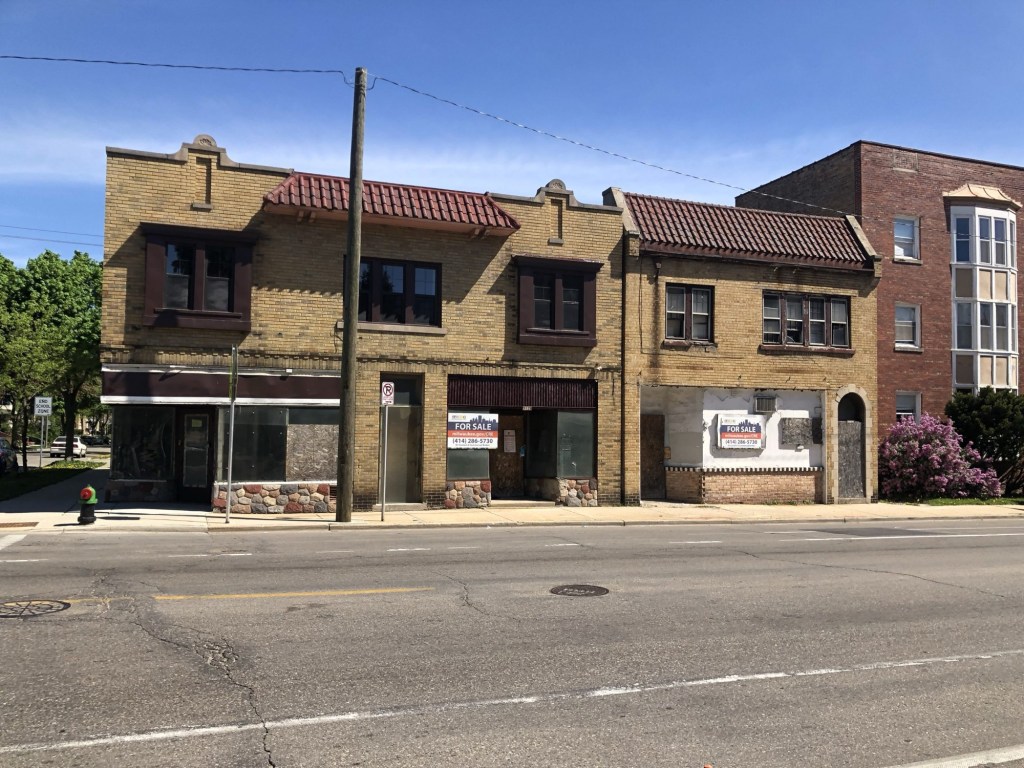
5128-5130 W. Center St. and 5124-5126 W. Center St. Photo by Jeramey Jannene.

MILWAUKEE — From 1st and Center Street west to Sherman Boulevard, abandoned buildings sit like open wounds on both sides of the street, remnants of factories, stores like Family Dollar, and once-thriving Black-owned businesses that used to anchor Milwaukee’s north side. For residents here, the phrase “America First” hits different. It’s not just a slogan. It’s a question.

What happened to America First?

When Donald J. Trump returned to the White House in January, he promised a revival of the economic nationalism that swept him into power in 2016. He talked about lifting up working-class Americans, restoring pride, and rebuilding the nation from the inside out. But early policies out of Washington tell a different story, a story where billions are sent overseas, while communities like this one are left to decay.

Foreign Priorities, Local Consequences

In the first 100 days of Trump’s second term, more than $22 billion has gone to foreign military aid, including a $3.8 billion annual commitment to Israel until 2028, and billions more to Ukraine. Meanwhile, federal programs that fund youth service, veteran reintegration, and inner-city job development are facing the axe.

The Corporation for National and Community Service , the agency behind AmeriCorps, is on the chopping block with $400 Million already cut from the budget in April. In Milwaukee, where City Year corps members help stabilize struggling schools, the impact will be immediate. “These cuts aren’t abstract,” said Vanessa Brown, a local educator and Marquette University graduate. “They take away people, resources, and hope.”

A Tale of Two Budgets

Supporters of the Trump administration say the military spending is about protecting American interests abroad. But on Milwaukee’s North Side, where gun violence, underfunded schools, and housing insecurity dominate daily life, the disconnect feels personal.

“You can walk five blocks and count ten boarded-up or burned down houses,” said Art Jones, a university professor and youth mentor. “But we’ve got money to build houses in Ukraine? Explain that to the kids sleeping in a shelter tonight.”

The Promise of Jobs, Still Waiting

Despite the tough talk on trade and manufacturing, many local plants never reopened after the last recession. Tariffs might have protected certain industries on paper, but they didn’t bring back the jobs and probably never will. What they did do, critics argue, is hike prices on everyday goods , from construction materials to car parts , squeezing small business owners and working families alike.

“It’s smoke and mirrors,” said Renee Evans, who owns a small contracting firm near Burleigh. “We were promised revitalization projects. What we got was new empty buildings and shuttered storefronts.”

The Border and the Backlash

While the administration has doubled down on mass deportations and immigration crackdowns, there’s been no meaningful investment in immigration courts or visa reform, creating longer delays and more confusion for legal immigrants, employers, and even military families. It’s a harsh policy with little planning, and local economies like Milwaukee’s which is reliant on immigrant labor in many work sectors is feeling the strain.

Is “America First” Just a Slogan Now?

For many here, the question isn’t whether America First has failed, it’s whether it was ever real to begin with. The country’s resources still seem to flow upward and outward, not inward to the communities that were promised revitalization.

“If this is America First,” said Kaleb Tatum, shaking his head outside a shuttered youth center on North Avenue, “we must not be part of America.”

Shades of Gray: The Historical Impact of Political Policies and the Importance of Knowing Our Past

Decades ago, the corridors of American politics witnessed a series of decisions that would dramatically reshape the landscape of African American communities. This story begins in the halls of power, where policies and laws were crafted, setting off a chain of events that would echo through generations. From the Reagan era’s war on drugs to the legislative intricacies underpinning Joe Biden’s rise in the political arena, these decisions painted a complex picture of intention versus impact. This aim is to untangle this complex web, tracing the roots of policies that have left a lasting imprint on society. We delve into the intricate interplay of legislation and its intended consequences, piecing together how political maneuvers have sculpturally shaped the realities of countless individuals and communities across the nation.

The 1980s, under the presidency of Ronald Reagan, marked a pivotal era where international intrigue and domestic policy collided. The Iran-Contra Affair, a scandal defined by covert arms sales and secret funding, not only dominated headlines but also served as a backdrop to the escalating War on Drugs. This war, declared with a mission to eradicate drug abuse, inadvertently laid the groundwork for a crisis in African American communities.

Simultaneously, a young senator named Joe Biden was rising through the political ranks. A figure who would come to shape significant aspects of criminal justice policy, Biden’s career in the 1980s and beyond reflects the complex relationship between American politics and the African American community. His role in shaping the Anti-Drug Abuse Act of 1986, with its disparate sentencing for crack and powder cocaine, had far-reaching impacts, disproportionately affecting African Americans and contributing to a surge in incarceration rates.

As the narrative progressed into the 1990s, Biden’s influence continued to grow. His involvement in crafting the 1994 Violent Crime Control and Law Enforcement Act further entrenched the trend of mass incarceration. Though aimed at addressing rampant crime, the bill’s consequences rippled through African American communities, deepening the chasms of inequality.

Decades later, during his 2020 presidential campaign, Biden’s rhetoric reflected a shift. His acknowledgment of the impact of these policies, coupled with promises of reform, marked a departure from his earlier stances. However, this shift was not without its controversies. Biden’s declaration in a 2020 interview that questioned African American allegiance to the Democratic Party sparked a conversation about the taken-for-granted African American vote in U.S. politics.

Biden’s long-standing pledge to Zionism, mirroring the broader U.S. political landscape’s support for Israel, further adds to the narrative’s complexity. It reflects a broader theme in American politics: the alignment of foreign policy interests, often at the expense of addressing pressing domestic issues.

The story of U.S. drug policy and its impact on African American communities, intertwined with Biden’s career, stands as a testament to the cyclical nature of political priorities and the often contradictory nature of government policies. It highlights a dissonance between the quest for votes from minority communities and the legislative actions that have historically impacted them.

This evolving narrative, chronicled over several decades and various administrations, is not merely a historical account; it serves as a reflective mirror for American society. In an era where political promises ebb and flow with the tide of public opinion, the importance of scrutinizing policy decisions and understanding their long-term impacts becomes paramount. As voters, the responsibility lies in our hands to delve into the history of those we elect into power.

It’s a reminder that genuine representation in the corridors of power and accountability are not just political ideals but necessities. As we stand at the crossroads of another election, it is crucial to remember that the votes we cast are echoes of our collective history and aspirations. We must challenge ourselves to look beyond the rhetoric, to understand the past of those we entrust with our future, ensuring our decisions are informed, and our voices are heard in shaping a more equitable and just society. As James Baldwin once said, “Not everything that is faced can be changed, but nothing can be changed until it is faced.”

What Emmett Till’s Mother Taught Me About Grief and Justice

On Feb. 26, 2012, my entire life changed in ways that I could never imagine. Within an instant, after the brutal and inhumane killing of my son, …

What Emmett Till’s Mother Taught Me About Grief and Justice

Five ways of expanding your business internationally

The global economy is changing thanks to worldwide connectivity. Companies across the globe are communicating with others without delays or hassles …

Five ways of expanding your business internationally

Serving Those Who Have Served Our Country

10408090_481456128668304_3135217482088239151_n

United Veterans Partnership

MAKING CONNECTIONS, ONE VETERANS AT A TIME!

United Veterans Partnership, Inc. (UVP) is a non-profit 501(c)(3) community development organization that works with our partners to build more sustainable communities where veterans and their families live, work, play and pray.

The UVP works closely with our partners to deliver programs that connect veterans to better housing and employment opportunities, financial literacy, business development resources and improved access healthcare and healthy food options.

At the end of the day, our success isn’t measured by the number of awards we get or the money we have raised but, rather, by the number of veterans who are living a better quality of life because of a connection that we made.


The Mission of the United Veterans Partnership is to “Help Veterans Build Sustainable Communities.”

For two years, the United Veterans Partnership (UVP) has listened to, communicated with and learned from veterans and other members of the community that the most pressing need is employment and business opportunities after their service to our country has ended. UVP is our answer to helping Veterans find the opportunities need to continue to be successful in the next chapter of their lives.

We are dedicated to helping veterans build communities through outreach programs and leadership development that focus on obtaining gainful employment, financial education, housing, entrepreneurial opportunities in business.

To do this the UVP has focused on striving to meet five goals to help meet the needs of returning veterans and the communities in which they live:

Jobs/Jobs Training: Develop a comprehensive Accelerated Job Training Program to reduce the jobless rate among veterans and partner with local companies to keep veterans employed long after their military obligation has ended.
Connecting the Veteran Workforce to Opportunities: Build stronger linkages between businesses and the central city workforce of veterans through partnerships with the Department of Veteran Affairs and other organizations that share the same goals of helping veterans achieve their goals.

Greater Veteran Involvement in Economic Development: Increase the participation of veterans of veterans with assistance from the UVP on local and regional planning and project development efforts.

Community Development: Deepen thee impact of Veterans on the development of the community, including but not limited to; housing and housing development, economic development, financial education and training, and community leadership opportunities.
Entrepreneurship/Small Business Development: Foster greater entrepreneurship in the community by guiding veterans on the creation and expansion of Veteran owned businesses and franchises.


Source: Our Mission