What Happened to America First? Early Policies Say Anything But…


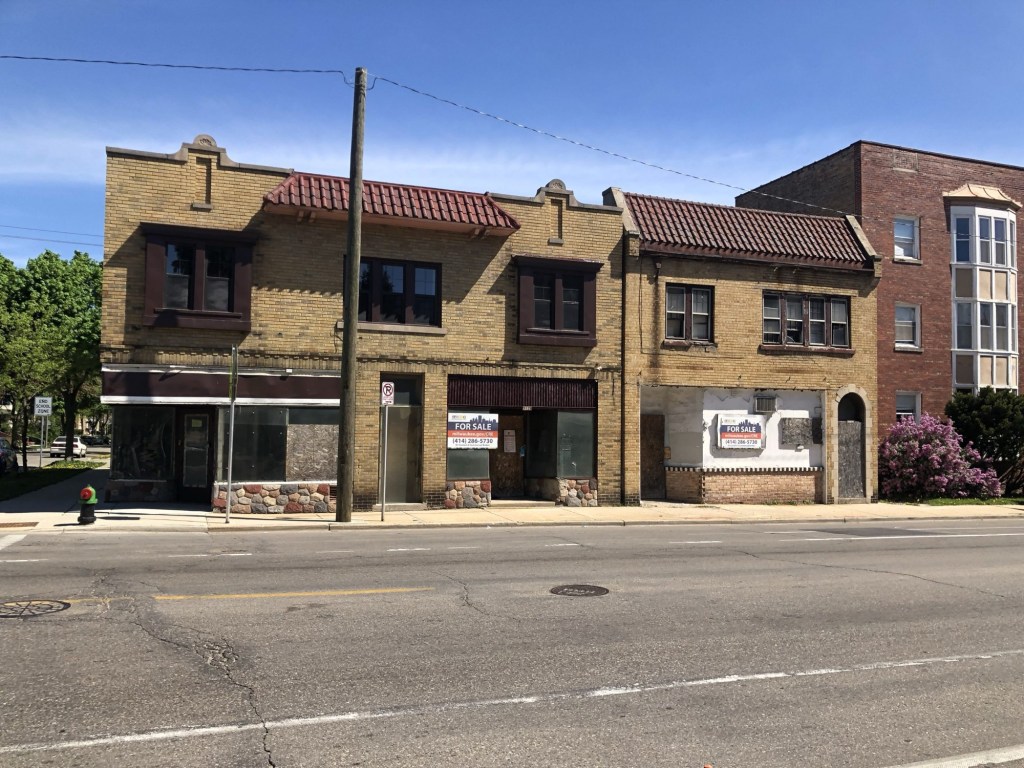
5128-5130 W. Center St. and 5124-5126 W. Center St. Photo by Jeramey Jannene.

MILWAUKEE — From 1st and Center Street west to Sherman Boulevard, abandoned buildings sit like open wounds on both sides of the street, remnants of factories, stores like Family Dollar, and once-thriving Black-owned businesses that used to anchor Milwaukee’s north side. For residents here, the phrase “America First” hits different. It’s not just a slogan. It’s a question.

What happened to America First?

When Donald J. Trump returned to the White House in January, he promised a revival of the economic nationalism that swept him into power in 2016. He talked about lifting up working-class Americans, restoring pride, and rebuilding the nation from the inside out. But early policies out of Washington tell a different story, a story where billions are sent overseas, while communities like this one are left to decay.

Foreign Priorities, Local Consequences

In the first 100 days of Trump’s second term, more than $22 billion has gone to foreign military aid, including a $3.8 billion annual commitment to Israel until 2028, and billions more to Ukraine. Meanwhile, federal programs that fund youth service, veteran reintegration, and inner-city job development are facing the axe.

The Corporation for National and Community Service , the agency behind AmeriCorps, is on the chopping block with $400 Million already cut from the budget in April. In Milwaukee, where City Year corps members help stabilize struggling schools, the impact will be immediate. “These cuts aren’t abstract,” said Vanessa Brown, a local educator and Marquette University graduate. “They take away people, resources, and hope.”

A Tale of Two Budgets

Supporters of the Trump administration say the military spending is about protecting American interests abroad. But on Milwaukee’s North Side, where gun violence, underfunded schools, and housing insecurity dominate daily life, the disconnect feels personal.

“You can walk five blocks and count ten boarded-up or burned down houses,” said Art Jones, a university professor and youth mentor. “But we’ve got money to build houses in Ukraine? Explain that to the kids sleeping in a shelter tonight.”

The Promise of Jobs, Still Waiting

Despite the tough talk on trade and manufacturing, many local plants never reopened after the last recession. Tariffs might have protected certain industries on paper, but they didn’t bring back the jobs and probably never will. What they did do, critics argue, is hike prices on everyday goods , from construction materials to car parts , squeezing small business owners and working families alike.

“It’s smoke and mirrors,” said Renee Evans, who owns a small contracting firm near Burleigh. “We were promised revitalization projects. What we got was new empty buildings and shuttered storefronts.”

The Border and the Backlash

While the administration has doubled down on mass deportations and immigration crackdowns, there’s been no meaningful investment in immigration courts or visa reform, creating longer delays and more confusion for legal immigrants, employers, and even military families. It’s a harsh policy with little planning, and local economies like Milwaukee’s which is reliant on immigrant labor in many work sectors is feeling the strain.

Is “America First” Just a Slogan Now?

For many here, the question isn’t whether America First has failed, it’s whether it was ever real to begin with. The country’s resources still seem to flow upward and outward, not inward to the communities that were promised revitalization.

“If this is America First,” said Kaleb Tatum, shaking his head outside a shuttered youth center on North Avenue, “we must not be part of America.”

CITY YEAR MILWAUKEE FACES UNCERTAIN FUTURE AS FEDERAL AMERICORPS FUNDING CUTS LOOM

City Year Milwaukee, a vital partner in local education equity efforts, may be one of many programs at risk following sweeping cuts to AmeriCorps funding enacted through recent federal executive orders by President Donald Trump.

For years, City Year AmeriCorps members have served as near-peer mentors and tutors in Milwaukee Public Schools, offering support in classrooms where additional academic, emotional, and behavioral reinforcement is needed most. Their work has contributed directly to increased reading scores, stronger attendance, and greater student engagement in underserved communities.

But those outcomes now face disruption.

The federal government’s decision to significantly scale back AmeriCorps support by $400 Million threatens the infrastructure that has powered City Year and dozens of national service programs for decades. The loss of funding doesn’t just cut stipends or operational support, it cuts opportunity in Milwaukee. It cuts the relationships that matter most: those between a struggling student and the one person in their school day who sees their potential and shows up every morning to nurture it.

“This isn’t just a budget line,” said one City Year alum. “It’s a lifeline to kids, to communities, and to those of us who joined AmeriCorps to serve with purpose.”

City Year, a tax-exempt 501(c)(3) nonprofit, remains committed to serving without discrimination based on race, color, gender, origin, political belief, or faith. But continuing that mission requires resources.

Supporters, alumni, and concerned residents can learn more and get involved at: https://www.cityyear.org/milwaukee

In the wake of these cuts, the question is not whether the need still exists. It’s whether we will still show up.

The Silent Killer: How Our Diet and Lifestyle Are Shortening Our Lives

By Nkozi Knight

I truly thought I was healthy. My BMI is only 25, and by most accounts, I look like I I am in great shape. But something wasn’t right for weeks. I felt tired all the time, my feet tingled, and my energy levels were nowhere near what they used to be when I would workout. Something inside me told me to get checked out, and what I found was alarming:

A1C: 7.3% → Diabetes confirmed

LDL (“bad” cholesterol): 198 mg/dL → Very high

Non-fasting glucose: 219 mg/dL → Dangerously high

In other words, I was walking around with a silent killer inside me, completely unaware. And I’m not alone.

Black Men and the Health Crisis No One Talks About

Black men in the United States are disproportionately affected by diabetes, high blood pressure, heart disease, blood clots, and amputations, a lot of it comes down to our diet, lifestyle, and neglect of medical care. Here are some statistics that speak to that point:

Black adults are 60% more likely to be diagnosed with diabetes than white adults (CDC, 2022).

More than 40% of Black men have high blood pressure, increasing the risk of heart attack and stroke (American Heart Association, 2023).

• Diabetes-related amputations occur nearly 3 times more often in Black patients than in white patients (JAMA, 2021).

Yet, we don’t talk about it. We recently witnessed super dad, Lavar Ball lose his foot from such complications. We brush off the fatigue, the numbness, the tingling, the headaches, the difficulty in the bedroom, and the shortness of breath as just “getting older.” But these are warning signs that something is seriously wrong.

The Warning Signs You Can’t Ignore

Tingling or numbness in your feet → Early sign of diabetic neuropathy, which can lead to amputation if untreated.

Extreme fatigue → Could be due to high blood sugar, poor circulation, or even heart disease.

Erectile dysfunction (ED) → Often an early symptom of diabetes or heart disease due to damaged blood vessels.

Blurry vision → High blood sugar can lead to diabetic retinopathy, which can cause blindness.

Slow-healing wounds → A sign of poor circulation, increasing the risk of infections and amputations.

• Frequent urination & constant thirst → Classic symptoms of diabetes.

If you’re experiencing any of these symptoms, it’s time to see a doctor immediately.

Fast Food & High Sugar Diets Are Killing Us

Let’s be real. Our beautiful culture is built around food, and not just any food, it always fried chicken, snacks, barbecue, mac and cheese, burgers, energy drinks, and other sugar-loaded drinks. We love to eat (at least I do), and food is a part of our identity. But it’s also the reason why we’re dying younger than we should.

The average American consumes 17 teaspoons of added sugar per day which far beyond the recommended limit of 9 teaspoons for men (American Heart Association, 2023).

Black Americans are more likely to consume sugar-sweetened beverages, which are directly linked to diabetes and heart disease (CDC, 2022).

Red meat and processed meats (bacon, sausage, deli meat) increase the risk of heart disease by 18% and diabetes by 12% (Harvard School of Public Health, 2023).

The Solution: Skip the Steak, Choose the Chicken

I used to be that guy….grabbing a burger and fries on the go, ordering a steak just because I could, and washing it all down with a Sprite or Old Fashioned. But after seeing my numbers, I realized I was digging my own grave, and I have too many people depending on me to check out early.

I made the switch, and I urge you to do the same:

No more red meat → Choose grilled chicken, turkey, or fish instead.

No more sugary drinks → Drink water, unsweetened tea, or black coffee.

No more processed carbs → Swap white bread & pasta for whole grains like quinoa & brown rice.

More fiber, more greens, more movement.

And most importantly, please see a doctor before it’s too late.

Your Health Is in Your Hands

Black men, we can’t afford to ignore our health any longer. We too often put our own needs aside to take care of everyone else to our own demise. Too many of us are losing limbs, suffering strokes, and dying before our time. It’s not genetics at all, it’s the choices we make every day.

If you made it this far I ask you to not wait until it’s too late. Get your bloodwork done, eat like your life depends on it (because it does), and start moving.

We all deserve longer, healthier lives but we have to take action to make that a reality. I thank God for the people in my life who encouraged me to get checked out before it was too late, because too many of us ignore the warning signs until we can’t anymore. Let’s hope the MAHA movement brings attention to this silent killer that’s taking too many of us too soon. Our health is our responsibility so let’s fight for it.

Sources:

• CDC. (2022). Diabetes Statistics in the U.S.

• American Heart Association. (2023). Heart Disease & Stroke Risk in African Americans.

• Harvard School of Public Health. (2023). The Impact of Diet on Chronic Diseases.

• JAMA. (2021). Racial Disparities in Diabetes-Related Amputations.

Unveiling Africa’s Economic Boom Behind the Headlines

By Nkozi Knight, GreenHomeHub, Knight Investment Group

April 19, 2024

Embracing Africa’s economic upswing, a group of entrepreneurs mirrors the continent’s colorful ascent on the global stage.

African Original travel-reality series, Ebuka Turns Up Africa, featuring celebrated Nigerian star Ebuka Obi-Uchendu.

My journey into the heart of Africa’s economic boom began with conversations with my oldest daughter Nkozia who is a frequent visitor to the continent, and my curiosity further peaked from my sectional sofa as I became captivated by Amazon Prime’s series “Ebuka Turns up Africa”. In this television series, Ebuka Obi-Uchendu travels across the continent, exploring hidden gems and navigating the complexities of friendships, relationships, finances, and loyalties. Inspired by the vibrancy and spirit shown in each episode, I was interested in diving deeper and upon my research, I discovered a reality about the continent that is vastly different than the Western media portrayals that mostly reflect poverty and conflict.

The Children of Hope campaign in Malawi presents a snapshot often seen in Western media: youthful faces finding joy amidst the challenges often depicted across the continent.

For years, Africa’s narrative has been dynamically shifting. Long portrayed as a continent primarily of destitution and despair, the real Africa has a much different story. A rich story of booming economies, groundbreaking technologies, and cultural renaissance. This narrative shift reflects a continent ripe with opportunities and a hotbed for growth and innovation in places like my home country of Nigeria, challenging the outdated views held by much of the Western and European media.

Nigeria: The Economic Powerhouse
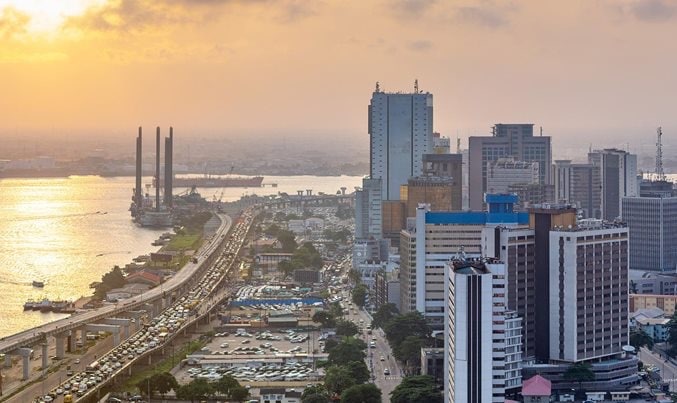
Leading Africa’s economic charge is Nigeria, currently the continent’s richest country with a GDP of $477 billion as of 2022. With projections by the International Monetary Fund suggesting an ascent to $915 billion by 2028, Nigeria’s economy, fueled by its diverse sectors including oil, gas, and technology, shows no signs of slowing down. Its burgeoning tech industry, particularly in cities like Lagos and Abuja, underscores a broader trend across the continent: a leap into digital and technological entrepreneurship.

The city of Lagos has the tallest skyline in Nigeria. 

Infrastructure and Regional Giants
Significant infrastructural developments such as Ethiopia’s Renaissance Dam and Kenya’s expansion of the Mombasa-Nairobi railway illustrate serious strides toward modernization and improved regional connectivity. These projects not only support economic growth but also enhance the daily lives of millions, with technology at the forefront of this renaissance.


Africa’s tech revolution extends beyond my home country of Nigeria. Innovations in mobile banking and renewable energy are pivotal. Mobile banking has transformed financial access for millions, demonstrating a leapfrog over traditional banking barriers. In the realm of sustainable development, nations like Morocco, where my daughter attends school, and South Africa are harnessing wind and solar power, setting new benchmarks for renewable energy.

The cultural sectors throughout Africa is thriving, making significant inroads on the global stage. Nigerian music, South African films, and Ghanaian fashion are capturing international audiences, showcasing the continent’s rich and diverse cultural heritage, and its something to truly be admired.

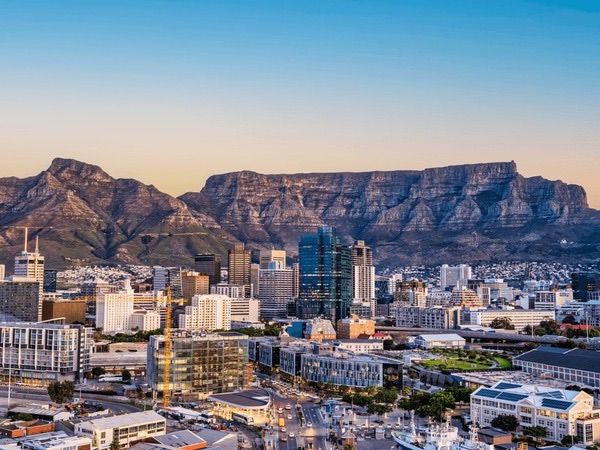
Cape Town South Africa

Economic Landscape

The economic landscape across Africa is as rich and varied as its cultural tapestry, with nations like South Africa and Egypt featuring robust, diversified economies that span mining, agriculture, and a burgeoning service and tourism industry. Algeria’s substantial oil and natural gas reserves play a crucial role in its financial health, echoing Angola’s reliance on its natural resources. Morocco’s vibrant economy thrives on tourism, agriculture, and a growing industrial sector.

Also, Kenya’s status as a regional economic hub is cemented by its diverse economy that embraces services, agriculture, and tourism. Ghana’s growth is buoyed by its agricultural base, complemented by significant oil and gas sectors. Tanzania, where my daughter recently visited, leverages its natural beauty and resources with a flourishing tourism and finance sector. Meanwhile, the beautiful people of Ethiopia are charting a path of rapid economic expansion, driven by sectors such as agriculture, manufacturing, and ambitious infrastructure projects.

The economic diversity across Africa is a story we need to hear more of as it reflects the resilience of the continent’s people who still deal with the theft of resources from European countries who often threaten to make topple their governments if they refuse to comply. Despite this, Africa’s adaptive and innovative spirit helps shape a new narrative of prosperity on the global economic stage.

Ethiopian Airlines pilot and flight crew

Confronting Stereotypes

Yet, despite these successes, Western portrayals often remain focused on negative aspects, overshadowing the continent’s achievements. This skewed narrative can influence public perception and policy in ways that are not reflective of the current African reality. African leaders and thinkers are calling for a more balanced portrayal that recognizes both the challenges and the immense progress being made.

Ebuka Turns up Africa

As the stories of 2024 unfold, it’s evident that Africa’s rise is not just in spite of Western media narratives but perhaps because it defies them. From the bustling markets of Cairo to the stunning vineyards of Cape Town, innovation, growth, and cultural vibrancy weave a rich tapestry that demands a global reevaluation. The legacy of resource extraction by countries like France and Great Britain is being overwritten by a new chapter of African self-determination and prosperity.

Shows like Ebuka Turns up Africa serve as a clarion call, inviting viewers to step beyond the screen and witness firsthand the continent’s transformation. The call is not just to watch, but to participate; to swap the well-trodden paths to Europe or the beaches of Mexico for the opportunity to immerse oneself in the tapestry of Africa’s economic prowess and cultural renaissance.

Let 2024 be the year where more travelers like myself, choose African destinations, where investment flows not just to traditional markets but to the burgeoning cities and industries across the African continent. This is not just an invitation; it’s a call to be part of a historical movement where one can witness a continent coming into its own, with success stories like Ebuka’s becoming the norm, celebrated and shared with the world. It’s time to rise from our sofas, set foot on African soil, and experience the continent’s heartbeat for ourselves.

Shades of Gray: The Historical Impact of Political Policies and the Importance of Knowing Our Past

Decades ago, the corridors of American politics witnessed a series of decisions that would dramatically reshape the landscape of African American communities. This story begins in the halls of power, where policies and laws were crafted, setting off a chain of events that would echo through generations. From the Reagan era’s war on drugs to the legislative intricacies underpinning Joe Biden’s rise in the political arena, these decisions painted a complex picture of intention versus impact. This aim is to untangle this complex web, tracing the roots of policies that have left a lasting imprint on society. We delve into the intricate interplay of legislation and its intended consequences, piecing together how political maneuvers have sculpturally shaped the realities of countless individuals and communities across the nation.

The 1980s, under the presidency of Ronald Reagan, marked a pivotal era where international intrigue and domestic policy collided. The Iran-Contra Affair, a scandal defined by covert arms sales and secret funding, not only dominated headlines but also served as a backdrop to the escalating War on Drugs. This war, declared with a mission to eradicate drug abuse, inadvertently laid the groundwork for a crisis in African American communities.

Simultaneously, a young senator named Joe Biden was rising through the political ranks. A figure who would come to shape significant aspects of criminal justice policy, Biden’s career in the 1980s and beyond reflects the complex relationship between American politics and the African American community. His role in shaping the Anti-Drug Abuse Act of 1986, with its disparate sentencing for crack and powder cocaine, had far-reaching impacts, disproportionately affecting African Americans and contributing to a surge in incarceration rates.

As the narrative progressed into the 1990s, Biden’s influence continued to grow. His involvement in crafting the 1994 Violent Crime Control and Law Enforcement Act further entrenched the trend of mass incarceration. Though aimed at addressing rampant crime, the bill’s consequences rippled through African American communities, deepening the chasms of inequality.

Decades later, during his 2020 presidential campaign, Biden’s rhetoric reflected a shift. His acknowledgment of the impact of these policies, coupled with promises of reform, marked a departure from his earlier stances. However, this shift was not without its controversies. Biden’s declaration in a 2020 interview that questioned African American allegiance to the Democratic Party sparked a conversation about the taken-for-granted African American vote in U.S. politics.

Biden’s long-standing pledge to Zionism, mirroring the broader U.S. political landscape’s support for Israel, further adds to the narrative’s complexity. It reflects a broader theme in American politics: the alignment of foreign policy interests, often at the expense of addressing pressing domestic issues.

The story of U.S. drug policy and its impact on African American communities, intertwined with Biden’s career, stands as a testament to the cyclical nature of political priorities and the often contradictory nature of government policies. It highlights a dissonance between the quest for votes from minority communities and the legislative actions that have historically impacted them.

This evolving narrative, chronicled over several decades and various administrations, is not merely a historical account; it serves as a reflective mirror for American society. In an era where political promises ebb and flow with the tide of public opinion, the importance of scrutinizing policy decisions and understanding their long-term impacts becomes paramount. As voters, the responsibility lies in our hands to delve into the history of those we elect into power.

It’s a reminder that genuine representation in the corridors of power and accountability are not just political ideals but necessities. As we stand at the crossroads of another election, it is crucial to remember that the votes we cast are echoes of our collective history and aspirations. We must challenge ourselves to look beyond the rhetoric, to understand the past of those we entrust with our future, ensuring our decisions are informed, and our voices are heard in shaping a more equitable and just society. As James Baldwin once said, “Not everything that is faced can be changed, but nothing can be changed until it is faced.”

The Lingering Shadows of Imperialism: Exploitation of African Nations

As someone who has served in the military, I’ve had firsthand insight into the geopolitical dynamics that still play out across the globe. One particular issue that has always been close to my heart is the persistent exploitation of African nations by former colonial powers and the United States.

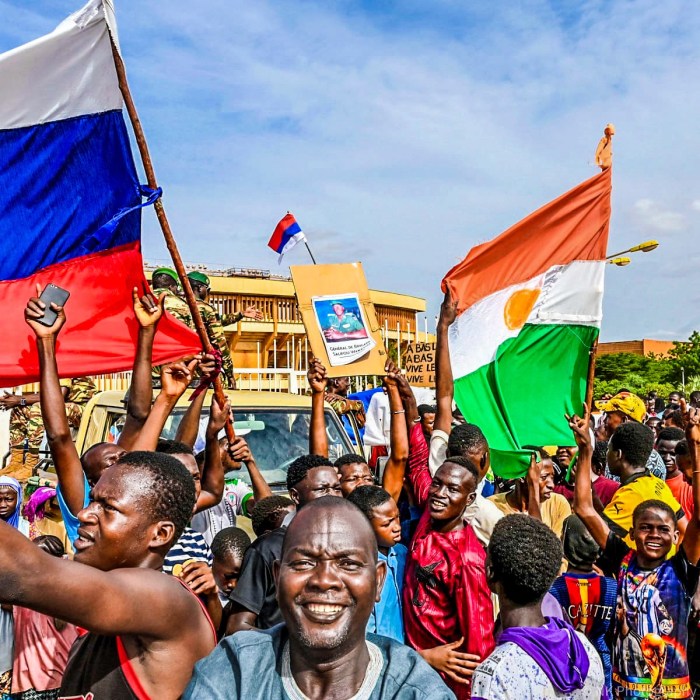
Niger, a landlocked country in West Africa, serves as a stark example. It is the source of 5% of the world’s uranium, a precious resource vital for nuclear energy and weapons. Yet, despite its immense wealth beneath the ground, Niger consistently ranks as one of the world’s poorest countries. This incongruity can be attributed to the continued imperialism and exploitative tactics employed by Western nations.

Historically, countries like France and Great Britain have left indelible marks on Africa, ostensibly ending colonization, but in truth, perpetuating a new form of neocolonialism. France, for instance, still exerts considerable economic influence on many of its former colonies, including Niger. Complex agreements and unequal trade dynamics ensure that while African nations supply raw materials, they see only a fraction of the profits.

The United States, though not a colonial power in Africa, has also been implicated in this exploitative dynamic. The establishment of military bases across the continent serves dual purposes: it’s positioned as a safeguard against extremism and other threats, but it also ensures that the U.S. maintains a stronghold to protect its interests, which often include access to natural resources. During my time in the military, it was evident how strategic positioning wasn’t just about national security, but also about economic leverage.

Furthermore, it’s worth noting that while African countries export raw materials, they often have to import finished products at higher prices, further entrenching them in a cycle of poverty. The revenues from these natural resources, like uranium from Niger, do not equitably benefit the local communities. Instead, profits are siphoned off by multinational corporations and corrupt leaders, leaving the general populace grappling with poverty, unemployment, and underdevelopment.

Addressing this exploitation requires a multipronged approach:

  1. Transparency in Trade Deals: International trade agreements involving African nations must be transparent, ensuring that they benefit local communities as much as they do foreign entities.
  2. Empowering Local Economies: Investing in local infrastructure, education, and healthcare can help African nations process their own resources, creating jobs and reducing dependency on imports.
  3. International Accountability: Global institutions, such as the UN, must hold countries accountable for exploitative practices, ushering in a new era of equitable and fair trade.

While the flags of colonial powers no longer fly over African capitals, the shadows of imperialism linger. It’s a collective responsibility, both of African governments and the international community, to dismantle these remnants of exploitation and pave the way for a brighter, more equitable future for the continent. As someone who has seen the intricacies of this exploitation up close, I urge everyone to educate themselves, advocate for change, and support policies that promote fairness and justice.

What Emmett Till’s Mother Taught Me About Grief and Justice

On Feb. 26, 2012, my entire life changed in ways that I could never imagine. Within an instant, after the brutal and inhumane killing of my son, …

What Emmett Till’s Mother Taught Me About Grief and Justice

Five ways of expanding your business internationally

The global economy is changing thanks to worldwide connectivity. Companies across the globe are communicating with others without delays or hassles …

Five ways of expanding your business internationally

5 Tips to Get Your First Business off the Ground

Building your first business is tough. Building any business is tough, but your first is going to be especially difficult – you have no mistakes to …

5 Tips to Get Your First Business off the Ground

5 Steps For Building Trust And Credibility

In today’s hyper-connected and transparent marketplace, brands and products arrive and depart at hypersonic speeds.

According to the 2012 Edelman Trust Barometer, For the first time, trust and transparency are just as important to a company’s reputation as the quality of their products and services. In U.S.A., these two elements stand even higher than product quality.

Cautious of fraud, scams, and scheming marketing tactics, customers are beginning to perceive the world defined by genuine or contrived. More often than not, they’re basing their buying decisions on how authentic they judge an offer to be.

AAEAAQAAAAAAAAMCAAAAJDIzNWU4OGMxLWY4YTgtNDUxYi1iZjY4LWRmZDk2ODIzZjU5MA

Unfortunately though, many companies don’t practice trustworthiness and credibility. Alternatively, they attempt to grow their firms based what they believe customers want to hear.

But listening to prospects and customers and mindlessly responding back what they state isn’t going to earn trust or relationship capital from the customer. It is not about deceiving people with amazing commitments. Rather, it is about courageously proclaiming what you believe, and then withdrawing to observe who is attracted to your idea.

Credible brands are able to earn a loyal following; a social community, so to speak. Happy customers will share their experiences with peers and friends, and if the company stays true to its messaging and continues to deliver products and/or service that are in alignment with the customers’ hopes, it will be on the path toward building a relationship capital brand built for the long-run.

If you’re thinking of elevating your organizational culture, launching a startup or developing a brand, think of the 4 attributes of earning Relationship Capital (RC):

•Character
•Competence
•Good Intent
•Proactivity

Take the Free Relationship Capital (RC) Test. I welcome you to take this assessment in confidence as we never share this information outside Standard of Trust.

 5 Steps For Building Trust And Credibility

The following steps are by no means the only ways to build trust, credibility, and relationship capital, but they are the most important.

1. Define Your Purpose and Guiding Principles

The first step is to determine what your credibility is composed of. You will need to choose which guiding principles you are willing to commit to no matter what. If you commit to the open standard principles of Relationship Capital (RC), they are the following:
•Honesty
•Accountability
•Responsibility
•Support
•Respect
•Trustworthiness
•Emotional Boundaries

AAEAAQAAAAAAAALZAAAAJGZiMTc4NWFmLWFiZTEtNDI2ZS1iYzc2LWI0ZWU5NDMwZDczNg

Your ability to embed this relationship capital guiding principles into your company’s purpose will be an effective way in earning and building relationship capital with your stakeholders that will sustain long-term distinction.

For example, the Purpose of the Standard of Trust Group is:

To make a difference to business organizations and their stakeholder relationships through the capture, measurement, and utilization of open standards of relationship capital. To assist business leaders and their organizations to compete by out-behaving the competition.

horiz-warning-banner

Let me “Warn” you. Do not make superficial commitments to the relationship capital guiding principles or other principles you may select. Inauthentic behavior will be found out by the social and digitally connected tribe and your reputation and credibility will be damaged

2. Determine How You Will Demonstrate Authenticity

Look for the moments to demonstrate your authenticity. Whether it’s online with social media or your LinkedIn blog, or in offline interactions with others, take the time to learn and understand your audience and permit to learn and understand you too.

3. Be Open

How far would you go to show your authenticity and credibility? Decide how you will demonstrate your guiding principles and how open you want to be. Then make a plan of action for showcasing this openness.

4. Be Consistent

Keep your communications consistent. The messages that you’re sending out through marketing, promotions and social media should be in alignment with the offline experience that you provide to customers.

5. Prepare For Resistance

Finally, get ready for the resistance. When you build a certain level of awareness, you’re going to get people who oppose. Don’t let this dishearten you or sidetrack you from your guiding principles and purpose. Stay committed to your principles, and you will earn respect (and relationship capital) from the people around you. Your loyal and customers, employees, partners, and brand ambassadors will defend and support you.

Conclusion

Whether a business leader, entrepreneur or startup, committing your authentic self is about being true to your guiding principles and fulfilling your stated commitments to your stakeholders (customers, employees, or partners).

Leading with authenticity is not for everyone, but those who decide to utilize this as the foundation for establishing or nurturing a relationship capital business or a relationship capital brand will learn that building a company based on purpose, performance, and relationship capital will provide sustainability despite the accelerating changes that may come in the future.

By Robert Peters

Sources: Standard of Trust: Leadership

Urban Ecology Center- Riverside Park

Image I am always amazed when I find new and exciting places to visit here in Milwaukee Wisconsin, and Urban Ecology Center’s Riverside Park is one of those places. Made of 76% recycled material, the Urban Ecology Center “Green” building boast that it using rain water for all restroom purposes and is not connected to the Lake Michigan water filtration system, saving thousands of dollars a year. On the roof are solar panels that produce enough energy to sustain it for the summer months and get a rebate from Wisconsin Electric Energies (WE Energies). The hardwood maple floor is over 100 years old and was donated after the demolition of a nearby elementary school gym. The wraparound porch is made entirely of wood scraps of trees from Africa from the construction of the Atlantic City Boardwalk. Although the building is amazing, the best feature of the Urban Ecology Center is its people.

Led by the unassuming Executive Director, Ken Leinbach, the Urban Ecology Center has grown year after year as one of the key organizations designed to connect urban areas with the beauty of the outdoors. In just 10 years the organization has grown from a $50,000.00 annual budget to over $3 million dollars as of the 2011. To ensure that all of the employees of the Urban Ecology Center share the vision of the organization, they are required to go on a 3 day camping retreat with no access to technology while being immersed in nature. This helps drive the purpose of the mission and the importance of what they look to accomplish; improving the relationship between nature and the urban community while promoting green energy alternatives.

If you are interested in learning more about what the Urban Ecology Center has to offer, please visit their website at: http://urbanecologycenter.org/ for more information.