Private Equity’s Greed Is Catching Up: Why Ordinary Americans Will Pay the Price

April 30, 2025 • By NKOZI KNIGHT

Many of us do not realize that private equity firms has always been about extraction, not creation. The model is simple. Borrow heavily, buy a company, slash jobs and benefits, sell off assets, and walk away with fees long before the damage shows. Communities are left with shuttered stores, abandoned buildings, bankrupt chains, and broken promises.

The list of casualties is long. Toys “R” Us was loaded with more than $5 billion dollars in debt by Bain Capital and KKR before it collapsed, taking 30,000 jobs with it. Payless ShoeSource closed its doors, erasing 18,000 jobs. J. Crew, Gymboree, Shopko, Forever 21, and Sears each followed the same path. Behind nearly every failure was a private equity deal that turned once-profitable companies into vehicles for debt. Blackstone, the largest of them all, drew criticism for gutting nursing homes and rental housing, where residents and tenants bore the consequences. Carlyle, Apollo, and Sycamore Partners engineered deals that enriched executives while leaving behind bankruptcies across retail, energy, and health care.

The damage has never been limited to debt. Private equity firms extract billions in fees on top of what they load onto companies. They sell the land and buildings, forcing the very businesses they own to pay rent back to them. In franchise models, they skim off royalty payments while cutting services and staff. They charge management fees to companies they already control, ensuring that even if a business fails, the firm still profits. These practices are not side effects. They are the business model.

For years the system ran on cheap money. With interest rates near zero, debt was abundant and investors were eager. Firms could buy, bleed, and flip companies in two or three years. That era is gone. Interest rates now sit above five percent. Debt costs more, buyers are scarce, and the IPO market has dried up. Firms are stuck holding companies that are drowning under the very leverage designed to enrich their owners.

The numbers are staggering. Nearly $12 trillion dollars in private equity assets now sit unsold. Exit activity has collapsed more than 70 percent since 2021. To raise cash, firms are borrowing against their own portfolios with NAV loans or dumping stakes at steep discounts on the secondary market. Even the giants like Blackstone, KKR, Apollo, Carlyle, Bain are stuck with bad debt no one wants. They cannot sell, yet their investors are demanding cash.

The quiet truth is that these firms are already maneuvering for Washington’s help. During the 2008 financial crisis, banks and insurers were rescued with taxpayer dollars. Private equity, which profited handsomely off that same collapse, is positioning itself for similar treatment.

This is not just an elite problem. It is a national one. When private equity runs out of road, it is not the billionaire partners who suffer. It is the workers whose jobs are cut, the retirees whose pensions cannot meet obligations, the students whose tuition rises because endowments cannot keep pace, and the taxpayers who are asked to backstop the system.

The parallels to 2008 are frightening. Then it was mortgage backed securities. Now it is unsellable companies and illiquid funds. In 2008, families lost homes and jobs while Wall Street was saved. Today the scale is even larger. With trillions in assets frozen, the next bailout could dwarf the last one.

Meanwhile, private equity’s destruction also extends into America’s hospitals and nursing homes and people are paying with their lives. Studies show that Medicare patients undergoing emergency surgeries in private equity–owned hospitals are 42 percent more likely to die within 30 days compared to those treated in community hospitals . A nationwide study found infections, falls, and other preventable adverse events increased following private equity takeovers of hospitals . Even the U.S. Department of Health and Human Services condemned the impact, warning that private equity ownership of nursing homes led to an 11 percent increase in patient deaths .

Recent reporting shows the financial calculus behind these tragedies. Nursing home operators in New York’s Capital Region diverted Medicare and Medicaid funds through inflated rent and bogus salaries. That left facilities chronically understaffed and suffering neglect so severe that it led to cases of serious injury and death .

By turning hospitals and nursing homes into profit centers rather than care centers, private equity firms aren’t just bankrupting businesses, they are literally killing people. And when that business model collapses, it will be everyday Americans who pay the cost once again.

The message is not subtle. If private equity’s gamble fails, the richest players will once again be saved. For ordinary Americans, the reckoning will look like it always does. Lost jobs. Higher taxes. Vanishing pensions. Rising tuition. And another generation paying for someone else’s greed.

This is the American cycle. The profits are privatized, the losses are socialized, and working families are forced to carry the cost.

Donald Trump’s $500 Billion Stargate AI Project: Bold Innovation or Dangerous Gamble?

When President Donald Trump unveiled the $500 billion Stargate AI venture on Tuesday, a partnership involving OpenAI, SoftBank, and Oracle, he touted it as a groundbreaking step toward cementing U.S. dominance in artificial intelligence. Trump claimed the project would ensure “the future of technology” while creating hundreds of thousands of jobs and tackling issues like cancer detection. Wall Street initially responded with cautious optimism, but as the details of Stargate emerge, skepticism is mounting, and for good reason in my opinion.

A Bold Promise Without a Foundation

At first glance, Stargate appears ambitious, even transformative. Backed by OpenAI’s cutting-edge technology, SoftBank’s financial clout, and Oracle’s infrastructure expertise, the venture has been pitched as a game-changer for AI research and development. Yet, serious doubts are surfacing about its feasibility and motives.

Tech billionaire Elon Musk, a former co-founder of OpenAI and a longtime critic of the organization’s direction, wasted no time questioning the project’s funding. “They don’t actually have the money,” Musk wrote on X. SoftBank CEO Masayoshi Son claims an initial $100 billion commitment with plans to grow it to $500 billion over four years, but whether those funds will materialize remains unclear. It’s not the first time SoftBank has made lofty promises and its track record includes overestimated ventures like the Vision Fund.

AI for Good or AI for Profit?

One of the most striking concerns is the ethical implications of Stargate. OpenAI CEO Sam Altman and Oracle co-founder Larry Ellison described the project as a way to solve pressing societal issues, like developing cancer vaccines through AI-driven genetic sequencing. While this paints a rosy picture, skeptics question whether these lofty claims are just a smokescreen for profit-driven motives. Musk has repeatedly accused OpenAI of abandoning its original mission to develop AI for the public good, turning instead into a profit-driven enterprise that prioritizes corporate interests.

Donald Trump’s decision to repeal his predecessor’s AI guardrails and policies designed to ensure ethical and safe development of AI, has opened the door to unchecked advancements. Without these safeguards, Stargate’s potential for misuse, whether through biased algorithms, privacy violations, or the militarization of AI, is alarming. Who will ensure that this technology is developed responsibly and does not deepen societal inequalities or threaten democratic systems?

An Economic Boon or Another False Promise?

Trump and Altman have touted the potential for Stargate to create hundreds of thousands of American jobs, particularly in construction and data center operations. However, these promises are eerily reminiscent of past grandiose projects that failed to deliver from the Biden administration. Mega-investments often come with overblown job projections, only to fall short once automation replaces human labor. Even if Stargate reaches its employment goals, questions linger about the quality of these jobs and their long-term sustainability.

A cornerstone of the Stargate project is the construction of massive data centers, which are essential for powering the AI infrastructure envisioned by OpenAI, SoftBank, and Oracle. While these centers promise to create jobs and drive technological advancement, their environmental and societal impacts are deeply concerning. Data centers consume enormous amounts of electricity and water, often straining local resources without providing long-term economic benefits to surrounding communities. Questions about data privacy, cybersecurity, and ownership also loom large, as these facilities will centralize vast amounts of sensitive information in the hands of private corporations. With promises of rapid scalability and a $500 billion price tag, it’s unclear whether such an ambitious undertaking can be achieved responsibly or whether the public will once again bear the hidden costs of unchecked corporate ambition.

Geopolitical Implications: Competing with China

Stargate is also being framed as a key weapon in the U.S.’s competition with China for AI supremacy. While strengthening America’s technological edge is important, rushing into a $500 billion project without transparency or strategic oversight risks creating a “tech cold war” that prioritizes dominance over ethical innovation. Accelerating AI development without proper international collaboration could exacerbate global tensions and lead to a dangerous arms race in AI technology.

What Stargate Really Represents

Beneath the glossy promises of economic growth and transformative technology, Stargate raises deeper questions about power, control, and the future of AI. By handing the reins to corporate behemoths like SoftBank, Oracle, and OpenAI, the U.S. risks placing critical technological advancements into the hands of entities more interested in profits than public welfare. This is not just about building data centers or detecting cancer, it’s about who gets to decide how AI shapes our world.

Trump’s willingness to prioritize corporate interests over ethical considerations should alarm all Americans from both parties. Without a commitment to transparency, regulation, and equity, Stargate could deepen societal divides and erode trust in technology. As history has shown, unchecked technological advancements often come at a steep cost to those least equipped to bear it.

Generative AI: Transforming the Fabric of Education, Business, and Society

By Nkozi Knight

The dawn of generative artificial intelligence (AI) is not merely a technological milestone but a transformative force poised to touch every corner of our lives, reshaping the fabric of our world. Imagine a future where AI-driven systems enhance learning experiences in classrooms from rural villages to urban centers, personalize healthcare treatments globally, and revolutionize businesses, driving unprecedented innovation and efficiency. The potential for AI to create new opportunities and solve complex problems is immense, making it a topic of critical importance for everyone from tech enthusiasts to policymakers, but most importantly for everyday citizens.

A Revolution in Our Society

Generative AI has begun to alter the societal landscape significantly. Major advancements by platforms like OpenAI’s ChatGPT and Google’s Gemini Advanced demonstrate AI’s capabilities in creating human-like text and solving complex problems. These tools are increasingly integrated into customer service, content creation, and strategic decision-making processes. According to McKinsey, over 55% of organizations now use AI in at least one business unit, up from 20% in 2017 .

This surge in adoption highlights the tangible benefits of AI, such as cost reductions and revenue increases. For instance, the use of AI in human resources has led to significant cost savings, while its application in supply chain management has boosted revenues by over 5% . However, this rapid integration is not without challenges, as issues like data privacy, intellectual property, and the accuracy of AI outputs remain pressing concerns .

Education: A New Frontier

In the realm of education, generative AI is revolutionizing how students learn and educators teach. AI-driven platforms are providing personalized learning experiences, adaptive testing, and real-time feedback, thereby making education more accessible and tailored to individual needs. Google’s Gemini Advanced, for example, can create interactive learning modules that adapt to a student’s progress, enhancing engagement and retention.

According to UNESCO, the thoughtful integration of AI into education systems can support lifelong learning and bridge educational gaps by providing resources to underprivileged communities . However, there is a caveat; an over-reliance on technology without adequate human oversight could undermine educational standards and equity.

Business Innovations

Generative AI is also making waves in the business sector, driving operational efficiencies and strategic advancements. Companies are leveraging AI for marketing, sales, product development, and customer engagement. Deloitte’s insights reveal that businesses are moving from pilot projects to large-scale AI deployments, aiming to realize tangible benefits such as improved efficiency and innovation .

AI-driven analytics are enabling businesses to make more informed decisions, ultimately driving growth and competitiveness. For example, AI’s ability to analyze vast amounts of data quickly and accurately helps companies to identify market trends, optimize supply chains, and enhance customer experiences.

Comparing AI Platforms

Different AI platforms bring unique strengths to the table. Here’s a detailed comparison of some leading generative AI tools:

OpenAI’s ChatGPT is exceptional at natural language generation, versatile across multiple domains including customer service, creative writing, and coding assistance. It’s best suited for general-purpose use, especially for enterprises needing versatile AI capabilities.

Google’s Gemini Advanced integrates seamlessly with Google services, providing real-time internet data and robust solutions for data analytics and enterprise applications. It’s ideal for businesses looking for deep integration with Google’s ecosystem, real-time data processing, and enhanced search capabilities.

Apple’s AI system focuses on privacy-centric AI solutions, ensuring secure data management while delivering powerful performance. This makes it a great choice for users and organizations prioritizing data privacy and security.

Microsoft’s Copilot is integrated with the Microsoft Office Suite, enhancing productivity tools like Word and Excel with AI capabilities. It’s perfect for office productivity enhancements, particularly for enterprises that extensively use Microsoft products.

Anthropic’s Claude emphasizes safety and ethical AI use, with a customizable conversational tone and a large context window. It’s best for ethical AI applications and businesses needing secure content generation.

Cohere’s Generate (Command) offers straightforward API integration for text generation, focusing on business use cases like copywriting and data extraction. This tool is well-suited for businesses needing seamless API integration for text generation and analysis.

Midjourney excels at creating artistic and highly stylized images, making it ideal for creative industries and artists looking to enhance their visual content.

DALL·E 3 is easy to use for AI image generation, capable of creating photorealistic and imaginative visuals. It’s best for marketing, design, and any application requiring high-quality images.

These platforms reflect the diverse approaches tech giants are taking to capture the AI market. OpenAI’s emphasis on broad accessibility contrasts with Google’s enterprise-focused strategies and Apple’s commitment to privacy, catering to varied user needs and preferences .

Societal Implications

Generative AI’s societal impact extends beyond business and education. It influences cultural production, healthcare, and even social interactions. AI-generated content, such as music and art, challenges traditional notions of creativity and authorship. In healthcare, AI-driven diagnostic tools and personalized treatment plans are revolutionizing patient care, offering more accurate and timely interventions .

However, these advancements come with ethical considerations. The potential for job displacement, biases in AI algorithms, and the need for regulatory frameworks are critical issues that society must address. Ensuring that AI development is inclusive and benefits all segments of society is paramount.

As generative AI continues to evolve, its role in shaping our future becomes increasingly significant. Whether in classrooms, boardrooms, or everyday life, AI is set to redefine the parameters of possibility, ushering in an era of unprecedented innovation and change.

For more insights on AI and its impact, visit NkoziKnight.com.

Benjamin Netanyahu: A Portrait of Israel’s Prime Minister


Born on October 21, 1949, in Tel Aviv, Israel, Netanyahu’s roots trace back to Poland. His father, Benzion Netanyahu, born Benzion Mileikowsky, was a historian specializing in the Jewish Golden Age in Spain. Benzion was an ardent Zionist and was involved in the Revisionist Zionism movement, a right-wing faction of Zionism founded by Ze’ev Jabotinsky. Netanyahu’s mother, Tzila Segal, was born in Petah Tikva, then part of Ottoman Palestine. The family name was changed to Netanyahu, reflecting their Hebrew identity. This background, steeped in Zionist ideology and Jewish history, profoundly influenced Netanyahu’s own political and ideological beliefs.

Education and Military Service:
Netanyahu’s formative years were marked by frequent moves between Israel and the United States, reflecting his father’s academic career. This bicultural upbringing contributed to his fluent English and understanding of Western culture. He completed his high school education in the U.S. before returning to Israel to serve in the Israel Defense Forces. He joined the elite special forces unit Sayeret Matkal, participating in numerous operations, including the 1967 Six-Day War. His military experience, particularly the tragic death of his brother Yonatan during the Entebbe raid in 1976, deeply impacted him and reinforced his commitment to Israel’s security.

Post-military, Netanyahu returned to the United States for higher education. He earned a Bachelor of Science degree in architecture and a Master of Science degree in management studies from the Massachusetts Institute of Technology. He also studied political science at Harvard University. This academic background in architecture and management, combined with his military experience, laid the groundwork for his strategic and analytical approach to politics.

Political Career:
Netanyahu’s political ascent began in the 1980s as the Israeli ambassador to the United Nations, where he became known for his articulate defense of Israel on the international stage. He then moved into Israeli domestic politics, joining the right-wing Likud party. In 1996, he was elected Prime Minister of Israel, becoming the youngest person to hold this office.

His tenure has been characterized by a hardline approach to security and the Israeli-Palestinian conflict, driven by his belief in the importance of a strong, secure Jewish state. He has been a vocal opponent of the Iran nuclear deal, an advocate for strong ties with the United States, and a proponent of expanding Israeli settlements in the West Bank, despite international criticism and condemnation.


Netanyahu’s career has not been without controversy. His policies on the Israeli-Palestinian conflict, particularly the treatment of Palestinians and the expansion of settlements into the West Bank, have been a source of domestic and international division. He has faced multiple allegations of corruption, which have sparked protests and legal challenges, yet he has maintained significant political support and resilience in Israel.

Views on Zionism and Israel as a Jewish State:
Influenced by his father’s Revisionist Zionism, Netanyahu strongly believes in Israel as a Jewish state, a refuge, and a homeland for Jews worldwide. This view has shaped much of his policy, especially regarding the Israeli-Palestinian conflict and settlements. His stance often sparks debate about the nature of Zionism and the future of a two-state solution which he vehemently oppose.


Netanyahu’s impact on Israeli politics and society is profound. He has shifted the country’s political discourse towards a right-wing, security-first perspective. His tenure has seen Israel navigate complex geopolitical challenges, including relations with neighboring countries and the broader Middle East.

Conflict with Israeli Public:
Despite his long tenure, Netanyahu’s policies have deeply polarized Israeli society. His approach to the Israeli-Palestinian conflict, his expansionist policies, and the allegations of corruption have led to significant domestic conflict, with many Israelis questioning the direction of their country under his leadership.

Endurance in Israeli Politics:
Netanyahu’s ability to stay in power for so long can be attributed to his political acumen, ability to navigate Israel’s complex coalition politics, and his resonant message of security and national strength in a region marked by instability.

Benjamin Netanyahu’s life and political journey reflect the turbulence and complexities of Israeli and Middle Eastern politics. His legacy, marked by his commitment to a secure, Jewish-majority Israel, his involvement in regional conflicts, and his embroilment in controversies, leaves a lasting imprint on the state of Israel and its place in the world.

Why Do Zoom Meetings Make Us So Sleepy? Unveiling the Mystery of Video Conference Fatigue

Over the past few years, the rise of remote work and the need for social distancing have transformed video conferencing tools like Zoom into a ubiquitous communication platform. While these virtual meetings have enabled people to stay connected and productive, many have also reported feeling excessively tired and sleepy after participating in them. In this article, we will explore the reasons behind this phenomenon, often referred to as ‘Zoom fatigue,’ and discuss ways to mitigate its effects.

Reduced Non-verbal Communication

One of the primary reasons for Zoom fatigue is the inherent limitations of non-verbal communication in video calls. In face-to-face interactions, we rely on a plethora of non-verbal cues, such as body language, facial expressions, and tone of voice, to fully grasp the meaning behind someone’s words. However, video calls make it challenging to perceive these cues, as participants often appear in small windows with limited visibility. This forces our brains to work harder to decipher the information, leading to cognitive overload and, ultimately, fatigue.

Constant Self-awareness

Another factor contributing to Zoom fatigue is the increased self-awareness that comes with being on camera. Many people find it difficult to ignore their own video feed, leading to a heightened sense of self-consciousness. This constant self-monitoring can be mentally draining and may cause feelings of exhaustion.

Lack of Physical Movement

During in-person meetings, participants could move around, stretch their legs, and change their posture. In contrast, video calls often require attendees to remain seated and relatively stationary in front of their screens. This lack of physical movement can lead to stiffness, discomfort, and drowsiness.

Screen Overload

In today’s digital world, many of us spend a significant portion of our day staring at screens. Adding video calls to an already screen-heavy routine can exacerbate eye strain and lead to a feeling of fatigue. Moreover, the blue light emitted by screens can disrupt our circadian rhythms, making it more difficult to fall asleep at night.

Back-to-Back Meetings

In a remote work environment, back-to-back video calls are a common occurrence. Without the natural breaks that come with in-person meetings, such as walking to a different room or engaging in casual conversation, Zoom meetings can become an unrelenting series of virtual encounters. This lack of downtime between meetings can contribute to mental exhaustion and feelings of sleepiness.

Strategies to Combat Zoom Fatigue

  1. Schedule Breaks: Allocate time for short breaks between meetings to allow your brain to rest and recharge.
  2. Encourage Movement: Stand up, stretch, or walk around during video calls to maintain energy levels and reduce stiffness.
  3. Limit Screen Time: Schedule regular screen-free periods throughout your day to reduce eye strain and fatigue.
  4. Use Audio-only Calls: When appropriate, switch to audio-only calls to give your eyes a break and reduce self-consciousness.
  5. Optimize Your Environment: Ensure your workspace is well-lit and ergonomic to minimize physical discomfort and promote alertness.

Zoom fatigue is a real and prevalent issue faced by many people participating in video conference meetings. By understanding the factors that contribute to this exhaustion, we can take steps to minimize its impact and maintain our energy levels throughout the workday.

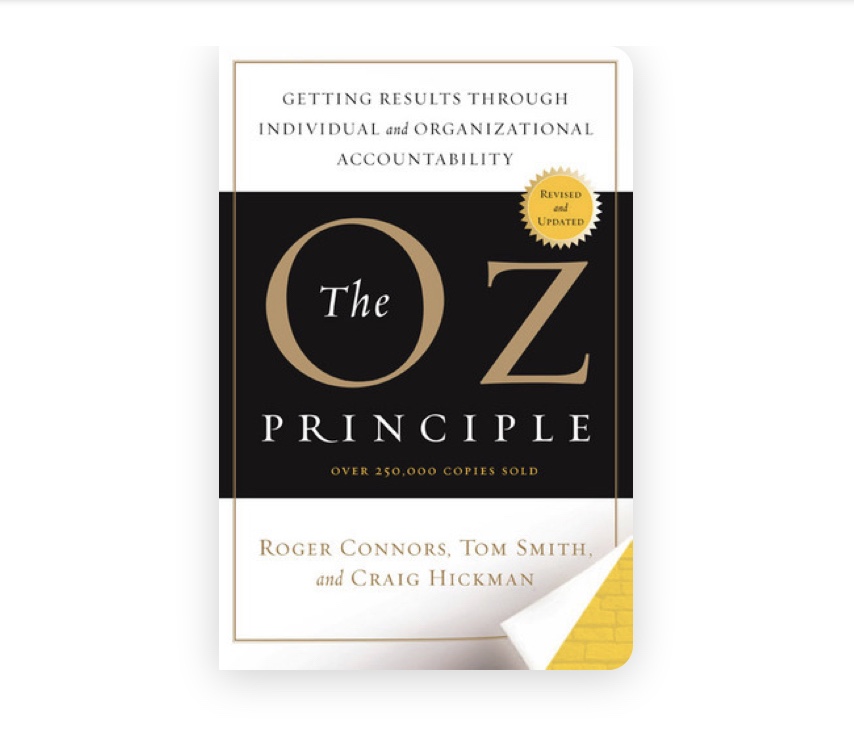
The Oz Principle: Getting Results Through Individual and Organizational Accountability

The Oz Principle, written by Roger Connors, Tom Smith, and Craig Hickman, is a popular management book that explores the concept of accountability in the workplace. The book draws on the classic story of The Wizard of Oz to illustrate how individuals and organizations can take ownership of their actions and outcomes to achieve success. In this blog post, we will summarize the main ideas of The Oz Principle and explain how they can be applied in the workplace.

The Oz Principle presents a framework for personal and organizational accountability based on four key principles: See It, Own It, Solve It, and Do It. Let’s take a closer look at each of these principles:

  1. See It: The first step in the accountability process is to see the problem or opportunity clearly. This involves identifying the root cause of the issue and understanding its impact on the organization. Seeing It requires individuals to be honest and objective in their assessment of the situation, without making excuses or blaming others.
  2. Own It: Once a problem or opportunity has been identified, the next step is to take ownership of it. This means accepting responsibility for the outcome and committing to taking action to address the issue. Owning It requires individuals to be accountable for their role in the situation, regardless of whether they were directly responsible for the problem.
  3. Solve It: The third step in the accountability process is to develop a plan to solve the problem or capitalize on the opportunity. This involves working collaboratively with others to identify and implement solutions that address the root cause of the issue. Solving It requires individuals to be proactive and creative in their problem-solving approach.
  4. Do It: The final step in the accountability process is to execute the plan and achieve the desired outcome. This involves taking action and following through on commitments to ensure that the problem is fully resolved or the opportunity is fully realized. Doing It requires individuals to be persistent and disciplined in their efforts to achieve success.

The Oz Principle emphasizes the importance of accountability in driving individual and organizational performance. By following the See It, Own It, Solve It, and Do It framework, individuals can take control of their actions and outcomes, and work together to achieve shared goals. The book provides practical tools and strategies for implementing accountability in the workplace, including the use of performance scorecards, team charters, and action plans.

In conclusion, The Oz Principle is a powerful management book that offers a fresh perspective on accountability in the workplace. Its four-step framework provides a clear roadmap for personal and organizational success, and its practical tools and strategies can be applied in a wide range of settings. By embracing the principles of See It, Own It, Solve It, and Do It, individuals and organizations can achieve greater accountability, productivity, and success.

What Emmett Till’s Mother Taught Me About Grief and Justice

On Feb. 26, 2012, my entire life changed in ways that I could never imagine. Within an instant, after the brutal and inhumane killing of my son, …

What Emmett Till’s Mother Taught Me About Grief and Justice

Five ways of expanding your business internationally

The global economy is changing thanks to worldwide connectivity. Companies across the globe are communicating with others without delays or hassles …

Five ways of expanding your business internationally

5 Tips to Get Your First Business off the Ground

Building your first business is tough. Building any business is tough, but your first is going to be especially difficult – you have no mistakes to …

5 Tips to Get Your First Business off the Ground

7 Surprising Things Successful Leaders Stop Doing that Make Leadership Easier

It doesn’t take a genius to make hard work painful. Sometimes success is about stopping something. 7 surprising things successful leaders stop doing:…

7 Surprising Things Successful Leaders Stop Doing that Make Leadership Easier

5 Common Networking Mistakes You’re Making

Mixer_0By 

Building a network of people that you don’t get along with is completely pointless.

The Leadership Insider network is an online community where the most thoughtful and influential people in business contribute answers to timely questions about careers and leadership. Today’s answer to the question: What’s the best way to network? is written by Scott Kriz, CEO of Bitium.

All too often, I see people at networking events exchanging business cards and starting up superficial conversations for obviously one-sided, self-serving purposes. But what happens when you leave the happy hour or the conference? How many of those conversations resulted in something substantial? Networking should be viewed as the beginning of long-lasting, mutually beneficial relationship. While there’s no formula to creating a valuable network, there certainly are guidelines. Here are five lessons I’ve learned while building and strengthening my network:

Be authentic
When I was fresh out of college, I used to attend events and come home with a pile of business cards, trying to figure out how each person could benefit me in my career. Guess how many of those turned into valuable relationships? Not one. Realizing this, I stopped bringing cards with me to events. Instead, I started attending events with smaller groups of people and focused more on getting to really know everyone on a personal level. Over time, I found that people with whom I shared common personal interests tended to provide more value than those with closer professional ties.

See also: What a game of chess can teach you about networking

Listen and ask questions
While I love sharing stories, I have never learned anything by hearing myself talk. So I try to focus on learning from other people’s experiences by taking a genuine interest in that person and asking them questions instead. For example, a few years ago, I found out the CMO from Microsoft had retired and was living in Southern California. Marketing has always been an area that fascinated me because it didn’t come naturally. I wanted to learn about marketing from the top mind in B2B marketing software so I could better understand it for my own business.

Through my network, I found out that she was going to be at a local accelerator event so I decided to attend as well. It’s amazing how generous people are with their time and their knowledge when you express genuine interest. Mich Mathews is now an investor and board member for Bitium–and a close friend of mine.

Seek out people that you like
Building a network of people that you don’t get along with is completely pointless. Every one of us has our own opinions, tastes and tolerances. Spend your time with people you like and you will find natural alignment. When I started my current company, I was lucky enough to have a co-founder that I had enormous respect for both personally and professionally. We wanted to hire the smartest employees, of whom we also enjoyed working with. Everyone on our current team has been hired through a personal or professional connection. I’m proud of this, not only because I love what we do as a company, but because I love the people that I am building the company with.

See also: Business cards aren’t outdated and 4 other networking tips

Put yourself in someone else’s shoes
Some of the best networkers that I know are busy and overcommitted by nature. In order to leverage their networks appropriately and get the introductions I want, I’ve found that the less intrusive and more specific that I can be, the more likely they are to help out. Put yourself in the shoes of the person who is being solicited and read the content of the email as if you are that person. Make your email request is concise, specific, not completely self-serving and most importantly, easy for them to forward on to the person you want an introduction to. Help them help you.

Be yourself
Remember that everyone is just a person, no matter what they have achieved or how well-known they are. It’s easy to get star struck when meeting someone you’ve read about or who is considered a ‘celebrity’ in your industry. Approach them like you would anyone else at an event. Too many times people try to force a conversation because they really admire someone and want nothing more than to be associated with that person. Relax, have fun and don’t try to foster relationships that aren’t natural.

Read all answers to the Leadership Insider question: What’s the best way to network?

How to work a room at an important networking event by Carol Leaman, CEO of Axonify.

The one question you have to ask everyone you network withby Clark Valberg, CEO of InVision.

3 signs you’re a serial meet-and-greet networker by Shadan Deleveaux, director of sales multicultural beauty division at L’Oréal USA.

Forget what you know about networking. Do this instead by Jim Yu, CEO of BrightEdge.

3 networking mistakes you don’t know you’re making by Dan Finnigan, CEO of Jobvite.

Why face-to-face networking will never go out of style by Kevin Chou, co-founder and CEO of Kabam.

How to effectively network (even if you dread it) by David DeWolf, president and CEO of 3Pillar Global.

The only thing you need to keep in mind when networkingby William Craig, founder and president of WebpageFX.

Why social media alone won’t get you a job by Gary Vaynerchuk, co-founder and CEO of VaynerMedia.

NYSE President: I owe every job I’ve ever had to networking by Tom Farley, president of the NYSE.

Executive Presence: Proven Leadership Strategies for Corporate America


According to Samuel Langhorne Clemens, better known as Mark Twain, “Really great people make you feel that you too, can become great.” This well-kept secret is the key concept of effective leadership and team management. Bringing the best out of others through inspirational leadership, team building, and effective communication will catapult you to the ranks of history’s greatest leaders.

Invest in your team members and they will in turn invest in your company. Inspirational leadership is inspiring your team members through active engagement by helping them to connect the dots between the work they do and the mission of the organization or company for which you work for. By bridging the gap for employees, you help them understand where they fit in the company and how that company fits into the outside world. Helping employees understand where they fit into the company is only half of the battle. An inspirational leader must also lead by example, exemplifying high character, moral and ethics in both a professional and personal setting.

Teams are often a representative of their manager and building a team in your image is critical to the success of a group. Of course this concept only works when the manager is a positive representative for the team and leads by example. Team building is imperative and gives employees the opportunity to get to know their manager and vice versa. Team building activities should include the entire group and be led by a committee of team members chosen by the manager. The key to the team builder is to get your team involved in the planning and the implementation of the event. Putting individuals into leadership roles among the team through the delegation of activities empowers them and gives them the desire to perform at a higher level. Team builders are not only engaging for team members but it also improves communication among the group.

Effective communication can be summed up in two simple words- active listening. Often times leaders fail to listen to the needs of those that look up to them and as a result their employees eventually tune them out. Listening to the needs of your employees will help you to determine their needs and what motivates them to perform at a high level. The top Fortune 100 companies understand the importance of investing in their leaders and implore training tailored to the vision and values of the organization. The relationship is often reciprocal in that the company that invest in the leader will in turn invest in his staff that benefits the organization and the community in which they service.