Private Equity’s Greed Is Catching Up: Why Ordinary Americans Will Pay the Price

April 30, 2025 • By NKOZI KNIGHT

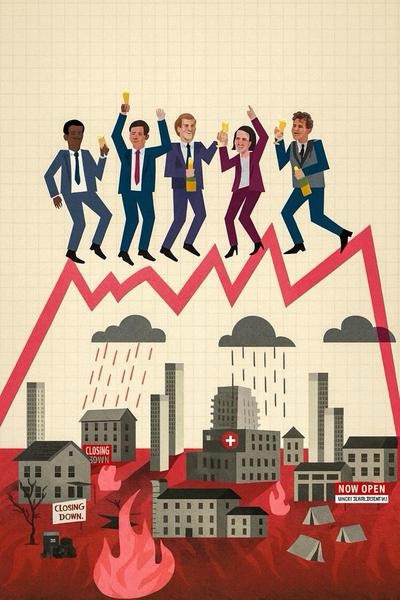
Many of us do not realize that private equity firms has always been about extraction, not creation. The model is simple. Borrow heavily, buy a company, slash jobs and benefits, sell off assets, and walk away with fees long before the damage shows. Communities are left with shuttered stores, abandoned buildings, bankrupt chains, and broken promises.

The list of casualties is long. Toys “R” Us was loaded with more than $5 billion dollars in debt by Bain Capital and KKR before it collapsed, taking 30,000 jobs with it. Payless ShoeSource closed its doors, erasing 18,000 jobs. J. Crew, Gymboree, Shopko, Forever 21, and Sears each followed the same path. Behind nearly every failure was a private equity deal that turned once-profitable companies into vehicles for debt. Blackstone, the largest of them all, drew criticism for gutting nursing homes and rental housing, where residents and tenants bore the consequences. Carlyle, Apollo, and Sycamore Partners engineered deals that enriched executives while leaving behind bankruptcies across retail, energy, and health care.

The damage has never been limited to debt. Private equity firms extract billions in fees on top of what they load onto companies. They sell the land and buildings, forcing the very businesses they own to pay rent back to them. In franchise models, they skim off royalty payments while cutting services and staff. They charge management fees to companies they already control, ensuring that even if a business fails, the firm still profits. These practices are not side effects. They are the business model.

For years the system ran on cheap money. With interest rates near zero, debt was abundant and investors were eager. Firms could buy, bleed, and flip companies in two or three years. That era is gone. Interest rates now sit above five percent. Debt costs more, buyers are scarce, and the IPO market has dried up. Firms are stuck holding companies that are drowning under the very leverage designed to enrich their owners.

The numbers are staggering. Nearly $12 trillion dollars in private equity assets now sit unsold. Exit activity has collapsed more than 70 percent since 2021. To raise cash, firms are borrowing against their own portfolios with NAV loans or dumping stakes at steep discounts on the secondary market. Even the giants like Blackstone, KKR, Apollo, Carlyle, Bain are stuck with bad debt no one wants. They cannot sell, yet their investors are demanding cash.

The quiet truth is that these firms are already maneuvering for Washington’s help. During the 2008 financial crisis, banks and insurers were rescued with taxpayer dollars. Private equity, which profited handsomely off that same collapse, is positioning itself for similar treatment.

This is not just an elite problem. It is a national one. When private equity runs out of road, it is not the billionaire partners who suffer. It is the workers whose jobs are cut, the retirees whose pensions cannot meet obligations, the students whose tuition rises because endowments cannot keep pace, and the taxpayers who are asked to backstop the system.

The parallels to 2008 are frightening. Then it was mortgage backed securities. Now it is unsellable companies and illiquid funds. In 2008, families lost homes and jobs while Wall Street was saved. Today the scale is even larger. With trillions in assets frozen, the next bailout could dwarf the last one.

Meanwhile, private equity’s destruction also extends into America’s hospitals and nursing homes and people are paying with their lives. Studies show that Medicare patients undergoing emergency surgeries in private equity–owned hospitals are 42 percent more likely to die within 30 days compared to those treated in community hospitals . A nationwide study found infections, falls, and other preventable adverse events increased following private equity takeovers of hospitals . Even the U.S. Department of Health and Human Services condemned the impact, warning that private equity ownership of nursing homes led to an 11 percent increase in patient deaths .

Recent reporting shows the financial calculus behind these tragedies. Nursing home operators in New York’s Capital Region diverted Medicare and Medicaid funds through inflated rent and bogus salaries. That left facilities chronically understaffed and suffering neglect so severe that it led to cases of serious injury and death .

By turning hospitals and nursing homes into profit centers rather than care centers, private equity firms aren’t just bankrupting businesses, they are literally killing people. And when that business model collapses, it will be everyday Americans who pay the cost once again.

The message is not subtle. If private equity’s gamble fails, the richest players will once again be saved. For ordinary Americans, the reckoning will look like it always does. Lost jobs. Higher taxes. Vanishing pensions. Rising tuition. And another generation paying for someone else’s greed.

This is the American cycle. The profits are privatized, the losses are socialized, and working families are forced to carry the cost.

The Overseers We Never Chose: Fallout’s Lesson for America

Fallout has long had a cult following, first as a groundbreaking video game series and now as a television show that has pulled in both longtime fans and newcomers. The franchise has always thrived on its mix of retrofuturistic style and sharp social commentary, holding up a mirror to the world we live in. *Spoiler alert* for those who haven’t seen the first season of the TV series: in Vault 31, democracy is a lie. Citizens are told their votes matter, that their overseers rise from among the people, but every leader is secretly thawed from a hidden vault of corporate executives loyal only to Vault Tec. The rituals of elections and speeches reassure the vault dwellers that their voices count, while the real outcomes are already fixed. It is chilling science fiction, but the longer you study American politics since the assassination of John F. Kennedy, the harder it is to escape the feeling that Fallout wasn’t imagining the future so much as describing our present.

The reveal of Vault 31 lands because it shatters the illusion of choice. The people of Vaults 32 and 33 believed they had agency, but every overseer came from the same frozen pool, bred and trained to serve Vault Tec’s hidden agenda. Their loyalty was never to the voters. It was always to the corporation.

Since Kennedy’s death, America has lived inside its own Vault 31. Every four years the nation goes through the pageantry of elections. Presidents come and go, parties trade control of Congress, the culture wars shift. Yet the deeper structures never move. No matter who holds power, the bipartisan loyalty to Israel remains absolute. Johnson armed Israel after the Six-Day War. Nixon rushed weapons during the Yom Kippur War. Reagan and Bush tightened the security umbrella. Clinton, Bush, and Obama ensured billions kept flowing. Trump moved the U.S. embassy to Jerusalem. Biden oversees record-breaking aid while Gaza burns. The names change. The policy does not.

The numbers tell the story. According to the Council on Foreign Relations, Israel has received over 300 billion dollars in U.S. assistance since its founding. Under Obama, a 10-year agreement guaranteed 38 billion in military aid. In just one year of the 2023–2024 conflict in Gaza, U.S. spending tied to Israel’s military operations reached nearly 23 billion. This, while America itself is drowning under more than 37 trillion dollars of debt, equal to about 108,000 dollars per citizen. Israel, by contrast, carries a manageable debt-to-GDP ratio under 70 percent while providing free university education and universal healthcare. Americans are told such programs are impossible at home, yet they are funded abroad without hesitation.

The pattern extends beyond aid. U.S. wars in the Middle East consistently serve Israel’s strategic position and the corporate interests tied to the military-industrial complex. Marines bled in Beirut. Americans fought and died in Iraq, Syria, and Libya. Each war was packaged as necessary for freedom and democracy, but the freedom secured was rarely America’s. The strategic winner was Israel, and the financial winners were corporations. Lockheed Martin, Raytheon, and Northrop Grumman collected more than 770 billion dollars in Pentagon contracts between 2020 and 2024, more than double what the U.S. spent on diplomacy and humanitarian aid in the same period. The “forever wars” were not fought for working-class families in Detroit or Milwaukee. They were fought to guarantee regional dominance and to feed the balance sheets of private contractors. Fallout’s Vault Tec experimented on people under the pretense of protection. Our reality is a government that funnels tax dollars into endless conflict while calling it security.

And through all of this, Israel has not looked like the shining democracy Americans are taught to revere. For nearly two decades Benjamin Netanyahu has dominated Israeli politics, surviving corruption charges and coalition collapses while reshaping the judiciary to protect his grip on power. This permanence resembles the overseers of Vault 31, thawed again and again no matter what turmoil erupts on the surface. Yet American leaders, Democrat and Republican alike, continue to describe Israel as “the only democracy in the Middle East,” a line repeated so often it becomes dogma.

The most disturbing part is not simply the loyalty to Israel but the bipartisan nature of it. Americans fight bitterly over abortion, guns, climate policy, and healthcare. But on Israel there is no debate. Nearly unanimous votes in Congress approve billions in aid even as American bridges collapse and millions remain uninsured. Like the citizens of Vault 32 and 33, Americans are given the ceremony of choice, but not the power to alter outcomes.

This is where Fallout’s metaphor becomes unavoidable. Vault 31 is not just a story about post-apocalyptic survival. It is about how democracy is hollowed out when leaders are preselected by hidden powers. Elections become performance. Ritual replaces substance. The real loyalty of overseers is not to the people but to those who control the system behind the curtain. In Fallout that power is Vault Tec. In our world it is the combined force of entrenched political lobbies, military corporations, and a bipartisan consensus that places Israel’s security above America’s domestic needs.

For over sixty years, Americans have gone through the motions of democracy while watching the same outcomes repeat. Debt climbs. Wars expand. Corporations profit. Israel thrives. The names on the ballots change, but the overseers do not.

When future generations look back, they will not remember the campaign slogans. They will not remember the televised debates. They will ask who saw through the theater. Fallout gives us the metaphor, history gives us the receipts. And unless we confront the overseers we never chose, we will go on mistaking ceremony for freedom while someone else writes the script.

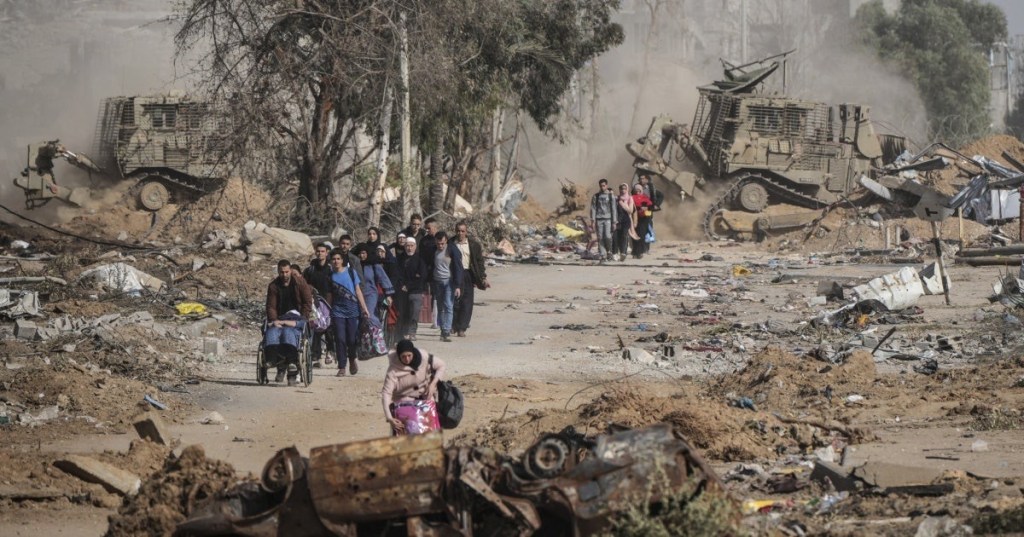
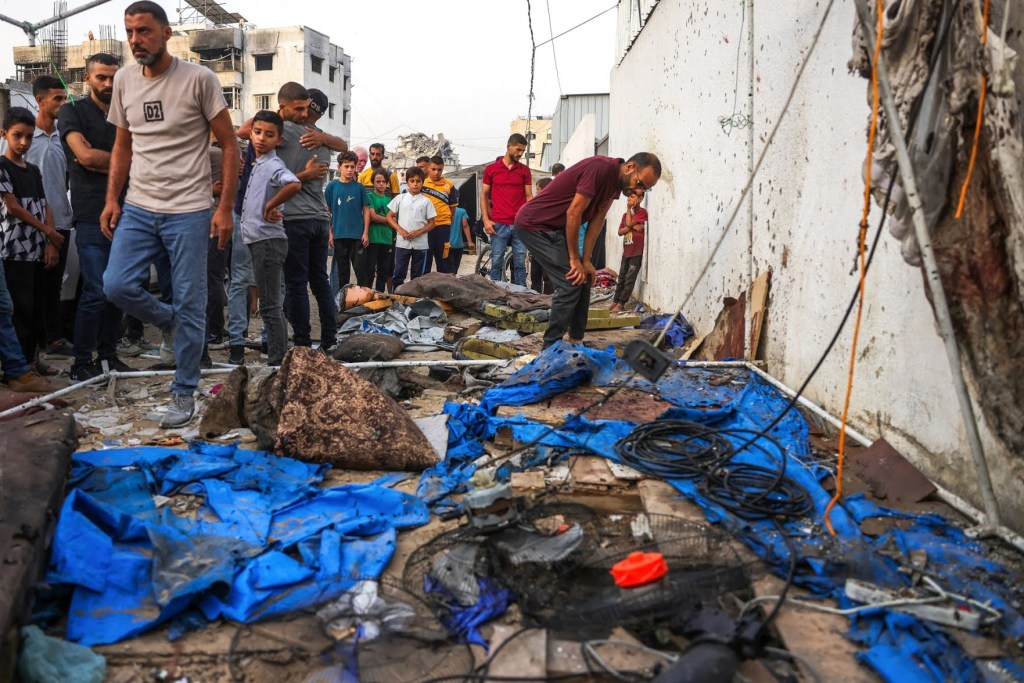
Gaza is a mass casualty event.

Palestinians check the destroyed Al Jazeera tent at Al-Shifa Hospital in Gaza City on Monday, following an overnight strike by the Israeli military.Bashar Taleb / AFP via Getty Images

Aug. 11, 2025, 9:03 PM EDT

By Nkozi Knight

The argument over Gaza too often collapses into labels and talking points. That framing lets us dodge the only question that matters. Are we willing to watch human beings be starved, shot at while seeking food, and buried under rubble, and do nothing?

As of August 2025, more than 61,000 Palestinians have been killed in Gaza since October 2023, according to figures collated by the U.N. from Gaza’s Health Ministry. Over 60,199 of those deaths have been fully identified by name and demographic details. Children are roughly one third of the dead. These are conservative counts and do not capture those still under collapsed buildings or the deaths from disease and hunger.    

The health system is hardly a system anymore. The World Health Organization reports that at least 94 percent of Gaza’s hospitals have been damaged or destroyed. Many operate only in fragments, without reliable power, oxygen, or surgical capacity.   

Schools have been leveled on a historic scale. U.N. satellite assessments show about 95 percent of school buildings damaged, with hundreds directly hit. The educational future of an entire generation is in jeopardy.    

Hunger is now policy by other means. The global famine monitor (IPC) warns that the food-consumption threshold for famine has already been passed in most areas of Gaza, with malnutrition and deaths rising. UNICEF has documented a sharp increase in children dying of starvation and related disease. The U.N. continues to report paltry aid flows compared with need.    

It is not just the volume of aid. It is the violence around it. After Israel dismantled the U.N.-led distribution system and backed a new contractor model this spring, multiple investigations documented civilians being shot at or killed around food sites and convoys. Hundreds have died seeking flour or canned food. These incidents are contested by Israeli authorities, but the pattern is now documented by journalists, doctors, and rights groups.   

Claims that “Hamas steals all the aid” are often made to justify these restrictions. Yet a recent U.S. government review found no evidence of massive theft of U.S.-funded aid by Hamas, even as diversion risks exist in any war. Meanwhile, Israeli far-right activists and settlers have repeatedly blocked, vandalized, or looted Gaza-bound convoys. Both truths can be held at once. Aid must be protected from diversion, and people must be allowed to eat.     

Christians are part of this story too. A Greek Orthodox church sheltering families was struck in October 2023, killing civilians. In December 2023, two Christian women were shot and killed inside the Holy Family Catholic parish compound, according to the Latin Patriarchate and the Vatican. The small Christian community has continued to suffer deaths and deprivation through 2024 and 2025.     

Here is the moral core you asked to preserve:

This is not about being anti-Semitic.

It is not about being pro-Hamas.

It is not even about taking a side on Israel’s right to be in the Middle East.

It is about being human.

It is about the countless lives lost.

The countless lives destroyed.

The generations of families wiped from the earth.

It is about the deliberate starvation of people who are already trapped in devastation.

International law is not silent about any of this. The Genocide Convention defines genocide as specific acts committed with intent to destroy a protected group. Those acts include killing, causing serious bodily or mental harm, and inflicting conditions of life calculated to bring about a group’s physical destruction. You do not need to be a lawyer to understand what “conditions of life” means when aid is throttled and families are shot at while queueing for food.   

Courts have acted, even if governments have not. In January and again in May 2024, the International Court of Justice ordered Israel to prevent genocidal acts and to ensure unimpeded humanitarian access, including ordering a halt to the offensive in Rafah. In November 2024, ICC judges issued arrest warrants for Israel’s prime minister and former defense minister on charges that include using starvation as a method of warfare. In July 2025, the ICC rejected Israel’s bid to withdraw those warrants.     

What should follow is not more argument. It is practical action.

Open the crossings wide and keep them open under neutral monitoring. Protect aid corridors and reinstate U.N.-led distribution at scale. Stop firing near food lines. Restore funding to agencies that have the reach to keep children alive. Enforce the ICJ’s orders. Respect the ICC process. None of this precludes holding Hamas accountable for the atrocities of October 7 or for any diversion of aid. It simply refuses to make civilians pay the price for crimes they did not commit.  

History records the numbers. Conscience remembers the names. Gaza is not a referendum on anyone’s identity. It is a of our own.

While You’re Watching Game 7 of the NBA Finals, We’re Being Sold Out Piece by Piece

We’re not watching a dramatic fall of America. There are no breaking news alerts about the end. No explosions in the streets. No economic sirens.

But make no mistake….something terrible is happening.

Piece by piece, decision by decision, we are being sold out. Our labor, our taxes, our future, it is all being extracted. And while it happens, we are told to look the other way while letting AI take many of our jobs.

Watch the game. Scroll the feed. Place a bet. Argue online about culture wars that do not affect your rent, your hospital bill, or your ability to afford groceries.

Meanwhile, the money keeps flowing. Out of your paycheck. Out of your neighborhood. Out of this country. Straight into the hands of foreign governments, defense contractors, and elite interests.

This is not the dramatic fall of a nation. It is a transfer of wealth, security, and stability away from ordinary Americans and toward a system that was never built to serve us. It is a system that acts globally, extracts locally, and survives only as long as we do not look directly at it.

You can call it a government. You can call it a machine. But what it really functions as is an empire. And the longer we ignore it, the more it takes.

The Cost of That Empire Is Being Paid in Evictions and Empty Refrigerators

While your tax dollars are used to fund missile systems in Israel, people across the United States are struggling just to keep a roof over their heads. Since 2020, the median price of a home has risen by more than 40 percent. Interest rates have climbed above 7 percent, making homeownership unreachable for millions (National Association of Realtors, 2024).

At the same time, Americans like myself, carry over $1.7 trillion in student loan debt. Medical bankruptcies remain the most common form of personal financial ruin. A premature baby that has to stay in a neonatal intensive care unit for over a month can cost well over a million dollars. On top of that, more than half of the country cannot afford an unexpected five hundred dollar emergency.

And yet, every year, tens of billions of dollars are approved for foreign aid without hesitation.

Israel receives more U.S. taxpayer money than any other nation on Earth. Since 1948, it has received over 300 billion dollars in aid, including nearly 4 billion annually in guaranteed military funding (Congressional Research Service, 2023).

That money has helped fund a public healthcare system, subsidized childcare, and modern infrastructure. Israel’s students have new schools. Their citizens have access to doctors without going bankrupt.

Meanwhile, in American cities, teachers work second jobs. Classrooms go without books. People drive across state lines to afford prescriptions. And in cities like Flint, Michigan and Jackson, Mississippi, families still live without safe drinking water.

This is not about scarcity. It is about priorities.

An Economy Built to Keep Us Consuming

We are told that the economy is doing well. But it only looks strong on paper because we are constantly spending to survive.

Wages have remained flat for decades, while the cost of everything else has gone up. Food, gas, housing, tuition, and insurance have all exploded. But instead of fixing the system, the solution we are offered is more debt.

Buy now, pay later.

Zero percent financing.

Monthly subscriptions for everything, even the essentials.

Our economy runs on credit cards and desperation.

We are not building wealth. We are surviving one paycheck at a time, and no one is willing to admit it.

And when that stress becomes too much, we are handed another solution, a distraction. Sometimes it’s a RICO case of a famous celebrity, other times it’s the United States bombing an empty nuclear facility in Iran, and other times it’s something as simple as sports and sports betting.

There is always something to pull our focus. Sports betting is now a multi-billion dollar industry thanks to ESPN, Draft Kings, Prize Picks, and MGM Sports betting. On television, sex-laden reality shows dominate prime time and paid subscriptions. Viral celebrity drama trends daily. Meanwhile, airstrikes in Gaza or explosions in Tehran are buried beneath all this noise but we pay for all of it.

None of this is random. It is a carefully designed system.

We Fund a Better Life for Others While We Are Told to Settle for Less

The average American is constantly being told to sacrifice.

Tighten your belt.

Use credit.

Be patient.

Inflation is temporary.

Work harder.

But there is no austerity when it comes to military aid.

There is always money for war. There is always money for foreign governments. There is always money to rebuild somewhere else in a land most have never been, but there is nothing for Maui, East Palestine, Flint, New Orleans, and many other cities in America.

Since 1948, Israel has received over 300 billion dollars in U.S. assistance (Reuters, 2024). That money has helped create one of the best publicly funded healthcare and education systems in the world—for a country with fewer people than New York City.

In America, we have veterans sleeping on the street in every major city.

We have kids learning from worksheets because their school cannot afford books.

We have families rationing insulin and choosing between medication and rent.

This is not just a funding issue. It is a values issue.

We are paying for the stability of others while our own communities are crumbling.

They Keep Us Distracted So We Do Not See It

Every time the conversation gets too close to real issues, the distractions flood in.

The headlines suddenly shift, and Operation Mockingbird goes full tilt. The scandals erupt more salacious than the prior one. The outrage machine gets turns on, and Americans are pinned against each other.

We are told to obsess over celebrities, argue over culture wars, and follow political soap operas like they are sports teams.

This is not a coincidence. It is the only way this corrupt system survives.

Because if we stop fighting each other, we might start asking the real questions.

Where is the money going?

Why can’t we afford basic services while funding foreign militaries?

Why is our economy built on debt and distraction?

And who exactly is benefiting from all of this since it’s not US?

This Is Not Incompetence. It Is a Strategy.

The truth is that the United States has all the resources it needs to take care of its people….if it wanted to.

But we do not. Not because we can’t. But because we are not supposed to.

We are expected to work, consume, and remain distracted.

We are expected to stay tired, stay anxious, and stay divided.

And we are expected to believe that any attempt to change the system is unrealistic, unpatriotic, or impossible.

But the truth is, the system is not broken. It is functioning exactly as designed.

It is designed to take.

It is designed to distract.

And it is designed to leave us wondering why we are doing everything right and still falling behind.

Can You Relate

If you are working harder than ever but getting nowhere, you are not alone.

If you are wondering why another country has healthcare and you cannot afford a routine checkup, you are asking the right question.

If you are tired of being told that sacrifice is patriotic while billionaires and foreign allies get blank checks, then maybe it is time we stop playing along.

They do not fear Iran. They do not fear China. They do not fear Russia.

What they fear is that you will start paying attention.

Because the moment we stop watching the show and start watching the system, the game is over.

Sources

National Association of Realtors. (2024). Median home price trends

Congressional Research Service. (2023). U.S. Foreign Aid to Israel

Reuters. (2024). Israel aid totals and annual packages

CNBC. (2023). 80 percent of Americans live paycheck to paycheck

Cato Institute. (2021). U.S. Military Footprint: 750 bases in 80 countries

Al Jazeera. (2021). U.S. global base presence overview

This Was Never About Democracy


Joint Chiefs Chairman Gen. Dan Caine speaks during a news conference at the Pentagon in Washington on Sunday, June 22, 2025, following U.S. airstrikes on three sites in Iran. The strikes mark the first direct American military involvement in support of Israel’s effort to dismantle Iran. (AP Photo/Alex Brandon)

By a Former SFO

On June 22, 2025, the United States launched Operation Midnight Hammer, a precision airstrike that hit three of Iran’s most fortified nuclear sites. The Pentagon claimed it wasn’t about regime change. But if you’ve been paying attention or like myself, you’ve worn the uniform and carried out the missions, you know that’s not true.

To the people of the world watching this unfold, wondering how we got here again, let me say what many in Washington won’t: This was never about democracy. It never is.

I’ve served in these wars. I’ve seen the playbook up close. And behind every “freedom mission,” there’s always a pipeline, a port, or a profit margin.

In Iraq, we were told we were bringing liberation. But we were guarding oil infrastructure while the country collapsed around us. Iraq has the fifth-largest oil reserves on Earth. Libya, before we shattered it, had Africa’s largest. Syria resists U.S. control and sits on key energy corridors. Yemen’s coast controls one of the most strategic oil shipping lanes in the world, known as the Bab al-Mandab Strait.

These aren’t wars for freedom. These are wars for access and control.

And it all ties back to the petrodollar. The U.S. dollar isn’t backed by gold, it’s backed by the global oil trade. When leaders challenge that system, they get taken out. Saddam Hussein tried to sell oil in euros. Gaddafi pushed for a gold-backed African currency. Both were removed, their countries reduced to chaos. Now Iran, Russia, and the expanded BRICS alliance are making the same moves trying to exit the dollar system. So now Iran is being bombed under the guise of “security.”

Let’s call this what it is: empire maintenance.

Destabilizing nations isn’t a failure, it’s the primary objective. Break countries that resist. Keep them weak. Prevent alliances with Russia, China, or anyone else outside the U.S. sphere. It’s an old playbook. Divide, conquer, install puppets. If that doesn’t work, create chaos and pretend we’re the firefighters, not the arsonists.

And don’t forget the profit. Every bomb dropped, every drone launched, every military base built feeds the defense industry. Raytheon, Lockheed Martin, Boeing, these are just a few of the real winners of every war we provoke. I saw it firsthand. I watched billion-dollar contracts handed out while our equipment in the field broke down or was left. This isn’t about patriotism. It’s a business. And business is booming no matter who the president of the United States is.

That’s why the war never ends. Permanent conflict justifies mass surveillance, not just on them but on us. It keeps over 800 U.S. military bases running. It feeds a trillion-dollar defense budget. And it keeps the American people afraid and numb, just afraid enough to keep asking for more bombs, more boots, more lies.

Now, Israel has struck first. The U.S. followed. And the war machine rolls on now pointed squarely at Iran.

This didn’t start yesterday. Back in 2007, General Wesley Clark said the Pentagon had a classified plan to take out seven countries in five years: Iraq, Syria, Lebanon, Libya, Somalia, Sudan, and Iran. Every name on that list has since been destabilized, overthrown, or bombed. Iran was the last one.

And if you’re wondering who’s next, just look at who’s resisting the dollar, blocking Western influence, or nationalizing their resources. Venezuela has already been targeted. Somalia, Niger, and others are in the crosshairs and not because they’re threats to peace, but because they’re threats to profit.

The cost? It’s not counted in defense budgets or quarterly earnings. It’s measured in bodies. In families torn apart. In children growing up under drones and rubble. In the rise of terrorist groups born out of the vacuums we leave behind. In entire generations who now associate “democracy” not with hope, but with fire raining from the sky.

“They hate us for our freedoms” was never true. They hate what we do. They hate what we destroy.

I believed the mission once. But now I see what it really was.

Regime change was never about freedom. It was always about control. About money. About fear.

And until we admit that the wars will never stop.

CITY YEAR MILWAUKEE FACES UNCERTAIN FUTURE AS FEDERAL AMERICORPS FUNDING CUTS LOOM

City Year Milwaukee, a vital partner in local education equity efforts, may be one of many programs at risk following sweeping cuts to AmeriCorps funding enacted through recent federal executive orders by President Donald Trump.

For years, City Year AmeriCorps members have served as near-peer mentors and tutors in Milwaukee Public Schools, offering support in classrooms where additional academic, emotional, and behavioral reinforcement is needed most. Their work has contributed directly to increased reading scores, stronger attendance, and greater student engagement in underserved communities.

But those outcomes now face disruption.

The federal government’s decision to significantly scale back AmeriCorps support by $400 Million threatens the infrastructure that has powered City Year and dozens of national service programs for decades. The loss of funding doesn’t just cut stipends or operational support, it cuts opportunity in Milwaukee. It cuts the relationships that matter most: those between a struggling student and the one person in their school day who sees their potential and shows up every morning to nurture it.

“This isn’t just a budget line,” said one City Year alum. “It’s a lifeline to kids, to communities, and to those of us who joined AmeriCorps to serve with purpose.”

City Year, a tax-exempt 501(c)(3) nonprofit, remains committed to serving without discrimination based on race, color, gender, origin, political belief, or faith. But continuing that mission requires resources.

Supporters, alumni, and concerned residents can learn more and get involved at: https://www.cityyear.org/milwaukee

In the wake of these cuts, the question is not whether the need still exists. It’s whether we will still show up.

BlackRock Doesn’t Just Own Tech. It Owns Your Future.

BlackRock doesn’t just own parts of Apple, Microsoft, and Amazon. It owns your food supply. It owns farmland. It owns water infrastructure. And through those investments, it owns a growing stake in the future of human survival itself.

What began in 1988 as a modest Wall Street firm built on risk management is now the largest asset manager in human history. BlackRock controls over $11 trillion , which is larger than the GDP of every country in the world except the United States and China.

But what most people still don’t realize is that BlackRock’s most important power grab didn’t happen on Wall Street. It happened quietly, across America’s farmland, its food systems, and its natural resources.

How Did We Get Here?

BlackRock’s expansion strategy was never about flashy takeovers. It was about ownership without attention. They don’t need to buy entire companies when they can buy enough shares to influence them all.

Through complex index funds and ETFs (Exchange-Traded Funds), BlackRock has quietly become a top shareholder in nearly every major corporation in America. Coca-Cola. PepsiCo. Kraft Heinz. Nestlé. Tyson Foods. Monsanto-Bayer. Even the companies that compete with each other are often owned by the same hand, BlackRock.

That includes food production, packaging, seeds, fertilizers, pesticides, farmland, water rights, grocery store chains, and agribusiness suppliers.

It is a spider web so vast that very few industries operate outside of its reach.

Farmland: The New Oil

In recent years, farmland has quietly become one of the hottest investments among America’s wealthiest. But few players have been as aggressive as BlackRock and its peers like Vanguard and State Street.

Why Farmland you may ask?

Simple. Land produces food, controls water access, and holds its value against inflation. In a world of uncertainty, farmland is power.

BlackRock has invested in farmland directly and indirectly through real estate investment trusts (REITs) like Farmland Partners and Gladstone Land Corporation. In some regions, institutional investors now own an estimated 30-50% of all available farmland.

For local farmers like Paul Rettler, this creates an impossible game that no one can win. Competing against trillion-dollar firms backed by infinite capital means the consolidation of agriculture isn’t slowing down, rather it’s accelerating.

The ESG Illusion

Much of BlackRock’s public messaging has centered around ESG, which stands for: Environmental, Social, and Governance investing , a framework designed to steer money toward sustainable and ethical practices.

But behind the marketing, ESG has often allowed BlackRock to reshape industries while still investing heavily in the very corporations most responsible for environmental harm.

Larry Fink, BlackRock’s billionaire CEO, has framed ESG as both a moral obligation and a business necessity. Yet BlackRock remains one of the largest shareholders in fossil fuel giants, industrial agriculture companies, and food manufacturers responsible for deforestation and soil degradation.

As environmental groups have pointed out daily, BlackRock has the ability to change the food system overnight. But profit almost always wins over principle and we have seen this outcome time and time again.

So What Does BlackRock Want?

It’s simple: Control. Influence. Permanence.

The more essential needs a company controls such as food, water, housing, energy, the less it matters who holds political office. Ownership is the real power.

When a handful of corporations control the basic elements of survival, the public becomes renters of everything, including their health, their homes, and their future.

This is the world being built right in front of us.

Water rights in California. Farmland in the Midwest. Global seed patents. Packaging monopolies. Shipping routes. Grocery store chains. Pharmaceutical partnerships. Tech platforms controlling communication.

This is not just about selling products.

This is about owning life itself.

So what can everyday people do?

Waiting for a politician to fix this system is like waiting for a thief to return what they stole. It is not going to happen.

But the answer is not fear. The answer is awareness. The answer is action.

It starts with taking back control wherever you can.

Buy from local farmers when possible. Grow your own food even if it is just herbs in your kitchen window. Filter your water. Cook your own meals. Learn how to read ingredient labels. Support local businesses over corporations when you can.

Most importantly, do your own research. Step outside of Google, mainstream media, and the same recycled talking points coming from media companies owned by the very corporations profiting from your confusion.

Seek independent sources. Read books. Listen to people on the ground, not just those in boardrooms. Question convenience when it comes at the cost of your health.

Learn how to be less dependent on the systems designed to keep you dependent.

Because at this point, we cannot wait for RFK. We cannot wait for politicians. We cannot wait for the same people who helped build this system to suddenly tear it down.

We have to start building something different starting in our homes, in our families, in our communities.

Not because it is trendy.

But because survival has always belonged to the people willing to think for themselves, take responsibility for their lives, and protect their future by any means necessary.

I Fought for This Country. But I Can No Longer Be Complicit in Its Foreign Policy Hypocrisy

As a veteran of the United States Navy, I Fought for This Country. But I Can No Longer Be Complicit in Its Foreign Policy Hypocrisy was taught to revere duty, honor, and fidelity to the ideals enshrined in our Constitution. But as I survey the wreckage of our foreign entanglements over the past century (many of which I once believed were necessary), I am confronted by a truth as uncomfortable as it is undeniable: the United States has become an empire more concerned with hegemonic preservation than human dignity.

For decades, our foreign policy has been defined not by altruism or the pursuit of global stability, but by opportunism disguised as liberation. And increasingly, those decisions seem less motivated by the interests of the American people and more by the imperatives of an unspoken geopolitical alliance that has evaded serious scrutiny.

We have sown chaos under the banner of democracy. In 1953, we orchestrated a coup in Iran, toppling Prime Minister Mohammad Mossadegh for the audacity of nationalizing his country’s oil. The result was a brutal monarchy, followed by a revolutionary backlash that has destabilized the region ever since. In 1963, we facilitated the removal of South Vietnam’s President Diem, catalyzing a war that cost over 58,000 American lives and millions of Vietnamese.

In 1973, we backed General Augusto Pinochet’s overthrow of Chilean President Salvador Allende, the Western Hemisphere’s first democratically elected Marxist. The junta that followed was a regime of torture, censorship, and state-sponsored murder. In 2003, we invaded Iraq under a pretense of weapons of mass destruction, a phantom menace that, once unmasked, left a power vacuum filled by sectarian violence, ISIS, and generations of trauma.

In 2011, we helped depose Muammar Gaddafi in Libya, leading to the collapse of civil society and the reemergence of open-air slave markets. We did not spread freedom. We exported anarchy.

These are not aberrations. They are patterns.

Yet amid these calamitous campaigns, one constant remains unchallenged: our unwavering and at times unfathomable deference to the state of Israel. The United States sends $3.8 billion annually in military assistance to Israel, even as we slash aid to nearly every other foreign nation, from humanitarian support in Sub-Saharan Africa to infrastructure investments in Latin America.

Why is Israel uniquely immune to austerity? Why is its influence over American foreign policy so pervasive that questioning it invites accusations of bigotry or disloyalty?

To ask these questions is not antisemitic.

It is democratic. It is imperative.

We are not obliged to bankroll or defend the actions of any foreign government, especially one whose policies often run counter to international law and the ethical standards we claim to uphold. A nation confident in its righteousness does not fear accountability.

And yet we remain captive to a status quo that conflates alliance with obedience. We act not as a sovereign superpower, but as a vassal in a global chess game whose rules we no longer write. The rhetoric of “shared values” becomes increasingly hollow as we silence dissent, criminalize critique, and ignore the suffering of those caught in the crossfire of our projections.

We call others “terrorists” while conveniently forgetting our role as the architect of their rage. We depose, destabilize, and then disavow.

I do not write this as a provocateur or as a partisan. I write as someone who has worn the uniform, who has saluted the flag, and who now grieves the betrayal of the ideals I once fought to protect. I want to live in a country that values transparency over pretext, humility over hubris, and peace over perpetual war.

Empire is unsustainable. Hegemony breeds resentment. And complicity, especially when cloaked in patriotic fervor, is corrosive to the soul of a republic.

We must confront our legacy with honesty. We must extricate ourselves from alliances that demand our silence rather than our scrutiny. And we must rediscover a foreign policy rooted not in domination, but in decency.

Anything less is a disservice to the nation we claim to love, and to the world we insist we’re trying to save.

Harvard Expands Free Tuition to Families Earning Under $200,000

By Nkozi Knight

In a move aimed at expanding access to higher education, Harvard University announced Monday that it will offer free tuition to students from families earning $200,000 or less starting in the 2025-2026 academic year. This marks a significant expansion of the university’s financial aid program, further removing financial barriers for prospective students.

Students from families with incomes below $100,000 will also have all expenses covered, including housing, food, health insurance, and travel costs. Previously, Harvard provided full financial support only to students from families earning less than $85,000 annually.

“Putting Harvard within financial reach for more individuals widens the array of backgrounds, experiences, and perspectives that all of our students encounter, fostering their intellectual and personal growth,” said Harvard President Alan Garber.

While tuition alone at Harvard currently exceeds $56,000, total costs, including housing and other fees, approach $83,000 per year. The new policy will significantly lessen that burden for many American families.

Families earning above $200,000 may still qualify for tailored financial aid depending on individual circumstances.

This initiative aligns with similar policies at other elite institutions, like the Massachusetts Institute of Technology (MIT), which announced a comparable expansion last fall. Harvard estimates that 86% of U.S. families will now be eligible for some level of financial aid.

“Harvard has long sought to open our doors to the most talented students, no matter their financial circumstances,” said Hopkins Dean of the Faculty of Arts and Sciences. “This investment ensures that every admitted student can pursue their academic passions and contribute to shaping our future.”

The expansion comes amid broader conversations about diversity in higher education, especially following the Supreme Court’s ruling against affirmative action in college admissions. Harvard, along with other institutions like the University of Pennsylvania, views increased financial aid as a pathway to maintaining diversity by ensuring access to students from varied socioeconomic backgrounds.

“We know the most talented students come from different socioeconomic backgrounds and experiences, from every state and around the globe,” said William Fitzsimmons, Harvard’s dean of admissions and financial aid. “Our financial aid is critical to ensuring that these students know Harvard College is a place where they can thrive.”

This policy marks a continued effort to create a more inclusive and accessible environment at one of the nation’s most prestigious universities.

The Nakba of 2025: A New Chapter in a 77-Year Displacement

Displaced Palestinians from the Nakba of 1948 (top) and displaced Palestinians in Gaza in 2025 (bottom). Seventy-seven years apart.

By N. Knight

February 2025

GAZA CITY — Seventy-seven years after the Nakba of 1948, in which Zionist paramilitary groups (later forming the Israeli Defense Forces) forcibly displaced more than 750,000 Palestinians during the creation of Israel, a new catastrophe is unfolding in Gaza. Then, as now, the mass removal of Palestinians was not just a consequence of war but a calculated effort to reshape the region’s demographics.

The original Nakba, or “catastrophe” in Arabic, saw entire villages erased, families expelled, and a people scattered across the Middle East with no path home. Today, with 1.5 million Palestinians displaced and Gaza reduced to rubble, history is repeating itself. What was once the forced exodus of Palestinian communities into Gaza and neighboring countries is now a campaign to permanently expel them from the land entirely.

And just as in 1948, this displacement has been backed by major world powers.

How the World Redefined a Nation Without Its People

Palestinians were never given a say in their removal. The decision to partition their homeland and create Israel was made by external powers, largely Britain and the United States, without the consent of the people already living there.

The Role of Winston Churchill and the British Mandate

Winston Churchill and Israeli Prime minister David Ben Gurion

Before Israel’s establishment, Palestine was under British rule as part of the League of Nations Mandate, a system intended to prepare nations for self-governance. But rather than supporting Palestinian self-determination, Britain instead paved the way for Zionist settlement under the Balfour Declaration of 1917, which promised a Jewish homeland in Palestine without consulting its Arab inhabitants.

Winston Churchill, as both Colonial Secretary and later as Prime Minister, was a staunch Zionist supporter who saw Jewish settlement as a British imperial interest. He dismissed Palestinian opposition outright, once stating:

“I do not admit that the dog in the manger has the final right to the manger, even though he may have lain there for a very long time.”

Under Churchill’s leadership, Britain facilitated Jewish immigration while crushing Palestinian resistance. By the time the British withdrew in 1948, Palestinians were politically powerless, abandoned to Zionist militias who would soon launch the campaign of forced displacement known as the Nakba.

Harry S. Truman’s Immediate Support for Ethnic Displacement

President Harry S. Truman (left) meets with Israeli Prime Minister David Ben-Gurion (right) and Israeli Ambassador Abba Eban (standing) in a gift ceremony in the Oval Office.

As the British withdrew, it was the United States under President Harry S. Truman that cemented Israel’s creation. Against the advice of his own State Department, which warned that recognizing Israel would spark mass displacement and long-term instability, Truman became the first world leader to formally recognize Israel just minutes after its declaration of independence on May 14, 1948.

Truman’s recognition was not just diplomatic. The United States provided Israel with critical financial and military aid, allowing the newly formed state to consolidate its territorial gains and prevent the return of displaced Palestinians.

The United Nations passed Resolution 194, affirming the right of Palestinian refugees to return to their homes. But Truman and his administration did nothing to enforce it. The result was that 750,000 Palestinians became permanent refugees, many of whom fled to the Gaza Strip only to find themselves trapped in a cycle of displacement that continues to this day.

From 1948 to 2025: A Continuing Nakba


Palestinians flee south via Salah al-Din Road, in central Gaza, on the third day of a temporary ceasefire between Israel and Hamas on November 26, 2023. © 2023 AP Photo/Hatem Moussa

What is happening now in Gaza follows the same pattern. The Israeli bombardment of Gaza has destroyed entire neighborhoods, killed over 100,000 Palestinians, and displaced 1.5 million people which is twice the number of refugees from 1948. The infrastructure of survival including hospitals, schools, and road, has been systematically wiped out. And now, current United States President Donald Trump has proposed ensuring that Palestinians never return.

Donald Trump’s plan to permanently expel Gaza’s residents and rebuild the land for Jewish settlers mirrors the policies of 1948, except now, the forced displacement is being openly endorsed as official United States policy. When as a question about Palestinian residents, he suggested they go to Egypt and Jordan, and redevelop Gaza into what he described as the “Riviera of the Middle East.”

A Global Response, and a Question

Internationally, Trump’s proposal has been met with sharp opposition. Saudi Arabia, Jordan, and Egypt have explicitly rejected the idea, warning that any forced resettlement of Palestinians into their territories would be a violation of sovereignty and a red line for the region. Saudi Foreign Minister Prince Faisal bin Farhan called it “a blatant attempt at ethnic cleansing that will not be tolerated by the Arab world.” Egyptian President Abdel Fattah el-Sisi reaffirmed that Egypt “will not accept the forced displacement of Palestinians into the Sinai.” Both nations have signaled that such a move could undermine diplomatic relations with Israel and the United States.

Yet, despite these warnings, the pattern remains unchanged. A population is being forcibly removed, their land repopulated with another ethnic group, and the world is expected to accept it as the price of geopolitics.

Which raises the question.

If the forced removal of an entire people, the destruction of their homes, and the resettlement of their land with another group is not ethnic cleansing, then what is

And if the world will not act to stop it now, will it ever?

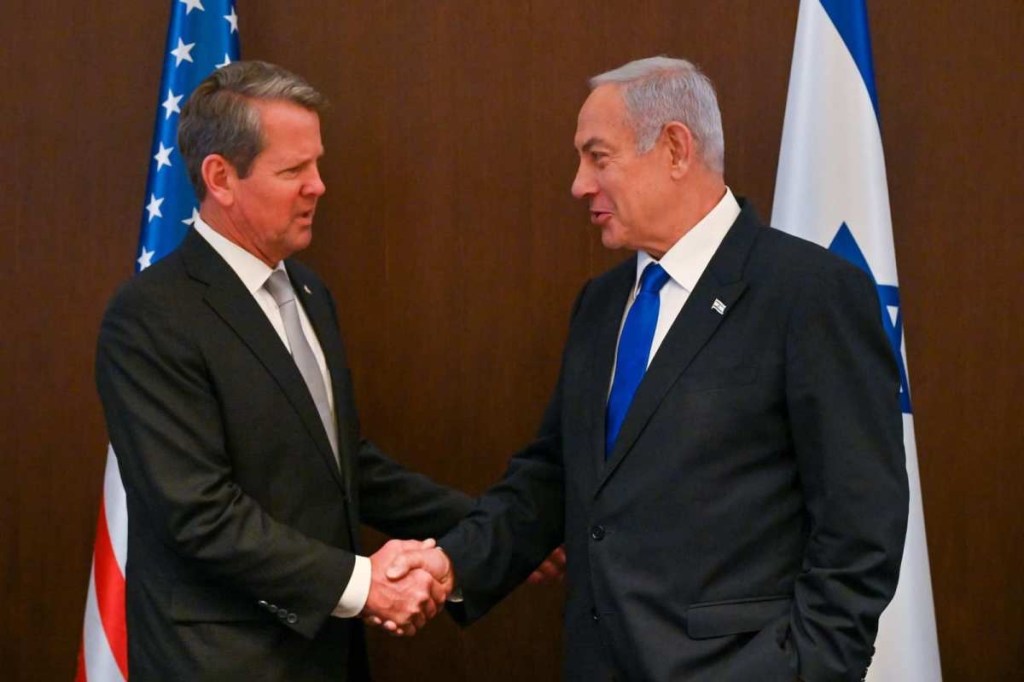
Georgia Legislation Reinstates Pledge to Israel for Major State Contracts

In a move that underscores Georgia’s commitment to Israel amid the ongoing Israel-Palestine conflict, Governor Brian Kemp enacted legislation on Monday mandating businesses engaged in significant state contracts to pledge not to participate in any boycott against Israel. This legislative action comes in the wake of a federal court decision that invalidated a comparable statute from 2016, which was challenged on the grounds of infringing free speech rights.

House Bill 383, the newly signed law, escalates the criteria for businesses required to commit to the anti-boycott pledge to those involved in state contracts exceeding $100,000 and applies exclusively to companies with a workforce of five or more. Governor Kemp, emphasizing Georgia’s solidarity with Israel, stated during the signing, “This deepens our support for a crucial ally, ensuring that Georgia does not financially back companies that boycott, divest from, or sanction Israel.”

This measure is a direct response to the boycott, divestment, and sanctions movement aimed at protesting Israeli policies towards Palestinians. Georgia stands as a forerunner among numerous states adopting such legislation, initially passed largely by the Republican majority in the state legislature in 2016. Despite bipartisan support for the revised bill, it has not been without its detractors, including Stacey Abrams, a leading Democrat, who expressed concerns over potential restrictions on advocacy movements.

The bill’s passage was notably supported by state Representative Mike Wilensky, the sole Jewish member of the Georgia Legislature, and received bipartisan endorsement. However, the law has faced criticism from entities like the Georgia chapter of the Council on American-Islamic Relations, which condemned the measure as an attempt to suppress free speech.

Proponents argue that the legislation judiciously balances Georgia’s prerogative in selecting its business partners with the safeguarding of free speech, a stance awaiting further scrutiny in federal courts. Anat Sultan-Dadon, Israel’s consul general to the southeast U.S., lauded the law as a countermeasure to what is perceived as a movement fueled by an “age-old hatred agenda” against Jews.

The enactment of House Bill 383 represents a significant moment in Georgia’s legislative history, spotlighting the state’s alignment with Israel and stirring a complex debate over the intersection of free speech and political boycotts in the context of international relations.

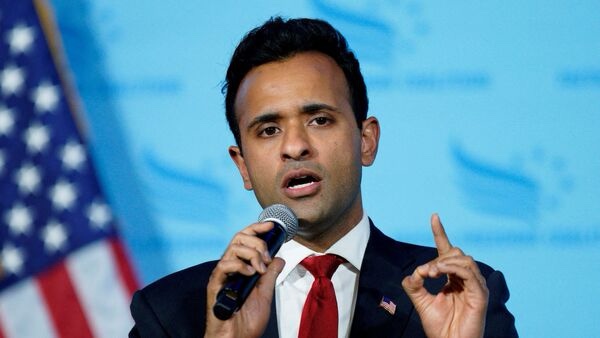
Vivek Ramaswamy: A Maverick’s Journey from Biotech to the Brink of Political Revolution

Vivek Ramaswamy, a multimillionaire former biotech executive, will seek to jump-start his ebbing 2024 Republican presidential campaign at Wednesday night’s fourth debate.

In the complex and ever-changing landscape of American politics, 38-year-old Vivek Ganapathy Ramaswamy emerges as a standout figure in the 2024 presidential election, embodying a story that’s deeply intertwined with the American dream.

Early Roots and Formative Years

Born in Cincinnati, Ohio, on August 9, 1985, Vivek’s life is a narrative shaped by a blend of cultural heritage and intellectual rigor. The son of Indian immigrants, his upbringing was a fusion of his family’s Hindu practices and the influences from his conservative Christian piano teacher. These diverse influences laid the groundwork for his multifaceted worldview.

A standout student, Vivek attended St. Xavier High School, a Jesuit Catholic institution, graduating as valedictorian. His academic prowess was matched by his skill on the tennis court, where he excelled as a nationally ranked junior player. His journey then led him to Harvard University, where he graduated summa cum laude in biology, known for his libertarian leanings and love for debate.

Venturing into Business and Biotech

Post-Harvard, Vivek’s path veered into the realms of finance and biotechnology. His entrepreneurial spirit saw him co-founding Campus Venture Network and joining QVT Financial, where he rose to partner. In 2014, he founded Roivant Sciences, a firm focused on developing underutilized drugs, marking his significant entry into the biotech industry.

A Political Ascent

Vivek’s political journey is marked by his firm stance against ESG investing and ‘woke culture’ in the corporate sector, themes he explores in his book “Woke, Inc.” His presidential campaign, encapsulated under the banner “America First 2.0,” advocates for radical changes across American society and governance, challenging established political norms.

Debate Stage: A Platform for Provocation

Ramaswamy’s performance in the December 6, 2023, debate painted him as a provocative figure, echoing the tactics of former President Donald Trump. His controversial statements, embracing far-right conspiracy theories, and aggressive attacks on opponents, signal a divisive and unconventional political strategy.

Policy Propositions and Their Echoes

His policies reflect a bold vision, advocating for a reshaping of the American social fabric, economy, and governance. From challenging the Department of Education and FBI to confrontational stances on foreign policy, these proposals, if enacted, could lead to sweeping changes in the nation’s trajectory.

A Candidate of Contrasts

Vivek Ramaswamy’s story from the son of immigrants to a presidential contender is more than a political narrative; it’s a reflection of the multifaceted American identity. His campaign, a mix of conservative ideals and radical proposals, stirs a debate about America’s future. Whether his vision aligns with the broader electorate is a question yet to be answered, but his influence on the political discourse is unmistakable.

Shades of Gray: The Historical Impact of Political Policies and the Importance of Knowing Our Past

Decades ago, the corridors of American politics witnessed a series of decisions that would dramatically reshape the landscape of African American communities. This story begins in the halls of power, where policies and laws were crafted, setting off a chain of events that would echo through generations. From the Reagan era’s war on drugs to the legislative intricacies underpinning Joe Biden’s rise in the political arena, these decisions painted a complex picture of intention versus impact. This aim is to untangle this complex web, tracing the roots of policies that have left a lasting imprint on society. We delve into the intricate interplay of legislation and its intended consequences, piecing together how political maneuvers have sculpturally shaped the realities of countless individuals and communities across the nation.

The 1980s, under the presidency of Ronald Reagan, marked a pivotal era where international intrigue and domestic policy collided. The Iran-Contra Affair, a scandal defined by covert arms sales and secret funding, not only dominated headlines but also served as a backdrop to the escalating War on Drugs. This war, declared with a mission to eradicate drug abuse, inadvertently laid the groundwork for a crisis in African American communities.

Simultaneously, a young senator named Joe Biden was rising through the political ranks. A figure who would come to shape significant aspects of criminal justice policy, Biden’s career in the 1980s and beyond reflects the complex relationship between American politics and the African American community. His role in shaping the Anti-Drug Abuse Act of 1986, with its disparate sentencing for crack and powder cocaine, had far-reaching impacts, disproportionately affecting African Americans and contributing to a surge in incarceration rates.

As the narrative progressed into the 1990s, Biden’s influence continued to grow. His involvement in crafting the 1994 Violent Crime Control and Law Enforcement Act further entrenched the trend of mass incarceration. Though aimed at addressing rampant crime, the bill’s consequences rippled through African American communities, deepening the chasms of inequality.

Decades later, during his 2020 presidential campaign, Biden’s rhetoric reflected a shift. His acknowledgment of the impact of these policies, coupled with promises of reform, marked a departure from his earlier stances. However, this shift was not without its controversies. Biden’s declaration in a 2020 interview that questioned African American allegiance to the Democratic Party sparked a conversation about the taken-for-granted African American vote in U.S. politics.

Biden’s long-standing pledge to Zionism, mirroring the broader U.S. political landscape’s support for Israel, further adds to the narrative’s complexity. It reflects a broader theme in American politics: the alignment of foreign policy interests, often at the expense of addressing pressing domestic issues.

The story of U.S. drug policy and its impact on African American communities, intertwined with Biden’s career, stands as a testament to the cyclical nature of political priorities and the often contradictory nature of government policies. It highlights a dissonance between the quest for votes from minority communities and the legislative actions that have historically impacted them.

This evolving narrative, chronicled over several decades and various administrations, is not merely a historical account; it serves as a reflective mirror for American society. In an era where political promises ebb and flow with the tide of public opinion, the importance of scrutinizing policy decisions and understanding their long-term impacts becomes paramount. As voters, the responsibility lies in our hands to delve into the history of those we elect into power.

It’s a reminder that genuine representation in the corridors of power and accountability are not just political ideals but necessities. As we stand at the crossroads of another election, it is crucial to remember that the votes we cast are echoes of our collective history and aspirations. We must challenge ourselves to look beyond the rhetoric, to understand the past of those we entrust with our future, ensuring our decisions are informed, and our voices are heard in shaping a more equitable and just society. As James Baldwin once said, “Not everything that is faced can be changed, but nothing can be changed until it is faced.”

Powerful Conversations: How High-Impact Leaders Communicate

iStock_000015269756XSmall[1].jpg

All leaders talk, but it is what they say and how they say it that determines whether the group succeeds or fails.

Think about it: the leader’s most fundamental and most important job is to be in touch with those around him or her. Whether it is in the hallways or on the phone, in the middle of the workday or after hours, while delivering a performance review to a key employee or a yearly address to thousands of employees, leaders are involved in a constant series of conversations.

Through these encounters, whether brief and spontaneous or scheduled and structured, leaders try to use their time with colleagues, employees, customers, and others to reach a variety of ends. Grabbing a moment, the leader takes the opportunity to influence and direct a member of the sales staff. A weekly meeting becomes a chance to coach a manager and gather information about the department’s morale and its financial numbers. A quick e-mail checks on the progress of a research project and gives a boost of recognition and support to the team. During a strategy meeting, the leader negotiates next steps with division heads and outlines a coordinated approach. At a company awards ceremony, he or she tries to hammer home a message about values and goals. In short, the leader, through his or her conversations, aims to foster relationships, build support networks, and sharpen organizational focus.

Yet outcomes from conversations are too often unclear. Perceptions don’t always match. Influences are frequently not as profound as one would hope. Communication is generally a struggle with mixed, uncertain, and unpredictable results. Too much conversation is ad hoc and hinges on moods, energy levels, relationships, and personalities. Sometimes a leader is right on point. Sometimes he or she clicks and forges a new connection. Other times, the leader misses the mark. Either way, he or she pushes on, lining up the next meeting, setting up the next goal, responding to the latest need for clarification.

Communication is never easy. Inevitably, when a leader is driving change and dealing with conflicting agendas, some conversations provide a challenge that tests the bounds and skill of experience. During the heat of a difficult conversation, you need to fall back on a discipline. You need clear communication that advances agendas, promotes learning, and strengthens relationships. It’s the difference between achieving objectives and having everything fall apart—and the difference between winning and losing.

Imagine having to let a close friend know that he or she is off a project because of poor performance, yet wanting at the same time to preserve the strength of the relationship. Imagine having to make necessary structural changes to an organization, realigning roles and positions in ways that involve cuts in the workforce, yet wanting at the same time to bolster morale and organizational commitment. These are the difficult conversations that High-Impact Leaders face every single day, so what makes them different from any other leader?

High-Impact Leaders are the people who get results. They are the ones who make things happen. They are the leaders who are able to continually advance a clear agenda, get others to buy into it, and move an organization, a division, or a team forward. Being a High-Impact Leader has nothing whatsoever to do with title or rank, because High-Impact Leaders can be found up, down, and across any organization.

-Impact Leaders are the ones who cause no surprises. They are explicit, consistent, concise, and authentic. They sometimes have an abundance of charisma, but that is clearly not a prerequisite. More to the point, High-Impact Leaders are the ones who take charge wherever they are. They are the ones others want to follow. They are also the leaders whose teams others consistently want to join. When they move on to new roles or new territories, they do not travel alone. Others ask to go with them.

These conditions result because High-Impact Leaders use the technology of Powerful Conversations and then match what they say with what they do. Through Powerful Conversations, they develop openness, honesty, and clarity in order to get others to believe and share in their goals, to gain commitments, and to foster trust. And they prove they are worthy of that trust by delivering on their own commitments and by making results happen.

The link between Powerful Conversations and High-Impact Leaders lies in the relationship between two concepts I refer to as Say and Do. I have seen people skilled at the art of Powerful Conversations nevertheless fail as leaders because they fail to live up to their words. As a result, they never become High-Impact Leaders. I have never known a High-Impact Leader, however, who was not also skilled at Powerful Conversations, whether conscious of that designation or not. To be a High-Impact Leader, you have to be able to conduct Powerful Conversations on a consistent basis and live up to the outcomes of those conversations. Why is this important? It has to do with trust—without which conversations cannot progress toward the realization of commitments.

One of the most important functions of a Powerful Conversation is to create clarity, a critical success factor for building trust. I cannot tell you how frequently I have been involved in situations in which a leader, reflecting on problems that have arisen, says, “I can’t believe they thought I meant that. I never had any intention of doing that.” And the followers say something like, “It’s unbelievable. Our leader made a clear commitment to do this and now denies it was ever part of the agenda.” Both sides shake their heads. Barriers go up. Trust is reduced or nonexistent.

True clarity implies that a leader says exactly what he or she means in such a way that his or her statements are received as intended. This requires openness, honesty, and an active and careful tracking of wants, needs, and commitments. It furthermore requires that those clear statements be lived up to with demonstrated actions built on organizational trust.

High-Impact Leaders today lead in a better way because they recognize that the shortest path to achieving objectives is to build trust and gain clear commitments from others. Specifically, they engage in Powerful Conversations to uncover the wants and needs of others in order to understand what will motivate those people to join forces with the leader and live up to the commitments of a conversation. They skillfully orchestrate the Powerful Conversations in which they engage to make clear all parties understand the exact commitments that have been made. Then they check into those commitments and make sure through follow-up conversations that the commitments can be kept. They track the wants and needs of others and find ways to reinforce their own desire to understand the wants and needs of others, often through continued follow-up conversations. High-Impact Leaders do these things because they know that trust must exist if the leader is to achieve his or her agenda through Powerful Conversations to create positive outcomes for their teams and stakeholders.

by Phil Harkins

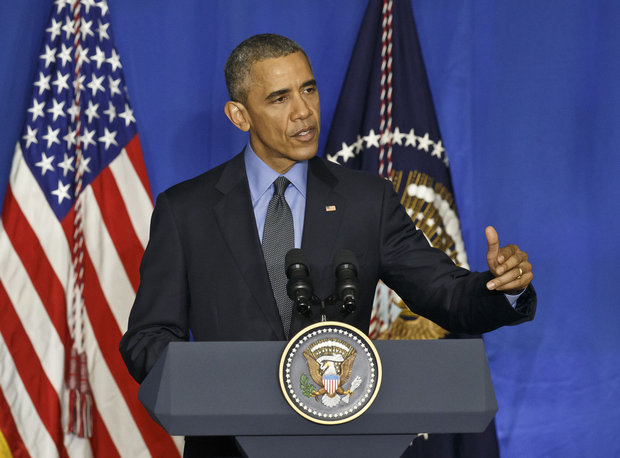
President Obama Speaks After Terrorism Briefing

19369685-mmmain

“We will not be terrorized.” ~ President Obama

President Obama states that his office does not have any credible information about an imminent terror attack. His three plan approach includes attacking terrorist in the Middle East, preventing terrorist from getting into the United States, and stepping up efforts to prevent attacks on American soil from both foreign and domestic terrorist.


5 Important Parts Of The $1.1 Trillion Government Spending Bill

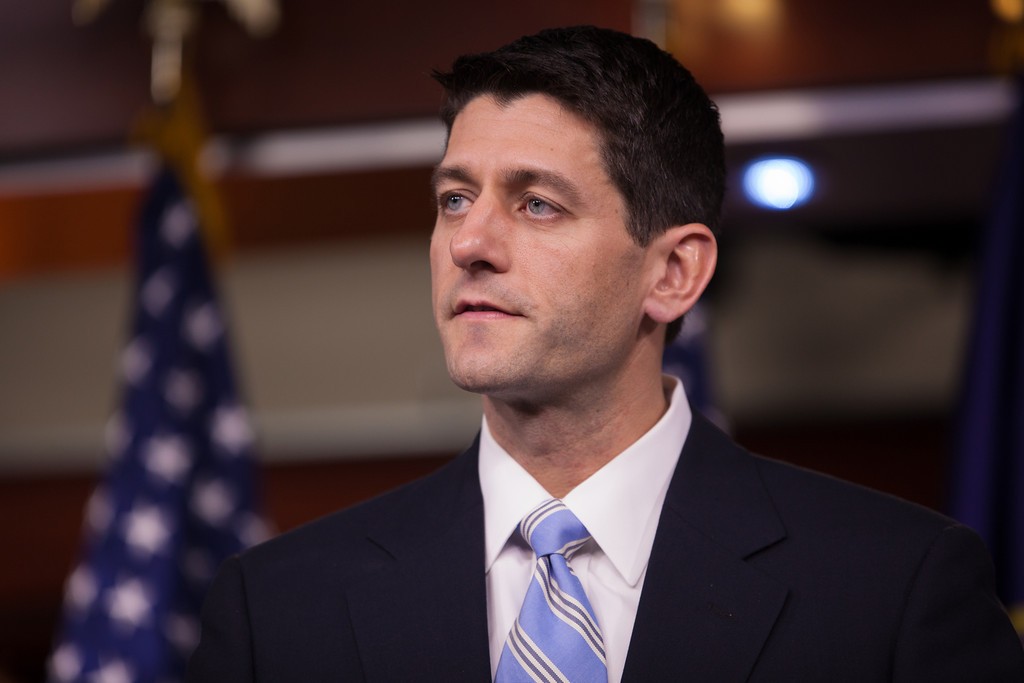
PaulRyan_JeffMalet-1024x683This week, Congress finally began to vote on a $1.1 trillion spending bill, avoiding government shutdown and putting at least a temporary halt to the gridlock that had defined Washington for much of the Obama administration.

The spending package, which hasn’t been voted on yet, would fund most federal agencies throughout 2016 and may actually demonstrate that Republicans and Democrats are, in fact, still capable of compromise. Here are five things to know about the bill:

There are actually two bills: For political reasons, the House leadership decided to split the funding measures into two different bills. One is the $1.1 trillion funding plan, the other is a $629 billion tax cut package. By splitting the two measures, USA Today notes, Democrats can vote against the tax cuts and conservative Republicans can vote against the funding bill while both can still pass.

The oil export ban is gone: The Republican caucus fought hard to put an end to the40-year ban on American companies’ ability to export oil. They got that done, much to the delight of the energy sector.

Republicans lost on refugees: Another major goal of some Republicans, especially more conservative members, was to restrict President Obama from bringing Syrian refugees to the U.S. They didn’t get that, though USA Today notes that the spending bill includes new anti-terror provisions relating to visas for visitors from 38 countries.

Planned Parenthood is safe: One of the most contentious issues for the past several months has focused on federal funding for Planned Parenthood, a national network of women’s health care centers that provide abortions. The organization will continue to receive funding, to the consternation of conservative Republicans.

The medical devices tax is gone: Mark this as a win for House Speaker Paul Ryan. Though it isn’t off the table forever, the deal delays the tax for at least two years.

Source: 5 Important Parts Of The $1.1 Trillion Government Spending Bill

Here’s How Many Jobs U.S. Companies Cut In September

The computer industry was hit hard.

Last month saw a surge in layoffs, primarily due to large-scale employee cuts at companies like Hewlett-Packard.

U.S. companies laid off 58,877 workers in September, according to data released Thursday by Challenger, Gray & Christmas. September layoffs are up 43% from August when about 41,000 workers were let go.

In total, employers have announced 493,431 planned layoffs so far this year, a 36% jump over the same period last year and 2% more than the 2014 total.

“Job cuts have already surpassed last year’s total and are on track to end the year as the highest annual total since 2009, when nearly 1.3 million layoffs were announced at the tail-end of the recession,” said John A. Challenger, CEO of Challenger, Gray & Christmas.

The computer industry accounted for the heaviest job cuts in September primarily driven by Hewlett-Packard, which said it would cut 30,000 jobs. The job losses, which were announced in mid-September by CEO Meg Whitman, should save the company $2.7 billion annually and represented about 10% of the company’s workforce, HP said.

Source: Here’s How Many Jobs U.S. Companies Cut In September