Knowing When to Walk Away in 2025

By Nkozi Knight

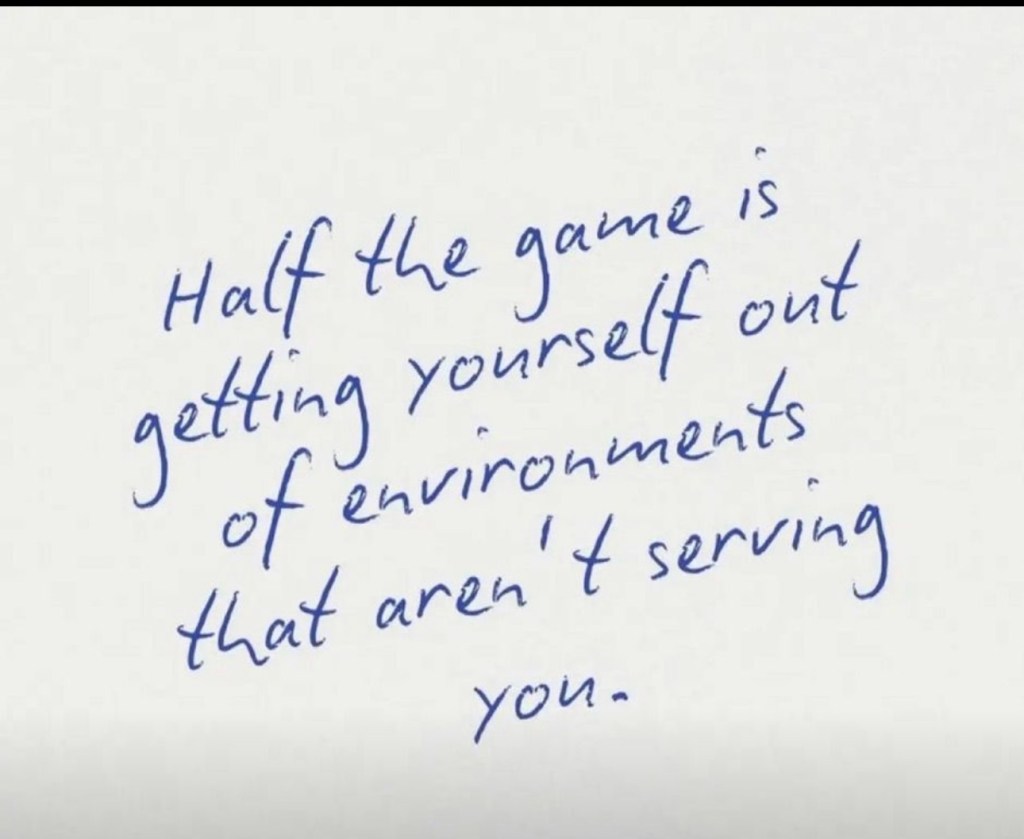
We tell ourselves that success comes from more effort and more time. That belief still matters. Yet in 2025 another truth is just as important. Half the game is choosing where you spend your effort in the first place. Sometimes the smart move is to walk away.

The labor market is reshaping itself in real time. Generative AI tools now handle work that once kept whole teams busy. Companies are reorganizing to chase efficiency and speed. Leadership teams are under pressure to do more with fewer people. Global talent markets are wide open. H1B holders bring real skill and many firms are recruiting globally before they look locally. None of this is a moral judgment. It is the environment. In this environment staying put out of habit can become the most expensive decision you make.

Silent quitting defined the last few years. People stayed but pulled back. In 2025 the bigger risk is silent stagnation. You keep delivering while the org chart keeps shifting. Systems take over routine tasks. Budgets move to automation and to roles that can scale. If your seat does not compound your skills or your network, the clock is already ticking even if you cannot hear it.

Walking away is not drama. It is strategy. The question is simple. Does this role increase your value twelve months from now. If the honest answer is no, the cost of loyalty is too high. Loyalty to your future is the only loyalty that compounds.

To evaluate your situation ask yourself whether the outcomes you deliver are unique to your skill set or whether a model could replace them. Consider whether the learning curve in your current role is still steep or if you are repeating cycles that add little to your future. Reflect on whether your work places you near decision makers or keeps you locked in execution only. And finally, consider whether the relationships you build today will serve you tomorrow. These questions offer quiet clarity that no performance review will provide.

Leaving does not always mean quitting your employer. It can mean walking away from the wrong team, the wrong leader, the wrong product line, or the wrong client mix. It can mean seeking roles that sit beside the machines rather than beneath them. Human judgment, trust building, original insight, and accountable ownership remain scarce. Aim your career at the work that needs a signature, not just a keyboard.

The H1B debate is loud this year and will stay loud. The best response is not resentment. It is readiness. Build competencies that translate across industries. Learn the tools that drive your field so you can direct them rather than compete with them. Grow relationships that outlast any single title. When your value is clear and portable you will not fear any policy cycle.

For leaders the message is just as direct. People are watching how you treat them during this transition. If you use AI to strip away meaningful work without creating new ladders, your best people will exit first. If you invest in upskilling and in clear career paths, your organization will retain its core talent and attract more. Markets reward firms that act with clarity and care at the same time.

The choice to walk away is never easy. It asks for courage and a clear view of the road ahead. Yet the market is telling the truth every day. Growth rarely happens in places that mute your voice or drain your energy. If the room you are in no longer fits the person you are becoming, it is time to leave the room.

In 2025 the winners will not be those who simply grind harder. They will be those who choose their arenas wisely and walk away when the environment no longer deserves them.

Behind Washington’s Latest Bipartisan Marvel: The Quiet Power Grab in the GENIUS Act

Date: Wisconsin, June 28, 2025

When the Senate voted 68-30 last week to pass the Guiding and Establishing National Innovation for U.S. Stablecoins Act, or better known as the GENIUS Act, the moment barely registered in a news cycle crowded with updates from the Diddy trial, ominous talk of World War III, and who does and does have have nuclear warheads a in the Middle East. Yet the bill is poised to reshape American money itself, setting the stage for bank-issued digital dollars and a vastly expanded federal role in everyday payments that will impact every Americans for the next decade.

House leaders now plan to bundle the measure with a separate market-structure bill, the CLARITY Act, and move both to the floor in a single vote as early as the week of July 7. President Trump has already signaled he will sign the package “without delay.”  

A $265 Million Campaign Pays Off

Passage caps the costliest crypto lobbying blitz on record. Industry groups and super PACs spent more than $265 million during the 2024 election cycle, which is nearly double the previous year, to elect crypto-friendly candidates and draft the very language that now governs them.  

Much of that money flowed through Fairshake, a super PAC bankrolled by Coinbase, Ripple and venture fund a16z, which alone poured over $130 million into congressional races. Thirty-three of its thirty-five endorsed candidates won which ties them with AIPAC.

The bill’s corporate sponsors read like a who’s-who of finance:

JPMorgan Chase filed a trademark for JPMD, a deposit-backed token it can now launch on Coinbase’s Base network.   PayPal and several regional banks lobbied for an exemption that lets them issue “payment stablecoins” under state charters.   World Liberty Financial, the Trump-family venture behind the USD1 stablecoin, secured a new $100 million investment from a UAE fund days before the vote.  

What the Bill Actually Does

This bill re-labels stablecoins as “payment systems,” taking them out of securities law and handing primary oversight to the Fed and the Office of the Comptroller of the Currency, creating an aura of legitimacy. It also creates a licensing moat: only banks and “permitted issuers” that meet 1-to-1 reserve, audit and AML rules can mint tokens—locking smaller DeFi projects outside the gate. Mandates monthly disclosures of reserves but allows issuers to hold short-term Treasuries, providing fresh demand for federal debt.   Bars members of Congress and their immediate families from trading stablecoins—but notably leaves the White House exempt. Senator Elizabeth Warren called this “a loophole big enough to drive a truck full of crypto through.”

The Bipartisan Pattern: Crypto and Foreign Wars

The only other legislation that has moved this smoothly across party lines in recent years is foreign-aid spending for Ukraine and Israel. In April 2024 Congress passed a $95 billion package for Ukraine, Israel and Taiwan with overwhelming majorities in both chambers, with all packages hovering over $300 billion in the last 5 years.

Critics argue the same donor class such as defense contractors abroad and crypto financiers at home, dictates both agendas. “If it involves new weapons or new money rails, Congress finds consensus,” says Sarah Bryer, a former Senate banking staffer now at watchdog group Public Citizen. “Everything else stalls.”

What Gets Missed While Washington Innovates

Poverty: The Supplemental Poverty Measure rose to 12.9 percent in 2023, the first increase in a decade.   Homelessness: More than 770,000 Americans were unhoused on a single night in January 2024, the highest count ever recorded.   Disaster Recovery: Communities from Maui to East Palestine still wait on promised federal funds years after their crises. To date the U.S. Congress has held nine hearings but passed no comprehensive relief bills for any of these victims.

Yet lawmakers devoted 18 months of hearings and four mark-ups to ensure banks can mint digital dollars.

A New Architecture for Control

Civil-liberties attorneys warn that putting money on permissioned blockchains invites mission creep. Once every transaction is traceable:

Payments can be geofenced or frozen at the click of a regulator’s dashboard. Political dissenters can be de-banked without ever seeing a courtroom. Cash’s untraceable refuge disappears, replaced by tokens that obey code written in Washington and often debugged on Wall Street.

Senator Warren, one of just eleven Democrats opposed, likened the bill to the 2000 Commodities Futures Modernization Act, which green-lit credit-default swaps before the 2008 crash. “We’re repeating history,” she warned on the floor. 

What Happens Next

If the House delivers the bill to President Trump before the July 4 recess, bank-branded stablecoins could hit the market within a year. JPMorgan’s JPMD pilot is ready; PayPal has quietly updated code to let its wallet swap into compliant tokens.

For ordinary Americans, the promise is faster payments, at least until the rules change. “Digital dollars are programmable,” notes Bryer. “Today they clear instantly. Tomorrow they refuse to buy a bus ticket to the wrong protest.”

The Bottom Line

The GENIUS Act is not just a regulatory tweak; it is the blueprint for a cashless, centrally mediated economy shaped by the largest banks, the loudest lobbyists and a White House with skin in the game. That it passed under the radar says as much about the media distractions of the moment as it does about the power of money in Washington.

As many households grapple with rising rents, increased living expenses, stubborn poverty and record homelessness, Congress has found rare harmony over who controls the future of money itself. When the dust settles, Americans may discover their new digital wallet comes with fewer rights than the battered leather one it replaced.

While You’re Watching Game 7 of the NBA Finals, We’re Being Sold Out Piece by Piece

We’re not watching a dramatic fall of America. There are no breaking news alerts about the end. No explosions in the streets. No economic sirens.

But make no mistake….something terrible is happening.

Piece by piece, decision by decision, we are being sold out. Our labor, our taxes, our future, it is all being extracted. And while it happens, we are told to look the other way while letting AI take many of our jobs.

Watch the game. Scroll the feed. Place a bet. Argue online about culture wars that do not affect your rent, your hospital bill, or your ability to afford groceries.

Meanwhile, the money keeps flowing. Out of your paycheck. Out of your neighborhood. Out of this country. Straight into the hands of foreign governments, defense contractors, and elite interests.

This is not the dramatic fall of a nation. It is a transfer of wealth, security, and stability away from ordinary Americans and toward a system that was never built to serve us. It is a system that acts globally, extracts locally, and survives only as long as we do not look directly at it.

You can call it a government. You can call it a machine. But what it really functions as is an empire. And the longer we ignore it, the more it takes.

The Cost of That Empire Is Being Paid in Evictions and Empty Refrigerators

While your tax dollars are used to fund missile systems in Israel, people across the United States are struggling just to keep a roof over their heads. Since 2020, the median price of a home has risen by more than 40 percent. Interest rates have climbed above 7 percent, making homeownership unreachable for millions (National Association of Realtors, 2024).

At the same time, Americans like myself, carry over $1.7 trillion in student loan debt. Medical bankruptcies remain the most common form of personal financial ruin. A premature baby that has to stay in a neonatal intensive care unit for over a month can cost well over a million dollars. On top of that, more than half of the country cannot afford an unexpected five hundred dollar emergency.

And yet, every year, tens of billions of dollars are approved for foreign aid without hesitation.

Israel receives more U.S. taxpayer money than any other nation on Earth. Since 1948, it has received over 300 billion dollars in aid, including nearly 4 billion annually in guaranteed military funding (Congressional Research Service, 2023).

That money has helped fund a public healthcare system, subsidized childcare, and modern infrastructure. Israel’s students have new schools. Their citizens have access to doctors without going bankrupt.

Meanwhile, in American cities, teachers work second jobs. Classrooms go without books. People drive across state lines to afford prescriptions. And in cities like Flint, Michigan and Jackson, Mississippi, families still live without safe drinking water.

This is not about scarcity. It is about priorities.

An Economy Built to Keep Us Consuming

We are told that the economy is doing well. But it only looks strong on paper because we are constantly spending to survive.

Wages have remained flat for decades, while the cost of everything else has gone up. Food, gas, housing, tuition, and insurance have all exploded. But instead of fixing the system, the solution we are offered is more debt.

Buy now, pay later.

Zero percent financing.

Monthly subscriptions for everything, even the essentials.

Our economy runs on credit cards and desperation.

We are not building wealth. We are surviving one paycheck at a time, and no one is willing to admit it.

And when that stress becomes too much, we are handed another solution, a distraction. Sometimes it’s a RICO case of a famous celebrity, other times it’s the United States bombing an empty nuclear facility in Iran, and other times it’s something as simple as sports and sports betting.

There is always something to pull our focus. Sports betting is now a multi-billion dollar industry thanks to ESPN, Draft Kings, Prize Picks, and MGM Sports betting. On television, sex-laden reality shows dominate prime time and paid subscriptions. Viral celebrity drama trends daily. Meanwhile, airstrikes in Gaza or explosions in Tehran are buried beneath all this noise but we pay for all of it.

None of this is random. It is a carefully designed system.

We Fund a Better Life for Others While We Are Told to Settle for Less

The average American is constantly being told to sacrifice.

Tighten your belt.

Use credit.

Be patient.

Inflation is temporary.

Work harder.

But there is no austerity when it comes to military aid.

There is always money for war. There is always money for foreign governments. There is always money to rebuild somewhere else in a land most have never been, but there is nothing for Maui, East Palestine, Flint, New Orleans, and many other cities in America.

Since 1948, Israel has received over 300 billion dollars in U.S. assistance (Reuters, 2024). That money has helped create one of the best publicly funded healthcare and education systems in the world—for a country with fewer people than New York City.

In America, we have veterans sleeping on the street in every major city.

We have kids learning from worksheets because their school cannot afford books.

We have families rationing insulin and choosing between medication and rent.

This is not just a funding issue. It is a values issue.

We are paying for the stability of others while our own communities are crumbling.

They Keep Us Distracted So We Do Not See It

Every time the conversation gets too close to real issues, the distractions flood in.

The headlines suddenly shift, and Operation Mockingbird goes full tilt. The scandals erupt more salacious than the prior one. The outrage machine gets turns on, and Americans are pinned against each other.

We are told to obsess over celebrities, argue over culture wars, and follow political soap operas like they are sports teams.

This is not a coincidence. It is the only way this corrupt system survives.

Because if we stop fighting each other, we might start asking the real questions.

Where is the money going?

Why can’t we afford basic services while funding foreign militaries?

Why is our economy built on debt and distraction?

And who exactly is benefiting from all of this since it’s not US?

This Is Not Incompetence. It Is a Strategy.

The truth is that the United States has all the resources it needs to take care of its people….if it wanted to.

But we do not. Not because we can’t. But because we are not supposed to.

We are expected to work, consume, and remain distracted.

We are expected to stay tired, stay anxious, and stay divided.

And we are expected to believe that any attempt to change the system is unrealistic, unpatriotic, or impossible.

But the truth is, the system is not broken. It is functioning exactly as designed.

It is designed to take.

It is designed to distract.

And it is designed to leave us wondering why we are doing everything right and still falling behind.

Can You Relate

If you are working harder than ever but getting nowhere, you are not alone.

If you are wondering why another country has healthcare and you cannot afford a routine checkup, you are asking the right question.

If you are tired of being told that sacrifice is patriotic while billionaires and foreign allies get blank checks, then maybe it is time we stop playing along.

They do not fear Iran. They do not fear China. They do not fear Russia.

What they fear is that you will start paying attention.

Because the moment we stop watching the show and start watching the system, the game is over.

Sources

National Association of Realtors. (2024). Median home price trends

Congressional Research Service. (2023). U.S. Foreign Aid to Israel

Reuters. (2024). Israel aid totals and annual packages

CNBC. (2023). 80 percent of Americans live paycheck to paycheck

Cato Institute. (2021). U.S. Military Footprint: 750 bases in 80 countries

Al Jazeera. (2021). U.S. global base presence overview
CITY YEAR MILWAUKEE FACES UNCERTAIN FUTURE AS FEDERAL AMERICORPS FUNDING CUTS LOOM

City Year Milwaukee, a vital partner in local education equity efforts, may be one of many programs at risk following sweeping cuts to AmeriCorps funding enacted through recent federal executive orders by President Donald Trump.

For years, City Year AmeriCorps members have served as near-peer mentors and tutors in Milwaukee Public Schools, offering support in classrooms where additional academic, emotional, and behavioral reinforcement is needed most. Their work has contributed directly to increased reading scores, stronger attendance, and greater student engagement in underserved communities.

But those outcomes now face disruption.

The federal government’s decision to significantly scale back AmeriCorps support by $400 Million threatens the infrastructure that has powered City Year and dozens of national service programs for decades. The loss of funding doesn’t just cut stipends or operational support, it cuts opportunity in Milwaukee. It cuts the relationships that matter most: those between a struggling student and the one person in their school day who sees their potential and shows up every morning to nurture it.

“This isn’t just a budget line,” said one City Year alum. “It’s a lifeline to kids, to communities, and to those of us who joined AmeriCorps to serve with purpose.”

City Year, a tax-exempt 501(c)(3) nonprofit, remains committed to serving without discrimination based on race, color, gender, origin, political belief, or faith. But continuing that mission requires resources.

Supporters, alumni, and concerned residents can learn more and get involved at: https://www.cityyear.org/milwaukee

In the wake of these cuts, the question is not whether the need still exists. It’s whether we will still show up.

What Thought Leadership Really Requires

Milwaukee’s Deer District April 17, 2025

By Nkozi Knight

In an age where social media rewards volume over value, the meaning of thought leadership has been diminished. The term once represented a blend of deep expertise, strategic clarity, and intellectual influence. Today, it is often misapplied to anyone who posts frequently enough to generate a following.

But real thought leadership is not a popularity contest. It is a responsibility. It involves translating lived experience into insight that others can use to make better decisions and solve meaningful problems.

The Misunderstanding of Thought Leadership

Far too often, we confuse visibility with credibility. A viral post may spark attention but attention alone does not drive transformation. A thought leader is not someone who talks the most. A thought leader is someone whose ideas stand the test of time and scrutiny.

The best thought leaders are not self-promoters. They are systems thinkers. They do not speak just to be heard. They offer clarity in complexity. They invite others into deeper understanding.

Three Requirements for Lasting Impact

1. Experience that Teaches

Effective thought leaders have done the work. They have led initiatives, built organizations, navigated risk, and owned the consequences of their decisions. Their insights are not theoretical. They are earned in practice.

2. The Willingness to Challenge Assumptions

True leadership involves asking uncomfortable questions. It means examining what is outdated, misaligned, or unspoken. Whether in corporate strategy, health equity, or entrepreneurship, progress depends on those willing to challenge the default settings of their industry.

3. A Commitment to Building Tools, Not Just Talk

Thought leadership is not just about inspiration. It is about utility. The most influential leaders provide frameworks, resources, and systems that others can adopt. They empower others to lead without needing to be the loudest voice in the room.

A Perspective from Business and Community

As someone who has worked across strategy, entrepreneurship, and community development, I believe thought leadership is most powerful when it is rooted in purpose. Whether scaling a business, coaching organizations on OKRs and KPIs, or mentoring young professionals, my focus is always on bridging strategic intent with meaningful outcomes.

Leadership is not about being the smartest person in the room. It is about making the room smarter. It is not about being first. It is about leaving a structure behind that others can use to go further.

Final Reflection

Thought leadership is not a marketing strategy. It is a discipline. It requires humility, consistency, and the ability to add value without needing validation. In a world full of noise, the leaders who will matter are the ones who think clearly, speak carefully, and act with intention

Harvard Expands Free Tuition to Families Earning Under $200,000

By Nkozi Knight

In a move aimed at expanding access to higher education, Harvard University announced Monday that it will offer free tuition to students from families earning $200,000 or less starting in the 2025-2026 academic year. This marks a significant expansion of the university’s financial aid program, further removing financial barriers for prospective students.

Students from families with incomes below $100,000 will also have all expenses covered, including housing, food, health insurance, and travel costs. Previously, Harvard provided full financial support only to students from families earning less than $85,000 annually.

“Putting Harvard within financial reach for more individuals widens the array of backgrounds, experiences, and perspectives that all of our students encounter, fostering their intellectual and personal growth,” said Harvard President Alan Garber.

While tuition alone at Harvard currently exceeds $56,000, total costs, including housing and other fees, approach $83,000 per year. The new policy will significantly lessen that burden for many American families.

Families earning above $200,000 may still qualify for tailored financial aid depending on individual circumstances.

This initiative aligns with similar policies at other elite institutions, like the Massachusetts Institute of Technology (MIT), which announced a comparable expansion last fall. Harvard estimates that 86% of U.S. families will now be eligible for some level of financial aid.

“Harvard has long sought to open our doors to the most talented students, no matter their financial circumstances,” said Hopkins Dean of the Faculty of Arts and Sciences. “This investment ensures that every admitted student can pursue their academic passions and contribute to shaping our future.”

The expansion comes amid broader conversations about diversity in higher education, especially following the Supreme Court’s ruling against affirmative action in college admissions. Harvard, along with other institutions like the University of Pennsylvania, views increased financial aid as a pathway to maintaining diversity by ensuring access to students from varied socioeconomic backgrounds.

“We know the most talented students come from different socioeconomic backgrounds and experiences, from every state and around the globe,” said William Fitzsimmons, Harvard’s dean of admissions and financial aid. “Our financial aid is critical to ensuring that these students know Harvard College is a place where they can thrive.”

This policy marks a continued effort to create a more inclusive and accessible environment at one of the nation’s most prestigious universities.

Demystifying Change Management: An Introduction to the LaMarsh Change Management Model

Effective change management is crucial for the success of your projects and the growth of your organization. One popular and proven approach is the LaMarsh Global Managed Change™ Model. This post will not only explore the key components of the LaMarsh Change Management Model but also delve into how it stands out from other models and the situations where it is the most effective. By understanding this model, project managers and change agents can navigate the complexities of organizational change with greater confidence and success.

The LaMarsh Change Management Model

Developed by LaMarsh Global, the Managed Change™ Model is a structured, systematic approach to managing change in organizations. It is designed to help project managers identify, address, and overcome the barriers to successful change implementation. The LaMarsh Model consists of three main components:

  1. Change management process
  2. Change management roles
  3. Change management competencies

The change management process in the LaMarsh Model is divided into three primary stages: Identify, Analyze, and Implement & Sustain. In the Identify stage, you will recognize the need for change and define the desired outcomes. The Analyze stage involves understanding potential risks, barriers, and the impact of the change on your organization. Finally, the Implement & Sustain stage is about creating a change management plan, executing it, and monitoring its progress.

The LaMarsh Model identifies four key roles in change management: Change Sponsor, Change Agent, Target, and Advocate. Each of these roles has distinct responsibilities, and their successful collaboration is essential for effective change management.

Developing change management competencies within an organization is a vital aspect of the LaMarsh Model. These competencies include communication, learning, collaboration, and problem-solving, which are all crucial for navigating the change process.

How the LaMarsh Model Differs from Other Change Management Models

While there are several change management models available, the LaMarsh Model stands out in three distinct ways:

  1. Flexibility: Unlike some other change management models, the LaMarsh Model is designed to be adaptable to a wide range of organizations and industries. Its flexibility allows it to be applied in various situations and tailored to the unique needs and challenges of each organization.
  2. Focus on roles and competencies: The LaMarsh Model places significant emphasis on the importance of clearly defined roles and the development of change management competencies within an organization. This focus on roles and competencies ensures that everyone involved in the change process understands their responsibilities and is equipped to perform them effectively.
  3. Emphasis on sustainability: While some change management models focus primarily on the implementation of change, the LaMarsh Model also emphasizes the need to sustain the change over time. By including reinforcement and measurement in the Implement & Sustain stage, this model ensures that the change becomes embedded in the organization’s culture and processes, leading to lasting success.

When to Choose the LaMarsh Change Management Model

The LaMarsh Change Management Model is particularly well-suited for the following scenarios:

  • Complex, organization-wide change: The flexibility and structure of the LaMarsh Model make it an excellent choice for managing complex changes that involve multiple departments or functions within an organization.
  • Changes requiring collaboration and buy-in from various stakeholders: The LaMarsh Model’s emphasis on roles and competencies ensures that everyone involved in the change process understands their responsibilities and is committed to the success of the change. This can be especially beneficial in scenarios where collaboration and buy-in from various stakeholders are critical.
  • Long-term, sustainable change: If your goal is to implement a change that lasts and becomes embedded in your organization’s culture and processes, the LaMarsh Model’s focus on sustainability makes it an ideal choice.

The LaMarsh Change Management Model offers project managers a structured, systematic approach to managing organizational change. By understanding the change management process, roles, and competencies, as well as how the model differs from other change management models and when it is preferable, you can improve your ability to navigate change and drive the success of your projects. Embracing the LaMarsh Model can be a valuable step in your journey as a project manager, helping you create positive, lasting impact within your organization. As you delve into the world of change management, armed with the knowledge of the LaMarsh Model, you’ll be better prepared to tackle challenges head-on and inspire others to embrace change, ensuring a brighter future for your organization.

Five ways of expanding your business internationally

The global economy is changing thanks to worldwide connectivity. Companies across the globe are communicating with others without delays or hassles …

Five ways of expanding your business internationally

5 Tips to Get Your First Business off the Ground

Building your first business is tough. Building any business is tough, but your first is going to be especially difficult – you have no mistakes to …

5 Tips to Get Your First Business off the Ground

Fatherhood

A dad’s role in a child’s well-being is very important. Fathers teach many important lessonsto a child, like how to be affectionate and supportive, and how to take care of everyone else by giving the best example, and all of this while being great examples themselves.

Here are some of my favorite fatherhood quotes:

“A good father is one of the most unsung, unpraised, unnoticed, and yet one of the most valuable assets in our society.”

“Every dad, if he takes time out of his busy life to reflect upon his fatherhood, can learn ways to become an even better dad.”

“Fathering is not something perfect men do, but something that perfects the man.”

“There is no greater name for a leader than mother or father. There is no leadership more important than parenthood.”

“‘Father’ is the noblest title a man can be given. It is more than a biological role. It signifies a patriarch, a leader, an exemplar, a confidant, a teacher, a hero, a friend.”

“You don’t raise heroes, you raise sons. And if you treat them like sons, they’ll turn out to be heroes, even if it’s just in your own eyes.”

Germantown Warhawks takes the 2020-21 WIAA Girls Basketball State Championship

Led by KK Arnold and Jaelyn Acker, the Germantown Warhawks defeated Hudson to win the WIAA Girls Division 1 State Basketball Championship by the score of 63-48.

Sophomore point guard KK Arnold leads all scorers with 31 points and 8 assist
2020-21 Girls Germantown Warhawks celebrate their first championship

Jaelyn Acker had 19 for the Warhawks as they win their first state championship in school history.

Powerful Conversations: How High-Impact Leaders Communicate

iStock_000015269756XSmall[1].jpg

All leaders talk, but it is what they say and how they say it that determines whether the group succeeds or fails.

Think about it: the leader’s most fundamental and most important job is to be in touch with those around him or her. Whether it is in the hallways or on the phone, in the middle of the workday or after hours, while delivering a performance review to a key employee or a yearly address to thousands of employees, leaders are involved in a constant series of conversations.

Through these encounters, whether brief and spontaneous or scheduled and structured, leaders try to use their time with colleagues, employees, customers, and others to reach a variety of ends. Grabbing a moment, the leader takes the opportunity to influence and direct a member of the sales staff. A weekly meeting becomes a chance to coach a manager and gather information about the department’s morale and its financial numbers. A quick e-mail checks on the progress of a research project and gives a boost of recognition and support to the team. During a strategy meeting, the leader negotiates next steps with division heads and outlines a coordinated approach. At a company awards ceremony, he or she tries to hammer home a message about values and goals. In short, the leader, through his or her conversations, aims to foster relationships, build support networks, and sharpen organizational focus.

Yet outcomes from conversations are too often unclear. Perceptions don’t always match. Influences are frequently not as profound as one would hope. Communication is generally a struggle with mixed, uncertain, and unpredictable results. Too much conversation is ad hoc and hinges on moods, energy levels, relationships, and personalities. Sometimes a leader is right on point. Sometimes he or she clicks and forges a new connection. Other times, the leader misses the mark. Either way, he or she pushes on, lining up the next meeting, setting up the next goal, responding to the latest need for clarification.

Communication is never easy. Inevitably, when a leader is driving change and dealing with conflicting agendas, some conversations provide a challenge that tests the bounds and skill of experience. During the heat of a difficult conversation, you need to fall back on a discipline. You need clear communication that advances agendas, promotes learning, and strengthens relationships. It’s the difference between achieving objectives and having everything fall apart—and the difference between winning and losing.

Imagine having to let a close friend know that he or she is off a project because of poor performance, yet wanting at the same time to preserve the strength of the relationship. Imagine having to make necessary structural changes to an organization, realigning roles and positions in ways that involve cuts in the workforce, yet wanting at the same time to bolster morale and organizational commitment. These are the difficult conversations that High-Impact Leaders face every single day, so what makes them different from any other leader?

High-Impact Leaders are the people who get results. They are the ones who make things happen. They are the leaders who are able to continually advance a clear agenda, get others to buy into it, and move an organization, a division, or a team forward. Being a High-Impact Leader has nothing whatsoever to do with title or rank, because High-Impact Leaders can be found up, down, and across any organization.

-Impact Leaders are the ones who cause no surprises. They are explicit, consistent, concise, and authentic. They sometimes have an abundance of charisma, but that is clearly not a prerequisite. More to the point, High-Impact Leaders are the ones who take charge wherever they are. They are the ones others want to follow. They are also the leaders whose teams others consistently want to join. When they move on to new roles or new territories, they do not travel alone. Others ask to go with them.

These conditions result because High-Impact Leaders use the technology of Powerful Conversations and then match what they say with what they do. Through Powerful Conversations, they develop openness, honesty, and clarity in order to get others to believe and share in their goals, to gain commitments, and to foster trust. And they prove they are worthy of that trust by delivering on their own commitments and by making results happen.

The link between Powerful Conversations and High-Impact Leaders lies in the relationship between two concepts I refer to as Say and Do. I have seen people skilled at the art of Powerful Conversations nevertheless fail as leaders because they fail to live up to their words. As a result, they never become High-Impact Leaders. I have never known a High-Impact Leader, however, who was not also skilled at Powerful Conversations, whether conscious of that designation or not. To be a High-Impact Leader, you have to be able to conduct Powerful Conversations on a consistent basis and live up to the outcomes of those conversations. Why is this important? It has to do with trust—without which conversations cannot progress toward the realization of commitments.

One of the most important functions of a Powerful Conversation is to create clarity, a critical success factor for building trust. I cannot tell you how frequently I have been involved in situations in which a leader, reflecting on problems that have arisen, says, “I can’t believe they thought I meant that. I never had any intention of doing that.” And the followers say something like, “It’s unbelievable. Our leader made a clear commitment to do this and now denies it was ever part of the agenda.” Both sides shake their heads. Barriers go up. Trust is reduced or nonexistent.

True clarity implies that a leader says exactly what he or she means in such a way that his or her statements are received as intended. This requires openness, honesty, and an active and careful tracking of wants, needs, and commitments. It furthermore requires that those clear statements be lived up to with demonstrated actions built on organizational trust.

High-Impact Leaders today lead in a better way because they recognize that the shortest path to achieving objectives is to build trust and gain clear commitments from others. Specifically, they engage in Powerful Conversations to uncover the wants and needs of others in order to understand what will motivate those people to join forces with the leader and live up to the commitments of a conversation. They skillfully orchestrate the Powerful Conversations in which they engage to make clear all parties understand the exact commitments that have been made. Then they check into those commitments and make sure through follow-up conversations that the commitments can be kept. They track the wants and needs of others and find ways to reinforce their own desire to understand the wants and needs of others, often through continued follow-up conversations. High-Impact Leaders do these things because they know that trust must exist if the leader is to achieve his or her agenda through Powerful Conversations to create positive outcomes for their teams and stakeholders.

by Phil Harkins

Serving Those Who Have Served Our Country

10408090_481456128668304_3135217482088239151_n

United Veterans Partnership

MAKING CONNECTIONS, ONE VETERANS AT A TIME!

United Veterans Partnership, Inc. (UVP) is a non-profit 501(c)(3) community development organization that works with our partners to build more sustainable communities where veterans and their families live, work, play and pray.

The UVP works closely with our partners to deliver programs that connect veterans to better housing and employment opportunities, financial literacy, business development resources and improved access healthcare and healthy food options.

At the end of the day, our success isn’t measured by the number of awards we get or the money we have raised but, rather, by the number of veterans who are living a better quality of life because of a connection that we made.


The Mission of the United Veterans Partnership is to “Help Veterans Build Sustainable Communities.”

For two years, the United Veterans Partnership (UVP) has listened to, communicated with and learned from veterans and other members of the community that the most pressing need is employment and business opportunities after their service to our country has ended. UVP is our answer to helping Veterans find the opportunities need to continue to be successful in the next chapter of their lives.

We are dedicated to helping veterans build communities through outreach programs and leadership development that focus on obtaining gainful employment, financial education, housing, entrepreneurial opportunities in business.

To do this the UVP has focused on striving to meet five goals to help meet the needs of returning veterans and the communities in which they live:

Jobs/Jobs Training: Develop a comprehensive Accelerated Job Training Program to reduce the jobless rate among veterans and partner with local companies to keep veterans employed long after their military obligation has ended.
Connecting the Veteran Workforce to Opportunities: Build stronger linkages between businesses and the central city workforce of veterans through partnerships with the Department of Veteran Affairs and other organizations that share the same goals of helping veterans achieve their goals.

Greater Veteran Involvement in Economic Development: Increase the participation of veterans of veterans with assistance from the UVP on local and regional planning and project development efforts.

Community Development: Deepen thee impact of Veterans on the development of the community, including but not limited to; housing and housing development, economic development, financial education and training, and community leadership opportunities.
Entrepreneurship/Small Business Development: Foster greater entrepreneurship in the community by guiding veterans on the creation and expansion of Veteran owned businesses and franchises.


Source: Our Mission

6 Changes You Can Make to Your Morning Routine That’ll Start Your Day Off on a Better Note

download

By Rachel Grumman Bender of LearnVest

Even if you pop out of bed with every intention of having a productive day, it’s easy to get derailed.

Let’s be honest—who hasn’t gotten sidetracked first thing in the morning checking social media or reading up on what everyone thought of last night’s Walking Dead episode?

Here’s the thing: How you kick off your morning can set the tone—and momentum—for getting things done throughout the day.

So we’ve rounded up six quick (because we know how important getting enough shut-eye is, too) and easy ways to jump-start your morning with power and purpose to set yourself up for a killer productive day.


Power Morning Move #1: Fit In a Seven-Minute Workout

While we know it’s easier said than done to roll out of bed as the sun is coming up, budgeting some extra time to exercise in the AM can help give you lasting energy for the entire day.

Research shows that fitting in a workout helps improve mental functioning and memory—helping to make you more productive.

And did we mention it can also help keep you trim? A 2013 study found that working out before breakfast helps burn 20% more body fat than if you schedule a workout later in the day.

The Morning Move

Check out The New York Times’ “The Scientific 7–Minute Workout,” an at-home routine that features 12 high-intensity interval-training moves that use just your body weight, a chair, and a wall.

There’s even an app for it so you can exercise anywhere, anytime—even in your pj’s.


Power Morning Move #2: Bliss Out With a Two-Minute Meditation

Convinced you don’t have the time or the discipline to meditate every day? Well, if you can spare 120 seconds, you do.

While that may not sound like much time, multiple studies have shown that even brief doses of meditation come with a slew of benefits that can boost your career—from making you cognitively sharper and more focused to improving decision-making.

The Morning Move

Zen Habits blogger and best-selling author Leo Babauta recommends sitting still and, for just two minutes, keeping your attention focused on your breath as it comes into your body and goes out.

“When your mind wanders, take note of that, but then gently come back to the breath,” Babauta has said. “That’s it—no mantra, no emptying of the mind, no perfect lotus position, no meditation hall or guru. Just pay attention to your breath.”

Babauta explains that these small bouts of meditation each morning can help you feel a bit calmer, less distracted, and less reactive during the day—especially when work stress creeps up on you.

Not bad for two minutes of your time, right?

Related: 5 Outside-the-Box Ways to Combat Work Stress That Really Work


Power Morning Move #3: Draft a Thoughtful Things-Not-To-Do List

We all have mile-long to-do lists that we semi-diligently try to tackle each day, but a surprising productivity secret is actually doing the opposite-thinking of things that, no matter how much you may want to do them, you can skip doing for 24 hours.

The Morning Move

Make a short anti-to-do list of typical time wasters you want to avoid that day, recommends Carson Tate, author of Work Simply: Embracing the Power of Your Personal Productivity Style.

Maybe your list includes dodging unnecessary meetings or even limiting the amount of time you spend on that ultimate time waster—email!

While you probably can’t go email-free for too many hours of the day, Tate suggests at least not starting your day by checking email.

“It’s counterintuitive, but I always tell clients that emails in your inbox are everyone else’s agendas,” Tate says. “They represent what everyone wants from you—their goals and objectives. Why not start your day with your own goals and objectives?”

Related: Power Hack of the Week: How to Tackle To-Dos Like a President

Power Morning Move #4: Listen to a Power Podcast

The “5 AM Miracle” is a weekly podcast that’s dedicated to “dominating your day” before breakfast by focusing on healthy habits, personal development, and productivity.

“Waking up with intention, with a plan and with a solidified purpose can make a dramatic difference, not only in your day but more importantly in your future success,” host Jeff Sanders notes.

The Morning Move

Tune in to a new podcast once a week or download one of the 100-plus shows from the archive.

Sanders and guests cover an array of topics geared toward becoming more efficient and productive, such as “How to Create Your Ideal Morning Routine,” “A Sharper Perspective on Getting Things Done” and “The Definitive Guide to Inbox Zero.”


Power Morning Move #5: Do the Dishes (Yes, You Heard Right!)

Rolling up your sleeves to hand wash a sink full of dirty dishes from last night’s dinner may be the last thing you want to do first thing in the morning, but a recent study found that mindfully cleaning dishes—in other words, staying in the moment while scrubbing away—reduced anxiety and made study subjects feel more inspired.

Who doesn’t want to kick off their day this way? But in order to truly reap the benefits, you have to do it right.

The Morning Move

Buddhist monk “Thich Nhat Hanh suggests that, while washing dishes, we should only pay attention to the experience of washing dishes and attend to the full sensory experience—the warmth of the water, the scent of the soap, the texture of each dish or utensil,” explains the study’s lead author, Adam Hanley.

Hanley chose to study dishwashing because it’s such a common task and so sensory-rich—and subsequently found that study participants who mindfully washed dishes reported a decrease in nervousness and a boost in inspiration.

Meanwhile, another group that simply washed dishes without practicing mindfulness didn’t experience any emotional changes—just clean plates.

Power Morning Move #6: Name Your Top Two Goals for the Day

We make choices all day long—from picking an outfit to deciding how to approach a major project at work.

The problem is that making one decision after another uses up mental energy, leading to what’s called “decision fatigue,” which means you may have already used up your best brainpower for the day by mulling over the options for your AM latte.

But there’s a way to combat decision fatigue—with one simple to-do.

The Morning Move

When you wake up and you’re at your freshest, “decide on the one or two things you want to accomplish,” Tate says, adding that even if you just spend a few minutes doing this, you’ve still prioritized your day.

And to help keep your decision-making sharper for longer, consider creating a morning routine that minimizes decision-making, such as eating the same breakfast each day.

“You don’t have to make grandiose, sweeping changes in your life,” she explains. “It can be really subtle, but you’ll see a pretty significant pop in productivity.”

6 Changes You Can Make to Your Morning Routine That’ll Start Your Day Off on a Better Note