Private Equity’s Greed Is Catching Up: Why Ordinary Americans Will Pay the Price

April 30, 2025 • By NKOZI KNIGHT

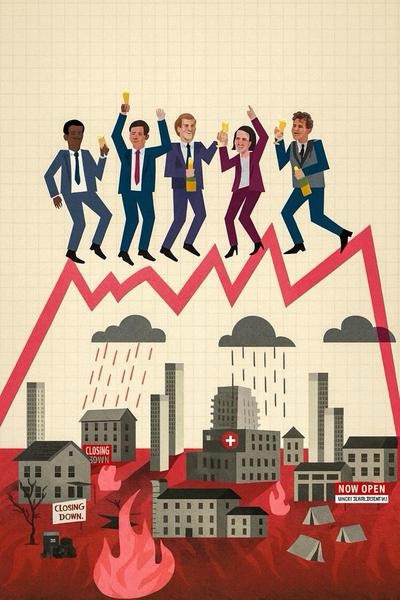
Many of us do not realize that private equity firms has always been about extraction, not creation. The model is simple. Borrow heavily, buy a company, slash jobs and benefits, sell off assets, and walk away with fees long before the damage shows. Communities are left with shuttered stores, abandoned buildings, bankrupt chains, and broken promises.

The list of casualties is long. Toys “R” Us was loaded with more than $5 billion dollars in debt by Bain Capital and KKR before it collapsed, taking 30,000 jobs with it. Payless ShoeSource closed its doors, erasing 18,000 jobs. J. Crew, Gymboree, Shopko, Forever 21, and Sears each followed the same path. Behind nearly every failure was a private equity deal that turned once-profitable companies into vehicles for debt. Blackstone, the largest of them all, drew criticism for gutting nursing homes and rental housing, where residents and tenants bore the consequences. Carlyle, Apollo, and Sycamore Partners engineered deals that enriched executives while leaving behind bankruptcies across retail, energy, and health care.

The damage has never been limited to debt. Private equity firms extract billions in fees on top of what they load onto companies. They sell the land and buildings, forcing the very businesses they own to pay rent back to them. In franchise models, they skim off royalty payments while cutting services and staff. They charge management fees to companies they already control, ensuring that even if a business fails, the firm still profits. These practices are not side effects. They are the business model.

For years the system ran on cheap money. With interest rates near zero, debt was abundant and investors were eager. Firms could buy, bleed, and flip companies in two or three years. That era is gone. Interest rates now sit above five percent. Debt costs more, buyers are scarce, and the IPO market has dried up. Firms are stuck holding companies that are drowning under the very leverage designed to enrich their owners.

The numbers are staggering. Nearly $12 trillion dollars in private equity assets now sit unsold. Exit activity has collapsed more than 70 percent since 2021. To raise cash, firms are borrowing against their own portfolios with NAV loans or dumping stakes at steep discounts on the secondary market. Even the giants like Blackstone, KKR, Apollo, Carlyle, Bain are stuck with bad debt no one wants. They cannot sell, yet their investors are demanding cash.

The quiet truth is that these firms are already maneuvering for Washington’s help. During the 2008 financial crisis, banks and insurers were rescued with taxpayer dollars. Private equity, which profited handsomely off that same collapse, is positioning itself for similar treatment.

This is not just an elite problem. It is a national one. When private equity runs out of road, it is not the billionaire partners who suffer. It is the workers whose jobs are cut, the retirees whose pensions cannot meet obligations, the students whose tuition rises because endowments cannot keep pace, and the taxpayers who are asked to backstop the system.

The parallels to 2008 are frightening. Then it was mortgage backed securities. Now it is unsellable companies and illiquid funds. In 2008, families lost homes and jobs while Wall Street was saved. Today the scale is even larger. With trillions in assets frozen, the next bailout could dwarf the last one.

Meanwhile, private equity’s destruction also extends into America’s hospitals and nursing homes and people are paying with their lives. Studies show that Medicare patients undergoing emergency surgeries in private equity–owned hospitals are 42 percent more likely to die within 30 days compared to those treated in community hospitals . A nationwide study found infections, falls, and other preventable adverse events increased following private equity takeovers of hospitals . Even the U.S. Department of Health and Human Services condemned the impact, warning that private equity ownership of nursing homes led to an 11 percent increase in patient deaths .

Recent reporting shows the financial calculus behind these tragedies. Nursing home operators in New York’s Capital Region diverted Medicare and Medicaid funds through inflated rent and bogus salaries. That left facilities chronically understaffed and suffering neglect so severe that it led to cases of serious injury and death .

By turning hospitals and nursing homes into profit centers rather than care centers, private equity firms aren’t just bankrupting businesses, they are literally killing people. And when that business model collapses, it will be everyday Americans who pay the cost once again.

The message is not subtle. If private equity’s gamble fails, the richest players will once again be saved. For ordinary Americans, the reckoning will look like it always does. Lost jobs. Higher taxes. Vanishing pensions. Rising tuition. And another generation paying for someone else’s greed.

This is the American cycle. The profits are privatized, the losses are socialized, and working families are forced to carry the cost.

The Overseers We Never Chose: Fallout’s Lesson for America

Fallout has long had a cult following, first as a groundbreaking video game series and now as a television show that has pulled in both longtime fans and newcomers. The franchise has always thrived on its mix of retrofuturistic style and sharp social commentary, holding up a mirror to the world we live in. *Spoiler alert* for those who haven’t seen the first season of the TV series: in Vault 31, democracy is a lie. Citizens are told their votes matter, that their overseers rise from among the people, but every leader is secretly thawed from a hidden vault of corporate executives loyal only to Vault Tec. The rituals of elections and speeches reassure the vault dwellers that their voices count, while the real outcomes are already fixed. It is chilling science fiction, but the longer you study American politics since the assassination of John F. Kennedy, the harder it is to escape the feeling that Fallout wasn’t imagining the future so much as describing our present.

The reveal of Vault 31 lands because it shatters the illusion of choice. The people of Vaults 32 and 33 believed they had agency, but every overseer came from the same frozen pool, bred and trained to serve Vault Tec’s hidden agenda. Their loyalty was never to the voters. It was always to the corporation.

Since Kennedy’s death, America has lived inside its own Vault 31. Every four years the nation goes through the pageantry of elections. Presidents come and go, parties trade control of Congress, the culture wars shift. Yet the deeper structures never move. No matter who holds power, the bipartisan loyalty to Israel remains absolute. Johnson armed Israel after the Six-Day War. Nixon rushed weapons during the Yom Kippur War. Reagan and Bush tightened the security umbrella. Clinton, Bush, and Obama ensured billions kept flowing. Trump moved the U.S. embassy to Jerusalem. Biden oversees record-breaking aid while Gaza burns. The names change. The policy does not.

The numbers tell the story. According to the Council on Foreign Relations, Israel has received over 300 billion dollars in U.S. assistance since its founding. Under Obama, a 10-year agreement guaranteed 38 billion in military aid. In just one year of the 2023–2024 conflict in Gaza, U.S. spending tied to Israel’s military operations reached nearly 23 billion. This, while America itself is drowning under more than 37 trillion dollars of debt, equal to about 108,000 dollars per citizen. Israel, by contrast, carries a manageable debt-to-GDP ratio under 70 percent while providing free university education and universal healthcare. Americans are told such programs are impossible at home, yet they are funded abroad without hesitation.

The pattern extends beyond aid. U.S. wars in the Middle East consistently serve Israel’s strategic position and the corporate interests tied to the military-industrial complex. Marines bled in Beirut. Americans fought and died in Iraq, Syria, and Libya. Each war was packaged as necessary for freedom and democracy, but the freedom secured was rarely America’s. The strategic winner was Israel, and the financial winners were corporations. Lockheed Martin, Raytheon, and Northrop Grumman collected more than 770 billion dollars in Pentagon contracts between 2020 and 2024, more than double what the U.S. spent on diplomacy and humanitarian aid in the same period. The “forever wars” were not fought for working-class families in Detroit or Milwaukee. They were fought to guarantee regional dominance and to feed the balance sheets of private contractors. Fallout’s Vault Tec experimented on people under the pretense of protection. Our reality is a government that funnels tax dollars into endless conflict while calling it security.

And through all of this, Israel has not looked like the shining democracy Americans are taught to revere. For nearly two decades Benjamin Netanyahu has dominated Israeli politics, surviving corruption charges and coalition collapses while reshaping the judiciary to protect his grip on power. This permanence resembles the overseers of Vault 31, thawed again and again no matter what turmoil erupts on the surface. Yet American leaders, Democrat and Republican alike, continue to describe Israel as “the only democracy in the Middle East,” a line repeated so often it becomes dogma.

The most disturbing part is not simply the loyalty to Israel but the bipartisan nature of it. Americans fight bitterly over abortion, guns, climate policy, and healthcare. But on Israel there is no debate. Nearly unanimous votes in Congress approve billions in aid even as American bridges collapse and millions remain uninsured. Like the citizens of Vault 32 and 33, Americans are given the ceremony of choice, but not the power to alter outcomes.

This is where Fallout’s metaphor becomes unavoidable. Vault 31 is not just a story about post-apocalyptic survival. It is about how democracy is hollowed out when leaders are preselected by hidden powers. Elections become performance. Ritual replaces substance. The real loyalty of overseers is not to the people but to those who control the system behind the curtain. In Fallout that power is Vault Tec. In our world it is the combined force of entrenched political lobbies, military corporations, and a bipartisan consensus that places Israel’s security above America’s domestic needs.

For over sixty years, Americans have gone through the motions of democracy while watching the same outcomes repeat. Debt climbs. Wars expand. Corporations profit. Israel thrives. The names on the ballots change, but the overseers do not.

When future generations look back, they will not remember the campaign slogans. They will not remember the televised debates. They will ask who saw through the theater. Fallout gives us the metaphor, history gives us the receipts. And unless we confront the overseers we never chose, we will go on mistaking ceremony for freedom while someone else writes the script.

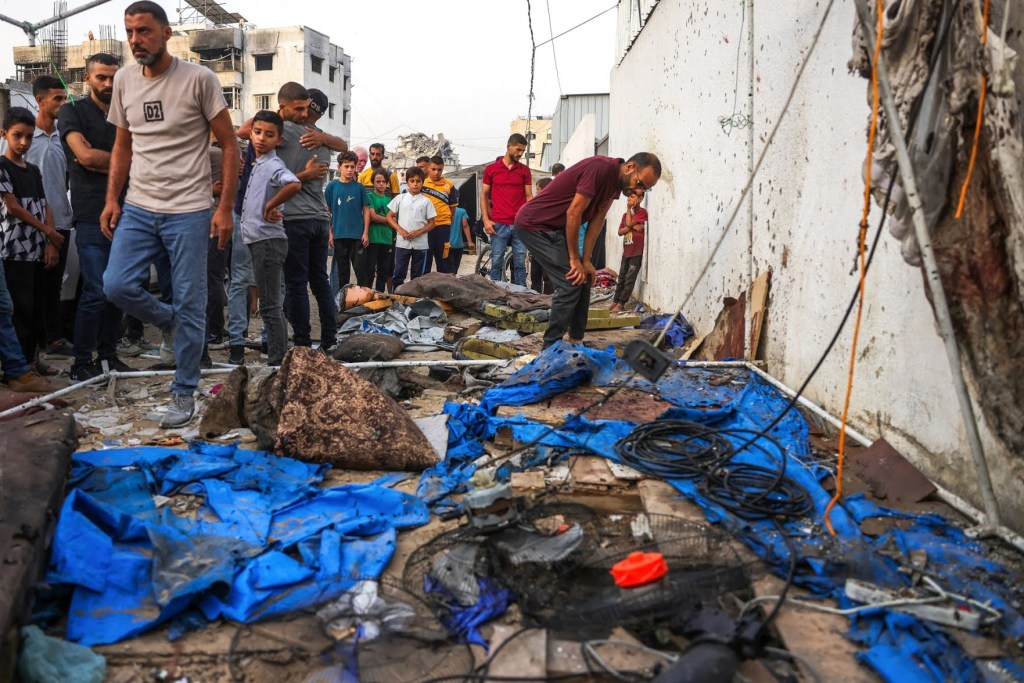
Gaza is a mass casualty event.

Palestinians check the destroyed Al Jazeera tent at Al-Shifa Hospital in Gaza City on Monday, following an overnight strike by the Israeli military.Bashar Taleb / AFP via Getty Images

Aug. 11, 2025, 9:03 PM EDT

By Nkozi Knight

The argument over Gaza too often collapses into labels and talking points. That framing lets us dodge the only question that matters. Are we willing to watch human beings be starved, shot at while seeking food, and buried under rubble, and do nothing?

As of August 2025, more than 61,000 Palestinians have been killed in Gaza since October 2023, according to figures collated by the U.N. from Gaza’s Health Ministry. Over 60,199 of those deaths have been fully identified by name and demographic details. Children are roughly one third of the dead. These are conservative counts and do not capture those still under collapsed buildings or the deaths from disease and hunger.    

The health system is hardly a system anymore. The World Health Organization reports that at least 94 percent of Gaza’s hospitals have been damaged or destroyed. Many operate only in fragments, without reliable power, oxygen, or surgical capacity.   

Schools have been leveled on a historic scale. U.N. satellite assessments show about 95 percent of school buildings damaged, with hundreds directly hit. The educational future of an entire generation is in jeopardy.    

Hunger is now policy by other means. The global famine monitor (IPC) warns that the food-consumption threshold for famine has already been passed in most areas of Gaza, with malnutrition and deaths rising. UNICEF has documented a sharp increase in children dying of starvation and related disease. The U.N. continues to report paltry aid flows compared with need.    

It is not just the volume of aid. It is the violence around it. After Israel dismantled the U.N.-led distribution system and backed a new contractor model this spring, multiple investigations documented civilians being shot at or killed around food sites and convoys. Hundreds have died seeking flour or canned food. These incidents are contested by Israeli authorities, but the pattern is now documented by journalists, doctors, and rights groups.   

Claims that “Hamas steals all the aid” are often made to justify these restrictions. Yet a recent U.S. government review found no evidence of massive theft of U.S.-funded aid by Hamas, even as diversion risks exist in any war. Meanwhile, Israeli far-right activists and settlers have repeatedly blocked, vandalized, or looted Gaza-bound convoys. Both truths can be held at once. Aid must be protected from diversion, and people must be allowed to eat.     

Christians are part of this story too. A Greek Orthodox church sheltering families was struck in October 2023, killing civilians. In December 2023, two Christian women were shot and killed inside the Holy Family Catholic parish compound, according to the Latin Patriarchate and the Vatican. The small Christian community has continued to suffer deaths and deprivation through 2024 and 2025.     

Here is the moral core you asked to preserve:

This is not about being anti-Semitic.

It is not about being pro-Hamas.

It is not even about taking a side on Israel’s right to be in the Middle East.

It is about being human.

It is about the countless lives lost.

The countless lives destroyed.

The generations of families wiped from the earth.

It is about the deliberate starvation of people who are already trapped in devastation.

International law is not silent about any of this. The Genocide Convention defines genocide as specific acts committed with intent to destroy a protected group. Those acts include killing, causing serious bodily or mental harm, and inflicting conditions of life calculated to bring about a group’s physical destruction. You do not need to be a lawyer to understand what “conditions of life” means when aid is throttled and families are shot at while queueing for food.   

Courts have acted, even if governments have not. In January and again in May 2024, the International Court of Justice ordered Israel to prevent genocidal acts and to ensure unimpeded humanitarian access, including ordering a halt to the offensive in Rafah. In November 2024, ICC judges issued arrest warrants for Israel’s prime minister and former defense minister on charges that include using starvation as a method of warfare. In July 2025, the ICC rejected Israel’s bid to withdraw those warrants.     

What should follow is not more argument. It is practical action.

Open the crossings wide and keep them open under neutral monitoring. Protect aid corridors and reinstate U.N.-led distribution at scale. Stop firing near food lines. Restore funding to agencies that have the reach to keep children alive. Enforce the ICJ’s orders. Respect the ICC process. None of this precludes holding Hamas accountable for the atrocities of October 7 or for any diversion of aid. It simply refuses to make civilians pay the price for crimes they did not commit.  

History records the numbers. Conscience remembers the names. Gaza is not a referendum on anyone’s identity. It is a of our own.

While You’re Watching Game 7 of the NBA Finals, We’re Being Sold Out Piece by Piece

We’re not watching a dramatic fall of America. There are no breaking news alerts about the end. No explosions in the streets. No economic sirens.

But make no mistake….something terrible is happening.

Piece by piece, decision by decision, we are being sold out. Our labor, our taxes, our future, it is all being extracted. And while it happens, we are told to look the other way while letting AI take many of our jobs.

Watch the game. Scroll the feed. Place a bet. Argue online about culture wars that do not affect your rent, your hospital bill, or your ability to afford groceries.

Meanwhile, the money keeps flowing. Out of your paycheck. Out of your neighborhood. Out of this country. Straight into the hands of foreign governments, defense contractors, and elite interests.

This is not the dramatic fall of a nation. It is a transfer of wealth, security, and stability away from ordinary Americans and toward a system that was never built to serve us. It is a system that acts globally, extracts locally, and survives only as long as we do not look directly at it.

You can call it a government. You can call it a machine. But what it really functions as is an empire. And the longer we ignore it, the more it takes.

The Cost of That Empire Is Being Paid in Evictions and Empty Refrigerators

While your tax dollars are used to fund missile systems in Israel, people across the United States are struggling just to keep a roof over their heads. Since 2020, the median price of a home has risen by more than 40 percent. Interest rates have climbed above 7 percent, making homeownership unreachable for millions (National Association of Realtors, 2024).

At the same time, Americans like myself, carry over $1.7 trillion in student loan debt. Medical bankruptcies remain the most common form of personal financial ruin. A premature baby that has to stay in a neonatal intensive care unit for over a month can cost well over a million dollars. On top of that, more than half of the country cannot afford an unexpected five hundred dollar emergency.

And yet, every year, tens of billions of dollars are approved for foreign aid without hesitation.

Israel receives more U.S. taxpayer money than any other nation on Earth. Since 1948, it has received over 300 billion dollars in aid, including nearly 4 billion annually in guaranteed military funding (Congressional Research Service, 2023).

That money has helped fund a public healthcare system, subsidized childcare, and modern infrastructure. Israel’s students have new schools. Their citizens have access to doctors without going bankrupt.

Meanwhile, in American cities, teachers work second jobs. Classrooms go without books. People drive across state lines to afford prescriptions. And in cities like Flint, Michigan and Jackson, Mississippi, families still live without safe drinking water.

This is not about scarcity. It is about priorities.

An Economy Built to Keep Us Consuming

We are told that the economy is doing well. But it only looks strong on paper because we are constantly spending to survive.

Wages have remained flat for decades, while the cost of everything else has gone up. Food, gas, housing, tuition, and insurance have all exploded. But instead of fixing the system, the solution we are offered is more debt.

Buy now, pay later.

Zero percent financing.

Monthly subscriptions for everything, even the essentials.

Our economy runs on credit cards and desperation.

We are not building wealth. We are surviving one paycheck at a time, and no one is willing to admit it.

And when that stress becomes too much, we are handed another solution, a distraction. Sometimes it’s a RICO case of a famous celebrity, other times it’s the United States bombing an empty nuclear facility in Iran, and other times it’s something as simple as sports and sports betting.

There is always something to pull our focus. Sports betting is now a multi-billion dollar industry thanks to ESPN, Draft Kings, Prize Picks, and MGM Sports betting. On television, sex-laden reality shows dominate prime time and paid subscriptions. Viral celebrity drama trends daily. Meanwhile, airstrikes in Gaza or explosions in Tehran are buried beneath all this noise but we pay for all of it.

None of this is random. It is a carefully designed system.

We Fund a Better Life for Others While We Are Told to Settle for Less

The average American is constantly being told to sacrifice.

Tighten your belt.

Use credit.

Be patient.

Inflation is temporary.

Work harder.

But there is no austerity when it comes to military aid.

There is always money for war. There is always money for foreign governments. There is always money to rebuild somewhere else in a land most have never been, but there is nothing for Maui, East Palestine, Flint, New Orleans, and many other cities in America.

Since 1948, Israel has received over 300 billion dollars in U.S. assistance (Reuters, 2024). That money has helped create one of the best publicly funded healthcare and education systems in the world—for a country with fewer people than New York City.

In America, we have veterans sleeping on the street in every major city.

We have kids learning from worksheets because their school cannot afford books.

We have families rationing insulin and choosing between medication and rent.

This is not just a funding issue. It is a values issue.

We are paying for the stability of others while our own communities are crumbling.

They Keep Us Distracted So We Do Not See It

Every time the conversation gets too close to real issues, the distractions flood in.

The headlines suddenly shift, and Operation Mockingbird goes full tilt. The scandals erupt more salacious than the prior one. The outrage machine gets turns on, and Americans are pinned against each other.

We are told to obsess over celebrities, argue over culture wars, and follow political soap operas like they are sports teams.

This is not a coincidence. It is the only way this corrupt system survives.

Because if we stop fighting each other, we might start asking the real questions.

Where is the money going?

Why can’t we afford basic services while funding foreign militaries?

Why is our economy built on debt and distraction?

And who exactly is benefiting from all of this since it’s not US?

This Is Not Incompetence. It Is a Strategy.

The truth is that the United States has all the resources it needs to take care of its people….if it wanted to.

But we do not. Not because we can’t. But because we are not supposed to.

We are expected to work, consume, and remain distracted.

We are expected to stay tired, stay anxious, and stay divided.

And we are expected to believe that any attempt to change the system is unrealistic, unpatriotic, or impossible.

But the truth is, the system is not broken. It is functioning exactly as designed.

It is designed to take.

It is designed to distract.

And it is designed to leave us wondering why we are doing everything right and still falling behind.

Can You Relate

If you are working harder than ever but getting nowhere, you are not alone.

If you are wondering why another country has healthcare and you cannot afford a routine checkup, you are asking the right question.

If you are tired of being told that sacrifice is patriotic while billionaires and foreign allies get blank checks, then maybe it is time we stop playing along.

They do not fear Iran. They do not fear China. They do not fear Russia.

What they fear is that you will start paying attention.

Because the moment we stop watching the show and start watching the system, the game is over.

Sources

National Association of Realtors. (2024). Median home price trends

Congressional Research Service. (2023). U.S. Foreign Aid to Israel

Reuters. (2024). Israel aid totals and annual packages

CNBC. (2023). 80 percent of Americans live paycheck to paycheck

Cato Institute. (2021). U.S. Military Footprint: 750 bases in 80 countries

Al Jazeera. (2021). U.S. global base presence overview

What Happened to America First? Early Policies Say Anything But…


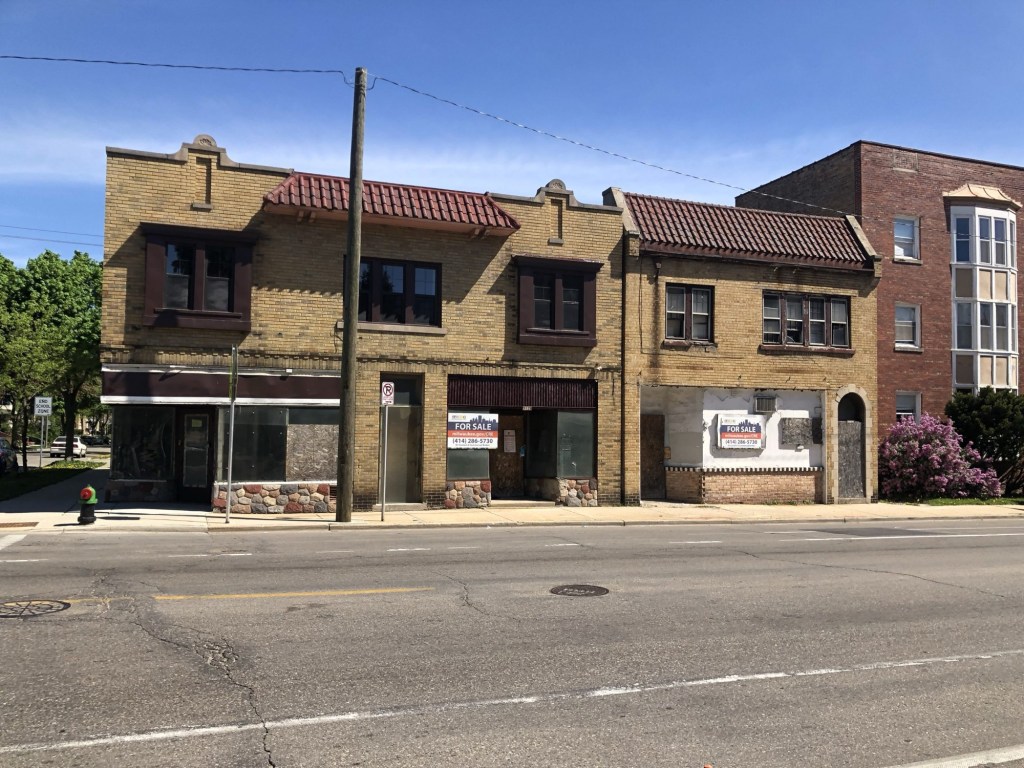
5128-5130 W. Center St. and 5124-5126 W. Center St. Photo by Jeramey Jannene.

MILWAUKEE — From 1st and Center Street west to Sherman Boulevard, abandoned buildings sit like open wounds on both sides of the street, remnants of factories, stores like Family Dollar, and once-thriving Black-owned businesses that used to anchor Milwaukee’s north side. For residents here, the phrase “America First” hits different. It’s not just a slogan. It’s a question.

What happened to America First?

When Donald J. Trump returned to the White House in January, he promised a revival of the economic nationalism that swept him into power in 2016. He talked about lifting up working-class Americans, restoring pride, and rebuilding the nation from the inside out. But early policies out of Washington tell a different story, a story where billions are sent overseas, while communities like this one are left to decay.

Foreign Priorities, Local Consequences

In the first 100 days of Trump’s second term, more than $22 billion has gone to foreign military aid, including a $3.8 billion annual commitment to Israel until 2028, and billions more to Ukraine. Meanwhile, federal programs that fund youth service, veteran reintegration, and inner-city job development are facing the axe.

The Corporation for National and Community Service , the agency behind AmeriCorps, is on the chopping block with $400 Million already cut from the budget in April. In Milwaukee, where City Year corps members help stabilize struggling schools, the impact will be immediate. “These cuts aren’t abstract,” said Vanessa Brown, a local educator and Marquette University graduate. “They take away people, resources, and hope.”

A Tale of Two Budgets

Supporters of the Trump administration say the military spending is about protecting American interests abroad. But on Milwaukee’s North Side, where gun violence, underfunded schools, and housing insecurity dominate daily life, the disconnect feels personal.

“You can walk five blocks and count ten boarded-up or burned down houses,” said Art Jones, a university professor and youth mentor. “But we’ve got money to build houses in Ukraine? Explain that to the kids sleeping in a shelter tonight.”

The Promise of Jobs, Still Waiting

Despite the tough talk on trade and manufacturing, many local plants never reopened after the last recession. Tariffs might have protected certain industries on paper, but they didn’t bring back the jobs and probably never will. What they did do, critics argue, is hike prices on everyday goods , from construction materials to car parts , squeezing small business owners and working families alike.

“It’s smoke and mirrors,” said Renee Evans, who owns a small contracting firm near Burleigh. “We were promised revitalization projects. What we got was new empty buildings and shuttered storefronts.”

The Border and the Backlash

While the administration has doubled down on mass deportations and immigration crackdowns, there’s been no meaningful investment in immigration courts or visa reform, creating longer delays and more confusion for legal immigrants, employers, and even military families. It’s a harsh policy with little planning, and local economies like Milwaukee’s which is reliant on immigrant labor in many work sectors is feeling the strain.

Is “America First” Just a Slogan Now?

For many here, the question isn’t whether America First has failed, it’s whether it was ever real to begin with. The country’s resources still seem to flow upward and outward, not inward to the communities that were promised revitalization.

“If this is America First,” said Kaleb Tatum, shaking his head outside a shuttered youth center on North Avenue, “we must not be part of America.”

Shades of Gray: The Historical Impact of Political Policies and the Importance of Knowing Our Past

Decades ago, the corridors of American politics witnessed a series of decisions that would dramatically reshape the landscape of African American communities. This story begins in the halls of power, where policies and laws were crafted, setting off a chain of events that would echo through generations. From the Reagan era’s war on drugs to the legislative intricacies underpinning Joe Biden’s rise in the political arena, these decisions painted a complex picture of intention versus impact. This aim is to untangle this complex web, tracing the roots of policies that have left a lasting imprint on society. We delve into the intricate interplay of legislation and its intended consequences, piecing together how political maneuvers have sculpturally shaped the realities of countless individuals and communities across the nation.

The 1980s, under the presidency of Ronald Reagan, marked a pivotal era where international intrigue and domestic policy collided. The Iran-Contra Affair, a scandal defined by covert arms sales and secret funding, not only dominated headlines but also served as a backdrop to the escalating War on Drugs. This war, declared with a mission to eradicate drug abuse, inadvertently laid the groundwork for a crisis in African American communities.

Simultaneously, a young senator named Joe Biden was rising through the political ranks. A figure who would come to shape significant aspects of criminal justice policy, Biden’s career in the 1980s and beyond reflects the complex relationship between American politics and the African American community. His role in shaping the Anti-Drug Abuse Act of 1986, with its disparate sentencing for crack and powder cocaine, had far-reaching impacts, disproportionately affecting African Americans and contributing to a surge in incarceration rates.

As the narrative progressed into the 1990s, Biden’s influence continued to grow. His involvement in crafting the 1994 Violent Crime Control and Law Enforcement Act further entrenched the trend of mass incarceration. Though aimed at addressing rampant crime, the bill’s consequences rippled through African American communities, deepening the chasms of inequality.

Decades later, during his 2020 presidential campaign, Biden’s rhetoric reflected a shift. His acknowledgment of the impact of these policies, coupled with promises of reform, marked a departure from his earlier stances. However, this shift was not without its controversies. Biden’s declaration in a 2020 interview that questioned African American allegiance to the Democratic Party sparked a conversation about the taken-for-granted African American vote in U.S. politics.

Biden’s long-standing pledge to Zionism, mirroring the broader U.S. political landscape’s support for Israel, further adds to the narrative’s complexity. It reflects a broader theme in American politics: the alignment of foreign policy interests, often at the expense of addressing pressing domestic issues.

The story of U.S. drug policy and its impact on African American communities, intertwined with Biden’s career, stands as a testament to the cyclical nature of political priorities and the often contradictory nature of government policies. It highlights a dissonance between the quest for votes from minority communities and the legislative actions that have historically impacted them.

This evolving narrative, chronicled over several decades and various administrations, is not merely a historical account; it serves as a reflective mirror for American society. In an era where political promises ebb and flow with the tide of public opinion, the importance of scrutinizing policy decisions and understanding their long-term impacts becomes paramount. As voters, the responsibility lies in our hands to delve into the history of those we elect into power.

It’s a reminder that genuine representation in the corridors of power and accountability are not just political ideals but necessities. As we stand at the crossroads of another election, it is crucial to remember that the votes we cast are echoes of our collective history and aspirations. We must challenge ourselves to look beyond the rhetoric, to understand the past of those we entrust with our future, ensuring our decisions are informed, and our voices are heard in shaping a more equitable and just society. As James Baldwin once said, “Not everything that is faced can be changed, but nothing can be changed until it is faced.”

The Lingering Shadows of Imperialism: Exploitation of African Nations

As someone who has served in the military, I’ve had firsthand insight into the geopolitical dynamics that still play out across the globe. One particular issue that has always been close to my heart is the persistent exploitation of African nations by former colonial powers and the United States.

Niger, a landlocked country in West Africa, serves as a stark example. It is the source of 5% of the world’s uranium, a precious resource vital for nuclear energy and weapons. Yet, despite its immense wealth beneath the ground, Niger consistently ranks as one of the world’s poorest countries. This incongruity can be attributed to the continued imperialism and exploitative tactics employed by Western nations.

Historically, countries like France and Great Britain have left indelible marks on Africa, ostensibly ending colonization, but in truth, perpetuating a new form of neocolonialism. France, for instance, still exerts considerable economic influence on many of its former colonies, including Niger. Complex agreements and unequal trade dynamics ensure that while African nations supply raw materials, they see only a fraction of the profits.

The United States, though not a colonial power in Africa, has also been implicated in this exploitative dynamic. The establishment of military bases across the continent serves dual purposes: it’s positioned as a safeguard against extremism and other threats, but it also ensures that the U.S. maintains a stronghold to protect its interests, which often include access to natural resources. During my time in the military, it was evident how strategic positioning wasn’t just about national security, but also about economic leverage.

Furthermore, it’s worth noting that while African countries export raw materials, they often have to import finished products at higher prices, further entrenching them in a cycle of poverty. The revenues from these natural resources, like uranium from Niger, do not equitably benefit the local communities. Instead, profits are siphoned off by multinational corporations and corrupt leaders, leaving the general populace grappling with poverty, unemployment, and underdevelopment.

Addressing this exploitation requires a multipronged approach:

  1. Transparency in Trade Deals: International trade agreements involving African nations must be transparent, ensuring that they benefit local communities as much as they do foreign entities.
  2. Empowering Local Economies: Investing in local infrastructure, education, and healthcare can help African nations process their own resources, creating jobs and reducing dependency on imports.
  3. International Accountability: Global institutions, such as the UN, must hold countries accountable for exploitative practices, ushering in a new era of equitable and fair trade.

While the flags of colonial powers no longer fly over African capitals, the shadows of imperialism linger. It’s a collective responsibility, both of African governments and the international community, to dismantle these remnants of exploitation and pave the way for a brighter, more equitable future for the continent. As someone who has seen the intricacies of this exploitation up close, I urge everyone to educate themselves, advocate for change, and support policies that promote fairness and justice.

Fitch Downgrades U.S. Credit Rating Amid Rising Deficits and Political Turmoil

In a recent blow to the United States, Fitch Ratings has downgraded the nation’s credit rating from the highest possible AAA to AA+. The rating agency attributed the drop to increasing deficits and political conflict, which they believe threaten the government’s capacity to service its debts.

This decision was made two months following a last-minute agreement between the Biden administration and House Republicans to temporarily raise the debt ceiling, thereby narrowly dodging a potentially catastrophic federal default.

This isn’t the first time the U.S. has faced such a demotion. Back in 2011, amid a similar crisis regarding the debt ceiling, Standard & Poor’s reduced the United States’ AAA rating. At present, Moody’s Investors Service is the only major credit rating agency that continues to assign the U.S. the top AAA rating.

Despite recognizing the robustness of the U.S. economy and the benefits reaped from the dollar’s position as the world’s primary currency, Fitch expressed concerns about the escalating deficits and both political parties’ reluctance to address long-term fiscal issues. Fitch voiced limited faith in the government’s ability to effectively manage the country’s finances.

In response to the downgrade, Treasury Secretary Janet Yellen criticized Fitch’s decision as “arbitrary” and reliant on obsolete data. She emphasized that “Treasury securities remain the world’s preeminent safe and liquid asset” and affirmed the underlying strength of the U.S. economy.

According to Fitch, the expenditure caps set as part of the recent debt agreement in June merely scratch the surface of the overall budget and do not confront enduring issues, such as financing Social Security and Medicare for an aging populace.

With tax reductions and elevated government expenditure leading to an expansion of deficits in recent years, and coupled with increasing interest rates, the fiscal burden has grown. Government interest payments in the first nine months of the current fiscal year amounted to $652 billion, marking a 25% rise from the same period last year.

Maya Macguineas, the president of the Committee for a Responsible Federal Budget, responded to the downgrade, terming it a “wake-up call.” She stressed the urgent need for fiscal responsibility, stating, “We are clearly on an unsustainable fiscal path. We need to do better.”

The repeated political standoffs over the debt ceiling have not only eroded the faith in U.S. fiscal management but also put the longstanding reputation of U.S. government bonds at risk. For close to a hundred years, these bonds have been considered some of the safest investments globally, primarily because the U.S. seemed unlikely to default on payments.

However, with the recent debt ceiling impasses, there is growing concern that the U.S. might default for the first time. Over a decade ago, S&P pointed out political discord as a significant risk to the country’s governing ability, and many experts opine that the situation has deteriorated since.

What Emmett Till’s Mother Taught Me About Grief and Justice

On Feb. 26, 2012, my entire life changed in ways that I could never imagine. Within an instant, after the brutal and inhumane killing of my son, …

What Emmett Till’s Mother Taught Me About Grief and Justice

Five ways of expanding your business internationally

The global economy is changing thanks to worldwide connectivity. Companies across the globe are communicating with others without delays or hassles …

Five ways of expanding your business internationally

President Obama Speaks After Terrorism Briefing

19369685-mmmain

“We will not be terrorized.” ~ President Obama

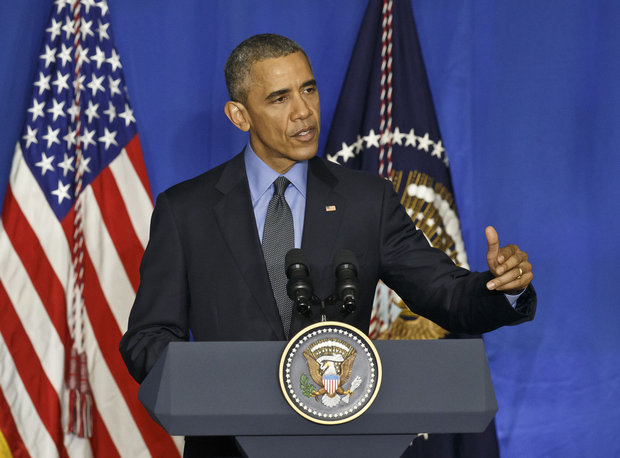
President Obama states that his office does not have any credible information about an imminent terror attack. His three plan approach includes attacking terrorist in the Middle East, preventing terrorist from getting into the United States, and stepping up efforts to prevent attacks on American soil from both foreign and domestic terrorist.


Quad/Graphics plans to close plants, cut $100M in costs

hqdefault

“Our third quarter financial performance was challenging and below our expectations,” Joel Quadracci, CEO of the commercial printing firm, said in a statement.

Quadracci said the company would move swiftly to slice costs and bring them in line with sales.

Quad did not say how many jobs it might cut, or identify any plants for closing. However, spokeswoman Claire Ho suggested that the firm’s operations in Wisconsin, where it employs 7,000 people at 14 facilities, are not high on the target list for closures.

Quad continues to move work to its most efficient printing and distribution plants, and the Wisconsin operations are “among the most efficient platforms in the entire printing industry,” Ho said in an email. She said Quad is still hiring in Wisconsin.

The company, the biggest printer of magazines and catalogs in North America, operates 57 printing plants in the U.S. and another eight outside the country. It employs 24,000 people worldwide.

However, like other printers, it has seen demand dampened by the rise of the Internet and digital technologies such as iPads and other tablets.

In its annual report filed with securities regulators last March, Quad noted that prices for printing had “declined significantly in recent years.”

Tuesday, Quadracci said in his statement that pricing pressure accelerated during the three months that ended Sept. 30, while Quad’s manufacturing productivity declined.

The firm’s sales for the three months ended Sept. 30 totaled $1.16 billion, down 6.5% from the $1.24 billion in third-quarter 2014 revenue.

The company booked a loss of $552.2 million, or $11.50 a share, in the quarter. But that stemmed almost entirely from a $532.6 million non-cash, after-tax charge Quad recorded for “goodwill impairment” triggered by the decline in the firm’s stock price.

Before Tuesday’s announcement, Quad’s stock closed at $13.10, down 18 cents.

The company went public in July 2010 at $49. Its shares traded above $40 for almost a year, then plunged. They rebounded above $30 in 2013, but have trended downward for the last two years.

The slide in the stock notwithstanding, Quad generates enough cash to pay a hefty dividend — at least at the prices of the last two years. The current dividend of $1.20 a year amounts to roughly 9% of Tuesday’s closing price.

Quad on Tuesday declared another 30-cent quarterly dividend.

The company also reduced its 2015 revenue estimates by about $200 million. Previously, Quad had estimated sales of $4.8 billion to $4.9 billion for the year. The firm now expects $4.6 billion to $4.7 billion in revenue.

Since 2009, Quad has more than doubled its revenue, in large measure through acquisitions.

Quadracci may disclose details of the company’s cutback plans this morning during a conference call with analysts.

About Rick Romell

author thumbnail

Rick Romell covers retail and general business news.

Quad/Graphics is an American printing company, based in Sussex, Wisconsin. It was founded on July 13, 1971, by Harry V. Quadracci, son of Harry R. Quadracci.
Headquarters: Sussex, WI
Company Website: qg.com
CEO: Joel Quadracci
Founded: 1971