For decades, private equity was the hottest corner of finance. The model was simple. Buy a company, cut costs, load it with debt and fees, polish the books, and sell it again within two to three years for a hefty profit. It was called the “flip,” and it made fortunes for firms like Blackstone, KKR, and Carlyle. Endowments and pensions rushed to get a piece of it.
That model is now broken.
The exits that once came fast and lucrative have slowed to a crawl. A world of near-zero interest rates is gone. Debt that once financed buyouts at minimal cost now comes with punishing interest, squeezing margins and stretching holding periods. Instead of flipping companies in two years, funds are sitting on assets for six, seven, even ten years. The portfolio backlog is staggering: more than $12 trillion worth of private equity assets sit unsold worldwide.
And at the center of this crisis are the universities that built their wealth on the promise of private equity. Harvard, Yale, and Princeton reshaped modern investing by betting heavily on illiquid alternatives. They now face the consequences of that bet.
The Death of the Flip
The two-year turnaround was never sustainable, but for a time it worked. Cheap debt fueled endless rounds of leveraged buyouts, where firms borrowed heavily, stripped assets, cut staff, and pushed companies back to market at inflated valuations.
But the cycle depended on two things: cheap money and eager buyers. Both have disappeared. The Federal Reserve’s rate hikes have doubled and tripled the cost of debt financing. Buyers are cautious, corporate balance sheets are tighter, and the IPO window remains largely shut.
Exit activity tells the story. In 2021, private equity firms sold $840 billion worth of companies. By 2023, that figure had collapsed to $234 billion, a drop of 72 percent. Even with a partial rebound in 2024 to $468 billion, exits are far too low to clear the backlog. Funds are holding twice as many assets as they did in 2019, but are selling them at the same pace as five years ago.
Without exits, distributions to investors dry up. Endowments that expected cash back to fund university budgets are left waiting.
Interest Rates as the Choke Point
Private equity’s entire model is built on leverage. A firm that buys a company for $10 billion may finance $7 billion of that price with debt, leaving just $3 billion of investor equity. If interest rates are low, debt is cheap, and any improvement in the business magnifies returns.
But with rates at five percent or higher, the math no longer works. Debt service eats into earnings. Refinancing becomes expensive or impossible. Companies bought at lofty valuations in 2020 and 2021 are now struggling to cover interest costs, let alone generate attractive profits for resale.
For the funds that hold them, paper valuations remain high, but real buyers demand discounts. That gap between reported NAV and market reality is another reason sales have slowed.
The Mechanics of Desperation
To keep investors from revolting, firms have engineered liquidity out of thin air. NAV loans lines of credit secured by the assets in a fund allow managers to borrow cash and hand it back to investors as if it were a distribution. Continuation funds where a firm sells a portfolio company from one of its funds into another fund it also controls in effect creates the illusion of an exit, while extending the holding period indefinitely.
On the investor side, endowments and pensions have turned to the secondary market, selling their stakes in private equity funds to buyers willing to take them at a discount. In 2024, secondary volume hit a record $155 billion. Harvard sold $1 billion worth of fund stakes. Yale is preparing to sell as much as $6 billion. The New York City pension system sold $5 billion. Buyers snapped them up at 10 to 15 percent discounts to stated value. For venture portfolios, the discounts were as steep as 50 percent.
These maneuvers do not solve the problem. They buy time. The only true fix is exits with real sales, IPOs, or recapitalizations and the industry is years away from clearing the overhang.
Case Studies: The Ivy League Squeeze
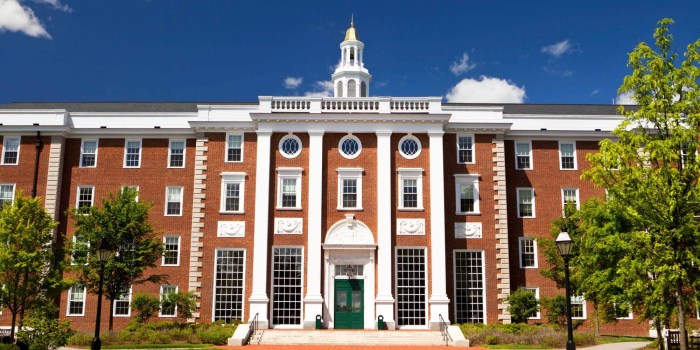
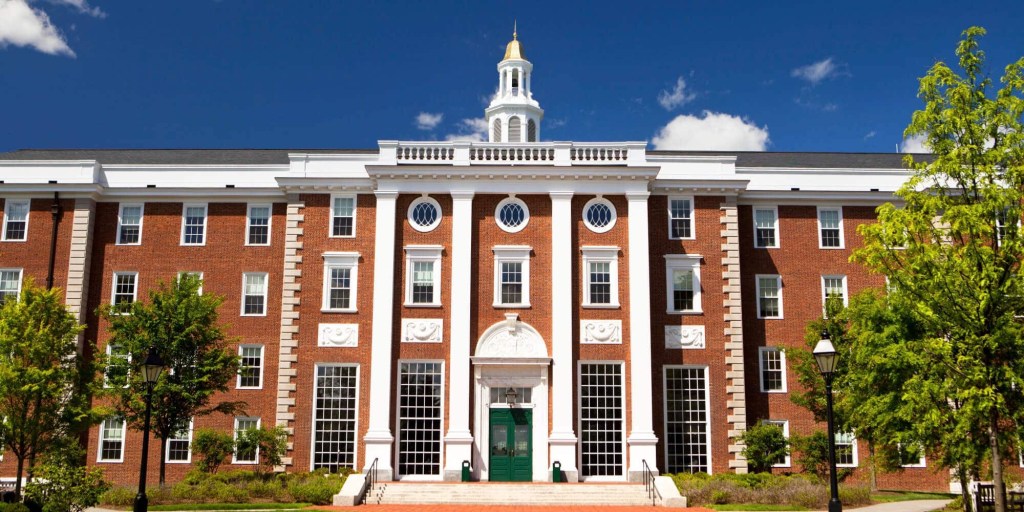
Harvard has a $53 billion endowment, the largest in the world. Nearly 40 percent of it is tied up in private equity. In April 2025, Harvard moved to sell $1 billion of those stakes through Jefferies, while simultaneously planning to issue $750 million in bonds. The official explanation is liquidity management, not distress. But the resemblance to 2008, when Harvard was forced to borrow billions to cover private equity calls, is unmistakable.
Yale built the “Yale model,” with nearly half of its $41 billion endowment allocated to private assets. For years, this made Yale the envy of institutional investors. But in 2024, Yale returned just 5.7 percent, compared to 13.5 percent for a basic stock-bond index. Now it is exploring a $6 billion secondary sale, nearly 15 percent of its endowment. The sale is not about strategy. It is about cash.
Princeton has a smaller endowment, about $35 billion, but the same exposure. Its longtime CIO Andrew Golden called 2023 the worst liquidity environment he had ever seen. Princeton raised $1.4 billion in bonds to shore up its balance sheet. Like Harvard and Yale, it insists the strategy is intact. But the reality is that illiquidity has become a liability.
Why This Matters to Everyday Americans
It is tempting to see this as an elite problem, billion dollar universities mismanaging their fortune. But it is not.
Endowments fund scholarships, financial aid, and core research. If Harvard or Yale faces a liquidity squeeze, it means fewer students receive aid. It means tuition rises to fill the gap. It means labs lose funding and staff lose jobs. What begins as a crisis in private equity becomes a crisis for students and families.
The same holds true in pensions. State retirement systems have billions tied up in private equity. When distributions dry up, they cannot meet obligations to retirees. That shortfall has to be covered by raising taxes, cutting benefits, or, in the worst case, turning to the federal government for relief. For millions of working and middle class Americans, this is not abstract. It is their retirement on the line.
The parallels to 2008 are chilling. Then, it was mortgage backed securities that turned toxic. Homeowners defaulted, banks failed, and Washington rushed in with taxpayer bailouts. Families lost houses, jobs, and savings, while Wall Street was rescued. Today, the scale is even larger. With twelve trillion dollars in unsold assets stuck on private equity books, the next bailout could dwarf 2008.
Imagine the politics of that moment. A populist like Donald Trump could frame it as Ivy League elites and Wall Street executives begging for lifelines while ordinary Americans pay the price. But the structural interdependence is real. If endowments and pensions buckle, the pressure on Washington to intervene may be irresistible. The federal government does not have the fiscal room to absorb another trillion dollar rescue, yet that may be exactly what is asked of it.
The burden would not fall on universities or private equity firms alone. It would fall on taxpayers, on students already struggling with debt, on workers who depend on pensions, on families already squeezed by inflation and high borrowing costs. In short, it would fall on the very people who had no hand in creating the mess.
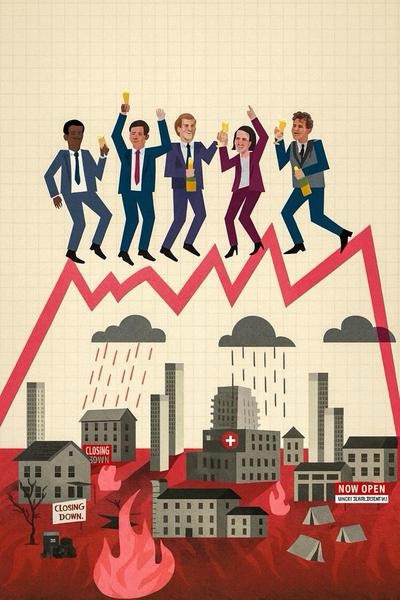
Private equity sold itself as the smartest bet of modern finance. But the two year flip is dead, interest rates have choked the model, and endowments that once trusted in illiquidity now find themselves trapped. For everyday Americans, the lesson is as clear as it was in 2008: when the smartest people in the room gamble with other people’s money and lose, it is everyone else who ends up paying the price.























 Nkozi Knight