Elevate Your Speaking Game: Why You Should Join Engaging Speakers as a Member and Chapter Director

Do you dream of a platform that not only sharpens your speaking prowess but also unites you with a community of driven professionals who share your passion? Search no more! Engaging Speakers is the ultimate destination for you. Continue reading to discover how embracing a membership and becoming a Chapter Director with Engaging Speakers can propel your speaking career to unparalleled heights and inspire you to act today.

Join a Supportive Community of Professionals

One of the primary benefits of Engaging Speakers is the opportunity to become part of a diverse and supportive community of professionals. By signing up as a member, you gain access to a network of speakers, entrepreneurs, and business owners who are dedicated to helping one another grow and succeed. This collaborative environment is perfect for fostering new connections and learning from others’ experiences.

Master Your Speaking Skills

Engaging Speakers offers its members numerous opportunities to improve their public speaking skills. With various workshops, webinars, and coaching sessions, you will be able to refine your craft, overcome stage fright, and deliver powerful messages with confidence. As a chapter director, you will have the opportunity to share your expertise with others, enabling you to grow as a speaker and leader.

Enhance Your Visibility and Credibility

Becoming a member of Engaging Speakers not only helps you improve your speaking skills but also increases your visibility and credibility within the industry. As a chapter director, you will have the opportunity to promote your business or brand through Engaging Speakers’ website, social media platforms, and events. This exposure will help you establish yourself as an authority in your field, attracting potential clients and opportunities.

Access to Exclusive Resources and Opportunities

Engaging Speakers offers its members an array of exclusive resources and opportunities. From receiving discounts on professional services to attending exclusive networking events, members enjoy numerous benefits. As a chapter director, you will have the chance to facilitate and organize events, creating opportunities for yourself and fellow members to connect, learn, and grow.

Give Back to the Community

Serving as a Chapter Director with Engaging Speakers is not only about personal growth but also about giving back to the community. By organizing events, sharing knowledge, and supporting fellow members, you will contribute to the overall development of the speaking community. This experience can be incredibly rewarding and fulfilling, as you witness the impact your efforts have on others.

Get Involved Today

Becoming a member and Chapter Director with Engaging Speakers is a game-changer for anyone looking to elevate their speaking career. With access to a supportive community, countless resources, and opportunities for growth, Engaging Speakers sets you on the path to success. Don’t miss out on this fantastic opportunity – sign up today and embark on an exciting journey towards becoming an influential speaker.

To learn more about Engaging Speakers and explore opportunities for involvement, feel free to reach out to us via email at info@engagingspeakers.com or give us a call at 800-689-1277.

Engaging Speakers

2735 Hassert Blvd

Suite 135-305

Naperville, IL 60564

Phone: 800-689-1277

Email: info@engagingspeakers.com

Why Do Zoom Meetings Make Us So Sleepy? Unveiling the Mystery of Video Conference Fatigue

Over the past few years, the rise of remote work and the need for social distancing have transformed video conferencing tools like Zoom into a ubiquitous communication platform. While these virtual meetings have enabled people to stay connected and productive, many have also reported feeling excessively tired and sleepy after participating in them. In this article, we will explore the reasons behind this phenomenon, often referred to as ‘Zoom fatigue,’ and discuss ways to mitigate its effects.

Reduced Non-verbal Communication

One of the primary reasons for Zoom fatigue is the inherent limitations of non-verbal communication in video calls. In face-to-face interactions, we rely on a plethora of non-verbal cues, such as body language, facial expressions, and tone of voice, to fully grasp the meaning behind someone’s words. However, video calls make it challenging to perceive these cues, as participants often appear in small windows with limited visibility. This forces our brains to work harder to decipher the information, leading to cognitive overload and, ultimately, fatigue.

Constant Self-awareness

Another factor contributing to Zoom fatigue is the increased self-awareness that comes with being on camera. Many people find it difficult to ignore their own video feed, leading to a heightened sense of self-consciousness. This constant self-monitoring can be mentally draining and may cause feelings of exhaustion.

Lack of Physical Movement

During in-person meetings, participants could move around, stretch their legs, and change their posture. In contrast, video calls often require attendees to remain seated and relatively stationary in front of their screens. This lack of physical movement can lead to stiffness, discomfort, and drowsiness.

Screen Overload

In today’s digital world, many of us spend a significant portion of our day staring at screens. Adding video calls to an already screen-heavy routine can exacerbate eye strain and lead to a feeling of fatigue. Moreover, the blue light emitted by screens can disrupt our circadian rhythms, making it more difficult to fall asleep at night.

Back-to-Back Meetings

In a remote work environment, back-to-back video calls are a common occurrence. Without the natural breaks that come with in-person meetings, such as walking to a different room or engaging in casual conversation, Zoom meetings can become an unrelenting series of virtual encounters. This lack of downtime between meetings can contribute to mental exhaustion and feelings of sleepiness.

Strategies to Combat Zoom Fatigue

  1. Schedule Breaks: Allocate time for short breaks between meetings to allow your brain to rest and recharge.
  2. Encourage Movement: Stand up, stretch, or walk around during video calls to maintain energy levels and reduce stiffness.
  3. Limit Screen Time: Schedule regular screen-free periods throughout your day to reduce eye strain and fatigue.
  4. Use Audio-only Calls: When appropriate, switch to audio-only calls to give your eyes a break and reduce self-consciousness.
  5. Optimize Your Environment: Ensure your workspace is well-lit and ergonomic to minimize physical discomfort and promote alertness.

Zoom fatigue is a real and prevalent issue faced by many people participating in video conference meetings. By understanding the factors that contribute to this exhaustion, we can take steps to minimize its impact and maintain our energy levels throughout the workday.

The Future of Work: Shifting Job Landscape in the United States Over the Next Decade

The rapidly evolving technology landscape is altering the world of work, transforming how organizations operate and the roles that employees hold. Over the next decade, we can expect significant shifts in the United States’ job market, with some careers experiencing exponential growth, while others decline. This blog post delves into the trending careers while exploring the impact of technology on employment and companies across various industries.

Trending Careers: Riding the Wave of Technological Advancements

Healthcare Professionals: As the U.S. population continues to age, there is an increasing demand for healthcare services. This need will fuel the growth of jobs in healthcare, such as physicians, nurses, and other medical practitioners. Technological advancements, including telemedicine, medical devices, and health informatics, will also create new opportunities in the industry.

Data Science and Analytics: With the exponential growth of data, businesses are increasingly relying on data-driven insights to make informed decisions. As a result, data science and analytics professionals will be in high demand, with roles like data analysts, data engineers, and data scientists becoming increasingly important.

Cybersecurity Experts: As technology becomes more sophisticated, the threat of cyber-attacks also grows. Consequently, the need for skilled cybersecurity professionals will continue to rise, ensuring the protection of valuable data and digital assets.

Renewable Energy Specialists: Climate change and sustainable energy concerns are driving the growth of the renewable energy sector. Professionals in solar, wind, and other renewable energy fields will see an increased demand for their expertise as countries transition towards more sustainable energy sources.

Mental Health: The increased awareness and focus on mental health will drive job growth in this sector. Counselors, therapists, and psychologists will be in high demand as society continues to prioritize mental health while using data to treat mental health issues faster.

Technology: The tech industry will continue to flourish, creating jobs in areas like artificial intelligence, machine learning, and cybersecurity as mentioned previously. Specialists in data analysis, software development, and information security will be highly sought after.

The future of work in the United States will be led by a continued shift towards technological careers, healthcare, data and renewable energy. While some industries will see growth, others will decline, and workers will need to be adaptable and flexible in order to stay competitive. As technology continues to evolve, it will be critical for workers to develop new skills and expertise in order to stay relevant and valuable in the job market now and in the future.

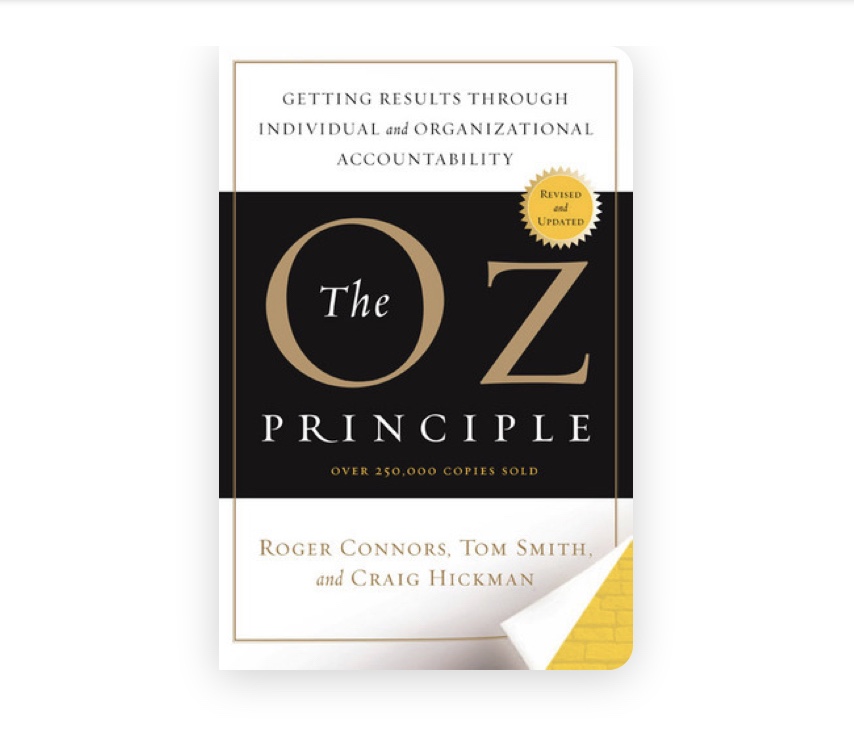
The Oz Principle: Getting Results Through Individual and Organizational Accountability

The Oz Principle, written by Roger Connors, Tom Smith, and Craig Hickman, is a popular management book that explores the concept of accountability in the workplace. The book draws on the classic story of The Wizard of Oz to illustrate how individuals and organizations can take ownership of their actions and outcomes to achieve success. In this blog post, we will summarize the main ideas of The Oz Principle and explain how they can be applied in the workplace.

The Oz Principle presents a framework for personal and organizational accountability based on four key principles: See It, Own It, Solve It, and Do It. Let’s take a closer look at each of these principles:

  1. See It: The first step in the accountability process is to see the problem or opportunity clearly. This involves identifying the root cause of the issue and understanding its impact on the organization. Seeing It requires individuals to be honest and objective in their assessment of the situation, without making excuses or blaming others.
  2. Own It: Once a problem or opportunity has been identified, the next step is to take ownership of it. This means accepting responsibility for the outcome and committing to taking action to address the issue. Owning It requires individuals to be accountable for their role in the situation, regardless of whether they were directly responsible for the problem.
  3. Solve It: The third step in the accountability process is to develop a plan to solve the problem or capitalize on the opportunity. This involves working collaboratively with others to identify and implement solutions that address the root cause of the issue. Solving It requires individuals to be proactive and creative in their problem-solving approach.
  4. Do It: The final step in the accountability process is to execute the plan and achieve the desired outcome. This involves taking action and following through on commitments to ensure that the problem is fully resolved or the opportunity is fully realized. Doing It requires individuals to be persistent and disciplined in their efforts to achieve success.

The Oz Principle emphasizes the importance of accountability in driving individual and organizational performance. By following the See It, Own It, Solve It, and Do It framework, individuals can take control of their actions and outcomes, and work together to achieve shared goals. The book provides practical tools and strategies for implementing accountability in the workplace, including the use of performance scorecards, team charters, and action plans.

In conclusion, The Oz Principle is a powerful management book that offers a fresh perspective on accountability in the workplace. Its four-step framework provides a clear roadmap for personal and organizational success, and its practical tools and strategies can be applied in a wide range of settings. By embracing the principles of See It, Own It, Solve It, and Do It, individuals and organizations can achieve greater accountability, productivity, and success.

What Emmett Till’s Mother Taught Me About Grief and Justice

On Feb. 26, 2012, my entire life changed in ways that I could never imagine. Within an instant, after the brutal and inhumane killing of my son, …

What Emmett Till’s Mother Taught Me About Grief and Justice

Five ways of expanding your business internationally

The global economy is changing thanks to worldwide connectivity. Companies across the globe are communicating with others without delays or hassles …

Five ways of expanding your business internationally

5 Tips to Get Your First Business off the Ground

Building your first business is tough. Building any business is tough, but your first is going to be especially difficult – you have no mistakes to …

5 Tips to Get Your First Business off the Ground

Middle class households made more than $2 trillion from homeownership over the past decade, showing it’s still a great way to build wealth

Real estate can still create huge wealth gains for young households. It’s buying the home in the first place that’s the problem.

Middle class households made more than $2 trillion from homeownership over the past decade, showing it’s still a great way to build wealth

7 Surprising Things Successful Leaders Stop Doing that Make Leadership Easier

It doesn’t take a genius to make hard work painful. Sometimes success is about stopping something. 7 surprising things successful leaders stop doing:…

7 Surprising Things Successful Leaders Stop Doing that Make Leadership Easier

Powerful Conversations: How High-Impact Leaders Communicate

iStock_000015269756XSmall[1].jpg

All leaders talk, but it is what they say and how they say it that determines whether the group succeeds or fails.

Think about it: the leader’s most fundamental and most important job is to be in touch with those around him or her. Whether it is in the hallways or on the phone, in the middle of the workday or after hours, while delivering a performance review to a key employee or a yearly address to thousands of employees, leaders are involved in a constant series of conversations.

Through these encounters, whether brief and spontaneous or scheduled and structured, leaders try to use their time with colleagues, employees, customers, and others to reach a variety of ends. Grabbing a moment, the leader takes the opportunity to influence and direct a member of the sales staff. A weekly meeting becomes a chance to coach a manager and gather information about the department’s morale and its financial numbers. A quick e-mail checks on the progress of a research project and gives a boost of recognition and support to the team. During a strategy meeting, the leader negotiates next steps with division heads and outlines a coordinated approach. At a company awards ceremony, he or she tries to hammer home a message about values and goals. In short, the leader, through his or her conversations, aims to foster relationships, build support networks, and sharpen organizational focus.

Yet outcomes from conversations are too often unclear. Perceptions don’t always match. Influences are frequently not as profound as one would hope. Communication is generally a struggle with mixed, uncertain, and unpredictable results. Too much conversation is ad hoc and hinges on moods, energy levels, relationships, and personalities. Sometimes a leader is right on point. Sometimes he or she clicks and forges a new connection. Other times, the leader misses the mark. Either way, he or she pushes on, lining up the next meeting, setting up the next goal, responding to the latest need for clarification.

Communication is never easy. Inevitably, when a leader is driving change and dealing with conflicting agendas, some conversations provide a challenge that tests the bounds and skill of experience. During the heat of a difficult conversation, you need to fall back on a discipline. You need clear communication that advances agendas, promotes learning, and strengthens relationships. It’s the difference between achieving objectives and having everything fall apart—and the difference between winning and losing.

Imagine having to let a close friend know that he or she is off a project because of poor performance, yet wanting at the same time to preserve the strength of the relationship. Imagine having to make necessary structural changes to an organization, realigning roles and positions in ways that involve cuts in the workforce, yet wanting at the same time to bolster morale and organizational commitment. These are the difficult conversations that High-Impact Leaders face every single day, so what makes them different from any other leader?

High-Impact Leaders are the people who get results. They are the ones who make things happen. They are the leaders who are able to continually advance a clear agenda, get others to buy into it, and move an organization, a division, or a team forward. Being a High-Impact Leader has nothing whatsoever to do with title or rank, because High-Impact Leaders can be found up, down, and across any organization.

-Impact Leaders are the ones who cause no surprises. They are explicit, consistent, concise, and authentic. They sometimes have an abundance of charisma, but that is clearly not a prerequisite. More to the point, High-Impact Leaders are the ones who take charge wherever they are. They are the ones others want to follow. They are also the leaders whose teams others consistently want to join. When they move on to new roles or new territories, they do not travel alone. Others ask to go with them.

These conditions result because High-Impact Leaders use the technology of Powerful Conversations and then match what they say with what they do. Through Powerful Conversations, they develop openness, honesty, and clarity in order to get others to believe and share in their goals, to gain commitments, and to foster trust. And they prove they are worthy of that trust by delivering on their own commitments and by making results happen.

The link between Powerful Conversations and High-Impact Leaders lies in the relationship between two concepts I refer to as Say and Do. I have seen people skilled at the art of Powerful Conversations nevertheless fail as leaders because they fail to live up to their words. As a result, they never become High-Impact Leaders. I have never known a High-Impact Leader, however, who was not also skilled at Powerful Conversations, whether conscious of that designation or not. To be a High-Impact Leader, you have to be able to conduct Powerful Conversations on a consistent basis and live up to the outcomes of those conversations. Why is this important? It has to do with trust—without which conversations cannot progress toward the realization of commitments.

One of the most important functions of a Powerful Conversation is to create clarity, a critical success factor for building trust. I cannot tell you how frequently I have been involved in situations in which a leader, reflecting on problems that have arisen, says, “I can’t believe they thought I meant that. I never had any intention of doing that.” And the followers say something like, “It’s unbelievable. Our leader made a clear commitment to do this and now denies it was ever part of the agenda.” Both sides shake their heads. Barriers go up. Trust is reduced or nonexistent.

True clarity implies that a leader says exactly what he or she means in such a way that his or her statements are received as intended. This requires openness, honesty, and an active and careful tracking of wants, needs, and commitments. It furthermore requires that those clear statements be lived up to with demonstrated actions built on organizational trust.

High-Impact Leaders today lead in a better way because they recognize that the shortest path to achieving objectives is to build trust and gain clear commitments from others. Specifically, they engage in Powerful Conversations to uncover the wants and needs of others in order to understand what will motivate those people to join forces with the leader and live up to the commitments of a conversation. They skillfully orchestrate the Powerful Conversations in which they engage to make clear all parties understand the exact commitments that have been made. Then they check into those commitments and make sure through follow-up conversations that the commitments can be kept. They track the wants and needs of others and find ways to reinforce their own desire to understand the wants and needs of others, often through continued follow-up conversations. High-Impact Leaders do these things because they know that trust must exist if the leader is to achieve his or her agenda through Powerful Conversations to create positive outcomes for their teams and stakeholders.

by Phil Harkins

Serving Those Who Have Served Our Country

10408090_481456128668304_3135217482088239151_n

United Veterans Partnership

MAKING CONNECTIONS, ONE VETERANS AT A TIME!

United Veterans Partnership, Inc. (UVP) is a non-profit 501(c)(3) community development organization that works with our partners to build more sustainable communities where veterans and their families live, work, play and pray.

The UVP works closely with our partners to deliver programs that connect veterans to better housing and employment opportunities, financial literacy, business development resources and improved access healthcare and healthy food options.

At the end of the day, our success isn’t measured by the number of awards we get or the money we have raised but, rather, by the number of veterans who are living a better quality of life because of a connection that we made.


The Mission of the United Veterans Partnership is to “Help Veterans Build Sustainable Communities.”

For two years, the United Veterans Partnership (UVP) has listened to, communicated with and learned from veterans and other members of the community that the most pressing need is employment and business opportunities after their service to our country has ended. UVP is our answer to helping Veterans find the opportunities need to continue to be successful in the next chapter of their lives.

We are dedicated to helping veterans build communities through outreach programs and leadership development that focus on obtaining gainful employment, financial education, housing, entrepreneurial opportunities in business.

To do this the UVP has focused on striving to meet five goals to help meet the needs of returning veterans and the communities in which they live:

Jobs/Jobs Training: Develop a comprehensive Accelerated Job Training Program to reduce the jobless rate among veterans and partner with local companies to keep veterans employed long after their military obligation has ended.
Connecting the Veteran Workforce to Opportunities: Build stronger linkages between businesses and the central city workforce of veterans through partnerships with the Department of Veteran Affairs and other organizations that share the same goals of helping veterans achieve their goals.

Greater Veteran Involvement in Economic Development: Increase the participation of veterans of veterans with assistance from the UVP on local and regional planning and project development efforts.

Community Development: Deepen thee impact of Veterans on the development of the community, including but not limited to; housing and housing development, economic development, financial education and training, and community leadership opportunities.
Entrepreneurship/Small Business Development: Foster greater entrepreneurship in the community by guiding veterans on the creation and expansion of Veteran owned businesses and franchises.


Source: Our Mission

7 Interview Questions to Help You Assess Emotional Intelligence

“Look for a team player who brings something positive to the company”

Emotional intelligence is the ability to recognize one’s own and other people’s emotions, to discriminate between different feelings and label them appropriately, and to use emotional information to guide thinking and behavior.

5 Common Networking Mistakes You’re Making

Mixer_0By 

Building a network of people that you don’t get along with is completely pointless.

The Leadership Insider network is an online community where the most thoughtful and influential people in business contribute answers to timely questions about careers and leadership. Today’s answer to the question: What’s the best way to network? is written by Scott Kriz, CEO of Bitium.

All too often, I see people at networking events exchanging business cards and starting up superficial conversations for obviously one-sided, self-serving purposes. But what happens when you leave the happy hour or the conference? How many of those conversations resulted in something substantial? Networking should be viewed as the beginning of long-lasting, mutually beneficial relationship. While there’s no formula to creating a valuable network, there certainly are guidelines. Here are five lessons I’ve learned while building and strengthening my network:

Be authentic
When I was fresh out of college, I used to attend events and come home with a pile of business cards, trying to figure out how each person could benefit me in my career. Guess how many of those turned into valuable relationships? Not one. Realizing this, I stopped bringing cards with me to events. Instead, I started attending events with smaller groups of people and focused more on getting to really know everyone on a personal level. Over time, I found that people with whom I shared common personal interests tended to provide more value than those with closer professional ties.

See also: What a game of chess can teach you about networking

Listen and ask questions
While I love sharing stories, I have never learned anything by hearing myself talk. So I try to focus on learning from other people’s experiences by taking a genuine interest in that person and asking them questions instead. For example, a few years ago, I found out the CMO from Microsoft had retired and was living in Southern California. Marketing has always been an area that fascinated me because it didn’t come naturally. I wanted to learn about marketing from the top mind in B2B marketing software so I could better understand it for my own business.

Through my network, I found out that she was going to be at a local accelerator event so I decided to attend as well. It’s amazing how generous people are with their time and their knowledge when you express genuine interest. Mich Mathews is now an investor and board member for Bitium–and a close friend of mine.

Seek out people that you like
Building a network of people that you don’t get along with is completely pointless. Every one of us has our own opinions, tastes and tolerances. Spend your time with people you like and you will find natural alignment. When I started my current company, I was lucky enough to have a co-founder that I had enormous respect for both personally and professionally. We wanted to hire the smartest employees, of whom we also enjoyed working with. Everyone on our current team has been hired through a personal or professional connection. I’m proud of this, not only because I love what we do as a company, but because I love the people that I am building the company with.

See also: Business cards aren’t outdated and 4 other networking tips

Put yourself in someone else’s shoes
Some of the best networkers that I know are busy and overcommitted by nature. In order to leverage their networks appropriately and get the introductions I want, I’ve found that the less intrusive and more specific that I can be, the more likely they are to help out. Put yourself in the shoes of the person who is being solicited and read the content of the email as if you are that person. Make your email request is concise, specific, not completely self-serving and most importantly, easy for them to forward on to the person you want an introduction to. Help them help you.

Be yourself
Remember that everyone is just a person, no matter what they have achieved or how well-known they are. It’s easy to get star struck when meeting someone you’ve read about or who is considered a ‘celebrity’ in your industry. Approach them like you would anyone else at an event. Too many times people try to force a conversation because they really admire someone and want nothing more than to be associated with that person. Relax, have fun and don’t try to foster relationships that aren’t natural.

Read all answers to the Leadership Insider question: What’s the best way to network?

How to work a room at an important networking event by Carol Leaman, CEO of Axonify.

The one question you have to ask everyone you network withby Clark Valberg, CEO of InVision.

3 signs you’re a serial meet-and-greet networker by Shadan Deleveaux, director of sales multicultural beauty division at L’Oréal USA.

Forget what you know about networking. Do this instead by Jim Yu, CEO of BrightEdge.

3 networking mistakes you don’t know you’re making by Dan Finnigan, CEO of Jobvite.

Why face-to-face networking will never go out of style by Kevin Chou, co-founder and CEO of Kabam.

How to effectively network (even if you dread it) by David DeWolf, president and CEO of 3Pillar Global.

The only thing you need to keep in mind when networkingby William Craig, founder and president of WebpageFX.

Why social media alone won’t get you a job by Gary Vaynerchuk, co-founder and CEO of VaynerMedia.

NYSE President: I owe every job I’ve ever had to networking by Tom Farley, president of the NYSE.