Fitch Downgrades U.S. Credit Rating Amid Rising Deficits and Political Turmoil

In a recent blow to the United States, Fitch Ratings has downgraded the nation’s credit rating from the highest possible AAA to AA+. The rating agency attributed the drop to increasing deficits and political conflict, which they believe threaten the government’s capacity to service its debts.

This decision was made two months following a last-minute agreement between the Biden administration and House Republicans to temporarily raise the debt ceiling, thereby narrowly dodging a potentially catastrophic federal default.

This isn’t the first time the U.S. has faced such a demotion. Back in 2011, amid a similar crisis regarding the debt ceiling, Standard & Poor’s reduced the United States’ AAA rating. At present, Moody’s Investors Service is the only major credit rating agency that continues to assign the U.S. the top AAA rating.

Despite recognizing the robustness of the U.S. economy and the benefits reaped from the dollar’s position as the world’s primary currency, Fitch expressed concerns about the escalating deficits and both political parties’ reluctance to address long-term fiscal issues. Fitch voiced limited faith in the government’s ability to effectively manage the country’s finances.

In response to the downgrade, Treasury Secretary Janet Yellen criticized Fitch’s decision as “arbitrary” and reliant on obsolete data. She emphasized that “Treasury securities remain the world’s preeminent safe and liquid asset” and affirmed the underlying strength of the U.S. economy.

According to Fitch, the expenditure caps set as part of the recent debt agreement in June merely scratch the surface of the overall budget and do not confront enduring issues, such as financing Social Security and Medicare for an aging populace.

With tax reductions and elevated government expenditure leading to an expansion of deficits in recent years, and coupled with increasing interest rates, the fiscal burden has grown. Government interest payments in the first nine months of the current fiscal year amounted to $652 billion, marking a 25% rise from the same period last year.

Maya Macguineas, the president of the Committee for a Responsible Federal Budget, responded to the downgrade, terming it a “wake-up call.” She stressed the urgent need for fiscal responsibility, stating, “We are clearly on an unsustainable fiscal path. We need to do better.”

The repeated political standoffs over the debt ceiling have not only eroded the faith in U.S. fiscal management but also put the longstanding reputation of U.S. government bonds at risk. For close to a hundred years, these bonds have been considered some of the safest investments globally, primarily because the U.S. seemed unlikely to default on payments.

However, with the recent debt ceiling impasses, there is growing concern that the U.S. might default for the first time. Over a decade ago, S&P pointed out political discord as a significant risk to the country’s governing ability, and many experts opine that the situation has deteriorated since.

The Meteoric Rise of Online Gambling and The Destructive Impact On Sports, Athletes, and Fans

As the digitization of daily life accelerates, the world of gambling is not immune to this transition. Recent years have witnessed an explosion of online gambling, fueled by large media sports outlets, with ESPN leading the charge, often making sports shows unwatchable. This shift has profound implications for the sporting world, the athletes at its center, and the fans, young and old, who passionately follow their favorite teams and players.

The Push from Sports Outlets

For sports media platforms, the digitization of gambling represents a new frontier of audience engagement and a fresh stream of revenue. ESPN has been at the forefront of this transformation, incorporating gambling lines, odds, and statistics into their sports coverage. Last month at the NBA draft, a betting line was changed when NBA Insider Sham Charania posted that Scoot Henderson was “gaining serious momentum” as the No. 2 pick. The problem is Sham Charania is a paid brand name ambassador for Fan Duel and his tweet resulted in millions of dollars changing hands with what many consider was bad information. This brought to light the lack of regulations and oversight to prevent conflict of interest between members of the media who can influence betting markets and company’s like Fan Duel. Companies like ESPN and Fox Sports continue to blur the lines as they have effectively mainstreamed sports betting, lending an air of legitimacy to an activity previously associated with the outskirts of the sporting world.

ESPN, owned by Disney, and other sports outlets are leveraging their immense influence to not only provide sports news but also to shape the way fans engage with sports. By introducing betting elements in their broadcasts, these platforms have turned viewership into an interactive, higher-stakes experience. Now, fans aren’t just rooting for their team; they’re also potentially reaping financial gains or losing everything from the outcome.

Impact on Sports and Athletes

This increased focus on gambling has significant implications for the sports themselves and the athletes who compete. One major concern is the threat to the integrity of sports. While most bets are placed in good faith, there is an increased risk of match-fixing and corruption as the volume of sports betting grows. Several NFL players were recently suspended for betting on games, potentially ruining their careers and livelihoods. Rigging a game for betting gains may become tempting to unscrupulous individuals, casting a shadow over the purity of competition.

For athletes, the rise of online gambling can present a new kind of pressure. Knowing that their performance can affect not only their team’s fortunes but also the financial outcomes of countless fans adds a unique stressor. This added pressure could affect their performance, either spurring them on to greater heights or causing them to buckle under the weight of expectation.

Impact on Fans

From the fans’ perspective, the rise of online gambling has transformed the way they engage with sports. It’s no longer just about cheering for your team; now, there’s a personal stake in the game’s outcome. For some, this adds an exciting new dimension to their fandom, heightening the thrills of victory and the agonies of defeat. But for others, it can lead to financial distress and potential addiction.

Furthermore, there’s the potential to alter the dynamic between fans and athletes. Instead of viewing athletes as individuals who are striving for success in their sport, they may increasingly see them as mere components of their betting strategies. This could potentially lead to a dehumanization of athletes and a detachment from the essential spirit of sports.

As the rise of online gambling continues, fueled by sports outlets such as ESPN, Fox Sports, and CBS, it’s imperative that we carefully consider and address its potential impacts. Regulation will play a key role in ensuring the integrity of sports and protecting fans from financial exploitation. As we move forward, it’s crucial to regulate this new landscape with the goal of preserving the core values of sports: competition, teamwork, and integrity for this generation and generations to come.

British Billionaire Hamish Harding 1 of 5 missing on Titanic expedition in the Atlantic

A British billionaire who is feared to be on board the missing Titanic tourist submarinewrote a last post warning about temperamental weather conditions ahead of the mission. 

Billionaire Hamish Harding, who has previously travelled on the Challenger Deep to the bottom of the ocean and on Jeff Bezos’ Blue Origin into space, posted on Instagram on Sunday to announce he was joining OceanGate Expeditions for their Titanic mission. That was the last time he posted before news broke that the submersible is missing somewhere in the Atlantic Ocean. In his eerie last post before the mission, Mr Harding said it would be “the first and only manned mission to the Titanic in 2023”. The father-of-two has not been heard from since.

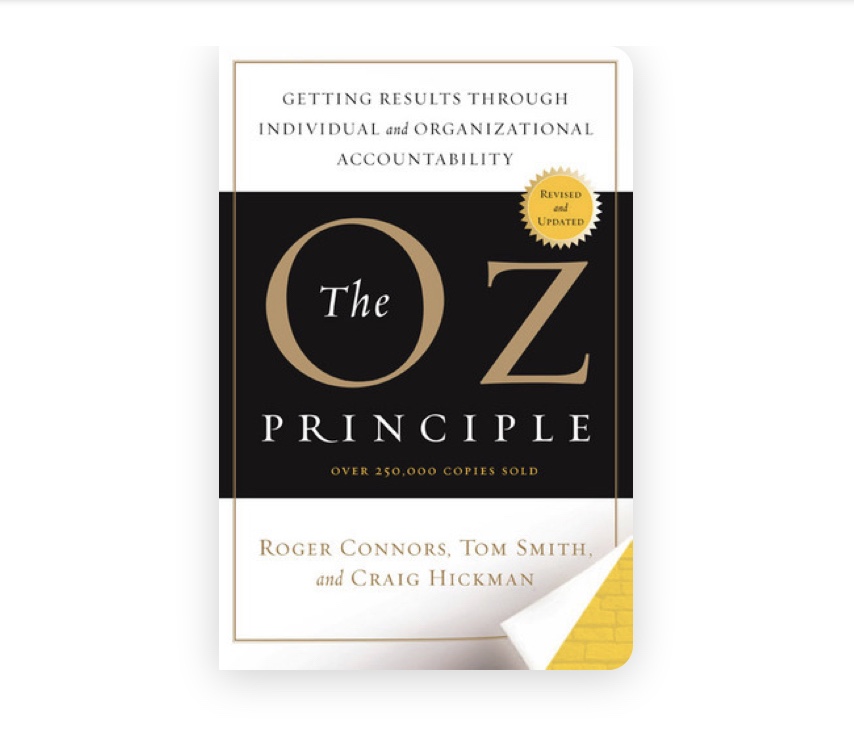
The Oz Principle: Getting Results Through Individual and Organizational Accountability

The Oz Principle, written by Roger Connors, Tom Smith, and Craig Hickman, is a popular management book that explores the concept of accountability in the workplace. The book draws on the classic story of The Wizard of Oz to illustrate how individuals and organizations can take ownership of their actions and outcomes to achieve success. In this blog post, we will summarize the main ideas of The Oz Principle and explain how they can be applied in the workplace.

The Oz Principle presents a framework for personal and organizational accountability based on four key principles: See It, Own It, Solve It, and Do It. Let’s take a closer look at each of these principles:

  1. See It: The first step in the accountability process is to see the problem or opportunity clearly. This involves identifying the root cause of the issue and understanding its impact on the organization. Seeing It requires individuals to be honest and objective in their assessment of the situation, without making excuses or blaming others.
  2. Own It: Once a problem or opportunity has been identified, the next step is to take ownership of it. This means accepting responsibility for the outcome and committing to taking action to address the issue. Owning It requires individuals to be accountable for their role in the situation, regardless of whether they were directly responsible for the problem.
  3. Solve It: The third step in the accountability process is to develop a plan to solve the problem or capitalize on the opportunity. This involves working collaboratively with others to identify and implement solutions that address the root cause of the issue. Solving It requires individuals to be proactive and creative in their problem-solving approach.
  4. Do It: The final step in the accountability process is to execute the plan and achieve the desired outcome. This involves taking action and following through on commitments to ensure that the problem is fully resolved or the opportunity is fully realized. Doing It requires individuals to be persistent and disciplined in their efforts to achieve success.

The Oz Principle emphasizes the importance of accountability in driving individual and organizational performance. By following the See It, Own It, Solve It, and Do It framework, individuals can take control of their actions and outcomes, and work together to achieve shared goals. The book provides practical tools and strategies for implementing accountability in the workplace, including the use of performance scorecards, team charters, and action plans.

In conclusion, The Oz Principle is a powerful management book that offers a fresh perspective on accountability in the workplace. Its four-step framework provides a clear roadmap for personal and organizational success, and its practical tools and strategies can be applied in a wide range of settings. By embracing the principles of See It, Own It, Solve It, and Do It, individuals and organizations can achieve greater accountability, productivity, and success.

What Emmett Till’s Mother Taught Me About Grief and Justice

On Feb. 26, 2012, my entire life changed in ways that I could never imagine. Within an instant, after the brutal and inhumane killing of my son, …

What Emmett Till’s Mother Taught Me About Grief and Justice

Five ways of expanding your business internationally

The global economy is changing thanks to worldwide connectivity. Companies across the globe are communicating with others without delays or hassles …

Five ways of expanding your business internationally

5 Tips to Get Your First Business off the Ground

Building your first business is tough. Building any business is tough, but your first is going to be especially difficult – you have no mistakes to …

5 Tips to Get Your First Business off the Ground

Fatherhood

A dad’s role in a child’s well-being is very important. Fathers teach many important lessonsto a child, like how to be affectionate and supportive, and how to take care of everyone else by giving the best example, and all of this while being great examples themselves.

Here are some of my favorite fatherhood quotes:

“A good father is one of the most unsung, unpraised, unnoticed, and yet one of the most valuable assets in our society.”

“Every dad, if he takes time out of his busy life to reflect upon his fatherhood, can learn ways to become an even better dad.”

“Fathering is not something perfect men do, but something that perfects the man.”

“There is no greater name for a leader than mother or father. There is no leadership more important than parenthood.”

“‘Father’ is the noblest title a man can be given. It is more than a biological role. It signifies a patriarch, a leader, an exemplar, a confidant, a teacher, a hero, a friend.”

“You don’t raise heroes, you raise sons. And if you treat them like sons, they’ll turn out to be heroes, even if it’s just in your own eyes.”

Powerful Conversations: How High-Impact Leaders Communicate

iStock_000015269756XSmall[1].jpg

All leaders talk, but it is what they say and how they say it that determines whether the group succeeds or fails.

Think about it: the leader’s most fundamental and most important job is to be in touch with those around him or her. Whether it is in the hallways or on the phone, in the middle of the workday or after hours, while delivering a performance review to a key employee or a yearly address to thousands of employees, leaders are involved in a constant series of conversations.

Through these encounters, whether brief and spontaneous or scheduled and structured, leaders try to use their time with colleagues, employees, customers, and others to reach a variety of ends. Grabbing a moment, the leader takes the opportunity to influence and direct a member of the sales staff. A weekly meeting becomes a chance to coach a manager and gather information about the department’s morale and its financial numbers. A quick e-mail checks on the progress of a research project and gives a boost of recognition and support to the team. During a strategy meeting, the leader negotiates next steps with division heads and outlines a coordinated approach. At a company awards ceremony, he or she tries to hammer home a message about values and goals. In short, the leader, through his or her conversations, aims to foster relationships, build support networks, and sharpen organizational focus.

Yet outcomes from conversations are too often unclear. Perceptions don’t always match. Influences are frequently not as profound as one would hope. Communication is generally a struggle with mixed, uncertain, and unpredictable results. Too much conversation is ad hoc and hinges on moods, energy levels, relationships, and personalities. Sometimes a leader is right on point. Sometimes he or she clicks and forges a new connection. Other times, the leader misses the mark. Either way, he or she pushes on, lining up the next meeting, setting up the next goal, responding to the latest need for clarification.

Communication is never easy. Inevitably, when a leader is driving change and dealing with conflicting agendas, some conversations provide a challenge that tests the bounds and skill of experience. During the heat of a difficult conversation, you need to fall back on a discipline. You need clear communication that advances agendas, promotes learning, and strengthens relationships. It’s the difference between achieving objectives and having everything fall apart—and the difference between winning and losing.

Imagine having to let a close friend know that he or she is off a project because of poor performance, yet wanting at the same time to preserve the strength of the relationship. Imagine having to make necessary structural changes to an organization, realigning roles and positions in ways that involve cuts in the workforce, yet wanting at the same time to bolster morale and organizational commitment. These are the difficult conversations that High-Impact Leaders face every single day, so what makes them different from any other leader?

High-Impact Leaders are the people who get results. They are the ones who make things happen. They are the leaders who are able to continually advance a clear agenda, get others to buy into it, and move an organization, a division, or a team forward. Being a High-Impact Leader has nothing whatsoever to do with title or rank, because High-Impact Leaders can be found up, down, and across any organization.

-Impact Leaders are the ones who cause no surprises. They are explicit, consistent, concise, and authentic. They sometimes have an abundance of charisma, but that is clearly not a prerequisite. More to the point, High-Impact Leaders are the ones who take charge wherever they are. They are the ones others want to follow. They are also the leaders whose teams others consistently want to join. When they move on to new roles or new territories, they do not travel alone. Others ask to go with them.

These conditions result because High-Impact Leaders use the technology of Powerful Conversations and then match what they say with what they do. Through Powerful Conversations, they develop openness, honesty, and clarity in order to get others to believe and share in their goals, to gain commitments, and to foster trust. And they prove they are worthy of that trust by delivering on their own commitments and by making results happen.

The link between Powerful Conversations and High-Impact Leaders lies in the relationship between two concepts I refer to as Say and Do. I have seen people skilled at the art of Powerful Conversations nevertheless fail as leaders because they fail to live up to their words. As a result, they never become High-Impact Leaders. I have never known a High-Impact Leader, however, who was not also skilled at Powerful Conversations, whether conscious of that designation or not. To be a High-Impact Leader, you have to be able to conduct Powerful Conversations on a consistent basis and live up to the outcomes of those conversations. Why is this important? It has to do with trust—without which conversations cannot progress toward the realization of commitments.

One of the most important functions of a Powerful Conversation is to create clarity, a critical success factor for building trust. I cannot tell you how frequently I have been involved in situations in which a leader, reflecting on problems that have arisen, says, “I can’t believe they thought I meant that. I never had any intention of doing that.” And the followers say something like, “It’s unbelievable. Our leader made a clear commitment to do this and now denies it was ever part of the agenda.” Both sides shake their heads. Barriers go up. Trust is reduced or nonexistent.

True clarity implies that a leader says exactly what he or she means in such a way that his or her statements are received as intended. This requires openness, honesty, and an active and careful tracking of wants, needs, and commitments. It furthermore requires that those clear statements be lived up to with demonstrated actions built on organizational trust.

High-Impact Leaders today lead in a better way because they recognize that the shortest path to achieving objectives is to build trust and gain clear commitments from others. Specifically, they engage in Powerful Conversations to uncover the wants and needs of others in order to understand what will motivate those people to join forces with the leader and live up to the commitments of a conversation. They skillfully orchestrate the Powerful Conversations in which they engage to make clear all parties understand the exact commitments that have been made. Then they check into those commitments and make sure through follow-up conversations that the commitments can be kept. They track the wants and needs of others and find ways to reinforce their own desire to understand the wants and needs of others, often through continued follow-up conversations. High-Impact Leaders do these things because they know that trust must exist if the leader is to achieve his or her agenda through Powerful Conversations to create positive outcomes for their teams and stakeholders.

by Phil Harkins

Yes, There Is Life in Space—Deal With It

No one has ever discovered life in space, and given the enormity of the universe and our tiny, modest place in it, it’s entirely possible no one will—either in our lifetimes or for many lifetimes to come. But never mind, because life is out there—indeed, it’s everywhere, simply because chemically and mathematically it has to…

http://time.com/4234106/life-in-space/

5 Most Common Mistakes People Make with Life Insurance

Over the years, I’ve seen that there is a lot of confusion around this topic – from what type of insurance is best to how much you need and where to get it. With that in mind, below are the five most common mistakes people make when it comes to life insurance. Hopefully, through this list, you’ll be able to get a better understanding of how life insurance works and why it’s a good tool for you and your family.


gofundme
Mistake #1 – Having no life insurance at all

Many people simply overlook the importance of life insurance. It doesn’t appear to be something they need and it can be viewed as an added expense. But take a second to stop and consider all the important people in your life. If you weren’t there, how would they be impacted financially? It’s not fun to think about, but by “playing dead” you can begin to understand that life insurance is a critical tool to ensuring your family feels financially supported should anything happen to you. For instance, if you have any financial obligations, a life insurance policy will help to ensure that those burdens do not fall entirely on your family members and they can avoid starting a gofundme page in your name to pay for funeral cost. Remember, it is also important to get life insurance sooner rather than later because the cost goes up the older we get.


Layoff

Mistake #2 – Relying solely on employer-provided workplace life insurance

Life insurance provided by your workplace is an excellent benefit and can serve as a good starting point for your basic minimum coverage. But remember any life insurance provided automatically from your employer is only good as long as you work with the company. Chances are you will not be with the same company for your entire working career either by choice or by force and the insurance does not go with you. You can purchase additional coverage through your employer or on your own to help fill the gap.


term-vs-perm-venn-diagram

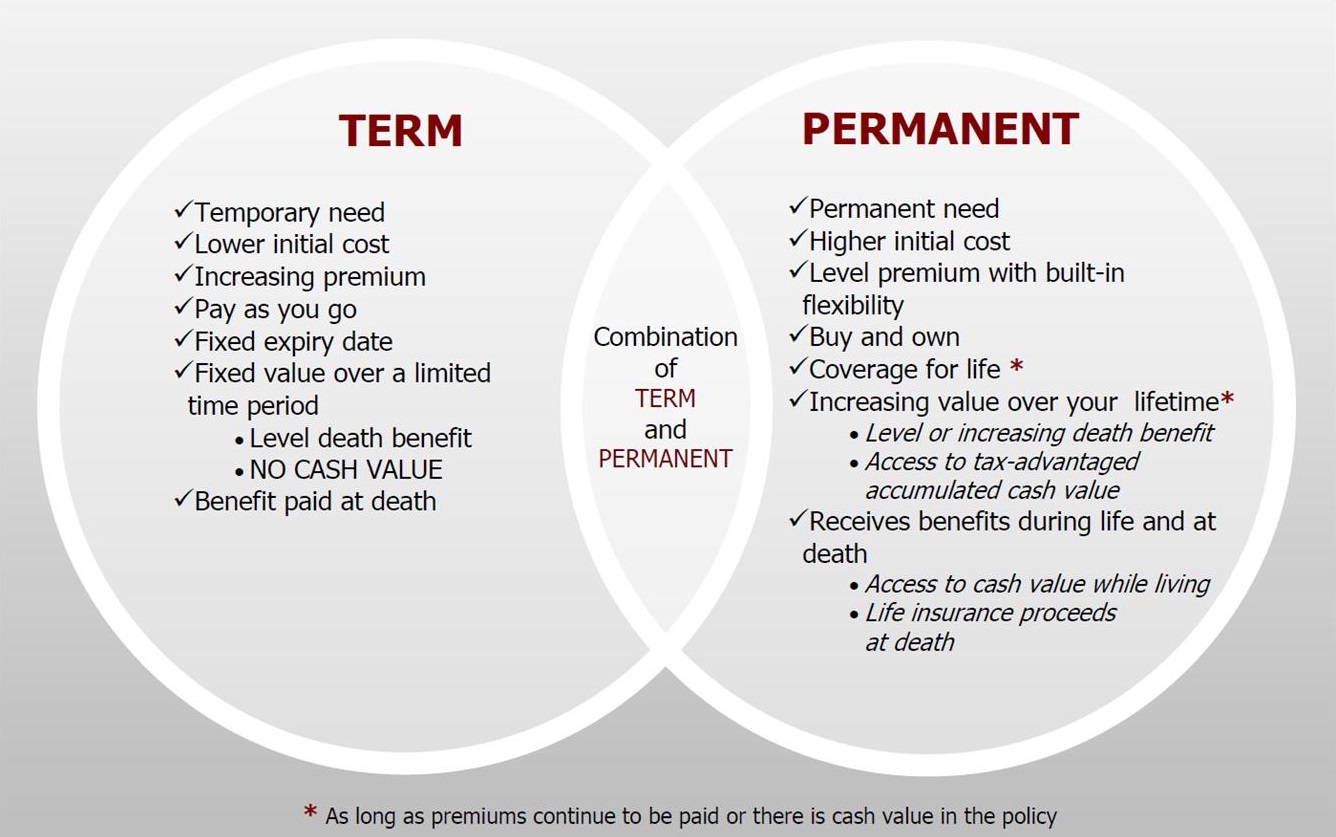
Mistake #3 – Only considering term life insurance

Term life insurance provides a “death” or “survivor” benefit, which is the amount beneficiaries receive if you pass away, for a certain period of time (15, 20 or 30 years are common increments), after which the coverage ends. An alternative solution would be to adopt cash value life insurance, which similarly provides a death benefit, but will grow over the years as long as you continue to fund the policy. Furthermore, cash value life insurance can help with financial obligations in a tax-advantaged way, whether it is paying for college, a business venture or retirement. These policies are generally more expensive, but can make a lot of sense if you are able to commit to regularly funding the policy.


Concern

Mistake #4 – Leaving retirement savings vulnerable

If you do not have any/enough life insurance, your family is likely to look to your retirement savings for financial support. This may seem like a safe solution for finding additional resources, but I would advise against using funds saved specifically for retirement for another purpose. If you are the higher earner in the family, your spouse may have been relying on those savings for his or her own retirement. Similarly, if your spouse is forced to liquidate or take large loans from the retirement account, it will hurt the potential long-term investment gains that would have benefitted your family down the road. It is important that the money you are saving is allotted for different goals – from life insurance to retirement – so that you are making the most of each savings opportunity.



Life-insurance-blog-post-150915

Mistake #5 – Guessing on how much life insurance you need

Many people who walk into my office have no idea how much life insurance they need. Is it five times annual salary? Ten times? Some other figure? There are many factors to take into account to figure out how much life insurance is right for you. Often this is where a financial professional can really help with the process. We can help quantify how much and what type of insurance makes the most sense for you and then help get that coverage in place. There are also many online calculators available to use as a starting point.

At the end of the day, we all just want to know that our loved ones will be taken care of after we’re gone. I have seen firsthand the peace of mind a life insurance policy can deliver. So this month, as life speeds up again, take a few minutes to pause and think about the future. Life Insurance Awareness month may only last 30 days, but a good policy will last for years to come!