
Recognition Without Repair: The United Nations Vote, Slavery’s Enduring Legacy, and the Politics of Selective Justice

The recent resolution adopted by the United Nations General Assembly, which formally designates the transatlantic slave trade as the “gravest crime against humanity,” represents a significant moment in the international recognition of one of the most expansive and systematically organized regimes of exploitation in modern history. The resolution passed by a vote of 123 in favor, yet its political meaning is inseparable from the positions taken by those who opposed or declined to support it. The United States, alongside Israel and Argentina, voted against the measure, while the United Kingdom and member states of the European Union abstained. This divergence reveals that even the formal acknowledgment of slavery’s magnitude remains politically contested at the highest levels of global governance.

Between the fifteenth and nineteenth centuries, approximately fifteen million Africans were forcibly transported across the Atlantic, a figure grounded in archival shipping records, port registries, and commercial documentation. However, this number reflects only those who survived long enough to be recorded within the formal system of trade. It does not include the millions who died during violent capture, forced marches to coastal holding sites, or confinement prior to embarkation. Nor does it account for the high mortality rates that followed arrival in the Americas, where disease, overwork, and systemic violence significantly reduced life expectancy. As such, the documented figure represents a partial accounting of a much broader human catastrophe.

Equally significant, and frequently underemphasized in public discourse, is the transformation of slavery in the Americas into a self-reproducing system of labor. Enslaved populations were not sustained solely through continued importation from Africa, but through coerced reproduction under conditions defined by surveillance, coercion, and the denial of bodily autonomy. Enslaved women, in particular, were subjected to systems in which their capacity to bear children was directly linked to economic value. In this context, reproduction functioned as an extension of forced labor, ensuring the expansion of enslaved populations without reliance on transatlantic supply. This dynamic illustrates that slavery was not only a labor system but a generational economic structure embedded within the development of early capitalist economies.

The material consequences of this system remain deeply embedded in the economic foundations of Western nations. As António Guterres has stated, the wealth of many modern economies was built upon “stolen lives and stolen labor,” a formulation that underscores the direct relationship between human exploitation and capital accumulation. In the United States, enslaved labor contributed significantly to the expansion of agricultural production, financial markets, and industrial growth, creating forms of wealth that have persisted across generations. The enduring disparities in wealth and opportunity observed today cannot be fully understood without reference to this historical foundation.

Against this backdrop, the position of the United States in the recent UN vote warrants particular attention. The decision to vote against a resolution that does not impose legal obligations but merely affirms a historical and moral reality raises important questions regarding the limits of acknowledgment. The opposition articulated by U.S. representatives, including concerns about establishing a hierarchy of historical injustices, reflects a broader reluctance to engage with the implications of such recognition, particularly in relation to ongoing debates surrounding reparations.

The inconsistency of this position becomes more evident when examined alongside established precedents for reparatory justice. In the aftermath of the Holocaust, the Federal Republic of Germany entered into the 1952 Luxembourg Agreement, committing to substantial financial reparations for Jewish survivors and to the state of Israel. Over the following decades, Germany has paid tens of billions of dollars in compensation, reflecting a sustained acknowledgment that historical crimes carry enduring moral and material consequences. These reparations were not dismissed on the basis of temporal distance, nor were they rejected due to the complexities of identifying beneficiaries across generations.

Within the United States, forms of restitution have also been implemented in relation to Indigenous populations. Through mechanisms such as the Indian Claims Commission and subsequent land restoration initiatives, the federal government has provided financial compensation and returned land to Native nations. While these measures remain incomplete and subject to ongoing critique, they nonetheless demonstrate that legal and institutional frameworks for addressing historical injustice are both conceivable and actionable.

The historical treatment of slavery presents a stark contrast. In the nineteenth century, following abolition within the British Empire, the United Kingdom compensated slave owners for the loss of enslaved individuals, effectively recognizing the economic interests of those who had benefited from the system while excluding those who had endured it. No comparable compensation was extended to the formerly enslaved, whose labor had generated the wealth being redistributed. This inversion of justice, in which perpetrators were indemnified and victims were neglected, remains one of the most consequential examples of structural inequity in modern history.

In light of these precedents, contemporary arguments against reparations for slavery, whether grounded in claims of impracticality, legal discontinuity, or temporal distance, appear increasingly inconsistent. The issue is not the absence of mechanisms through which reparations could be pursued, but rather the selective application of those mechanisms across different historical contexts. The willingness to provide restitution in some cases, while resisting it in others, suggests that the question is ultimately one of political will rather than feasibility.

The resolution adopted by the United Nations General Assembly therefore highlights a fundamental tension between recognition and accountability. While the international community has taken a meaningful step in formally acknowledging the transatlantic slave trade as a crime of unparalleled magnitude, the absence of consensus among key nations underscores the limitations of symbolic recognition in the absence of material engagement.

If the transatlantic slave trade is to be understood as the gravest crime against humanity, then the implications of that designation extend beyond acknowledgment. They require a sustained and substantive engagement with the enduring consequences of that history. Without such engagement, recognition risks functioning as an endpoint rather than a beginning, offering moral clarity without corresponding action.
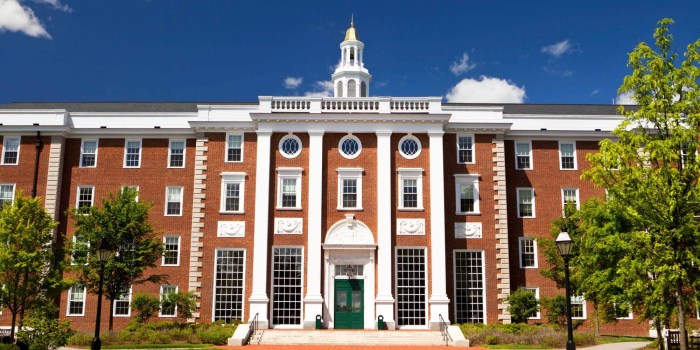
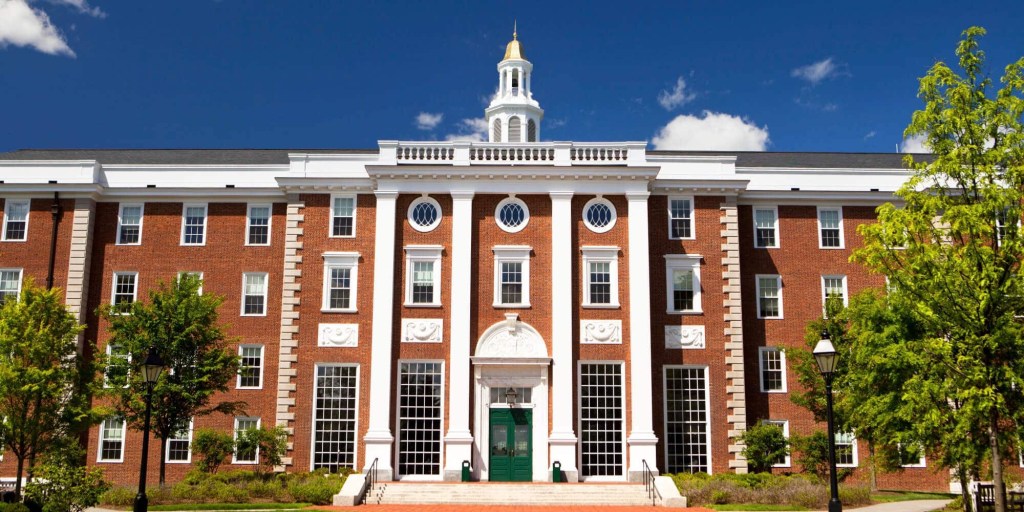
Harvard Expands Free Tuition to Families Earning Under $200,000

By Nkozi Knight

In a move aimed at expanding access to higher education, Harvard University announced Monday that it will offer free tuition to students from families earning $200,000 or less starting in the 2025-2026 academic year. This marks a significant expansion of the university’s financial aid program, further removing financial barriers for prospective students.

Students from families with incomes below $100,000 will also have all expenses covered, including housing, food, health insurance, and travel costs. Previously, Harvard provided full financial support only to students from families earning less than $85,000 annually.

“Putting Harvard within financial reach for more individuals widens the array of backgrounds, experiences, and perspectives that all of our students encounter, fostering their intellectual and personal growth,” said Harvard President Alan Garber.

While tuition alone at Harvard currently exceeds $56,000, total costs, including housing and other fees, approach $83,000 per year. The new policy will significantly lessen that burden for many American families.

Families earning above $200,000 may still qualify for tailored financial aid depending on individual circumstances.

This initiative aligns with similar policies at other elite institutions, like the Massachusetts Institute of Technology (MIT), which announced a comparable expansion last fall. Harvard estimates that 86% of U.S. families will now be eligible for some level of financial aid.

“Harvard has long sought to open our doors to the most talented students, no matter their financial circumstances,” said Hopkins Dean of the Faculty of Arts and Sciences. “This investment ensures that every admitted student can pursue their academic passions and contribute to shaping our future.”

The expansion comes amid broader conversations about diversity in higher education, especially following the Supreme Court’s ruling against affirmative action in college admissions. Harvard, along with other institutions like the University of Pennsylvania, views increased financial aid as a pathway to maintaining diversity by ensuring access to students from varied socioeconomic backgrounds.

“We know the most talented students come from different socioeconomic backgrounds and experiences, from every state and around the globe,” said William Fitzsimmons, Harvard’s dean of admissions and financial aid. “Our financial aid is critical to ensuring that these students know Harvard College is a place where they can thrive.”

This policy marks a continued effort to create a more inclusive and accessible environment at one of the nation’s most prestigious universities.

What Emmett Till’s Mother Taught Me About Grief and Justice

On Feb. 26, 2012, my entire life changed in ways that I could never imagine. Within an instant, after the brutal and inhumane killing of my son, …

What Emmett Till’s Mother Taught Me About Grief and Justice

Five ways of expanding your business internationally

The global economy is changing thanks to worldwide connectivity. Companies across the globe are communicating with others without delays or hassles …

Five ways of expanding your business internationally

7 Ways to Transform Your Money Mindset


The level of abundance in your life in any area (love, friendship, success or finances) is a reflection of your inner state — what you hold in your mind and heart.

Want to create a healthy and loving wealth consciousness? Here are seven ways to transform your money mindset.

1. Forgive your past.

So many of our unquestioned beliefs and behavior patterns today around money are simply things we picked up at childhood or our past. They are not true and they don’t serve our highest good.

Forgiveness is a way to release them from our heart and energy field, so we are no longer blindly re-creating the same patterns and keeping ourselves stuck at the same level of abundance.

Grab a piece of paper and write down all of the painful memories you have around money –involving your parents, lovers, bosses or even yourself — that make you feel icky, stressed, anxious or frustrated.

Now, go through your list and practice forgiveness until you release the negative charge from each memory. You could try:

(a) Using a mantra such as: I forgive you. I’m sorry. I love you.

(b) Placing your hand on your heart and simply letting yourself feel the emotions that arise — giving yourself permission to feel them fully without attaching a mental story to them. Often as you let your feelings rise and observe them without judgement, they will naturally dissolve.

(c) Having compassion. Maybe your parents fought in front of you or didn’t have enough money and it caused you pain, but they were doing their best from their level of awareness — and they were probably re-creating the patterns they had learnt when they were children. Everyone is a divine loving inner spirit deep down — sometimes our true nature just gets temporarily obscured, like a cloud covering the sun.

2. Change your story.

The poet Rumi once said: “This world is like a mountain. Your echo depends on you. If you scream good things, the world will give it back. If you scream bad things, the world will give it back.”

He is referring to the Universal law of creation. Your inner world (thoughts, beliefs and feelings) creates your outer reality.

Do you find yourself saying or thinking things like: I’m so broke… Making money is hard… I’m always down to my last dollar… I never have enough… Wanting money is bad or greedy…?

Try changing your story around money. Start saying and thinking things like: I’m so blessed… I have everything that I need… the Universe always takes care of me… I give to the world and I receive… it is safe for me to have abundance… I am provided for.

3. Open your mind to infinite possibilities.

When it comes to manifesting, your logical mind can be your worst enemy.

It has a limited capacity to think beyond what it already knows, and it can be quick to tell you things like: Well, you can’t earn more from your current job, so receiving more money is, frankly, impossible.

When you have unexamined assumptions that you can only receive money in certain pre-determined ways — like a pay cheque from a day job — you block the Universe from finding other amazingly creative ways to bring you abundance.

Begin asking the Universe: What would it take for more money to flow to me? What would it take for me to get paid for being me? What would it take for creative ideas to come to me?

4. Practice gratitude.

The world is a reflection of you. When you look around your life and see and feel lack, the Universe receives the message to send you more lack.

So many of us suffer from a condition called Onlyness. We look at our bank balance and think: I only have $42. We look at our wardrobes and think: I only have these clothes to choose from. We look at our lives and think: I only have this much love, friendship, success, wellbeing or happiness.

When you start looking around your life and seeing everything as evidence of abundance, and feeling thankful and deeply grateful, the Universe sends you more abundance.

Look at your bank balance and think: Wow, I have a whole $42 to spend, that’s awesome. Look at your wardrobe and thank: Wow, I have warm clothes for my temple, how amazing is that? Look at your life and think: Wow, I already have this much love, friendship, success, wellbeing and happiness, and I am excited for even more. I am so grateful to be alive, adventuring in time and space, and I am going to soak up and appreciate every moment.

Bless your money as it goes in and out of your life. Bless it as you buy something as simple as your morning coffee. Pause and give thanks to the Universe for providing so much for you.

5. Create space.

When your life is full to the brim with old energy, memories and clutter, you are not symbolically or energetically creating space for abundance to come into your life.

Do a life assessment — look lovingly and honestly at your home, possessions, bank balance, love life, friends, career, leisure time, wellbeing and lifestyle.

Where are you not being true to your heart, soul and values? What needs to go in order for you to feel freer, lighter and liberated?

The more you remove anything that no longer serves you, the more space you create — physically and emotionally — for new people, opportunities and abundance to flow into your life.

6. Know your worth.

You are a divine spiritual being having a human experience.

You are the Universe experience itself through you. Your creator desires for you to experience endless happiness, peace and fulfillment.

Until you know your true nature and worth, you will probably experience feelings of guilt and doubt around receiving and abundance.

When you wake up to who you really are, you begin to realize that you are not here just to struggle and survive – you are here to love, create, expand and thrive.

7. Take small steps to cultivate the feeling of abundance.

Abundance is not a number on a bank statement, a large house or a luxury holiday. Abundance is a feeling.

Think about what abundance means to you. Does it mean freedom? Does it mean generosity? Does it mean indulgence?

When you know what abundance means to you, you can start taking baby steps to cultivate the feeling of abundance on a daily basis.

You can do this through visualization (imagining your dreams already being real) or by looking around your life and coming up with creative ways to feel the way you want to feel.

Maybe you feel abundant when you: spend a whole hour with a good book and a glass of wine; cook dinner for friends; have freshly washed hair and wear your favorite outfit; or carry a $100 note in your wallet. Start doing these small actions more often.

When you create the feeling of abundance within you, the Universe will pick up your new signal and start bringing you circumstances to match your new vibration.

Elyse Santilli Writer and life coach at NotesOnBliss.com, your guidebook to happiness and creating a beautiful life

Elyse is a writer, life coach and happiness teacher at NotesOnBliss.com and the creator of the Beautiful Life Bootcamp online course. She teaches people to align with their inner spirit, design a life they love, and expand their happiness and inner peace. For updates and inspiration, sign up now.

Wisconsin Colleges and Universities by Cost in 2015

Below is a chart of Wisconsin colleges and universities from lowest to highest tuition cost.

Institution Name City In-State Cost Net Cost Website
Chippewa Valley Technical College Eau Claire $3,395 $8,555 Go
Madison Area Technical College Madison $3,666 $12,576 Go
Mid-State Technical College Wisconsin Rapids $3,666 $8,614 Go
Milwaukee Area Technical College Milwaukee $3,666 $9,071 Go
Blackhawk Technical College Janesville $3,666 $9,193 Go
Waukesha County Technical College Pewaukee $3,666 $9,122 Go
Moraine Park Technical College Fond du Lac $3,666 $9,617 Go
Western Technical College La Crosse $3,666 $8,802 Go
Northcentral Technical College Wausau $3,666 $9,188 Go
Fox Valley Technical College Appleton $3,666 $6,969 Go
Northeast Wisconsin Technical College Green Bay $3,666 $8,892 Go
Gateway Technical College Kenosha $3,666 $7,637 Go
Lakeshore Technical College Cleveland $3,666 $7,261 Go
Southwest Wisconsin Technical College Fennimore $3,667 $7,590 Go
Wisconsin Indianhead Technical College Shell Lake $3,910 $8,567 Go
Nicolet Area Technical College Rhinelander $4,039 $6,487 Go
Lac Courte Oreilles Ojibwa Community College Hayward $4,560 $6,609 Go
University of Wisconsin Colleges Madison $4,750 $8,410 Go
College of Menominee Nation Keshena $6,000 N/A Go
University of Wisconsin-Stevens Point Stevens Point $6,298 $11,820 Go
University of Wisconsin-Green Bay Green Bay $6,298 $11,557 Go
University of Wisconsin-Parkside Kenosha $6,298 $9,348 Go
University of Wisconsin-Platteville Platteville $6,418 $12,952 Go
University of Wisconsin-Oshkosh Oshkosh $6,422 $11,703 Go
University of Wisconsin-River Falls River Falls $6,428 $12,014 Go
           
Institution Name City In-State Cost Net Cost Website
University of Wisconsin-Whitewater Whitewater $6,519 $11,332 Go
University of Wisconsin-Superior Superior $6,535 $11,565 Go
University of Wisconsin-Stout Menomonie $7,014 $14,264 Go
University of Wisconsin-Eau Claire Eau Claire $7,361 $12,940 Go
University of Wisconsin-La Crosse La Crosse $7,585 $12,927 Go
University of Wisconsin-Milwaukee Milwaukee $8,091 $14,882 Go
University of Wisconsin-Madison Madison $9,273 $16,536 Go
University of Phoenix-Milwaukee Campus Milwaukee $10,560 N/A Go
Rasmussen College-Wisconsin Green Bay $10,764 N/A Go
Herzing University-Kenosha Kenosha $11,150 N/A Go
Herzing University-Brookfield Brookfield $11,150 N/A Go
Herzing University-Madison Madison $11,150 N/A Go
Maranatha Baptist University Watertown $11,980 N/A Go
Northland International University Dunbar $12,290 N/A Go
Anthem College-Brookfield Brookfield $13,806 N/A Go
Globe University-Madison East Madison $14,040 N/A Go
Globe University–Green Bay Green Bay $14,040 N/A Go
Globe University–Madison West Middleton $14,040 N/A Go
Globe University–Wausau Rothschild $14,040 N/A Go
Globe University-La Crosse Onalaska $14,040 N/A Go
Globe University-Appleton Grand Chute $14,040 N/A Go
Globe University-Eau Claire Eau Claire $14,040 N/A Go
The Art Institute of Wisconsin Milwaukee $14,868 N/A Go
Strayer University-Wisconsin Milwaukee $15,300 N/A Go
DeVry University-Wisconsin Milwaukee $15,930 N/A Go
Madison Media Institute Madison $16,309 N/A Go
Bryant & Stratton College-Milwaukee Milwaukee $16,530 N/A Go
Bryant & Stratton College-Wauwatosa Wauwatosa $16,530 N/A Go
Bryant & Stratton College-Bayshore Glendale $16,530 N/A Go
Bellin College Green Bay $20,000 N/A Go
Lakeland College Plymouth $21,960 N/A Go
Alverno College Milwaukee $22,656 N/A Go
Viterbo University La Crosse $22,740 N/A Go
Silver Lake College of the Holy Family Manitowoc $22,950 N/A Go
Marian University Fond Du Lac $24,300 N/A Go
Mount Mary University Milwaukee $24,598 N/A Go
Wisconsin Lutheran College Milwaukee $24,620 N/A Go
Edgewood College Madison $24,666 N/A Go
Cardinal Stritch University Milwaukee $24,800 N/A Go
Concordia University-Wisconsin Mequon $24,930 N/A Go
Carroll University Waukesha $27,039 N/A Go
Northland College Ashland $29,000 N/A Go
Milwaukee Institute of Art & Design Milwaukee $29,474 N/A Go
Saint Norbert College De Pere $31,266 N/A Go
Ripon College Ripon $31,329 N/A Go
Milwaukee School of Engineering Milwaukee $32,880 N/A Go
Marquette University Milwaukee $34,200 N/A Go
Carthage College Kenosha $34,850 N/A Go
Lawrence University Appleton $40,926 N/A Go
Beloit College Beloit $40,970 N/A Go

2015 University Rankings- Wisconsin

11 Top-Ranked Wisconsin Colleges and Universities

Top Ranked Universities in Wisconsin- Highest Overall School Score