We are taught that success is a matter of effort and time. Keep your head down. Do the work. Stay loyal. That path built many careers. It also blinds many people to a quieter truth. Sometimes the most valuable move is to leave before the role leaves you.
Workplaces are changing faster than job descriptions. Automation absorbs routine tasks. Teams are reorganized to chase efficiency. Hiring broadens across borders and time zones. The game rewards adaptability and clear value creation more than tenure. In that world staying put out of habit can become the most expensive decision you make.
Quiet quitting got the headlines. The real danger is quiet stagnation. You keep delivering while the organization shifts around you. The learning curve flattens. Budgets tilt toward tools and roles that scale. Your calendar fills up while your market value stands still. It feels safe. It is not.
Walking away is not drama. It is strategy. The test is blunt. Does this role increase your value a year from now. Will you gain judgment, relationships, and outcomes that a tool cannot replicate. Are you closer to decisions or only to tasks. If the answers are unclear, your growth is elsewhere.
Leaving does not always mean leaving the company. It can mean moving away from the wrong team, the wrong product line, or the wrong client mix. It can mean choosing work that sits beside the machines rather than beneath them. Human judgment, trust building, original insight, and accountable ownership remain scarce. Aim your career at the work that needs a signature, not just a keyboard.
Global hiring and visa policies will keep shifting. So will the conversation about who gets which jobs. The best answer is not resentment. It is readiness. Build skills that travel across industries. Learn the systems that drive your field so you can direct them rather than compete with them. Grow relationships that outlast titles and managers. When your value is obvious and portable, market cycles do not scare you.
Leaders face a parallel choice. Use new technology to strip meaning from work and your best people will leave first. Use it to remove drudgery while investing in clear ladders and real learning and your best people will build with you. Markets reward firms that pair efficiency with dignity.
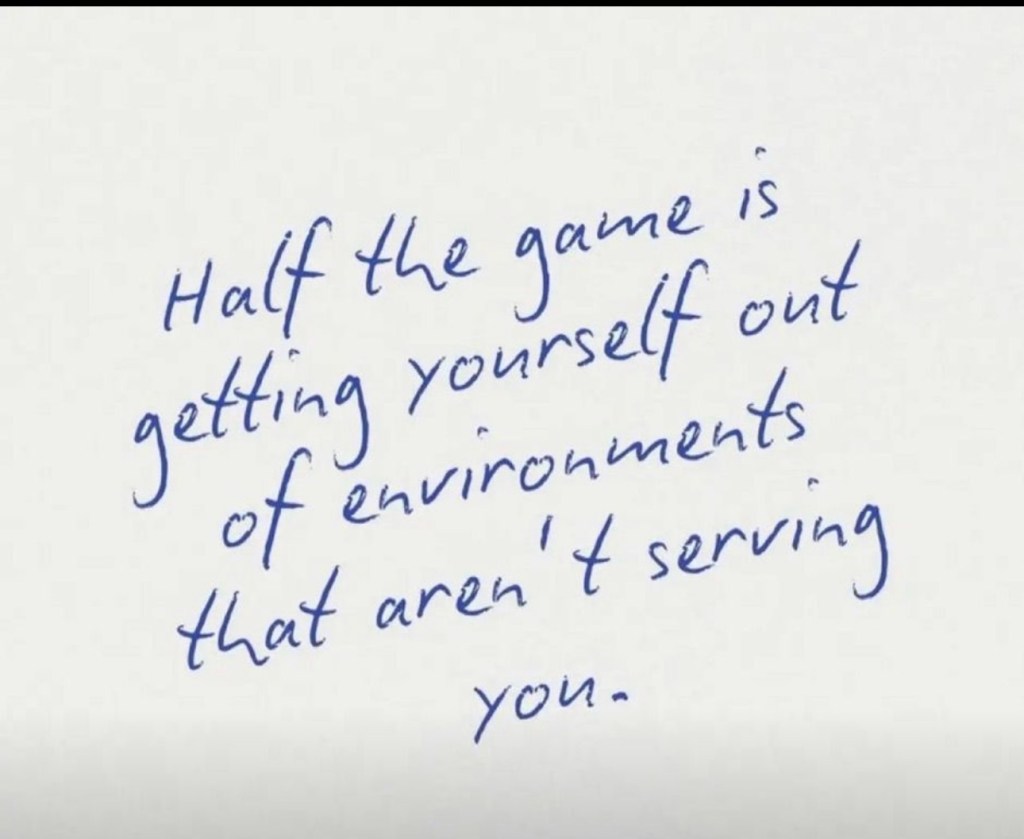
The hardest part of leaving is the story we tell ourselves. We equate exit with failure. We confuse loyalty with growth. We wait for a sign that never comes. Here is the truth. Growth rarely happens in rooms that mute your voice or drain your energy. If the space no longer fits the person you are becoming, it is time to choose a new space.
Staying can be brave when it compounds your value. Staying can be costly when it does not. The opportunity you want is seldom waiting at the desk you have. Choose your arena with care. If the work no longer deserves you, walk away.
We tell ourselves that success comes from more effort and more time. That belief still matters. Yet in 2025 another truth is just as important. Half the game is choosing where you spend your effort in the first place. Sometimes the smart move is to walk away.
The labor market is reshaping itself in real time. Generative AI tools now handle work that once kept whole teams busy. Companies are reorganizing to chase efficiency and speed. Leadership teams are under pressure to do more with fewer people. Global talent markets are wide open. H1B holders bring real skill and many firms are recruiting globally before they look locally. None of this is a moral judgment. It is the environment. In this environment staying put out of habit can become the most expensive decision you make.
Silent quitting defined the last few years. People stayed but pulled back. In 2025 the bigger risk is silent stagnation. You keep delivering while the org chart keeps shifting. Systems take over routine tasks. Budgets move to automation and to roles that can scale. If your seat does not compound your skills or your network, the clock is already ticking even if you cannot hear it.
Walking away is not drama. It is strategy. The question is simple. Does this role increase your value twelve months from now. If the honest answer is no, the cost of loyalty is too high. Loyalty to your future is the only loyalty that compounds.
To evaluate your situation ask yourself whether the outcomes you deliver are unique to your skill set or whether a model could replace them. Consider whether the learning curve in your current role is still steep or if you are repeating cycles that add little to your future. Reflect on whether your work places you near decision makers or keeps you locked in execution only. And finally, consider whether the relationships you build today will serve you tomorrow. These questions offer quiet clarity that no performance review will provide.
Leaving does not always mean quitting your employer. It can mean walking away from the wrong team, the wrong leader, the wrong product line, or the wrong client mix. It can mean seeking roles that sit beside the machines rather than beneath them. Human judgment, trust building, original insight, and accountable ownership remain scarce. Aim your career at the work that needs a signature, not just a keyboard.
The H1B debate is loud this year and will stay loud. The best response is not resentment. It is readiness. Build competencies that translate across industries. Learn the tools that drive your field so you can direct them rather than compete with them. Grow relationships that outlast any single title. When your value is clear and portable you will not fear any policy cycle.
For leaders the message is just as direct. People are watching how you treat them during this transition. If you use AI to strip away meaningful work without creating new ladders, your best people will exit first. If you invest in upskilling and in clear career paths, your organization will retain its core talent and attract more. Markets reward firms that act with clarity and care at the same time.
The choice to walk away is never easy. It asks for courage and a clear view of the road ahead. Yet the market is telling the truth every day. Growth rarely happens in places that mute your voice or drain your energy. If the room you are in no longer fits the person you are becoming, it is time to leave the room.
In 2025 the winners will not be those who simply grind harder. They will be those who choose their arenas wisely and walk away when the environment no longer deserves them.
Many of us do not realize that private equity firms has always been about extraction, not creation. The model is simple. Borrow heavily, buy a company, slash jobs and benefits, sell off assets, and walk away with fees long before the damage shows. Communities are left with shuttered stores, abandoned buildings, bankrupt chains, and broken promises.
The list of casualties is long. Toys “R” Us was loaded with more than $5 billion dollars in debt by Bain Capital and KKR before it collapsed, taking 30,000 jobs with it. Payless ShoeSource closed its doors, erasing 18,000 jobs. J. Crew, Gymboree, Shopko, Forever 21, and Sears each followed the same path. Behind nearly every failure was a private equity deal that turned once-profitable companies into vehicles for debt. Blackstone, the largest of them all, drew criticism for gutting nursing homes and rental housing, where residents and tenants bore the consequences. Carlyle, Apollo, and Sycamore Partners engineered deals that enriched executives while leaving behind bankruptcies across retail, energy, and health care.
The damage has never been limited to debt. Private equity firms extract billions in fees on top of what they load onto companies. They sell the land and buildings, forcing the very businesses they own to pay rent back to them. In franchise models, they skim off royalty payments while cutting services and staff. They charge management fees to companies they already control, ensuring that even if a business fails, the firm still profits. These practices are not side effects. They are the business model.
For years the system ran on cheap money. With interest rates near zero, debt was abundant and investors were eager. Firms could buy, bleed, and flip companies in two or three years. That era is gone. Interest rates now sit above five percent. Debt costs more, buyers are scarce, and the IPO market has dried up. Firms are stuck holding companies that are drowning under the very leverage designed to enrich their owners.
The numbers are staggering. Nearly $12 trillion dollars in private equity assets now sit unsold. Exit activity has collapsed more than 70 percent since 2021. To raise cash, firms are borrowing against their own portfolios with NAV loans or dumping stakes at steep discounts on the secondary market. Even the giants like Blackstone, KKR, Apollo, Carlyle, Bain are stuck with bad debt no one wants. They cannot sell, yet their investors are demanding cash.
The quiet truth is that these firms are already maneuvering for Washington’s help. During the 2008 financial crisis, banks and insurers were rescued with taxpayer dollars. Private equity, which profited handsomely off that same collapse, is positioning itself for similar treatment.
This is not just an elite problem. It is a national one. When private equity runs out of road, it is not the billionaire partners who suffer. It is the workers whose jobs are cut, the retirees whose pensions cannot meet obligations, the students whose tuition rises because endowments cannot keep pace, and the taxpayers who are asked to backstop the system.
The parallels to 2008 are frightening. Then it was mortgage backed securities. Now it is unsellable companies and illiquid funds. In 2008, families lost homes and jobs while Wall Street was saved. Today the scale is even larger. With trillions in assets frozen, the next bailout could dwarf the last one.
Meanwhile, private equity’s destruction also extends into America’s hospitals and nursing homes and people are paying with their lives. Studies show that Medicare patients undergoing emergency surgeries in private equity–owned hospitals are 42 percent more likely to die within 30 days compared to those treated in community hospitals . A nationwide study found infections, falls, and other preventable adverse events increased following private equity takeovers of hospitals . Even the U.S. Department of Health and Human Services condemned the impact, warning that private equity ownership of nursing homes led to an 11 percent increase in patient deaths .
Recent reporting shows the financial calculus behind these tragedies. Nursing home operators in New York’s Capital Region diverted Medicare and Medicaid funds through inflated rent and bogus salaries. That left facilities chronically understaffed and suffering neglect so severe that it led to cases of serious injury and death .
By turning hospitals and nursing homes into profit centers rather than care centers, private equity firms aren’t just bankrupting businesses, they are literally killing people. And when that business model collapses, it will be everyday Americans who pay the cost once again.
The message is not subtle. If private equity’s gamble fails, the richest players will once again be saved. For ordinary Americans, the reckoning will look like it always does. Lost jobs. Higher taxes. Vanishing pensions. Rising tuition. And another generation paying for someone else’s greed.
This is the American cycle. The profits are privatized, the losses are socialized, and working families are forced to carry the cost.
In an age where social media rewards volume over value, the meaning of thought leadership has been diminished. The term once represented a blend of deep expertise, strategic clarity, and intellectual influence. Today, it is often misapplied to anyone who posts frequently enough to generate a following.
But real thought leadership is not a popularity contest. It is a responsibility. It involves translating lived experience into insight that others can use to make better decisions and solve meaningful problems.
The Misunderstanding of Thought Leadership
Far too often, we confuse visibility with credibility. A viral post may spark attention but attention alone does not drive transformation. A thought leader is not someone who talks the most. A thought leader is someone whose ideas stand the test of time and scrutiny.
The best thought leaders are not self-promoters. They are systems thinkers. They do not speak just to be heard. They offer clarity in complexity. They invite others into deeper understanding.
Three Requirements for Lasting Impact
1. Experience that Teaches
Effective thought leaders have done the work. They have led initiatives, built organizations, navigated risk, and owned the consequences of their decisions. Their insights are not theoretical. They are earned in practice.
2. The Willingness to Challenge Assumptions
True leadership involves asking uncomfortable questions. It means examining what is outdated, misaligned, or unspoken. Whether in corporate strategy, health equity, or entrepreneurship, progress depends on those willing to challenge the default settings of their industry.
3. A Commitment to Building Tools, Not Just Talk
Thought leadership is not just about inspiration. It is about utility. The most influential leaders provide frameworks, resources, and systems that others can adopt. They empower others to lead without needing to be the loudest voice in the room.
A Perspective from Business and Community
As someone who has worked across strategy, entrepreneurship, and community development, I believe thought leadership is most powerful when it is rooted in purpose. Whether scaling a business, coaching organizations on OKRs and KPIs, or mentoring young professionals, my focus is always on bridging strategic intent with meaningful outcomes.
Leadership is not about being the smartest person in the room. It is about making the room smarter. It is not about being first. It is about leaving a structure behind that others can use to go further.
Final Reflection
Thought leadership is not a marketing strategy. It is a discipline. It requires humility, consistency, and the ability to add value without needing validation. In a world full of noise, the leaders who will matter are the ones who think clearly, speak carefully, and act with intention
In a move aimed at expanding access to higher education, Harvard University announced Monday that it will offer free tuition to students from families earning $200,000 or less starting in the 2025-2026 academic year. This marks a significant expansion of the university’s financial aid program, further removing financial barriers for prospective students.
Students from families with incomes below $100,000 will also have all expenses covered, including housing, food, health insurance, and travel costs. Previously, Harvard provided full financial support only to students from families earning less than $85,000 annually.
“Putting Harvard within financial reach for more individuals widens the array of backgrounds, experiences, and perspectives that all of our students encounter, fostering their intellectual and personal growth,” said Harvard President Alan Garber.
While tuition alone at Harvard currently exceeds $56,000, total costs, including housing and other fees, approach $83,000 per year. The new policy will significantly lessen that burden for many American families.
Families earning above $200,000 may still qualify for tailored financial aid depending on individual circumstances.
This initiative aligns with similar policies at other elite institutions, like the Massachusetts Institute of Technology (MIT), which announced a comparable expansion last fall. Harvard estimates that 86% of U.S. families will now be eligible for some level of financial aid.
“Harvard has long sought to open our doors to the most talented students, no matter their financial circumstances,” said Hopkins Dean of the Faculty of Arts and Sciences. “This investment ensures that every admitted student can pursue their academic passions and contribute to shaping our future.”
The expansion comes amid broader conversations about diversity in higher education, especially following the Supreme Court’s ruling against affirmative action in college admissions. Harvard, along with other institutions like the University of Pennsylvania, views increased financial aid as a pathway to maintaining diversity by ensuring access to students from varied socioeconomic backgrounds.
“We know the most talented students come from different socioeconomic backgrounds and experiences, from every state and around the globe,” said William Fitzsimmons, Harvard’s dean of admissions and financial aid. “Our financial aid is critical to ensuring that these students know Harvard College is a place where they can thrive.”
This policy marks a continued effort to create a more inclusive and accessible environment at one of the nation’s most prestigious universities.
The dawn of generative artificial intelligence (AI) is not merely a technological milestone but a transformative force poised to touch every corner of our lives, reshaping the fabric of our world. Imagine a future where AI-driven systems enhance learning experiences in classrooms from rural villages to urban centers, personalize healthcare treatments globally, and revolutionize businesses, driving unprecedented innovation and efficiency. The potential for AI to create new opportunities and solve complex problems is immense, making it a topic of critical importance for everyone from tech enthusiasts to policymakers, but most importantly for everyday citizens.
A Revolution in Our Society
Generative AI has begun to alter the societal landscape significantly. Major advancements by platforms like OpenAI’s ChatGPT and Google’s Gemini Advanced demonstrate AI’s capabilities in creating human-like text and solving complex problems. These tools are increasingly integrated into customer service, content creation, and strategic decision-making processes. According to McKinsey, over 55% of organizations now use AI in at least one business unit, up from 20% in 2017 .
This surge in adoption highlights the tangible benefits of AI, such as cost reductions and revenue increases. For instance, the use of AI in human resources has led to significant cost savings, while its application in supply chain management has boosted revenues by over 5% . However, this rapid integration is not without challenges, as issues like data privacy, intellectual property, and the accuracy of AI outputs remain pressing concerns .
Education: A New Frontier
In the realm of education, generative AI is revolutionizing how students learn and educators teach. AI-driven platforms are providing personalized learning experiences, adaptive testing, and real-time feedback, thereby making education more accessible and tailored to individual needs. Google’s Gemini Advanced, for example, can create interactive learning modules that adapt to a student’s progress, enhancing engagement and retention.
According to UNESCO, the thoughtful integration of AI into education systems can support lifelong learning and bridge educational gaps by providing resources to underprivileged communities . However, there is a caveat; an over-reliance on technology without adequate human oversight could undermine educational standards and equity.
Business Innovations
Generative AI is also making waves in the business sector, driving operational efficiencies and strategic advancements. Companies are leveraging AI for marketing, sales, product development, and customer engagement. Deloitte’s insights reveal that businesses are moving from pilot projects to large-scale AI deployments, aiming to realize tangible benefits such as improved efficiency and innovation .
AI-driven analytics are enabling businesses to make more informed decisions, ultimately driving growth and competitiveness. For example, AI’s ability to analyze vast amounts of data quickly and accurately helps companies to identify market trends, optimize supply chains, and enhance customer experiences.
Comparing AI Platforms
Different AI platforms bring unique strengths to the table. Here’s a detailed comparison of some leading generative AI tools:
OpenAI’s ChatGPT is exceptional at natural language generation, versatile across multiple domains including customer service, creative writing, and coding assistance. It’s best suited for general-purpose use, especially for enterprises needing versatile AI capabilities.
Google’s Gemini Advanced integrates seamlessly with Google services, providing real-time internet data and robust solutions for data analytics and enterprise applications. It’s ideal for businesses looking for deep integration with Google’s ecosystem, real-time data processing, and enhanced search capabilities.
Apple’s AI system focuses on privacy-centric AI solutions, ensuring secure data management while delivering powerful performance. This makes it a great choice for users and organizations prioritizing data privacy and security.
Microsoft’s Copilot is integrated with the Microsoft Office Suite, enhancing productivity tools like Word and Excel with AI capabilities. It’s perfect for office productivity enhancements, particularly for enterprises that extensively use Microsoft products.
Anthropic’s Claude emphasizes safety and ethical AI use, with a customizable conversational tone and a large context window. It’s best for ethical AI applications and businesses needing secure content generation.
Cohere’s Generate (Command) offers straightforward API integration for text generation, focusing on business use cases like copywriting and data extraction. This tool is well-suited for businesses needing seamless API integration for text generation and analysis.
Midjourney excels at creating artistic and highly stylized images, making it ideal for creative industries and artists looking to enhance their visual content.
DALL·E 3 is easy to use for AI image generation, capable of creating photorealistic and imaginative visuals. It’s best for marketing, design, and any application requiring high-quality images.
These platforms reflect the diverse approaches tech giants are taking to capture the AI market. OpenAI’s emphasis on broad accessibility contrasts with Google’s enterprise-focused strategies and Apple’s commitment to privacy, catering to varied user needs and preferences .
Societal Implications
Generative AI’s societal impact extends beyond business and education. It influences cultural production, healthcare, and even social interactions. AI-generated content, such as music and art, challenges traditional notions of creativity and authorship. In healthcare, AI-driven diagnostic tools and personalized treatment plans are revolutionizing patient care, offering more accurate and timely interventions .
However, these advancements come with ethical considerations. The potential for job displacement, biases in AI algorithms, and the need for regulatory frameworks are critical issues that society must address. Ensuring that AI development is inclusive and benefits all segments of society is paramount.
As generative AI continues to evolve, its role in shaping our future becomes increasingly significant. Whether in classrooms, boardrooms, or everyday life, AI is set to redefine the parameters of possibility, ushering in an era of unprecedented innovation and change.
For more insights on AI and its impact, visit NkoziKnight.com.
Effective change management is crucial for the success of your projects and the growth of your organization. One popular and proven approach is the LaMarsh Global Managed Change™ Model. This post will not only explore the key components of the LaMarsh Change Management Model but also delve into how it stands out from other models and the situations where it is the most effective. By understanding this model, project managers and change agents can navigate the complexities of organizational change with greater confidence and success.
The LaMarsh Change Management Model
Developed by LaMarsh Global, the Managed Change™ Model is a structured, systematic approach to managing change in organizations. It is designed to help project managers identify, address, and overcome the barriers to successful change implementation. The LaMarsh Model consists of three main components:
Change management process
Change management roles
Change management competencies
The change management process in the LaMarsh Model is divided into three primary stages: Identify, Analyze, and Implement & Sustain. In the Identify stage, you will recognize the need for change and define the desired outcomes. The Analyze stage involves understanding potential risks, barriers, and the impact of the change on your organization. Finally, the Implement & Sustain stage is about creating a change management plan, executing it, and monitoring its progress.
The LaMarsh Model identifies four key roles in change management: Change Sponsor, Change Agent, Target, and Advocate. Each of these roles has distinct responsibilities, and their successful collaboration is essential for effective change management.
Developing change management competencies within an organization is a vital aspect of the LaMarsh Model. These competencies include communication, learning, collaboration, and problem-solving, which are all crucial for navigating the change process.
How the LaMarsh Model Differs from Other Change Management Models
While there are several change management models available, the LaMarsh Model stands out in three distinct ways:
Flexibility: Unlike some other change management models, the LaMarsh Model is designed to be adaptable to a wide range of organizations and industries. Its flexibility allows it to be applied in various situations and tailored to the unique needs and challenges of each organization.
Focus on roles and competencies: The LaMarsh Model places significant emphasis on the importance of clearly defined roles and the development of change management competencies within an organization. This focus on roles and competencies ensures that everyone involved in the change process understands their responsibilities and is equipped to perform them effectively.
Emphasis on sustainability: While some change management models focus primarily on the implementation of change, the LaMarsh Model also emphasizes the need to sustain the change over time. By including reinforcement and measurement in the Implement & Sustain stage, this model ensures that the change becomes embedded in the organization’s culture and processes, leading to lasting success.
When to Choose the LaMarsh Change Management Model
The LaMarsh Change Management Model is particularly well-suited for the following scenarios:
Complex, organization-wide change: The flexibility and structure of the LaMarsh Model make it an excellent choice for managing complex changes that involve multiple departments or functions within an organization.
Changes requiring collaboration and buy-in from various stakeholders: The LaMarsh Model’s emphasis on roles and competencies ensures that everyone involved in the change process understands their responsibilities and is committed to the success of the change. This can be especially beneficial in scenarios where collaboration and buy-in from various stakeholders are critical.
Long-term, sustainable change: If your goal is to implement a change that lasts and becomes embedded in your organization’s culture and processes, the LaMarsh Model’s focus on sustainability makes it an ideal choice.
The LaMarsh Change Management Model offers project managers a structured, systematic approach to managing organizational change. By understanding the change management process, roles, and competencies, as well as how the model differs from other change management models and when it is preferable, you can improve your ability to navigate change and drive the success of your projects. Embracing the LaMarsh Model can be a valuable step in your journey as a project manager, helping you create positive, lasting impact within your organization. As you delve into the world of change management, armed with the knowledge of the LaMarsh Model, you’ll be better prepared to tackle challenges head-on and inspire others to embrace change, ensuring a brighter future for your organization.
Do you dream of a platform that not only sharpens your speaking prowess but also unites you with a community of driven professionals who share your passion? Search no more! Engaging Speakers is the ultimate destination for you. Continue reading to discover how embracing a membership and becoming a Chapter Director with Engaging Speakers can propel your speaking career to unparalleled heights and inspire you to act today.
Join a Supportive Community of Professionals
One of the primary benefits of Engaging Speakers is the opportunity to become part of a diverse and supportive community of professionals. By signing up as a member, you gain access to a network of speakers, entrepreneurs, and business owners who are dedicated to helping one another grow and succeed. This collaborative environment is perfect for fostering new connections and learning from others’ experiences.
Master Your Speaking Skills
Engaging Speakers offers its members numerous opportunities to improve their public speaking skills. With various workshops, webinars, and coaching sessions, you will be able to refine your craft, overcome stage fright, and deliver powerful messages with confidence. As a chapter director, you will have the opportunity to share your expertise with others, enabling you to grow as a speaker and leader.
Enhance Your Visibility and Credibility
Becoming a member of Engaging Speakers not only helps you improve your speaking skills but also increases your visibility and credibility within the industry. As a chapter director, you will have the opportunity to promote your business or brand through Engaging Speakers’ website, social media platforms, and events. This exposure will help you establish yourself as an authority in your field, attracting potential clients and opportunities.
Access to Exclusive Resources and Opportunities
Engaging Speakers offers its members an array of exclusive resources and opportunities. From receiving discounts on professional services to attending exclusive networking events, members enjoy numerous benefits. As a chapter director, you will have the chance to facilitate and organize events, creating opportunities for yourself and fellow members to connect, learn, and grow.
Give Back to the Community
Serving as a Chapter Director with Engaging Speakers is not only about personal growth but also about giving back to the community. By organizing events, sharing knowledge, and supporting fellow members, you will contribute to the overall development of the speaking community. This experience can be incredibly rewarding and fulfilling, as you witness the impact your efforts have on others.
Get Involved Today
Becoming a member and Chapter Director with Engaging Speakers is a game-changer for anyone looking to elevate their speaking career. With access to a supportive community, countless resources, and opportunities for growth, Engaging Speakers sets you on the path to success. Don’t miss out on this fantastic opportunity – sign up today and embark on an exciting journey towards becoming an influential speaker.
To learn more about Engaging Speakers and explore opportunities for involvement, feel free to reach out to us via email at info@engagingspeakers.com or give us a call at 800-689-1277.
Over the past few years, the rise of remote work and the need for social distancing have transformed video conferencing tools like Zoom into a ubiquitous communication platform. While these virtual meetings have enabled people to stay connected and productive, many have also reported feeling excessively tired and sleepy after participating in them. In this article, we will explore the reasons behind this phenomenon, often referred to as ‘Zoom fatigue,’ and discuss ways to mitigate its effects.
Reduced Non-verbal Communication
One of the primary reasons for Zoom fatigue is the inherent limitations of non-verbal communication in video calls. In face-to-face interactions, we rely on a plethora of non-verbal cues, such as body language, facial expressions, and tone of voice, to fully grasp the meaning behind someone’s words. However, video calls make it challenging to perceive these cues, as participants often appear in small windows with limited visibility. This forces our brains to work harder to decipher the information, leading to cognitive overload and, ultimately, fatigue.
Constant Self-awareness
Another factor contributing to Zoom fatigue is the increased self-awareness that comes with being on camera. Many people find it difficult to ignore their own video feed, leading to a heightened sense of self-consciousness. This constant self-monitoring can be mentally draining and may cause feelings of exhaustion.
Lack of Physical Movement
During in-person meetings, participants could move around, stretch their legs, and change their posture. In contrast, video calls often require attendees to remain seated and relatively stationary in front of their screens. This lack of physical movement can lead to stiffness, discomfort, and drowsiness.
Screen Overload
In today’s digital world, many of us spend a significant portion of our day staring at screens. Adding video calls to an already screen-heavy routine can exacerbate eye strain and lead to a feeling of fatigue. Moreover, the blue light emitted by screens can disrupt our circadian rhythms, making it more difficult to fall asleep at night.
Back-to-Back Meetings
In a remote work environment, back-to-back video calls are a common occurrence. Without the natural breaks that come with in-person meetings, such as walking to a different room or engaging in casual conversation, Zoom meetings can become an unrelenting series of virtual encounters. This lack of downtime between meetings can contribute to mental exhaustion and feelings of sleepiness.
Strategies to Combat Zoom Fatigue
Schedule Breaks: Allocate time for short breaks between meetings to allow your brain to rest and recharge.
Encourage Movement: Stand up, stretch, or walk around during video calls to maintain energy levels and reduce stiffness.
Limit Screen Time: Schedule regular screen-free periods throughout your day to reduce eye strain and fatigue.
Use Audio-only Calls: When appropriate, switch to audio-only calls to give your eyes a break and reduce self-consciousness.
Optimize Your Environment: Ensure your workspace is well-lit and ergonomic to minimize physical discomfort and promote alertness.
Zoom fatigue is a real and prevalent issue faced by many people participating in video conference meetings. By understanding the factors that contribute to this exhaustion, we can take steps to minimize its impact and maintain our energy levels throughout the workday.
The rapidly evolving technology landscape is altering the world of work, transforming how organizations operate and the roles that employees hold. Over the next decade, we can expect significant shifts in the United States’ job market, with some careers experiencing exponential growth, while others decline. This blog post delves into the trending careers while exploring the impact of technology on employment and companies across various industries.
Trending Careers: Riding the Wave of Technological Advancements
Healthcare Professionals: As the U.S. population continues to age, there is an increasing demand for healthcare services. This need will fuel the growth of jobs in healthcare, such as physicians, nurses, and other medical practitioners. Technological advancements, including telemedicine, medical devices, and health informatics, will also create new opportunities in the industry.
Data Science and Analytics: With the exponential growth of data, businesses are increasingly relying on data-driven insights to make informed decisions. As a result, data science and analytics professionals will be in high demand, with roles like data analysts, data engineers, and data scientists becoming increasingly important.
Cybersecurity Experts: As technology becomes more sophisticated, the threat of cyber-attacks also grows. Consequently, the need for skilled cybersecurity professionals will continue to rise, ensuring the protection of valuable data and digital assets.
Renewable Energy Specialists: Climate change and sustainable energy concerns are driving the growth of the renewable energy sector. Professionals in solar, wind, and other renewable energy fields will see an increased demand for their expertise as countries transition towards more sustainable energy sources.
Mental Health: The increased awareness and focus on mental health will drive job growth in this sector. Counselors, therapists, and psychologists will be in high demand as society continues to prioritize mental health while using data to treat mental health issues faster.
Technology: The tech industry will continue to flourish, creating jobs in areas like artificial intelligence, machine learning, and cybersecurity as mentioned previously. Specialists in data analysis, software development, and information security will be highly sought after.
The future of work in the United States will be led by a continued shift towards technological careers, healthcare, data and renewable energy. While some industries will see growth, others will decline, and workers will need to be adaptable and flexible in order to stay competitive. As technology continues to evolve, it will be critical for workers to develop new skills and expertise in order to stay relevant and valuable in the job market now and in the future.

















 Nkozi Knight