What Happens When Life Breaks Wide Open

Life has a way of humbling you. Sometimes gently. But more often like a truck running a red light right into you. One day you think you’ve figured it out. You’ve got the great career, the suburban house, the beautiful family, the plan. Then suddenly, everything shifts. For me, it was a divorce after 15 years of marriage, right in the middle of a global pandemic that some of you may remember. Just when I thought things couldn’t get more uncertain, the world got even more expensive, even more unstable, and somehow, even more confusing as a newly single man.

We were all sold this idea that if you worked hard, followed the rules, and did the “right things,” life would reward you. But the truth is, life doesn’t care about your checklist. And that’s not necessarily a bad thing. Sometimes the very thing that feels like a failure is the doorway to something more real, more free, more honest.

I’ve learned that change doesn’t always come with a warning. Sometimes it shows up in a quiet moment. A look. A bill. A diagnosis. A conversation you didn’t want to have. And while it can shake your foundation, it also gives you a shot at rebuilding with intention. But that starts with facing the moment, not avoiding it and not numbing it.

Most of the time, the breaking doesn’t come all at once. It’s subtle. It’s in the slow fade of the things you used to laugh about. The quiet tension over dinner. The way your job starts to feel more like a burden than a blessing. It’s not always dramatic. Sometimes it’s just the weight of little things stacking up until you realize you can’t carry it anymore.

Looking back, the signs were there. But life has a way of keeping you busy enough not to see what’s slipping away. You focus on the next goal, the next deadline, the next vacation that’s supposed to fix everything. Meanwhile, your relationships go unchecked. Your peace gets traded for productivity. And before you know it, you’re living a life you no longer recognize.

I’ve come to believe that what feels like everything falling apart is often just life shaking loose what you’ve outgrown. The roles. The routines. The relationships. But because we’ve poured so much of ourselves into them, letting go feels like failure. Even when deep down we know it’s time.

Then comes the moment you can’t ignore. The conversation that ends it. The letter. The job loss. The diagnosis. The silence in your house that used to be full of laughter. Whatever it is, it hits hard. Suddenly you’re standing in the middle of your life wondering what the hell just happened.

For me, it wasn’t just the divorce. I didn’t just lose my wife. I lost my best friend, my movie partner, the person I confided in when the world felt too heavy. The silence after that kind of loss is brutal. It’s not just about adjusting to being alone. It’s about feeling like your future got wiped clean, and not in a good way.

The hardest part? Watching my kids adjust to it all. One week with me, one week with her. Backpacks moving back and forth like we were trading pieces of a life we built together. You do your best to keep it stable for them, but behind the smiles and routines, you know they’re trying to figure it out just like you are.

And then there’s the dating world, which, let me tell you, is a whole other nightmare when you’re in your 40s. I didn’t know how to date anymore. What do you even say on an app? “Hey, I’m emotionally complex and have a joint custody schedule, swipe right?” It’s awkward, exhausting, and sometimes just plain sad if I’m being honest. Nobody tells you how hard it is to start over in a world where people would rather text than talk, scroll than connect, and ghost you before they ever get to know you.

It’s not just about dating. It’s about realizing the whole landscape has changed while you were busy building a life with someone else. And now here you are, trying to learn a new language in a world that moves faster, cares less, and doesn’t always make space for real connection.

At first, it feels overwhelming. Like you’ve been dropped into a new world with old expectations. But then, slowly, you start to realize this isn’t just about adapting to what’s around you. It’s about reconnecting with what’s inside you.

You start to understand that maybe this isn’t about going back to who you were. Maybe it’s about finally listening to who you’ve been becoming underneath it all. The truth is, somewhere between the heartbreak, the silence, and the starting over, your soul started speaking up and this time, you’re ready to hear it.

You don’t have to bounce back right away. In fact, you shouldn’t. There’s no prize for pretending you’re fine when you’re falling apart inside. Sit with it. All of it. The anger, the confusion, the fear, the grief. Let it come. Cry if you need to. Be still if you need to. Rage if that’s what it takes to get through the day. Just don’t lie to yourself about how hard it is.

I remember sitting in my car after dropping my kids off, holding the steering wheel like it was the only thing keeping me from falling apart as tears streamed down my face. Some days I felt like a failure. Some days I felt numb. Some days I didn’t know who I was anymore outside of being someone’s husband or provider. And that’s when I realized. I was grieving more than just a relationship. I was grieving who I used to be.

No one really talks about that part. How you can lose yourself while trying to hold it all together. But you can’t heal what you won’t face. You’ve got to let yourself feel the full weight of the moment. Because only when you go through it, not around it, do you start to get clarity. That’s when healing becomes possible, and I’m still healing.

Eventually, something shifts. Not all at once. Not in some rom-com movie-worthy moment where the music swells and the sun comes out. It’s quieter than that. It’s in the morning you get up and make your bed. The day you laugh again without forcing it. The moment you realize you’ve gone a whole hour without replaying everything that went wrong.

Healing isn’t about going back to who you were. It’s about becoming someone new. Someone shaped by the pain, but not defined by it. You begin to reclaim parts of yourself you forgot existed. You remember what peace feels like. You start choosing joy. Not because everything is perfect. But because you’re done letting life just happen to you.

That moment, that turning point, is when you stop surviving and start living again.

And the truth is, the experience that nearly broke you might be the very thing that finally woke you up.

You start realizing that your worth isn’t tied to a title, a role, or a relationship. That your happiness isn’t anyone else’s job but yours. And that your power doesn’t come from pretending to be unshaken. It comes from showing up anyway, even when your voice trembles and your heart is still healing.

I don’t have all the answers. But I know this. You get one life. And no one’s coming to live it for you.

The government might not have your back. The systems might be broken. The world might feel heavy. But that doesn’t mean you stop showing up for yourself. You don’t wait for peace. You build it. You don’t wait for love. You become it. You don’t wait for someone to save you. You learn to save yourself, piece by piece.

And when the storm clears, because it always does, you’ll realize that even with the deep scars, you’re still here. Still standing. Still capable of joy, purpose, connection, and love. Maybe even more so than before.

So take the pause. Grieve what you lost. And then when you’re ready, slowly, on your own terms, get back up and start again. Not the same version of you, but the stronger, wiser, more intentional one.

You deserve that.

I’d love to hear your story. Have you had a moment that changed your life? Something that knocked the wind out of you but also woke you up? Leave a comment or message me. Your truth might be exactly what someone else needs to hear today.


What Happened to America First? Early Policies Say Anything But…


5128-5130 W. Center St. and 5124-5126 W. Center St. Photo by Jeramey Jannene.

MILWAUKEE — From 1st and Center Street west to Sherman Boulevard, abandoned buildings sit like open wounds on both sides of the street, remnants of factories, stores like Family Dollar, and once-thriving Black-owned businesses that used to anchor Milwaukee’s north side. For residents here, the phrase “America First” hits different. It’s not just a slogan. It’s a question.

What happened to America First?

When Donald J. Trump returned to the White House in January, he promised a revival of the economic nationalism that swept him into power in 2016. He talked about lifting up working-class Americans, restoring pride, and rebuilding the nation from the inside out. But early policies out of Washington tell a different story, a story where billions are sent overseas, while communities like this one are left to decay.

Foreign Priorities, Local Consequences

In the first 100 days of Trump’s second term, more than $22 billion has gone to foreign military aid, including a $3.8 billion annual commitment to Israel until 2028, and billions more to Ukraine. Meanwhile, federal programs that fund youth service, veteran reintegration, and inner-city job development are facing the axe.

The Corporation for National and Community Service , the agency behind AmeriCorps, is on the chopping block with $400 Million already cut from the budget in April. In Milwaukee, where City Year corps members help stabilize struggling schools, the impact will be immediate. “These cuts aren’t abstract,” said Vanessa Brown, a local educator and Marquette University graduate. “They take away people, resources, and hope.”

A Tale of Two Budgets

Supporters of the Trump administration say the military spending is about protecting American interests abroad. But on Milwaukee’s North Side, where gun violence, underfunded schools, and housing insecurity dominate daily life, the disconnect feels personal.

“You can walk five blocks and count ten boarded-up or burned down houses,” said Art Jones, a university professor and youth mentor. “But we’ve got money to build houses in Ukraine? Explain that to the kids sleeping in a shelter tonight.”

The Promise of Jobs, Still Waiting

Despite the tough talk on trade and manufacturing, many local plants never reopened after the last recession. Tariffs might have protected certain industries on paper, but they didn’t bring back the jobs and probably never will. What they did do, critics argue, is hike prices on everyday goods , from construction materials to car parts , squeezing small business owners and working families alike.

“It’s smoke and mirrors,” said Renee Evans, who owns a small contracting firm near Burleigh. “We were promised revitalization projects. What we got was new empty buildings and shuttered storefronts.”

The Border and the Backlash

While the administration has doubled down on mass deportations and immigration crackdowns, there’s been no meaningful investment in immigration courts or visa reform, creating longer delays and more confusion for legal immigrants, employers, and even military families. It’s a harsh policy with little planning, and local economies like Milwaukee’s which is reliant on immigrant labor in many work sectors is feeling the strain.

Is “America First” Just a Slogan Now?

For many here, the question isn’t whether America First has failed, it’s whether it was ever real to begin with. The country’s resources still seem to flow upward and outward, not inward to the communities that were promised revitalization.

“If this is America First,” said Kaleb Tatum, shaking his head outside a shuttered youth center on North Avenue, “we must not be part of America.”

CITY YEAR MILWAUKEE FACES UNCERTAIN FUTURE AS FEDERAL AMERICORPS FUNDING CUTS LOOM

City Year Milwaukee, a vital partner in local education equity efforts, may be one of many programs at risk following sweeping cuts to AmeriCorps funding enacted through recent federal executive orders by President Donald Trump.

For years, City Year AmeriCorps members have served as near-peer mentors and tutors in Milwaukee Public Schools, offering support in classrooms where additional academic, emotional, and behavioral reinforcement is needed most. Their work has contributed directly to increased reading scores, stronger attendance, and greater student engagement in underserved communities.

But those outcomes now face disruption.

The federal government’s decision to significantly scale back AmeriCorps support by $400 Million threatens the infrastructure that has powered City Year and dozens of national service programs for decades. The loss of funding doesn’t just cut stipends or operational support, it cuts opportunity in Milwaukee. It cuts the relationships that matter most: those between a struggling student and the one person in their school day who sees their potential and shows up every morning to nurture it.

“This isn’t just a budget line,” said one City Year alum. “It’s a lifeline to kids, to communities, and to those of us who joined AmeriCorps to serve with purpose.”

City Year, a tax-exempt 501(c)(3) nonprofit, remains committed to serving without discrimination based on race, color, gender, origin, political belief, or faith. But continuing that mission requires resources.

Supporters, alumni, and concerned residents can learn more and get involved at: https://www.cityyear.org/milwaukee

In the wake of these cuts, the question is not whether the need still exists. It’s whether we will still show up.

What Thought Leadership Really Requires

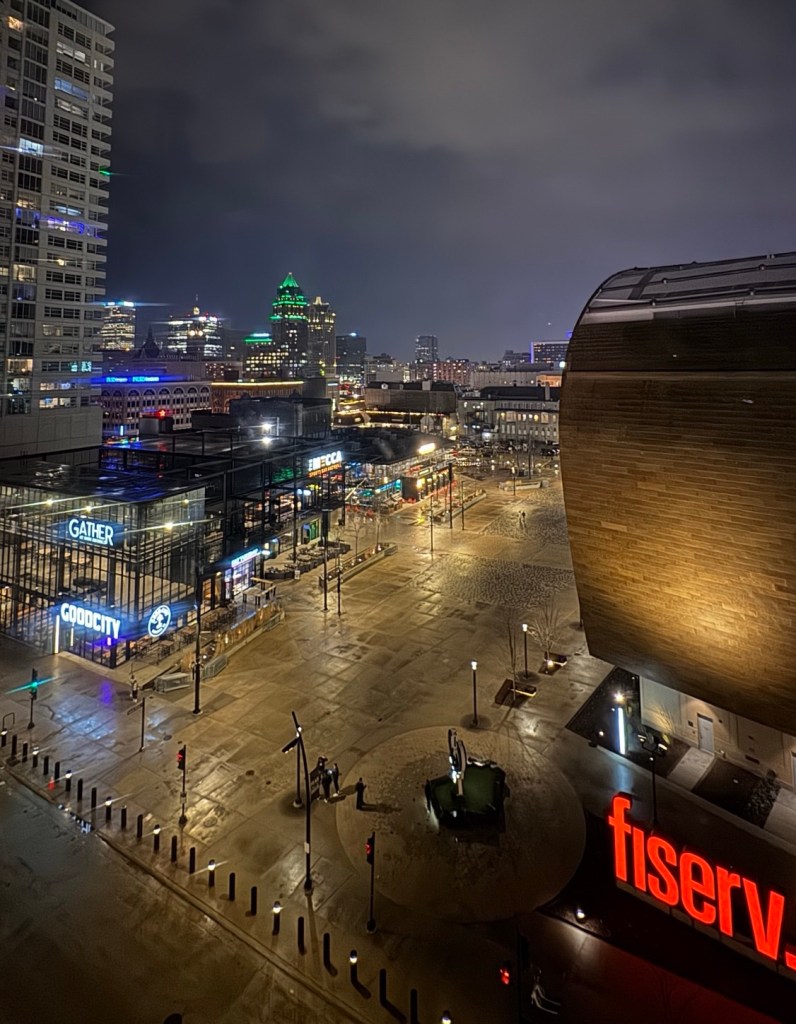
Milwaukee’s Deer District April 17, 2025

By Nkozi Knight

In an age where social media rewards volume over value, the meaning of thought leadership has been diminished. The term once represented a blend of deep expertise, strategic clarity, and intellectual influence. Today, it is often misapplied to anyone who posts frequently enough to generate a following.

But real thought leadership is not a popularity contest. It is a responsibility. It involves translating lived experience into insight that others can use to make better decisions and solve meaningful problems.

The Misunderstanding of Thought Leadership

Far too often, we confuse visibility with credibility. A viral post may spark attention but attention alone does not drive transformation. A thought leader is not someone who talks the most. A thought leader is someone whose ideas stand the test of time and scrutiny.

The best thought leaders are not self-promoters. They are systems thinkers. They do not speak just to be heard. They offer clarity in complexity. They invite others into deeper understanding.

Three Requirements for Lasting Impact

1. Experience that Teaches

Effective thought leaders have done the work. They have led initiatives, built organizations, navigated risk, and owned the consequences of their decisions. Their insights are not theoretical. They are earned in practice.

2. The Willingness to Challenge Assumptions

True leadership involves asking uncomfortable questions. It means examining what is outdated, misaligned, or unspoken. Whether in corporate strategy, health equity, or entrepreneurship, progress depends on those willing to challenge the default settings of their industry.

3. A Commitment to Building Tools, Not Just Talk

Thought leadership is not just about inspiration. It is about utility. The most influential leaders provide frameworks, resources, and systems that others can adopt. They empower others to lead without needing to be the loudest voice in the room.

A Perspective from Business and Community

As someone who has worked across strategy, entrepreneurship, and community development, I believe thought leadership is most powerful when it is rooted in purpose. Whether scaling a business, coaching organizations on OKRs and KPIs, or mentoring young professionals, my focus is always on bridging strategic intent with meaningful outcomes.

Leadership is not about being the smartest person in the room. It is about making the room smarter. It is not about being first. It is about leaving a structure behind that others can use to go further.

Final Reflection

Thought leadership is not a marketing strategy. It is a discipline. It requires humility, consistency, and the ability to add value without needing validation. In a world full of noise, the leaders who will matter are the ones who think clearly, speak carefully, and act with intention

BlackRock Doesn’t Just Own Tech. It Owns Your Future.

BlackRock doesn’t just own parts of Apple, Microsoft, and Amazon. It owns your food supply. It owns farmland. It owns water infrastructure. And through those investments, it owns a growing stake in the future of human survival itself.

What began in 1988 as a modest Wall Street firm built on risk management is now the largest asset manager in human history. BlackRock controls over $11 trillion , which is larger than the GDP of every country in the world except the United States and China.

But what most people still don’t realize is that BlackRock’s most important power grab didn’t happen on Wall Street. It happened quietly, across America’s farmland, its food systems, and its natural resources.

How Did We Get Here?

BlackRock’s expansion strategy was never about flashy takeovers. It was about ownership without attention. They don’t need to buy entire companies when they can buy enough shares to influence them all.

Through complex index funds and ETFs (Exchange-Traded Funds), BlackRock has quietly become a top shareholder in nearly every major corporation in America. Coca-Cola. PepsiCo. Kraft Heinz. Nestlé. Tyson Foods. Monsanto-Bayer. Even the companies that compete with each other are often owned by the same hand, BlackRock.

That includes food production, packaging, seeds, fertilizers, pesticides, farmland, water rights, grocery store chains, and agribusiness suppliers.

It is a spider web so vast that very few industries operate outside of its reach.

Farmland: The New Oil

In recent years, farmland has quietly become one of the hottest investments among America’s wealthiest. But few players have been as aggressive as BlackRock and its peers like Vanguard and State Street.

Why Farmland you may ask?

Simple. Land produces food, controls water access, and holds its value against inflation. In a world of uncertainty, farmland is power.

BlackRock has invested in farmland directly and indirectly through real estate investment trusts (REITs) like Farmland Partners and Gladstone Land Corporation. In some regions, institutional investors now own an estimated 30-50% of all available farmland.

For local farmers like Paul Rettler, this creates an impossible game that no one can win. Competing against trillion-dollar firms backed by infinite capital means the consolidation of agriculture isn’t slowing down, rather it’s accelerating.

The ESG Illusion

Much of BlackRock’s public messaging has centered around ESG, which stands for: Environmental, Social, and Governance investing , a framework designed to steer money toward sustainable and ethical practices.

But behind the marketing, ESG has often allowed BlackRock to reshape industries while still investing heavily in the very corporations most responsible for environmental harm.

Larry Fink, BlackRock’s billionaire CEO, has framed ESG as both a moral obligation and a business necessity. Yet BlackRock remains one of the largest shareholders in fossil fuel giants, industrial agriculture companies, and food manufacturers responsible for deforestation and soil degradation.

As environmental groups have pointed out daily, BlackRock has the ability to change the food system overnight. But profit almost always wins over principle and we have seen this outcome time and time again.

So What Does BlackRock Want?

It’s simple: Control. Influence. Permanence.

The more essential needs a company controls such as food, water, housing, energy, the less it matters who holds political office. Ownership is the real power.

When a handful of corporations control the basic elements of survival, the public becomes renters of everything, including their health, their homes, and their future.

This is the world being built right in front of us.

Water rights in California. Farmland in the Midwest. Global seed patents. Packaging monopolies. Shipping routes. Grocery store chains. Pharmaceutical partnerships. Tech platforms controlling communication.

This is not just about selling products.

This is about owning life itself.

So what can everyday people do?

Waiting for a politician to fix this system is like waiting for a thief to return what they stole. It is not going to happen.

But the answer is not fear. The answer is awareness. The answer is action.

It starts with taking back control wherever you can.

Buy from local farmers when possible. Grow your own food even if it is just herbs in your kitchen window. Filter your water. Cook your own meals. Learn how to read ingredient labels. Support local businesses over corporations when you can.

Most importantly, do your own research. Step outside of Google, mainstream media, and the same recycled talking points coming from media companies owned by the very corporations profiting from your confusion.

Seek independent sources. Read books. Listen to people on the ground, not just those in boardrooms. Question convenience when it comes at the cost of your health.

Learn how to be less dependent on the systems designed to keep you dependent.

Because at this point, we cannot wait for RFK. We cannot wait for politicians. We cannot wait for the same people who helped build this system to suddenly tear it down.

We have to start building something different starting in our homes, in our families, in our communities.

Not because it is trendy.

But because survival has always belonged to the people willing to think for themselves, take responsibility for their lives, and protect their future by any means necessary.

The Quiet Poisoning of a Generation: How Food, Water, and Corporate Greed are Undermining Human Health

There’s something happening in our society and if you’ve felt it, you’re not alone.

More people are tired for no reason. Fertility rates are plummeting. Chronic illness is everywhere. Children face record levels of anxiety, allergies, and developmental issues. And yet, we’re told this is normal.

It’s not.

This is the byproduct of a system that has quietly (and quite profitably) waged war on human health.


Founded in 1988, BlackRock now controls over 10 trillion dollars in assets making it one of the most powerful financial forces on the planet.

Follow The Money, Find The Motive

Today, four corporations effectively control most of what you eat, drink, and absorb.

→ Bill Gates is now the largest private farmland owner in America.

→ BlackRock and Vanguard own massive stakes in Monsanto, Nestlé, PepsiCo, Kellogg’s, and Beyond Meat.

→ Lab-grown meat is no longer science fiction, it’s a funded inevitability.

→ The same companies poisoning your body with seed oils, synthetic additives, and plastic packaging? They own the pharmaceutical firms selling you the cure.

This is not a conspiracy — it’s strategy.

When you own the food, the water, the farmland, the grocery distribution, and the healthcare response, you don’t need to control people with force.

You control them with dependence.

What’s Happening To Us?

Consider this:

Global sperm counts have dropped 50% since the 1970s. Testosterone levels in men are down 30% in 20 years. Microplastics are now found in human bloodstreams, breast milk, and even placentas. “Forever chemicals” (PFAS) are in 98% of the U.S. population. The CDC now quietly admits fluoride in water, while good for teeth in small doses, can impact brain development at high levels.

If this were isolated, it could be coincidence.

But when it’s everywhere like our water, food, packaging, cosmetics, medicine, even the air, you start to realize: This is systemic.

The Long Game: Weaken the Body, Profit from the Cure

Sick people buy more products.

Infertile couples pay more for solutions.

Distracted, inflamed, chemically-dependent populations don’t resist systems, they survive within them.

And while many are waiting for politicians like RFK Jr. to come in and blow the whistle, the reality is clear:

This system is working exactly as designed.

So What Do We Do?

Here’s the truth: No one is coming to save us.

But there is power in knowing how to exit the trap.

Real Alternatives for Real People:

Filter your water using Berkey, Clearly Filtered, or AquaTru. Eat whole, organic, ancestral foods with a focus on local sources first. Cut seed oils completely and cook with avocado oil, olive oil, or ghee. Limit plastic exposure by using stainless steel, glass containers, and beeswax wraps. Get daily sunlight and move your body because nature was the original medicine. Supplement wisely to rebuild minerals and support safe detoxing. Support local farmers instead of large corporations whenever possible. Learn herbal medicine like black seed oil, seamoss, milk thistle, and dandelion root. Sweat daily through sauna sessions, hot yoga, or hard workouts. Reduce pharmaceutical dependence by healing the root cause, not just managing symptoms.

Final Thought

We can’t wait for RFK. We can’t wait for “them” to fix what they profit from breaking.

We have to take back our health. Ourselves. Today.

Not because it’s trendy.

Not because it’s easy.

But because our future depends on it.

Health is no longer a luxury, it’s a form of resistance.

This is how we fight back.

I Fought for This Country. But I Can No Longer Be Complicit in Its Foreign Policy Hypocrisy

As a veteran of the United States Navy, I Fought for This Country. But I Can No Longer Be Complicit in Its Foreign Policy Hypocrisy was taught to revere duty, honor, and fidelity to the ideals enshrined in our Constitution. But as I survey the wreckage of our foreign entanglements over the past century (many of which I once believed were necessary), I am confronted by a truth as uncomfortable as it is undeniable: the United States has become an empire more concerned with hegemonic preservation than human dignity.

For decades, our foreign policy has been defined not by altruism or the pursuit of global stability, but by opportunism disguised as liberation. And increasingly, those decisions seem less motivated by the interests of the American people and more by the imperatives of an unspoken geopolitical alliance that has evaded serious scrutiny.

We have sown chaos under the banner of democracy. In 1953, we orchestrated a coup in Iran, toppling Prime Minister Mohammad Mossadegh for the audacity of nationalizing his country’s oil. The result was a brutal monarchy, followed by a revolutionary backlash that has destabilized the region ever since. In 1963, we facilitated the removal of South Vietnam’s President Diem, catalyzing a war that cost over 58,000 American lives and millions of Vietnamese.

In 1973, we backed General Augusto Pinochet’s overthrow of Chilean President Salvador Allende, the Western Hemisphere’s first democratically elected Marxist. The junta that followed was a regime of torture, censorship, and state-sponsored murder. In 2003, we invaded Iraq under a pretense of weapons of mass destruction, a phantom menace that, once unmasked, left a power vacuum filled by sectarian violence, ISIS, and generations of trauma.

In 2011, we helped depose Muammar Gaddafi in Libya, leading to the collapse of civil society and the reemergence of open-air slave markets. We did not spread freedom. We exported anarchy.

These are not aberrations. They are patterns.

Yet amid these calamitous campaigns, one constant remains unchallenged: our unwavering and at times unfathomable deference to the state of Israel. The United States sends $3.8 billion annually in military assistance to Israel, even as we slash aid to nearly every other foreign nation, from humanitarian support in Sub-Saharan Africa to infrastructure investments in Latin America.

Why is Israel uniquely immune to austerity? Why is its influence over American foreign policy so pervasive that questioning it invites accusations of bigotry or disloyalty?

To ask these questions is not antisemitic.

It is democratic. It is imperative.

We are not obliged to bankroll or defend the actions of any foreign government, especially one whose policies often run counter to international law and the ethical standards we claim to uphold. A nation confident in its righteousness does not fear accountability.

And yet we remain captive to a status quo that conflates alliance with obedience. We act not as a sovereign superpower, but as a vassal in a global chess game whose rules we no longer write. The rhetoric of “shared values” becomes increasingly hollow as we silence dissent, criminalize critique, and ignore the suffering of those caught in the crossfire of our projections.

We call others “terrorists” while conveniently forgetting our role as the architect of their rage. We depose, destabilize, and then disavow.

I do not write this as a provocateur or as a partisan. I write as someone who has worn the uniform, who has saluted the flag, and who now grieves the betrayal of the ideals I once fought to protect. I want to live in a country that values transparency over pretext, humility over hubris, and peace over perpetual war.

Empire is unsustainable. Hegemony breeds resentment. And complicity, especially when cloaked in patriotic fervor, is corrosive to the soul of a republic.

We must confront our legacy with honesty. We must extricate ourselves from alliances that demand our silence rather than our scrutiny. And we must rediscover a foreign policy rooted not in domination, but in decency.

Anything less is a disservice to the nation we claim to love, and to the world we insist we’re trying to save.

Harvard Expands Free Tuition to Families Earning Under $200,000

By Nkozi Knight

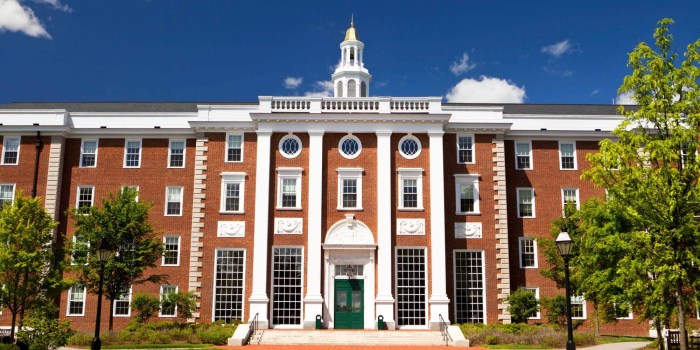
In a move aimed at expanding access to higher education, Harvard University announced Monday that it will offer free tuition to students from families earning $200,000 or less starting in the 2025-2026 academic year. This marks a significant expansion of the university’s financial aid program, further removing financial barriers for prospective students.

Students from families with incomes below $100,000 will also have all expenses covered, including housing, food, health insurance, and travel costs. Previously, Harvard provided full financial support only to students from families earning less than $85,000 annually.

“Putting Harvard within financial reach for more individuals widens the array of backgrounds, experiences, and perspectives that all of our students encounter, fostering their intellectual and personal growth,” said Harvard President Alan Garber.

While tuition alone at Harvard currently exceeds $56,000, total costs, including housing and other fees, approach $83,000 per year. The new policy will significantly lessen that burden for many American families.

Families earning above $200,000 may still qualify for tailored financial aid depending on individual circumstances.

This initiative aligns with similar policies at other elite institutions, like the Massachusetts Institute of Technology (MIT), which announced a comparable expansion last fall. Harvard estimates that 86% of U.S. families will now be eligible for some level of financial aid.

“Harvard has long sought to open our doors to the most talented students, no matter their financial circumstances,” said Hopkins Dean of the Faculty of Arts and Sciences. “This investment ensures that every admitted student can pursue their academic passions and contribute to shaping our future.”

The expansion comes amid broader conversations about diversity in higher education, especially following the Supreme Court’s ruling against affirmative action in college admissions. Harvard, along with other institutions like the University of Pennsylvania, views increased financial aid as a pathway to maintaining diversity by ensuring access to students from varied socioeconomic backgrounds.

“We know the most talented students come from different socioeconomic backgrounds and experiences, from every state and around the globe,” said William Fitzsimmons, Harvard’s dean of admissions and financial aid. “Our financial aid is critical to ensuring that these students know Harvard College is a place where they can thrive.”

This policy marks a continued effort to create a more inclusive and accessible environment at one of the nation’s most prestigious universities.

The Silent Killer: How Our Diet and Lifestyle Are Shortening Our Lives

By Nkozi Knight

I truly thought I was healthy. My BMI is only 25, and by most accounts, I look like I I am in great shape. But something wasn’t right for weeks. I felt tired all the time, my feet tingled, and my energy levels were nowhere near what they used to be when I would workout. Something inside me told me to get checked out, and what I found was alarming:

A1C: 7.3% → Diabetes confirmed

LDL (“bad” cholesterol): 198 mg/dL → Very high

Non-fasting glucose: 219 mg/dL → Dangerously high

In other words, I was walking around with a silent killer inside me, completely unaware. And I’m not alone.

Black Men and the Health Crisis No One Talks About

Black men in the United States are disproportionately affected by diabetes, high blood pressure, heart disease, blood clots, and amputations, a lot of it comes down to our diet, lifestyle, and neglect of medical care. Here are some statistics that speak to that point:

Black adults are 60% more likely to be diagnosed with diabetes than white adults (CDC, 2022).

More than 40% of Black men have high blood pressure, increasing the risk of heart attack and stroke (American Heart Association, 2023).

• Diabetes-related amputations occur nearly 3 times more often in Black patients than in white patients (JAMA, 2021).

Yet, we don’t talk about it. We recently witnessed super dad, Lavar Ball lose his foot from such complications. We brush off the fatigue, the numbness, the tingling, the headaches, the difficulty in the bedroom, and the shortness of breath as just “getting older.” But these are warning signs that something is seriously wrong.

The Warning Signs You Can’t Ignore

Tingling or numbness in your feet → Early sign of diabetic neuropathy, which can lead to amputation if untreated.

Extreme fatigue → Could be due to high blood sugar, poor circulation, or even heart disease.

Erectile dysfunction (ED) → Often an early symptom of diabetes or heart disease due to damaged blood vessels.

Blurry vision → High blood sugar can lead to diabetic retinopathy, which can cause blindness.

Slow-healing wounds → A sign of poor circulation, increasing the risk of infections and amputations.

• Frequent urination & constant thirst → Classic symptoms of diabetes.

If you’re experiencing any of these symptoms, it’s time to see a doctor immediately.

Fast Food & High Sugar Diets Are Killing Us

Let’s be real. Our beautiful culture is built around food, and not just any food, it always fried chicken, snacks, barbecue, mac and cheese, burgers, energy drinks, and other sugar-loaded drinks. We love to eat (at least I do), and food is a part of our identity. But it’s also the reason why we’re dying younger than we should.

The average American consumes 17 teaspoons of added sugar per day which far beyond the recommended limit of 9 teaspoons for men (American Heart Association, 2023).

Black Americans are more likely to consume sugar-sweetened beverages, which are directly linked to diabetes and heart disease (CDC, 2022).

Red meat and processed meats (bacon, sausage, deli meat) increase the risk of heart disease by 18% and diabetes by 12% (Harvard School of Public Health, 2023).

The Solution: Skip the Steak, Choose the Chicken

I used to be that guy….grabbing a burger and fries on the go, ordering a steak just because I could, and washing it all down with a Sprite or Old Fashioned. But after seeing my numbers, I realized I was digging my own grave, and I have too many people depending on me to check out early.

I made the switch, and I urge you to do the same:

No more red meat → Choose grilled chicken, turkey, or fish instead.

No more sugary drinks → Drink water, unsweetened tea, or black coffee.

No more processed carbs → Swap white bread & pasta for whole grains like quinoa & brown rice.

More fiber, more greens, more movement.

And most importantly, please see a doctor before it’s too late.

Your Health Is in Your Hands

Black men, we can’t afford to ignore our health any longer. We too often put our own needs aside to take care of everyone else to our own demise. Too many of us are losing limbs, suffering strokes, and dying before our time. It’s not genetics at all, it’s the choices we make every day.

If you made it this far I ask you to not wait until it’s too late. Get your bloodwork done, eat like your life depends on it (because it does), and start moving.

We all deserve longer, healthier lives but we have to take action to make that a reality. I thank God for the people in my life who encouraged me to get checked out before it was too late, because too many of us ignore the warning signs until we can’t anymore. Let’s hope the MAHA movement brings attention to this silent killer that’s taking too many of us too soon. Our health is our responsibility so let’s fight for it.

Sources:

• CDC. (2022). Diabetes Statistics in the U.S.

• American Heart Association. (2023). Heart Disease & Stroke Risk in African Americans.

• Harvard School of Public Health. (2023). The Impact of Diet on Chronic Diseases.

• JAMA. (2021). Racial Disparities in Diabetes-Related Amputations.

The Nakba of 2025: A New Chapter in a 77-Year Displacement

Displaced Palestinians from the Nakba of 1948 (top) and displaced Palestinians in Gaza in 2025 (bottom). Seventy-seven years apart.

By N. Knight

February 2025

GAZA CITY — Seventy-seven years after the Nakba of 1948, in which Zionist paramilitary groups (later forming the Israeli Defense Forces) forcibly displaced more than 750,000 Palestinians during the creation of Israel, a new catastrophe is unfolding in Gaza. Then, as now, the mass removal of Palestinians was not just a consequence of war but a calculated effort to reshape the region’s demographics.

The original Nakba, or “catastrophe” in Arabic, saw entire villages erased, families expelled, and a people scattered across the Middle East with no path home. Today, with 1.5 million Palestinians displaced and Gaza reduced to rubble, history is repeating itself. What was once the forced exodus of Palestinian communities into Gaza and neighboring countries is now a campaign to permanently expel them from the land entirely.

And just as in 1948, this displacement has been backed by major world powers.

How the World Redefined a Nation Without Its People

Palestinians were never given a say in their removal. The decision to partition their homeland and create Israel was made by external powers, largely Britain and the United States, without the consent of the people already living there.

The Role of Winston Churchill and the British Mandate

Winston Churchill and Israeli Prime minister David Ben Gurion

Before Israel’s establishment, Palestine was under British rule as part of the League of Nations Mandate, a system intended to prepare nations for self-governance. But rather than supporting Palestinian self-determination, Britain instead paved the way for Zionist settlement under the Balfour Declaration of 1917, which promised a Jewish homeland in Palestine without consulting its Arab inhabitants.

Winston Churchill, as both Colonial Secretary and later as Prime Minister, was a staunch Zionist supporter who saw Jewish settlement as a British imperial interest. He dismissed Palestinian opposition outright, once stating:

“I do not admit that the dog in the manger has the final right to the manger, even though he may have lain there for a very long time.”

Under Churchill’s leadership, Britain facilitated Jewish immigration while crushing Palestinian resistance. By the time the British withdrew in 1948, Palestinians were politically powerless, abandoned to Zionist militias who would soon launch the campaign of forced displacement known as the Nakba.

Harry S. Truman’s Immediate Support for Ethnic Displacement

President Harry S. Truman (left) meets with Israeli Prime Minister David Ben-Gurion (right) and Israeli Ambassador Abba Eban (standing) in a gift ceremony in the Oval Office.

As the British withdrew, it was the United States under President Harry S. Truman that cemented Israel’s creation. Against the advice of his own State Department, which warned that recognizing Israel would spark mass displacement and long-term instability, Truman became the first world leader to formally recognize Israel just minutes after its declaration of independence on May 14, 1948.

Truman’s recognition was not just diplomatic. The United States provided Israel with critical financial and military aid, allowing the newly formed state to consolidate its territorial gains and prevent the return of displaced Palestinians.

The United Nations passed Resolution 194, affirming the right of Palestinian refugees to return to their homes. But Truman and his administration did nothing to enforce it. The result was that 750,000 Palestinians became permanent refugees, many of whom fled to the Gaza Strip only to find themselves trapped in a cycle of displacement that continues to this day.

From 1948 to 2025: A Continuing Nakba


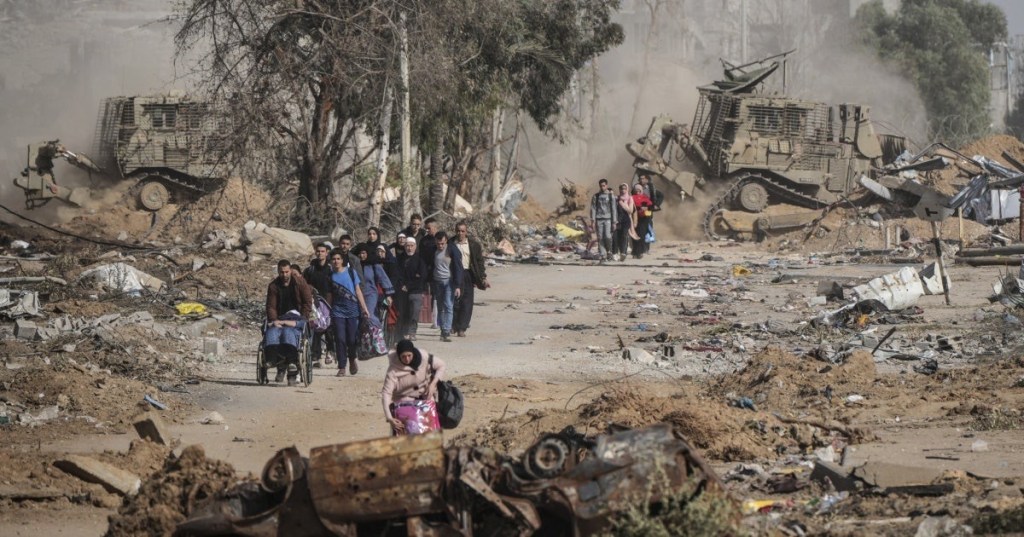
Palestinians flee south via Salah al-Din Road, in central Gaza, on the third day of a temporary ceasefire between Israel and Hamas on November 26, 2023. © 2023 AP Photo/Hatem Moussa

What is happening now in Gaza follows the same pattern. The Israeli bombardment of Gaza has destroyed entire neighborhoods, killed over 100,000 Palestinians, and displaced 1.5 million people which is twice the number of refugees from 1948. The infrastructure of survival including hospitals, schools, and road, has been systematically wiped out. And now, current United States President Donald Trump has proposed ensuring that Palestinians never return.

Donald Trump’s plan to permanently expel Gaza’s residents and rebuild the land for Jewish settlers mirrors the policies of 1948, except now, the forced displacement is being openly endorsed as official United States policy. When as a question about Palestinian residents, he suggested they go to Egypt and Jordan, and redevelop Gaza into what he described as the “Riviera of the Middle East.”

A Global Response, and a Question

Internationally, Trump’s proposal has been met with sharp opposition. Saudi Arabia, Jordan, and Egypt have explicitly rejected the idea, warning that any forced resettlement of Palestinians into their territories would be a violation of sovereignty and a red line for the region. Saudi Foreign Minister Prince Faisal bin Farhan called it “a blatant attempt at ethnic cleansing that will not be tolerated by the Arab world.” Egyptian President Abdel Fattah el-Sisi reaffirmed that Egypt “will not accept the forced displacement of Palestinians into the Sinai.” Both nations have signaled that such a move could undermine diplomatic relations with Israel and the United States.

Yet, despite these warnings, the pattern remains unchanged. A population is being forcibly removed, their land repopulated with another ethnic group, and the world is expected to accept it as the price of geopolitics.

Which raises the question.

If the forced removal of an entire people, the destruction of their homes, and the resettlement of their land with another group is not ethnic cleansing, then what is

And if the world will not act to stop it now, will it ever?

Bitcoin Falls to 11-Day Low Amid Broader Tech Selloff

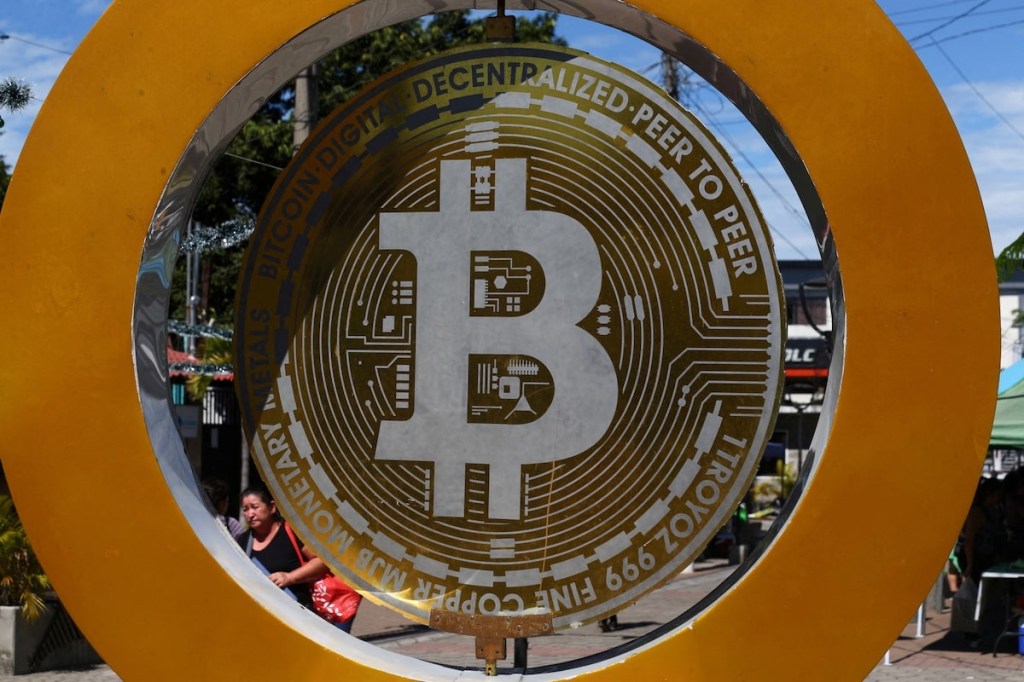
A woman passes by the Bitcoin Monument after bitcoin soared above $100,000, in Ilopango, El Salvador, December 5, 2024. 

Bitcoin fell below $100,000 on Monday, marking its lowest level in 11 days, as a wave of caution swept through global markets following a sharp selloff in tech stocks. Analysts linked the decline to investor anxiety over the surging popularity of a Chinese artificial intelligence model that has disrupted confidence in Western AI-related equities.

Bitcoin Tracks Broader Market Losses

The world’s largest cryptocurrency dropped as much as 7% during the session, trading at $98,745 by late afternoon in London. The dip follows a turbulent day for technology stocks, particularly in the AI sector, which saw significant losses after China’s DeepSeek AI launched its low-cost, high-efficiency DeepSeek-V3 model.

“Bitcoin’s decline is a direct reflection of the broader risk-off sentiment dominating markets,” said Emilia Carter, a cryptocurrency strategist at Digital Asset Partners. “The tech selloff has spooked investors, leading to a rotation out of speculative assets like Bitcoin.”

Tech Selloff Sparks Broader Market Jitters

The tech-heavy Nasdaq Composite fell 2.6%, with major players like Nvidia, Microsoft, and Alphabet posting steep losses. Nvidia, a leader in AI hardware, suffered an 11.2% drop after concerns over its competitive position in the Chinese market. Analysts suggested that DeepSeek’s rapid ascent has reshaped market dynamics, intensifying pressure on Western tech firms.

“DeepSeek’s breakthrough highlights the growing capabilities of Chinese AI firms,” said Daniel Morgan, an analyst at Synapse Capital. “This has created a ripple effect, with investors reassessing valuations across the tech sector, which in turn is affecting sentiment in other high-risk asset classes like cryptocurrencies.”

Safe-Haven Assets Gain

As riskier assets took a hit, traditional safe-havens saw gains. U.S. Treasury yields dropped, with the benchmark 10-year yield falling to 3.42%, while gold climbed 1.3% to $1,945 per ounce. The dollar weakened against major currencies, with the Japanese yen rising 0.7% to 129.50 per dollar.

“Market participants are in defensive mode, pulling back from speculative investments,” said Jonathan Knight, head of macroeconomic research at Fortress Investments. “The flight to safety reflects growing concerns about geopolitical risks and economic uncertainty.”

Bitcoin’s Outlook

Despite the drop, some analysts remain optimistic about Bitcoin’s long-term prospects. “Bitcoin has weathered similar pullbacks before, and its underlying fundamentals remain strong,” said Clara Davis, a senior researcher at CryptoAnalytics. “While short-term volatility is inevitable, the broader adoption trends for cryptocurrencies are intact.”

Still, others cautioned that Bitcoin’s correlation with risk assets could make it vulnerable to further market turbulence, especially as global economic conditions remain uncertain.

What’s Next?

Market attention now turns to how Western technology firms will respond to the competitive threat posed by DeepSeek and whether the broader tech selloff will deepen. Cryptocurrency investors, meanwhile, are watching for signs of stabilization in Bitcoin prices as the market digests the latest developments.

Tech Rout: Nvidia Plunges as China’s DeepSeek AI Soars, Investors Flock to Safe Havens

By Nkozi Knight

Global markets took a hit on Monday as technology stocks plummeted amid growing concerns over competitive pressures from China’s burgeoning AI sector. Shares of Nvidia, a key player in the artificial intelligence (AI) industry, dropped sharply, losing 11.2% in a single session. The slide came as Chinese startup DeepSeek surged in popularity with its low-cost AI model, intensifying market anxiety about the dominance of U.S. tech firms in the rapidly growing AI space.

Tech Stocks in Freefall

Nvidia, widely regarded as a leader in AI computing hardware, saw its shares nosedive after reports of slowing demand for its GPUs in China. Analysts attributed the decline to DeepSeek’s unveiling of its DeepSeek-V3 model, a highly efficient AI system offering comparable performance at a fraction of the cost.

The ripple effect hit other tech giants as well, with Microsoft, Meta Platforms, and Alphabet each recording losses of 3-5%. The Nasdaq Composite Index fell 2.6%, its worst single-day performance since December 2024.

“The competitive landscape is shifting rapidly, and this adds a new layer of uncertainty for U.S.-based AI leaders,” said Daniel Crawford, a senior equity analyst at Global Insights. “DeepSeek’s entry into the market highlights the growing sophistication of Chinese AI firms and their ability to disrupt established players.”

DeepSeek’s Meteoric Rise

DeepSeek’s DeepSeek-V3 became the most downloaded free app on Apple’s App Store within days of its launch. The AI assistant boasts advanced natural language processing capabilities and features targeted at small and medium-sized businesses, undercutting its U.S. competitors on price.

The surge in popularity underscores the increasing influence of Chinese technology companies in global markets. With heavy state-backed funding, firms like DeepSeek are rapidly closing the innovation gap with their Western counterparts.

“DeepSeek represents a ‘Sputnik moment’ for the AI industry,” said James Li, an AI researcher based in Shanghai. “This is a wake-up call for U.S. firms to accelerate innovation or risk losing their competitive edge.”

Flight to Safety

Amid the turmoil, investors sought refuge in traditional safe-haven assets. U.S. Treasury yields dropped as demand surged, with the 10-year yield falling to 3.42%. Gold also saw a 1.3% increase, closing at $1,945 per ounce. The U.S. dollar weakened against major currencies, with the euro rising 0.8% to $1.11.

“Investors are nervous, and rightfully so,” said Sophia Greene, chief market strategist at Capital Horizons. “The market is recalibrating to factor in geopolitical risks and the growing unpredictability of tech-driven disruptions.”

Outlook

The fallout from the tech sell-off has raised broader concerns about the U.S.’s ability to maintain its dominance in the AI industry. Lawmakers in Washington have called for more stringent measures to ensure domestic innovation and reduce reliance on foreign supply chains.

For now, the spotlight remains on how U.S. tech giants will respond to the threat posed by DeepSeek and other rising stars in the Chinese tech ecosystem. Investors are watching closely as the industry braces for further turbulence.

Donald Trump’s $500 Billion Stargate AI Project: Bold Innovation or Dangerous Gamble?

When President Donald Trump unveiled the $500 billion Stargate AI venture on Tuesday, a partnership involving OpenAI, SoftBank, and Oracle, he touted it as a groundbreaking step toward cementing U.S. dominance in artificial intelligence. Trump claimed the project would ensure “the future of technology” while creating hundreds of thousands of jobs and tackling issues like cancer detection. Wall Street initially responded with cautious optimism, but as the details of Stargate emerge, skepticism is mounting, and for good reason in my opinion.

A Bold Promise Without a Foundation

At first glance, Stargate appears ambitious, even transformative. Backed by OpenAI’s cutting-edge technology, SoftBank’s financial clout, and Oracle’s infrastructure expertise, the venture has been pitched as a game-changer for AI research and development. Yet, serious doubts are surfacing about its feasibility and motives.

Tech billionaire Elon Musk, a former co-founder of OpenAI and a longtime critic of the organization’s direction, wasted no time questioning the project’s funding. “They don’t actually have the money,” Musk wrote on X. SoftBank CEO Masayoshi Son claims an initial $100 billion commitment with plans to grow it to $500 billion over four years, but whether those funds will materialize remains unclear. It’s not the first time SoftBank has made lofty promises and its track record includes overestimated ventures like the Vision Fund.

AI for Good or AI for Profit?

One of the most striking concerns is the ethical implications of Stargate. OpenAI CEO Sam Altman and Oracle co-founder Larry Ellison described the project as a way to solve pressing societal issues, like developing cancer vaccines through AI-driven genetic sequencing. While this paints a rosy picture, skeptics question whether these lofty claims are just a smokescreen for profit-driven motives. Musk has repeatedly accused OpenAI of abandoning its original mission to develop AI for the public good, turning instead into a profit-driven enterprise that prioritizes corporate interests.

Donald Trump’s decision to repeal his predecessor’s AI guardrails and policies designed to ensure ethical and safe development of AI, has opened the door to unchecked advancements. Without these safeguards, Stargate’s potential for misuse, whether through biased algorithms, privacy violations, or the militarization of AI, is alarming. Who will ensure that this technology is developed responsibly and does not deepen societal inequalities or threaten democratic systems?

An Economic Boon or Another False Promise?

Trump and Altman have touted the potential for Stargate to create hundreds of thousands of American jobs, particularly in construction and data center operations. However, these promises are eerily reminiscent of past grandiose projects that failed to deliver from the Biden administration. Mega-investments often come with overblown job projections, only to fall short once automation replaces human labor. Even if Stargate reaches its employment goals, questions linger about the quality of these jobs and their long-term sustainability.

A cornerstone of the Stargate project is the construction of massive data centers, which are essential for powering the AI infrastructure envisioned by OpenAI, SoftBank, and Oracle. While these centers promise to create jobs and drive technological advancement, their environmental and societal impacts are deeply concerning. Data centers consume enormous amounts of electricity and water, often straining local resources without providing long-term economic benefits to surrounding communities. Questions about data privacy, cybersecurity, and ownership also loom large, as these facilities will centralize vast amounts of sensitive information in the hands of private corporations. With promises of rapid scalability and a $500 billion price tag, it’s unclear whether such an ambitious undertaking can be achieved responsibly or whether the public will once again bear the hidden costs of unchecked corporate ambition.

Geopolitical Implications: Competing with China

Stargate is also being framed as a key weapon in the U.S.’s competition with China for AI supremacy. While strengthening America’s technological edge is important, rushing into a $500 billion project without transparency or strategic oversight risks creating a “tech cold war” that prioritizes dominance over ethical innovation. Accelerating AI development without proper international collaboration could exacerbate global tensions and lead to a dangerous arms race in AI technology.

What Stargate Really Represents

Beneath the glossy promises of economic growth and transformative technology, Stargate raises deeper questions about power, control, and the future of AI. By handing the reins to corporate behemoths like SoftBank, Oracle, and OpenAI, the U.S. risks placing critical technological advancements into the hands of entities more interested in profits than public welfare. This is not just about building data centers or detecting cancer, it’s about who gets to decide how AI shapes our world.

Trump’s willingness to prioritize corporate interests over ethical considerations should alarm all Americans from both parties. Without a commitment to transparency, regulation, and equity, Stargate could deepen societal divides and erode trust in technology. As history has shown, unchecked technological advancements often come at a steep cost to those least equipped to bear it.

2025: A Year of Resilience and Hope

2025 will bring challenges we may not yet foresee, testing our resilience and our collective humanity. Yet history reminds us that even in our darkest hours, we have endured, adapted, and risen above. It is in times of turmoil that the true strength of humanity reveals itself.

The chaos of the world does not erase the good within it. We see it in acts of kindness, in the resilience of communities, in the unwavering hope of those who refuse to give in. These moments, small as they may seem, are proof that humanity’s light is far stronger than the shadows that try to engulf it.

As we face what lies ahead, let us hold tightly to faith and not just in a higher purpose, but in one another. Let us carry hope, not as an abstract idea, but as a tangible force that fuels our actions and inspires those around us. And let us strive to be the reason someone else rediscovers their faith in mankind.

Our actions, no matter how small, ripple outward. In the face of uncertainty, they can become a source of strength for others. If we remain steadfast, committed to the good we can do, the challenges of the future will only serve to make us stronger. Humanity’s light, even when tested, will endure. It always has. It always will.

Wisconsin Real Estate Market: What to Expect in 2024 & 2025?

2024 Parade of Homes Model-The Clare

The median home sale price in Wisconsin has reached $327,000, reflecting an 8.8% year-over-year increase. Homes are still selling quickly, with an average of 43 days on the market, which suggests high demand in the real estate market. This is further reinforced by a 6.6% increase in home sales, with 6,532 homes sold in July 2024 compared to 6,130 last year. These figures indicate a competitive housing market, favoring sellers.

Inventory has risen by 6.5%, giving buyers more options. However, the supply remains tight, averaging around 2 months, which leans towards a seller’s market. Mortgage rates are around 6%, giving buyers somewhat more purchasing power, though prices are still on the rise.

With Wisconsin’s strong job market and an unemployment rate of 3%, the housing market is unlikely to experience a crash soon. Wisconsin’s balanced economy, affordable cost of living, and steady population growth continue to support the real estate market’s strength .

If you’re considering buying or selling in areas like Caledonia or Beaver Dam, it’s a good time to stay informed as the market is expected to favor buyers slightly towards the end of 2024.

2024 Parade of Homes model