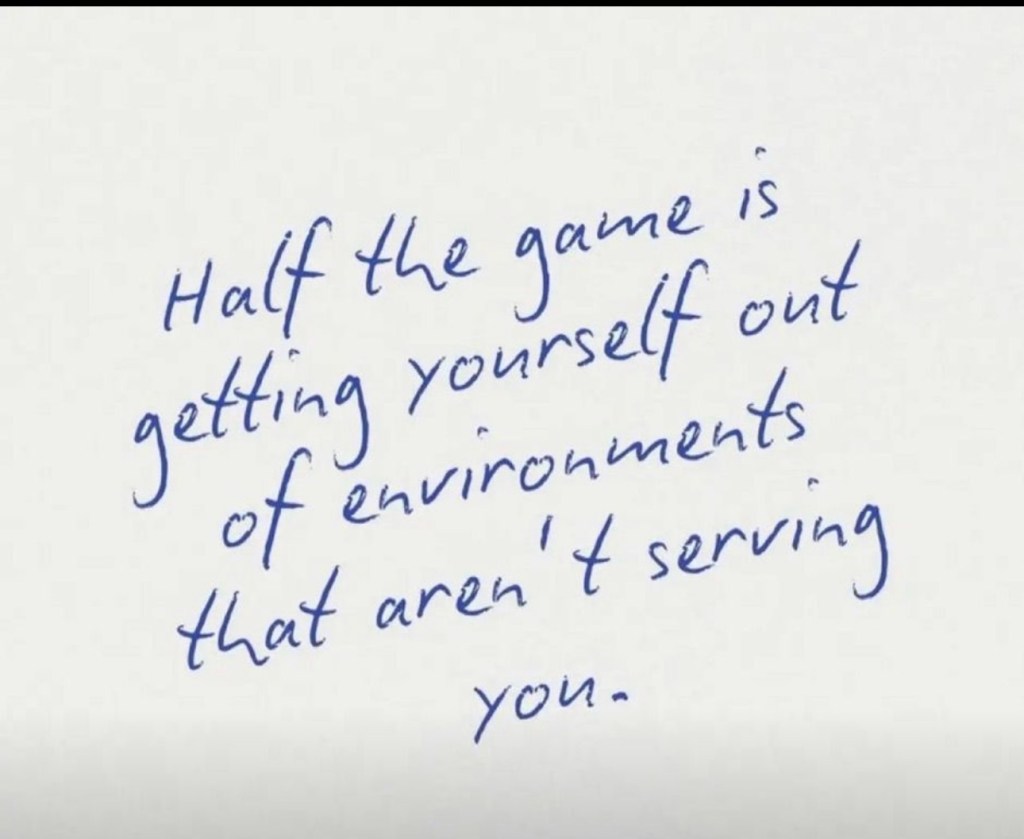
We tell ourselves that success comes from more effort and more time. That belief still matters. Yet in 2025 another truth is just as important. Half the game is choosing where you spend your effort in the first place. Sometimes the smart move is to walk away.
The labor market is reshaping itself in real time. Generative AI tools now handle work that once kept whole teams busy. Companies are reorganizing to chase efficiency and speed. Leadership teams are under pressure to do more with fewer people. Global talent markets are wide open. H1B holders bring real skill and many firms are recruiting globally before they look locally. None of this is a moral judgment. It is the environment. In this environment staying put out of habit can become the most expensive decision you make.
Silent quitting defined the last few years. People stayed but pulled back. In 2025 the bigger risk is silent stagnation. You keep delivering while the org chart keeps shifting. Systems take over routine tasks. Budgets move to automation and to roles that can scale. If your seat does not compound your skills or your network, the clock is already ticking even if you cannot hear it.
Walking away is not drama. It is strategy. The question is simple. Does this role increase your value twelve months from now. If the honest answer is no, the cost of loyalty is too high. Loyalty to your future is the only loyalty that compounds.
To evaluate your situation ask yourself whether the outcomes you deliver are unique to your skill set or whether a model could replace them. Consider whether the learning curve in your current role is still steep or if you are repeating cycles that add little to your future. Reflect on whether your work places you near decision makers or keeps you locked in execution only. And finally, consider whether the relationships you build today will serve you tomorrow. These questions offer quiet clarity that no performance review will provide.
Leaving does not always mean quitting your employer. It can mean walking away from the wrong team, the wrong leader, the wrong product line, or the wrong client mix. It can mean seeking roles that sit beside the machines rather than beneath them. Human judgment, trust building, original insight, and accountable ownership remain scarce. Aim your career at the work that needs a signature, not just a keyboard.
The H1B debate is loud this year and will stay loud. The best response is not resentment. It is readiness. Build competencies that translate across industries. Learn the tools that drive your field so you can direct them rather than compete with them. Grow relationships that outlast any single title. When your value is clear and portable you will not fear any policy cycle.
For leaders the message is just as direct. People are watching how you treat them during this transition. If you use AI to strip away meaningful work without creating new ladders, your best people will exit first. If you invest in upskilling and in clear career paths, your organization will retain its core talent and attract more. Markets reward firms that act with clarity and care at the same time.
The choice to walk away is never easy. It asks for courage and a clear view of the road ahead. Yet the market is telling the truth every day. Growth rarely happens in places that mute your voice or drain your energy. If the room you are in no longer fits the person you are becoming, it is time to leave the room.
In 2025 the winners will not be those who simply grind harder. They will be those who choose their arenas wisely and walk away when the environment no longer deserves them.
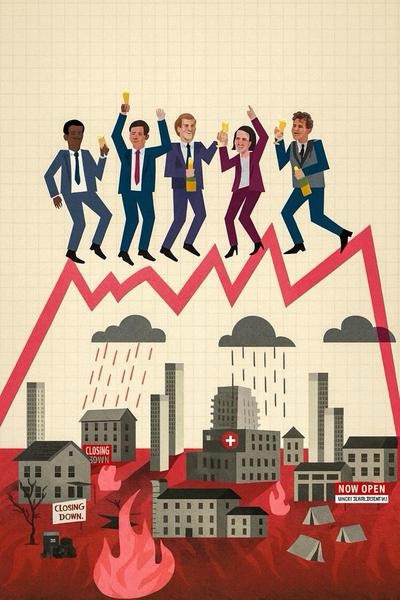
Many of us do not realize that private equity firms has always been about extraction, not creation. The model is simple. Borrow heavily, buy a company, slash jobs and benefits, sell off assets, and walk away with fees long before the damage shows. Communities are left with shuttered stores, abandoned buildings, bankrupt chains, and broken promises.
The list of casualties is long. Toys “R” Us was loaded with more than $5 billion dollars in debt by Bain Capital and KKR before it collapsed, taking 30,000 jobs with it. Payless ShoeSource closed its doors, erasing 18,000 jobs. J. Crew, Gymboree, Shopko, Forever 21, and Sears each followed the same path. Behind nearly every failure was a private equity deal that turned once-profitable companies into vehicles for debt. Blackstone, the largest of them all, drew criticism for gutting nursing homes and rental housing, where residents and tenants bore the consequences. Carlyle, Apollo, and Sycamore Partners engineered deals that enriched executives while leaving behind bankruptcies across retail, energy, and health care.
The damage has never been limited to debt. Private equity firms extract billions in fees on top of what they load onto companies. They sell the land and buildings, forcing the very businesses they own to pay rent back to them. In franchise models, they skim off royalty payments while cutting services and staff. They charge management fees to companies they already control, ensuring that even if a business fails, the firm still profits. These practices are not side effects. They are the business model.
For years the system ran on cheap money. With interest rates near zero, debt was abundant and investors were eager. Firms could buy, bleed, and flip companies in two or three years. That era is gone. Interest rates now sit above five percent. Debt costs more, buyers are scarce, and the IPO market has dried up. Firms are stuck holding companies that are drowning under the very leverage designed to enrich their owners.
The numbers are staggering. Nearly $12 trillion dollars in private equity assets now sit unsold. Exit activity has collapsed more than 70 percent since 2021. To raise cash, firms are borrowing against their own portfolios with NAV loans or dumping stakes at steep discounts on the secondary market. Even the giants like Blackstone, KKR, Apollo, Carlyle, Bain are stuck with bad debt no one wants. They cannot sell, yet their investors are demanding cash.
The quiet truth is that these firms are already maneuvering for Washington’s help. During the 2008 financial crisis, banks and insurers were rescued with taxpayer dollars. Private equity, which profited handsomely off that same collapse, is positioning itself for similar treatment.
This is not just an elite problem. It is a national one. When private equity runs out of road, it is not the billionaire partners who suffer. It is the workers whose jobs are cut, the retirees whose pensions cannot meet obligations, the students whose tuition rises because endowments cannot keep pace, and the taxpayers who are asked to backstop the system.
The parallels to 2008 are frightening. Then it was mortgage backed securities. Now it is unsellable companies and illiquid funds. In 2008, families lost homes and jobs while Wall Street was saved. Today the scale is even larger. With trillions in assets frozen, the next bailout could dwarf the last one.
Meanwhile, private equity’s destruction also extends into America’s hospitals and nursing homes and people are paying with their lives. Studies show that Medicare patients undergoing emergency surgeries in private equity–owned hospitals are 42 percent more likely to die within 30 days compared to those treated in community hospitals . A nationwide study found infections, falls, and other preventable adverse events increased following private equity takeovers of hospitals . Even the U.S. Department of Health and Human Services condemned the impact, warning that private equity ownership of nursing homes led to an 11 percent increase in patient deaths .
Recent reporting shows the financial calculus behind these tragedies. Nursing home operators in New York’s Capital Region diverted Medicare and Medicaid funds through inflated rent and bogus salaries. That left facilities chronically understaffed and suffering neglect so severe that it led to cases of serious injury and death .
By turning hospitals and nursing homes into profit centers rather than care centers, private equity firms aren’t just bankrupting businesses, they are literally killing people. And when that business model collapses, it will be everyday Americans who pay the cost once again.
The message is not subtle. If private equity’s gamble fails, the richest players will once again be saved. For ordinary Americans, the reckoning will look like it always does. Lost jobs. Higher taxes. Vanishing pensions. Rising tuition. And another generation paying for someone else’s greed.
This is the American cycle. The profits are privatized, the losses are socialized, and working families are forced to carry the cost.
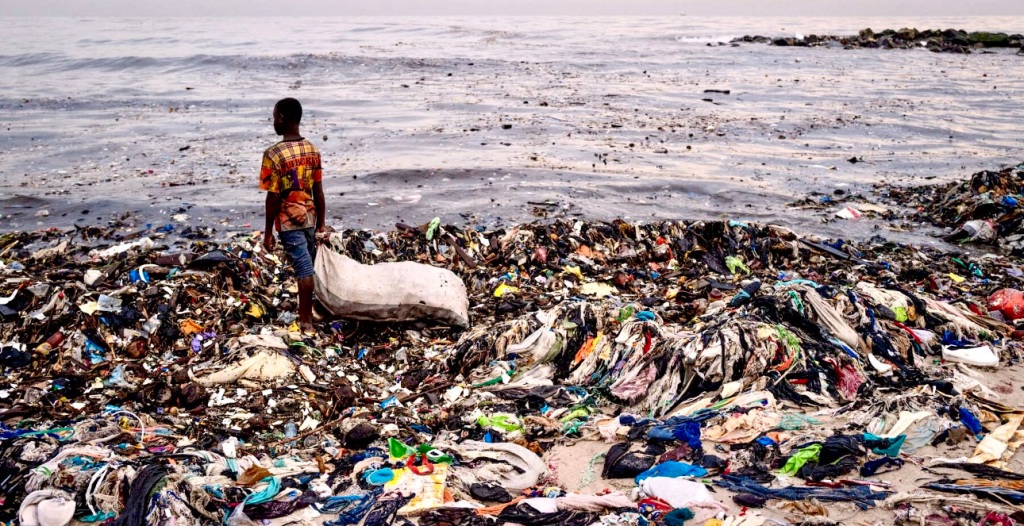
A young boy stands amid mountains of discarded clothing and plastic waste on Ghana’s Chorkor Beach
Accra, Ghana –
The beaches of Ghana should be sanctuaries. Places where waves kiss the sand and children play in peace. But on the shores of Chorkor Beach, the tide doesn’t bring seashells. It brings sweaters from Shein, leggings from Lululemon, and Target tees soaked in salt and filth.
Week after week, a deluge of secondhand clothing arrives in Ghana from the United States, the United Kingdom, and other industrialized nations. Billed as “donations,” these shipments are not gifts. They are refuse. They are the castoffs of a culture addicted to overconsumption and numbed to consequence.
Ghana receives roughly 15 million garments a week, much of it dumped by consumers who believe they’re “doing good” by donating to local bins outside of Walmart or church parking lots. In reality, 40 percent of these clothes are unusable trash, exported to West Africa in bulk and eventually dumped, burned, or strewn across the coastline. Kantamanto Market in Accra, once a center of textile trade and reuse, has become overwhelmed and swamped by low-quality fast fashion designed to fall apart before its first wash.
“We are drowning in your clothing,” said a local vendor in a recent BBC Africa Eye documentary. “These aren’t donations. They are poison.”
This isn’t hyperbole. Synthetic fabrics, often polyester, don’t biodegrade. They clog drains, suffocate marine life, and release microplastics into the ecosystem. Some are so contaminated with dyes and industrial chemicals that simply burning them chokes nearby residents. Because Western brands outsource both the problem and the blame, few Americans ever witness the wreckage.
The Cult of the New
American corporations drive this destruction through a business model of planned obsolescence and psychological manipulation. Fast fashion giants like Shein, Fashion Nova, Boohoo, and H&M churn out hundreds of new styles weekly. And we buy them. On impulse. To feel something. To impress no one. To post once on social media and then forget.
A 2023 Vogue Business investigation reported that the average American throws away 81 pounds of clothing per year. That’s nearly 13 billion pounds of textile waste, most of which is either burned or exported. Out of sight. Out of mind.
The 2024 HBO documentary Brandy Hellville and the Cult of Fast Fashion peeled back the curtain on this global racket, revealing how corporations knowingly flood developing nations with clothing that cannot be sold, recycled, or reused. These companies profit from both ends of the pipeline, selling cheap clothes and then writing off their “donations” for tax breaks.
But in Ghana, the beaches tell the truth. Children walk barefoot through piles of wet fabric. Fishermen cast their nets into waters tangled with discarded bras and sweaters. Clothes meant for dignity now strip the land of its own.
Stop Pretending It’s Helping
The problem is systemic, but it starts at home.
Donating clothes in bins is not inherently virtuous. In fact, it’s part of the illusion. The vast majority of those clothes don’t go to shelters or local families. They are sold in bulk to global brokers who profit off Africa’s environmental misery.
We are not helping. We are offloading guilt.
The solution cannot be just more donation or wishful recycling. It begins with consuming less. Buy intentionally. Wear things longer. Mend. Repurpose. Swap. Or better yet, just don’t buy unless you need to. The world doesn’t need another $9 tee you’ll forget in a week.
And for the clothes that have truly reached their end? Perhaps it’s time to explore municipal incineration, compostable textiles, or clothing deposit programs where manufacturers are held financially responsible for their waste. We regulate plastic straws more than we regulate stores like Forever 21, H&M, and Walmart.
A Final Reckoning
Americans, if we do not change, beaches like Chorkor will disappear, buried under the weight of our vanity and excess. What once were coastal communities tied to fishing, family, and resilience are now becoming textile graveyards. The soil is dying. The water is choking. The air burns with the fumes of our unwanted clothes that takes 200 years to naturally decompose.
This is no longer just about fashion. It’s about justice.
Because let’s be honest: we know who’s responsible.
The responsible parties include: Shein, H&M, Zara, Forever 21, Fashion Nova, Boohoo, PrettyLittleThing, Temu, Target, Walmart, Old Navy, Uniqlo, Gap, Amazon’s in-house brands, and countless Instagram and Tik Tok shops. These corporations flood the global market with billions of garments each year. Their business model thrives on overproduction, cheap labor, and psychological manipulation. They manufacture the illusion of need. They sell you a fantasy of trendiness and self-expression at the cost of someone else’s environment and dignity.
And we, the consumers, buy in. Often literally.
Every impulse buy, every “haul” video, every $5 tee or $10 dress contributes to a planetary cycle of destruction. We wear it once, toss it in a bin, and tell ourselves we did something good by “donating.” But we’re not recycling. We’re relocating the problem. Our discarded clothes are not going to those in need. They’re going to countries like Ghana, Kenya, Chile, and Haiti, nations without the infrastructure to process the sheer volume of waste we produce.
Because the truth is: your closet might be clean, but someone else is paying the price for it.
And they’re paying with their soil, their seas, and their breath.
We need a global reckoning. Not just with corporations, but with ourselves.
Buy less. Buy better. Demand accountability. Push for laws that make brands responsible for the full life cycle of their products.
Until we stop treating clothing as disposable, we will continue to treat people the same way.
Boys play in the sea diving off a pile of clothing found washed up on the beach at Jamestown, Accra(Image: Adam Gerrard / Daily Mirror
Life has a way of humbling you. Sometimes gently. But more often like a truck running a red light right into you. One day you think you’ve figured it out. You’ve got the great career, the suburban house, the beautiful family, the plan. Then suddenly, everything shifts. For me, it was a divorce after 15 years of marriage, right in the middle of a global pandemic that some of you may remember. Just when I thought things couldn’t get more uncertain, the world got even more expensive, even more unstable, and somehow, even more confusing as a newly single man.
We were all sold this idea that if you worked hard, followed the rules, and did the “right things,” life would reward you. But the truth is, life doesn’t care about your checklist. And that’s not necessarily a bad thing. Sometimes the very thing that feels like a failure is the doorway to something more real, more free, more honest.
I’ve learned that change doesn’t always come with a warning. Sometimes it shows up in a quiet moment. A look. A bill. A diagnosis. A conversation you didn’t want to have. And while it can shake your foundation, it also gives you a shot at rebuilding with intention. But that starts with facing the moment, not avoiding it and not numbing it.
Most of the time, the breaking doesn’t come all at once. It’s subtle. It’s in the slow fade of the things you used to laugh about. The quiet tension over dinner. The way your job starts to feel more like a burden than a blessing. It’s not always dramatic. Sometimes it’s just the weight of little things stacking up until you realize you can’t carry it anymore.
Looking back, the signs were there. But life has a way of keeping you busy enough not to see what’s slipping away. You focus on the next goal, the next deadline, the next vacation that’s supposed to fix everything. Meanwhile, your relationships go unchecked. Your peace gets traded for productivity. And before you know it, you’re living a life you no longer recognize.
I’ve come to believe that what feels like everything falling apart is often just life shaking loose what you’ve outgrown. The roles. The routines. The relationships. But because we’ve poured so much of ourselves into them, letting go feels like failure. Even when deep down we know it’s time.
Then comes the moment you can’t ignore. The conversation that ends it. The letter. The job loss. The diagnosis. The silence in your house that used to be full of laughter. Whatever it is, it hits hard. Suddenly you’re standing in the middle of your life wondering what the hell just happened.
For me, it wasn’t just the divorce. I didn’t just lose my wife. I lost my best friend, my movie partner, the person I confided in when the world felt too heavy. The silence after that kind of loss is brutal. It’s not just about adjusting to being alone. It’s about feeling like your future got wiped clean, and not in a good way.
The hardest part? Watching my kids adjust to it all. One week with me, one week with her. Backpacks moving back and forth like we were trading pieces of a life we built together. You do your best to keep it stable for them, but behind the smiles and routines, you know they’re trying to figure it out just like you are.
And then there’s the dating world, which, let me tell you, is a whole other nightmare when you’re in your 40s. I didn’t know how to date anymore. What do you even say on an app? “Hey, I’m emotionally complex and have a joint custody schedule, swipe right?” It’s awkward, exhausting, and sometimes just plain sad if I’m being honest. Nobody tells you how hard it is to start over in a world where people would rather text than talk, scroll than connect, and ghost you before they ever get to know you.
It’s not just about dating. It’s about realizing the whole landscape has changed while you were busy building a life with someone else. And now here you are, trying to learn a new language in a world that moves faster, cares less, and doesn’t always make space for real connection.
At first, it feels overwhelming. Like you’ve been dropped into a new world with old expectations. But then, slowly, you start to realize this isn’t just about adapting to what’s around you. It’s about reconnecting with what’s inside you.
You start to understand that maybe this isn’t about going back to who you were. Maybe it’s about finally listening to who you’ve been becoming underneath it all. The truth is, somewhere between the heartbreak, the silence, and the starting over, your soul started speaking up and this time, you’re ready to hear it.
You don’t have to bounce back right away. In fact, you shouldn’t. There’s no prize for pretending you’re fine when you’re falling apart inside. Sit with it. All of it. The anger, the confusion, the fear, the grief. Let it come. Cry if you need to. Be still if you need to. Rage if that’s what it takes to get through the day. Just don’t lie to yourself about how hard it is.
I remember sitting in my car after dropping my kids off, holding the steering wheel like it was the only thing keeping me from falling apart as tears streamed down my face. Some days I felt like a failure. Some days I felt numb. Some days I didn’t know who I was anymore outside of being someone’s husband or provider. And that’s when I realized. I was grieving more than just a relationship. I was grieving who I used to be.
No one really talks about that part. How you can lose yourself while trying to hold it all together. But you can’t heal what you won’t face. You’ve got to let yourself feel the full weight of the moment. Because only when you go through it, not around it, do you start to get clarity. That’s when healing becomes possible, and I’m still healing.
Eventually, something shifts. Not all at once. Not in some rom-com movie-worthy moment where the music swells and the sun comes out. It’s quieter than that. It’s in the morning you get up and make your bed. The day you laugh again without forcing it. The moment you realize you’ve gone a whole hour without replaying everything that went wrong.
Healing isn’t about going back to who you were. It’s about becoming someone new. Someone shaped by the pain, but not defined by it. You begin to reclaim parts of yourself you forgot existed. You remember what peace feels like. You start choosing joy. Not because everything is perfect. But because you’re done letting life just happen to you.
That moment, that turning point, is when you stop surviving and start living again.
And the truth is, the experience that nearly broke you might be the very thing that finally woke you up.
You start realizing that your worth isn’t tied to a title, a role, or a relationship. That your happiness isn’t anyone else’s job but yours. And that your power doesn’t come from pretending to be unshaken. It comes from showing up anyway, even when your voice trembles and your heart is still healing.
I don’t have all the answers. But I know this. You get one life. And no one’s coming to live it for you.
The government might not have your back. The systems might be broken. The world might feel heavy. But that doesn’t mean you stop showing up for yourself. You don’t wait for peace. You build it. You don’t wait for love. You become it. You don’t wait for someone to save you. You learn to save yourself, piece by piece.
And when the storm clears, because it always does, you’ll realize that even with the deep scars, you’re still here. Still standing. Still capable of joy, purpose, connection, and love. Maybe even more so than before.
So take the pause. Grieve what you lost. And then when you’re ready, slowly, on your own terms, get back up and start again. Not the same version of you, but the stronger, wiser, more intentional one.
You deserve that.
I’d love to hear your story. Have you had a moment that changed your life? Something that knocked the wind out of you but also woke you up? Leave a comment or message me. Your truth might be exactly what someone else needs to hear today.
City Year Milwaukee, a vital partner in local education equity efforts, may be one of many programs at risk following sweeping cuts to AmeriCorps funding enacted through recent federal executive orders by President Donald Trump.
For years, City Year AmeriCorps members have served as near-peer mentors and tutors in Milwaukee Public Schools, offering support in classrooms where additional academic, emotional, and behavioral reinforcement is needed most. Their work has contributed directly to increased reading scores, stronger attendance, and greater student engagement in underserved communities.
But those outcomes now face disruption.
The federal government’s decision to significantly scale back AmeriCorps support by $400 Million threatens the infrastructure that has powered City Year and dozens of national service programs for decades. The loss of funding doesn’t just cut stipends or operational support, it cuts opportunity in Milwaukee. It cuts the relationships that matter most: those between a struggling student and the one person in their school day who sees their potential and shows up every morning to nurture it.
“This isn’t just a budget line,” said one City Year alum. “It’s a lifeline to kids, to communities, and to those of us who joined AmeriCorps to serve with purpose.”
City Year, a tax-exempt 501(c)(3) nonprofit, remains committed to serving without discrimination based on race, color, gender, origin, political belief, or faith. But continuing that mission requires resources.
BlackRock doesn’t just own parts of Apple, Microsoft, and Amazon. It owns your food supply. It owns farmland. It owns water infrastructure. And through those investments, it owns a growing stake in the future of human survival itself.
What began in 1988 as a modest Wall Street firm built on risk management is now the largest asset manager in human history. BlackRock controls over $11 trillion , which is larger than the GDP of every country in the world except the United States and China.
But what most people still don’t realize is that BlackRock’s most important power grab didn’t happen on Wall Street. It happened quietly, across America’s farmland, its food systems, and its natural resources.
How Did We Get Here?
BlackRock’s expansion strategy was never about flashy takeovers. It was about ownership without attention. They don’t need to buy entire companies when they can buy enough shares to influence them all.
Through complex index funds and ETFs (Exchange-Traded Funds), BlackRock has quietly become a top shareholder in nearly every major corporation in America. Coca-Cola. PepsiCo. Kraft Heinz. Nestlé. Tyson Foods. Monsanto-Bayer. Even the companies that compete with each other are often owned by the same hand, BlackRock.
That includes food production, packaging, seeds, fertilizers, pesticides, farmland, water rights, grocery store chains, and agribusiness suppliers.
It is a spider web so vast that very few industries operate outside of its reach.
Farmland: The New Oil
In recent years, farmland has quietly become one of the hottest investments among America’s wealthiest. But few players have been as aggressive as BlackRock and its peers like Vanguard and State Street.
Why Farmland you may ask?
Simple. Land produces food, controls water access, and holds its value against inflation. In a world of uncertainty, farmland is power.
BlackRock has invested in farmland directly and indirectly through real estate investment trusts (REITs) like Farmland Partners and Gladstone Land Corporation. In some regions, institutional investors now own an estimated 30-50% of all available farmland.
For local farmers like Paul Rettler, this creates an impossible game that no one can win. Competing against trillion-dollar firms backed by infinite capital means the consolidation of agriculture isn’t slowing down, rather it’s accelerating.
The ESG Illusion
Much of BlackRock’s public messaging has centered around ESG, which stands for: Environmental, Social, and Governance investing , a framework designed to steer money toward sustainable and ethical practices.
But behind the marketing, ESG has often allowed BlackRock to reshape industries while still investing heavily in the very corporations most responsible for environmental harm.
Larry Fink, BlackRock’s billionaire CEO, has framed ESG as both a moral obligation and a business necessity. Yet BlackRock remains one of the largest shareholders in fossil fuel giants, industrial agriculture companies, and food manufacturers responsible for deforestation and soil degradation.
As environmental groups have pointed out daily, BlackRock has the ability to change the food system overnight. But profit almost always wins over principle and we have seen this outcome time and time again.
So What Does BlackRock Want?
It’s simple: Control. Influence. Permanence.
The more essential needs a company controls such as food, water, housing, energy, the less it matters who holds political office. Ownership is the real power.
When a handful of corporations control the basic elements of survival, the public becomes renters of everything, including their health, their homes, and their future.
This is the world being built right in front of us.
Water rights in California. Farmland in the Midwest. Global seed patents. Packaging monopolies. Shipping routes. Grocery store chains. Pharmaceutical partnerships. Tech platforms controlling communication.
This is not just about selling products.
This is about owning life itself.
So what can everyday people do?
Waiting for a politician to fix this system is like waiting for a thief to return what they stole. It is not going to happen.
But the answer is not fear. The answer is awareness. The answer is action.
It starts with taking back control wherever you can.
Buy from local farmers when possible. Grow your own food even if it is just herbs in your kitchen window. Filter your water. Cook your own meals. Learn how to read ingredient labels. Support local businesses over corporations when you can.
Most importantly, do your own research. Step outside of Google, mainstream media, and the same recycled talking points coming from media companies owned by the very corporations profiting from your confusion.
Seek independent sources. Read books. Listen to people on the ground, not just those in boardrooms. Question convenience when it comes at the cost of your health.
Learn how to be less dependent on the systems designed to keep you dependent.
Because at this point, we cannot wait for RFK. We cannot wait for politicians. We cannot wait for the same people who helped build this system to suddenly tear it down.
We have to start building something different starting in our homes, in our families, in our communities.
Not because it is trendy.
But because survival has always belonged to the people willing to think for themselves, take responsibility for their lives, and protect their future by any means necessary.
There’s something happening in our society and if you’ve felt it, you’re not alone.
More people are tired for no reason. Fertility rates are plummeting. Chronic illness is everywhere. Children face record levels of anxiety, allergies, and developmental issues. And yet, we’re told this is normal.
It’s not.
This is the byproduct of a system that has quietly (and quite profitably) waged war on human health.
Founded in 1988, BlackRock now controls over 10 trillion dollars in assets making it one of the most powerful financial forces on the planet.
Follow The Money, Find The Motive
Today, four corporations effectively control most of what you eat, drink, and absorb.
→ Bill Gates is now the largest private farmland owner in America.
→ BlackRock and Vanguard own massive stakes in Monsanto, Nestlé, PepsiCo, Kellogg’s, and Beyond Meat.
→ Lab-grown meat is no longer science fiction, it’s a funded inevitability.
→ The same companies poisoning your body with seed oils, synthetic additives, and plastic packaging? They own the pharmaceutical firms selling you the cure.
This is not a conspiracy — it’s strategy.
When you own the food, the water, the farmland, the grocery distribution, and the healthcare response, you don’t need to control people with force.
You control them with dependence.
What’s Happening To Us?
Consider this:
Global sperm counts have dropped 50% since the 1970s. Testosterone levels in men are down 30% in 20 years. Microplastics are now found in human bloodstreams, breast milk, and even placentas. “Forever chemicals” (PFAS) are in 98% of the U.S. population. The CDC now quietly admits fluoride in water, while good for teeth in small doses, can impact brain development at high levels.
If this were isolated, it could be coincidence.
But when it’s everywhere like our water, food, packaging, cosmetics, medicine, even the air, you start to realize: This is systemic.
The Long Game: Weaken the Body, Profit from the Cure
Sick people buy more products.
Infertile couples pay more for solutions.
Distracted, inflamed, chemically-dependent populations don’t resist systems, they survive within them.
And while many are waiting for politicians like RFK Jr. to come in and blow the whistle, the reality is clear:
This system is working exactly as designed.
So What Do We Do?
Here’s the truth: No one is coming to save us.
But there is power in knowing how to exit the trap.
Real Alternatives for Real People:
Filter your water using Berkey, Clearly Filtered, or AquaTru. Eat whole, organic, ancestral foods with a focus on local sources first. Cut seed oils completely and cook with avocado oil, olive oil, or ghee. Limit plastic exposure by using stainless steel, glass containers, and beeswax wraps. Get daily sunlight and move your body because nature was the original medicine. Supplement wisely to rebuild minerals and support safe detoxing. Support local farmers instead of large corporations whenever possible. Learn herbal medicine like black seed oil, seamoss, milk thistle, and dandelion root. Sweat daily through sauna sessions, hot yoga, or hard workouts. Reduce pharmaceutical dependence by healing the root cause, not just managing symptoms.
Final Thought
We can’t wait for RFK. We can’t wait for “them” to fix what they profit from breaking.
We have to take back our health. Ourselves. Today.
Not because it’s trendy.
Not because it’s easy.
But because our future depends on it.
Health is no longer a luxury, it’s a form of resistance.
I truly thought I was healthy. My BMI is only 25, and by most accounts, I look like I I am in great shape. But something wasn’t right for weeks. I felt tired all the time, my feet tingled, and my energy levels were nowhere near what they used to be when I would workout. Something inside me told me to get checked out, and what I found was alarming:
• A1C: 7.3% → Diabetes confirmed
• LDL (“bad” cholesterol): 198 mg/dL → Very high
• Non-fasting glucose: 219 mg/dL → Dangerously high
In other words, I was walking around with a silent killer inside me, completely unaware. And I’m not alone.
Black Men and the Health Crisis No One Talks About
Black men in the United States are disproportionately affected by diabetes, high blood pressure, heart disease, blood clots, and amputations, a lot of it comes down to our diet, lifestyle, and neglect of medical care. Here are some statistics that speak to that point:
• Black adults are 60% more likely to be diagnosed with diabetes than white adults (CDC, 2022).
• More than 40% of Black men have high blood pressure, increasing the risk of heart attack and stroke (American Heart Association, 2023).
• Diabetes-related amputations occur nearly 3 times more often in Black patients than in white patients (JAMA, 2021).
Yet, we don’t talk about it. We recently witnessed super dad, Lavar Ball lose his foot from such complications. We brush off the fatigue, the numbness, the tingling, the headaches, the difficulty in the bedroom, and the shortness of breath as just “getting older.” But these are warning signs that something is seriously wrong.
The Warning Signs You Can’t Ignore
• Tingling or numbness in your feet → Early sign of diabetic neuropathy, which can lead to amputation if untreated.
• Extreme fatigue → Could be due to high blood sugar, poor circulation, or even heart disease.
• Erectile dysfunction (ED) → Often an early symptom of diabetes or heart disease due to damaged blood vessels.
• Blurry vision → High blood sugar can lead to diabetic retinopathy, which can cause blindness.
• Slow-healing wounds → A sign of poor circulation, increasing the risk of infections and amputations.
If you’re experiencing any of these symptoms, it’s time to see a doctor immediately.
Fast Food & High Sugar Diets Are Killing Us
Let’s be real. Our beautiful culture is built around food, and not just any food, it always fried chicken, snacks, barbecue, mac and cheese, burgers, energy drinks, and other sugar-loaded drinks. We love to eat (at least I do), and food is a part of our identity. But it’s also the reason why we’re dying younger than we should.
• The average American consumes 17 teaspoons of added sugar per day which far beyond the recommended limit of 9 teaspoons for men (American Heart Association, 2023).
• Black Americans are more likely to consume sugar-sweetened beverages, which are directly linked to diabetes and heart disease (CDC, 2022).
• Red meat and processed meats (bacon, sausage, deli meat) increase the risk of heart disease by 18% and diabetes by 12% (Harvard School of Public Health, 2023).
The Solution: Skip the Steak, Choose the Chicken
I used to be that guy….grabbing a burger and fries on the go, ordering a steak just because I could, and washing it all down with a Sprite or Old Fashioned. But after seeing my numbers, I realized I was digging my own grave, and I have too many people depending on me to check out early.
I made the switch, and I urge you to do the same:
✔ No more red meat → Choose grilled chicken, turkey, or fish instead.
✔ No more sugary drinks → Drink water, unsweetened tea, or black coffee.
✔ No more processed carbs → Swap white bread & pasta for whole grains like quinoa & brown rice.
✔ More fiber, more greens, more movement.
And most importantly, please see a doctor before it’s too late.
Your Health Is in Your Hands
Black men, we can’t afford to ignore our health any longer. We too often put our own needs aside to take care of everyone else to our own demise. Too many of us are losing limbs, suffering strokes, and dying before our time. It’s not genetics at all, it’s the choices we make every day.
If you made it this far I ask you to not wait until it’s too late. Get your bloodwork done, eat like your life depends on it (because it does), and start moving.
We all deserve longer, healthier lives but we have to take action to make that a reality. I thank God for the people in my life who encouraged me to get checked out before it was too late, because too many of us ignore the warning signs until we can’t anymore. Let’s hope the MAHA movement brings attention to this silent killer that’s taking too many of us too soon. Our health is our responsibility so let’s fight for it.
Sources:
• CDC. (2022). Diabetes Statistics in the U.S.
• American Heart Association. (2023). Heart Disease & Stroke Risk in African Americans.
• Harvard School of Public Health. (2023). The Impact of Diet on Chronic Diseases.
• JAMA. (2021). Racial Disparities in Diabetes-Related Amputations.
2025 will bring challenges we may not yet foresee, testing our resilience and our collective humanity. Yet history reminds us that even in our darkest hours, we have endured, adapted, and risen above. It is in times of turmoil that the true strength of humanity reveals itself.
The chaos of the world does not erase the good within it. We see it in acts of kindness, in the resilience of communities, in the unwavering hope of those who refuse to give in. These moments, small as they may seem, are proof that humanity’s light is far stronger than the shadows that try to engulf it.
As we face what lies ahead, let us hold tightly to faith and not just in a higher purpose, but in one another. Let us carry hope, not as an abstract idea, but as a tangible force that fuels our actions and inspires those around us. And let us strive to be the reason someone else rediscovers their faith in mankind.
Our actions, no matter how small, ripple outward. In the face of uncertainty, they can become a source of strength for others. If we remain steadfast, committed to the good we can do, the challenges of the future will only serve to make us stronger. Humanity’s light, even when tested, will endure. It always has. It always will.
The median home sale price in Wisconsin has reached $327,000, reflecting an 8.8% year-over-year increase. Homes are still selling quickly, with an average of 43 days on the market, which suggests high demand in the real estate market. This is further reinforced by a 6.6% increase in home sales, with 6,532 homes sold in July 2024 compared to 6,130 last year. These figures indicate a competitive housing market, favoring sellers.
Inventory has risen by 6.5%, giving buyers more options. However, the supply remains tight, averaging around 2 months, which leans towards a seller’s market. Mortgage rates are around 6%, giving buyers somewhat more purchasing power, though prices are still on the rise.
With Wisconsin’s strong job market and an unemployment rate of 3%, the housing market is unlikely to experience a crash soon. Wisconsin’s balanced economy, affordable cost of living, and steady population growth continue to support the real estate market’s strength .
If you’re considering buying or selling in areas like Caledonia or Beaver Dam, it’s a good time to stay informed as the market is expected to favor buyers slightly towards the end of 2024.
The dawn of generative artificial intelligence (AI) is not merely a technological milestone but a transformative force poised to touch every corner of our lives, reshaping the fabric of our world. Imagine a future where AI-driven systems enhance learning experiences in classrooms from rural villages to urban centers, personalize healthcare treatments globally, and revolutionize businesses, driving unprecedented innovation and efficiency. The potential for AI to create new opportunities and solve complex problems is immense, making it a topic of critical importance for everyone from tech enthusiasts to policymakers, but most importantly for everyday citizens.
A Revolution in Our Society
Generative AI has begun to alter the societal landscape significantly. Major advancements by platforms like OpenAI’s ChatGPT and Google’s Gemini Advanced demonstrate AI’s capabilities in creating human-like text and solving complex problems. These tools are increasingly integrated into customer service, content creation, and strategic decision-making processes. According to McKinsey, over 55% of organizations now use AI in at least one business unit, up from 20% in 2017 .
This surge in adoption highlights the tangible benefits of AI, such as cost reductions and revenue increases. For instance, the use of AI in human resources has led to significant cost savings, while its application in supply chain management has boosted revenues by over 5% . However, this rapid integration is not without challenges, as issues like data privacy, intellectual property, and the accuracy of AI outputs remain pressing concerns .
Education: A New Frontier
In the realm of education, generative AI is revolutionizing how students learn and educators teach. AI-driven platforms are providing personalized learning experiences, adaptive testing, and real-time feedback, thereby making education more accessible and tailored to individual needs. Google’s Gemini Advanced, for example, can create interactive learning modules that adapt to a student’s progress, enhancing engagement and retention.
According to UNESCO, the thoughtful integration of AI into education systems can support lifelong learning and bridge educational gaps by providing resources to underprivileged communities . However, there is a caveat; an over-reliance on technology without adequate human oversight could undermine educational standards and equity.
Business Innovations
Generative AI is also making waves in the business sector, driving operational efficiencies and strategic advancements. Companies are leveraging AI for marketing, sales, product development, and customer engagement. Deloitte’s insights reveal that businesses are moving from pilot projects to large-scale AI deployments, aiming to realize tangible benefits such as improved efficiency and innovation .
AI-driven analytics are enabling businesses to make more informed decisions, ultimately driving growth and competitiveness. For example, AI’s ability to analyze vast amounts of data quickly and accurately helps companies to identify market trends, optimize supply chains, and enhance customer experiences.
Comparing AI Platforms
Different AI platforms bring unique strengths to the table. Here’s a detailed comparison of some leading generative AI tools:
OpenAI’s ChatGPT is exceptional at natural language generation, versatile across multiple domains including customer service, creative writing, and coding assistance. It’s best suited for general-purpose use, especially for enterprises needing versatile AI capabilities.
Google’s Gemini Advanced integrates seamlessly with Google services, providing real-time internet data and robust solutions for data analytics and enterprise applications. It’s ideal for businesses looking for deep integration with Google’s ecosystem, real-time data processing, and enhanced search capabilities.
Apple’s AI system focuses on privacy-centric AI solutions, ensuring secure data management while delivering powerful performance. This makes it a great choice for users and organizations prioritizing data privacy and security.
Microsoft’s Copilot is integrated with the Microsoft Office Suite, enhancing productivity tools like Word and Excel with AI capabilities. It’s perfect for office productivity enhancements, particularly for enterprises that extensively use Microsoft products.
Anthropic’s Claude emphasizes safety and ethical AI use, with a customizable conversational tone and a large context window. It’s best for ethical AI applications and businesses needing secure content generation.
Cohere’s Generate (Command) offers straightforward API integration for text generation, focusing on business use cases like copywriting and data extraction. This tool is well-suited for businesses needing seamless API integration for text generation and analysis.
Midjourney excels at creating artistic and highly stylized images, making it ideal for creative industries and artists looking to enhance their visual content.
DALL·E 3 is easy to use for AI image generation, capable of creating photorealistic and imaginative visuals. It’s best for marketing, design, and any application requiring high-quality images.
These platforms reflect the diverse approaches tech giants are taking to capture the AI market. OpenAI’s emphasis on broad accessibility contrasts with Google’s enterprise-focused strategies and Apple’s commitment to privacy, catering to varied user needs and preferences .
Societal Implications
Generative AI’s societal impact extends beyond business and education. It influences cultural production, healthcare, and even social interactions. AI-generated content, such as music and art, challenges traditional notions of creativity and authorship. In healthcare, AI-driven diagnostic tools and personalized treatment plans are revolutionizing patient care, offering more accurate and timely interventions .
However, these advancements come with ethical considerations. The potential for job displacement, biases in AI algorithms, and the need for regulatory frameworks are critical issues that society must address. Ensuring that AI development is inclusive and benefits all segments of society is paramount.
As generative AI continues to evolve, its role in shaping our future becomes increasingly significant. Whether in classrooms, boardrooms, or everyday life, AI is set to redefine the parameters of possibility, ushering in an era of unprecedented innovation and change.
For more insights on AI and its impact, visit NkoziKnight.com.
As a seasoned travel enthusiast, I’ve experienced my fair share of luxury resorts, but my recent stay at Breathless Riviera Cancun Resort & Spa was truly unparalleled. Nestled between the picturesque Caribbean Sea and the Lagoon of Bahia Petempich, this adult-only paradise redefines the all-inclusive experience with its unlimited luxury approach.
Upon arrival, I was captivated by the resort’s modern design and vibrant atmosphere. The unique layout, featuring three horseshoe-shaped buildings each with their distinct vibe, immediately set the stage for an extraordinary getaway. I stayed in the Xcelerate Junior Suite Swimout Ocean Front King, a marvel of comfort and elegance. The suite’s standout feature was undoubtedly the private pool, offering a serene escape with stunning sea views. Inside, the amenities, including a well-stocked mini-bar, plush seating area, and a sleek flat-screen TV, ensured my every need was met.
The resort’s commitment to high standards was evident in their cleaning practices. From the moment I began planning my trip to my safe journey home, their heightened health and safety measures provided peace of mind, allowing me to fully immerse myself in the experience.
Dining at Breathless Riviera Cancun was a gastronomic adventure. With various dining venues, each meal was an exploration of global cuisines, served in the most enchanting settings. The bars and lounges, pouring unlimited premium spirits, were perfect for evening relaxation and socializing.
The heart of the resort is its vibrant energy and social atmosphere. Whether basking in the tranquility of the xhale club section, mixing and mingling in the energy center, or diving into the excitement of the xcelerate Party Zone, there was never a dull moment. The sparkling social and party pools, set amidst lush landscapes, were the hubs of daytime entertainment and the venues for the resort’s spectacular events and parties.
Breathless Riviera Cancun offers a myriad of activities and experiences, from high-energy events and entertainment to tranquil moments of relaxation, making it ideal for couples, friends, and solo travelers looking to indulge in a lively yet luxurious retreat.
My stay at Breathless Riviera Cancun Resort & Spa was nothing short of extraordinary. The resort’s unique blend of vibrant fun, luxurious accommodations, night parties, and unwavering commitment to guest safety and satisfaction sets it apart as a premier destination in Cancun. Whether you’re planning a romantic getaway, a bachelor or bachelorette party, or simply a much-needed escape from the ordinary, Breathless Riviera Cancun promises an experience that you’ll cherish forever.
A series of court challenges seek to upend longstanding real estate industry practices that determine the commissions agents receive on the sale of a home — and who foots the bill.
A federal jury in one of those cases on Tuesday ordered the National Association of Realtors along with some of the nation’s biggest real estate brokerages to pay almost $1.8 billion in damages, after finding they artificially inflated commissions paid to real estate agents.
The class-action lawsuit was filed in 2019 on behalf of 500,000 home sellers in Missouri and some border towns. The verdict stated that the defendants “conspired to require home sellers to pay the broker representing the buyer of their homes in violation of federal antitrust law.”
If treble damages — which allows plaintiffs to potentially receive up to three times actual or compensatory damages — are awarded, then the defendants may have to pay more than $5 billion.
“This matter is not close to being final as we will appeal the jury’s verdict,” Mantill Williams, a spokesman for the NAR, said in a statement. “In the interim, we will ask the court to reduce the damages awarded by the jury.”https://76b575ca9530c4e3b3e66a54a9d20e9c.safeframe.googlesyndication.com/safeframe/1-0-40/html/container.html?n=0
Williams said it will likely be several years before the case is resolved.
But already the NAR and several real estate brokerages are facing another lawsuit over agent commission rules. Fresh off winning the verdict in the 2019 case, the lawyers filed a new class-action lawsuit in the U.S. District Court for the Western District of Missouri that seeks class-action status covering anyone in the U.S. who sold a home in the last five years. It names the trade association and seven brokerage companies, including Redfin Corp., Weichert Realtors and Compass Inc.
“What’s at issue nationwide is costing Americans about $60 billion in extra real estate commissions,” said Michael Ketchmark, one of the attorneys representing the plaintiffs in the lawsuits.
The focus of the lawsuits is an NAR rule that requires that home sellers offer to pay the commission for the agent representing the homebuyer when they advertise their property on a local Multiple Listings Service, where a majority of U.S. homes are listed for sale. This is in addition to also having to cover the commission for their listing agent or broker.
The NAR’s rules also prohibit a buyer’s agent from making home purchase offers contingent on the reduction of their commission, according to the complaint.
“Defendants’ conspiracy forces home sellers to pay a cost that, in a competitive market and were it not for defendants’ anticompetitive restraint, would be paid by the buyer,” the plaintiffs argued in the lawsuit filed Tuesday.
Plaintiffs also claim that the NAR requirement effectively keeps commissions for a homebuyer’s agent artificially high.
If NAR’s “Mandatory Offer of Compensation Rule” were not in place, then homebuyers would foot the bill for their agent’s commission, which would open the door for competition — and lower commissions — among agents vying to represent a homebuyer, the plaintiffs contend.
The NAR argues that the practice of listing brokers making offers of compensation to buyer brokers is best for consumers.null
“It gives the greatest number of buyers a chance to afford a home and professional representation, while also giving sellers access to the greatest number of buyers,” Williams said.
The NAR spokesman also noted that the trade association’s policies have always required that an offer of agent compensation be made without specifying an amount, adding that it could be as little as $1 or even a penny.
In July, the independent Bright MLS, which covers some states in the eastern part of the country, changed the rules so that it’s OK for a home listed in that region’s MLS to not include an offer of agent compensation at all. That still falls within NAR’s guidelines.null
“In addition, regardless of the offer, those offers are always negotiable,” Williams said.
As home prices have soared in recent years, pushing the national median sales price to $394,300 as of September, so have agents’ commissions.
“Today, what effectively happens is the buyer agent’s commissions are added to the sale price of the house, inflating the sale price,” said Stephen Brobeck, senior fellow at the Consumer Federation of America. “If sellers no longer had to pay the buyer agents, there wouldn’t be that inflation and buyers could negotiate the commission down and they would end up paying less money.”null
Typically, the home seller pays their listing agent, who then splits the commission with the buyer’s agent according to the NAR rules. Traditionally, that works out to a 5% to 6% commission split roughly evenly between the buyer’s and seller’s agents.
Such commissions are justified, given the professionalism agents offer their clients and the hefty expenses they often incur in preparing to sell a home, including costs for staging, marketing, photography, lock boxes and even cleaning, said Matthew Shelton, a Kansas City area real estate agent.
“Never have I had a seller even bat an eye or question a commission,” he said. “If somebody takes control and limits what commissions can be charged that would be more concerning, you know, if they put a cap on anything. I don’t think that that’s accurate or correct.”null
The 2019 lawsuit originally also included Anywhere Real Estate Inc. and Re/Max, but the two companies reached a settlement agreement, which included Anywhere paying $83.5 million, Re/Max paying $55 million, and the pair agreeing to pull back on their relationships with NAR.
Homebuyers and sellers aren’t likely to see any immediate change in the way agent commissions for homes listed on the MLS are typically handled, as the NAR has vowed to appeal Tuesday’s verdict.
However, the industry will be watching for what the court will do next now that the jury has spoken.
“What’s critical is how far the court orders the industry to restructure their compensation and offers,” Brobeck said. “The real solution is for buyers to be able to finance the buyer-agent commissions as part of their mortgages …. But there are regulatory barriers to that occurring right now — regulatory barriers that are strongly supported by the industry.”
In a blog post Tuesday, Redfin CEO Glenn Kelman noted that it may take days or weeks for the judge to decide what structural changes the jury’s verdict will entail, and possibly years of court appeals.
“For now, the initial size of the damages alone will ensure major change,” he wrote.
Last month, Redfin announced it would mandate that its brokers and agents withdraw from NAR membership, citing partly the trade association’s requirement of a fee for the buyer’s agent on all listings.
The agent commission lawsuits aren’t the first time that the residential real estate industry has drawn scrutiny about the impact its rules have on competition.
The Justice Department filed a complaint in 2020 against the NAR, alleging it established and enforced rules and policies that illegally restrained competition in residential real estate services. The government withdrew a proposed settlement agreement in 2021, saying the move would allow it to conduct a broader investigation of NAR’s rules and conduct.
___
Associated Press writer Michelle Chapman in New York and Heather Hollingsworth in Kansas City contributed to this report.
Effective change management is crucial for the success of your projects and the growth of your organization. One popular and proven approach is the LaMarsh Global Managed Change™ Model. This post will not only explore the key components of the LaMarsh Change Management Model but also delve into how it stands out from other models and the situations where it is the most effective. By understanding this model, project managers and change agents can navigate the complexities of organizational change with greater confidence and success.
The LaMarsh Change Management Model
Developed by LaMarsh Global, the Managed Change™ Model is a structured, systematic approach to managing change in organizations. It is designed to help project managers identify, address, and overcome the barriers to successful change implementation. The LaMarsh Model consists of three main components:
Change management process
Change management roles
Change management competencies
The change management process in the LaMarsh Model is divided into three primary stages: Identify, Analyze, and Implement & Sustain. In the Identify stage, you will recognize the need for change and define the desired outcomes. The Analyze stage involves understanding potential risks, barriers, and the impact of the change on your organization. Finally, the Implement & Sustain stage is about creating a change management plan, executing it, and monitoring its progress.
The LaMarsh Model identifies four key roles in change management: Change Sponsor, Change Agent, Target, and Advocate. Each of these roles has distinct responsibilities, and their successful collaboration is essential for effective change management.
Developing change management competencies within an organization is a vital aspect of the LaMarsh Model. These competencies include communication, learning, collaboration, and problem-solving, which are all crucial for navigating the change process.
How the LaMarsh Model Differs from Other Change Management Models
While there are several change management models available, the LaMarsh Model stands out in three distinct ways:
Flexibility: Unlike some other change management models, the LaMarsh Model is designed to be adaptable to a wide range of organizations and industries. Its flexibility allows it to be applied in various situations and tailored to the unique needs and challenges of each organization.
Focus on roles and competencies: The LaMarsh Model places significant emphasis on the importance of clearly defined roles and the development of change management competencies within an organization. This focus on roles and competencies ensures that everyone involved in the change process understands their responsibilities and is equipped to perform them effectively.
Emphasis on sustainability: While some change management models focus primarily on the implementation of change, the LaMarsh Model also emphasizes the need to sustain the change over time. By including reinforcement and measurement in the Implement & Sustain stage, this model ensures that the change becomes embedded in the organization’s culture and processes, leading to lasting success.
When to Choose the LaMarsh Change Management Model
The LaMarsh Change Management Model is particularly well-suited for the following scenarios:
Complex, organization-wide change: The flexibility and structure of the LaMarsh Model make it an excellent choice for managing complex changes that involve multiple departments or functions within an organization.
Changes requiring collaboration and buy-in from various stakeholders: The LaMarsh Model’s emphasis on roles and competencies ensures that everyone involved in the change process understands their responsibilities and is committed to the success of the change. This can be especially beneficial in scenarios where collaboration and buy-in from various stakeholders are critical.
Long-term, sustainable change: If your goal is to implement a change that lasts and becomes embedded in your organization’s culture and processes, the LaMarsh Model’s focus on sustainability makes it an ideal choice.
The LaMarsh Change Management Model offers project managers a structured, systematic approach to managing organizational change. By understanding the change management process, roles, and competencies, as well as how the model differs from other change management models and when it is preferable, you can improve your ability to navigate change and drive the success of your projects. Embracing the LaMarsh Model can be a valuable step in your journey as a project manager, helping you create positive, lasting impact within your organization. As you delve into the world of change management, armed with the knowledge of the LaMarsh Model, you’ll be better prepared to tackle challenges head-on and inspire others to embrace change, ensuring a brighter future for your organization.
Over the past few years, the rise of remote work and the need for social distancing have transformed video conferencing tools like Zoom into a ubiquitous communication platform. While these virtual meetings have enabled people to stay connected and productive, many have also reported feeling excessively tired and sleepy after participating in them. In this article, we will explore the reasons behind this phenomenon, often referred to as ‘Zoom fatigue,’ and discuss ways to mitigate its effects.
Reduced Non-verbal Communication
One of the primary reasons for Zoom fatigue is the inherent limitations of non-verbal communication in video calls. In face-to-face interactions, we rely on a plethora of non-verbal cues, such as body language, facial expressions, and tone of voice, to fully grasp the meaning behind someone’s words. However, video calls make it challenging to perceive these cues, as participants often appear in small windows with limited visibility. This forces our brains to work harder to decipher the information, leading to cognitive overload and, ultimately, fatigue.
Constant Self-awareness
Another factor contributing to Zoom fatigue is the increased self-awareness that comes with being on camera. Many people find it difficult to ignore their own video feed, leading to a heightened sense of self-consciousness. This constant self-monitoring can be mentally draining and may cause feelings of exhaustion.
Lack of Physical Movement
During in-person meetings, participants could move around, stretch their legs, and change their posture. In contrast, video calls often require attendees to remain seated and relatively stationary in front of their screens. This lack of physical movement can lead to stiffness, discomfort, and drowsiness.
Screen Overload
In today’s digital world, many of us spend a significant portion of our day staring at screens. Adding video calls to an already screen-heavy routine can exacerbate eye strain and lead to a feeling of fatigue. Moreover, the blue light emitted by screens can disrupt our circadian rhythms, making it more difficult to fall asleep at night.
Back-to-Back Meetings
In a remote work environment, back-to-back video calls are a common occurrence. Without the natural breaks that come with in-person meetings, such as walking to a different room or engaging in casual conversation, Zoom meetings can become an unrelenting series of virtual encounters. This lack of downtime between meetings can contribute to mental exhaustion and feelings of sleepiness.
Strategies to Combat Zoom Fatigue
Schedule Breaks: Allocate time for short breaks between meetings to allow your brain to rest and recharge.
Encourage Movement: Stand up, stretch, or walk around during video calls to maintain energy levels and reduce stiffness.
Limit Screen Time: Schedule regular screen-free periods throughout your day to reduce eye strain and fatigue.
Use Audio-only Calls: When appropriate, switch to audio-only calls to give your eyes a break and reduce self-consciousness.
Optimize Your Environment: Ensure your workspace is well-lit and ergonomic to minimize physical discomfort and promote alertness.
Zoom fatigue is a real and prevalent issue faced by many people participating in video conference meetings. By understanding the factors that contribute to this exhaustion, we can take steps to minimize its impact and maintain our energy levels throughout the workday.
The rapidly evolving technology landscape is altering the world of work, transforming how organizations operate and the roles that employees hold. Over the next decade, we can expect significant shifts in the United States’ job market, with some careers experiencing exponential growth, while others decline. This blog post delves into the trending careers while exploring the impact of technology on employment and companies across various industries.
Trending Careers: Riding the Wave of Technological Advancements
Healthcare Professionals: As the U.S. population continues to age, there is an increasing demand for healthcare services. This need will fuel the growth of jobs in healthcare, such as physicians, nurses, and other medical practitioners. Technological advancements, including telemedicine, medical devices, and health informatics, will also create new opportunities in the industry.
Data Science and Analytics: With the exponential growth of data, businesses are increasingly relying on data-driven insights to make informed decisions. As a result, data science and analytics professionals will be in high demand, with roles like data analysts, data engineers, and data scientists becoming increasingly important.
Cybersecurity Experts: As technology becomes more sophisticated, the threat of cyber-attacks also grows. Consequently, the need for skilled cybersecurity professionals will continue to rise, ensuring the protection of valuable data and digital assets.
Renewable Energy Specialists: Climate change and sustainable energy concerns are driving the growth of the renewable energy sector. Professionals in solar, wind, and other renewable energy fields will see an increased demand for their expertise as countries transition towards more sustainable energy sources.
Mental Health: The increased awareness and focus on mental health will drive job growth in this sector. Counselors, therapists, and psychologists will be in high demand as society continues to prioritize mental health while using data to treat mental health issues faster.
Technology: The tech industry will continue to flourish, creating jobs in areas like artificial intelligence, machine learning, and cybersecurity as mentioned previously. Specialists in data analysis, software development, and information security will be highly sought after.
The future of work in the United States will be led by a continued shift towards technological careers, healthcare, data and renewable energy. While some industries will see growth, others will decline, and workers will need to be adaptable and flexible in order to stay competitive. As technology continues to evolve, it will be critical for workers to develop new skills and expertise in order to stay relevant and valuable in the job market now and in the future.
In today’s world, environmental and ethical concerns have taken center stage. Our choices, both as consumers and producers, have a significant impact on the health of our planet and its inhabitants. As such, there has been a growing emphasis on the importance of using eco-friendly, sustainable, green products that are not tested on animals. In this blog post, we will explore the key reasons why we should adopt these products and practices in our daily lives, and conclude with a summary of the benefits they provide.
Reduced Environmental Impact
The first major advantage of using eco-friendly products is the reduction of our environmental footprint. These products are typically made from renewable, biodegradable, or recycled materials, which means they have a lower impact on the Earth’s resources. By choosing these products, we are not only conserving valuable resources but also reducing waste and pollution.
Healthier Living Eco-friendly products are often free from harmful chemicals and toxins commonly found in conventional products. This leads to a healthier lifestyle as we reduce our exposure to substances that can have adverse effects on our well-being. Moreover, using natural and organic ingredients in products like skincare and cleaning supplies can improve the quality of our lives by reducing the risk of allergic reactions or other health issues.
Animal Welfare
A significant aspect of green products is their commitment to not using animal testing. By choosing these products, we are making a stand against cruel practices and promoting the ethical treatment of animals. There are numerous alternative testing methods that are equally effective and do not cause unnecessary suffering.
Sustainable Living for a Better Future
Sustainable products are developed with a focus on durability and long-term use, which means that they are less likely to end up in landfills. This reduces waste and conserves resources, ultimately leading to a cleaner and healthier environment. Sustainable living also promotes ethical consumption, which can have a positive impact on social and economic aspects of our lives.
What Do We Do Now
The increasing urgency to protect our environment and reduce the negative impact of human activities cannot be overstressed. By choosing eco-friendly, sustainable, and green products, we not only contribute to the preservation of our planet but also support ethical practices that abstain from animal testing. Throughout this blog post, we have discussed the numerous benefits of these products, which include reducing our carbon footprint, conserving natural resources, promoting a healthier lifestyle, and supporting companies that prioritize the welfare of animals and the environment.
As conscious consumers, we have the power to make a significant difference with our choices. By opting for green products and encouraging others to do the same, we can collectively work towards a more sustainable future. This change starts with each one of us making an effort to be informed and responsible shoppers. Together, we can create a cleaner, healthier, and more compassionate world that future generations can inherit and cherish. So, let us strive to make eco-friendly, sustainable, and cruelty-free products the norm, rather than the exception, as we journey towards a greener tomorrow.




















 Nkozi Knight