Private Equity’s Greed Is Catching Up: Why Ordinary Americans Will Pay the Price

April 30, 2025 • By NKOZI KNIGHT

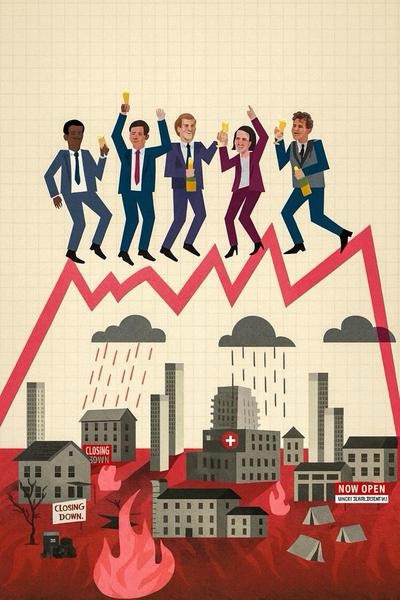
Many of us do not realize that private equity firms has always been about extraction, not creation. The model is simple. Borrow heavily, buy a company, slash jobs and benefits, sell off assets, and walk away with fees long before the damage shows. Communities are left with shuttered stores, abandoned buildings, bankrupt chains, and broken promises.

The list of casualties is long. Toys “R” Us was loaded with more than $5 billion dollars in debt by Bain Capital and KKR before it collapsed, taking 30,000 jobs with it. Payless ShoeSource closed its doors, erasing 18,000 jobs. J. Crew, Gymboree, Shopko, Forever 21, and Sears each followed the same path. Behind nearly every failure was a private equity deal that turned once-profitable companies into vehicles for debt. Blackstone, the largest of them all, drew criticism for gutting nursing homes and rental housing, where residents and tenants bore the consequences. Carlyle, Apollo, and Sycamore Partners engineered deals that enriched executives while leaving behind bankruptcies across retail, energy, and health care.

The damage has never been limited to debt. Private equity firms extract billions in fees on top of what they load onto companies. They sell the land and buildings, forcing the very businesses they own to pay rent back to them. In franchise models, they skim off royalty payments while cutting services and staff. They charge management fees to companies they already control, ensuring that even if a business fails, the firm still profits. These practices are not side effects. They are the business model.

For years the system ran on cheap money. With interest rates near zero, debt was abundant and investors were eager. Firms could buy, bleed, and flip companies in two or three years. That era is gone. Interest rates now sit above five percent. Debt costs more, buyers are scarce, and the IPO market has dried up. Firms are stuck holding companies that are drowning under the very leverage designed to enrich their owners.

The numbers are staggering. Nearly $12 trillion dollars in private equity assets now sit unsold. Exit activity has collapsed more than 70 percent since 2021. To raise cash, firms are borrowing against their own portfolios with NAV loans or dumping stakes at steep discounts on the secondary market. Even the giants like Blackstone, KKR, Apollo, Carlyle, Bain are stuck with bad debt no one wants. They cannot sell, yet their investors are demanding cash.

The quiet truth is that these firms are already maneuvering for Washington’s help. During the 2008 financial crisis, banks and insurers were rescued with taxpayer dollars. Private equity, which profited handsomely off that same collapse, is positioning itself for similar treatment.

This is not just an elite problem. It is a national one. When private equity runs out of road, it is not the billionaire partners who suffer. It is the workers whose jobs are cut, the retirees whose pensions cannot meet obligations, the students whose tuition rises because endowments cannot keep pace, and the taxpayers who are asked to backstop the system.

The parallels to 2008 are frightening. Then it was mortgage backed securities. Now it is unsellable companies and illiquid funds. In 2008, families lost homes and jobs while Wall Street was saved. Today the scale is even larger. With trillions in assets frozen, the next bailout could dwarf the last one.

Meanwhile, private equity’s destruction also extends into America’s hospitals and nursing homes and people are paying with their lives. Studies show that Medicare patients undergoing emergency surgeries in private equity–owned hospitals are 42 percent more likely to die within 30 days compared to those treated in community hospitals . A nationwide study found infections, falls, and other preventable adverse events increased following private equity takeovers of hospitals . Even the U.S. Department of Health and Human Services condemned the impact, warning that private equity ownership of nursing homes led to an 11 percent increase in patient deaths .

Recent reporting shows the financial calculus behind these tragedies. Nursing home operators in New York’s Capital Region diverted Medicare and Medicaid funds through inflated rent and bogus salaries. That left facilities chronically understaffed and suffering neglect so severe that it led to cases of serious injury and death .

By turning hospitals and nursing homes into profit centers rather than care centers, private equity firms aren’t just bankrupting businesses, they are literally killing people. And when that business model collapses, it will be everyday Americans who pay the cost once again.

The message is not subtle. If private equity’s gamble fails, the richest players will once again be saved. For ordinary Americans, the reckoning will look like it always does. Lost jobs. Higher taxes. Vanishing pensions. Rising tuition. And another generation paying for someone else’s greed.

This is the American cycle. The profits are privatized, the losses are socialized, and working families are forced to carry the cost.

The Private Equity Trap: How Harvard, Yale, and Princeton Got Caught in a Liquidity Crisis

For decades, private equity was the hottest corner of finance. The model was simple. Buy a company, cut costs, load it with debt and fees, polish the books, and sell it again within two to three years for a hefty profit. It was called the “flip,” and it made fortunes for firms like Blackstone, KKR, and Carlyle. Endowments and pensions rushed to get a piece of it.

That model is now broken.

The exits that once came fast and lucrative have slowed to a crawl. A world of near-zero interest rates is gone. Debt that once financed buyouts at minimal cost now comes with punishing interest, squeezing margins and stretching holding periods. Instead of flipping companies in two years, funds are sitting on assets for six, seven, even ten years. The portfolio backlog is staggering: more than $12 trillion worth of private equity assets sit unsold worldwide.

And at the center of this crisis are the universities that built their wealth on the promise of private equity. Harvard, Yale, and Princeton reshaped modern investing by betting heavily on illiquid alternatives. They now face the consequences of that bet.

The Death of the Flip

The two-year turnaround was never sustainable, but for a time it worked. Cheap debt fueled endless rounds of leveraged buyouts, where firms borrowed heavily, stripped assets, cut staff, and pushed companies back to market at inflated valuations.

But the cycle depended on two things: cheap money and eager buyers. Both have disappeared. The Federal Reserve’s rate hikes have doubled and tripled the cost of debt financing. Buyers are cautious, corporate balance sheets are tighter, and the IPO window remains largely shut.

Exit activity tells the story. In 2021, private equity firms sold $840 billion worth of companies. By 2023, that figure had collapsed to $234 billion, a drop of 72 percent. Even with a partial rebound in 2024 to $468 billion, exits are far too low to clear the backlog. Funds are holding twice as many assets as they did in 2019, but are selling them at the same pace as five years ago.

Without exits, distributions to investors dry up. Endowments that expected cash back to fund university budgets are left waiting.

Interest Rates as the Choke Point

Private equity’s entire model is built on leverage. A firm that buys a company for $10 billion may finance $7 billion of that price with debt, leaving just $3 billion of investor equity. If interest rates are low, debt is cheap, and any improvement in the business magnifies returns.

But with rates at five percent or higher, the math no longer works. Debt service eats into earnings. Refinancing becomes expensive or impossible. Companies bought at lofty valuations in 2020 and 2021 are now struggling to cover interest costs, let alone generate attractive profits for resale.

For the funds that hold them, paper valuations remain high, but real buyers demand discounts. That gap between reported NAV and market reality is another reason sales have slowed.

The Mechanics of Desperation

To keep investors from revolting, firms have engineered liquidity out of thin air. NAV loans lines of credit secured by the assets in a fund allow managers to borrow cash and hand it back to investors as if it were a distribution. Continuation funds where a firm sells a portfolio company from one of its funds into another fund it also controls in effect creates the illusion of an exit, while extending the holding period indefinitely.

On the investor side, endowments and pensions have turned to the secondary market, selling their stakes in private equity funds to buyers willing to take them at a discount. In 2024, secondary volume hit a record $155 billion. Harvard sold $1 billion worth of fund stakes. Yale is preparing to sell as much as $6 billion. The New York City pension system sold $5 billion. Buyers snapped them up at 10 to 15 percent discounts to stated value. For venture portfolios, the discounts were as steep as 50 percent.

These maneuvers do not solve the problem. They buy time. The only true fix is exits with real sales, IPOs, or recapitalizations and the industry is years away from clearing the overhang.

Case Studies: The Ivy League Squeeze

Harvard has a $53 billion endowment, the largest in the world. Nearly 40 percent of it is tied up in private equity. In April 2025, Harvard moved to sell $1 billion of those stakes through Jefferies, while simultaneously planning to issue $750 million in bonds. The official explanation is liquidity management, not distress. But the resemblance to 2008, when Harvard was forced to borrow billions to cover private equity calls, is unmistakable.

Yale built the “Yale model,” with nearly half of its $41 billion endowment allocated to private assets. For years, this made Yale the envy of institutional investors. But in 2024, Yale returned just 5.7 percent, compared to 13.5 percent for a basic stock-bond index. Now it is exploring a $6 billion secondary sale, nearly 15 percent of its endowment. The sale is not about strategy. It is about cash.

Princeton has a smaller endowment, about $35 billion, but the same exposure. Its longtime CIO Andrew Golden called 2023 the worst liquidity environment he had ever seen. Princeton raised $1.4 billion in bonds to shore up its balance sheet. Like Harvard and Yale, it insists the strategy is intact. But the reality is that illiquidity has become a liability.

Why This Matters to Everyday Americans

It is tempting to see this as an elite problem, billion dollar universities mismanaging their fortune. But it is not.

Endowments fund scholarships, financial aid, and core research. If Harvard or Yale faces a liquidity squeeze, it means fewer students receive aid. It means tuition rises to fill the gap. It means labs lose funding and staff lose jobs. What begins as a crisis in private equity becomes a crisis for students and families.

The same holds true in pensions. State retirement systems have billions tied up in private equity. When distributions dry up, they cannot meet obligations to retirees. That shortfall has to be covered by raising taxes, cutting benefits, or, in the worst case, turning to the federal government for relief. For millions of working and middle class Americans, this is not abstract. It is their retirement on the line.

The parallels to 2008 are chilling. Then, it was mortgage backed securities that turned toxic. Homeowners defaulted, banks failed, and Washington rushed in with taxpayer bailouts. Families lost houses, jobs, and savings, while Wall Street was rescued. Today, the scale is even larger. With twelve trillion dollars in unsold assets stuck on private equity books, the next bailout could dwarf 2008.

Imagine the politics of that moment. A populist like Donald Trump could frame it as Ivy League elites and Wall Street executives begging for lifelines while ordinary Americans pay the price. But the structural interdependence is real. If endowments and pensions buckle, the pressure on Washington to intervene may be irresistible. The federal government does not have the fiscal room to absorb another trillion dollar rescue, yet that may be exactly what is asked of it.

The burden would not fall on universities or private equity firms alone. It would fall on taxpayers, on students already struggling with debt, on workers who depend on pensions, on families already squeezed by inflation and high borrowing costs. In short, it would fall on the very people who had no hand in creating the mess.

Private equity sold itself as the smartest bet of modern finance. But the two year flip is dead, interest rates have choked the model, and endowments that once trusted in illiquidity now find themselves trapped. For everyday Americans, the lesson is as clear as it was in 2008: when the smartest people in the room gamble with other people’s money and lose, it is everyone else who ends up paying the price.

BlackRock Doesn’t Just Own Tech. It Owns Your Future.

BlackRock doesn’t just own parts of Apple, Microsoft, and Amazon. It owns your food supply. It owns farmland. It owns water infrastructure. And through those investments, it owns a growing stake in the future of human survival itself.

What began in 1988 as a modest Wall Street firm built on risk management is now the largest asset manager in human history. BlackRock controls over $11 trillion , which is larger than the GDP of every country in the world except the United States and China.

But what most people still don’t realize is that BlackRock’s most important power grab didn’t happen on Wall Street. It happened quietly, across America’s farmland, its food systems, and its natural resources.

How Did We Get Here?

BlackRock’s expansion strategy was never about flashy takeovers. It was about ownership without attention. They don’t need to buy entire companies when they can buy enough shares to influence them all.

Through complex index funds and ETFs (Exchange-Traded Funds), BlackRock has quietly become a top shareholder in nearly every major corporation in America. Coca-Cola. PepsiCo. Kraft Heinz. Nestlé. Tyson Foods. Monsanto-Bayer. Even the companies that compete with each other are often owned by the same hand, BlackRock.

That includes food production, packaging, seeds, fertilizers, pesticides, farmland, water rights, grocery store chains, and agribusiness suppliers.

It is a spider web so vast that very few industries operate outside of its reach.

Farmland: The New Oil

In recent years, farmland has quietly become one of the hottest investments among America’s wealthiest. But few players have been as aggressive as BlackRock and its peers like Vanguard and State Street.

Why Farmland you may ask?

Simple. Land produces food, controls water access, and holds its value against inflation. In a world of uncertainty, farmland is power.

BlackRock has invested in farmland directly and indirectly through real estate investment trusts (REITs) like Farmland Partners and Gladstone Land Corporation. In some regions, institutional investors now own an estimated 30-50% of all available farmland.

For local farmers like Paul Rettler, this creates an impossible game that no one can win. Competing against trillion-dollar firms backed by infinite capital means the consolidation of agriculture isn’t slowing down, rather it’s accelerating.

The ESG Illusion

Much of BlackRock’s public messaging has centered around ESG, which stands for: Environmental, Social, and Governance investing , a framework designed to steer money toward sustainable and ethical practices.

But behind the marketing, ESG has often allowed BlackRock to reshape industries while still investing heavily in the very corporations most responsible for environmental harm.

Larry Fink, BlackRock’s billionaire CEO, has framed ESG as both a moral obligation and a business necessity. Yet BlackRock remains one of the largest shareholders in fossil fuel giants, industrial agriculture companies, and food manufacturers responsible for deforestation and soil degradation.

As environmental groups have pointed out daily, BlackRock has the ability to change the food system overnight. But profit almost always wins over principle and we have seen this outcome time and time again.

So What Does BlackRock Want?

It’s simple: Control. Influence. Permanence.

The more essential needs a company controls such as food, water, housing, energy, the less it matters who holds political office. Ownership is the real power.

When a handful of corporations control the basic elements of survival, the public becomes renters of everything, including their health, their homes, and their future.

This is the world being built right in front of us.

Water rights in California. Farmland in the Midwest. Global seed patents. Packaging monopolies. Shipping routes. Grocery store chains. Pharmaceutical partnerships. Tech platforms controlling communication.

This is not just about selling products.

This is about owning life itself.

So what can everyday people do?

Waiting for a politician to fix this system is like waiting for a thief to return what they stole. It is not going to happen.

But the answer is not fear. The answer is awareness. The answer is action.

It starts with taking back control wherever you can.

Buy from local farmers when possible. Grow your own food even if it is just herbs in your kitchen window. Filter your water. Cook your own meals. Learn how to read ingredient labels. Support local businesses over corporations when you can.

Most importantly, do your own research. Step outside of Google, mainstream media, and the same recycled talking points coming from media companies owned by the very corporations profiting from your confusion.

Seek independent sources. Read books. Listen to people on the ground, not just those in boardrooms. Question convenience when it comes at the cost of your health.

Learn how to be less dependent on the systems designed to keep you dependent.

Because at this point, we cannot wait for RFK. We cannot wait for politicians. We cannot wait for the same people who helped build this system to suddenly tear it down.

We have to start building something different starting in our homes, in our families, in our communities.

Not because it is trendy.

But because survival has always belonged to the people willing to think for themselves, take responsibility for their lives, and protect their future by any means necessary.

BRICS Expansion: The Biggest Challenge to the US Dollar?

BRICS, a coalition of emerging markets comprising Brazil, Russia, India, China, and South Africa, is welcoming six new members: Saudi Arabia, Iran, Egypt, Argentina, Ethiopia, and the United Arab Emirates. This growth aims to craft a fairer, inclusive, and prosperous world, says South African President Cyril Ramaphosa.

Historically, BRICS has aspired to strengthen its geopolitical standing to challenge Western dominance. Notably, the integration of significant energy exporters like Saudi Arabia, Iran, and the UAE will bolster this mission. Moreover, the potential lineup of countries eager to join BRICS reflects the world’s increasing disaffection with a primarily US-led global order.

However, some economists, like Gregory Daco from EY-Parthenon, express skepticism about BRICS matching the power of Western alliances like the G7 in the foreseeable future. The ambition to reduce dollar dependence (de-dollarization) appears ambitious, especially given the differing strategic priorities of BRICS members.

The concept of a unified BRICS currency to counterbalance the dollar has been a recurring theme, stirred up by remarks from Brazilian President Luiz Inácio Lula da Silva questioning the US dollar’s dominance. Yet, not all are on board with the idea. South Africa’s finance minister, Enoch Godongwana, recently voiced reservations about losing monetary policy independence with such a move. Moreover, the term BRIC’s creator, Jim O’Neill, called the idea of a shared currency “ridiculous,” referencing the challenges posed by political tensions between members like India and China.

While the prospect of a unified BRICS currency remains distant, the bloc is undeniably trying to lessen its dollar dependency. The group has expressed intentions to decrease reliance on the US dollar in international trade. Emphasizing this sentiment, Russian President Vladimir Putin highlighted the growing momentum of de-dollarization efforts. Moreover, there’s talk of promoting the Chinese renminbi as a reserve currency.

However, these ambitions face steep challenges. As of 2022, the US dollar was used in nearly 90% of global foreign exchange transactions. The renminbi represented a mere 2.5% of foreign exchange reserves, making its rise to challenge the US dollar, at least for now, a far-off dream. While BRICS grows and evolves, the journey to a post-dollar world seems laden with complexities and hurdles.

Fitch Downgrades U.S. Credit Rating Amid Rising Deficits and Political Turmoil

In a recent blow to the United States, Fitch Ratings has downgraded the nation’s credit rating from the highest possible AAA to AA+. The rating agency attributed the drop to increasing deficits and political conflict, which they believe threaten the government’s capacity to service its debts.

This decision was made two months following a last-minute agreement between the Biden administration and House Republicans to temporarily raise the debt ceiling, thereby narrowly dodging a potentially catastrophic federal default.

This isn’t the first time the U.S. has faced such a demotion. Back in 2011, amid a similar crisis regarding the debt ceiling, Standard & Poor’s reduced the United States’ AAA rating. At present, Moody’s Investors Service is the only major credit rating agency that continues to assign the U.S. the top AAA rating.

Despite recognizing the robustness of the U.S. economy and the benefits reaped from the dollar’s position as the world’s primary currency, Fitch expressed concerns about the escalating deficits and both political parties’ reluctance to address long-term fiscal issues. Fitch voiced limited faith in the government’s ability to effectively manage the country’s finances.

In response to the downgrade, Treasury Secretary Janet Yellen criticized Fitch’s decision as “arbitrary” and reliant on obsolete data. She emphasized that “Treasury securities remain the world’s preeminent safe and liquid asset” and affirmed the underlying strength of the U.S. economy.

According to Fitch, the expenditure caps set as part of the recent debt agreement in June merely scratch the surface of the overall budget and do not confront enduring issues, such as financing Social Security and Medicare for an aging populace.

With tax reductions and elevated government expenditure leading to an expansion of deficits in recent years, and coupled with increasing interest rates, the fiscal burden has grown. Government interest payments in the first nine months of the current fiscal year amounted to $652 billion, marking a 25% rise from the same period last year.

Maya Macguineas, the president of the Committee for a Responsible Federal Budget, responded to the downgrade, terming it a “wake-up call.” She stressed the urgent need for fiscal responsibility, stating, “We are clearly on an unsustainable fiscal path. We need to do better.”

The repeated political standoffs over the debt ceiling have not only eroded the faith in U.S. fiscal management but also put the longstanding reputation of U.S. government bonds at risk. For close to a hundred years, these bonds have been considered some of the safest investments globally, primarily because the U.S. seemed unlikely to default on payments.

However, with the recent debt ceiling impasses, there is growing concern that the U.S. might default for the first time. Over a decade ago, S&P pointed out political discord as a significant risk to the country’s governing ability, and many experts opine that the situation has deteriorated since.

Elevate Your Speaking Game: Why You Should Join Engaging Speakers as a Member and Chapter Director

Do you dream of a platform that not only sharpens your speaking prowess but also unites you with a community of driven professionals who share your passion? Search no more! Engaging Speakers is the ultimate destination for you. Continue reading to discover how embracing a membership and becoming a Chapter Director with Engaging Speakers can propel your speaking career to unparalleled heights and inspire you to act today.

Join a Supportive Community of Professionals

One of the primary benefits of Engaging Speakers is the opportunity to become part of a diverse and supportive community of professionals. By signing up as a member, you gain access to a network of speakers, entrepreneurs, and business owners who are dedicated to helping one another grow and succeed. This collaborative environment is perfect for fostering new connections and learning from others’ experiences.

Master Your Speaking Skills

Engaging Speakers offers its members numerous opportunities to improve their public speaking skills. With various workshops, webinars, and coaching sessions, you will be able to refine your craft, overcome stage fright, and deliver powerful messages with confidence. As a chapter director, you will have the opportunity to share your expertise with others, enabling you to grow as a speaker and leader.

Enhance Your Visibility and Credibility

Becoming a member of Engaging Speakers not only helps you improve your speaking skills but also increases your visibility and credibility within the industry. As a chapter director, you will have the opportunity to promote your business or brand through Engaging Speakers’ website, social media platforms, and events. This exposure will help you establish yourself as an authority in your field, attracting potential clients and opportunities.

Access to Exclusive Resources and Opportunities

Engaging Speakers offers its members an array of exclusive resources and opportunities. From receiving discounts on professional services to attending exclusive networking events, members enjoy numerous benefits. As a chapter director, you will have the chance to facilitate and organize events, creating opportunities for yourself and fellow members to connect, learn, and grow.

Give Back to the Community

Serving as a Chapter Director with Engaging Speakers is not only about personal growth but also about giving back to the community. By organizing events, sharing knowledge, and supporting fellow members, you will contribute to the overall development of the speaking community. This experience can be incredibly rewarding and fulfilling, as you witness the impact your efforts have on others.

Get Involved Today

Becoming a member and Chapter Director with Engaging Speakers is a game-changer for anyone looking to elevate their speaking career. With access to a supportive community, countless resources, and opportunities for growth, Engaging Speakers sets you on the path to success. Don’t miss out on this fantastic opportunity – sign up today and embark on an exciting journey towards becoming an influential speaker.

To learn more about Engaging Speakers and explore opportunities for involvement, feel free to reach out to us via email at info@engagingspeakers.com or give us a call at 800-689-1277.

Engaging Speakers

2735 Hassert Blvd

Suite 135-305

Naperville, IL 60564

Phone: 800-689-1277

Email: info@engagingspeakers.com

Middle class households made more than $2 trillion from homeownership over the past decade, showing it’s still a great way to build wealth

Real estate can still create huge wealth gains for young households. It’s buying the home in the first place that’s the problem.

Middle class households made more than $2 trillion from homeownership over the past decade, showing it’s still a great way to build wealth

Powerful Conversations: How High-Impact Leaders Communicate

iStock_000015269756XSmall[1].jpg

All leaders talk, but it is what they say and how they say it that determines whether the group succeeds or fails.

Think about it: the leader’s most fundamental and most important job is to be in touch with those around him or her. Whether it is in the hallways or on the phone, in the middle of the workday or after hours, while delivering a performance review to a key employee or a yearly address to thousands of employees, leaders are involved in a constant series of conversations.

Through these encounters, whether brief and spontaneous or scheduled and structured, leaders try to use their time with colleagues, employees, customers, and others to reach a variety of ends. Grabbing a moment, the leader takes the opportunity to influence and direct a member of the sales staff. A weekly meeting becomes a chance to coach a manager and gather information about the department’s morale and its financial numbers. A quick e-mail checks on the progress of a research project and gives a boost of recognition and support to the team. During a strategy meeting, the leader negotiates next steps with division heads and outlines a coordinated approach. At a company awards ceremony, he or she tries to hammer home a message about values and goals. In short, the leader, through his or her conversations, aims to foster relationships, build support networks, and sharpen organizational focus.

Yet outcomes from conversations are too often unclear. Perceptions don’t always match. Influences are frequently not as profound as one would hope. Communication is generally a struggle with mixed, uncertain, and unpredictable results. Too much conversation is ad hoc and hinges on moods, energy levels, relationships, and personalities. Sometimes a leader is right on point. Sometimes he or she clicks and forges a new connection. Other times, the leader misses the mark. Either way, he or she pushes on, lining up the next meeting, setting up the next goal, responding to the latest need for clarification.

Communication is never easy. Inevitably, when a leader is driving change and dealing with conflicting agendas, some conversations provide a challenge that tests the bounds and skill of experience. During the heat of a difficult conversation, you need to fall back on a discipline. You need clear communication that advances agendas, promotes learning, and strengthens relationships. It’s the difference between achieving objectives and having everything fall apart—and the difference between winning and losing.

Imagine having to let a close friend know that he or she is off a project because of poor performance, yet wanting at the same time to preserve the strength of the relationship. Imagine having to make necessary structural changes to an organization, realigning roles and positions in ways that involve cuts in the workforce, yet wanting at the same time to bolster morale and organizational commitment. These are the difficult conversations that High-Impact Leaders face every single day, so what makes them different from any other leader?

High-Impact Leaders are the people who get results. They are the ones who make things happen. They are the leaders who are able to continually advance a clear agenda, get others to buy into it, and move an organization, a division, or a team forward. Being a High-Impact Leader has nothing whatsoever to do with title or rank, because High-Impact Leaders can be found up, down, and across any organization.

-Impact Leaders are the ones who cause no surprises. They are explicit, consistent, concise, and authentic. They sometimes have an abundance of charisma, but that is clearly not a prerequisite. More to the point, High-Impact Leaders are the ones who take charge wherever they are. They are the ones others want to follow. They are also the leaders whose teams others consistently want to join. When they move on to new roles or new territories, they do not travel alone. Others ask to go with them.

These conditions result because High-Impact Leaders use the technology of Powerful Conversations and then match what they say with what they do. Through Powerful Conversations, they develop openness, honesty, and clarity in order to get others to believe and share in their goals, to gain commitments, and to foster trust. And they prove they are worthy of that trust by delivering on their own commitments and by making results happen.

The link between Powerful Conversations and High-Impact Leaders lies in the relationship between two concepts I refer to as Say and Do. I have seen people skilled at the art of Powerful Conversations nevertheless fail as leaders because they fail to live up to their words. As a result, they never become High-Impact Leaders. I have never known a High-Impact Leader, however, who was not also skilled at Powerful Conversations, whether conscious of that designation or not. To be a High-Impact Leader, you have to be able to conduct Powerful Conversations on a consistent basis and live up to the outcomes of those conversations. Why is this important? It has to do with trust—without which conversations cannot progress toward the realization of commitments.

One of the most important functions of a Powerful Conversation is to create clarity, a critical success factor for building trust. I cannot tell you how frequently I have been involved in situations in which a leader, reflecting on problems that have arisen, says, “I can’t believe they thought I meant that. I never had any intention of doing that.” And the followers say something like, “It’s unbelievable. Our leader made a clear commitment to do this and now denies it was ever part of the agenda.” Both sides shake their heads. Barriers go up. Trust is reduced or nonexistent.

True clarity implies that a leader says exactly what he or she means in such a way that his or her statements are received as intended. This requires openness, honesty, and an active and careful tracking of wants, needs, and commitments. It furthermore requires that those clear statements be lived up to with demonstrated actions built on organizational trust.

High-Impact Leaders today lead in a better way because they recognize that the shortest path to achieving objectives is to build trust and gain clear commitments from others. Specifically, they engage in Powerful Conversations to uncover the wants and needs of others in order to understand what will motivate those people to join forces with the leader and live up to the commitments of a conversation. They skillfully orchestrate the Powerful Conversations in which they engage to make clear all parties understand the exact commitments that have been made. Then they check into those commitments and make sure through follow-up conversations that the commitments can be kept. They track the wants and needs of others and find ways to reinforce their own desire to understand the wants and needs of others, often through continued follow-up conversations. High-Impact Leaders do these things because they know that trust must exist if the leader is to achieve his or her agenda through Powerful Conversations to create positive outcomes for their teams and stakeholders.

by Phil Harkins

5 Most Common Mistakes People Make with Life Insurance

Over the years, I’ve seen that there is a lot of confusion around this topic – from what type of insurance is best to how much you need and where to get it. With that in mind, below are the five most common mistakes people make when it comes to life insurance. Hopefully, through this list, you’ll be able to get a better understanding of how life insurance works and why it’s a good tool for you and your family.


gofundme
Mistake #1 – Having no life insurance at all

Many people simply overlook the importance of life insurance. It doesn’t appear to be something they need and it can be viewed as an added expense. But take a second to stop and consider all the important people in your life. If you weren’t there, how would they be impacted financially? It’s not fun to think about, but by “playing dead” you can begin to understand that life insurance is a critical tool to ensuring your family feels financially supported should anything happen to you. For instance, if you have any financial obligations, a life insurance policy will help to ensure that those burdens do not fall entirely on your family members and they can avoid starting a gofundme page in your name to pay for funeral cost. Remember, it is also important to get life insurance sooner rather than later because the cost goes up the older we get.


Layoff

Mistake #2 – Relying solely on employer-provided workplace life insurance

Life insurance provided by your workplace is an excellent benefit and can serve as a good starting point for your basic minimum coverage. But remember any life insurance provided automatically from your employer is only good as long as you work with the company. Chances are you will not be with the same company for your entire working career either by choice or by force and the insurance does not go with you. You can purchase additional coverage through your employer or on your own to help fill the gap.


term-vs-perm-venn-diagram

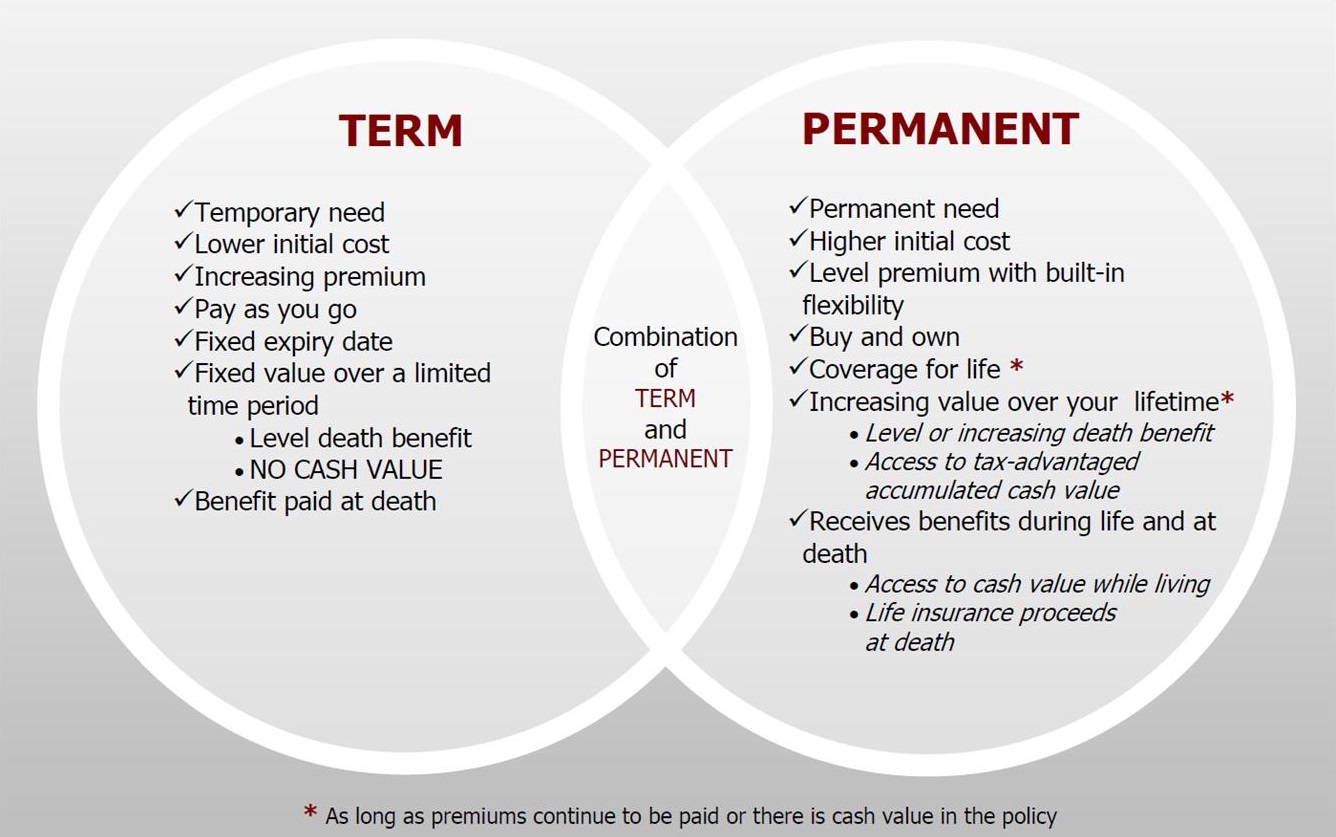
Mistake #3 – Only considering term life insurance

Term life insurance provides a “death” or “survivor” benefit, which is the amount beneficiaries receive if you pass away, for a certain period of time (15, 20 or 30 years are common increments), after which the coverage ends. An alternative solution would be to adopt cash value life insurance, which similarly provides a death benefit, but will grow over the years as long as you continue to fund the policy. Furthermore, cash value life insurance can help with financial obligations in a tax-advantaged way, whether it is paying for college, a business venture or retirement. These policies are generally more expensive, but can make a lot of sense if you are able to commit to regularly funding the policy.


Concern

Mistake #4 – Leaving retirement savings vulnerable

If you do not have any/enough life insurance, your family is likely to look to your retirement savings for financial support. This may seem like a safe solution for finding additional resources, but I would advise against using funds saved specifically for retirement for another purpose. If you are the higher earner in the family, your spouse may have been relying on those savings for his or her own retirement. Similarly, if your spouse is forced to liquidate or take large loans from the retirement account, it will hurt the potential long-term investment gains that would have benefitted your family down the road. It is important that the money you are saving is allotted for different goals – from life insurance to retirement – so that you are making the most of each savings opportunity.


Life-insurance-blog-post-150915

Mistake #5 – Guessing on how much life insurance you need

Many people who walk into my office have no idea how much life insurance they need. Is it five times annual salary? Ten times? Some other figure? There are many factors to take into account to figure out how much life insurance is right for you. Often this is where a financial professional can really help with the process. We can help quantify how much and what type of insurance makes the most sense for you and then help get that coverage in place. There are also many online calculators available to use as a starting point.

At the end of the day, we all just want to know that our loved ones will be taken care of after we’re gone. I have seen firsthand the peace of mind a life insurance policy can deliver. So this month, as life speeds up again, take a few minutes to pause and think about the future. Life Insurance Awareness month may only last 30 days, but a good policy will last for years to come!


7 Ways to Transform Your Money Mindset


The level of abundance in your life in any area (love, friendship, success or finances) is a reflection of your inner state — what you hold in your mind and heart.

Want to create a healthy and loving wealth consciousness? Here are seven ways to transform your money mindset.

1. Forgive your past.

So many of our unquestioned beliefs and behavior patterns today around money are simply things we picked up at childhood or our past. They are not true and they don’t serve our highest good.

Forgiveness is a way to release them from our heart and energy field, so we are no longer blindly re-creating the same patterns and keeping ourselves stuck at the same level of abundance.

Grab a piece of paper and write down all of the painful memories you have around money –involving your parents, lovers, bosses or even yourself — that make you feel icky, stressed, anxious or frustrated.

Now, go through your list and practice forgiveness until you release the negative charge from each memory. You could try:

(a) Using a mantra such as: I forgive you. I’m sorry. I love you.

(b) Placing your hand on your heart and simply letting yourself feel the emotions that arise — giving yourself permission to feel them fully without attaching a mental story to them. Often as you let your feelings rise and observe them without judgement, they will naturally dissolve.

(c) Having compassion. Maybe your parents fought in front of you or didn’t have enough money and it caused you pain, but they were doing their best from their level of awareness — and they were probably re-creating the patterns they had learnt when they were children. Everyone is a divine loving inner spirit deep down — sometimes our true nature just gets temporarily obscured, like a cloud covering the sun.

2. Change your story.

The poet Rumi once said: “This world is like a mountain. Your echo depends on you. If you scream good things, the world will give it back. If you scream bad things, the world will give it back.”

He is referring to the Universal law of creation. Your inner world (thoughts, beliefs and feelings) creates your outer reality.

Do you find yourself saying or thinking things like: I’m so broke… Making money is hard… I’m always down to my last dollar… I never have enough… Wanting money is bad or greedy…?

Try changing your story around money. Start saying and thinking things like: I’m so blessed… I have everything that I need… the Universe always takes care of me… I give to the world and I receive… it is safe for me to have abundance… I am provided for.

3. Open your mind to infinite possibilities.

When it comes to manifesting, your logical mind can be your worst enemy.

It has a limited capacity to think beyond what it already knows, and it can be quick to tell you things like: Well, you can’t earn more from your current job, so receiving more money is, frankly, impossible.

When you have unexamined assumptions that you can only receive money in certain pre-determined ways — like a pay cheque from a day job — you block the Universe from finding other amazingly creative ways to bring you abundance.

Begin asking the Universe: What would it take for more money to flow to me? What would it take for me to get paid for being me? What would it take for creative ideas to come to me?

4. Practice gratitude.

The world is a reflection of you. When you look around your life and see and feel lack, the Universe receives the message to send you more lack.

So many of us suffer from a condition called Onlyness. We look at our bank balance and think: I only have $42. We look at our wardrobes and think: I only have these clothes to choose from. We look at our lives and think: I only have this much love, friendship, success, wellbeing or happiness.

When you start looking around your life and seeing everything as evidence of abundance, and feeling thankful and deeply grateful, the Universe sends you more abundance.

Look at your bank balance and think: Wow, I have a whole $42 to spend, that’s awesome. Look at your wardrobe and thank: Wow, I have warm clothes for my temple, how amazing is that? Look at your life and think: Wow, I already have this much love, friendship, success, wellbeing and happiness, and I am excited for even more. I am so grateful to be alive, adventuring in time and space, and I am going to soak up and appreciate every moment.

Bless your money as it goes in and out of your life. Bless it as you buy something as simple as your morning coffee. Pause and give thanks to the Universe for providing so much for you.

5. Create space.

When your life is full to the brim with old energy, memories and clutter, you are not symbolically or energetically creating space for abundance to come into your life.

Do a life assessment — look lovingly and honestly at your home, possessions, bank balance, love life, friends, career, leisure time, wellbeing and lifestyle.

Where are you not being true to your heart, soul and values? What needs to go in order for you to feel freer, lighter and liberated?

The more you remove anything that no longer serves you, the more space you create — physically and emotionally — for new people, opportunities and abundance to flow into your life.

6. Know your worth.

You are a divine spiritual being having a human experience.

You are the Universe experience itself through you. Your creator desires for you to experience endless happiness, peace and fulfillment.

Until you know your true nature and worth, you will probably experience feelings of guilt and doubt around receiving and abundance.

When you wake up to who you really are, you begin to realize that you are not here just to struggle and survive – you are here to love, create, expand and thrive.

7. Take small steps to cultivate the feeling of abundance.

Abundance is not a number on a bank statement, a large house or a luxury holiday. Abundance is a feeling.

Think about what abundance means to you. Does it mean freedom? Does it mean generosity? Does it mean indulgence?

When you know what abundance means to you, you can start taking baby steps to cultivate the feeling of abundance on a daily basis.

You can do this through visualization (imagining your dreams already being real) or by looking around your life and coming up with creative ways to feel the way you want to feel.

Maybe you feel abundant when you: spend a whole hour with a good book and a glass of wine; cook dinner for friends; have freshly washed hair and wear your favorite outfit; or carry a $100 note in your wallet. Start doing these small actions more often.

When you create the feeling of abundance within you, the Universe will pick up your new signal and start bringing you circumstances to match your new vibration.

Elyse Santilli Writer and life coach at NotesOnBliss.com, your guidebook to happiness and creating a beautiful life

Elyse is a writer, life coach and happiness teacher at NotesOnBliss.com and the creator of the Beautiful Life Bootcamp online course. She teaches people to align with their inner spirit, design a life they love, and expand their happiness and inner peace. For updates and inspiration, sign up now.