As a seasoned travel enthusiast, I’ve experienced my fair share of luxury resorts, but my recent stay at Breathless Riviera Cancun Resort & Spa was truly unparalleled. Nestled between the picturesque Caribbean Sea and the Lagoon of Bahia Petempich, this adult-only paradise redefines the all-inclusive experience with its unlimited luxury approach.
Upon arrival, I was captivated by the resort’s modern design and vibrant atmosphere. The unique layout, featuring three horseshoe-shaped buildings each with their distinct vibe, immediately set the stage for an extraordinary getaway. I stayed in the Xcelerate Junior Suite Swimout Ocean Front King, a marvel of comfort and elegance. The suite’s standout feature was undoubtedly the private pool, offering a serene escape with stunning sea views. Inside, the amenities, including a well-stocked mini-bar, plush seating area, and a sleek flat-screen TV, ensured my every need was met.
The resort’s commitment to high standards was evident in their cleaning practices. From the moment I began planning my trip to my safe journey home, their heightened health and safety measures provided peace of mind, allowing me to fully immerse myself in the experience.
Dining at Breathless Riviera Cancun was a gastronomic adventure. With various dining venues, each meal was an exploration of global cuisines, served in the most enchanting settings. The bars and lounges, pouring unlimited premium spirits, were perfect for evening relaxation and socializing.
The heart of the resort is its vibrant energy and social atmosphere. Whether basking in the tranquility of the xhale club section, mixing and mingling in the energy center, or diving into the excitement of the xcelerate Party Zone, there was never a dull moment. The sparkling social and party pools, set amidst lush landscapes, were the hubs of daytime entertainment and the venues for the resort’s spectacular events and parties.
Breathless Riviera Cancun offers a myriad of activities and experiences, from high-energy events and entertainment to tranquil moments of relaxation, making it ideal for couples, friends, and solo travelers looking to indulge in a lively yet luxurious retreat.
My stay at Breathless Riviera Cancun Resort & Spa was nothing short of extraordinary. The resort’s unique blend of vibrant fun, luxurious accommodations, night parties, and unwavering commitment to guest safety and satisfaction sets it apart as a premier destination in Cancun. Whether you’re planning a romantic getaway, a bachelor or bachelorette party, or simply a much-needed escape from the ordinary, Breathless Riviera Cancun promises an experience that you’ll cherish forever.
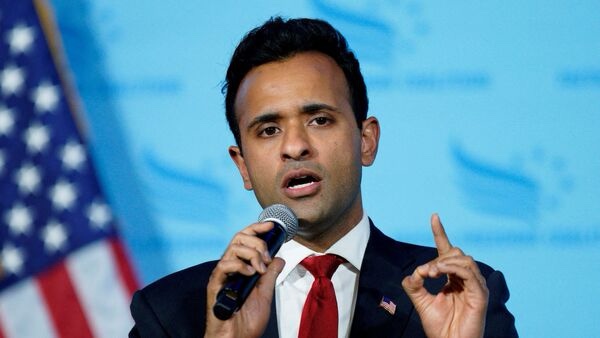
Vivek Ramaswamy, a multimillionaire former biotech executive, will seek to jump-start his ebbing 2024 Republican presidential campaign at Wednesday night’s fourth debate.
In the complex and ever-changing landscape of American politics, 38-year-old Vivek Ganapathy Ramaswamy emerges as a standout figure in the 2024 presidential election, embodying a story that’s deeply intertwined with the American dream.
Early Roots and Formative Years
Born in Cincinnati, Ohio, on August 9, 1985, Vivek’s life is a narrative shaped by a blend of cultural heritage and intellectual rigor. The son of Indian immigrants, his upbringing was a fusion of his family’s Hindu practices and the influences from his conservative Christian piano teacher. These diverse influences laid the groundwork for his multifaceted worldview.
A standout student, Vivek attended St. Xavier High School, a Jesuit Catholic institution, graduating as valedictorian. His academic prowess was matched by his skill on the tennis court, where he excelled as a nationally ranked junior player. His journey then led him to Harvard University, where he graduated summa cum laude in biology, known for his libertarian leanings and love for debate.
Venturing into Business and Biotech
Post-Harvard, Vivek’s path veered into the realms of finance and biotechnology. His entrepreneurial spirit saw him co-founding Campus Venture Network and joining QVT Financial, where he rose to partner. In 2014, he founded Roivant Sciences, a firm focused on developing underutilized drugs, marking his significant entry into the biotech industry.
A Political Ascent
Vivek’s political journey is marked by his firm stance against ESG investing and ‘woke culture’ in the corporate sector, themes he explores in his book “Woke, Inc.” His presidential campaign, encapsulated under the banner “America First 2.0,” advocates for radical changes across American society and governance, challenging established political norms.
Debate Stage: A Platform for Provocation
Ramaswamy’s performance in the December 6, 2023, debate painted him as a provocative figure, echoing the tactics of former President Donald Trump. His controversial statements, embracing far-right conspiracy theories, and aggressive attacks on opponents, signal a divisive and unconventional political strategy.
Policy Propositions and Their Echoes
His policies reflect a bold vision, advocating for a reshaping of the American social fabric, economy, and governance. From challenging the Department of Education and FBI to confrontational stances on foreign policy, these proposals, if enacted, could lead to sweeping changes in the nation’s trajectory.
A Candidate of Contrasts
Vivek Ramaswamy’s story from the son of immigrants to a presidential contender is more than a political narrative; it’s a reflection of the multifaceted American identity. His campaign, a mix of conservative ideals and radical proposals, stirs a debate about America’s future. Whether his vision aligns with the broader electorate is a question yet to be answered, but his influence on the political discourse is unmistakable.
Decades ago, the corridors of American politics witnessed a series of decisions that would dramatically reshape the landscape of African American communities. This story begins in the halls of power, where policies and laws were crafted, setting off a chain of events that would echo through generations. From the Reagan era’s war on drugs to the legislative intricacies underpinning Joe Biden’s rise in the political arena, these decisions painted a complex picture of intention versus impact. This aim is to untangle this complex web, tracing the roots of policies that have left a lasting imprint on society. We delve into the intricate interplay of legislation and its intended consequences, piecing together how political maneuvers have sculpturally shaped the realities of countless individuals and communities across the nation.
The 1980s, under the presidency of Ronald Reagan, marked a pivotal era where international intrigue and domestic policy collided. The Iran-Contra Affair, a scandal defined by covert arms sales and secret funding, not only dominated headlines but also served as a backdrop to the escalating War on Drugs. This war, declared with a mission to eradicate drug abuse, inadvertently laid the groundwork for a crisis in African American communities.
Simultaneously, a young senator named Joe Biden was rising through the political ranks. A figure who would come to shape significant aspects of criminal justice policy, Biden’s career in the 1980s and beyond reflects the complex relationship between American politics and the African American community. His role in shaping the Anti-Drug Abuse Act of 1986, with its disparate sentencing for crack and powder cocaine, had far-reaching impacts, disproportionately affecting African Americans and contributing to a surge in incarceration rates.
As the narrative progressed into the 1990s, Biden’s influence continued to grow. His involvement in crafting the 1994 Violent Crime Control and Law Enforcement Act further entrenched the trend of mass incarceration. Though aimed at addressing rampant crime, the bill’s consequences rippled through African American communities, deepening the chasms of inequality.
Decades later, during his 2020 presidential campaign, Biden’s rhetoric reflected a shift. His acknowledgment of the impact of these policies, coupled with promises of reform, marked a departure from his earlier stances. However, this shift was not without its controversies. Biden’s declaration in a 2020 interview that questioned African American allegiance to the Democratic Party sparked a conversation about the taken-for-granted African American vote in U.S. politics.
Biden’s long-standing pledge to Zionism, mirroring the broader U.S. political landscape’s support for Israel, further adds to the narrative’s complexity. It reflects a broader theme in American politics: the alignment of foreign policy interests, often at the expense of addressing pressing domestic issues.
The story of U.S. drug policy and its impact on African American communities, intertwined with Biden’s career, stands as a testament to the cyclical nature of political priorities and the often contradictory nature of government policies. It highlights a dissonance between the quest for votes from minority communities and the legislative actions that have historically impacted them.
This evolving narrative, chronicled over several decades and various administrations, is not merely a historical account; it serves as a reflective mirror for American society. In an era where political promises ebb and flow with the tide of public opinion, the importance of scrutinizing policy decisions and understanding their long-term impacts becomes paramount. As voters, the responsibility lies in our hands to delve into the history of those we elect into power.
It’s a reminder that genuine representation in the corridors of power and accountability are not just political ideals but necessities. As we stand at the crossroads of another election, it is crucial to remember that the votes we cast are echoes of our collective history and aspirations. We must challenge ourselves to look beyond the rhetoric, to understand the past of those we entrust with our future, ensuring our decisions are informed, and our voices are heard in shaping a more equitable and just society. As James Baldwin once said, “Not everything that is faced can be changed, but nothing can be changed until it is faced.”
Born on October 21, 1949, in Tel Aviv, Israel, Netanyahu’s roots trace back to Poland. His father, Benzion Netanyahu, born Benzion Mileikowsky, was a historian specializing in the Jewish Golden Age in Spain. Benzion was an ardent Zionist and was involved in the Revisionist Zionism movement, a right-wing faction of Zionism founded by Ze’ev Jabotinsky. Netanyahu’s mother, Tzila Segal, was born in Petah Tikva, then part of Ottoman Palestine. The family name was changed to Netanyahu, reflecting their Hebrew identity. This background, steeped in Zionist ideology and Jewish history, profoundly influenced Netanyahu’s own political and ideological beliefs.
Education and Military Service: Netanyahu’s formative years were marked by frequent moves between Israel and the United States, reflecting his father’s academic career. This bicultural upbringing contributed to his fluent English and understanding of Western culture. He completed his high school education in the U.S. before returning to Israel to serve in the Israel Defense Forces. He joined the elite special forces unit Sayeret Matkal, participating in numerous operations, including the 1967 Six-Day War. His military experience, particularly the tragic death of his brother Yonatan during the Entebbe raid in 1976, deeply impacted him and reinforced his commitment to Israel’s security.
Post-military, Netanyahu returned to the United States for higher education. He earned a Bachelor of Science degree in architecture and a Master of Science degree in management studies from the Massachusetts Institute of Technology. He also studied political science at Harvard University. This academic background in architecture and management, combined with his military experience, laid the groundwork for his strategic and analytical approach to politics.
Political Career: Netanyahu’s political ascent began in the 1980s as the Israeli ambassador to the United Nations, where he became known for his articulate defense of Israel on the international stage. He then moved into Israeli domestic politics, joining the right-wing Likud party. In 1996, he was elected Prime Minister of Israel, becoming the youngest person to hold this office.
His tenure has been characterized by a hardline approach to security and the Israeli-Palestinian conflict, driven by his belief in the importance of a strong, secure Jewish state. He has been a vocal opponent of the Iran nuclear deal, an advocate for strong ties with the United States, and a proponent of expanding Israeli settlements in the West Bank, despite international criticism and condemnation.
Netanyahu’s career has not been without controversy. His policies on the Israeli-Palestinian conflict, particularly the treatment of Palestinians and the expansion of settlements into the West Bank, have been a source of domestic and international division. He has faced multiple allegations of corruption, which have sparked protests and legal challenges, yet he has maintained significant political support and resilience in Israel.
Views on Zionism and Israel as a Jewish State: Influenced by his father’s Revisionist Zionism, Netanyahu strongly believes in Israel as a Jewish state, a refuge, and a homeland for Jews worldwide. This view has shaped much of his policy, especially regarding the Israeli-Palestinian conflict and settlements. His stance often sparks debate about the nature of Zionism and the future of a two-state solution which he vehemently oppose.
Netanyahu’s impact on Israeli politics and society is profound. He has shifted the country’s political discourse towards a right-wing, security-first perspective. His tenure has seen Israel navigate complex geopolitical challenges, including relations with neighboring countries and the broader Middle East.
Conflict with Israeli Public: Despite his long tenure, Netanyahu’s policies have deeply polarized Israeli society. His approach to the Israeli-Palestinian conflict, his expansionist policies, and the allegations of corruption have led to significant domestic conflict, with many Israelis questioning the direction of their country under his leadership.
Endurance in Israeli Politics: Netanyahu’s ability to stay in power for so long can be attributed to his political acumen, ability to navigate Israel’s complex coalition politics, and his resonant message of security and national strength in a region marked by instability.
Benjamin Netanyahu’s life and political journey reflect the turbulence and complexities of Israeli and Middle Eastern politics. His legacy, marked by his commitment to a secure, Jewish-majority Israel, his involvement in regional conflicts, and his embroilment in controversies, leaves a lasting imprint on the state of Israel and its place in the world.
A series of court challenges seek to upend longstanding real estate industry practices that determine the commissions agents receive on the sale of a home — and who foots the bill.
A federal jury in one of those cases on Tuesday ordered the National Association of Realtors along with some of the nation’s biggest real estate brokerages to pay almost $1.8 billion in damages, after finding they artificially inflated commissions paid to real estate agents.
The class-action lawsuit was filed in 2019 on behalf of 500,000 home sellers in Missouri and some border towns. The verdict stated that the defendants “conspired to require home sellers to pay the broker representing the buyer of their homes in violation of federal antitrust law.”
If treble damages — which allows plaintiffs to potentially receive up to three times actual or compensatory damages — are awarded, then the defendants may have to pay more than $5 billion.
“This matter is not close to being final as we will appeal the jury’s verdict,” Mantill Williams, a spokesman for the NAR, said in a statement. “In the interim, we will ask the court to reduce the damages awarded by the jury.”https://76b575ca9530c4e3b3e66a54a9d20e9c.safeframe.googlesyndication.com/safeframe/1-0-40/html/container.html?n=0
Williams said it will likely be several years before the case is resolved.
But already the NAR and several real estate brokerages are facing another lawsuit over agent commission rules. Fresh off winning the verdict in the 2019 case, the lawyers filed a new class-action lawsuit in the U.S. District Court for the Western District of Missouri that seeks class-action status covering anyone in the U.S. who sold a home in the last five years. It names the trade association and seven brokerage companies, including Redfin Corp., Weichert Realtors and Compass Inc.
“What’s at issue nationwide is costing Americans about $60 billion in extra real estate commissions,” said Michael Ketchmark, one of the attorneys representing the plaintiffs in the lawsuits.
The focus of the lawsuits is an NAR rule that requires that home sellers offer to pay the commission for the agent representing the homebuyer when they advertise their property on a local Multiple Listings Service, where a majority of U.S. homes are listed for sale. This is in addition to also having to cover the commission for their listing agent or broker.
The NAR’s rules also prohibit a buyer’s agent from making home purchase offers contingent on the reduction of their commission, according to the complaint.
“Defendants’ conspiracy forces home sellers to pay a cost that, in a competitive market and were it not for defendants’ anticompetitive restraint, would be paid by the buyer,” the plaintiffs argued in the lawsuit filed Tuesday.
Plaintiffs also claim that the NAR requirement effectively keeps commissions for a homebuyer’s agent artificially high.
If NAR’s “Mandatory Offer of Compensation Rule” were not in place, then homebuyers would foot the bill for their agent’s commission, which would open the door for competition — and lower commissions — among agents vying to represent a homebuyer, the plaintiffs contend.
The NAR argues that the practice of listing brokers making offers of compensation to buyer brokers is best for consumers.null
“It gives the greatest number of buyers a chance to afford a home and professional representation, while also giving sellers access to the greatest number of buyers,” Williams said.
The NAR spokesman also noted that the trade association’s policies have always required that an offer of agent compensation be made without specifying an amount, adding that it could be as little as $1 or even a penny.
In July, the independent Bright MLS, which covers some states in the eastern part of the country, changed the rules so that it’s OK for a home listed in that region’s MLS to not include an offer of agent compensation at all. That still falls within NAR’s guidelines.null
“In addition, regardless of the offer, those offers are always negotiable,” Williams said.
As home prices have soared in recent years, pushing the national median sales price to $394,300 as of September, so have agents’ commissions.
“Today, what effectively happens is the buyer agent’s commissions are added to the sale price of the house, inflating the sale price,” said Stephen Brobeck, senior fellow at the Consumer Federation of America. “If sellers no longer had to pay the buyer agents, there wouldn’t be that inflation and buyers could negotiate the commission down and they would end up paying less money.”null
Typically, the home seller pays their listing agent, who then splits the commission with the buyer’s agent according to the NAR rules. Traditionally, that works out to a 5% to 6% commission split roughly evenly between the buyer’s and seller’s agents.
Such commissions are justified, given the professionalism agents offer their clients and the hefty expenses they often incur in preparing to sell a home, including costs for staging, marketing, photography, lock boxes and even cleaning, said Matthew Shelton, a Kansas City area real estate agent.
“Never have I had a seller even bat an eye or question a commission,” he said. “If somebody takes control and limits what commissions can be charged that would be more concerning, you know, if they put a cap on anything. I don’t think that that’s accurate or correct.”null
The 2019 lawsuit originally also included Anywhere Real Estate Inc. and Re/Max, but the two companies reached a settlement agreement, which included Anywhere paying $83.5 million, Re/Max paying $55 million, and the pair agreeing to pull back on their relationships with NAR.
Homebuyers and sellers aren’t likely to see any immediate change in the way agent commissions for homes listed on the MLS are typically handled, as the NAR has vowed to appeal Tuesday’s verdict.
However, the industry will be watching for what the court will do next now that the jury has spoken.
“What’s critical is how far the court orders the industry to restructure their compensation and offers,” Brobeck said. “The real solution is for buyers to be able to finance the buyer-agent commissions as part of their mortgages …. But there are regulatory barriers to that occurring right now — regulatory barriers that are strongly supported by the industry.”
In a blog post Tuesday, Redfin CEO Glenn Kelman noted that it may take days or weeks for the judge to decide what structural changes the jury’s verdict will entail, and possibly years of court appeals.
“For now, the initial size of the damages alone will ensure major change,” he wrote.
Last month, Redfin announced it would mandate that its brokers and agents withdraw from NAR membership, citing partly the trade association’s requirement of a fee for the buyer’s agent on all listings.
The agent commission lawsuits aren’t the first time that the residential real estate industry has drawn scrutiny about the impact its rules have on competition.
The Justice Department filed a complaint in 2020 against the NAR, alleging it established and enforced rules and policies that illegally restrained competition in residential real estate services. The government withdrew a proposed settlement agreement in 2021, saying the move would allow it to conduct a broader investigation of NAR’s rules and conduct.
___
Associated Press writer Michelle Chapman in New York and Heather Hollingsworth in Kansas City contributed to this report.
Growing up in America, understanding struggle is second nature. We’ve borne witness to the civil rights movement, the persistent fight for equality, and the daily challenges faced by many communities. Just as we’ve felt the weight of our own history, we can empathize deeply with the pain and suffering unfolding in the Middle East.
Gaza is a stark testament to the tragedies of conflict. Every bombed church, every shattered hospital, tells the story of innocent lives cut short, futures derailed, dreams crushed. As I watch this from afar, the weight of history rings in my ears, reminding me that injustice anywhere threatens justice everywhere.
At the same time, I can’t ignore the fear gripping Israel. The constant hum of sirens, the rush to bomb shelters, the anxiety of waiting for the next rocket. It’s a life no one should have to live, not in Israel, Gaza, or anywhere.
But here’s the truth, as raw and as real as it gets: violence only births more violence. We’ve seen it in our streets, in our history, and it’s clear as day in the Middle East. No matter the reasons, the aftermath is always the same: regular people, trying to live their lives, paying the highest price.
The tales of suffering in both Gaza and Israel aren’t just headlines for me. They’re reminders of what happens when hate is left unchecked, when we let our differences overshadow our shared humanity.
As Americans, we have a duty to stand against oppression, to voice our concerns when we see wrongs being committed, and to push for peace. It’s not about taking sides; it’s about recognizing that at the end of the day, it’s the innocent children, families, and communities that bear the brunt of these conflicts.
The road to peace is long and winding, filled with potholes and setbacks. But if there’s one thing our history has taught us, it’s that change, real change, comes from persistence, understanding, and a whole lot of love.
So, let’s channel that same energy, that same spirit of unity, and advocate for a world where children in both Gaza and Israel can look towards a future without fear.
BRICS, a coalition of emerging markets comprising Brazil, Russia, India, China, and South Africa, is welcoming six new members: Saudi Arabia, Iran, Egypt, Argentina, Ethiopia, and the United Arab Emirates. This growth aims to craft a fairer, inclusive, and prosperous world, says South African President Cyril Ramaphosa.
Historically, BRICS has aspired to strengthen its geopolitical standing to challenge Western dominance. Notably, the integration of significant energy exporters like Saudi Arabia, Iran, and the UAE will bolster this mission. Moreover, the potential lineup of countries eager to join BRICS reflects the world’s increasing disaffection with a primarily US-led global order.
However, some economists, like Gregory Daco from EY-Parthenon, express skepticism about BRICS matching the power of Western alliances like the G7 in the foreseeable future. The ambition to reduce dollar dependence (de-dollarization) appears ambitious, especially given the differing strategic priorities of BRICS members.
The concept of a unified BRICS currency to counterbalance the dollar has been a recurring theme, stirred up by remarks from Brazilian President Luiz Inácio Lula da Silva questioning the US dollar’s dominance. Yet, not all are on board with the idea. South Africa’s finance minister, Enoch Godongwana, recently voiced reservations about losing monetary policy independence with such a move. Moreover, the term BRIC’s creator, Jim O’Neill, called the idea of a shared currency “ridiculous,” referencing the challenges posed by political tensions between members like India and China.
While the prospect of a unified BRICS currency remains distant, the bloc is undeniably trying to lessen its dollar dependency. The group has expressed intentions to decrease reliance on the US dollar in international trade. Emphasizing this sentiment, Russian President Vladimir Putin highlighted the growing momentum of de-dollarization efforts. Moreover, there’s talk of promoting the Chinese renminbi as a reserve currency.
However, these ambitions face steep challenges. As of 2022, the US dollar was used in nearly 90% of global foreign exchange transactions. The renminbi represented a mere 2.5% of foreign exchange reserves, making its rise to challenge the US dollar, at least for now, a far-off dream. While BRICS grows and evolves, the journey to a post-dollar world seems laden with complexities and hurdles.
As someone who has served in the military, I’ve had firsthand insight into the geopolitical dynamics that still play out across the globe. One particular issue that has always been close to my heart is the persistent exploitation of African nations by former colonial powers and the United States.
Niger, a landlocked country in West Africa, serves as a stark example. It is the source of 5% of the world’s uranium, a precious resource vital for nuclear energy and weapons. Yet, despite its immense wealth beneath the ground, Niger consistently ranks as one of the world’s poorest countries. This incongruity can be attributed to the continued imperialism and exploitative tactics employed by Western nations.
Historically, countries like France and Great Britain have left indelible marks on Africa, ostensibly ending colonization, but in truth, perpetuating a new form of neocolonialism. France, for instance, still exerts considerable economic influence on many of its former colonies, including Niger. Complex agreements and unequal trade dynamics ensure that while African nations supply raw materials, they see only a fraction of the profits.
The United States, though not a colonial power in Africa, has also been implicated in this exploitative dynamic. The establishment of military bases across the continent serves dual purposes: it’s positioned as a safeguard against extremism and other threats, but it also ensures that the U.S. maintains a stronghold to protect its interests, which often include access to natural resources. During my time in the military, it was evident how strategic positioning wasn’t just about national security, but also about economic leverage.
Furthermore, it’s worth noting that while African countries export raw materials, they often have to import finished products at higher prices, further entrenching them in a cycle of poverty. The revenues from these natural resources, like uranium from Niger, do not equitably benefit the local communities. Instead, profits are siphoned off by multinational corporations and corrupt leaders, leaving the general populace grappling with poverty, unemployment, and underdevelopment.
Addressing this exploitation requires a multipronged approach:
Transparency in Trade Deals: International trade agreements involving African nations must be transparent, ensuring that they benefit local communities as much as they do foreign entities.
Empowering Local Economies: Investing in local infrastructure, education, and healthcare can help African nations process their own resources, creating jobs and reducing dependency on imports.
International Accountability: Global institutions, such as the UN, must hold countries accountable for exploitative practices, ushering in a new era of equitable and fair trade.
While the flags of colonial powers no longer fly over African capitals, the shadows of imperialism linger. It’s a collective responsibility, both of African governments and the international community, to dismantle these remnants of exploitation and pave the way for a brighter, more equitable future for the continent. As someone who has seen the intricacies of this exploitation up close, I urge everyone to educate themselves, advocate for change, and support policies that promote fairness and justice.
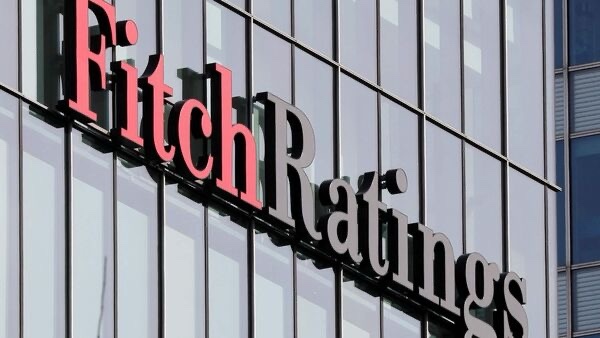
In a recent blow to the United States, Fitch Ratings has downgraded the nation’s credit rating from the highest possible AAA to AA+. The rating agency attributed the drop to increasing deficits and political conflict, which they believe threaten the government’s capacity to service its debts.
This decision was made two months following a last-minute agreement between the Biden administration and House Republicans to temporarily raise the debt ceiling, thereby narrowly dodging a potentially catastrophic federal default.
This isn’t the first time the U.S. has faced such a demotion. Back in 2011, amid a similar crisis regarding the debt ceiling, Standard & Poor’s reduced the United States’ AAA rating. At present, Moody’s Investors Service is the only major credit rating agency that continues to assign the U.S. the top AAA rating.
Despite recognizing the robustness of the U.S. economy and the benefits reaped from the dollar’s position as the world’s primary currency, Fitch expressed concerns about the escalating deficits and both political parties’ reluctance to address long-term fiscal issues. Fitch voiced limited faith in the government’s ability to effectively manage the country’s finances.
In response to the downgrade, Treasury Secretary Janet Yellen criticized Fitch’s decision as “arbitrary” and reliant on obsolete data. She emphasized that “Treasury securities remain the world’s preeminent safe and liquid asset” and affirmed the underlying strength of the U.S. economy.
According to Fitch, the expenditure caps set as part of the recent debt agreement in June merely scratch the surface of the overall budget and do not confront enduring issues, such as financing Social Security and Medicare for an aging populace.
With tax reductions and elevated government expenditure leading to an expansion of deficits in recent years, and coupled with increasing interest rates, the fiscal burden has grown. Government interest payments in the first nine months of the current fiscal year amounted to $652 billion, marking a 25% rise from the same period last year.
Maya Macguineas, the president of the Committee for a Responsible Federal Budget, responded to the downgrade, terming it a “wake-up call.” She stressed the urgent need for fiscal responsibility, stating, “We are clearly on an unsustainable fiscal path. We need to do better.”
The repeated political standoffs over the debt ceiling have not only eroded the faith in U.S. fiscal management but also put the longstanding reputation of U.S. government bonds at risk. For close to a hundred years, these bonds have been considered some of the safest investments globally, primarily because the U.S. seemed unlikely to default on payments.
However, with the recent debt ceiling impasses, there is growing concern that the U.S. might default for the first time. Over a decade ago, S&P pointed out political discord as a significant risk to the country’s governing ability, and many experts opine that the situation has deteriorated since.
What strategies do you use to increase comfort in your daily life?
As a middle aged man who’s carved a successful path in the financial sector, I’ve found that my comfort hinges on a delicate balance between my work, personal life, and my community. In the high-stakes world of finance, taking care of my health through regular workouts and healthy food choices is not just an option; it’s a necessity to keep my mind sharp. But mental strength, for me, goes beyond the physical—it’s about finding moments of calm amidst the chaos, stealing some quiet moments for meditation, and making sure I get enough rest to recharge. And while I do value my “me time,” the relationships I’ve built—with my family, friends, and mentors—play a crucial role in my overall well-being. Their understanding and support make a world of difference to my emotional comfort. And of course, being in finance, planning ahead and managing my time well helps maintain my comfort levels—it’s always better to stay ahead of the game, whether it’s money matters or just life in general. That’s how I ensure a sense of comfort and peace in my everyday life.
As the digitization of daily life accelerates, the world of gambling is not immune to this transition. Recent years have witnessed an explosion of online gambling, fueled by large media sports outlets, with ESPN leading the charge, often making sports shows unwatchable. This shift has profound implications for the sporting world, the athletes at its center, and the fans, young and old, who passionately follow their favorite teams and players.
The Push from Sports Outlets
For sports media platforms, the digitization of gambling represents a new frontier of audience engagement and a fresh stream of revenue. ESPN has been at the forefront of this transformation, incorporating gambling lines, odds, and statistics into their sports coverage. Last month at the NBA draft, a betting line was changed when NBA Insider Sham Charania posted that Scoot Henderson was “gaining serious momentum” as the No. 2 pick. The problem is Sham Charania is a paid brand name ambassador for Fan Duel and his tweet resulted in millions of dollars changing hands with what many consider was bad information. This brought to light the lack of regulations and oversight to prevent conflict of interest between members of the media who can influence betting markets and company’s like Fan Duel. Companies like ESPN and Fox Sports continue to blur the lines as they have effectively mainstreamed sports betting, lending an air of legitimacy to an activity previously associated with the outskirts of the sporting world.
ESPN, owned by Disney, and other sports outlets are leveraging their immense influence to not only provide sports news but also to shape the way fans engage with sports. By introducing betting elements in their broadcasts, these platforms have turned viewership into an interactive, higher-stakes experience. Now, fans aren’t just rooting for their team; they’re also potentially reaping financial gains or losing everything from the outcome.
Impact on Sports and Athletes
This increased focus on gambling has significant implications for the sports themselves and the athletes who compete. One major concern is the threat to the integrity of sports. While most bets are placed in good faith, there is an increased risk of match-fixing and corruption as the volume of sports betting grows. Several NFL players were recently suspended for betting on games, potentially ruining their careers and livelihoods. Rigging a game for betting gains may become tempting to unscrupulous individuals, casting a shadow over the purity of competition.
For athletes, the rise of online gambling can present a new kind of pressure. Knowing that their performance can affect not only their team’s fortunes but also the financial outcomes of countless fans adds a unique stressor. This added pressure could affect their performance, either spurring them on to greater heights or causing them to buckle under the weight of expectation.
Impact on Fans
From the fans’ perspective, the rise of online gambling has transformed the way they engage with sports. It’s no longer just about cheering for your team; now, there’s a personal stake in the game’s outcome. For some, this adds an exciting new dimension to their fandom, heightening the thrills of victory and the agonies of defeat. But for others, it can lead to financial distress and potential addiction.
Furthermore, there’s the potential to alter the dynamic between fans and athletes. Instead of viewing athletes as individuals who are striving for success in their sport, they may increasingly see them as mere components of their betting strategies. This could potentially lead to a dehumanization of athletes and a detachment from the essential spirit of sports.
As the rise of online gambling continues, fueled by sports outlets such as ESPN, Fox Sports, and CBS, it’s imperative that we carefully consider and address its potential impacts. Regulation will play a key role in ensuring the integrity of sports and protecting fans from financial exploitation. As we move forward, it’s crucial to regulate this new landscape with the goal of preserving the core values of sports: competition, teamwork, and integrity for this generation and generations to come.
A British billionaire who is feared to be on board the missing Titanic tourist submarinewrote a last post warning about temperamental weather conditions ahead of the mission.
Billionaire Hamish Harding, who has previously travelled on the Challenger Deep to the bottom of the ocean and on Jeff Bezos’ Blue Origin into space, posted on Instagram on Sunday to announce he was joining OceanGate Expeditions for their Titanic mission. That was the last time he posted before news broke that the submersible is missing somewhere in the Atlantic Ocean. In his eerie last post before the mission, Mr Harding said it would be “the first and only manned mission to the Titanic in 2023”. The father-of-two has not been heard from since.

























 Nkozi Knight