In today’s fast-paced business world, companies need to adapt quickly to changing market trends and consumer demands. One of the key drivers of this …
How Business Intelligence Empowers Agile Methodologies Across Industries
Category: Economy
Key Tips for Transitioning into a New Leadership Role Successfully

Stepping into a new leadership role is a major milestone in your career. There’s a sense of excitement, the determination to succeed, and maybe a …
Key Tips for Transitioning into a New Leadership Role Successfully
Lessons from a Chief Problem Solver: Insights from Cathy McKnight
Navigating a career is rarely a straight path. For many of us, uncertainty looms as we try to carve our place in the professional world. When Cathy …
Lessons from a Chief Problem Solver: Insights from Cathy McKnight

The Silent Killer: How Our Diet and Lifestyle Are Shortening Our Lives
By Nkozi Knight
I truly thought I was healthy. My BMI is only 25, and by most accounts, I look like I I am in great shape. But something wasn’t right for weeks. I felt tired all the time, my feet tingled, and my energy levels were nowhere near what they used to be when I would workout. Something inside me told me to get checked out, and what I found was alarming:
• A1C: 7.3% → Diabetes confirmed
• LDL (“bad” cholesterol): 198 mg/dL → Very high
• Non-fasting glucose: 219 mg/dL → Dangerously high
In other words, I was walking around with a silent killer inside me, completely unaware. And I’m not alone.
Black Men and the Health Crisis No One Talks About
Black men in the United States are disproportionately affected by diabetes, high blood pressure, heart disease, blood clots, and amputations, a lot of it comes down to our diet, lifestyle, and neglect of medical care. Here are some statistics that speak to that point:
• Black adults are 60% more likely to be diagnosed with diabetes than white adults (CDC, 2022).
• More than 40% of Black men have high blood pressure, increasing the risk of heart attack and stroke (American Heart Association, 2023).
• Diabetes-related amputations occur nearly 3 times more often in Black patients than in white patients (JAMA, 2021).
Yet, we don’t talk about it. We recently witnessed super dad, Lavar Ball lose his foot from such complications. We brush off the fatigue, the numbness, the tingling, the headaches, the difficulty in the bedroom, and the shortness of breath as just “getting older.” But these are warning signs that something is seriously wrong.
The Warning Signs You Can’t Ignore
• Tingling or numbness in your feet → Early sign of diabetic neuropathy, which can lead to amputation if untreated.
• Extreme fatigue → Could be due to high blood sugar, poor circulation, or even heart disease.
• Erectile dysfunction (ED) → Often an early symptom of diabetes or heart disease due to damaged blood vessels.
• Blurry vision → High blood sugar can lead to diabetic retinopathy, which can cause blindness.
• Slow-healing wounds → A sign of poor circulation, increasing the risk of infections and amputations.
• Frequent urination & constant thirst → Classic symptoms of diabetes.
If you’re experiencing any of these symptoms, it’s time to see a doctor immediately.
Fast Food & High Sugar Diets Are Killing Us
Let’s be real. Our beautiful culture is built around food, and not just any food, it always fried chicken, snacks, barbecue, mac and cheese, burgers, energy drinks, and other sugar-loaded drinks. We love to eat (at least I do), and food is a part of our identity. But it’s also the reason why we’re dying younger than we should.
• The average American consumes 17 teaspoons of added sugar per day which far beyond the recommended limit of 9 teaspoons for men (American Heart Association, 2023).
• Black Americans are more likely to consume sugar-sweetened beverages, which are directly linked to diabetes and heart disease (CDC, 2022).
• Red meat and processed meats (bacon, sausage, deli meat) increase the risk of heart disease by 18% and diabetes by 12% (Harvard School of Public Health, 2023).

The Solution: Skip the Steak, Choose the Chicken
I used to be that guy….grabbing a burger and fries on the go, ordering a steak just because I could, and washing it all down with a Sprite or Old Fashioned. But after seeing my numbers, I realized I was digging my own grave, and I have too many people depending on me to check out early.
I made the switch, and I urge you to do the same:
✔ No more red meat → Choose grilled chicken, turkey, or fish instead.
✔ No more sugary drinks → Drink water, unsweetened tea, or black coffee.
✔ No more processed carbs → Swap white bread & pasta for whole grains like quinoa & brown rice.
✔ More fiber, more greens, more movement.
And most importantly, please see a doctor before it’s too late.
Your Health Is in Your Hands
Black men, we can’t afford to ignore our health any longer. We too often put our own needs aside to take care of everyone else to our own demise. Too many of us are losing limbs, suffering strokes, and dying before our time. It’s not genetics at all, it’s the choices we make every day.
If you made it this far I ask you to not wait until it’s too late. Get your bloodwork done, eat like your life depends on it (because it does), and start moving.
We all deserve longer, healthier lives but we have to take action to make that a reality. I thank God for the people in my life who encouraged me to get checked out before it was too late, because too many of us ignore the warning signs until we can’t anymore. Let’s hope the MAHA movement brings attention to this silent killer that’s taking too many of us too soon. Our health is our responsibility so let’s fight for it.
Sources:
• CDC. (2022). Diabetes Statistics in the U.S.
• American Heart Association. (2023). Heart Disease & Stroke Risk in African Americans.
• Harvard School of Public Health. (2023). The Impact of Diet on Chronic Diseases.
• JAMA. (2021). Racial Disparities in Diabetes-Related Amputations.
How to Start a Successful Blog: A 12-Step Guide for Beginners

Starting your own blog has never been easier. In this post, we’ll cover the step-by-step process on how you can start a blog today, and why you …
How to Start a Successful Blog: A 12-Step Guide for Beginners
The Nakba of 2025: A New Chapter in a 77-Year Displacement

By N. Knight
February 2025
GAZA CITY — Seventy-seven years after the Nakba of 1948, in which Zionist paramilitary groups (later forming the Israeli Defense Forces) forcibly displaced more than 750,000 Palestinians during the creation of Israel, a new catastrophe is unfolding in Gaza. Then, as now, the mass removal of Palestinians was not just a consequence of war but a calculated effort to reshape the region’s demographics.
The original Nakba, or “catastrophe” in Arabic, saw entire villages erased, families expelled, and a people scattered across the Middle East with no path home. Today, with 1.5 million Palestinians displaced and Gaza reduced to rubble, history is repeating itself. What was once the forced exodus of Palestinian communities into Gaza and neighboring countries is now a campaign to permanently expel them from the land entirely.
And just as in 1948, this displacement has been backed by major world powers.
How the World Redefined a Nation Without Its People
Palestinians were never given a say in their removal. The decision to partition their homeland and create Israel was made by external powers, largely Britain and the United States, without the consent of the people already living there.
The Role of Winston Churchill and the British Mandate

Before Israel’s establishment, Palestine was under British rule as part of the League of Nations Mandate, a system intended to prepare nations for self-governance. But rather than supporting Palestinian self-determination, Britain instead paved the way for Zionist settlement under the Balfour Declaration of 1917, which promised a Jewish homeland in Palestine without consulting its Arab inhabitants.
Winston Churchill, as both Colonial Secretary and later as Prime Minister, was a staunch Zionist supporter who saw Jewish settlement as a British imperial interest. He dismissed Palestinian opposition outright, once stating:
“I do not admit that the dog in the manger has the final right to the manger, even though he may have lain there for a very long time.”
Under Churchill’s leadership, Britain facilitated Jewish immigration while crushing Palestinian resistance. By the time the British withdrew in 1948, Palestinians were politically powerless, abandoned to Zionist militias who would soon launch the campaign of forced displacement known as the Nakba.
Harry S. Truman’s Immediate Support for Ethnic Displacement

As the British withdrew, it was the United States under President Harry S. Truman that cemented Israel’s creation. Against the advice of his own State Department, which warned that recognizing Israel would spark mass displacement and long-term instability, Truman became the first world leader to formally recognize Israel just minutes after its declaration of independence on May 14, 1948.
Truman’s recognition was not just diplomatic. The United States provided Israel with critical financial and military aid, allowing the newly formed state to consolidate its territorial gains and prevent the return of displaced Palestinians.
The United Nations passed Resolution 194, affirming the right of Palestinian refugees to return to their homes. But Truman and his administration did nothing to enforce it. The result was that 750,000 Palestinians became permanent refugees, many of whom fled to the Gaza Strip only to find themselves trapped in a cycle of displacement that continues to this day.
From 1948 to 2025: A Continuing Nakba

Palestinians flee south via Salah al-Din Road, in central Gaza, on the third day of a temporary ceasefire between Israel and Hamas on November 26, 2023. © 2023 AP Photo/Hatem Moussa
What is happening now in Gaza follows the same pattern. The Israeli bombardment of Gaza has destroyed entire neighborhoods, killed over 100,000 Palestinians, and displaced 1.5 million people which is twice the number of refugees from 1948. The infrastructure of survival including hospitals, schools, and road, has been systematically wiped out. And now, current United States President Donald Trump has proposed ensuring that Palestinians never return.
Donald Trump’s plan to permanently expel Gaza’s residents and rebuild the land for Jewish settlers mirrors the policies of 1948, except now, the forced displacement is being openly endorsed as official United States policy. When as a question about Palestinian residents, he suggested they go to Egypt and Jordan, and redevelop Gaza into what he described as the “Riviera of the Middle East.”
A Global Response, and a Question
Internationally, Trump’s proposal has been met with sharp opposition. Saudi Arabia, Jordan, and Egypt have explicitly rejected the idea, warning that any forced resettlement of Palestinians into their territories would be a violation of sovereignty and a red line for the region. Saudi Foreign Minister Prince Faisal bin Farhan called it “a blatant attempt at ethnic cleansing that will not be tolerated by the Arab world.” Egyptian President Abdel Fattah el-Sisi reaffirmed that Egypt “will not accept the forced displacement of Palestinians into the Sinai.” Both nations have signaled that such a move could undermine diplomatic relations with Israel and the United States.
Yet, despite these warnings, the pattern remains unchanged. A population is being forcibly removed, their land repopulated with another ethnic group, and the world is expected to accept it as the price of geopolitics.
Which raises the question.
If the forced removal of an entire people, the destruction of their homes, and the resettlement of their land with another group is not ethnic cleansing, then what is
And if the world will not act to stop it now, will it ever?
Bitcoin Falls to 11-Day Low Amid Broader Tech Selloff

Bitcoin fell below $100,000 on Monday, marking its lowest level in 11 days, as a wave of caution swept through global markets following a sharp selloff in tech stocks. Analysts linked the decline to investor anxiety over the surging popularity of a Chinese artificial intelligence model that has disrupted confidence in Western AI-related equities.
Bitcoin Tracks Broader Market Losses
The world’s largest cryptocurrency dropped as much as 7% during the session, trading at $98,745 by late afternoon in London. The dip follows a turbulent day for technology stocks, particularly in the AI sector, which saw significant losses after China’s DeepSeek AI launched its low-cost, high-efficiency DeepSeek-V3 model.
“Bitcoin’s decline is a direct reflection of the broader risk-off sentiment dominating markets,” said Emilia Carter, a cryptocurrency strategist at Digital Asset Partners. “The tech selloff has spooked investors, leading to a rotation out of speculative assets like Bitcoin.”
Tech Selloff Sparks Broader Market Jitters
The tech-heavy Nasdaq Composite fell 2.6%, with major players like Nvidia, Microsoft, and Alphabet posting steep losses. Nvidia, a leader in AI hardware, suffered an 11.2% drop after concerns over its competitive position in the Chinese market. Analysts suggested that DeepSeek’s rapid ascent has reshaped market dynamics, intensifying pressure on Western tech firms.
“DeepSeek’s breakthrough highlights the growing capabilities of Chinese AI firms,” said Daniel Morgan, an analyst at Synapse Capital. “This has created a ripple effect, with investors reassessing valuations across the tech sector, which in turn is affecting sentiment in other high-risk asset classes like cryptocurrencies.”
Safe-Haven Assets Gain
As riskier assets took a hit, traditional safe-havens saw gains. U.S. Treasury yields dropped, with the benchmark 10-year yield falling to 3.42%, while gold climbed 1.3% to $1,945 per ounce. The dollar weakened against major currencies, with the Japanese yen rising 0.7% to 129.50 per dollar.
“Market participants are in defensive mode, pulling back from speculative investments,” said Jonathan Knight, head of macroeconomic research at Fortress Investments. “The flight to safety reflects growing concerns about geopolitical risks and economic uncertainty.”
Bitcoin’s Outlook
Despite the drop, some analysts remain optimistic about Bitcoin’s long-term prospects. “Bitcoin has weathered similar pullbacks before, and its underlying fundamentals remain strong,” said Clara Davis, a senior researcher at CryptoAnalytics. “While short-term volatility is inevitable, the broader adoption trends for cryptocurrencies are intact.”
Still, others cautioned that Bitcoin’s correlation with risk assets could make it vulnerable to further market turbulence, especially as global economic conditions remain uncertain.
What’s Next?
Market attention now turns to how Western technology firms will respond to the competitive threat posed by DeepSeek and whether the broader tech selloff will deepen. Cryptocurrency investors, meanwhile, are watching for signs of stabilization in Bitcoin prices as the market digests the latest developments.
Tech Rout: Nvidia Plunges as China’s DeepSeek AI Soars, Investors Flock to Safe Havens

By Nkozi Knight
Global markets took a hit on Monday as technology stocks plummeted amid growing concerns over competitive pressures from China’s burgeoning AI sector. Shares of Nvidia, a key player in the artificial intelligence (AI) industry, dropped sharply, losing 11.2% in a single session. The slide came as Chinese startup DeepSeek surged in popularity with its low-cost AI model, intensifying market anxiety about the dominance of U.S. tech firms in the rapidly growing AI space.
Tech Stocks in Freefall
Nvidia, widely regarded as a leader in AI computing hardware, saw its shares nosedive after reports of slowing demand for its GPUs in China. Analysts attributed the decline to DeepSeek’s unveiling of its DeepSeek-V3 model, a highly efficient AI system offering comparable performance at a fraction of the cost.
The ripple effect hit other tech giants as well, with Microsoft, Meta Platforms, and Alphabet each recording losses of 3-5%. The Nasdaq Composite Index fell 2.6%, its worst single-day performance since December 2024.
“The competitive landscape is shifting rapidly, and this adds a new layer of uncertainty for U.S.-based AI leaders,” said Daniel Crawford, a senior equity analyst at Global Insights. “DeepSeek’s entry into the market highlights the growing sophistication of Chinese AI firms and their ability to disrupt established players.”
DeepSeek’s Meteoric Rise
DeepSeek’s DeepSeek-V3 became the most downloaded free app on Apple’s App Store within days of its launch. The AI assistant boasts advanced natural language processing capabilities and features targeted at small and medium-sized businesses, undercutting its U.S. competitors on price.
The surge in popularity underscores the increasing influence of Chinese technology companies in global markets. With heavy state-backed funding, firms like DeepSeek are rapidly closing the innovation gap with their Western counterparts.
“DeepSeek represents a ‘Sputnik moment’ for the AI industry,” said James Li, an AI researcher based in Shanghai. “This is a wake-up call for U.S. firms to accelerate innovation or risk losing their competitive edge.”
Flight to Safety
Amid the turmoil, investors sought refuge in traditional safe-haven assets. U.S. Treasury yields dropped as demand surged, with the 10-year yield falling to 3.42%. Gold also saw a 1.3% increase, closing at $1,945 per ounce. The U.S. dollar weakened against major currencies, with the euro rising 0.8% to $1.11.
“Investors are nervous, and rightfully so,” said Sophia Greene, chief market strategist at Capital Horizons. “The market is recalibrating to factor in geopolitical risks and the growing unpredictability of tech-driven disruptions.”
Outlook
The fallout from the tech sell-off has raised broader concerns about the U.S.’s ability to maintain its dominance in the AI industry. Lawmakers in Washington have called for more stringent measures to ensure domestic innovation and reduce reliance on foreign supply chains.
For now, the spotlight remains on how U.S. tech giants will respond to the threat posed by DeepSeek and other rising stars in the Chinese tech ecosystem. Investors are watching closely as the industry braces for further turbulence.
Donald Trump’s $500 Billion Stargate AI Project: Bold Innovation or Dangerous Gamble?

When President Donald Trump unveiled the $500 billion Stargate AI venture on Tuesday, a partnership involving OpenAI, SoftBank, and Oracle, he touted it as a groundbreaking step toward cementing U.S. dominance in artificial intelligence. Trump claimed the project would ensure “the future of technology” while creating hundreds of thousands of jobs and tackling issues like cancer detection. Wall Street initially responded with cautious optimism, but as the details of Stargate emerge, skepticism is mounting, and for good reason in my opinion.
A Bold Promise Without a Foundation
At first glance, Stargate appears ambitious, even transformative. Backed by OpenAI’s cutting-edge technology, SoftBank’s financial clout, and Oracle’s infrastructure expertise, the venture has been pitched as a game-changer for AI research and development. Yet, serious doubts are surfacing about its feasibility and motives.
Tech billionaire Elon Musk, a former co-founder of OpenAI and a longtime critic of the organization’s direction, wasted no time questioning the project’s funding. “They don’t actually have the money,” Musk wrote on X. SoftBank CEO Masayoshi Son claims an initial $100 billion commitment with plans to grow it to $500 billion over four years, but whether those funds will materialize remains unclear. It’s not the first time SoftBank has made lofty promises and its track record includes overestimated ventures like the Vision Fund.
AI for Good or AI for Profit?
One of the most striking concerns is the ethical implications of Stargate. OpenAI CEO Sam Altman and Oracle co-founder Larry Ellison described the project as a way to solve pressing societal issues, like developing cancer vaccines through AI-driven genetic sequencing. While this paints a rosy picture, skeptics question whether these lofty claims are just a smokescreen for profit-driven motives. Musk has repeatedly accused OpenAI of abandoning its original mission to develop AI for the public good, turning instead into a profit-driven enterprise that prioritizes corporate interests.
Donald Trump’s decision to repeal his predecessor’s AI guardrails and policies designed to ensure ethical and safe development of AI, has opened the door to unchecked advancements. Without these safeguards, Stargate’s potential for misuse, whether through biased algorithms, privacy violations, or the militarization of AI, is alarming. Who will ensure that this technology is developed responsibly and does not deepen societal inequalities or threaten democratic systems?
An Economic Boon or Another False Promise?
Trump and Altman have touted the potential for Stargate to create hundreds of thousands of American jobs, particularly in construction and data center operations. However, these promises are eerily reminiscent of past grandiose projects that failed to deliver from the Biden administration. Mega-investments often come with overblown job projections, only to fall short once automation replaces human labor. Even if Stargate reaches its employment goals, questions linger about the quality of these jobs and their long-term sustainability.
A cornerstone of the Stargate project is the construction of massive data centers, which are essential for powering the AI infrastructure envisioned by OpenAI, SoftBank, and Oracle. While these centers promise to create jobs and drive technological advancement, their environmental and societal impacts are deeply concerning. Data centers consume enormous amounts of electricity and water, often straining local resources without providing long-term economic benefits to surrounding communities. Questions about data privacy, cybersecurity, and ownership also loom large, as these facilities will centralize vast amounts of sensitive information in the hands of private corporations. With promises of rapid scalability and a $500 billion price tag, it’s unclear whether such an ambitious undertaking can be achieved responsibly or whether the public will once again bear the hidden costs of unchecked corporate ambition.
Geopolitical Implications: Competing with China
Stargate is also being framed as a key weapon in the U.S.’s competition with China for AI supremacy. While strengthening America’s technological edge is important, rushing into a $500 billion project without transparency or strategic oversight risks creating a “tech cold war” that prioritizes dominance over ethical innovation. Accelerating AI development without proper international collaboration could exacerbate global tensions and lead to a dangerous arms race in AI technology.
What Stargate Really Represents
Beneath the glossy promises of economic growth and transformative technology, Stargate raises deeper questions about power, control, and the future of AI. By handing the reins to corporate behemoths like SoftBank, Oracle, and OpenAI, the U.S. risks placing critical technological advancements into the hands of entities more interested in profits than public welfare. This is not just about building data centers or detecting cancer, it’s about who gets to decide how AI shapes our world.
Trump’s willingness to prioritize corporate interests over ethical considerations should alarm all Americans from both parties. Without a commitment to transparency, regulation, and equity, Stargate could deepen societal divides and erode trust in technology. As history has shown, unchecked technological advancements often come at a steep cost to those least equipped to bear it.



Wisconsin Real Estate Market: What to Expect in 2024 & 2025?

The median home sale price in Wisconsin has reached $327,000, reflecting an 8.8% year-over-year increase. Homes are still selling quickly, with an average of 43 days on the market, which suggests high demand in the real estate market. This is further reinforced by a 6.6% increase in home sales, with 6,532 homes sold in July 2024 compared to 6,130 last year. These figures indicate a competitive housing market, favoring sellers.
Inventory has risen by 6.5%, giving buyers more options. However, the supply remains tight, averaging around 2 months, which leans towards a seller’s market. Mortgage rates are around 6%, giving buyers somewhat more purchasing power, though prices are still on the rise.
With Wisconsin’s strong job market and an unemployment rate of 3%, the housing market is unlikely to experience a crash soon. Wisconsin’s balanced economy, affordable cost of living, and steady population growth continue to support the real estate market’s strength .
If you’re considering buying or selling in areas like Caledonia or Beaver Dam, it’s a good time to stay informed as the market is expected to favor buyers slightly towards the end of 2024.

Trump Calls for Unity and Inclusivity at the Republican National Convention

The Republican National Convention, held in Milwaukee, Wisconsin, from July 15-18, became a powerful platform for former President Donald Trump to …
Trump Calls for Unity and Inclusivity at the Republican National Convention
Generative AI: Transforming the Fabric of Education, Business, and Society

By Nkozi Knight
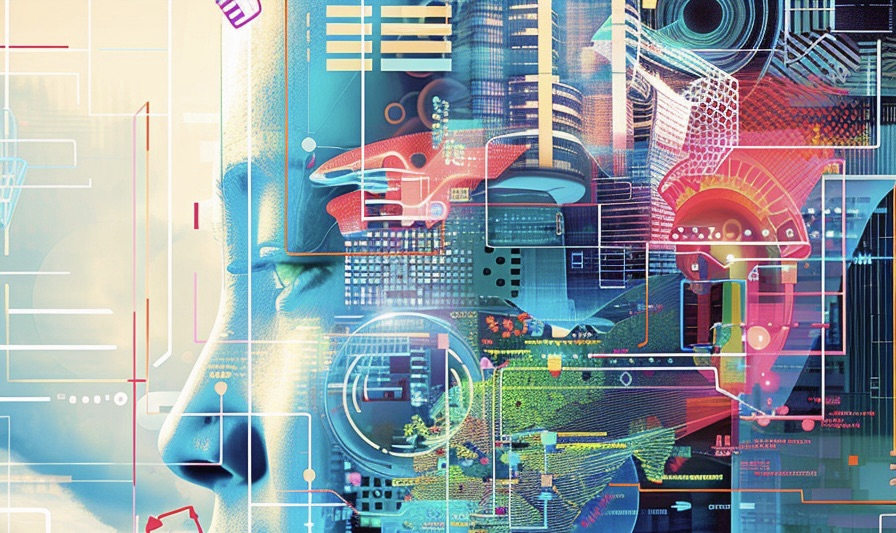
The dawn of generative artificial intelligence (AI) is not merely a technological milestone but a transformative force poised to touch every corner of our lives, reshaping the fabric of our world. Imagine a future where AI-driven systems enhance learning experiences in classrooms from rural villages to urban centers, personalize healthcare treatments globally, and revolutionize businesses, driving unprecedented innovation and efficiency. The potential for AI to create new opportunities and solve complex problems is immense, making it a topic of critical importance for everyone from tech enthusiasts to policymakers, but most importantly for everyday citizens.
A Revolution in Our Society
Generative AI has begun to alter the societal landscape significantly. Major advancements by platforms like OpenAI’s ChatGPT and Google’s Gemini Advanced demonstrate AI’s capabilities in creating human-like text and solving complex problems. These tools are increasingly integrated into customer service, content creation, and strategic decision-making processes. According to McKinsey, over 55% of organizations now use AI in at least one business unit, up from 20% in 2017 .
This surge in adoption highlights the tangible benefits of AI, such as cost reductions and revenue increases. For instance, the use of AI in human resources has led to significant cost savings, while its application in supply chain management has boosted revenues by over 5% . However, this rapid integration is not without challenges, as issues like data privacy, intellectual property, and the accuracy of AI outputs remain pressing concerns .

Education: A New Frontier
In the realm of education, generative AI is revolutionizing how students learn and educators teach. AI-driven platforms are providing personalized learning experiences, adaptive testing, and real-time feedback, thereby making education more accessible and tailored to individual needs. Google’s Gemini Advanced, for example, can create interactive learning modules that adapt to a student’s progress, enhancing engagement and retention.
According to UNESCO, the thoughtful integration of AI into education systems can support lifelong learning and bridge educational gaps by providing resources to underprivileged communities . However, there is a caveat; an over-reliance on technology without adequate human oversight could undermine educational standards and equity.

Business Innovations
Generative AI is also making waves in the business sector, driving operational efficiencies and strategic advancements. Companies are leveraging AI for marketing, sales, product development, and customer engagement. Deloitte’s insights reveal that businesses are moving from pilot projects to large-scale AI deployments, aiming to realize tangible benefits such as improved efficiency and innovation .
AI-driven analytics are enabling businesses to make more informed decisions, ultimately driving growth and competitiveness. For example, AI’s ability to analyze vast amounts of data quickly and accurately helps companies to identify market trends, optimize supply chains, and enhance customer experiences.

Comparing AI Platforms
Different AI platforms bring unique strengths to the table. Here’s a detailed comparison of some leading generative AI tools:
OpenAI’s ChatGPT is exceptional at natural language generation, versatile across multiple domains including customer service, creative writing, and coding assistance. It’s best suited for general-purpose use, especially for enterprises needing versatile AI capabilities.
Google’s Gemini Advanced integrates seamlessly with Google services, providing real-time internet data and robust solutions for data analytics and enterprise applications. It’s ideal for businesses looking for deep integration with Google’s ecosystem, real-time data processing, and enhanced search capabilities.
Apple’s AI system focuses on privacy-centric AI solutions, ensuring secure data management while delivering powerful performance. This makes it a great choice for users and organizations prioritizing data privacy and security.
Microsoft’s Copilot is integrated with the Microsoft Office Suite, enhancing productivity tools like Word and Excel with AI capabilities. It’s perfect for office productivity enhancements, particularly for enterprises that extensively use Microsoft products.
Anthropic’s Claude emphasizes safety and ethical AI use, with a customizable conversational tone and a large context window. It’s best for ethical AI applications and businesses needing secure content generation.
Cohere’s Generate (Command) offers straightforward API integration for text generation, focusing on business use cases like copywriting and data extraction. This tool is well-suited for businesses needing seamless API integration for text generation and analysis.
Midjourney excels at creating artistic and highly stylized images, making it ideal for creative industries and artists looking to enhance their visual content.
DALL·E 3 is easy to use for AI image generation, capable of creating photorealistic and imaginative visuals. It’s best for marketing, design, and any application requiring high-quality images.
These platforms reflect the diverse approaches tech giants are taking to capture the AI market. OpenAI’s emphasis on broad accessibility contrasts with Google’s enterprise-focused strategies and Apple’s commitment to privacy, catering to varied user needs and preferences .
Societal Implications
Generative AI’s societal impact extends beyond business and education. It influences cultural production, healthcare, and even social interactions. AI-generated content, such as music and art, challenges traditional notions of creativity and authorship. In healthcare, AI-driven diagnostic tools and personalized treatment plans are revolutionizing patient care, offering more accurate and timely interventions .
However, these advancements come with ethical considerations. The potential for job displacement, biases in AI algorithms, and the need for regulatory frameworks are critical issues that society must address. Ensuring that AI development is inclusive and benefits all segments of society is paramount.
As generative AI continues to evolve, its role in shaping our future becomes increasingly significant. Whether in classrooms, boardrooms, or everyday life, AI is set to redefine the parameters of possibility, ushering in an era of unprecedented innovation and change.
For more insights on AI and its impact, visit NkoziKnight.com.
Why You Get So Many Political Campaign Texts—and What to Do About It

Are you drowning in political campaign texts? You aren’t alone. As the November 2024 election approaches, Americans across the country are …
Why You Get So Many Political Campaign Texts—and What to Do About It
Unveiling Africa’s Economic Boom Behind the Headlines
By Nkozi Knight, GreenHomeHub, Knight Investment Group
April 19, 2024
Embracing Africa’s economic upswing, a group of entrepreneurs mirrors the continent’s colorful ascent on the global stage.

My journey into the heart of Africa’s economic boom began with conversations with my oldest daughter Nkozia who is a frequent visitor to the continent, and my curiosity further peaked from my sectional sofa as I became captivated by Amazon Prime’s series “Ebuka Turns up Africa”. In this television series, Ebuka Obi-Uchendu travels across the continent, exploring hidden gems and navigating the complexities of friendships, relationships, finances, and loyalties. Inspired by the vibrancy and spirit shown in each episode, I was interested in diving deeper and upon my research, I discovered a reality about the continent that is vastly different than the Western media portrayals that mostly reflect poverty and conflict.

For years, Africa’s narrative has been dynamically shifting. Long portrayed as a continent primarily of destitution and despair, the real Africa has a much different story. A rich story of booming economies, groundbreaking technologies, and cultural renaissance. This narrative shift reflects a continent ripe with opportunities and a hotbed for growth and innovation in places like my home country of Nigeria, challenging the outdated views held by much of the Western and European media.
Nigeria: The Economic Powerhouse
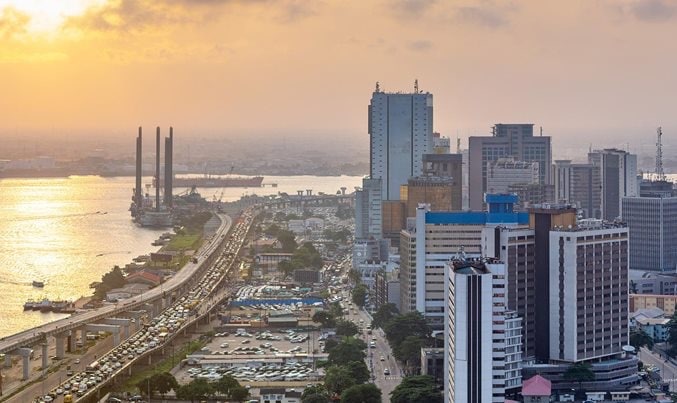
Leading Africa’s economic charge is Nigeria, currently the continent’s richest country with a GDP of $477 billion as of 2022. With projections by the International Monetary Fund suggesting an ascent to $915 billion by 2028, Nigeria’s economy, fueled by its diverse sectors including oil, gas, and technology, shows no signs of slowing down. Its burgeoning tech industry, particularly in cities like Lagos and Abuja, underscores a broader trend across the continent: a leap into digital and technological entrepreneurship.
Infrastructure and Regional Giants
Significant infrastructural developments such as Ethiopia’s Renaissance Dam and Kenya’s expansion of the Mombasa-Nairobi railway illustrate serious strides toward modernization and improved regional connectivity. These projects not only support economic growth but also enhance the daily lives of millions, with technology at the forefront of this renaissance.
Africa’s tech revolution extends beyond my home country of Nigeria. Innovations in mobile banking and renewable energy are pivotal. Mobile banking has transformed financial access for millions, demonstrating a leapfrog over traditional banking barriers. In the realm of sustainable development, nations like Morocco, where my daughter attends school, and South Africa are harnessing wind and solar power, setting new benchmarks for renewable energy.
The cultural sectors throughout Africa is thriving, making significant inroads on the global stage. Nigerian music, South African films, and Ghanaian fashion are capturing international audiences, showcasing the continent’s rich and diverse cultural heritage, and its something to truly be admired.

Economic Landscape
The economic landscape across Africa is as rich and varied as its cultural tapestry, with nations like South Africa and Egypt featuring robust, diversified economies that span mining, agriculture, and a burgeoning service and tourism industry. Algeria’s substantial oil and natural gas reserves play a crucial role in its financial health, echoing Angola’s reliance on its natural resources. Morocco’s vibrant economy thrives on tourism, agriculture, and a growing industrial sector.
Also, Kenya’s status as a regional economic hub is cemented by its diverse economy that embraces services, agriculture, and tourism. Ghana’s growth is buoyed by its agricultural base, complemented by significant oil and gas sectors. Tanzania, where my daughter recently visited, leverages its natural beauty and resources with a flourishing tourism and finance sector. Meanwhile, the beautiful people of Ethiopia are charting a path of rapid economic expansion, driven by sectors such as agriculture, manufacturing, and ambitious infrastructure projects.
The economic diversity across Africa is a story we need to hear more of as it reflects the resilience of the continent’s people who still deal with the theft of resources from European countries who often threaten to make topple their governments if they refuse to comply. Despite this, Africa’s adaptive and innovative spirit helps shape a new narrative of prosperity on the global economic stage.

Confronting Stereotypes
Yet, despite these successes, Western portrayals often remain focused on negative aspects, overshadowing the continent’s achievements. This skewed narrative can influence public perception and policy in ways that are not reflective of the current African reality. African leaders and thinkers are calling for a more balanced portrayal that recognizes both the challenges and the immense progress being made.

As the stories of 2024 unfold, it’s evident that Africa’s rise is not just in spite of Western media narratives but perhaps because it defies them. From the bustling markets of Cairo to the stunning vineyards of Cape Town, innovation, growth, and cultural vibrancy weave a rich tapestry that demands a global reevaluation. The legacy of resource extraction by countries like France and Great Britain is being overwritten by a new chapter of African self-determination and prosperity.
Shows like Ebuka Turns up Africa serve as a clarion call, inviting viewers to step beyond the screen and witness firsthand the continent’s transformation. The call is not just to watch, but to participate; to swap the well-trodden paths to Europe or the beaches of Mexico for the opportunity to immerse oneself in the tapestry of Africa’s economic prowess and cultural renaissance.
Let 2024 be the year where more travelers like myself, choose African destinations, where investment flows not just to traditional markets but to the burgeoning cities and industries across the African continent. This is not just an invitation; it’s a call to be part of a historical movement where one can witness a continent coming into its own, with success stories like Ebuka’s becoming the norm, celebrated and shared with the world. It’s time to rise from our sofas, set foot on African soil, and experience the continent’s heartbeat for ourselves.
Quietly Making Noise: How Introverts Can Stand Out in Professional Circles

We’ve all been there, right? The mandatory company mixer where the goal is ‘networking’ — a word that can send shivers down the spines of introverts …
Quietly Making Noise: How Introverts Can Stand Out in Professional Circles
Strategies for Introverts: Navigating Workplace Visibility
As an introvert in this extrovert world, I found these two Harvard Business Review articles, “Are You an Introvert? Boost Your Visibility” and “An …
Strategies for Introverts: Navigating Workplace Visibility
Water Is the New Oil in the Gulf

In the arid desert landscapes of the Arabian Gulf, where oil has long been the region’s economic bedrock, a new narrative is unfolding—one where …
Water Is the New Oil in the Gulf
My Condolences, You’re Now Running a Billion-Dollar Business

A few things I’ve learned during my interim role of running WordPress.com
My Condolences, You’re Now Running a Billion-Dollar Business
Georgia Legislation Reinstates Pledge to Israel for Major State Contracts

In a move that underscores Georgia’s commitment to Israel amid the ongoing Israel-Palestine conflict, Governor Brian Kemp enacted legislation on Monday mandating businesses engaged in significant state contracts to pledge not to participate in any boycott against Israel. This legislative action comes in the wake of a federal court decision that invalidated a comparable statute from 2016, which was challenged on the grounds of infringing free speech rights.
House Bill 383, the newly signed law, escalates the criteria for businesses required to commit to the anti-boycott pledge to those involved in state contracts exceeding $100,000 and applies exclusively to companies with a workforce of five or more. Governor Kemp, emphasizing Georgia’s solidarity with Israel, stated during the signing, “This deepens our support for a crucial ally, ensuring that Georgia does not financially back companies that boycott, divest from, or sanction Israel.”
This measure is a direct response to the boycott, divestment, and sanctions movement aimed at protesting Israeli policies towards Palestinians. Georgia stands as a forerunner among numerous states adopting such legislation, initially passed largely by the Republican majority in the state legislature in 2016. Despite bipartisan support for the revised bill, it has not been without its detractors, including Stacey Abrams, a leading Democrat, who expressed concerns over potential restrictions on advocacy movements.
The bill’s passage was notably supported by state Representative Mike Wilensky, the sole Jewish member of the Georgia Legislature, and received bipartisan endorsement. However, the law has faced criticism from entities like the Georgia chapter of the Council on American-Islamic Relations, which condemned the measure as an attempt to suppress free speech.
Proponents argue that the legislation judiciously balances Georgia’s prerogative in selecting its business partners with the safeguarding of free speech, a stance awaiting further scrutiny in federal courts. Anat Sultan-Dadon, Israel’s consul general to the southeast U.S., lauded the law as a countermeasure to what is perceived as a movement fueled by an “age-old hatred agenda” against Jews.
The enactment of House Bill 383 represents a significant moment in Georgia’s legislative history, spotlighting the state’s alignment with Israel and stirring a complex debate over the intersection of free speech and political boycotts in the context of international relations.

 Nkozi Knight