Bitcoin Falls to 11-Day Low Amid Broader Tech Selloff

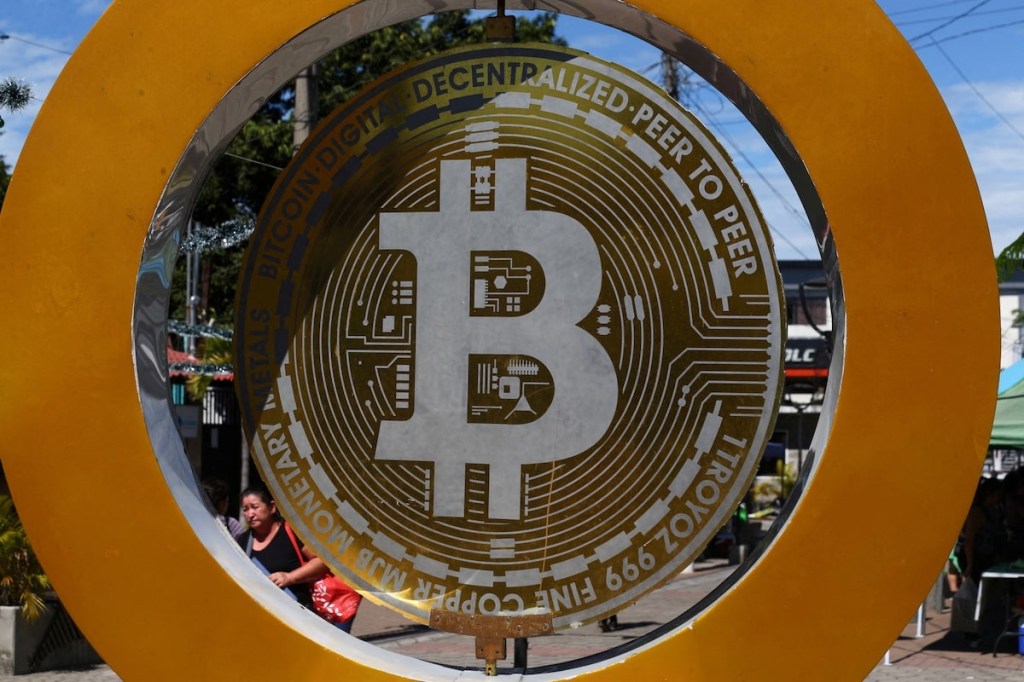
A woman passes by the Bitcoin Monument after bitcoin soared above $100,000, in Ilopango, El Salvador, December 5, 2024. 

Bitcoin fell below $100,000 on Monday, marking its lowest level in 11 days, as a wave of caution swept through global markets following a sharp selloff in tech stocks. Analysts linked the decline to investor anxiety over the surging popularity of a Chinese artificial intelligence model that has disrupted confidence in Western AI-related equities.

Bitcoin Tracks Broader Market Losses

The world’s largest cryptocurrency dropped as much as 7% during the session, trading at $98,745 by late afternoon in London. The dip follows a turbulent day for technology stocks, particularly in the AI sector, which saw significant losses after China’s DeepSeek AI launched its low-cost, high-efficiency DeepSeek-V3 model.

“Bitcoin’s decline is a direct reflection of the broader risk-off sentiment dominating markets,” said Emilia Carter, a cryptocurrency strategist at Digital Asset Partners. “The tech selloff has spooked investors, leading to a rotation out of speculative assets like Bitcoin.”

Tech Selloff Sparks Broader Market Jitters

The tech-heavy Nasdaq Composite fell 2.6%, with major players like Nvidia, Microsoft, and Alphabet posting steep losses. Nvidia, a leader in AI hardware, suffered an 11.2% drop after concerns over its competitive position in the Chinese market. Analysts suggested that DeepSeek’s rapid ascent has reshaped market dynamics, intensifying pressure on Western tech firms.

“DeepSeek’s breakthrough highlights the growing capabilities of Chinese AI firms,” said Daniel Morgan, an analyst at Synapse Capital. “This has created a ripple effect, with investors reassessing valuations across the tech sector, which in turn is affecting sentiment in other high-risk asset classes like cryptocurrencies.”

Safe-Haven Assets Gain

As riskier assets took a hit, traditional safe-havens saw gains. U.S. Treasury yields dropped, with the benchmark 10-year yield falling to 3.42%, while gold climbed 1.3% to $1,945 per ounce. The dollar weakened against major currencies, with the Japanese yen rising 0.7% to 129.50 per dollar.

“Market participants are in defensive mode, pulling back from speculative investments,” said Jonathan Knight, head of macroeconomic research at Fortress Investments. “The flight to safety reflects growing concerns about geopolitical risks and economic uncertainty.”

Bitcoin’s Outlook

Despite the drop, some analysts remain optimistic about Bitcoin’s long-term prospects. “Bitcoin has weathered similar pullbacks before, and its underlying fundamentals remain strong,” said Clara Davis, a senior researcher at CryptoAnalytics. “While short-term volatility is inevitable, the broader adoption trends for cryptocurrencies are intact.”

Still, others cautioned that Bitcoin’s correlation with risk assets could make it vulnerable to further market turbulence, especially as global economic conditions remain uncertain.

What’s Next?

Market attention now turns to how Western technology firms will respond to the competitive threat posed by DeepSeek and whether the broader tech selloff will deepen. Cryptocurrency investors, meanwhile, are watching for signs of stabilization in Bitcoin prices as the market digests the latest developments.

Tech Rout: Nvidia Plunges as China’s DeepSeek AI Soars, Investors Flock to Safe Havens

By Nkozi Knight

Global markets took a hit on Monday as technology stocks plummeted amid growing concerns over competitive pressures from China’s burgeoning AI sector. Shares of Nvidia, a key player in the artificial intelligence (AI) industry, dropped sharply, losing 11.2% in a single session. The slide came as Chinese startup DeepSeek surged in popularity with its low-cost AI model, intensifying market anxiety about the dominance of U.S. tech firms in the rapidly growing AI space.

Tech Stocks in Freefall

Nvidia, widely regarded as a leader in AI computing hardware, saw its shares nosedive after reports of slowing demand for its GPUs in China. Analysts attributed the decline to DeepSeek’s unveiling of its DeepSeek-V3 model, a highly efficient AI system offering comparable performance at a fraction of the cost.

The ripple effect hit other tech giants as well, with Microsoft, Meta Platforms, and Alphabet each recording losses of 3-5%. The Nasdaq Composite Index fell 2.6%, its worst single-day performance since December 2024.

“The competitive landscape is shifting rapidly, and this adds a new layer of uncertainty for U.S.-based AI leaders,” said Daniel Crawford, a senior equity analyst at Global Insights. “DeepSeek’s entry into the market highlights the growing sophistication of Chinese AI firms and their ability to disrupt established players.”

DeepSeek’s Meteoric Rise

DeepSeek’s DeepSeek-V3 became the most downloaded free app on Apple’s App Store within days of its launch. The AI assistant boasts advanced natural language processing capabilities and features targeted at small and medium-sized businesses, undercutting its U.S. competitors on price.

The surge in popularity underscores the increasing influence of Chinese technology companies in global markets. With heavy state-backed funding, firms like DeepSeek are rapidly closing the innovation gap with their Western counterparts.

“DeepSeek represents a ‘Sputnik moment’ for the AI industry,” said James Li, an AI researcher based in Shanghai. “This is a wake-up call for U.S. firms to accelerate innovation or risk losing their competitive edge.”

Flight to Safety

Amid the turmoil, investors sought refuge in traditional safe-haven assets. U.S. Treasury yields dropped as demand surged, with the 10-year yield falling to 3.42%. Gold also saw a 1.3% increase, closing at $1,945 per ounce. The U.S. dollar weakened against major currencies, with the euro rising 0.8% to $1.11.

“Investors are nervous, and rightfully so,” said Sophia Greene, chief market strategist at Capital Horizons. “The market is recalibrating to factor in geopolitical risks and the growing unpredictability of tech-driven disruptions.”

Outlook

The fallout from the tech sell-off has raised broader concerns about the U.S.’s ability to maintain its dominance in the AI industry. Lawmakers in Washington have called for more stringent measures to ensure domestic innovation and reduce reliance on foreign supply chains.

For now, the spotlight remains on how U.S. tech giants will respond to the threat posed by DeepSeek and other rising stars in the Chinese tech ecosystem. Investors are watching closely as the industry braces for further turbulence.

Donald Trump’s $500 Billion Stargate AI Project: Bold Innovation or Dangerous Gamble?

When President Donald Trump unveiled the $500 billion Stargate AI venture on Tuesday, a partnership involving OpenAI, SoftBank, and Oracle, he touted it as a groundbreaking step toward cementing U.S. dominance in artificial intelligence. Trump claimed the project would ensure “the future of technology” while creating hundreds of thousands of jobs and tackling issues like cancer detection. Wall Street initially responded with cautious optimism, but as the details of Stargate emerge, skepticism is mounting, and for good reason in my opinion.

A Bold Promise Without a Foundation

At first glance, Stargate appears ambitious, even transformative. Backed by OpenAI’s cutting-edge technology, SoftBank’s financial clout, and Oracle’s infrastructure expertise, the venture has been pitched as a game-changer for AI research and development. Yet, serious doubts are surfacing about its feasibility and motives.

Tech billionaire Elon Musk, a former co-founder of OpenAI and a longtime critic of the organization’s direction, wasted no time questioning the project’s funding. “They don’t actually have the money,” Musk wrote on X. SoftBank CEO Masayoshi Son claims an initial $100 billion commitment with plans to grow it to $500 billion over four years, but whether those funds will materialize remains unclear. It’s not the first time SoftBank has made lofty promises and its track record includes overestimated ventures like the Vision Fund.

AI for Good or AI for Profit?

One of the most striking concerns is the ethical implications of Stargate. OpenAI CEO Sam Altman and Oracle co-founder Larry Ellison described the project as a way to solve pressing societal issues, like developing cancer vaccines through AI-driven genetic sequencing. While this paints a rosy picture, skeptics question whether these lofty claims are just a smokescreen for profit-driven motives. Musk has repeatedly accused OpenAI of abandoning its original mission to develop AI for the public good, turning instead into a profit-driven enterprise that prioritizes corporate interests.

Donald Trump’s decision to repeal his predecessor’s AI guardrails and policies designed to ensure ethical and safe development of AI, has opened the door to unchecked advancements. Without these safeguards, Stargate’s potential for misuse, whether through biased algorithms, privacy violations, or the militarization of AI, is alarming. Who will ensure that this technology is developed responsibly and does not deepen societal inequalities or threaten democratic systems?

An Economic Boon or Another False Promise?

Trump and Altman have touted the potential for Stargate to create hundreds of thousands of American jobs, particularly in construction and data center operations. However, these promises are eerily reminiscent of past grandiose projects that failed to deliver from the Biden administration. Mega-investments often come with overblown job projections, only to fall short once automation replaces human labor. Even if Stargate reaches its employment goals, questions linger about the quality of these jobs and their long-term sustainability.

A cornerstone of the Stargate project is the construction of massive data centers, which are essential for powering the AI infrastructure envisioned by OpenAI, SoftBank, and Oracle. While these centers promise to create jobs and drive technological advancement, their environmental and societal impacts are deeply concerning. Data centers consume enormous amounts of electricity and water, often straining local resources without providing long-term economic benefits to surrounding communities. Questions about data privacy, cybersecurity, and ownership also loom large, as these facilities will centralize vast amounts of sensitive information in the hands of private corporations. With promises of rapid scalability and a $500 billion price tag, it’s unclear whether such an ambitious undertaking can be achieved responsibly or whether the public will once again bear the hidden costs of unchecked corporate ambition.

Geopolitical Implications: Competing with China

Stargate is also being framed as a key weapon in the U.S.’s competition with China for AI supremacy. While strengthening America’s technological edge is important, rushing into a $500 billion project without transparency or strategic oversight risks creating a “tech cold war” that prioritizes dominance over ethical innovation. Accelerating AI development without proper international collaboration could exacerbate global tensions and lead to a dangerous arms race in AI technology.

What Stargate Really Represents

Beneath the glossy promises of economic growth and transformative technology, Stargate raises deeper questions about power, control, and the future of AI. By handing the reins to corporate behemoths like SoftBank, Oracle, and OpenAI, the U.S. risks placing critical technological advancements into the hands of entities more interested in profits than public welfare. This is not just about building data centers or detecting cancer, it’s about who gets to decide how AI shapes our world.

Trump’s willingness to prioritize corporate interests over ethical considerations should alarm all Americans from both parties. Without a commitment to transparency, regulation, and equity, Stargate could deepen societal divides and erode trust in technology. As history has shown, unchecked technological advancements often come at a steep cost to those least equipped to bear it.

2025: A Year of Resilience and Hope

2025 will bring challenges we may not yet foresee, testing our resilience and our collective humanity. Yet history reminds us that even in our darkest hours, we have endured, adapted, and risen above. It is in times of turmoil that the true strength of humanity reveals itself.

The chaos of the world does not erase the good within it. We see it in acts of kindness, in the resilience of communities, in the unwavering hope of those who refuse to give in. These moments, small as they may seem, are proof that humanity’s light is far stronger than the shadows that try to engulf it.

As we face what lies ahead, let us hold tightly to faith and not just in a higher purpose, but in one another. Let us carry hope, not as an abstract idea, but as a tangible force that fuels our actions and inspires those around us. And let us strive to be the reason someone else rediscovers their faith in mankind.

Our actions, no matter how small, ripple outward. In the face of uncertainty, they can become a source of strength for others. If we remain steadfast, committed to the good we can do, the challenges of the future will only serve to make us stronger. Humanity’s light, even when tested, will endure. It always has. It always will.