Ironheart and the Betrayal of Storytelling


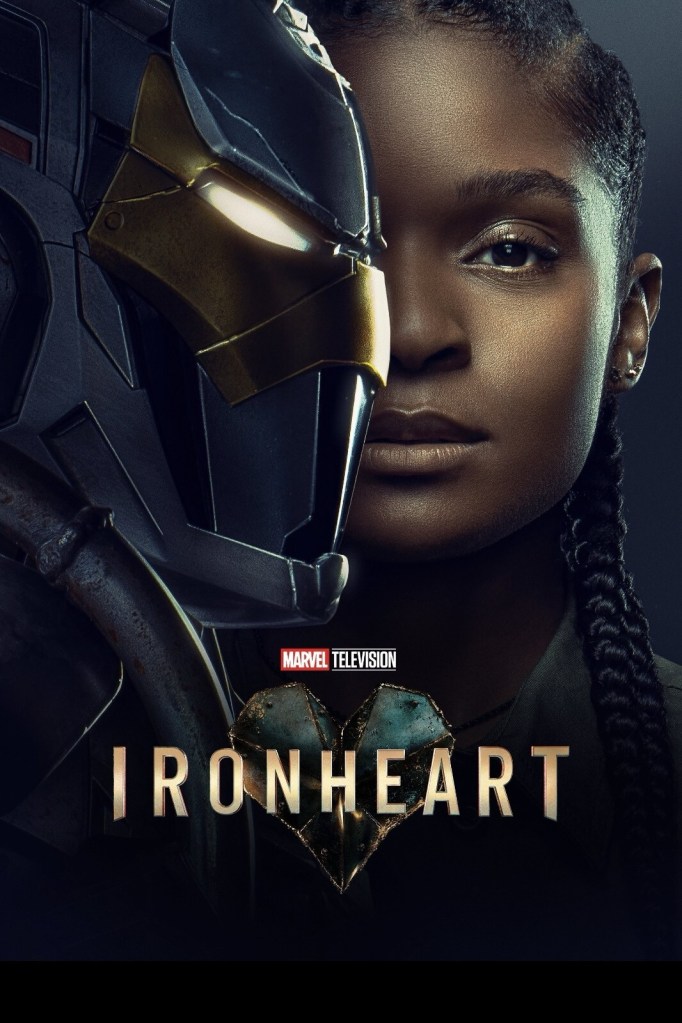
Riri Williams, Ironheart, stands beside her armor modeled after Iron Man, a symbol of the genius and potential that Marvel’s adaptation failed to honor.

When Marvel introduced Riri Williams in Black Panther: Wakanda Forever, she felt like a revelation. A young Black genius, bold and quick-witted, standing confidently beside Shuri and Wakanda’s leaders, she radiated promise. Audiences believed she was destined to inherit the mantle of brilliance that Tony Stark left behind.

The Disney Plus series Ironheart undid all of that. Rather than elevating Riri’s genius, the show stripped her down and leaned on clichés. Instead of building an earned character arc, Marvel forced one, and when audiences rejected it, Disney did not admit the problem was storytelling. It turned on its own fans, deflecting fair criticism as misogyny or racism. That response only deepened the sense of betrayal.

What made Ironheart sting was not representation but its absence of authentic narrative. Riri’s journey was reactive rather than inventive, her brilliance muted to the point where she seemed less capable than in Black Panther 2. Her supporting cast was too thin to provide depth, leaving Dominique Thorne to carry scenes without the balance that seasoned actors could have offered. This was the opposite of what Marvel did with Tom Holland’s Spider-Man, where young talent was elevated by veterans like Robert Downey Jr. and Michael Keaton. In Ironheart, there was no gravitas to steady her.

The most glaring missed opportunity was the arc itself. In the comics, Riri is mentored by Tony Stark’s AI, a natural continuation of Iron Man’s legacy and a relationship that challenges her intellect. That arc was abandoned in favor of an AI woman who felt more like a nagging caricature than a mentor. It was meant to look progressive, but it flattened Riri even further. Instead of sharpening her genius through real tests, the show reduced her to tropes and sidelined the one connection that could have tethered her to Marvel’s larger story.

What took its place was a parade of stereotypes. The single mother household. The absent father. The drive-by shooting that killed her stepfather. Drugs and street crime. Poverty. Black and Latino men both hyperviolent and emasculated. Struggle as the entire identity. These were not fresh interpretations of culture. They were shortcut stereotype boxes checked by writers who did not seem to understand the communities they were trying to represent.

Audiences are tired of this. They want aspiration and intelligence, not clichés. The success of Black Panther proved that. That film grossed more than $1.3 billion worldwide because it was rooted in authenticity and celebrated Black excellence. It trusted viewers to embrace complexity. Ironheart, by contrast, felt like it was written on autopilot, with representation treated as the main plot line coupled with bad writing.

The reception told the story. Ironheart failed to enter the top ten streaming shows at launch, averaging fewer than 90 million minutes per episode. Nielsen reported just 526 million minutes viewed in its debut week a fraction of Marvel’s earlier dominance. Viewers who began often did not finish. Critics offered cautious praise, but audiences were blunt. Rotten Tomatoes’ audience score fell into the mid-50s. IMDb scored it a dismal 3.7 out of 10. By every measure, this was the weakest Marvel Studios project to date.

Instead of listening, Disney dismissed its fans. Criticism was waved away as misogyny or racism. But this is dishonest. Marvel fans embraced Black Panther, Into the Spider-Verse, and Miles Morales because those stories were intelligent and authentic. They reject Ironheart because it was shallow. Viewers are not bigoted for noticing lazy storytelling. They are discerning enough to know when a studio has lost its way.

Riri Williams deserved better. She deserved a story that celebrated her genius and connected her to Iron Man’s legacy in a way that felt earned. She deserved writing that matched the promise we glimpsed in Wakanda. What we got instead was a hollow series that leaned on stereotypes, dulled its lead, and insulted its audience.

Marvel once thrived because it told stories with depth and intelligence, trusting its fans to embrace complexity. Ironheart showed what happens when that trust is broken. We are not rejecting representation. We are rejecting lazy representation. If Disney refuses to admit that the real problem is storytelling, it will not just be one show that fails. It will be the entire brand.

Disney did not fail Riri Williams. It failed to believe her brilliance was enough.

Justice for Sale: Why Diddy Was Convicted Under a Century-Old Law While Other Elites Walk Free

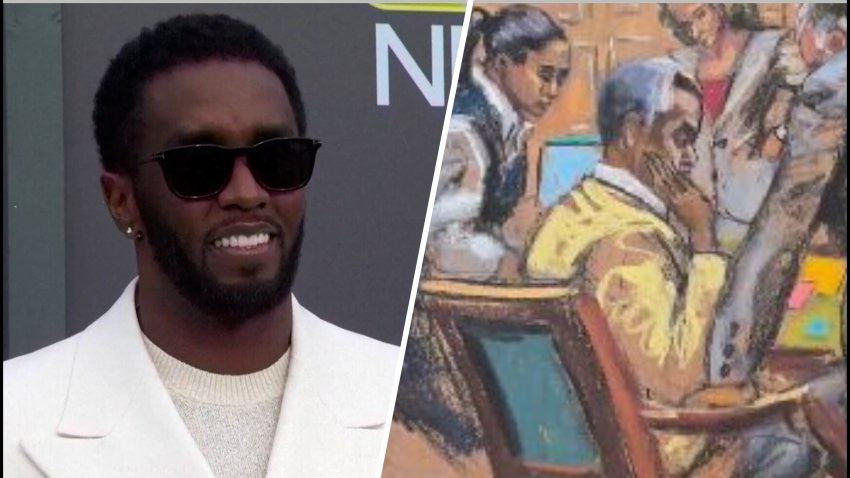
When Sean “Diddy” Combs was convicted of two counts under the Mann Act on July 2nd, 2025, it was hard not to feel the weight of contradiction. A law written in 1910 to combat what was then described as “white slavery” had just been used to take down one of hip-hop’s most powerful and visible figures. Meanwhile, men like Jeffrey Epstein and former Abercrombie and Fitch CEO Mike Jeffries continued to escape prosecution, despite years of credible accusations and damning evidence.

If the allegations against Combs are true, then accountability is warranted and many years in prison should have been the outcome. But if that same law is only applied to certain men, primarily those who happen to be Black, who are famous, and who make the wrong enemies the this is not justice. It is selective enforcement.

What Is the Mann Act and Who Has It Historically Targeted?

The Mann Act, passed by Congress in 1910, criminalizes transporting individuals across state lines “for the purpose of prostitution or debauchery, or for any other immoral purpose.” Though written broadly, the law has rarely been applied evenly. From its inception, it has disproportionately targeted Black men, especially those who achieved prominence and visibility in public life.

Here are just a few examples that stand out:

Jack Johnson – He was the first Black heavyweight boxing champion. In 1913, Johnson was prosecuted under the Mann Act for transporting his white girlfriend across state lines, even though they later married. His conviction was widely seen as punishment for both his relationships and for daring to dominate a white-controlled sport during the Jim Crow era.

Chuck Berry – A pioneer of rock and roll, Berry was convicted under the Mann Act in 1962 for transporting a 14-year-old girl to work at his nightclub. Although there was a legal basis for the charge, the case was racially charged from the start, and Berry’s conviction was overturned on appeal due to a judge’s blatant racial bias.

Charlie Parker – The jazz saxophonist known as “Bird” was arrested under the Mann Act in the 1940s. The charges were later dropped, but the case reflected the broader climate of surveillance and legal intimidation faced by Black artists during that era, especially when their relationships crossed racial lines.

Sam Cooke – Cooke was never convicted under the Mann Act, but he was frequently targeted by law enforcement and under FBI surveillance. His relationships with white women and his outspoken civil rights advocacy made him a person of interest. Reports suggest authorities sought opportunities to prosecute him under the Mann Act or similar statutes.

Beyond these high-profile cases, historians have documented hundreds of examples where lesser-known Black men were prosecuted under the Mann Act during the twentieth century for consensual relationships, especially with white women. Most pled guilty to avoid harsher punishment. Many lacked the legal resources to fight the charges.

Then there is Charlie Chaplin. He was not Black. He was a white British filmmaker, one of the most famous entertainers of his time. In 1944, the United States government charged Chaplin under the Mann Act for allegedly transporting actress Joan Barry across state lines for sexual purposes. Chaplin was acquitted. But his case is a reminder that while the law was used against Black men with regularity, it was also sometimes used to enforce political or moral conformity. Chaplin had become a target due to his personal views, criticism of American policies, and resistance to the cultural norms of the time. The Mann Act became a tool to humiliate and neutralize him publicly.

So while Chaplin is often the lone white figure cited in Mann Act history, his case only highlights how exceptional it was for someone of his background to be charged.

Diddy’s Conviction Echoes That History

In 2025, Diddy was convicted of two counts under the Mann Act. Prosecutors failed to convict him on the more serious charges of sex trafficking and racketeering, but they secured these two counts based on his alleged transportation of individuals for sexual purposes. This approach follows a familiar pattern. When prosecutors cannot secure a major win, they reach for older statutes to salvage a conviction.

But the question remains: Where is this same level of energy when it comes to white men with equal or greater levels of power and resources, and with just as much or more evidence against them?

Mike Jeffries, the former Abercrombie and Fitch CEO, was exposed in 2023 through a detailed BBC investigation. The report included multiple men who accused Jeffries and his partner of flying them to sex parties around the world, often under pressure, using cash, drugs, and promises of modeling contracts. Flight logs, witnesses, and even former handlers corroborated the accounts.

Yet Jeffries has not been charged. Not under the Mann Act. Not under trafficking laws. Not under anything.

Jeffrey Epstein is an even more glaring example. His crimes involved minors, interstate and international travel, financial coercion, and a network of handlers and enablers. His plane, known as the “Lolita Express,” is documented in FAA flight logs. His victims testified under oath. His co-conspirators remain uncharged.

Still, when federal prosecutors finally moved against Epstein, the Mann Act was nowhere to be found. Instead, they pursued limited charges years after he had already secured a sweetheart deal with federal protection.

So again, we must ask why are some men brought down with the full weight of obscure federal laws, while others seem to exist beyond the reach of any legal system at all?

Selective Justice Is Not Justice

Diddy is not innocent in the moral sense. His name has been attached to disturbing allegations for decades. But if this system is truly about justice, then it must apply to everyone, not just the convenient targets.

The Mann Act is more than a law. It is a mirror. It reflects who society believes deserves to be held accountable and who is protected by wealth, whiteness, or institutional connections.

Federal law should not function like a press release or a media spectacle. If the system can resurrect a 115-year-old statute to convict a Black music mogul, then it can certainly find the will to pursue white billionaires who operate with impunity.

Until that happens, this is not justice. It is theater. It is distraction. And we all know it.

The Silent Killer: How Our Diet and Lifestyle Are Shortening Our Lives

By Nkozi Knight

I truly thought I was healthy. My BMI is only 25, and by most accounts, I look like I I am in great shape. But something wasn’t right for weeks. I felt tired all the time, my feet tingled, and my energy levels were nowhere near what they used to be when I would workout. Something inside me told me to get checked out, and what I found was alarming:

A1C: 7.3% → Diabetes confirmed

LDL (“bad” cholesterol): 198 mg/dL → Very high

Non-fasting glucose: 219 mg/dL → Dangerously high

In other words, I was walking around with a silent killer inside me, completely unaware. And I’m not alone.

Black Men and the Health Crisis No One Talks About

Black men in the United States are disproportionately affected by diabetes, high blood pressure, heart disease, blood clots, and amputations, a lot of it comes down to our diet, lifestyle, and neglect of medical care. Here are some statistics that speak to that point:

Black adults are 60% more likely to be diagnosed with diabetes than white adults (CDC, 2022).

More than 40% of Black men have high blood pressure, increasing the risk of heart attack and stroke (American Heart Association, 2023).

• Diabetes-related amputations occur nearly 3 times more often in Black patients than in white patients (JAMA, 2021).

Yet, we don’t talk about it. We recently witnessed super dad, Lavar Ball lose his foot from such complications. We brush off the fatigue, the numbness, the tingling, the headaches, the difficulty in the bedroom, and the shortness of breath as just “getting older.” But these are warning signs that something is seriously wrong.

The Warning Signs You Can’t Ignore

Tingling or numbness in your feet → Early sign of diabetic neuropathy, which can lead to amputation if untreated.

Extreme fatigue → Could be due to high blood sugar, poor circulation, or even heart disease.

Erectile dysfunction (ED) → Often an early symptom of diabetes or heart disease due to damaged blood vessels.

Blurry vision → High blood sugar can lead to diabetic retinopathy, which can cause blindness.

Slow-healing wounds → A sign of poor circulation, increasing the risk of infections and amputations.

• Frequent urination & constant thirst → Classic symptoms of diabetes.

If you’re experiencing any of these symptoms, it’s time to see a doctor immediately.

Fast Food & High Sugar Diets Are Killing Us

Let’s be real. Our beautiful culture is built around food, and not just any food, it always fried chicken, snacks, barbecue, mac and cheese, burgers, energy drinks, and other sugar-loaded drinks. We love to eat (at least I do), and food is a part of our identity. But it’s also the reason why we’re dying younger than we should.

The average American consumes 17 teaspoons of added sugar per day which far beyond the recommended limit of 9 teaspoons for men (American Heart Association, 2023).

Black Americans are more likely to consume sugar-sweetened beverages, which are directly linked to diabetes and heart disease (CDC, 2022).

Red meat and processed meats (bacon, sausage, deli meat) increase the risk of heart disease by 18% and diabetes by 12% (Harvard School of Public Health, 2023).

The Solution: Skip the Steak, Choose the Chicken

I used to be that guy….grabbing a burger and fries on the go, ordering a steak just because I could, and washing it all down with a Sprite or Old Fashioned. But after seeing my numbers, I realized I was digging my own grave, and I have too many people depending on me to check out early.

I made the switch, and I urge you to do the same:

No more red meat → Choose grilled chicken, turkey, or fish instead.

No more sugary drinks → Drink water, unsweetened tea, or black coffee.

No more processed carbs → Swap white bread & pasta for whole grains like quinoa & brown rice.

More fiber, more greens, more movement.

And most importantly, please see a doctor before it’s too late.

Your Health Is in Your Hands

Black men, we can’t afford to ignore our health any longer. We too often put our own needs aside to take care of everyone else to our own demise. Too many of us are losing limbs, suffering strokes, and dying before our time. It’s not genetics at all, it’s the choices we make every day.

If you made it this far I ask you to not wait until it’s too late. Get your bloodwork done, eat like your life depends on it (because it does), and start moving.

We all deserve longer, healthier lives but we have to take action to make that a reality. I thank God for the people in my life who encouraged me to get checked out before it was too late, because too many of us ignore the warning signs until we can’t anymore. Let’s hope the MAHA movement brings attention to this silent killer that’s taking too many of us too soon. Our health is our responsibility so let’s fight for it.

Sources:

• CDC. (2022). Diabetes Statistics in the U.S.

• American Heart Association. (2023). Heart Disease & Stroke Risk in African Americans.

• Harvard School of Public Health. (2023). The Impact of Diet on Chronic Diseases.

• JAMA. (2021). Racial Disparities in Diabetes-Related Amputations.

Fatherhood

A dad’s role in a child’s well-being is very important. Fathers teach many important lessonsto a child, like how to be affectionate and supportive, and how to take care of everyone else by giving the best example, and all of this while being great examples themselves.

Here are some of my favorite fatherhood quotes:

“A good father is one of the most unsung, unpraised, unnoticed, and yet one of the most valuable assets in our society.”

“Every dad, if he takes time out of his busy life to reflect upon his fatherhood, can learn ways to become an even better dad.”

“Fathering is not something perfect men do, but something that perfects the man.”

“There is no greater name for a leader than mother or father. There is no leadership more important than parenthood.”

“‘Father’ is the noblest title a man can be given. It is more than a biological role. It signifies a patriarch, a leader, an exemplar, a confidant, a teacher, a hero, a friend.”

“You don’t raise heroes, you raise sons. And if you treat them like sons, they’ll turn out to be heroes, even if it’s just in your own eyes.”

Serving Those Who Have Served Our Country

10408090_481456128668304_3135217482088239151_n

United Veterans Partnership

MAKING CONNECTIONS, ONE VETERANS AT A TIME!

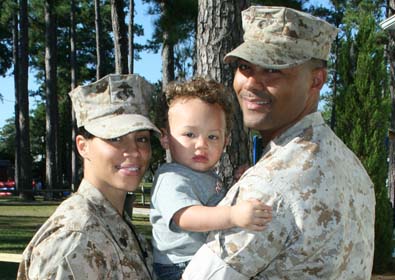
United Veterans Partnership, Inc. (UVP) is a non-profit 501(c)(3) community development organization that works with our partners to build more sustainable communities where veterans and their families live, work, play and pray.

The UVP works closely with our partners to deliver programs that connect veterans to better housing and employment opportunities, financial literacy, business development resources and improved access healthcare and healthy food options.

At the end of the day, our success isn’t measured by the number of awards we get or the money we have raised but, rather, by the number of veterans who are living a better quality of life because of a connection that we made.


The Mission of the United Veterans Partnership is to “Help Veterans Build Sustainable Communities.”

For two years, the United Veterans Partnership (UVP) has listened to, communicated with and learned from veterans and other members of the community that the most pressing need is employment and business opportunities after their service to our country has ended. UVP is our answer to helping Veterans find the opportunities need to continue to be successful in the next chapter of their lives.

We are dedicated to helping veterans build communities through outreach programs and leadership development that focus on obtaining gainful employment, financial education, housing, entrepreneurial opportunities in business.

To do this the UVP has focused on striving to meet five goals to help meet the needs of returning veterans and the communities in which they live:

Jobs/Jobs Training: Develop a comprehensive Accelerated Job Training Program to reduce the jobless rate among veterans and partner with local companies to keep veterans employed long after their military obligation has ended.
Connecting the Veteran Workforce to Opportunities: Build stronger linkages between businesses and the central city workforce of veterans through partnerships with the Department of Veteran Affairs and other organizations that share the same goals of helping veterans achieve their goals.

Greater Veteran Involvement in Economic Development: Increase the participation of veterans of veterans with assistance from the UVP on local and regional planning and project development efforts.

Community Development: Deepen thee impact of Veterans on the development of the community, including but not limited to; housing and housing development, economic development, financial education and training, and community leadership opportunities.
Entrepreneurship/Small Business Development: Foster greater entrepreneurship in the community by guiding veterans on the creation and expansion of Veteran owned businesses and franchises.


Source: Our Mission

Here’s How Many Jobs U.S. Companies Cut In September

The computer industry was hit hard.

Last month saw a surge in layoffs, primarily due to large-scale employee cuts at companies like Hewlett-Packard.

U.S. companies laid off 58,877 workers in September, according to data released Thursday by Challenger, Gray & Christmas. September layoffs are up 43% from August when about 41,000 workers were let go.

In total, employers have announced 493,431 planned layoffs so far this year, a 36% jump over the same period last year and 2% more than the 2014 total.

“Job cuts have already surpassed last year’s total and are on track to end the year as the highest annual total since 2009, when nearly 1.3 million layoffs were announced at the tail-end of the recession,” said John A. Challenger, CEO of Challenger, Gray & Christmas.

The computer industry accounted for the heaviest job cuts in September primarily driven by Hewlett-Packard, which said it would cut 30,000 jobs. The job losses, which were announced in mid-September by CEO Meg Whitman, should save the company $2.7 billion annually and represented about 10% of the company’s workforce, HP said.

Source: Here’s How Many Jobs U.S. Companies Cut In September

5 Common Networking Mistakes You’re Making

Mixer_0By 

Building a network of people that you don’t get along with is completely pointless.

The Leadership Insider network is an online community where the most thoughtful and influential people in business contribute answers to timely questions about careers and leadership. Today’s answer to the question: What’s the best way to network? is written by Scott Kriz, CEO of Bitium.

All too often, I see people at networking events exchanging business cards and starting up superficial conversations for obviously one-sided, self-serving purposes. But what happens when you leave the happy hour or the conference? How many of those conversations resulted in something substantial? Networking should be viewed as the beginning of long-lasting, mutually beneficial relationship. While there’s no formula to creating a valuable network, there certainly are guidelines. Here are five lessons I’ve learned while building and strengthening my network:

Be authentic
When I was fresh out of college, I used to attend events and come home with a pile of business cards, trying to figure out how each person could benefit me in my career. Guess how many of those turned into valuable relationships? Not one. Realizing this, I stopped bringing cards with me to events. Instead, I started attending events with smaller groups of people and focused more on getting to really know everyone on a personal level. Over time, I found that people with whom I shared common personal interests tended to provide more value than those with closer professional ties.

See also: What a game of chess can teach you about networking

Listen and ask questions
While I love sharing stories, I have never learned anything by hearing myself talk. So I try to focus on learning from other people’s experiences by taking a genuine interest in that person and asking them questions instead. For example, a few years ago, I found out the CMO from Microsoft had retired and was living in Southern California. Marketing has always been an area that fascinated me because it didn’t come naturally. I wanted to learn about marketing from the top mind in B2B marketing software so I could better understand it for my own business.

Through my network, I found out that she was going to be at a local accelerator event so I decided to attend as well. It’s amazing how generous people are with their time and their knowledge when you express genuine interest. Mich Mathews is now an investor and board member for Bitium–and a close friend of mine.

Seek out people that you like
Building a network of people that you don’t get along with is completely pointless. Every one of us has our own opinions, tastes and tolerances. Spend your time with people you like and you will find natural alignment. When I started my current company, I was lucky enough to have a co-founder that I had enormous respect for both personally and professionally. We wanted to hire the smartest employees, of whom we also enjoyed working with. Everyone on our current team has been hired through a personal or professional connection. I’m proud of this, not only because I love what we do as a company, but because I love the people that I am building the company with.

See also: Business cards aren’t outdated and 4 other networking tips

Put yourself in someone else’s shoes
Some of the best networkers that I know are busy and overcommitted by nature. In order to leverage their networks appropriately and get the introductions I want, I’ve found that the less intrusive and more specific that I can be, the more likely they are to help out. Put yourself in the shoes of the person who is being solicited and read the content of the email as if you are that person. Make your email request is concise, specific, not completely self-serving and most importantly, easy for them to forward on to the person you want an introduction to. Help them help you.

Be yourself
Remember that everyone is just a person, no matter what they have achieved or how well-known they are. It’s easy to get star struck when meeting someone you’ve read about or who is considered a ‘celebrity’ in your industry. Approach them like you would anyone else at an event. Too many times people try to force a conversation because they really admire someone and want nothing more than to be associated with that person. Relax, have fun and don’t try to foster relationships that aren’t natural.

Read all answers to the Leadership Insider question: What’s the best way to network?

How to work a room at an important networking event by Carol Leaman, CEO of Axonify.

The one question you have to ask everyone you network withby Clark Valberg, CEO of InVision.

3 signs you’re a serial meet-and-greet networker by Shadan Deleveaux, director of sales multicultural beauty division at L’Oréal USA.

Forget what you know about networking. Do this instead by Jim Yu, CEO of BrightEdge.

3 networking mistakes you don’t know you’re making by Dan Finnigan, CEO of Jobvite.

Why face-to-face networking will never go out of style by Kevin Chou, co-founder and CEO of Kabam.

How to effectively network (even if you dread it) by David DeWolf, president and CEO of 3Pillar Global.

The only thing you need to keep in mind when networkingby William Craig, founder and president of WebpageFX.

Why social media alone won’t get you a job by Gary Vaynerchuk, co-founder and CEO of VaynerMedia.

NYSE President: I owe every job I’ve ever had to networking by Tom Farley, president of the NYSE.

4 Valuable Leadership Lessons You Can Learn From the Transformers

Transformers-3-Dark-of-the-Moon-Optimus-Prime-crop_1302889481

By Minda Zetlin of Inc.

Can toys and cartoon characters really make you a better leader? Surprisingly, the answer is yes.

That’s the word from Seth M. Spain, assistant professor of organizational behavior at Binghamton University. He and his colleague Peter Harms have turned their analytic skills on the Transformers, the popular Japanese-American toys, comic books, animation, and movie characters that can turn themselves from robots into vehicles and other types of machines. Spain and Harms found that the lessons in their character descriptions are full of wisdom about what makes a great leader.

Why study the Transformers in the first place? For one thing, Spain explains, each toy comes with both a rank and a rating of the character’s abilities, which makes it easier to compare them to each other. Also, “Peter knew I was a general-purpose mid-30s nerd and the Transformers would be something I’d be interested in.”

The two put together a database of each Transformer characters using the toys’ rankings and “my painfully extensive knowledge of the cartoon series,” Spain says. They published their findings in a Psychology Today blog post titled “What Would Optimus Prime Do?” In it, they make the argument that emulating the leader of the Autobots (the good Transformers) really can improve your leadership skills.

“What was most surprising—given this is a toy and cartoon series for fairly small children—was how representative the findings were of what we know about leadership from regular academic study,” Spain says. Here’s a look at some of the wisdom you can glean from the Transformers:

1. Don’t Have Too Many Bosses

Leaderless, flat, and more democratic organization structures are getting lots of attention these days—mostly because they work surprisingly well and sometimes outpace the competition. That’s because removing management layers and the high salaries that go with them allows such companies to run leaner and more efficiently.

Same goes for Transformers. “The Autobots have a flatter, less hierarchical, more equal organization,” Spain says. “Whereas the Decepticons (evil Transformers) are more vertical, with a despot ruling by fiat.”

2. Be Very Smart

“The most important quality for Transformer leaders is intelligence,” Spain says. “We looked at good guys and bad guys separately and the best predictor of rank was a high rating in intelligence.”

That mirrors the real world. “The academic literature says that intellectual ability is a predictor of both leader emergence and leader effectiveness,” Spain notes. “We’re not necessarily talking book smarts or academic achievement,” he adds. “It could be what used to be called a shrewd business sense. There’s a certain swiftness of mind.”

3. Know Who You’re Leading

“One of the main things we did was look at followership in the cartoon show,” Spain says. “We broke it down into examples of both constructive and destructive followers. The Decepticons have really good examples of both excellent and really bad followers.”

One outstanding example of a really bad follower is Starscream, a lieutenant in the Decepticons. “He’s constantly plotting to overthrow the leader Megatron, but Megatron keeps him around for some reason, even though he often tells him he’s not smart enough to be a leader.” That strategy backfires in an early animated episode when the Decepticons are about to defeat the Autobots until Starscream mucks things up with an assassination attempt against Megatron.

“On the other hand, Megatron has other followers who are extremely loyal and dependable,” Spain notes. “One lesson from that is to be aware of your followers and what they’re all about.” That may be difficult for a leader such as Megatron, he adds. “Classic Dark Triad leader may not be paying a lot of attention to their followers and may miss a lot of information,” he says. “But even evil leaders need good followers if they’re going to succeed.” (Here’s more on the Dark Triad and how a small dose of evil qualities can benefit every leader.)

4. Care About Everyone

Caring for others may be the most important attribute that sets Optimus Prime apart from Megatron. “Optimus Prime is constantly trying to make sure his followers are OK, and that human beings aren’t harmed in the fights between robots,” Spain notes. Compassion and integrity are vital traits for a leader, he adds.

That’s really the central message of this research. “The sociological point we’re trying to make is that narratives of all kinds can communicate norms and expectations about leadership,” Spain says. “So holding up a popular example can be very useful.”

In other words, try asking yourself “What would Optimus Prime do?” It really can lead you to the best decision.

About The Author

Inc.com is where you can find everything you need to know to start and grow your business now. Inc.com is replete with small business ideas, information, and inspiration, as well as practical advice from those who have done it before.