By Nkozi Knight
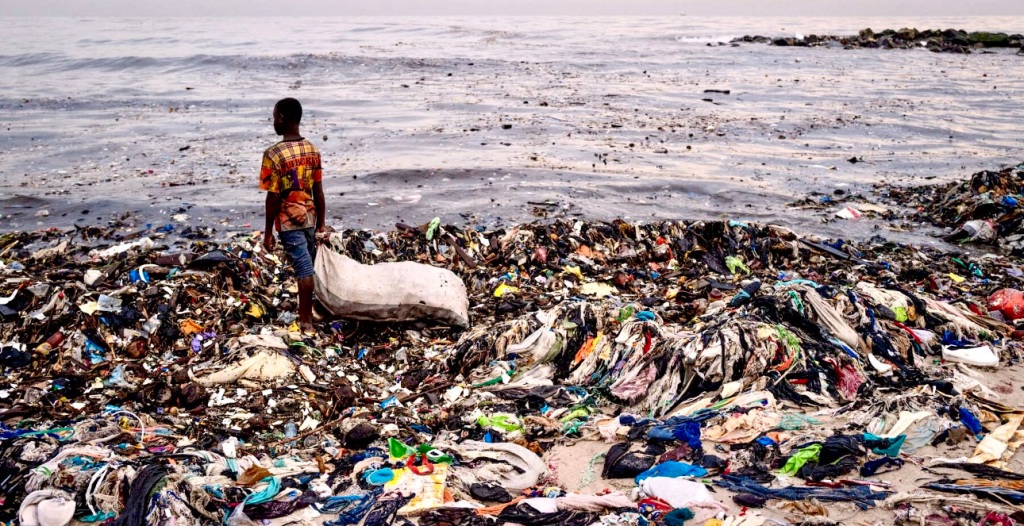
A young boy stands amid mountains of discarded clothing and plastic waste on Ghana’s Chorkor Beach
Accra, Ghana –
The beaches of Ghana should be sanctuaries. Places where waves kiss the sand and children play in peace. But on the shores of Chorkor Beach, the tide doesn’t bring seashells. It brings sweaters from Shein, leggings from Lululemon, and Target tees soaked in salt and filth.
Week after week, a deluge of secondhand clothing arrives in Ghana from the United States, the United Kingdom, and other industrialized nations. Billed as “donations,” these shipments are not gifts. They are refuse. They are the castoffs of a culture addicted to overconsumption and numbed to consequence.
Ghana receives roughly 15 million garments a week, much of it dumped by consumers who believe they’re “doing good” by donating to local bins outside of Walmart or church parking lots. In reality, 40 percent of these clothes are unusable trash, exported to West Africa in bulk and eventually dumped, burned, or strewn across the coastline. Kantamanto Market in Accra, once a center of textile trade and reuse, has become overwhelmed and swamped by low-quality fast fashion designed to fall apart before its first wash.
“We are drowning in your clothing,” said a local vendor in a recent BBC Africa Eye documentary. “These aren’t donations. They are poison.”
This isn’t hyperbole. Synthetic fabrics, often polyester, don’t biodegrade. They clog drains, suffocate marine life, and release microplastics into the ecosystem. Some are so contaminated with dyes and industrial chemicals that simply burning them chokes nearby residents. Because Western brands outsource both the problem and the blame, few Americans ever witness the wreckage.
The Cult of the New
American corporations drive this destruction through a business model of planned obsolescence and psychological manipulation. Fast fashion giants like Shein, Fashion Nova, Boohoo, and H&M churn out hundreds of new styles weekly. And we buy them. On impulse. To feel something. To impress no one. To post once on social media and then forget.
A 2023 Vogue Business investigation reported that the average American throws away 81 pounds of clothing per year. That’s nearly 13 billion pounds of textile waste, most of which is either burned or exported. Out of sight. Out of mind.
The 2024 HBO documentary Brandy Hellville and the Cult of Fast Fashion peeled back the curtain on this global racket, revealing how corporations knowingly flood developing nations with clothing that cannot be sold, recycled, or reused. These companies profit from both ends of the pipeline, selling cheap clothes and then writing off their “donations” for tax breaks.
But in Ghana, the beaches tell the truth. Children walk barefoot through piles of wet fabric. Fishermen cast their nets into waters tangled with discarded bras and sweaters. Clothes meant for dignity now strip the land of its own.
Stop Pretending It’s Helping
The problem is systemic, but it starts at home.
Donating clothes in bins is not inherently virtuous. In fact, it’s part of the illusion. The vast majority of those clothes don’t go to shelters or local families. They are sold in bulk to global brokers who profit off Africa’s environmental misery.
We are not helping. We are offloading guilt.
The solution cannot be just more donation or wishful recycling. It begins with consuming less. Buy intentionally. Wear things longer. Mend. Repurpose. Swap. Or better yet, just don’t buy unless you need to. The world doesn’t need another $9 tee you’ll forget in a week.
And for the clothes that have truly reached their end? Perhaps it’s time to explore municipal incineration, compostable textiles, or clothing deposit programs where manufacturers are held financially responsible for their waste. We regulate plastic straws more than we regulate stores like Forever 21, H&M, and Walmart.
A Final Reckoning
Americans, if we do not change, beaches like Chorkor will disappear, buried under the weight of our vanity and excess. What once were coastal communities tied to fishing, family, and resilience are now becoming textile graveyards. The soil is dying. The water is choking. The air burns with the fumes of our unwanted clothes that takes 200 years to naturally decompose.
This is no longer just about fashion. It’s about justice.
Because let’s be honest: we know who’s responsible.
The responsible parties include: Shein, H&M, Zara, Forever 21, Fashion Nova, Boohoo, PrettyLittleThing, Temu, Target, Walmart, Old Navy, Uniqlo, Gap, Amazon’s in-house brands, and countless Instagram and Tik Tok shops. These corporations flood the global market with billions of garments each year. Their business model thrives on overproduction, cheap labor, and psychological manipulation. They manufacture the illusion of need. They sell you a fantasy of trendiness and self-expression at the cost of someone else’s environment and dignity.
And we, the consumers, buy in. Often literally.
Every impulse buy, every “haul” video, every $5 tee or $10 dress contributes to a planetary cycle of destruction. We wear it once, toss it in a bin, and tell ourselves we did something good by “donating.” But we’re not recycling. We’re relocating the problem. Our discarded clothes are not going to those in need. They’re going to countries like Ghana, Kenya, Chile, and Haiti, nations without the infrastructure to process the sheer volume of waste we produce.
Because the truth is: your closet might be clean, but someone else is paying the price for it.
And they’re paying with their soil, their seas, and their breath.
We need a global reckoning. Not just with corporations, but with ourselves.
Buy less. Buy better. Demand accountability. Push for laws that make brands responsible for the full life cycle of their products.
Until we stop treating clothing as disposable, we will continue to treat people the same way.
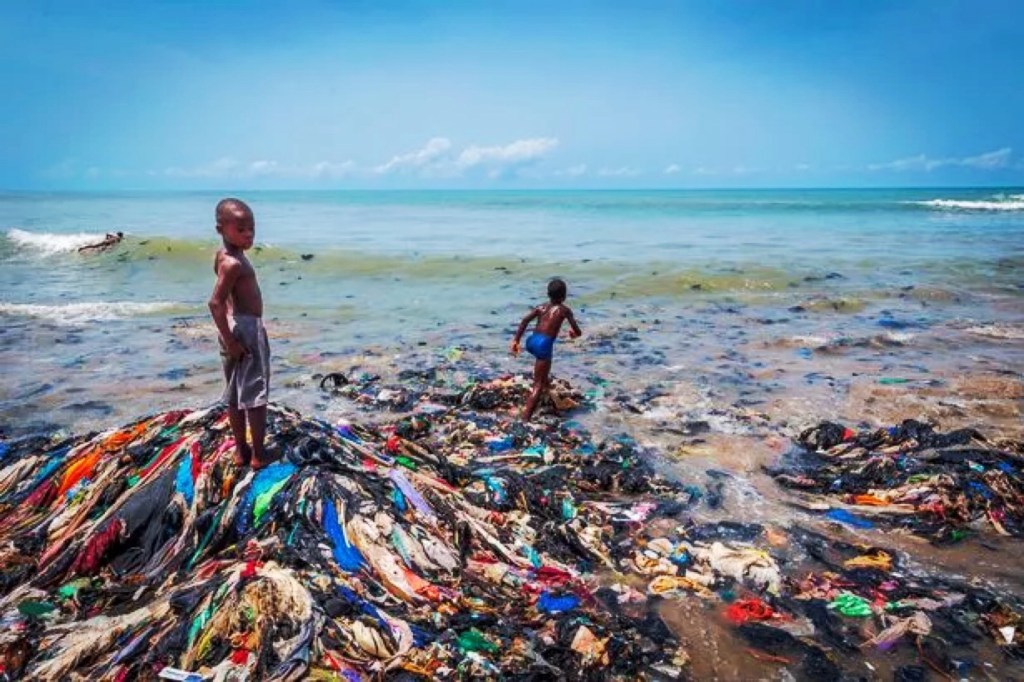
For a video documentary, watch:
Ghana: Fast fashion dumping dumping ground
Further Reading and Resources:
Greenpeace Report: Fast Fashion, Slow Poison
HBO Documentary: Brandy Hellville & The Cult of Fast Fashion
AP News Article: Fast fashion waste is polluting Africa
The Guardian: Where does the UK’s fast fashion end up?



 Nkozi Knight