What Thought Leadership Really Requires

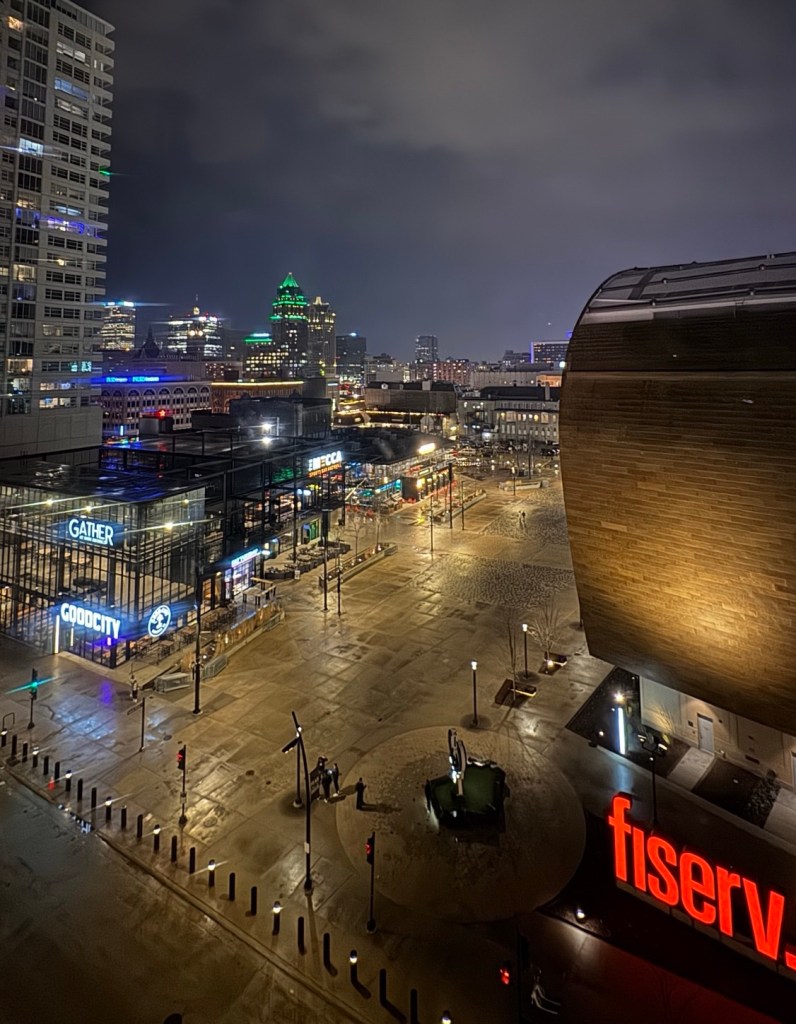
Milwaukee’s Deer District April 17, 2025

By Nkozi Knight

In an age where social media rewards volume over value, the meaning of thought leadership has been diminished. The term once represented a blend of deep expertise, strategic clarity, and intellectual influence. Today, it is often misapplied to anyone who posts frequently enough to generate a following.

But real thought leadership is not a popularity contest. It is a responsibility. It involves translating lived experience into insight that others can use to make better decisions and solve meaningful problems.

The Misunderstanding of Thought Leadership

Far too often, we confuse visibility with credibility. A viral post may spark attention but attention alone does not drive transformation. A thought leader is not someone who talks the most. A thought leader is someone whose ideas stand the test of time and scrutiny.

The best thought leaders are not self-promoters. They are systems thinkers. They do not speak just to be heard. They offer clarity in complexity. They invite others into deeper understanding.

Three Requirements for Lasting Impact

1. Experience that Teaches

Effective thought leaders have done the work. They have led initiatives, built organizations, navigated risk, and owned the consequences of their decisions. Their insights are not theoretical. They are earned in practice.

2. The Willingness to Challenge Assumptions

True leadership involves asking uncomfortable questions. It means examining what is outdated, misaligned, or unspoken. Whether in corporate strategy, health equity, or entrepreneurship, progress depends on those willing to challenge the default settings of their industry.

3. A Commitment to Building Tools, Not Just Talk

Thought leadership is not just about inspiration. It is about utility. The most influential leaders provide frameworks, resources, and systems that others can adopt. They empower others to lead without needing to be the loudest voice in the room.

A Perspective from Business and Community

As someone who has worked across strategy, entrepreneurship, and community development, I believe thought leadership is most powerful when it is rooted in purpose. Whether scaling a business, coaching organizations on OKRs and KPIs, or mentoring young professionals, my focus is always on bridging strategic intent with meaningful outcomes.

Leadership is not about being the smartest person in the room. It is about making the room smarter. It is not about being first. It is about leaving a structure behind that others can use to go further.

Final Reflection

Thought leadership is not a marketing strategy. It is a discipline. It requires humility, consistency, and the ability to add value without needing validation. In a world full of noise, the leaders who will matter are the ones who think clearly, speak carefully, and act with intention

BlackRock Doesn’t Just Own Tech. It Owns Your Future.

BlackRock doesn’t just own parts of Apple, Microsoft, and Amazon. It owns your food supply. It owns farmland. It owns water infrastructure. And through those investments, it owns a growing stake in the future of human survival itself.

What began in 1988 as a modest Wall Street firm built on risk management is now the largest asset manager in human history. BlackRock controls over $11 trillion , which is larger than the GDP of every country in the world except the United States and China.

But what most people still don’t realize is that BlackRock’s most important power grab didn’t happen on Wall Street. It happened quietly, across America’s farmland, its food systems, and its natural resources.

How Did We Get Here?

BlackRock’s expansion strategy was never about flashy takeovers. It was about ownership without attention. They don’t need to buy entire companies when they can buy enough shares to influence them all.

Through complex index funds and ETFs (Exchange-Traded Funds), BlackRock has quietly become a top shareholder in nearly every major corporation in America. Coca-Cola. PepsiCo. Kraft Heinz. Nestlé. Tyson Foods. Monsanto-Bayer. Even the companies that compete with each other are often owned by the same hand, BlackRock.

That includes food production, packaging, seeds, fertilizers, pesticides, farmland, water rights, grocery store chains, and agribusiness suppliers.

It is a spider web so vast that very few industries operate outside of its reach.

Farmland: The New Oil

In recent years, farmland has quietly become one of the hottest investments among America’s wealthiest. But few players have been as aggressive as BlackRock and its peers like Vanguard and State Street.

Why Farmland you may ask?

Simple. Land produces food, controls water access, and holds its value against inflation. In a world of uncertainty, farmland is power.

BlackRock has invested in farmland directly and indirectly through real estate investment trusts (REITs) like Farmland Partners and Gladstone Land Corporation. In some regions, institutional investors now own an estimated 30-50% of all available farmland.

For local farmers like Paul Rettler, this creates an impossible game that no one can win. Competing against trillion-dollar firms backed by infinite capital means the consolidation of agriculture isn’t slowing down, rather it’s accelerating.

The ESG Illusion

Much of BlackRock’s public messaging has centered around ESG, which stands for: Environmental, Social, and Governance investing , a framework designed to steer money toward sustainable and ethical practices.

But behind the marketing, ESG has often allowed BlackRock to reshape industries while still investing heavily in the very corporations most responsible for environmental harm.

Larry Fink, BlackRock’s billionaire CEO, has framed ESG as both a moral obligation and a business necessity. Yet BlackRock remains one of the largest shareholders in fossil fuel giants, industrial agriculture companies, and food manufacturers responsible for deforestation and soil degradation.

As environmental groups have pointed out daily, BlackRock has the ability to change the food system overnight. But profit almost always wins over principle and we have seen this outcome time and time again.

So What Does BlackRock Want?

It’s simple: Control. Influence. Permanence.

The more essential needs a company controls such as food, water, housing, energy, the less it matters who holds political office. Ownership is the real power.

When a handful of corporations control the basic elements of survival, the public becomes renters of everything, including their health, their homes, and their future.

This is the world being built right in front of us.

Water rights in California. Farmland in the Midwest. Global seed patents. Packaging monopolies. Shipping routes. Grocery store chains. Pharmaceutical partnerships. Tech platforms controlling communication.

This is not just about selling products.

This is about owning life itself.

So what can everyday people do?

Waiting for a politician to fix this system is like waiting for a thief to return what they stole. It is not going to happen.

But the answer is not fear. The answer is awareness. The answer is action.

It starts with taking back control wherever you can.

Buy from local farmers when possible. Grow your own food even if it is just herbs in your kitchen window. Filter your water. Cook your own meals. Learn how to read ingredient labels. Support local businesses over corporations when you can.

Most importantly, do your own research. Step outside of Google, mainstream media, and the same recycled talking points coming from media companies owned by the very corporations profiting from your confusion.

Seek independent sources. Read books. Listen to people on the ground, not just those in boardrooms. Question convenience when it comes at the cost of your health.

Learn how to be less dependent on the systems designed to keep you dependent.

Because at this point, we cannot wait for RFK. We cannot wait for politicians. We cannot wait for the same people who helped build this system to suddenly tear it down.

We have to start building something different starting in our homes, in our families, in our communities.

Not because it is trendy.

But because survival has always belonged to the people willing to think for themselves, take responsibility for their lives, and protect their future by any means necessary.

The Quiet Poisoning of a Generation: How Food, Water, and Corporate Greed are Undermining Human Health

There’s something happening in our society and if you’ve felt it, you’re not alone.

More people are tired for no reason. Fertility rates are plummeting. Chronic illness is everywhere. Children face record levels of anxiety, allergies, and developmental issues. And yet, we’re told this is normal.

It’s not.

This is the byproduct of a system that has quietly (and quite profitably) waged war on human health.


Founded in 1988, BlackRock now controls over 10 trillion dollars in assets making it one of the most powerful financial forces on the planet.

Follow The Money, Find The Motive

Today, four corporations effectively control most of what you eat, drink, and absorb.

→ Bill Gates is now the largest private farmland owner in America.

→ BlackRock and Vanguard own massive stakes in Monsanto, Nestlé, PepsiCo, Kellogg’s, and Beyond Meat.

→ Lab-grown meat is no longer science fiction, it’s a funded inevitability.

→ The same companies poisoning your body with seed oils, synthetic additives, and plastic packaging? They own the pharmaceutical firms selling you the cure.

This is not a conspiracy — it’s strategy.

When you own the food, the water, the farmland, the grocery distribution, and the healthcare response, you don’t need to control people with force.

You control them with dependence.

What’s Happening To Us?

Consider this:

Global sperm counts have dropped 50% since the 1970s. Testosterone levels in men are down 30% in 20 years. Microplastics are now found in human bloodstreams, breast milk, and even placentas. “Forever chemicals” (PFAS) are in 98% of the U.S. population. The CDC now quietly admits fluoride in water, while good for teeth in small doses, can impact brain development at high levels.

If this were isolated, it could be coincidence.

But when it’s everywhere like our water, food, packaging, cosmetics, medicine, even the air, you start to realize: This is systemic.

The Long Game: Weaken the Body, Profit from the Cure

Sick people buy more products.

Infertile couples pay more for solutions.

Distracted, inflamed, chemically-dependent populations don’t resist systems, they survive within them.

And while many are waiting for politicians like RFK Jr. to come in and blow the whistle, the reality is clear:

This system is working exactly as designed.

So What Do We Do?

Here’s the truth: No one is coming to save us.

But there is power in knowing how to exit the trap.

Real Alternatives for Real People:

Filter your water using Berkey, Clearly Filtered, or AquaTru. Eat whole, organic, ancestral foods with a focus on local sources first. Cut seed oils completely and cook with avocado oil, olive oil, or ghee. Limit plastic exposure by using stainless steel, glass containers, and beeswax wraps. Get daily sunlight and move your body because nature was the original medicine. Supplement wisely to rebuild minerals and support safe detoxing. Support local farmers instead of large corporations whenever possible. Learn herbal medicine like black seed oil, seamoss, milk thistle, and dandelion root. Sweat daily through sauna sessions, hot yoga, or hard workouts. Reduce pharmaceutical dependence by healing the root cause, not just managing symptoms.

Final Thought

We can’t wait for RFK. We can’t wait for “them” to fix what they profit from breaking.

We have to take back our health. Ourselves. Today.

Not because it’s trendy.

Not because it’s easy.

But because our future depends on it.

Health is no longer a luxury, it’s a form of resistance.

This is how we fight back.