Vivek Ramaswamy: A Maverick’s Journey from Biotech to the Brink of Political Revolution

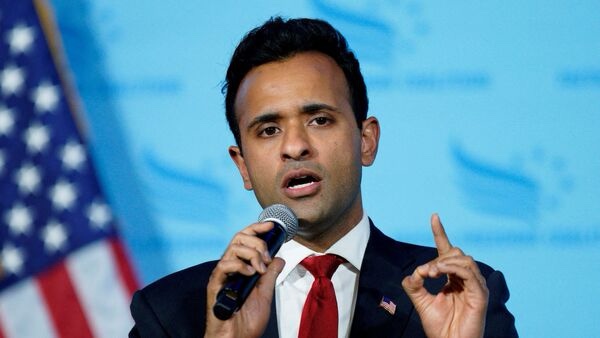
Vivek Ramaswamy, a multimillionaire former biotech executive, will seek to jump-start his ebbing 2024 Republican presidential campaign at Wednesday night’s fourth debate.

In the complex and ever-changing landscape of American politics, 38-year-old Vivek Ganapathy Ramaswamy emerges as a standout figure in the 2024 presidential election, embodying a story that’s deeply intertwined with the American dream.

Early Roots and Formative Years

Born in Cincinnati, Ohio, on August 9, 1985, Vivek’s life is a narrative shaped by a blend of cultural heritage and intellectual rigor. The son of Indian immigrants, his upbringing was a fusion of his family’s Hindu practices and the influences from his conservative Christian piano teacher. These diverse influences laid the groundwork for his multifaceted worldview.

A standout student, Vivek attended St. Xavier High School, a Jesuit Catholic institution, graduating as valedictorian. His academic prowess was matched by his skill on the tennis court, where he excelled as a nationally ranked junior player. His journey then led him to Harvard University, where he graduated summa cum laude in biology, known for his libertarian leanings and love for debate.

Venturing into Business and Biotech

Post-Harvard, Vivek’s path veered into the realms of finance and biotechnology. His entrepreneurial spirit saw him co-founding Campus Venture Network and joining QVT Financial, where he rose to partner. In 2014, he founded Roivant Sciences, a firm focused on developing underutilized drugs, marking his significant entry into the biotech industry.

A Political Ascent

Vivek’s political journey is marked by his firm stance against ESG investing and ‘woke culture’ in the corporate sector, themes he explores in his book “Woke, Inc.” His presidential campaign, encapsulated under the banner “America First 2.0,” advocates for radical changes across American society and governance, challenging established political norms.

Debate Stage: A Platform for Provocation

Ramaswamy’s performance in the December 6, 2023, debate painted him as a provocative figure, echoing the tactics of former President Donald Trump. His controversial statements, embracing far-right conspiracy theories, and aggressive attacks on opponents, signal a divisive and unconventional political strategy.

Policy Propositions and Their Echoes

His policies reflect a bold vision, advocating for a reshaping of the American social fabric, economy, and governance. From challenging the Department of Education and FBI to confrontational stances on foreign policy, these proposals, if enacted, could lead to sweeping changes in the nation’s trajectory.

A Candidate of Contrasts

Vivek Ramaswamy’s story from the son of immigrants to a presidential contender is more than a political narrative; it’s a reflection of the multifaceted American identity. His campaign, a mix of conservative ideals and radical proposals, stirs a debate about America’s future. Whether his vision aligns with the broader electorate is a question yet to be answered, but his influence on the political discourse is unmistakable.

Shades of Gray: The Historical Impact of Political Policies and the Importance of Knowing Our Past

Decades ago, the corridors of American politics witnessed a series of decisions that would dramatically reshape the landscape of African American communities. This story begins in the halls of power, where policies and laws were crafted, setting off a chain of events that would echo through generations. From the Reagan era’s war on drugs to the legislative intricacies underpinning Joe Biden’s rise in the political arena, these decisions painted a complex picture of intention versus impact. This aim is to untangle this complex web, tracing the roots of policies that have left a lasting imprint on society. We delve into the intricate interplay of legislation and its intended consequences, piecing together how political maneuvers have sculpturally shaped the realities of countless individuals and communities across the nation.

The 1980s, under the presidency of Ronald Reagan, marked a pivotal era where international intrigue and domestic policy collided. The Iran-Contra Affair, a scandal defined by covert arms sales and secret funding, not only dominated headlines but also served as a backdrop to the escalating War on Drugs. This war, declared with a mission to eradicate drug abuse, inadvertently laid the groundwork for a crisis in African American communities.

Simultaneously, a young senator named Joe Biden was rising through the political ranks. A figure who would come to shape significant aspects of criminal justice policy, Biden’s career in the 1980s and beyond reflects the complex relationship between American politics and the African American community. His role in shaping the Anti-Drug Abuse Act of 1986, with its disparate sentencing for crack and powder cocaine, had far-reaching impacts, disproportionately affecting African Americans and contributing to a surge in incarceration rates.

As the narrative progressed into the 1990s, Biden’s influence continued to grow. His involvement in crafting the 1994 Violent Crime Control and Law Enforcement Act further entrenched the trend of mass incarceration. Though aimed at addressing rampant crime, the bill’s consequences rippled through African American communities, deepening the chasms of inequality.

Decades later, during his 2020 presidential campaign, Biden’s rhetoric reflected a shift. His acknowledgment of the impact of these policies, coupled with promises of reform, marked a departure from his earlier stances. However, this shift was not without its controversies. Biden’s declaration in a 2020 interview that questioned African American allegiance to the Democratic Party sparked a conversation about the taken-for-granted African American vote in U.S. politics.

Biden’s long-standing pledge to Zionism, mirroring the broader U.S. political landscape’s support for Israel, further adds to the narrative’s complexity. It reflects a broader theme in American politics: the alignment of foreign policy interests, often at the expense of addressing pressing domestic issues.

The story of U.S. drug policy and its impact on African American communities, intertwined with Biden’s career, stands as a testament to the cyclical nature of political priorities and the often contradictory nature of government policies. It highlights a dissonance between the quest for votes from minority communities and the legislative actions that have historically impacted them.

This evolving narrative, chronicled over several decades and various administrations, is not merely a historical account; it serves as a reflective mirror for American society. In an era where political promises ebb and flow with the tide of public opinion, the importance of scrutinizing policy decisions and understanding their long-term impacts becomes paramount. As voters, the responsibility lies in our hands to delve into the history of those we elect into power.

It’s a reminder that genuine representation in the corridors of power and accountability are not just political ideals but necessities. As we stand at the crossroads of another election, it is crucial to remember that the votes we cast are echoes of our collective history and aspirations. We must challenge ourselves to look beyond the rhetoric, to understand the past of those we entrust with our future, ensuring our decisions are informed, and our voices are heard in shaping a more equitable and just society. As James Baldwin once said, “Not everything that is faced can be changed, but nothing can be changed until it is faced.”

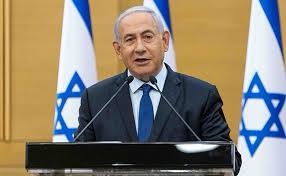
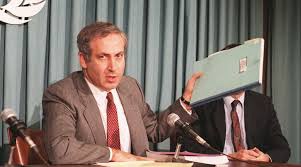
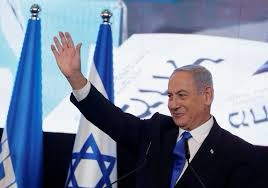
Benjamin Netanyahu: A Portrait of Israel’s Prime Minister


Born on October 21, 1949, in Tel Aviv, Israel, Netanyahu’s roots trace back to Poland. His father, Benzion Netanyahu, born Benzion Mileikowsky, was a historian specializing in the Jewish Golden Age in Spain. Benzion was an ardent Zionist and was involved in the Revisionist Zionism movement, a right-wing faction of Zionism founded by Ze’ev Jabotinsky. Netanyahu’s mother, Tzila Segal, was born in Petah Tikva, then part of Ottoman Palestine. The family name was changed to Netanyahu, reflecting their Hebrew identity. This background, steeped in Zionist ideology and Jewish history, profoundly influenced Netanyahu’s own political and ideological beliefs.

Education and Military Service:
Netanyahu’s formative years were marked by frequent moves between Israel and the United States, reflecting his father’s academic career. This bicultural upbringing contributed to his fluent English and understanding of Western culture. He completed his high school education in the U.S. before returning to Israel to serve in the Israel Defense Forces. He joined the elite special forces unit Sayeret Matkal, participating in numerous operations, including the 1967 Six-Day War. His military experience, particularly the tragic death of his brother Yonatan during the Entebbe raid in 1976, deeply impacted him and reinforced his commitment to Israel’s security.

Post-military, Netanyahu returned to the United States for higher education. He earned a Bachelor of Science degree in architecture and a Master of Science degree in management studies from the Massachusetts Institute of Technology. He also studied political science at Harvard University. This academic background in architecture and management, combined with his military experience, laid the groundwork for his strategic and analytical approach to politics.

Political Career:
Netanyahu’s political ascent began in the 1980s as the Israeli ambassador to the United Nations, where he became known for his articulate defense of Israel on the international stage. He then moved into Israeli domestic politics, joining the right-wing Likud party. In 1996, he was elected Prime Minister of Israel, becoming the youngest person to hold this office.

His tenure has been characterized by a hardline approach to security and the Israeli-Palestinian conflict, driven by his belief in the importance of a strong, secure Jewish state. He has been a vocal opponent of the Iran nuclear deal, an advocate for strong ties with the United States, and a proponent of expanding Israeli settlements in the West Bank, despite international criticism and condemnation.


Netanyahu’s career has not been without controversy. His policies on the Israeli-Palestinian conflict, particularly the treatment of Palestinians and the expansion of settlements into the West Bank, have been a source of domestic and international division. He has faced multiple allegations of corruption, which have sparked protests and legal challenges, yet he has maintained significant political support and resilience in Israel.

Views on Zionism and Israel as a Jewish State:
Influenced by his father’s Revisionist Zionism, Netanyahu strongly believes in Israel as a Jewish state, a refuge, and a homeland for Jews worldwide. This view has shaped much of his policy, especially regarding the Israeli-Palestinian conflict and settlements. His stance often sparks debate about the nature of Zionism and the future of a two-state solution which he vehemently oppose.


Netanyahu’s impact on Israeli politics and society is profound. He has shifted the country’s political discourse towards a right-wing, security-first perspective. His tenure has seen Israel navigate complex geopolitical challenges, including relations with neighboring countries and the broader Middle East.

Conflict with Israeli Public:
Despite his long tenure, Netanyahu’s policies have deeply polarized Israeli society. His approach to the Israeli-Palestinian conflict, his expansionist policies, and the allegations of corruption have led to significant domestic conflict, with many Israelis questioning the direction of their country under his leadership.

Endurance in Israeli Politics:
Netanyahu’s ability to stay in power for so long can be attributed to his political acumen, ability to navigate Israel’s complex coalition politics, and his resonant message of security and national strength in a region marked by instability.

Benjamin Netanyahu’s life and political journey reflect the turbulence and complexities of Israeli and Middle Eastern politics. His legacy, marked by his commitment to a secure, Jewish-majority Israel, his involvement in regional conflicts, and his embroilment in controversies, leaves a lasting imprint on the state of Israel and its place in the world.