
BRICS, a coalition of emerging markets comprising Brazil, Russia, India, China, and South Africa, is welcoming six new members: Saudi Arabia, Iran, Egypt, Argentina, Ethiopia, and the United Arab Emirates. This growth aims to craft a fairer, inclusive, and prosperous world, says South African President Cyril Ramaphosa.
Historically, BRICS has aspired to strengthen its geopolitical standing to challenge Western dominance. Notably, the integration of significant energy exporters like Saudi Arabia, Iran, and the UAE will bolster this mission. Moreover, the potential lineup of countries eager to join BRICS reflects the world’s increasing disaffection with a primarily US-led global order.
However, some economists, like Gregory Daco from EY-Parthenon, express skepticism about BRICS matching the power of Western alliances like the G7 in the foreseeable future. The ambition to reduce dollar dependence (de-dollarization) appears ambitious, especially given the differing strategic priorities of BRICS members.
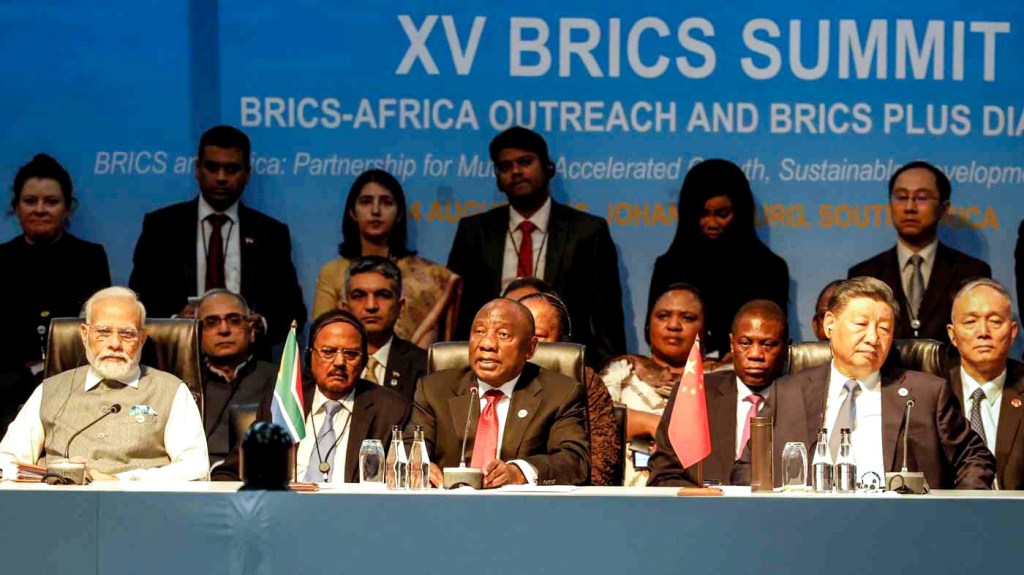
The concept of a unified BRICS currency to counterbalance the dollar has been a recurring theme, stirred up by remarks from Brazilian President Luiz Inácio Lula da Silva questioning the US dollar’s dominance. Yet, not all are on board with the idea. South Africa’s finance minister, Enoch Godongwana, recently voiced reservations about losing monetary policy independence with such a move. Moreover, the term BRIC’s creator, Jim O’Neill, called the idea of a shared currency “ridiculous,” referencing the challenges posed by political tensions between members like India and China.
While the prospect of a unified BRICS currency remains distant, the bloc is undeniably trying to lessen its dollar dependency. The group has expressed intentions to decrease reliance on the US dollar in international trade. Emphasizing this sentiment, Russian President Vladimir Putin highlighted the growing momentum of de-dollarization efforts. Moreover, there’s talk of promoting the Chinese renminbi as a reserve currency.
However, these ambitions face steep challenges. As of 2022, the US dollar was used in nearly 90% of global foreign exchange transactions. The renminbi represented a mere 2.5% of foreign exchange reserves, making its rise to challenge the US dollar, at least for now, a far-off dream. While BRICS grows and evolves, the journey to a post-dollar world seems laden with complexities and hurdles.
 Nkozi Knight