I Fought for This Country. But I Can No Longer Be Complicit in Its Foreign Policy Hypocrisy

As a veteran of the United States Navy, I Fought for This Country. But I Can No Longer Be Complicit in Its Foreign Policy Hypocrisy was taught to revere duty, honor, and fidelity to the ideals enshrined in our Constitution. But as I survey the wreckage of our foreign entanglements over the past century (many of which I once believed were necessary), I am confronted by a truth as uncomfortable as it is undeniable: the United States has become an empire more concerned with hegemonic preservation than human dignity.

For decades, our foreign policy has been defined not by altruism or the pursuit of global stability, but by opportunism disguised as liberation. And increasingly, those decisions seem less motivated by the interests of the American people and more by the imperatives of an unspoken geopolitical alliance that has evaded serious scrutiny.

We have sown chaos under the banner of democracy. In 1953, we orchestrated a coup in Iran, toppling Prime Minister Mohammad Mossadegh for the audacity of nationalizing his country’s oil. The result was a brutal monarchy, followed by a revolutionary backlash that has destabilized the region ever since. In 1963, we facilitated the removal of South Vietnam’s President Diem, catalyzing a war that cost over 58,000 American lives and millions of Vietnamese.

In 1973, we backed General Augusto Pinochet’s overthrow of Chilean President Salvador Allende, the Western Hemisphere’s first democratically elected Marxist. The junta that followed was a regime of torture, censorship, and state-sponsored murder. In 2003, we invaded Iraq under a pretense of weapons of mass destruction, a phantom menace that, once unmasked, left a power vacuum filled by sectarian violence, ISIS, and generations of trauma.

In 2011, we helped depose Muammar Gaddafi in Libya, leading to the collapse of civil society and the reemergence of open-air slave markets. We did not spread freedom. We exported anarchy.

These are not aberrations. They are patterns.

Yet amid these calamitous campaigns, one constant remains unchallenged: our unwavering and at times unfathomable deference to the state of Israel. The United States sends $3.8 billion annually in military assistance to Israel, even as we slash aid to nearly every other foreign nation, from humanitarian support in Sub-Saharan Africa to infrastructure investments in Latin America.

Why is Israel uniquely immune to austerity? Why is its influence over American foreign policy so pervasive that questioning it invites accusations of bigotry or disloyalty?

To ask these questions is not antisemitic.

It is democratic. It is imperative.

We are not obliged to bankroll or defend the actions of any foreign government, especially one whose policies often run counter to international law and the ethical standards we claim to uphold. A nation confident in its righteousness does not fear accountability.

And yet we remain captive to a status quo that conflates alliance with obedience. We act not as a sovereign superpower, but as a vassal in a global chess game whose rules we no longer write. The rhetoric of “shared values” becomes increasingly hollow as we silence dissent, criminalize critique, and ignore the suffering of those caught in the crossfire of our projections.

We call others “terrorists” while conveniently forgetting our role as the architect of their rage. We depose, destabilize, and then disavow.

I do not write this as a provocateur or as a partisan. I write as someone who has worn the uniform, who has saluted the flag, and who now grieves the betrayal of the ideals I once fought to protect. I want to live in a country that values transparency over pretext, humility over hubris, and peace over perpetual war.

Empire is unsustainable. Hegemony breeds resentment. And complicity, especially when cloaked in patriotic fervor, is corrosive to the soul of a republic.

We must confront our legacy with honesty. We must extricate ourselves from alliances that demand our silence rather than our scrutiny. And we must rediscover a foreign policy rooted not in domination, but in decency.

Anything less is a disservice to the nation we claim to love, and to the world we insist we’re trying to save.
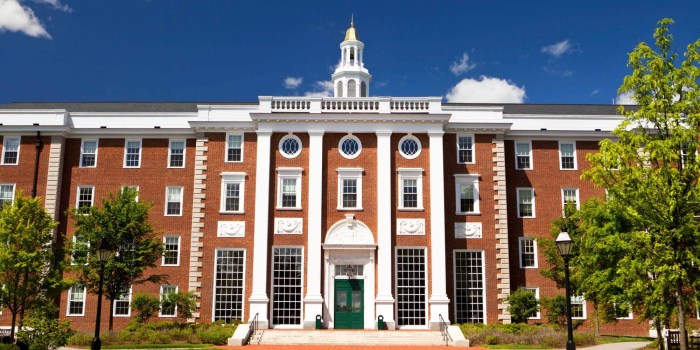

Harvard Expands Free Tuition to Families Earning Under $200,000

By Nkozi Knight

In a move aimed at expanding access to higher education, Harvard University announced Monday that it will offer free tuition to students from families earning $200,000 or less starting in the 2025-2026 academic year. This marks a significant expansion of the university’s financial aid program, further removing financial barriers for prospective students.

Students from families with incomes below $100,000 will also have all expenses covered, including housing, food, health insurance, and travel costs. Previously, Harvard provided full financial support only to students from families earning less than $85,000 annually.

“Putting Harvard within financial reach for more individuals widens the array of backgrounds, experiences, and perspectives that all of our students encounter, fostering their intellectual and personal growth,” said Harvard President Alan Garber.

While tuition alone at Harvard currently exceeds $56,000, total costs, including housing and other fees, approach $83,000 per year. The new policy will significantly lessen that burden for many American families.

Families earning above $200,000 may still qualify for tailored financial aid depending on individual circumstances.

This initiative aligns with similar policies at other elite institutions, like the Massachusetts Institute of Technology (MIT), which announced a comparable expansion last fall. Harvard estimates that 86% of U.S. families will now be eligible for some level of financial aid.

“Harvard has long sought to open our doors to the most talented students, no matter their financial circumstances,” said Hopkins Dean of the Faculty of Arts and Sciences. “This investment ensures that every admitted student can pursue their academic passions and contribute to shaping our future.”

The expansion comes amid broader conversations about diversity in higher education, especially following the Supreme Court’s ruling against affirmative action in college admissions. Harvard, along with other institutions like the University of Pennsylvania, views increased financial aid as a pathway to maintaining diversity by ensuring access to students from varied socioeconomic backgrounds.

“We know the most talented students come from different socioeconomic backgrounds and experiences, from every state and around the globe,” said William Fitzsimmons, Harvard’s dean of admissions and financial aid. “Our financial aid is critical to ensuring that these students know Harvard College is a place where they can thrive.”

This policy marks a continued effort to create a more inclusive and accessible environment at one of the nation’s most prestigious universities.

The Silent Killer: How Our Diet and Lifestyle Are Shortening Our Lives

By Nkozi Knight

I truly thought I was healthy. My BMI is only 25, and by most accounts, I look like I I am in great shape. But something wasn’t right for weeks. I felt tired all the time, my feet tingled, and my energy levels were nowhere near what they used to be when I would workout. Something inside me told me to get checked out, and what I found was alarming:

A1C: 7.3% → Diabetes confirmed

LDL (“bad” cholesterol): 198 mg/dL → Very high

Non-fasting glucose: 219 mg/dL → Dangerously high

In other words, I was walking around with a silent killer inside me, completely unaware. And I’m not alone.

Black Men and the Health Crisis No One Talks About

Black men in the United States are disproportionately affected by diabetes, high blood pressure, heart disease, blood clots, and amputations, a lot of it comes down to our diet, lifestyle, and neglect of medical care. Here are some statistics that speak to that point:

Black adults are 60% more likely to be diagnosed with diabetes than white adults (CDC, 2022).

More than 40% of Black men have high blood pressure, increasing the risk of heart attack and stroke (American Heart Association, 2023).

• Diabetes-related amputations occur nearly 3 times more often in Black patients than in white patients (JAMA, 2021).

Yet, we don’t talk about it. We recently witnessed super dad, Lavar Ball lose his foot from such complications. We brush off the fatigue, the numbness, the tingling, the headaches, the difficulty in the bedroom, and the shortness of breath as just “getting older.” But these are warning signs that something is seriously wrong.

The Warning Signs You Can’t Ignore

Tingling or numbness in your feet → Early sign of diabetic neuropathy, which can lead to amputation if untreated.

Extreme fatigue → Could be due to high blood sugar, poor circulation, or even heart disease.

Erectile dysfunction (ED) → Often an early symptom of diabetes or heart disease due to damaged blood vessels.

Blurry vision → High blood sugar can lead to diabetic retinopathy, which can cause blindness.

Slow-healing wounds → A sign of poor circulation, increasing the risk of infections and amputations.

• Frequent urination & constant thirst → Classic symptoms of diabetes.

If you’re experiencing any of these symptoms, it’s time to see a doctor immediately.

Fast Food & High Sugar Diets Are Killing Us

Let’s be real. Our beautiful culture is built around food, and not just any food, it always fried chicken, snacks, barbecue, mac and cheese, burgers, energy drinks, and other sugar-loaded drinks. We love to eat (at least I do), and food is a part of our identity. But it’s also the reason why we’re dying younger than we should.

The average American consumes 17 teaspoons of added sugar per day which far beyond the recommended limit of 9 teaspoons for men (American Heart Association, 2023).

Black Americans are more likely to consume sugar-sweetened beverages, which are directly linked to diabetes and heart disease (CDC, 2022).

Red meat and processed meats (bacon, sausage, deli meat) increase the risk of heart disease by 18% and diabetes by 12% (Harvard School of Public Health, 2023).

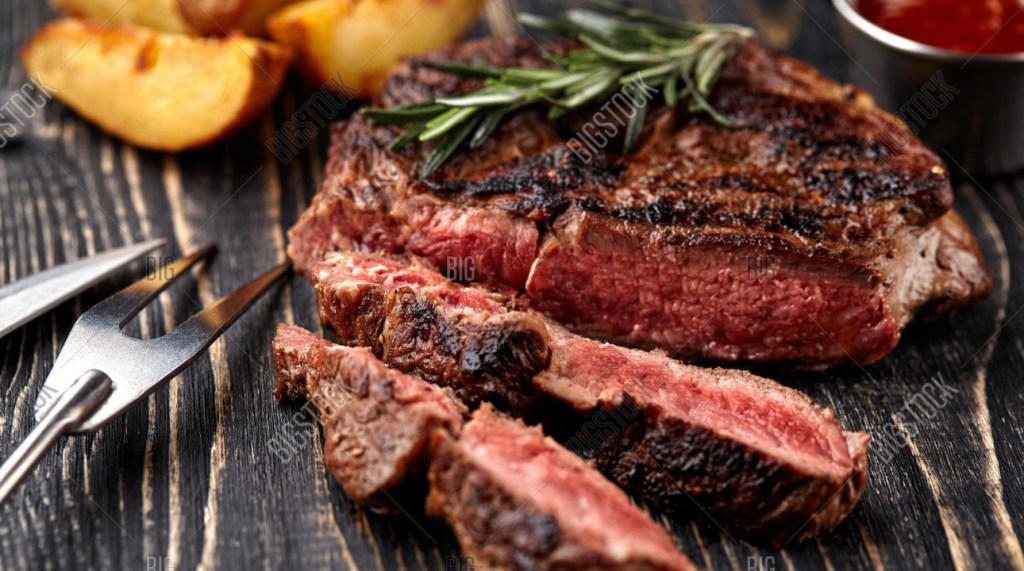
The Solution: Skip the Steak, Choose the Chicken

I used to be that guy….grabbing a burger and fries on the go, ordering a steak just because I could, and washing it all down with a Sprite or Old Fashioned. But after seeing my numbers, I realized I was digging my own grave, and I have too many people depending on me to check out early.

I made the switch, and I urge you to do the same:

No more red meat → Choose grilled chicken, turkey, or fish instead.

No more sugary drinks → Drink water, unsweetened tea, or black coffee.

No more processed carbs → Swap white bread & pasta for whole grains like quinoa & brown rice.

More fiber, more greens, more movement.

And most importantly, please see a doctor before it’s too late.

Your Health Is in Your Hands

Black men, we can’t afford to ignore our health any longer. We too often put our own needs aside to take care of everyone else to our own demise. Too many of us are losing limbs, suffering strokes, and dying before our time. It’s not genetics at all, it’s the choices we make every day.

If you made it this far I ask you to not wait until it’s too late. Get your bloodwork done, eat like your life depends on it (because it does), and start moving.

We all deserve longer, healthier lives but we have to take action to make that a reality. I thank God for the people in my life who encouraged me to get checked out before it was too late, because too many of us ignore the warning signs until we can’t anymore. Let’s hope the MAHA movement brings attention to this silent killer that’s taking too many of us too soon. Our health is our responsibility so let’s fight for it.

Sources:

• CDC. (2022). Diabetes Statistics in the U.S.

• American Heart Association. (2023). Heart Disease & Stroke Risk in African Americans.

• Harvard School of Public Health. (2023). The Impact of Diet on Chronic Diseases.

• JAMA. (2021). Racial Disparities in Diabetes-Related Amputations.