Some of my favorite images from my April 2021 trip to Puerto Vallarta, Jalisco, Mexico.




Personal and professional tips, inspiring stories of success and failures, travel information, and current news.
Some of my favorite images from my April 2021 trip to Puerto Vallarta, Jalisco, Mexico.

I sat lotus style in the warm sand, enveloped in a dome of rose tinted light. The magical glow transformed and penetrated everything in sight. The …
The Magical Sunsets of Mexico’s Puerto Vallarta

One of my past times is watching good quality, travel-based Youtube videos. There are some amazing creators out in this beautiful world, who are able…
How to Travel in Lockdown: The Best Virtual Getaways on Youtube, by The Luxury Travel Expert.
Led by KK Arnold and Jaelyn Acker, the Germantown Warhawks defeated Hudson to win the WIAA Girls Division 1 State Basketball Championship by the score of 63-48.
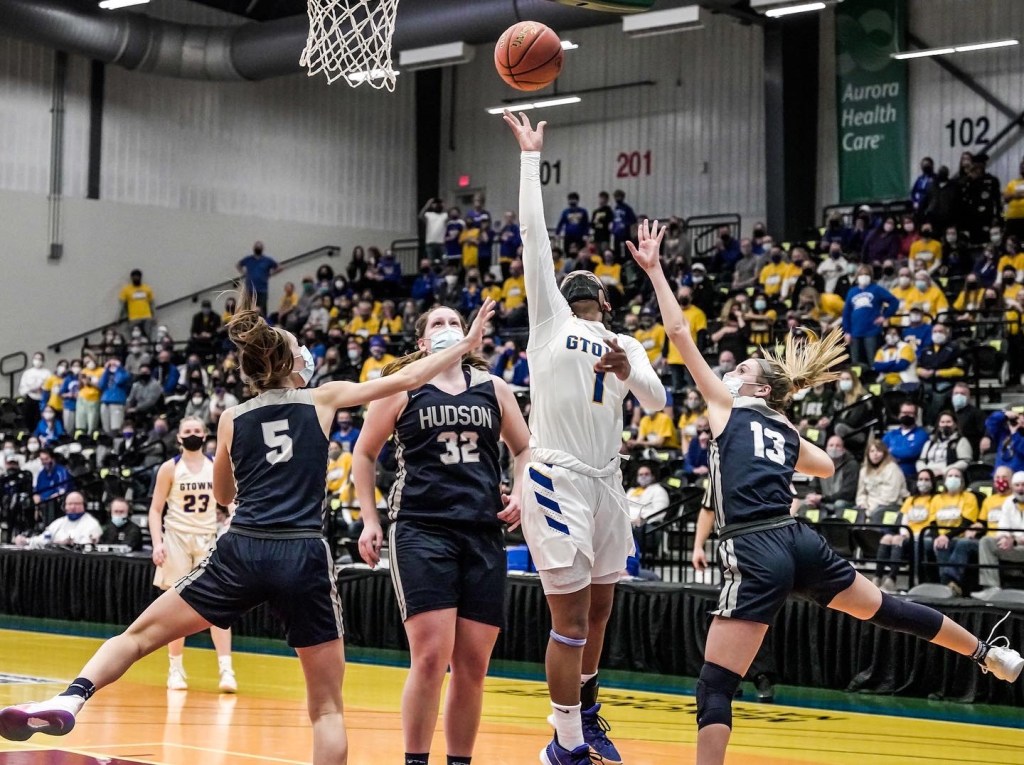


Jaelyn Acker had 19 for the Warhawks as they win their first state championship in school history.
:max_bytes(150000):strip_icc()/GettyImages-1173672653-d3037631ea6c4c34a644fcd8ec90d11f.jpg?quality=80&w=1284&ssl=1)
Snorkeling, not only doesn’t require formal training but it’s also a fun activity to share with friends and family. Even if you are not an expert …
Snorkeling in Puerto Vallarta

Puerto Vallarta is a premier beach destination among travelers from across the world. It should come as no surprise. With its crystal blue waters and…
Beaches in Puerto Vallarta

Monday newsletters always feature top 10 travel lists to inspire. Today (February 22, 2021): Top 10 world’s best airlines for longhaul Business Class…
Top 10 best airlines for longhaul Business Class

Monday newsletters always feature top 10 travel lists to inspire. Today (February 22, 2021): Top 10 best luxury hotels in Sicily & the Aeolian …
Top 10 best luxury hotels in Sicily & the Aeolian islands
Toni Breidinger says that when she sat behind the wheel of a go-kart at age 9, she knew she would become a race car driver.
— Read on www.cnn.com/2021/02/13/us/daytona-nascar-arab-american-female-driver-toni-breidinger-trnd/index.html

Friday newsletters always feature luxury travel contests, tips, series, or news. Today (January 8, 2020): The 85 most anticipated hotel openings of …
The most anticipated hotel openings of 2021

Monday newsletters always feature top 10 travel lists to inspire. Today (February 1, 2021): Top 10 most luxurious resorts in the Caribbean. With an …
Top 10 best luxury resorts in the Caribbean

Wednesday newsletters always feature a hotel or flight review. Prior to the outbreak of the pandemic, I enjoyed a wonderful trip to New York City and…
Review: Belmond Cap Juluca, Anguilla (Caribbean)

Amanda Gorman moved me deeply, as she did many others, with her inaugural poem “The Hill We Climb.” When I found out that she was nurtured at least …
What Amanda Gorman Teaches Us About Our Shared America

On its surface, the mandate of the World Trade Organization is relatively circumscribed: to make and enforce the rules of the road for global trade …
Ngozi Okonjo-Iweala Believes the WTO Can Change the World. But First It Needs Reform

Mario Draghi is about to be sworn in as Italy’s next prime minister. The former head of the European Central Bank, affectionately dubbed “Super Mario…
What Happens Next in Italy With Mario Draghi Taking Charge

I recently read an IES-funded study, called “The Effects of a Principal Professional Development Program Focused on Instructional Leadership.” The …
What Works in Professional Development
Sudan passes 2020 budget with anticipated deficit of $1.62 billion
Sudan passes 2020 budget with anticipated deficit of $1.62 billion
— Read on business.financialpost.com/pmn/business-pmn/sudan-passes-2020-budget-with-anticipated-deficit-of-1-62-billion

First, read these 2 foundational books…
1. The Change Masters
Rosabeth Moss Kanter
Free Press, 1985
“A foundational book for your collection. When a colleague recently switched careers, I lent her this incredibly dog-eared book from college days. Rosabeth Moss Kanter helped coined the idea and term ’empowerment’ in the 1970s, a sure sign she was ahead of her time. Even though The Change Masters was published forty years ago, it’s relevant. Why? Because all progress is made by those that are change masters. Become one.”
2. Here Comes Everybody: The Power of Organizing without Organizations
Clay Shirky
Penguin, 2008
“A few years back, I took out Clay Shirky’s book and found it filled with scribbles. While it’s almost passé now to talk of how Obama organized a large community to sweep into the presidency, Shirky’s book is textbook quality for what will happen next. It points to a new truth: Today, connected individuals can do what once only large organizations could. So look past the timeliness of his stories to see the timeless.”
Then, try these 4 to understand current needs…
1. Opposable Mind: Winning through Integrative Thinking
Roger Martin
Harvard Business Review, 2009
“I’m convinced that the way we create an abundant future of prosperity will require a global redesign of what is possible. And I think Roger Martin’s idea here could be key. When you hold two ideas as opposites, you’ll never find a way for both things to be true. But to go forward and reconcile some deep divides we have, we’re going to have to find new solutions to old problems through new thinking. Martin’s book is like yoga for the mind.”
2. Redesigning Leadership (Simplicity: Design, Technology, Business, Life)
John Maeda
MIT Press, 2011
“The real question is: How will we reinvent the world around us? Well, fundamentally, it will involve having folks take the big step away from just being themselves (the thing we all know best) and join in doing something with others (the people we fear may let us down). John Maeda’s book captures a modern leader’s challenge to switch gears and become a social, collaborative leader.”
3. The Difference
Scott E. Page
Princeton University Press, 2010
“Complex systems turn out to be adaptive and resilient, and therefore thriving, systems. Sounds like something our world needs more of, right? See how a math theorist argues for including difference –- that is, cognitive difference — into our lives, our workplaces and ultimately what we create. The value of this difference is a proven truth, not a feel-good mantra, for how you shape both better ideas and new solutions. It’s going to be central to what happens next.”
4. Finite and Infinite Games
James Carse
Free Press, 1986
“Most of the ways people think of business, politics or economics assume that if you win, others lose. I’ve done thirteen years of schooling and realize that’s how people teach this stuff. Those people view the world as a finite game. But there’s another choice. After you read Finite and Infinite Games, you may never look at any relationship or power dynamic the same way again.”
Then, read this book to understand what comes next…
The New Capitalist Manifesto: Building a Disruptively Better Business
Umair Haque
Harvard Business Review, 2011
“Here’s one theory of what comes next in our economy, written by a sharp mind and cultural critic. His book doesn’t get everything right (How could it?), but it’s an incredibly powerful read on the right questions all of us ought to be asking.”
Last, one personal love worth sharing.
The Illuminated Rumi
Jelaluddin Rumi, with translation by Coleman Barks and illustrations by Michael Green
Broadway Books, 1997
“Because I believe all of us need to be grounded in eternal wisdom, I’d want you to have this book by your bedside with a prescription: Read daily.”
Featured image via iStock.
![iStock_000015269756XSmall[1].jpg](https://nkoziknight.com/wp-content/uploads/2019/03/istock_000015269756xsmall1.jpg)
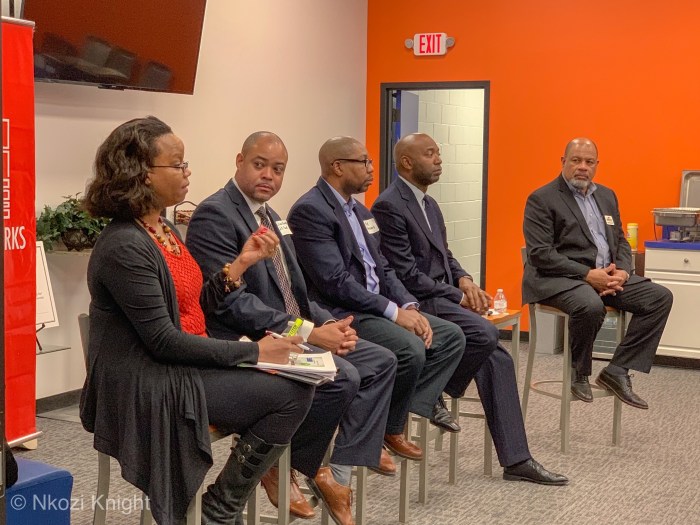
All leaders talk, but it is what they say and how they say it that determines whether the group succeeds or fails.
Think about it: the leader’s most fundamental and most important job is to be in touch with those around him or her. Whether it is in the hallways or on the phone, in the middle of the workday or after hours, while delivering a performance review to a key employee or a yearly address to thousands of employees, leaders are involved in a constant series of conversations.
Through these encounters, whether brief and spontaneous or scheduled and structured, leaders try to use their time with colleagues, employees, customers, and others to reach a variety of ends. Grabbing a moment, the leader takes the opportunity to influence and direct a member of the sales staff. A weekly meeting becomes a chance to coach a manager and gather information about the department’s morale and its financial numbers. A quick e-mail checks on the progress of a research project and gives a boost of recognition and support to the team. During a strategy meeting, the leader negotiates next steps with division heads and outlines a coordinated approach. At a company awards ceremony, he or she tries to hammer home a message about values and goals. In short, the leader, through his or her conversations, aims to foster relationships, build support networks, and sharpen organizational focus.
Yet outcomes from conversations are too often unclear. Perceptions don’t always match. Influences are frequently not as profound as one would hope. Communication is generally a struggle with mixed, uncertain, and unpredictable results. Too much conversation is ad hoc and hinges on moods, energy levels, relationships, and personalities. Sometimes a leader is right on point. Sometimes he or she clicks and forges a new connection. Other times, the leader misses the mark. Either way, he or she pushes on, lining up the next meeting, setting up the next goal, responding to the latest need for clarification.
Communication is never easy. Inevitably, when a leader is driving change and dealing with conflicting agendas, some conversations provide a challenge that tests the bounds and skill of experience. During the heat of a difficult conversation, you need to fall back on a discipline. You need clear communication that advances agendas, promotes learning, and strengthens relationships. It’s the difference between achieving objectives and having everything fall apart—and the difference between winning and losing.
Imagine having to let a close friend know that he or she is off a project because of poor performance, yet wanting at the same time to preserve the strength of the relationship. Imagine having to make necessary structural changes to an organization, realigning roles and positions in ways that involve cuts in the workforce, yet wanting at the same time to bolster morale and organizational commitment. These are the difficult conversations that High-Impact Leaders face every single day, so what makes them different from any other leader?
High-Impact Leaders are the people who get results. They are the ones who make things happen. They are the leaders who are able to continually advance a clear agenda, get others to buy into it, and move an organization, a division, or a team forward. Being a High-Impact Leader has nothing whatsoever to do with title or rank, because High-Impact Leaders can be found up, down, and across any organization.
-Impact Leaders are the ones who cause no surprises. They are explicit, consistent, concise, and authentic. They sometimes have an abundance of charisma, but that is clearly not a prerequisite. More to the point, High-Impact Leaders are the ones who take charge wherever they are. They are the ones others want to follow. They are also the leaders whose teams others consistently want to join. When they move on to new roles or new territories, they do not travel alone. Others ask to go with them.
These conditions result because High-Impact Leaders use the technology of Powerful Conversations and then match what they say with what they do. Through Powerful Conversations, they develop openness, honesty, and clarity in order to get others to believe and share in their goals, to gain commitments, and to foster trust. And they prove they are worthy of that trust by delivering on their own commitments and by making results happen.
The link between Powerful Conversations and High-Impact Leaders lies in the relationship between two concepts I refer to as Say and Do. I have seen people skilled at the art of Powerful Conversations nevertheless fail as leaders because they fail to live up to their words. As a result, they never become High-Impact Leaders. I have never known a High-Impact Leader, however, who was not also skilled at Powerful Conversations, whether conscious of that designation or not. To be a High-Impact Leader, you have to be able to conduct Powerful Conversations on a consistent basis and live up to the outcomes of those conversations. Why is this important? It has to do with trust—without which conversations cannot progress toward the realization of commitments.
One of the most important functions of a Powerful Conversation is to create clarity, a critical success factor for building trust. I cannot tell you how frequently I have been involved in situations in which a leader, reflecting on problems that have arisen, says, “I can’t believe they thought I meant that. I never had any intention of doing that.” And the followers say something like, “It’s unbelievable. Our leader made a clear commitment to do this and now denies it was ever part of the agenda.” Both sides shake their heads. Barriers go up. Trust is reduced or nonexistent.
True clarity implies that a leader says exactly what he or she means in such a way that his or her statements are received as intended. This requires openness, honesty, and an active and careful tracking of wants, needs, and commitments. It furthermore requires that those clear statements be lived up to with demonstrated actions built on organizational trust.
High-Impact Leaders today lead in a better way because they recognize that the shortest path to achieving objectives is to build trust and gain clear commitments from others. Specifically, they engage in Powerful Conversations to uncover the wants and needs of others in order to understand what will motivate those people to join forces with the leader and live up to the commitments of a conversation. They skillfully orchestrate the Powerful Conversations in which they engage to make clear all parties understand the exact commitments that have been made. Then they check into those commitments and make sure through follow-up conversations that the commitments can be kept. They track the wants and needs of others and find ways to reinforce their own desire to understand the wants and needs of others, often through continued follow-up conversations. High-Impact Leaders do these things because they know that trust must exist if the leader is to achieve his or her agenda through Powerful Conversations to create positive outcomes for their teams and stakeholders.
by Phil Harkins
 Nkozi Knight