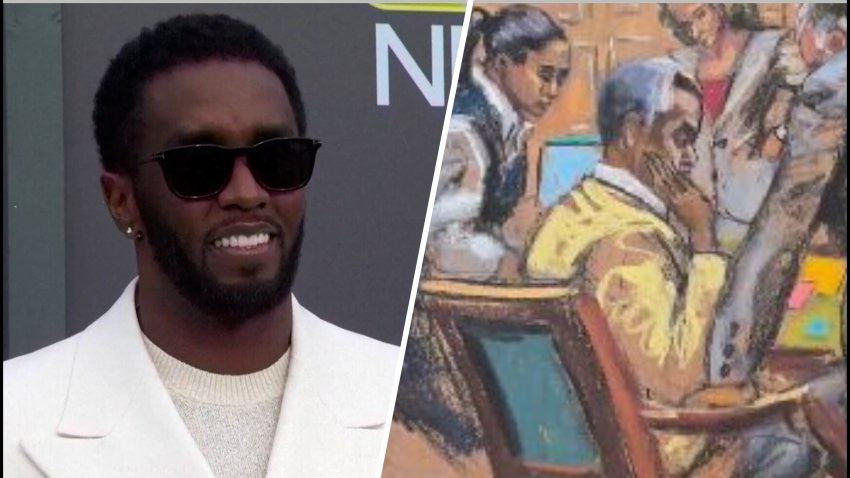
When Sean “Diddy” Combs was convicted of two counts under the Mann Act on July 2nd, 2025, it was hard not to feel the weight of contradiction. A law written in 1910 to combat what was then described as “white slavery” had just been used to take down one of hip-hop’s most powerful and visible figures. Meanwhile, men like Jeffrey Epstein and former Abercrombie and Fitch CEO Mike Jeffries continued to escape prosecution, despite years of credible accusations and damning evidence.
If the allegations against Combs are true, then accountability is warranted and many years in prison should have been the outcome. But if that same law is only applied to certain men, primarily those who happen to be Black, who are famous, and who make the wrong enemies the this is not justice. It is selective enforcement.
What Is the Mann Act and Who Has It Historically Targeted?
The Mann Act, passed by Congress in 1910, criminalizes transporting individuals across state lines “for the purpose of prostitution or debauchery, or for any other immoral purpose.” Though written broadly, the law has rarely been applied evenly. From its inception, it has disproportionately targeted Black men, especially those who achieved prominence and visibility in public life.
Here are just a few examples that stand out:
Jack Johnson – He was the first Black heavyweight boxing champion. In 1913, Johnson was prosecuted under the Mann Act for transporting his white girlfriend across state lines, even though they later married. His conviction was widely seen as punishment for both his relationships and for daring to dominate a white-controlled sport during the Jim Crow era.
Chuck Berry – A pioneer of rock and roll, Berry was convicted under the Mann Act in 1962 for transporting a 14-year-old girl to work at his nightclub. Although there was a legal basis for the charge, the case was racially charged from the start, and Berry’s conviction was overturned on appeal due to a judge’s blatant racial bias.
Charlie Parker – The jazz saxophonist known as “Bird” was arrested under the Mann Act in the 1940s. The charges were later dropped, but the case reflected the broader climate of surveillance and legal intimidation faced by Black artists during that era, especially when their relationships crossed racial lines.
Sam Cooke – Cooke was never convicted under the Mann Act, but he was frequently targeted by law enforcement and under FBI surveillance. His relationships with white women and his outspoken civil rights advocacy made him a person of interest. Reports suggest authorities sought opportunities to prosecute him under the Mann Act or similar statutes.
Beyond these high-profile cases, historians have documented hundreds of examples where lesser-known Black men were prosecuted under the Mann Act during the twentieth century for consensual relationships, especially with white women. Most pled guilty to avoid harsher punishment. Many lacked the legal resources to fight the charges.
Then there is Charlie Chaplin. He was not Black. He was a white British filmmaker, one of the most famous entertainers of his time. In 1944, the United States government charged Chaplin under the Mann Act for allegedly transporting actress Joan Barry across state lines for sexual purposes. Chaplin was acquitted. But his case is a reminder that while the law was used against Black men with regularity, it was also sometimes used to enforce political or moral conformity. Chaplin had become a target due to his personal views, criticism of American policies, and resistance to the cultural norms of the time. The Mann Act became a tool to humiliate and neutralize him publicly.
So while Chaplin is often the lone white figure cited in Mann Act history, his case only highlights how exceptional it was for someone of his background to be charged.
Diddy’s Conviction Echoes That History
In 2025, Diddy was convicted of two counts under the Mann Act. Prosecutors failed to convict him on the more serious charges of sex trafficking and racketeering, but they secured these two counts based on his alleged transportation of individuals for sexual purposes. This approach follows a familiar pattern. When prosecutors cannot secure a major win, they reach for older statutes to salvage a conviction.
But the question remains: Where is this same level of energy when it comes to white men with equal or greater levels of power and resources, and with just as much or more evidence against them?
Mike Jeffries, the former Abercrombie and Fitch CEO, was exposed in 2023 through a detailed BBC investigation. The report included multiple men who accused Jeffries and his partner of flying them to sex parties around the world, often under pressure, using cash, drugs, and promises of modeling contracts. Flight logs, witnesses, and even former handlers corroborated the accounts.
Yet Jeffries has not been charged. Not under the Mann Act. Not under trafficking laws. Not under anything.
Jeffrey Epstein is an even more glaring example. His crimes involved minors, interstate and international travel, financial coercion, and a network of handlers and enablers. His plane, known as the “Lolita Express,” is documented in FAA flight logs. His victims testified under oath. His co-conspirators remain uncharged.
Still, when federal prosecutors finally moved against Epstein, the Mann Act was nowhere to be found. Instead, they pursued limited charges years after he had already secured a sweetheart deal with federal protection.
So again, we must ask why are some men brought down with the full weight of obscure federal laws, while others seem to exist beyond the reach of any legal system at all?
Selective Justice Is Not Justice
Diddy is not innocent in the moral sense. His name has been attached to disturbing allegations for decades. But if this system is truly about justice, then it must apply to everyone, not just the convenient targets.
The Mann Act is more than a law. It is a mirror. It reflects who society believes deserves to be held accountable and who is protected by wealth, whiteness, or institutional connections.
Federal law should not function like a press release or a media spectacle. If the system can resurrect a 115-year-old statute to convict a Black music mogul, then it can certainly find the will to pursue white billionaires who operate with impunity.
Until that happens, this is not justice. It is theater. It is distraction. And we all know it.

 Nkozi Knight