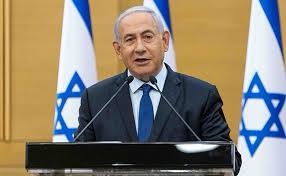
Born on October 21, 1949, in Tel Aviv, Israel, Netanyahu’s roots trace back to Poland. His father, Benzion Netanyahu, born Benzion Mileikowsky, was a historian specializing in the Jewish Golden Age in Spain. Benzion was an ardent Zionist and was involved in the Revisionist Zionism movement, a right-wing faction of Zionism founded by Ze’ev Jabotinsky. Netanyahu’s mother, Tzila Segal, was born in Petah Tikva, then part of Ottoman Palestine. The family name was changed to Netanyahu, reflecting their Hebrew identity. This background, steeped in Zionist ideology and Jewish history, profoundly influenced Netanyahu’s own political and ideological beliefs.

Education and Military Service:
Netanyahu’s formative years were marked by frequent moves between Israel and the United States, reflecting his father’s academic career. This bicultural upbringing contributed to his fluent English and understanding of Western culture. He completed his high school education in the U.S. before returning to Israel to serve in the Israel Defense Forces. He joined the elite special forces unit Sayeret Matkal, participating in numerous operations, including the 1967 Six-Day War. His military experience, particularly the tragic death of his brother Yonatan during the Entebbe raid in 1976, deeply impacted him and reinforced his commitment to Israel’s security.
Post-military, Netanyahu returned to the United States for higher education. He earned a Bachelor of Science degree in architecture and a Master of Science degree in management studies from the Massachusetts Institute of Technology. He also studied political science at Harvard University. This academic background in architecture and management, combined with his military experience, laid the groundwork for his strategic and analytical approach to politics.
Political Career:
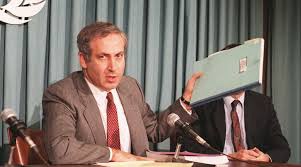
Netanyahu’s political ascent began in the 1980s as the Israeli ambassador to the United Nations, where he became known for his articulate defense of Israel on the international stage. He then moved into Israeli domestic politics, joining the right-wing Likud party. In 1996, he was elected Prime Minister of Israel, becoming the youngest person to hold this office.
His tenure has been characterized by a hardline approach to security and the Israeli-Palestinian conflict, driven by his belief in the importance of a strong, secure Jewish state. He has been a vocal opponent of the Iran nuclear deal, an advocate for strong ties with the United States, and a proponent of expanding Israeli settlements in the West Bank, despite international criticism and condemnation.
Netanyahu’s career has not been without controversy. His policies on the Israeli-Palestinian conflict, particularly the treatment of Palestinians and the expansion of settlements into the West Bank, have been a source of domestic and international division. He has faced multiple allegations of corruption, which have sparked protests and legal challenges, yet he has maintained significant political support and resilience in Israel.
Views on Zionism and Israel as a Jewish State:
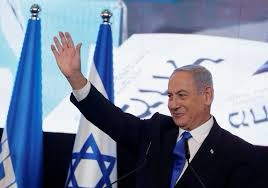
Influenced by his father’s Revisionist Zionism, Netanyahu strongly believes in Israel as a Jewish state, a refuge, and a homeland for Jews worldwide. This view has shaped much of his policy, especially regarding the Israeli-Palestinian conflict and settlements. His stance often sparks debate about the nature of Zionism and the future of a two-state solution which he vehemently oppose.
Netanyahu’s impact on Israeli politics and society is profound. He has shifted the country’s political discourse towards a right-wing, security-first perspective. His tenure has seen Israel navigate complex geopolitical challenges, including relations with neighboring countries and the broader Middle East.
Conflict with Israeli Public:
Despite his long tenure, Netanyahu’s policies have deeply polarized Israeli society. His approach to the Israeli-Palestinian conflict, his expansionist policies, and the allegations of corruption have led to significant domestic conflict, with many Israelis questioning the direction of their country under his leadership.
Endurance in Israeli Politics:
Netanyahu’s ability to stay in power for so long can be attributed to his political acumen, ability to navigate Israel’s complex coalition politics, and his resonant message of security and national strength in a region marked by instability.
Benjamin Netanyahu’s life and political journey reflect the turbulence and complexities of Israeli and Middle Eastern politics. His legacy, marked by his commitment to a secure, Jewish-majority Israel, his involvement in regional conflicts, and his embroilment in controversies, leaves a lasting imprint on the state of Israel and its place in the world.

 Nkozi Knight